Indian Spiced Okra

Have you tried okra before? As am sure you know, they are also called ‘ladies fingers’. Less well known is the vegetable called ‘gentleman’s toes’ – I kid you not! They are also known as ‘tindora’ or ‘ivy gourds’ – check out my recipe here if you interested – it’s actually super tasty. Anyway back to okra. I’ve been eating them a fair amount on my recent travels so thought I would continue to include them in our diet now that we are back home in London.

Thankfully I live near loads of Asian grocers so sourcing them is very easy. I had a lot of positive feedback on instagram about sharing the recipe with you when I put it onto my instastories.


My friend, Harriet aka @thenutritionalbean who is a Registered Nutritional Therapist, Nutritionist and Health Coach, based in Bruton, kindly shared some nutritional facts on okra with me that I thought you would benefit from reading too.

“Overall, okra appears to be a nutritional powerhouse and particularly useful for diabetics and those with digestive complaints. It delivers carotene (vitamin A), folate, vitamins B1, B3, B5, B6, C, E and K needed for our immune system, energy production and cardiovascular health, plus amino acids for growth and repair. Okra is packed with minerals and antioxidant-rich phytochemicals (the plant’s natural defence system that also help keep our cells protected from damage). Not only nutritionally replete, okra is used for its wide-ranging medicinal qualities. As you may know, once cooked, these ladies’ fingers become mucilaginous and for this reason are used, like marshmallow, for soothing an inflamed and irritated digestive tract. Okra may also stop Helicobacter Pylori, a wide-ranging and often nasty bacteria that can lead to ulcers, from adhering to the stomach lining. The specific fibre content is shown to help keep our blood sugar levels stable, keep inflammation in check and improve triglyceride and lipid profiles. Studies on Type 2 Diabetic rats are finding that their condition improves after eating okra.”

Makes you want to start including it in your diet fairly regularly right?

Some people are put off with the texture, but I find if you dry the okra properly after washing then the gooeyness is minimal. I have another similar recipe for okra here which uses less ingredients and has a slightly different taste. If you want to make the dish more Middle Eastern then try this one, which includes tomatoes and butterbeans.


Indian Spiced Okra

500g okra

2 tbsp vegetable oil

10 fresh curry leaves

1 tsp black mustard seeds

1 red onion, finely chopped

1 tsp garam masala

1 tsp coriander powder

1 tsp cumin powder

1/2 tsp turmeric powder

1/2 tsp Kashmiri chilli powder (optional)

2 small green chillies, sliced lengthways

5 garlic cloves, thinly sliced

1 tsp salt

  1. First wash the okra and then lay them out on a tea towel and cover with kitchen roll so that they become dry completely.
  2. Slice off the end of the okra and discard and then slice them, width ways, to one inch pieces, or you can slice on the diagonal, about three times per okra.
  3. In a deep frying pan or wok, add the oil and when it is hot add the mustard seeds and curry leaves for 20 seconds before adding the onion. Keep on a medium heat and move the onion around the pan for about 5 minutes, so that the onion begins to colour.
  4. Stir in the spices and then add the garlic, chilli, followed by the okra.
  5. Add the salt and gently fry for 10-15 minutes, moving the okra around the pan until it softens.
  6. This is a dry dish so do not expect there to be much of a sauce. The spices will coat the okra.


Baingan Bharta – Spiced Smokey Aubergine/Eggplant 

How’s everyone getting on? Not having the January blues I hope. It’s a bit cold and dreary back here in London and snow is  forecast, but I hope that this post will lift your heart and spirits and that you’ll see the world in colour once again. I thought you would be intrigued to see beautiful Jodhpur below. We recently spent a few days in this magnificent city, wandering the streets and soaking up the electric atmosphere.

I’ve been trying out some of the lovely recipes that I sampled in India in the comfort of my warm cosy kitchen this week. I’ll be sharing lots of them with you here on the blog over the coming weeks. Today I wanted to show you a wonderful aubergine dish – or eggplant as it is known to my US followers. It is similar to my baba ganoush, but with an Indian twist due to the spices.

Before I show you the recipe however, I wanted a moment to talk about chillies. I often get asked which chillies I use in my Indian cooking. When it comes to fresh green chillies I opt for the ones that are small and thin – but not the Thai birds eye, which are far hotter. The chillies I buy are slightly largely and longer, but still thin compared to the more bulbous ones.

In Kolkata I visited so many wonderful markets but the one above – Bow Bazaar – which is more of a wholesale fresh produce market, had a magnificent array of fresh produce. These chillies are similar to the ones I buy here in the UK.

So back to the recipe for this week. Please do give it a go and share the results on your social media outlets with the #chilliandmint and link me @chilliandmint.

Have a lovely weekend everyone.


Baingan Bharta – Spiced Smokey Aubergine/Eggplant 

serves 4-6 (served with some other dishes)

2 large aubergines

2 tbsp oil

1 tsp cumin seeds

1 small red onion, finely chopped

1 inch fresh ginger, finely grated

4 garlic cloves, finely sliced or chopped

1-2 fresh green chilli, finely sliced

1 tsp salt, to taste

1/2 tsp turmeric powder

1/2 tsp chilli powder

1 tsp coriander powder

4 medium sized tomatoes, cubed


  1. First you need to place the aubergines over a flame. If you have a gas hob then this works really well. If you do not you can place in the oven for 20-30 minutes, or until the flesh softens, although it won’t have the same smokiness as over an open flame. If you are smoking it over a flame/gas hob it will take around 8 minutes, but you need to use tongs to turn it over so that it is ‘burnt’. Once it is soft and the sides have shrivelled remove from the plan and place on a plate to cool.
  2. Remove the charred skin from the aubergine and run under water to remove any excess skin. Place in a bowl and mash using a fork or potato masher.
  3. In a non-stick pan add the oil on a medium/low heat and add the cumin seeds. Allow them to fizzle in the pan for 15 seconds or so before adding the red onion, fresh chilli, garlic and ginger. Move around the pan to soften for 5 minutes.
  4. Add the spice powders and salt and move around the pan.
  5. Add the tomatoes and aubergine and move around the pan for a further 3-5 minutes.
  6. Serve warm – you can add some fresh coriander on top or eat it as is.

You can serve this at room temperature, but personally I love it hot with a paratha or chapati.


Snap Shot of India and a delicious Indian breakfast recipe – Pongal

Happy New Year to you all. I have just returned from three glorious weeks in colourful, warm-spirited India (hence my lack of blog posts). I have seen and experienced so much that it feels that I have been away for far longer. I feel uplifted and invigorated and have returned to cold chilly London with a positive outlook and excitement for the year ahead.

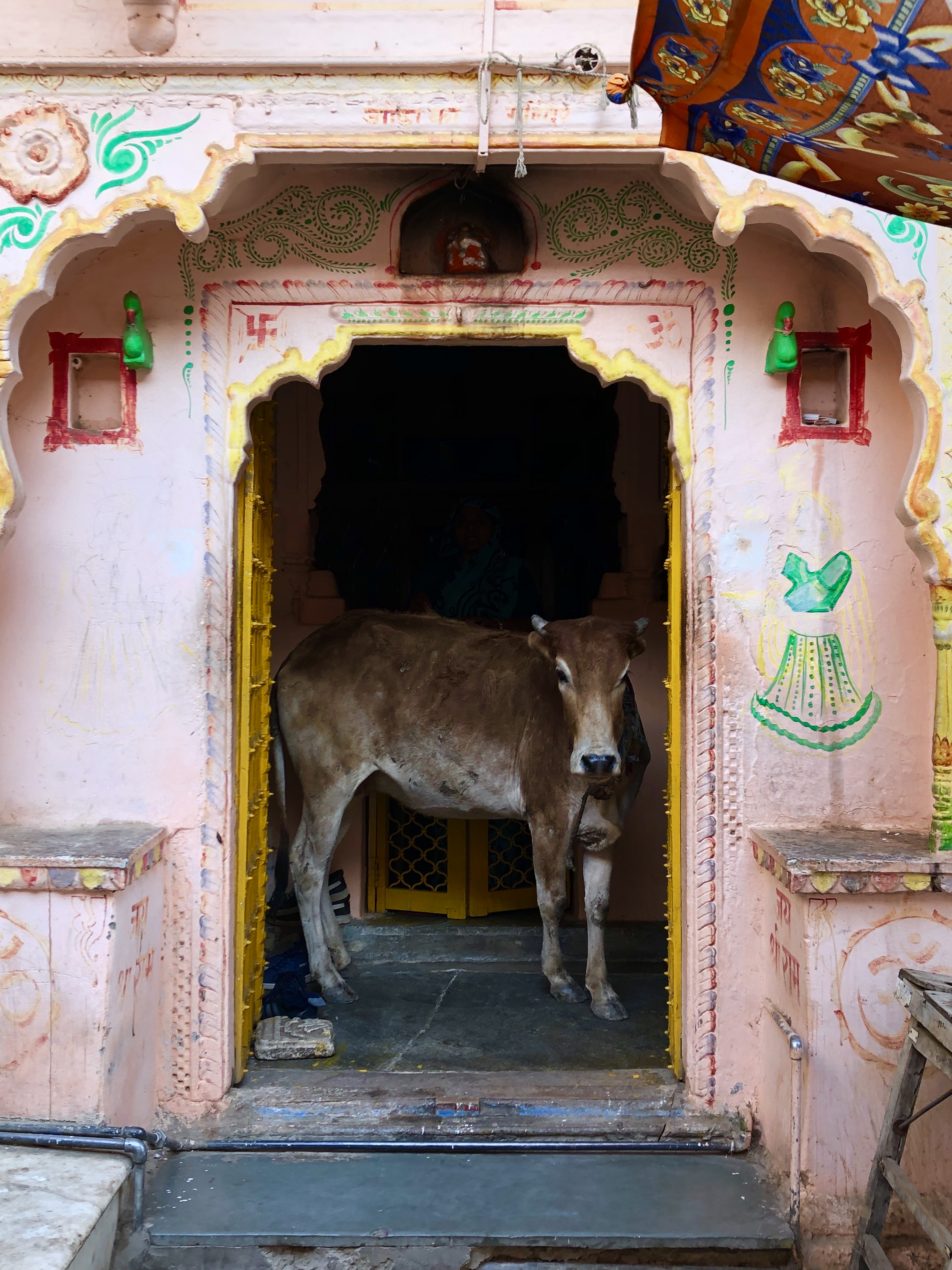
If you’ve never been to India then I urge you to go. It’s incredible and, like Africa, seeps into your soul and never leaves you. It’s frenetic, chaotic and providing you leave your Western ways and customs at home, you can acclimatise to the way of life there pretty quickly. It’s crowded, intoxicating and full on, but remember to breath and relax and you will begin to enjoy everything about this magical country. I was pretty active on Instagram so if you are keen to see some of the Indian street life, food and people, then please follow me over there as well. Here are few snaps to whet your appetite.

We spent 9 days in beautiful Kolkata, visiting family and generally relaxing and seeing more of the city. Followed by a two week tour of Rajasthan. I have lots of tips and suggestions on the food front, but I am presently writing an article that I hope to get into one of the magazines or newspapers – so watch this space. The photo of ‘papri chat’ below gives you an idea of how epic the street food is in Kolkata. It is commonly thought of as the street food capital of India.

The best way to get under the skin of any city is to pound the pavements on foot and see everything up close. It’s an overload of the senses and truly engaging. In Kolkata one day, we walked 10km along the Hooghly River – a distributary of the Ganges River – and saw everything from the Mullick Ghat Flower Market, people bathing in the river, a wedding couple, the cremation ghats (I particularly wanted to show my children this, as death is dealt with in very different way in India and it is nothing to be afraid of), the district of Kumortuli Pally – Kolkata’s Potter’s community, to the Marble Palace.

Rajasthan was the second part of our trip and whilst, on paper, the trip sounded rather exhausting, it was in fact not the case. We combined culture and sights with relaxing in beautiful surroundings and meeting the local people. Staying in the Aravalli Hills, in a stunning heritage hotel in a small rural village, was a highlight. It you are planning a trip to Rajasthan, make sure you book a night or two at Rawla Narlai – where you will get to meet this fine gentleman, who I think without doubt has the best attire of any hotel staff I have ever met.

Without overloading you on my first blog post back, let me introduce the recipe that I wanted to show you today. To give you a brief back story, I was poorly for a few days with Delhi belly (not from street food but from a ‘smart’ hotel dinner). After eating next to nothing for a few days I wanted to eat comforting food that would ease me back. At our hotel in Delhi ‘pongal’ was on the breakfast menu. It’s actually a south Indian breakfast originating, I believe from Tamil Nadu. It is often referred to as ven/ghee/kara or milagu pongal but the one in the hotel simple said pongal, so I will go with that. It is made with rice and a small yellow lentil called moong dal – which you can order online from Asian Dukan in the UK. It didn’t look dreadfully appetising, but my goodness it tasted wonderful. A cross between a savoury porridge and dal – not dissimilar to Chinese congee, but in my mind – better.

I have a couple of other tasty Indian breakfast recipes on this blog – Upma  and Hoppers or Appam so thought this might be a good one to add to the list. You can make it the night before then leave it in the fridge until morning. Simply add a little boiling water to bring it back to life, and hey presto you have a deliciously subtle and tasty Indian breakfast. It’s also perfectly tasty to eat for lunch too so you can make a batch and eat it as you want over a couple of days.


Pongal

serves 4-6

120g basmati rice

120g yellow moong dal

900ml cold water

1 tbsp ghee (clarified butter)

10 approx cashew nuts

1/2 tsp cumin seeds

1/2 tsp mustard seeds

1/2 tsp roughly broken up black peppercorns

1 tsp grated/chopped fresh ginger

1 stem of fresh curry leaves (Sainsburys now sell them)

1 fresh green chilli, finely chopped, optional

pinch of asafoetida/hing

pinch of turmeric powder, optional

1tsp salt, to taste

handful of freshly chopped coriander, leaves and stems

  1. This first part is optional, but it gives the dish a slightly more smokey flavour. Dry roast the dal until it begins to bronze slightly. It will take a couple of minutes, but use a wooden spoon to move it around the pan so that it does not burn. You can omit this part and simply go to 2. should you wish.
  2. Add the rice to the same pan as the dal and place some water in the pan. Move the spoon around the pan then discard the water by gently pouring it out – you don’t need to use a sieve. Repeat twice and then add 900ml cold water.
  3. Leave to simmer for around 20-25 minutes, by which time the rice and dal will be soft and the water soaked up. If it becomes too dry simply add in a little more water.
  4. Using a potato masher, mash the rice and dal so that it gets broken up and more ‘mash’ like in appearance. Place to one side whilst you do the next steps.
  5. Using a frying pan, add the ghee. Once it has melted add the cashew nuts and gently move around the pan for 30 seconds before adding the cumin and mustard seeds, black pepper. They will begin to pop, so make sure that your heat is on low.
  6. Now add the fresh ginger, turmeric (optional), asafoetida, curry leaves and green chilli (optional). Move around the pan for 20 seconds or so and then add the contents of the pan into the rice and dal mixture.
  7. Move around the pan and add salt to taste. Add more water if necessary. Check to taste and heat up again if necessary. Add some freshly chopped coriander and serve.

With these cold, dark mornings we are having in the UK, what better way to start the day than with some delicate spices in a comforting bowl of Indian pongal.

More exciting Indian recipes and photos next week. Have a good weekend in the meantime.