Feeds:
Comments

Posts Tagged ‘mustard oil’

There has been a whirlwind of activity in my household this week, getting ready for our departure to Hong Kong for the Christmas holidays. Big A and little Z breaking up from school and I have been doing last minute Christmas shopping – all done now, big sigh of relief - on top of that the ‘outlaws’ are spending this week with us, which means there is a lot of feasting and fragrant Indian cooking smells coming from the kitchen. A sprinkling of Christmas drinks with the traditional mulled wine (blog post for christmas 2013 I think) and carol concerts have added to the Christmas spirit and excitement.

Out of the blue this morning I received a ‘Blog of the Year Award’ from the lovely Charu who writes Soul of Spice, and whose blog I enjoy following immensely.

As part of the honour I must bestow the award on others that stand out for me. It’s a tough call as there are many strong contenders out there, but there are two obvious ones for me:

1) The Garum Factory. Written by husband and wife, Ken and Jody who are based on the east coast of the US.  Importantly the recipes are temptingly delicious and ones that I actually want to cook (mainly savouries, which suits my palette) The photographs always inspire me to try and improve mine ;o) and the narrative is always very amusing. I also mentioned The Garum Factory in a past post here

2) The other one I always enjoy reading and perusing over is The Hungry Australian written by Christina. She always seems to have a million things going on at once (running Eat Drink Blog conferences, the food blogger hop, writing articles for magazines, being a good mother, wife etc)  but is consistent at posting interesting blog posts with bright, impressive photos and interesting recipes, many with an Asian twist – which is  a winner in my book.

So I pass on the honour to both of you. Congratulations.

Blog of the Year Award 1 star thumbnail

The rules to accept this award:

1. Select the blog(s) you think deserve the ‘Blog of the Year 2012’ Award
2. Write a blog post and tell us about the blog(s) you have chosen – there’s no minimum or maximum number of blogs required – and ‘present’ them with their award.
3. Please include a link back to this page ‘Blog of the Year 2012’ Award – and include these ‘rules’ in your post (please don’t alter the rules or the badges!)
4. Let the blog(s) you have chosen know that you have given them this award and share the ‘rules’ with them
5. You can now also join our Facebook page – click the link here ‘Blog of the Year 2012’ Award and then you can share your blog with an even wider audience
6. As a winner of the award – please add a link back to the blog that presented you with the award – and then proudly display the award on your blog and sidebar … and start collecting stars…

6-stars-image

Yes – that’s right – there are stars to collect! Unlike other awards which you can only add to your blog once – this award is different! When you begin you will receive the ‘1 star’ award – and every time you are given the award by another blog – you can add another star! There are a total of 6 stars to collect. Which means that you can check out your favourite blogs – and even if they have already been given the award by someone else – you can still bestow it on them again and help them to reach the maximum 6 stars!
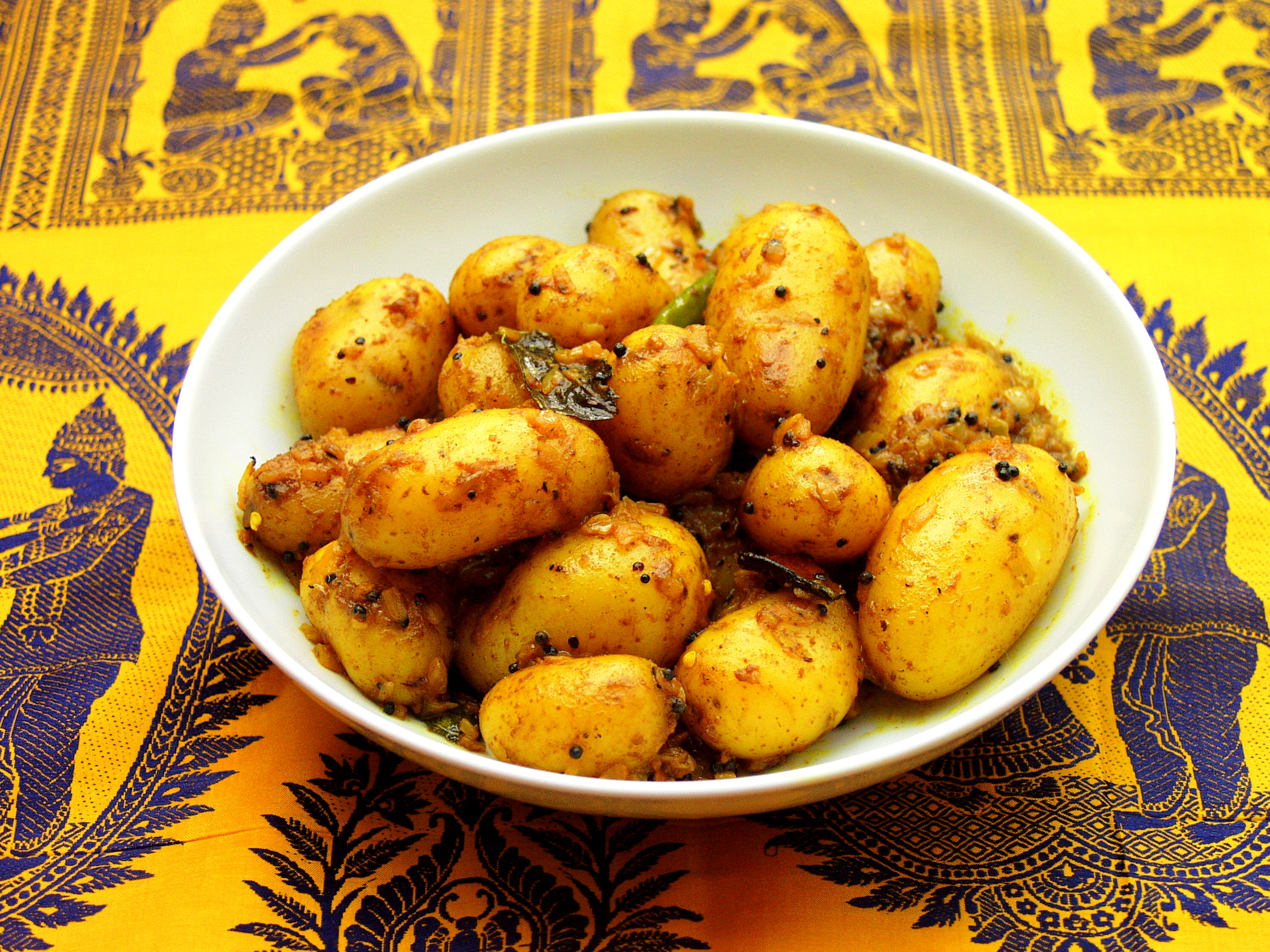
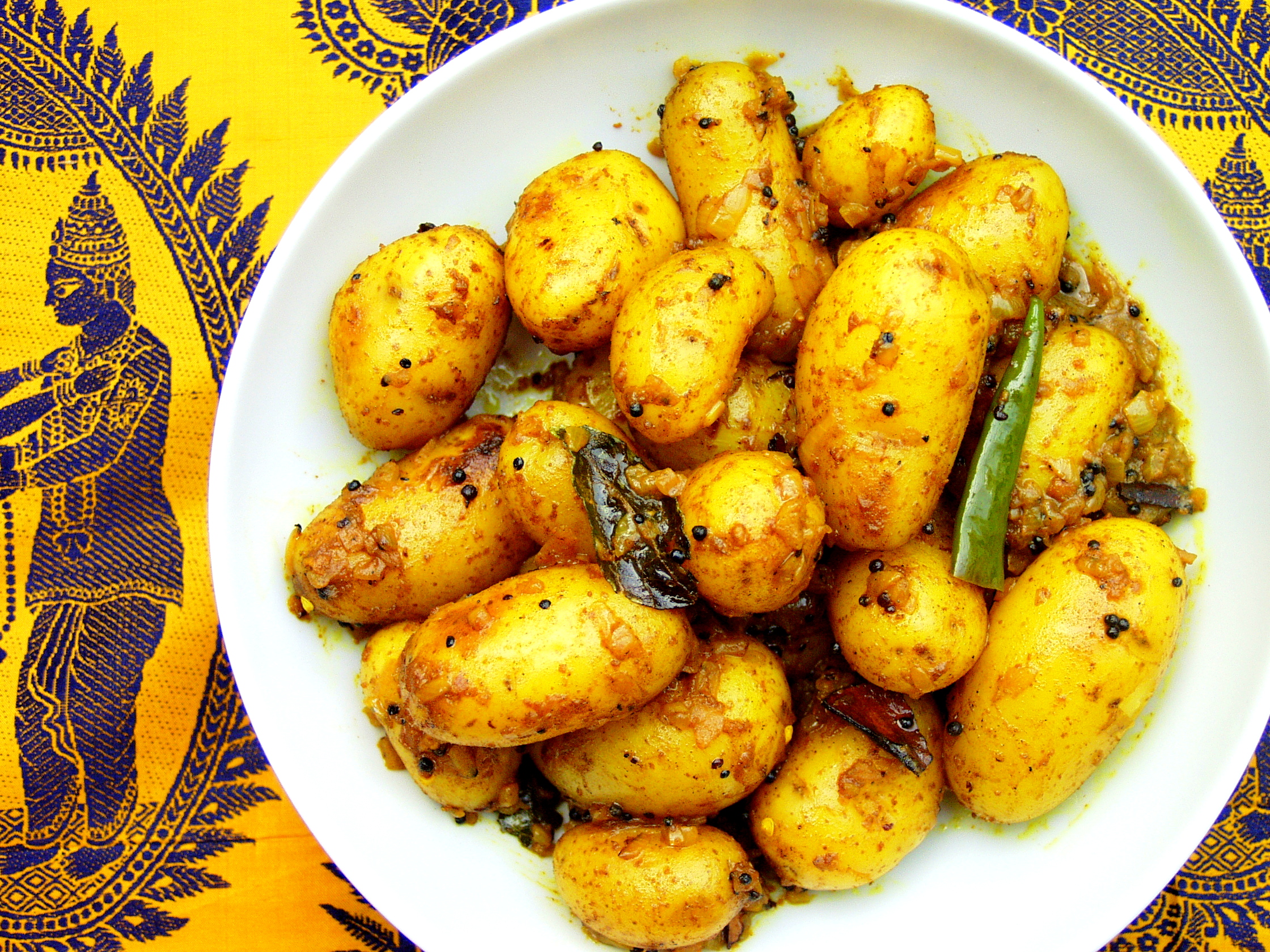
We all love potatoes right? So I thought that a new way to cook them might appeal to you all, hence the curried potatoes recipe below. I am sure I am not alone in saying that potatoes and rice are the two staples that you will always find in households, so if you want to cook an easy, cheap and quick supper making this dish, along side a dal for example, makes a really filling and tasty supper/lunch.

Curried Potatoes

Serves 4

2 tbsp mustard oil (or vegetable oil if you don’t have mustard oil)

500g small potatoes (I use Charlotte, but new would be good too)

1 tsp mustard seeds

1 onion, finely chopped

1 green chilli, chopped in half

4 inch piece cinnamon bark, broken into pieces

3 curry leaves

2 cloves

1 tsp turmeric

150 ml water

1 tbsp yoghurt

1/2 tsp sugar

1 tsp salt (to taste)

1. Boil the potatoes until they are softened – this will take around 10 minutes. Drain and place to one side.

2. In a pan gently heat up the mustard oil and when it is hot add the mustard seeds and stir for 10 seconds, then add the chilli, cloves, salt, sugar, cinnamon bark and curry leaves and stir once again.

3. Add the onion to the pan and stir into the spices. When they have softened and begin to bronze add the turmeric followed by the potatoes and stir in together so that they are properly coated in the spices.

4. Place the water and yoghurt in the pan and gently simmer  with the lid on until the water has almost completely been absorbed.

Serve immediately with some Indian bread, such as luchi or paratha. It would also go very well with a cinnamon and ginger dal

Read Full Post »

I know that coriander leaves (cilantro for my lovely US/Canadian readers, dhone pata for my equally lovely Bengali readers) divides opinion, but I for one admire the herb for it’s wonderful, bold and punchy flavour. I find it really adds the perfect kick to a dish and brings it alive.

For this dish, or perhaps that’s a little bit grand to call it a dish as it ‘s more of a tasty snack, has coriander as the main ingredient. It takes centre stage and while they might not look that exciting, they taste really good and are prefect nibbles if you have friends popping over or if you are feeling the need for an original snack.

We’ve been having a roller coaster of weather conditions over here in the UK, with sun-rain-hail-thunder-lightening-rainbows all in one day, so outside play action for big A and little Z has been only temporary. Inside the house we get creative in all manner of ways, and cooking little delights is something we enjoy doing together. These bite sized fritters are easy to prepare and the girls love to help me put them together. We make an extra batch for them, without the chilli, but for a more mature, adult palate I add lots of chilli.

So here are the main fresh ingredients you need to make the fritters:

Coriander Leaf Fritters – Dhone Pata Bora

serves 2-3 (double/triple for larger quantity)

large handful of fresh coriander leaves/cilantro leaves/dhone pata, chopped

1 shallot, finely chopped

1 inch ginger, grated or finely chopped

2 small green chilli, finely chopped

half tsp of salt

3 tbsp plain or gram flour

3 tbsp water

splash of oil (I use mustard oil)

1. Finely chop all the fresh ingredients and place in a bowl along with the flour (I simply used plain instead of gram this time), salt and water. Add the water a little at a time so that the fritters are not too moist. If they do become too moist simply add a little more flour to bind them together.

2. Mix well and roll into small balls in your hand and then gently press down so as to flatten them, so that they look like this:

3. Heat the oil in a pan and when it is hot gently place the fritters into the oil and fry on a medium to low heat for a few minutes. When the undersides have darkened turn them over and let the fritters cook throughly on the uncooked side. The cooking time should not take much more than 5 minutes.

4. Serve and eat immediately. They also word well with dal and rice if you want to make more of a meal out of them.

Read Full Post »


Warmer weather beckons (I hope!) at the end of the week when I’ll be in the sunny Florida Keys and art deco Miami. I was last in the Keys when I was 19 so it’s been some time since I visited its warm shores and admired its glorious sunsets. There is always so much to get ready before embarking on a long journey and since I pride myself on my packing it is left up to me to pack all the clothes. There is definitely an art to effective packing right! The truth of the matter is I hate packing, seriously it is so tedious and tricky to get the balance on what exactly to take. I am hoping that since it will be warmer then in London, I won’t have to take too many clothes and the ones I do will be light weight cotton. Well that’s the plan.

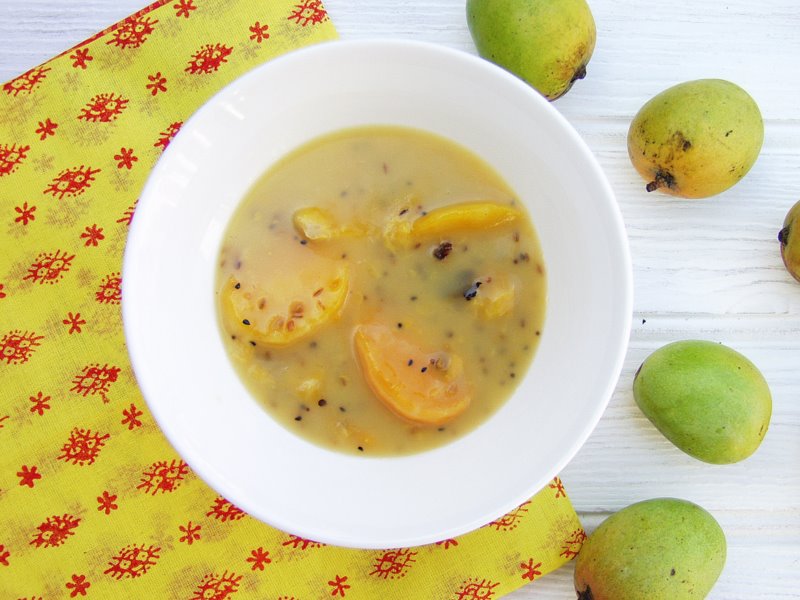
There is nothing that screams sunshine and warm weather more than mangoes. They are undoubtedly the queen of fruits and whilst the yellow ones are juicy and sweet, the unripe ones – they are the green ones by the way – are perfect for chutney making. The sourness combined with spice and salt is a perfect winning combination and cools down the body in hot temperatures. In India a few spoonfuls of the chutney either alongside or after some spicy dal or curry works a treat.

We have all sampled the mango chutney served in curry houses when we order poppadums,  however nothing prepares you for the true deliciousness of this knock out, authentic, fresh mango chutney. It tastes completely different and I love the sweet, sour, salty combination.

Mango Chutney

(or affectionately known as Aam-er Tok by Bengali speakers, which actually translates as sour mango)

Serves 3-4

2 small green mangoes (unripe ideally)

1 tsp mustard oil

 1 large dried red chilli, cut into two pieces (or 4 small dried red chilli)

1 tsp panch phoron 

2 tsp plain flour

three quarters of a tsp salt

100 ml cold water

2 tbsp sugar

1. Peel the mango skin and discard and slice the mango and keep the stone. If you have really unripe green mangoes, which can be very sour, it is best to boil the sliced mangoes in a little water, with a pinch of salt, to remove part of the acidity for two minutes. Discard the water and put the mangoes to one side.

2. Place the oil in a pan and gently heat. When it is hot add the dried red chilli, including the seeds and fry the chilli gently until it darkens slightly in colour, which will take no more than a minute. Warning: you are likely to cough at this stage as the chilli darkens  so do not be alarmed!

3. Add the panch phoron to the hot oil as well as the soft mango, salt and 75 ml of water.

4. In a separate bowl add the flour and 35ml of cold water to create a white, smooth liquid. Immediately add this to the pan and stir it into the mangoes. At this stage also add the sugar.

5. Boil gently for 5-6 minutes. If you prefer to have a runnier chutney add a little more water, however, if you prefer a thicker consistency then you will need to boil it for longer.

6. Leave to cool and chill. Serve at either chilled or room temperature, but not hot.

It is wonderful to eat after a heavy curry as it helps to cleanse the palate and digest your food.

Note: In hot climates people tend to prefer the chutney with a stronger sour undertone and as such the amount of sugar they add is less. For those who prefer a sweeter taste then add the amount of sugar that I have specified above.

Read Full Post »

Amma, is my daughters’ Indian grandmother, or to put it simply, my mother-in-law. She is originally from Bengal, or to be precise, Calcutta, or Kolkata as it is now known. Bengali’s are passionate about food, whether its talking about it, preparing it or eating it, so being married to one suits me down to the ground as this mentality pretty much sums me up as well. Amma has been my guide over the last decade to a wide array of wonderful Indian dishes, passed down to her by her mother. My repertoire is still growing, but a firm favourite which I like to cook and devour is her chicken curry recipe. With all her recipes she never measures any ingredient or follows a recipe, so I have tried to write down approximate amounts for the curry. It doesn’t matter if you put a little too much of one ingredient and a little less of another. Experiment and see what flavours you like to enhance more or less.

The big trick with cooking Indian food is that you cook it on the bone. ‘On the bone’, I hear you say, ‘its less attractive on the bone’. Well aesthetics aside  it tastes a whole lot better, I assure you. Get your butcher, or yourself if you are buying it straight from the supermarket, to cut up your chicken into 12 pieces or more if you can.  Then when you go home try and remove as much of the skin as possible. Once this has been done you are ready to prepare the dish.

Amma’s Chicken Curry

Serves 6

1 large chicken

1 onion, chopped

1 generous tsp of turmeric

1 tsp of chilli powder

1 tsp of sugar

1 tsp ground coriander

1 tsp ground cumin

2 dsp of tinned tomatoes

1 tbsp of yoghurt (optional)

8 garlic pieces, peeled and kept whole

2 inch piece ginger, grated

1 tsp Patak’s tikka paste

2/3 potatoes (optional)

carrots, cut into 2 inch pieces (optional)

5 cardamom

1 piece (4 inches) of cinnamon bark

4 cloves

1 tsp salt

a little mustard oil

1. Heat some mustard oil in a large casserole pot and fry the chopped onion gently.

2. After 5 minutes place the chopped chicken pieces on top of the onion and put the lid on the pot. Turn the chicken at intervals so that it whitens all over.

3. Once all the chicken pieces have turned from pink to white (this should take no more than 10 minutes), add the turmeric, chilli powder, sugar, ground cumin and ground coriander. Turn the pieces of chicken over into the spices and then add two large dessert spoons of tinned tomatoes and the yoghurt. You may find that a little water is needed to moisten the dish and to create more of a gravy.

4. Place the garlic pieces and grated ginger into the curry and add the salt. Amma also tends to put in a tsp of Patak’s tikka paste. It is equally delicious without, but see which you prefer.

5. I often like to add a few quartered potatoes at this stage, so that there are 6 or so pieces in the curry. Now is also the time to add the chopped carrots, cut to about 1-2 inches in length. Again I would not put anymore than about 7 carrot pieces in the curry.

6. Keep the curry on a low heat and gently turn the chicken pieces and other ingredients around in the pan so that all the juices blend in together.

7. After 30 minutes slightly open the cardamom pods, break the cinnamon bark into smaller pieces and place the cloves into the pot. Again if a little more water is needed just add where necessary. The water will reduce when cooking, however, it helps the potato and carrots to soften.

8. The curry should be cooked in about 50 minutes. If the carrots or potatoes are still hard, continue to cook for longer. This curry often tastes better if you cook it in advance, even the day before, and let it rest.

9. To serve sprinkle coriander leaves over the curry, with a wedge of lemon and rice. I like to cook basmati rice with a few cardamom pods and cloves in it. It exudes a wonderful aroma.

Cooking this curry is not an exact science. I find that each time my curry tastes a little different from the last depending on what emphasis I want to give it – more chilli, less garlic etc.

I hope you enjoy it as much as I do……let me know.

Read Full Post »

Follow

Get every new post delivered to your Inbox.

Join 576 other followers