Rhubarb and Ginger Jam

Last year when I attended the Ballymaloe Food and Drink Literary Festival one of the first things I did upon arriving, was to take myself to their beautiful living room and order tea and scones – as you do!  Needless to say it set the tone for the whole weekend, but one very lasting memory was that they served their scones and clotted cream not with strawberry or raspberry jam, BUT with rhubarb and ginger jam. It tasted sublime and I made a mental note to try making some at some point back at home.

Now ok it’s taken me a year but I got there and it tastes great so was keen to share it with you. My mother celebrated her birthday the other day and invited some friends over for tea. My youngest daughter and I made cakes (an elderflower and lemon drizzle, in honour of the recent royal wedding and a carrot cake) and scones and some mushroom tartlets with sour cream and parsley. My eldest daughter baked her legendary chocolate cake and my father made a wonderful Victoria sponge and scones with raisins.

As a side note, scones you can make ahead as they are great to freeze – I made around a 100 for my brothers wedding tea – the recipe is here and it works really well. So whilst strawberry and raspberry jam were on offer for the traditionalists, my rhubarb and ginger jam tempted those who wished to try something new and exciting. Hope you like it too.

Strawberry jam (left) my Rhubarb and Ginger jam (right)         Mama


Rhubarb and Ginger Jam

1 kg of pink rhubarb, washed and cut into 2cm pieces

1kg of jam sugar

50g stem ginger

1 lemon, zest and juice

4cm fresh ginger, peeled and finely grated


Before you begin you will want to clean and sterilise the jars that you are planning on using.

  1. Place all the ingredients into a large plastic bowl, stir thoroughly and then cover and leave to one side for a couple of hours, stir a couple of times over this period,  so that the sugar dissolves and the flavours all harmonise together.
  2. Place a plate into the freezer.
  3. Use a large stainless steel pot – you do not need a preserving pan – and pour all the ingredients from the bowl into the pan. Place on a medium heat and stir so that the rhubarb tenderises and a setting point is reached. This will take no longer than 15 minutes.
  4. To test for setting point, simply remove the plate from the freezer and spoon a little jam onto the plate. Within a minute the jam will have little wrinkles if you move it with your finger. If it is still too runny, leave it to cook a little longer and try again.
  5. If setting point has been reached, remove from the heat and leave for a couple of minutes before pouring into the sterilised jars. Seal immediately and label. I find this easy fill funnel great for jam and chutney making.


SaveSave

SaveSave

SaveSave


Fish Medley Chowder

img_4105

Pick up a paper or food magazine and the big topic for January always tends to be how to detox and various diets to go on to help shift the excesses of the Christmas season. We all start with good intentions but as the weeks of January roll into February the new exercise class or diet doesn’t seem to hold the same appeal in quite the same way.

img_4104

I tend to follow the old adage ‘everything in moderation’ and in January and February I do try to eat less meat, eat a lot of vegetables – especially greens, have a few vegetarian days per week and eat lots of fish. Exercise is important all year around and whilst I have been a little slack on this of late, other than great long walks over the Christmas hols most days, I will gradually get into it again once my daughters go back to school.

As I am still without a fridge  – the process of replacing my old (10 month old) one with AEG is painful to say the least, I have had to be well organised when it comes to feeding the troops. Thankfully my freezer – which is separate to the fridge – is working well and has been keeping us going with frozen fish.

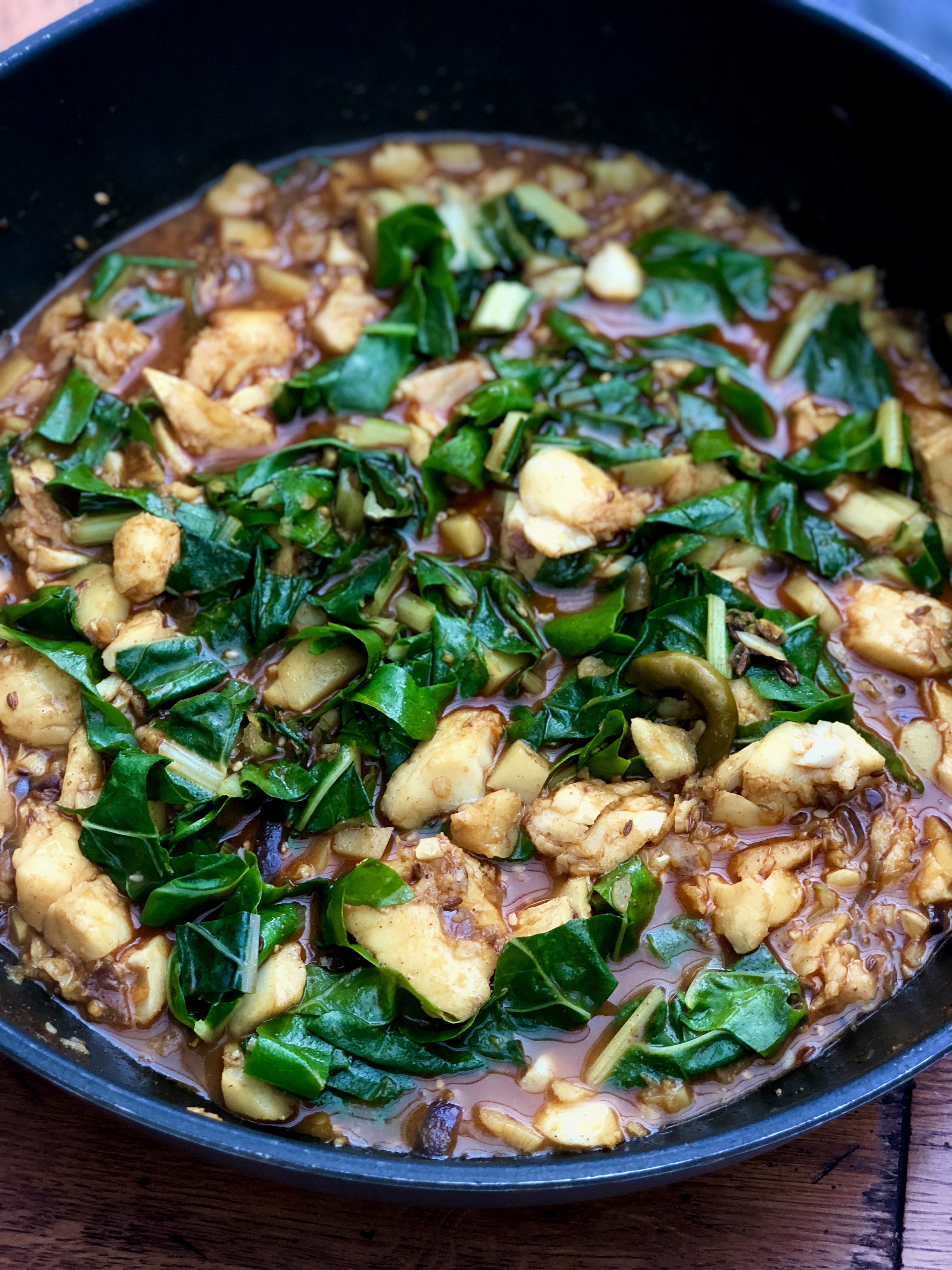
For todays blog post I am going to share my fish medley chowder which is healthy, filling and a one pot meal to feed the family. They all love it and give it a big thumbs up.  I picked up a fresh fish mix – which is perfect for fish pie – in waitrose, which included Atlantic cod, smoked haddock and Atlantic salmon. It’s been sitting in the freezer ready for when I need to thaw it and cook. The fish was already cut to size so there really was minimum effort on my part. Give it a whirl. It is hassle free and whilst it is effectively a soup is substantial enough to be a whole meal.

Happy New Year to you all. I hope to put up lots of inspiring recipes over the course of this year for you all. Here is to happy, healthy eating.

Fish Medley Chowder

1 good slice of butter

1 leek

1 onion

small bunch of fresh thyme kept whole

2 bay leaves

1 large potato/2 medium size, cut into bite sized cubes

salt and pepper to taste

800ml milk

1 vegetable/fish stock cube

100ml boiling water

sweetcorn from one corn on the cob (frozen sweetcorn is also fine)

500g cubed smoked haddock, salmon, cod

handful of fresh flat leaf parsley

  1. Place the butter in the pan – I find my Le Creuset casserole pan works well – and when it is melted add the leeks, onions, thyme and bay leaves.
  2. After 4 minutes or so the leeks and onions will have softened and become more transparent. Add the cubed potato and a little salt and pepper to the pan.
  3. After a further couple of minutes add 500ml of milk along with the vegetable/fish stock cube and the boiling water.
  4. Cut the sweetcorn off the cob and add to the pan – frozen is fine, in which case throw in a couple of handfuls.
  5. Allow to simmer gently on a low heat for 10 minutes or until the potato has softened. Add the extra milk gradually over this time.
  6. Add the fish cubes to the pan. Do not move around the pan too much as you do not want them to break. Simmer gently for 8-10 minutes by which time the fish will be nicely cooked. Taste and season further if necessary.
  7. Remove the bay leaves and fresh thyme bunch from the pan before serving.
  8. Serve in deep bowls with fresh parsley scattered on top.


Warming moong dal after a bracing New Year’s Day walk

img_4035

It’s new year’s day and after a wet and overcast walk through Richmond Park, along the Thames to Ham House followed by a mulled wine pit stop at the New Inn in Ham, we made it back to the car as day was turning to night, just in time before the gates to the park closed.

img_4037

Wet, windswept and with ruddy cheeks we made it home to hot piping bowls of dal that I had made in advance and then gently reheated. It is the queen of comfort food. Nourishing, warming, simple, restorative and importantly an utter joy to eat. It’s the type of food that gives you a great big hug and an inner body glow. There are so many varieties of dal, it can never get boring to eat or make. In India it is eaten every day in some form or rather. I’m a convert and I hope you will become one too once you give some of my dals a go. This one gives red onion centre stage (although I realise it does not show it in the photos I took, trust me they are in there!) and you can reduce the number of chillies depending on your preference. I find that by chopping them in two you can then make sure they do not go into the bowls of children or those who are less keen on eating a chilli. Either way give it a whirl to warm your soul after a windswept walk. Happy New Year to you all, may 2017 be a great one.

Moong Dal

Serves 4

230g yellow mung dal

1 tbsp oil/ghee

1 tsp black mustard seeds

1 tsp cumin seeds

1 red onion, thinly sliced

3 garlic cloves, crushed

2 green chillies, chopped in half

1 sprig of fresh curry leaves

1/2 tsp turmeric powder

salt to taste

serve

squeeze of lemon

  1. In a deep pan add the dal and then cover it with cold water. Using one of your hands rub the dal through your fingers and move it around your pan. Pour the water out of the pan and repeat the process a couple of times.
  2. Finally cover the dal once again with cold water so that it is about an inch above the dal. Place on a low heat and keep the lid off the pan. You will need to keep adding more water as the dal cooks as it will get soaked up. It is not an exact science so just put a little in at a time so that it does not become too watery.
  3. Remove the scum that will form at the top of the dal and discard.
  4. Gently cook the dal for around 45 minutes, by which time it will have nicely softened.
  5. After the dal has been cooking for about 30 minutes place some oil in a frying pan. Add the cumin and mustard seeds and allow them to begin to splutter before adding the fresh curry leaves and the red onion slices – I find slicing them with a mandolin works best.
  6. Move around the pan and allow the red onion to soften slightly before adding the garlic and chilli and cook for a further 5 minutes.
  7. Add the turmeric powder and then add a couple of spoonfuls of the dal to the pan. Move the dal around the frying pan before returning the contents of the frying pan into the pan with the dal.
  8. Give a good stir and add salt to taste. If you are going to eat the dal later in the day, gently reheat it and add a little more water to loosen it up.

Serve with a squeeze of lemon.

img_4036


Dhokla – A Savoury Cake from Gujarat

IMG_1629-2

Dhokla or khaman dhokla, to give it’s proper title, is a spongy steamed snack that originates from the state of Gujarat in India. Traditionally it is steamed for around 15-20 minutes before a hot tadka is poured over the top. Tadka, or tempering as it is sometimes referred,  is a form of cooking in the Indian subcontinent where whole spices are roasted briefly in oil or ghee to release their flavours. They are then put on the top of dals, curries and of course dhokla. The tadka completely lifts the whole dish and is key in many recipes.

IMG_1635

The magic ingredient in dhokla is an ingredient called Eno. You’ll be able to pick it up at any Indian grocers. Do not be alarmed when you buy it in a bottle and it reads ‘fast refreshing relief from stomach upset’. You are buying the right ingredient. Do check the guidelines on the back and if anything applies to you then give it is a miss. If Eno is hard to source then I suggest using bicarbonate of soda in it’s place. It won’t be as spongy but the dhokla will still taste great.

IMG_1636

One other addition that you can decide whether to add or not is the sugar component at the end. Whilst dhokla is principally a savoury snack it does often have a little sugar added to the tarka which is then poured over the steamed dhokla. It gives the snack a delectable lightly sweet and salty taste to it, although it is principally a savoury snack.

IMG_1637

Dhokla

150g gram flour (chickpea flour)

25g course semolina

140g natural yoghurt

2 small fresh green chillies (keep the seeds in for added heat)

1 heaped tsp ginger paste

1/4 tsp turmeric powder

1 tbsp lemon juice

approximately 120ml water (add more if necessary)

1/2 tsp salt, to taste

1tsp  Eno

*****

Tadka

2 tbsp vegetable oil

1 tsp black mustard seeds

1 tsp sesame seeds

1/4 tsp hing/asafoetida

Around 15 fresh curry leaves (cleaned and dried)

1 tsp sugar, optional

25ml warm water, optional

To serve

1 handful of fresh coriander leaves, finely chopped

1/2 tbsp fresh or dried coconut shavings

  1. First line your tin with baking parchment and rub a few drops of olive oil into the sides and bottom. My tin is just over 19cm in diameter and fits perfectly into my wooden bamboo steamer. If you do not have a steamer, simply use a large deep pan (which has a lid) and place an upside down bowl that you can rest the cake tin on. You need to then fill the pan up with water so that the water level remains below the bowl or first level of the bamboo steamer.
  2. Next you need to sieve the gram flour and semolina and then add the natural yogurt. Stir together and then add the finely chopped chilli, ginger paste and salt. Pour in the water gradually so that no lumps form and you have a smooth paste, slightly denser than pancake mixture.
  3. Heat the pan so that the water is boiling and ready to steam the dhokla.
  4. Add the eno (or bicarbonate of soda) and stir continuously for about 1 minute to allow air to enter the mixture. You will notice that the size of the batter will increase slightly.
  5. Immediately pour the dhokla batter into the baking tin and place in the steamer for around 20 minutes on a medium heat. At 17 minutes insert a toothpick or knife into the dhokla to see if it comes out clean. If it is then it is ready, if it has some mixture on it then leave it for a further few minutes. When it is done, remove from the steamer and leave to rest for 5 minutes, before turning it out of the tin and removing the baking parchment.
  6. Meanwhile heat a frying pan with oil and when it is hot add the sesame seeds, mustards seeds, asafoetida and fresh curry leaves. Leave to fizzle for no more than 20 seconds, moving around the pan.
  7. In a small jug mix the sugar with the warm water and add to the pan. It will spit so be careful. Move around the pan for a few seconds and then pour the tadka over the dhokla so that it soaks into it and scatter the coriander and coconut garnish as well.
  8. Eat immediately or at room temperature.

* I have friends who make it with just semolina and no gram flour and you can also make it with dhokla flour itself (a combination of gram flour and rice flour).

You can also omit water altogether and simply use yoghurt so use my recipe as a template to find the one that suits you and your taste best.

* you can find eno (fruit salt) in any Asian grocers. It is the ingredient that makes the cake spongy in appearance.  If you do not have it to hand you can use bicarbonate of soda although it will be more dense in texture. 


Wild Garlic Pesto Linguine with Sausage Crumb

IMG_0392Continuing with the same theme as last week’s post I decided to use up the remaining fresh wild garlic that my mother had given me by whizzing it up to create a pesto. It stores so easily in the fridge, for at least a week, and the whole family love it so its a win win.  Making pesto in general is easy and versatile. You can alternate the nuts from pine to walnut to pistachio and add a host of herbs and vegetables: basil, coriander spinach, wild garlic, tomatoes, peppers. I love the look of these varieties that Saveur has come up with.

IMG_0414

I thought the addition of a sausage crumb scattering would be a nice touch and balance well with the wild garlic. I used one sausage per person and then made a little incision into each sausage so that the outer ‘skin’ could be taken off. With the sausage meat I then broke it down and gently fried it, so that it crisped up.

IMG_0413

It took far less time than cooking a sausage normally would so again this whole meal was created in a very short space of time. I found I had lots of pesto leftover so popped it in the fridge in a sealed jar to use over the coming days.

If you are unsure about foraging wild garlic you might like to check out the Royal Horticultural Society guide on how to recognise it – see here.

Wild Garlic Pesto Linguine with Sausage Crumb

Pesto

200g wild garlic leaves washed and roughly chopped, flowers removed

100g parmesan cheese, finely grated

100g pine nuts/walnuts

150ml olive oil

squeeze of lemon juice

salt

pepper

****

1 tsp ground nut oil

sausages (1 per person)

linguine

  1. First you need to wash the wild garlic leaves thoroughly and remove the flowers (these are edible but best put on as a garnish re my last blog post).
  2. Roughly chop the leaves and then place them into a food processor and blitz so that they are broken down.
  3. Next add the parmesan cheese and blitz again before adding the pine nuts.
  4. Gradually add the olive oil so that a paste forms. Add more or less olive oil depending on the thickness you require for your pesto.
  5. Season to taste and add a dash of lemon juice.
  6. Boil a pan of water and add the linguine and cook according to packet instructions – just under 10 minutes should be perfect.
  7. To make the sausage crumb all you need to do is remove the outer covering of the sausage and discard. With the sausage meat, break it down using your hands.
  8. Heat a frying pan and add the ground nut oil. Add the sausage meat and move around the pan until it browns and begins to crisp. This should be done within about 5 minutes.
  9. Strain the pasta and place back in the pan. Add a generous amount of pesto and stir into the pasta.
  10. Serve into bowls and scatter with sausage crumb.

You can store the remaining pesto in the fridge in a sealed jar for over a week. 

IMG_0415


Indian Inspired Cucumber, Apple and Red Onion Salad

IMG_0217

I’ve just returned from 10 glorious days in the Schwarzwald – or German Black Forest to you and me.

IMG_9957

Days were spent hiking through dense forests where gentle streams turned into ferocious waterfalls.

IMG_0097

 We climbed many a hill and marvelled at all the spruce and pine trees peppering the landscape. Dramatic scenery at every turn.

IMG_0022

Picnic lunch stops afforded us spectacular vistas, stretching for miles and the best thing was that we were completely alone – over the time we were there we passed only a couple of other walkers, one of which was a nun from the local nunnery. We live in such a frenetic, fast paced world that taking time out and spending time with nature away from the crowds is wonderfully cleansing for the mind and soul.

IMG_9971

Upon returning to our gasthof we would often treat ourselves to the local speciality…….Black Forest Gateaux,  because when in Rome…..

IMG_0113

After resting our weary limbs we prepared for serious dining in the evening. The food was exquisite, refined and yet hearty – the lemongrass creme brule and the wild garlic soup being highlights.

IMG_9946

Upon returning back in the UK however, I was ready to have a vegetarian spell. I began to crave green vegetables (I eat a lot of spinach) and fruit with a spice injection and simple Asian food. In fact the first thing I cooked for myself when we returned to Blighty was this.

With the bambinos having just returned to school and the sun giving us a lovely, welcome dose of vitamin c – check out the blossom and blue skies

IMG_0208

I wanted to eat a lovely salad that I was given recently when I was in Kerala. It’s lovely on it’s own or eaten to accompany all manner of Indian, meat, fish or veg curries – see my recipe library. The crunch from all the different textures and the flavours sing sweet notes as you dive into this salad. Give it a whirl and let me know if you agree.

IMG_0218

Indian Inspired Cucumber, Apple and Red Onion Salad

Serves 4 with another dish or 2 on it’s own

2 crunchy green apples, cored, skin removed, quartered and chopped into 3

1 cucumber, skin removed, halved and chopped into half moons

1 red onion, finely sliced

1 handful of fresh coriander, roughly chopped

1/2 tsp salt

1 tbsp agave nectar/honey

  1. Skin, slice and cut the ingredients as specified above and mix altogether along with the honey and salt. Simple and utterly delicious.

This salad would also be perfect with meat, fish or vegetables off the BBQ.

IMG_0219


Dry-Fried Ginger and Turmeric Okra

IMG_2268

Okra, or rather ‘ladies fingers’ tends to divide people. Those in the negative camp tend to complain about  ‘a slimy texture’ as the main reason for not raving about this vegetable.  I have recently discovered the reason for this and the way to keep slime at bay whenever you cook with okra.

IMG_2254


IMG_2260


It’s simple. After washing the okra you need to dry them throughly. There cannot be a drop of water remaining on the okra. You need to dry each and every okra with a dry tea towel. It only takes a moment to do but the finished result when you eat your okra will be worth the little drying exercise.IMG_2281

In Cochin recently I was shown a very simple and straightforward okra dish, which is great to accompany meats, fish or dal. Ten minutes max and you have yourself a tasty little dish. If you also prepare my speedy dal then you have yourself a satisfying feast in no time at all.

Did you know there is also a vegetable called ‘gentleman’s toes’? I am totally serious. You can find out more about this tasty vegetable on my blog post here.

So remember don’t add water when cooking with okra and make sure the okra is super dry before cooking with it.

Dry-Fried Ginger and Turmeric Okra

Serves 2

1 tbsp coconut oil

250g okra, washed and completely dried and then chopped and sliced (see photos above)

1/2 tsp turmeric powder

1/2 tsp ginger powder

1 tsp Kashmiri chilli powder

1 tsp salt

  1. Heat the oil in a pan.
  2. Add the okra, spices and salt and stir.
  3. Place a lid on the pan and stir at intervals for 6-8 minutes.
  4. Taste to see if the okra has softened but still holds its shape.
  5. Serve immediately.


Spinach with Shallots, Green Raisins and Red Peanuts

IMG_2055

My latest addiction is spinach.

I know I know how crazy do I sound? I’ve always liked it mind you, but of late it’s gone up a notch or two. It’s probably my body screaming at me that ‘I NEED MORE IRON‘.

 I’m happy to eat it in all its incarnations for breakfast, lunch or dinner. It’s super versatile and is cooked quicker than the time it takes to get your bowl/plate and cutlery together.

IMG_2046

Recently I visit a local eatery called ‘The Little Taperia‘ in Tooting in the strip, which is fast becoming increasingly hip and cool. Sitting next to Soho House’s ‘Chicken Shop’ and virtually opposite the newly established the ‘Trafalgar Arms’, ‘The Little Taperia’ offers Spanish tapas at it’s best; I could literally eat the whole menu. It was packed on my visit with a wonderful buzz to the place. The decor (love the floor tiles) and general vibe was conducive to a relaxed, memorable evening, so if you have not yet been I urge you to get down there and experience it for yourself.

IMG_2046

Back to the spinach. You are probably wondering where spinach and ‘The Little Taperia’ fit together.  Well it was there that I ate a delicious spinach dish that inspired me to create my own version of the dish for you today. They used pine nuts and I can’t recall if they added raisins but I’m thinking they did as the dish had a subtle sweetness, which I don’t think was coming from the onions alone – but may well have been. Needless to say the dish was utterly delicious and I think the one that I have created for you equally hits the spot.

I’ve eaten it on a few occasions since and this time I accompanied it with my Indian dal with butternut squash. I don’t actually have that recipe up on my blog but a very similar one using marrow can be found here.

IMG_2049

I add a dollop of ghee – clarified butter – on the top but if you are off diary or watching your waist line then just omit that part.

Spinach with Shallots, Green Raisins and Red Peanuts

2 tbsp light olive oil

2 banana shallots, finely sliced

pinch of salt

35g red peanuts (works out to be a handful)

35g green raisins (works out to be a handful)

240g fresh spinach

1 tbsp ghee

  1. Heat a pan with the oil and when it is medium hot add the banana shallots and pinch of salt and leave to soften and begin to bronze, which will take around 5 minutes.
  2. Add the green raisins and red peanuts and move around the pan. After a minute add the spinach.
  3. Place a lid the pan so that the spinach wilts. After a minute give a stir and then add the ghee. Let it melt and then serve immediately.

It is perfect with meat or fish but in this instance I ate it with some of my butternut squash dal, which was hit the spot for a delicious vegetarian supper. My butternut squash dal is similar to my marrow dal but uses butternut squash instead of marrow. Check it out here.

IMG_2041