
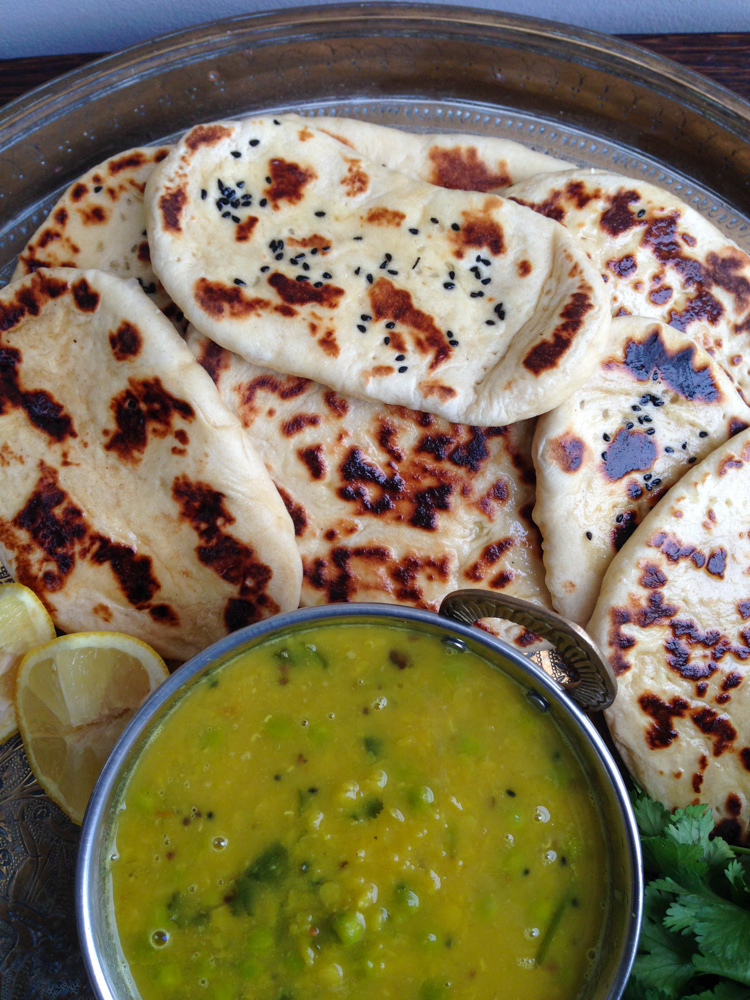
Soft pillowy naan bread dunked into a bowl of dal has got to be THE ultimate comfort food. As those who have been reading my blog for sometime will know, whenever I return from holiday the first thing I cook is some dal. It’s quick, easy and you can determine the amount of fresh chilli that you put in it. There are so many dals you can make, but I often opt for – red split lentil dal. You can add whatever vegetable you have to hand – tomatoes, peas, carrots – but I would advise not adding more than 2 max.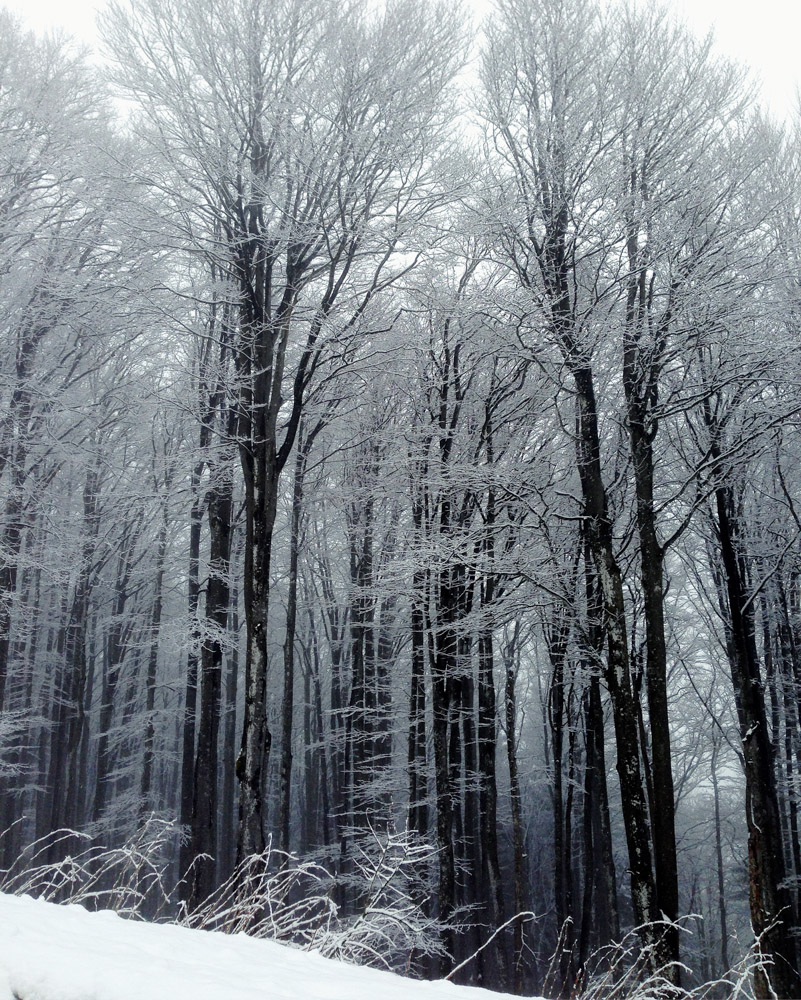
I had spent a week in the glorious Black Forest in the south west corner of Germany. Wifi is hit and miss – hence the lack of a blog post last week, apologies – so it allows you to unwind properly and relax in this beautiful part of the country. 
The top of the hills were covered in snow, but down in the valleys the pastures were green, which gave us the option of walks in the meadows and through the forests or skiing at higher altitudes.

We were blessed with clear blue skies and warming winter sun. A stunning combination.

Whilst our days were spent out and about in the fresh air, our evenings were spent sitting by the roaring fires eating the local produce of venison, wild boar, cheese, breads, wine, an interesting salad leaf that can only be found in the Black Forest around February (name escapes me, but it was a cross between rocket and watercress) and Black Forest gateaux – naturally.

We drove from London, staying over for a couple of nights in Strasbourg on the way, admiring it’s impressive cathedral and quaint streets. In many ways in reminded me of Bruges or nearby Colmar – definitely worth a detour if you haven’t been.

Strasbourg is easy to explore on foot and has a number of museums and art galleries in close proximity. A boat trip on the waterways is also a must and helps you get your bearings.

To break up our homeward journey we stayed in Laon, in the region of Picardy. If medieval history is of interest to you then this place is an absolute must. We stayed in one of the old canon’s houses (there were 84 canons at one time living in Laon – it was the largest chapter in France in the 12th and 13th centuries) up in the attic with a view of the cathedral. Our airbnb host was a charming and well travelled French man who was keen to show us his eleventh century frescos and ruins in his cellar. The cellar stretched under the whole of his house and when we had seen what we thought was the extent of it, he revealed another doorway with steps leading further down to another level. We proceeded to explore this level and then found further steps leading to another level. It was a cavern within a cavern within a cavern. It was without doubt the most incredibly historical cellar we have ever been in and an archaeologist/historians dream. Over the ages new floors were simply added – we could make out the old stables on one level. Apparently there are many passageways linking up the canon’s houses surrounding the cathedral. I imagine many of them are filled in or perhaps not yet discovered by their occupants living many metres above.

The Knights Templar spent much time both in Laon and the surrounding area. They built this magnificent church (above) modelled on the Church of the Holy Sepulchre in Jerusalem in 1140. Unfortunately we only managed to spend a few minutes here before we were ushered out as it was closing time, so the museum that stands beside it will have to wait for a future visit.

The Cathedral itself is worth a visit and in fact it was what initially drew us to this hill top city a couple of years ago, as we could see it’s towers from miles away. Laon is only 80 miles north east of Paris and only a couple of hours from Calais so it’s a good place to stopover before catching the Euro tunnel home.

Anyway enough of my travels and back to the matter at hand….naan bread. Believe it or not they are really easy to cook yourself. Making the dough is pretty straight forward and then you need to let it rest, in a warm part of your house, for 1-2 hours to let it increase in size.

Then it is simply a case of rolling out the naan into small, thin, oval shapes. You can add nigella (black onion seeds) or sesame seeds on the top or keep them plain. Sometimes I like to add a couple of teaspoons of garlic paste to make garlic naan. You can be as inventive as you like in all honesty.

I tend to cook mine in a frying pan – do not add any oil – but you can also cook them under the grill if you prefer, but be watchful as they bronze quickly.

It takes no more than a minute or so to cook them and then I add some melted butter on top. Equally if you prefer you can add some melted ghee or even milk.
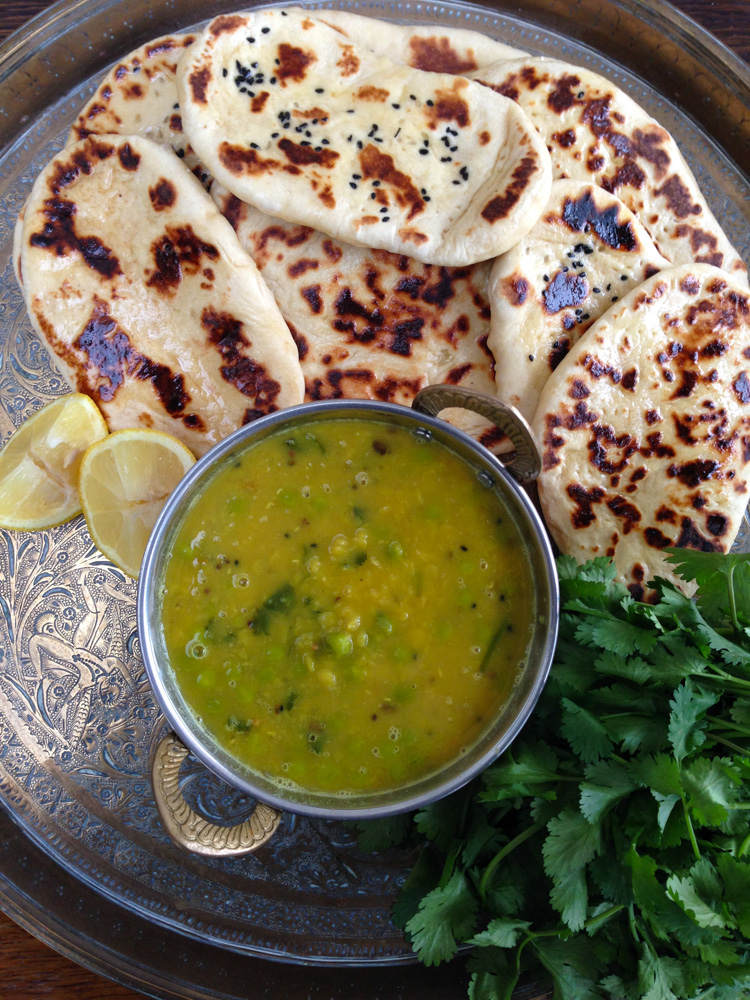
My girls (and husband) love them both with a meal or an after school snack. Serve them warm and eat straight away. A wonderful treat and perfect for chilly February weather.
Homemade Naan Bread
makes around 9-10 naan bread
400g plain flour
2 tbsp rapeseed oil
5g dried yeast
1 tsp salt
1 tsp sugar
1 tsp baking powder
1 egg beaten
100g full fat plain yoghurt
100ml warm full fat milk
1 tbsp butter, melted
optional: nigella/sesame seeds/fresh coriander as a topping
If you want to make garlic naan add a couple of tsp of garlic paste at the beginning and mix into the dough.
- In a large mixing bowl add the flour and then make a hole in the centre and pour in the oil, dried yeast, salt, sugar, baking powder and beaten egg.
- Mix gently using your hands and once it has become quite crumbly add the yoghurt and then continue to mix together.
- Now gradually add in the warm milk until all the mixture comes together.
- Remove from the bowl and place a little plain flour on a cold surface.
- Kneed the dough for 5 minutes until it become soft and pliable.
- Return to the bowl and cover with cling film and leave in a warm room for over an hour so that it can increase in size.
- When it is ready, split the dough into even balls and begin to roll them out thinly in oval shapes. You may need a sprinkling of extra flour at this stage to prevent it from sticking to the surface. Pierce gently with a fork. If adding nigella/sesame seeds lay a few on the top and gently roll them into the top of the naan.
- Heat a non-stick frying pan. When it is properly hot add a naan bread and leave for around 20 seconds before turning over and leaving for a further 20 seconds. Turn once more for a few more seconds – or longer if it is not bronzing sufficiently.
- Remove from the pan and add a little melted butter to the top. Keep under a warm tea towel whilst you work on the remaining naan. As the naan’s I make are quite small I can often manage two in a pan at a time.


 CHILLI & MINT