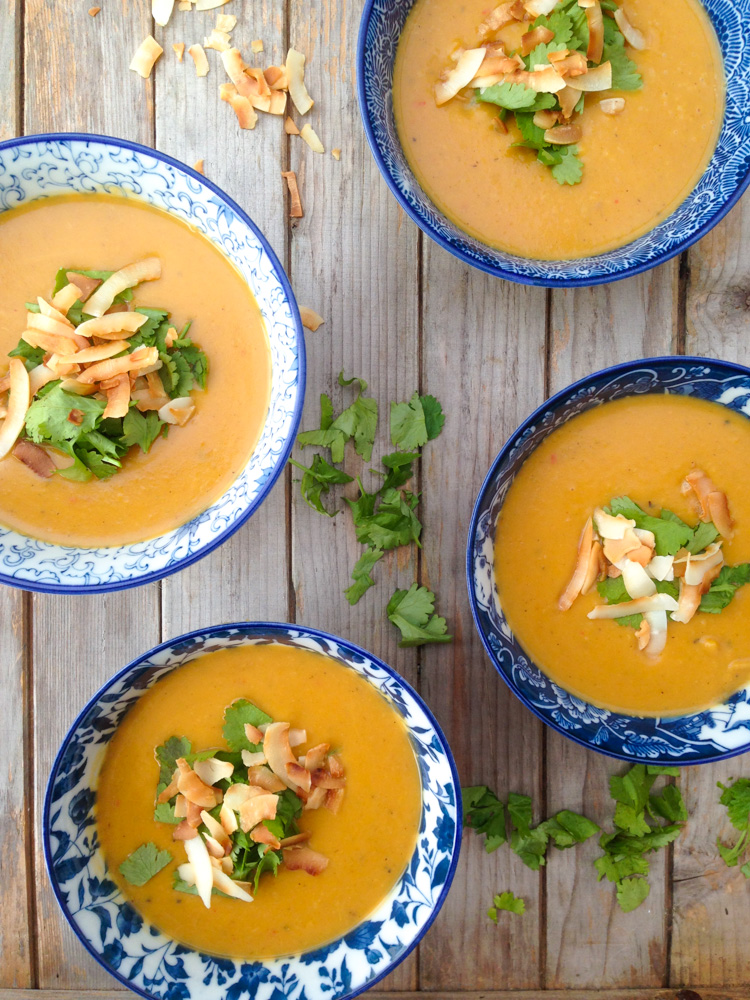
Butternut Squash and Coconut Soup with Ginger and Chilli – The Brother Hubbard Cookbook


Last weekend I jetted over to Ireland to visit the Ballymaloe Food and Drink Literary Festival, which was a whirlwind of eating, talks, demonstrations, foraging forays (now just try to say that quickly!), and talking to A LOT of other kindred spirits who are all passionate about food in some capacity.
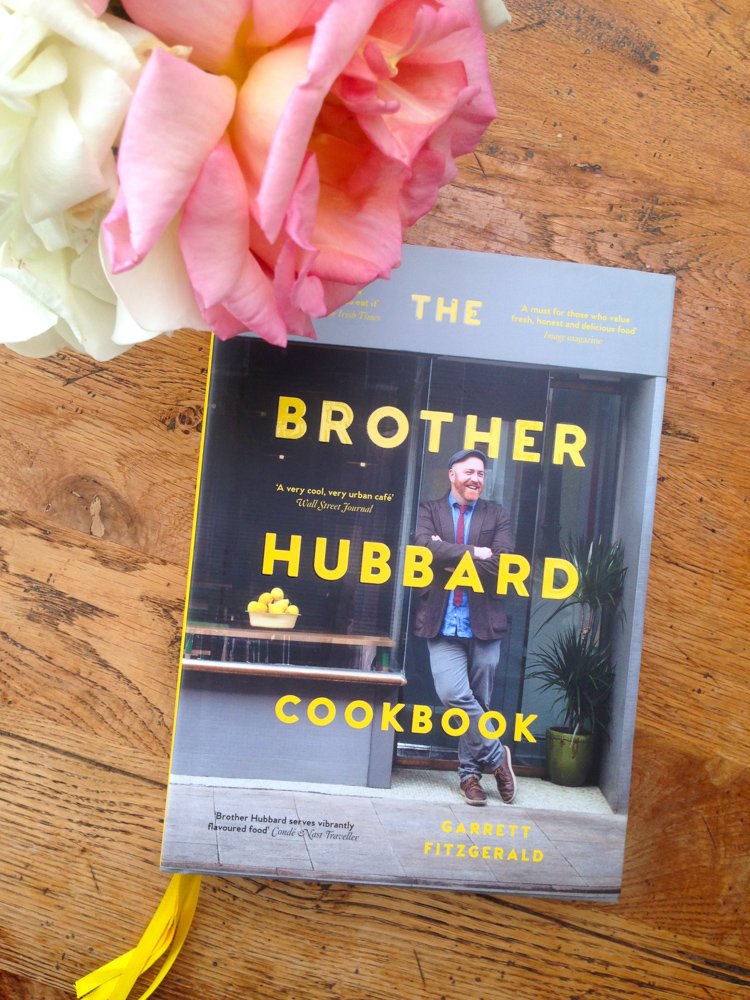
One talk I booked myself into was given by Garrett and James who set up ‘The Brother Hubbard’ cafe x2 in Dublin. I’ll be honest with you – I’d never heard of it or them, but I always like to hear how people start their journey into food, so thought it would be interesting to attend. I also rather liked the title of the book. It sounded intriguing.

Their one hour talk was utterly engaging and I loved the way that they embarked on some serious world travels – after the 3 month intensive course at Ballymaloe Cookery School –  in order to gain first hand food and cusine knowledge and experience, even spending time in Syria (prior to the troubles today). After a spell in Australia working in cafes to gain yet more experience they returned home to Dublin to open up their very own cafe, with a leaning on Levantine and Southern Mediterranean cuisine. It takes a brave person to give up their nice, ‘safe’ careers with pensions and all the perks to follow their passion.

It has clearly all paid off as 5 years later they have 2 cafes, one of which is about to expand threefold and 65 staff. I did not go into their talk thinking that I would necessarily buy their cookbook as I have so many, but after hearing their story and talking to them over the weekend, I thought I would be crazy not to purchase it as it is packed full of fabulous sounding recipes, using a myriad of herbs and spices. Clearly a no-brainer for me.

I also love the fact that the photos and pages are matt finish, that they have 4 yellow ribbon bookmarks – how cool is that. Publishers seriously think about doing this in other cookbooks as it is so handy to have more than one. It doesn’t have loads of photos, but the narrative is engaging that for once I don’t mind so much that there is not a photo with almost every recipe.

It’s been so hot this week – blissfully hot – that eating outside with a glass of rose has been a must. Before you ask why on earth am I showing you a soup recipe in the sweltering heat, let me just say that hot soup and drinks actually cools you down in the heat. In India I am always having a hot soup even in the heat. Give this recipe a whirl as it is a real keeper. You can also purchase the book online and at all good bookshops.

Butternut Squash and Coconut Soup with Ginger and Chilli

Recipe from ‘The Brother Hubbard Cookbook’

Serves 4 (as a substantial lunch)

1kg butternut squash, skin kept on, scoop out the seeds and dice

2 tbsp olive oil

1 tsp coriander powder

1 tsp cumin powder

2 tbsp olive oil

250g onions (2-3), diced

250g celery, diced

6 garlic cloves, roughly chopped

1 fresh red chilli, deseeded and roughly chopped

30g fresh ginger, peeled and grated

1 kg boiling water

1x400ml tin of coconut milk

salt and freshly ground pepper, to taste

1-2 limes, juice only

fresh coriander to serve

toasted coconut flakes to serve

  1. Preheat your oven to 180 degrees. Place the diced butternut squash in a large bowl. Add the oil and then sprinkle with cumin and coriander powder. Mix in well with your hands. Turn out onto a baking tray.
  2. Roast the butternut squash for 25 minutes. You want them to be soft but not very brown as it will discolour the soup.
  3. If serving with coconut flakes, use a frying pan to bronze them for a few minutes. You need to move them around constantly and do not add any oil. Place to one side.
  4. Meanwhile in a large pan add the olive oil and sweat the onions, celery and garlic. To do this simply cut a piece of baking paper and place directly over the vegetables. It does not need to be neat or perfect fitting. Place the lid on the pan. Every 5 minutes, stir the vegetables and then replace the baking paper. After 10 minutes, add the chilli and ginger and continue to sweat the vegetables for a further 5 minutes. Make sure that the ginger and chilli do not brown on the bottom.
  5. Now add the squash, which is now soft and add the boiling water, coconut milk, salt and pepper. Bring to a simmer and then reduce the heat for 10 minutes.
  6. Using a hand blender blend all the ingredients until super smooth. Adjust the seasoning and add the lime juice.
  7. Before serving add the fresh coriander and toasted coconut flakes. If you fancy you could also add a slice of red chilli.


Sri Lanka’s Tea Gardens, the Coast and Beetroot Curry

This is quite a long post so boil yourself some water and make yourself a cup of tea. Sitting comfortably……..then let’s begin.
No trip to Sri Lanka is complete without a stay in the tea gardens. The cooling climate, the rich green tea plantations and the slower pace of life is very appealing, especially after spending time in the hot dry lands of the cultural triangle. I loved the experience of staying in them when I visited Kerala so made sure they were included in our Sri Lanka itinerary. Many travellers head to Nuwara Eliya often referred by the Sri Lankan tourist industry as ‘Little England’, a nod to the British summer time retreat in the 1800, but instead we opted to stay in a few valleys away, near to a small town called Hatton. There is a train station in Hatton and if I were to revist I would take the slow steam train from Kandy to Hatton to admire the scenery and avoid the hairpin bends, which make even the most hardened traveller feel car sick. Tickets need to be bought in advance so think about this as an option even if you have a driver.

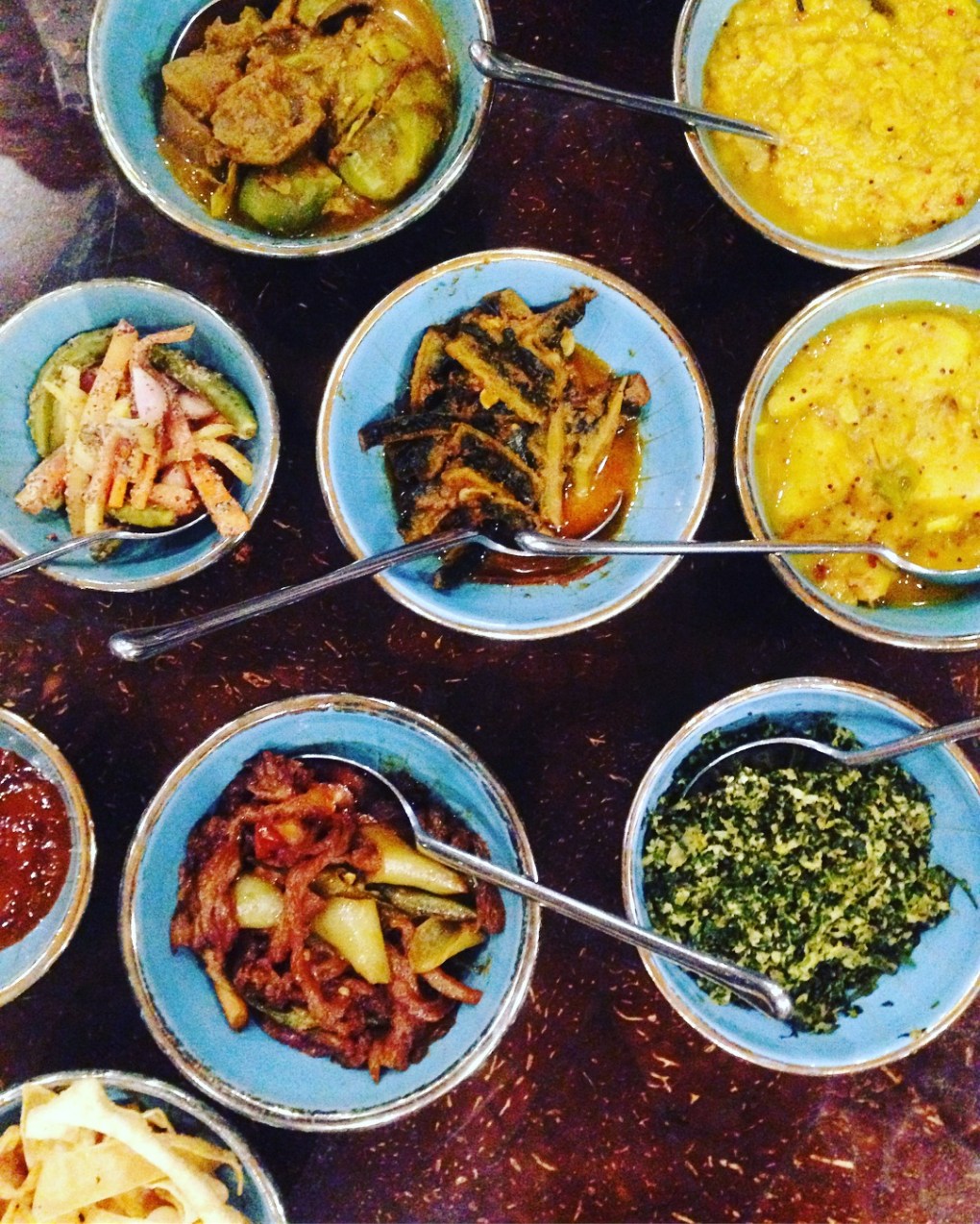
We stayed a night in Mandira Dickoya and a night in Mandira Strathdon both old colonial ‘planters’ cottages who managed the tea estates. Mandira Strathdon is best for those travelling with a family as there are adjoining rooms. On arrival you are transported to another era where the pace of life was slow and charmed.  The food at these boutique hotels is homely and authentic – check out these delicious bowls of curry that we had for supper.

Breakfast involved a freshly squeezed juice and some beautifully presented fruit – papaya with fresh lime being my favourite.

This was followed by buffalo milk curd and coconut treacle – I*N*C*R*E*D*I*B*L*E. Don’t be fooled into thinking it looks plain and tasteless. You’ll become addicted I promise you.

This was then invariable followed by the ubiquities rice hoppers with dal, chilli and pickle, sometimes with an egg in the middle. Tasty and certainly very filling.


In order to walk off breakfast, a guide showed us around the neighbourhood and the numerous tea plantations so that we could learn more about the tea, flora, fauna and general wildlife. Can I recommend that if you do this you wear long trousers and socks that pull up. My husband decided to take a stroll in shorts and ended up with the inevitable leeches, which caused his ankle to bleed for the proceeding three hours.


We met with some of the tea-pluckers, many of whom are the older women. The fear is that by the next generation there will be no one left to actually pick the leaves as the younger generation are not wanting to take on such hard labour. The tea plantations will revert to the forests that they once were before the arrival of the British, Dutch and Portuguese. To give you an idea of a ‘day-in-a-life’ of a tea plucker we learn’t that they rise before 6.30am and report to the factory where they are allocated an area to pluck tea leaves. They must pluck 18kg a day to get paid. For their labours they will receive the equivalant of £7 a day. As part of the job they will receive lodgings until their retirement.

A derelict tea factory stood alongside a hindu temple and tea pluckers cottages were painted in vibrant colours,  some with beautiful flower garlands adorning the porch area.

There was even the most beautiful Christian church that was still well maintained and cared for, with graves from British planters who called this corner of the world home; the views from the church were magnificent.

We visited Norwood tea factory and got to see the full cycle of a tea leaf, leaving with an enhanced respect for both the tea pluckers and the process involved to create the tea that is drunk the world over. Definitely worth a visit if you are in the area. 

On our return to our lodgings we chanced upon a rather fascinating festival where crowds of people had gathered. As the traffic was brought to a standstill we decided to get out on foot to take a closer look. From afar we could see young men tied to large bamboo poles that were levered up into the air and then attached to small lorries. There was a lot of colour and noise and it looked intriguing if not a little surreal. The mind boggled as to what on earth they were actually doing. On closer inspection what appeared to be a rather jolly occasion looked, to the Western spectator (there was only us), to be dreadfully painful.

We discovered that the young men were actually tied up to the poles with small cleaver hooks going through their skin. Bizarrely it was our youngest daughter who first spotted this, who inquired whether we thought it would hurt. Bewildered and fascinated in equally measure, back at our hotel I discovered that the festival was called – Thirunaal, which coincides with the full moon around the 13/14th April and practiced by Tamil Hindus. I discovered that Sri Lanka is not the only country which practices such extreme religious devotion, it is also hugely popular in Indonesia and am sure it also takes place in India as well. The belief is that ones devotion to the hindu gods will free the body from pain incurred from the hooks. Being part of this festival the young men fulfil their vows to hindu gods.

Throughout the night, drums were heard and the festival continued as the full moon shone. It was certainly interesting to stumble upon, but felt a world away from Western civilisation.

The following day we headed for the coast, using the super highway from Columbo to Galle – 100km which takes no time at all owing to the fact that it was tolled and hence no one used it other than tourists, not even the sacred cows! As much as I love the hill stations and mountains I adore being near the sea – smelling the salty air, the sound of the waves and the palm trees gently blowing in the wind. We stayed in a small boutique hotel called Apa Villa, which is owned by Hans Hoefer – the photographer, designer and founder of Insight Guides.

It overlooks the sea, but due to the reef it is impossible to swim safely here. We didn’t mind as we had a beautiful pool to do some laps.

It was whilst staying here that we spent half a day with the kitchen staff at Hans’s other residence Apa Villa Illuketia a few kilometres inland, and which you can also stay in. This was the estate that Hans originally bought before buying his property on the coast. It has plenty of old world charm and we spent a peaceful morning with the staff, before sitting down to the lunch that we had watched being prepared.

Galle is definitely worth a visit, which was 15-20 minutes up the road from Apa Villas. This Dutch built fort town is walkable, absolutely charming and filled with fascinating shops, museum and churches.

It feels very European – well Dutch to be precise – once you get within the city walls.

We loved this great retro poster shop and thought this poster was rather apt.

We couldn’t resist a London priced cocktail at the Aman Galle Hotel occupying an elegant, 17th-century Colonial-style building to watch the world go by.

The beetroot recipe below was one that I was taught during the morning at Illuketia and works as a great accompanying dish with other fish/meat/vegetable curries or a simple dal.

Sri Lankan Beetroot Curry

2 tbsp rapeseed/coconut oil

1/2 red onion, chopped

2 garlic cloves, thinly sliced

10 fresh curry leaves

1 pandan leaf, cut into 4 strips

1 small/medium tomato, roughly chopped

1/4 tsp Sri Lankan chilli powder

1/2 tsp salt

1 tsp garam masala

1/4 tsp turmeric

2 medium sized beetroot, peeled and chopped into batons

pinch of freshly ground black pepper

25ml water

200ml coconut milk

  1. Heat the oil in a pan and add onion, garlic, curry leaves, pandan leaf and tomato and allow to soften for a 5 minutes.
  2. Add the chilli powder, salt, garam masala and turmeric and stir into the other ingredients.
  3. After a further five minutes add the beetroot and, to help soften it, add the water and coconut milk. Simmer gently for around 20 minutes so that the beetroot has softened and the liquid reduced slightly.
  4. You are now ready to serve.


SaveSave

SaveSave

SaveSave

SaveSave

SaveSave


Sri Lanka’s Cultural Triangle and Sri Lankan Dal

Sri Lanka’s temperature can change dramatically depending where you are in the country. The cultural triangle is in the interior dry lands, also known as the northern plains (and traditionally known as Rajarata, or “The King’s Land”). Earthy scrub mingles with dense jungle and this is in turn is punctuated by  small mountainous boulders – such as Sigiriya (below) and Pidurangala.

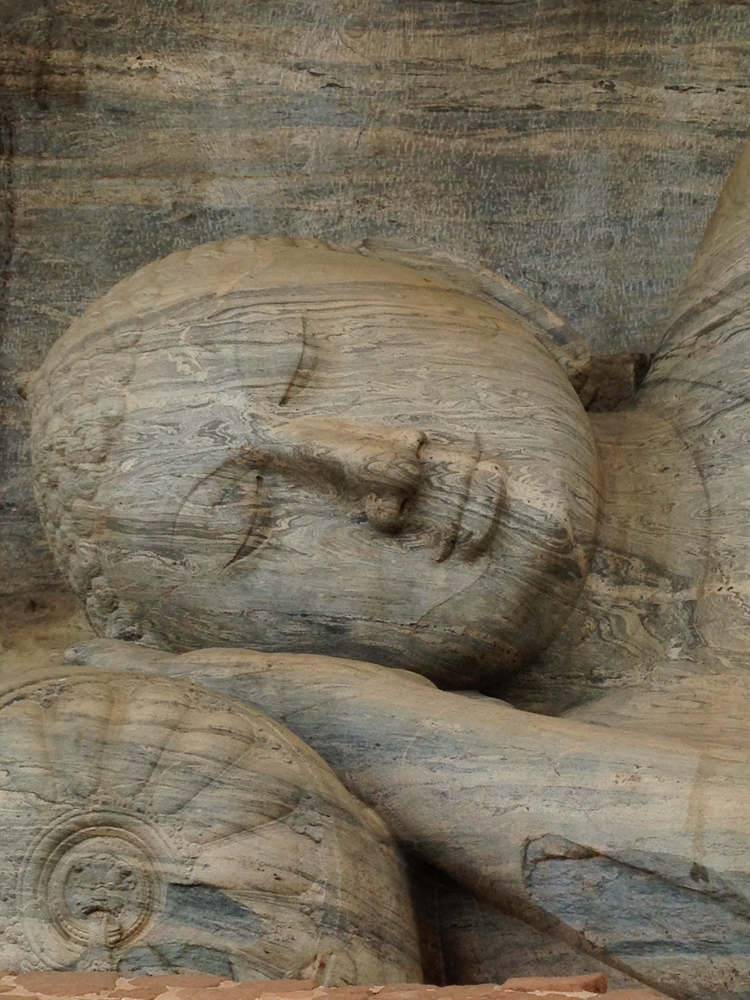
We climbed the less touristy Pidurangala, which is a few feet shorter than Sigiriya and far less crowded, we probably saw no more than 15 people there and back. It offered us the same views, at a fraction of the cost apparently, and a good view of Sigiriya itself. It does not have the same ruins that Sigiriya has at the top,  although it does have it’s own temple and buddha, but if it is the view you are after then you have the same experience on either rock.  I will say however that the final part of the climb is precarious – a case of heaving yourself up onto a giant boulder – so makes it tricky for children or those not sure on their feet!

For three days we did some serious cultural touring in the heat, travelling a good distance on some days. The main sites that draw locals and tourists alike are the ancient kingdoms of Anuradhapura, Polonnaruwa, Sigiriya and to a lesser extent on Pidurangala and Daumbulla cave temple (below).

However for those keen on wildlife, Minneriya National Park is also within the cultural triangle and an absolute must. The park forms part of the elephant corridor, allowing elephants to migrate between the protected areas of Kaudulla National Park in the north and Wasgomuwa National Park in the south. Hiring a jeep we spent a few hours in the park viewing all the wildlife (over 200 elephants) as well as wild buffaloes, land monitors, a vast array of birds and even a crocodile. There were a number of other jeeps with other tourists, so it did feel a little bit like feeding time at the zoo, but that said I would recommend a few hours scoping out the place.

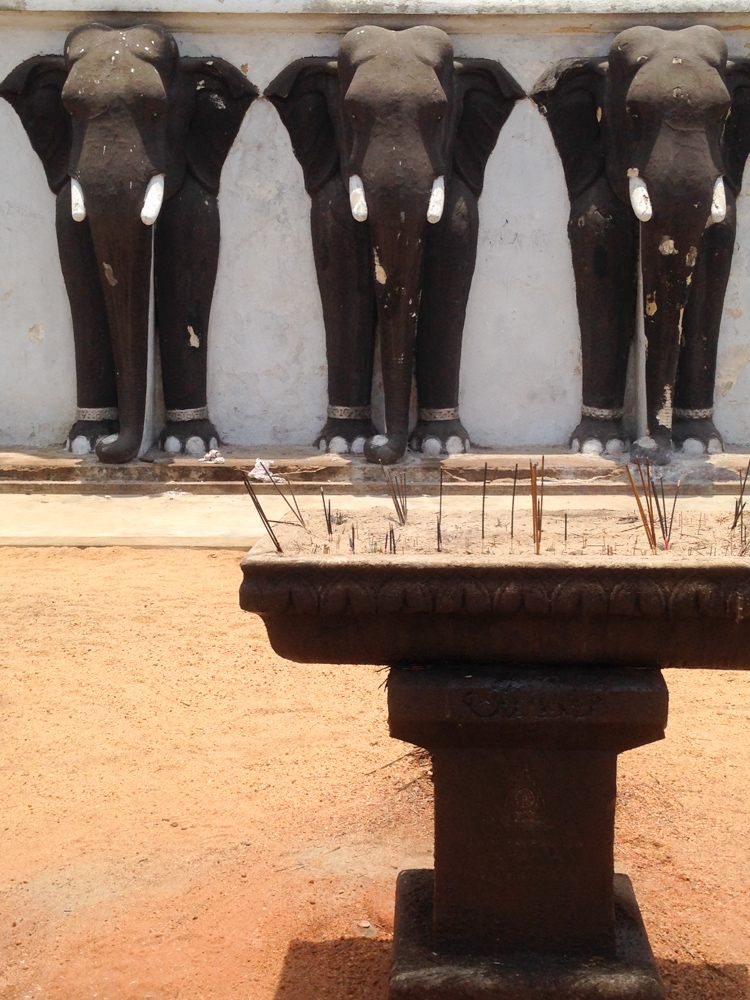
The largest site to see is Anuradhapura, which was founded in the 4th century BC and was one of Sri Lanka’s greatest centres of religious and political power. The ancient city is sprawling with numerous temples, massive dagobas – which are the Sinhalese name for the Buddhist stupa, a mound-like structure with relics, used by Buddhist monks to meditate (see below).

You can also see remains of ancient palaces, pools and auspicious trees.

Local pilgrims far out numbered tourists and with the heat blazing down my one piece of advice is take a pair of socks to slip on when you visit the temples and dagobas. You have to remove your shoes and the stone is scorching hot. I learned the hard way on the first day.

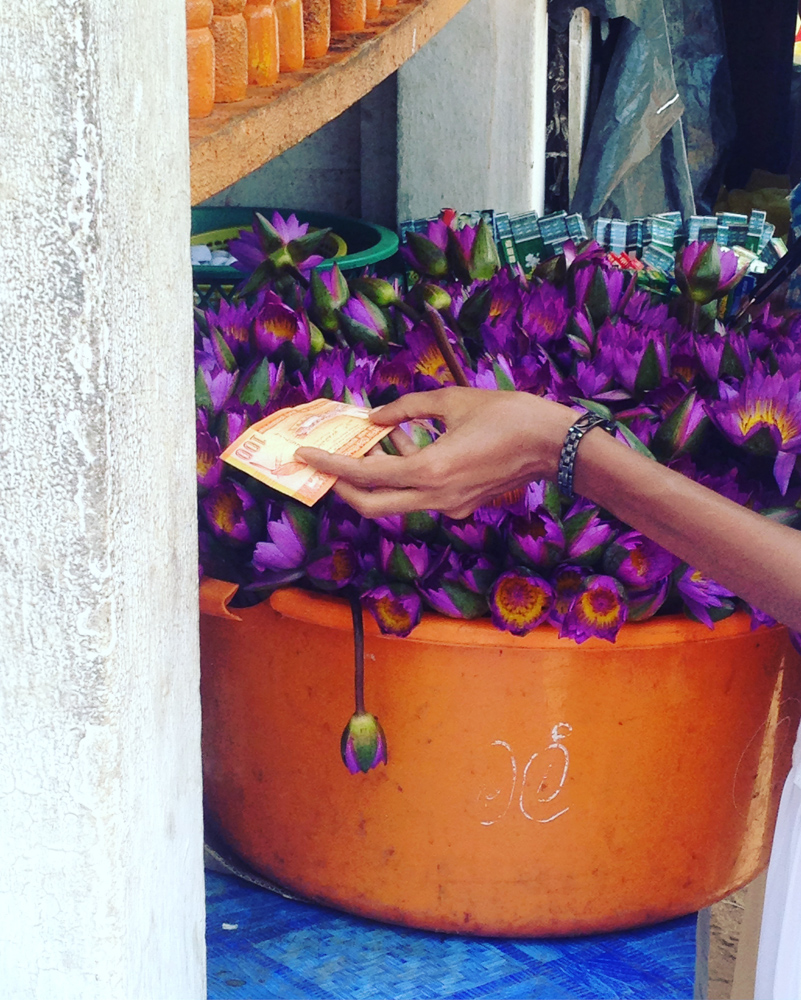
Outside all the temples there are flower and incense sellers selling stunning purple lotus flowers to passing pilgrims, which in turn buy them in order to offer them to buddha within the temples.

Stone elephants stand proudly guarding the boundaries to the temple complexes.

Polonnaruwa is not as sprawling as Anuradhapura and less busy, but offers the traveller as rich an experience. During the 12th century the kingdom went through a golden age where monasteries and  temples where built on a massive scale. The prosperity was not to last and by 1293 the city was abandoned and the jungle quickly consumed it. It wasn’t until the 20th century that excavation and restoration began and in 1982 it was a declared a UNESCO World Heritage Site. Our driver kindly drove us from ruin to ruin, but if you are feeling up to it you can also hire bikes, which looked a fun, albeit hot, way to move around the city.

With all this touring we parked ourselves at the Water Gardens Sigiriya (a few hours away from these ancient kingdoms) which had a rather impressive view upon arrival.

It opened at the end of last year (2016) and offers incredibly spacious rooms (I think a villa would be more apt), with plunge pools in some. Although when you have the main pool like this –

then your plunge pool becomes pretty redundant. The hotel is beautiful and has been thoughtfully created in the natural habitat. Peacocks roam around the grounds – apparently eating up the snakes (Sri Lankan has more venomous snakes than any other country), although they have a cry similar to a young child, which is a little disarming to begin with but after a while you don’t even notice it. Golf buggies are on hand to  ferry guests from their rooms to the restaurant, bar or pool.

The restaurant had both Western and Sri Lankan fare, although I personally wish they had had more of the latter and less of the former. Eating Western lamb shanks in Sri Lanka just isn’t my thang! The Sri Lankan food was very good, but after three days I was craving more variety.   We were on half board and the menu for supper included starters, soups, then the main event – the Sri Lankan food, followed by dessert. The starters and soup were more Western in flavour and to be honest I would have preferred more continuity of Sri Lankan food throughout…….but maybe that’s just me.

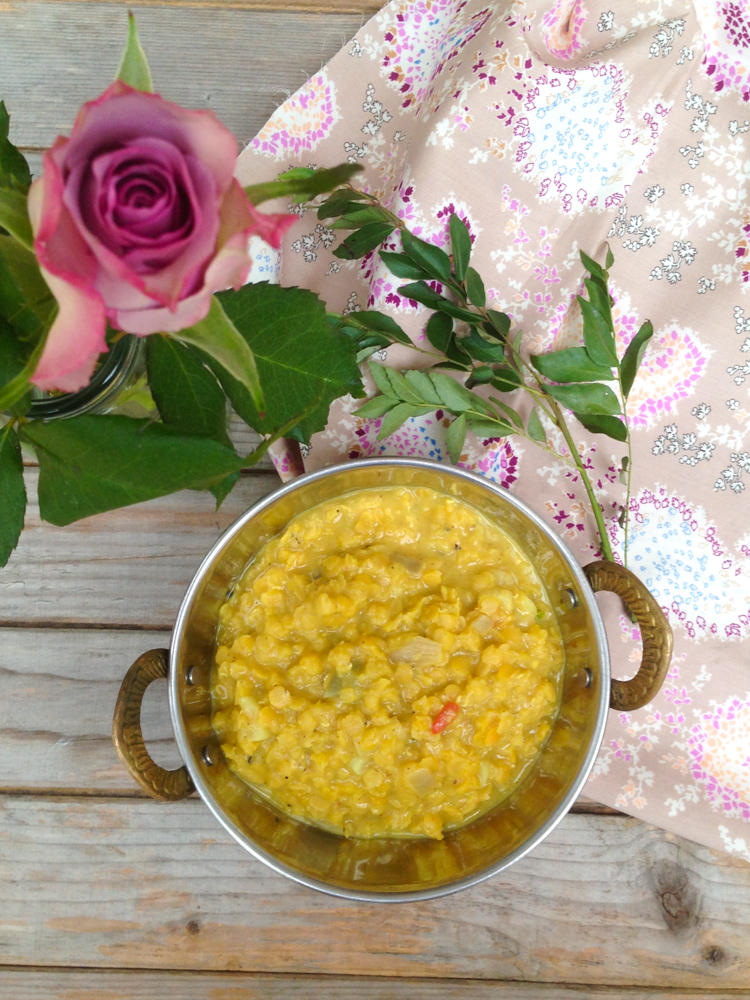
This week I wanted to show you how to cook a delicious dal I was fed on numerous occasions in Sri Lanka. It is very different from my Bengali dal but equally as moreish.

Sri Lankan Dal

Serves 4-6 if served with other dishes

300g red split lentil dal

1 red onion, roughly chopped

3 garlic cloves, roughly chopped

2 pandan leaves *

10 fresh curry leaves **

1/2 large tomato, diced

1 tsp salt

1/2 tsp ground turmeric

1 heaped tsp Sri Lankan curry powder ***

1/2 tsp freshly ground black pepper

1/2 tsp chilli powder

1 fresh green chilli, sliced in two

400ml coconut milk

400ml water

1. Wash the red split lentils and then place all the ingredients on top along with the coconut milk and water.

2. Simmer gently for 15 -20 minutes. Check to taste the salt levels are correct and add a little more water as required.

In Sri Lanka two varieties of coconut milk were added and no water. First they added the less thick variety and then only at the end, on a low simmer, did they add the thicker coconut milk. 

*pandan leaves – you can pick these up from your local Asian or Sri Lankan grocers or equally you can order online here.

*** fresh curry leaves you can pick up easily at Asian grocers or online.

***There are two types of curry powder in Sri Lanka – roasted which is redder in colour and unroasted, which is browner in colour. You need to use the unroasted in this dal. I bought back both varieties from my trip but if you want to make your own simply unroasted then blend 2 tbsp coriander seeds with 1 tsp of cumin seeds and 1 tsp of fennel seeds. Very easy.

If you want to make the roasted curry powder: Warm a frying pan and then add 2 tbsp of coriander seeds, followed by 1/2 tsp black peppercorns, 5 cloves, 5 cardamom pods (seeds only), 6 dried chillies, 3 stalks of fresh curry leaves, 1 tbsp cumin seeds and 1/2 tbsp fennel seeds. Move around the pan continuously for 5 minutes so that they do not burn and then place in a spice grinder.

SaveSave

SaveSave

SaveSave