Gul and Sepoy, Spitalfields

Have you been to Gunpowder or Madame D’s (which I reviewed for Binge) yet? No I hear you cry. Then ladies and gents, seriously, you have got to get your skates on and head over to Spitalfields in East London and give them both a try. They’ve both received the highly acclaimed accolade of ‘bib gourmand’ (bg’s are given to restaurants which offer both excellent food and good value for money, but do not have to offer the same level of service and pomp that those winning a star would have to).

Gunpowder focuses on home style Indian food, whilst Madame D’s focus is Himalayan, or rather ‘Hakka Chinese’, food. However the really exciting news and the purpose of this post, is that the husband and wife team, Harneet and Devina Baweja, along with Gunpowder head chef, Nirmal Save, have just launched their third restaurant in under two years. Impressive hey! Gul and Sepoy is a stones throw away from their other two restaurants based on Commercial Street, just along from Som Saa.
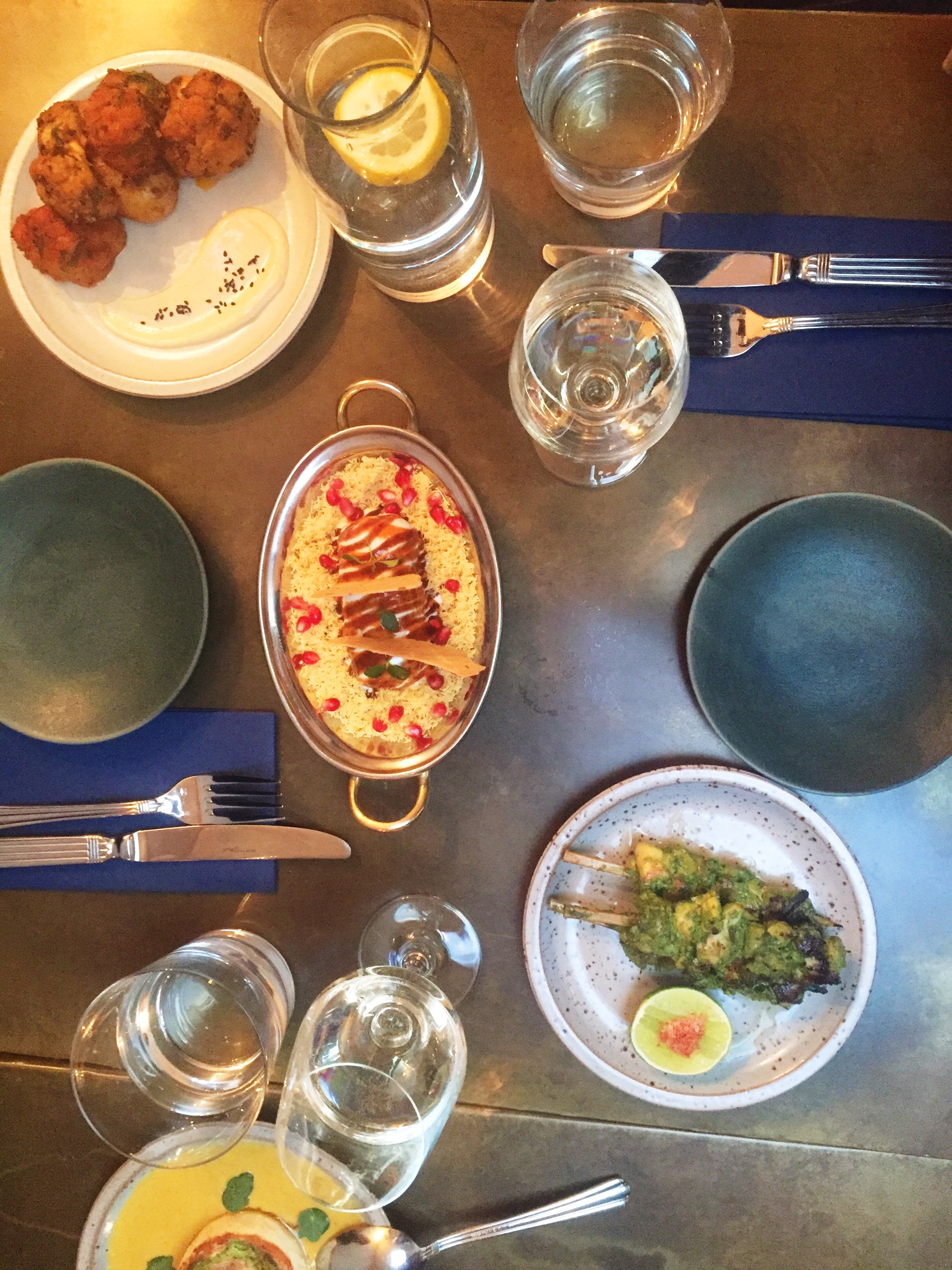
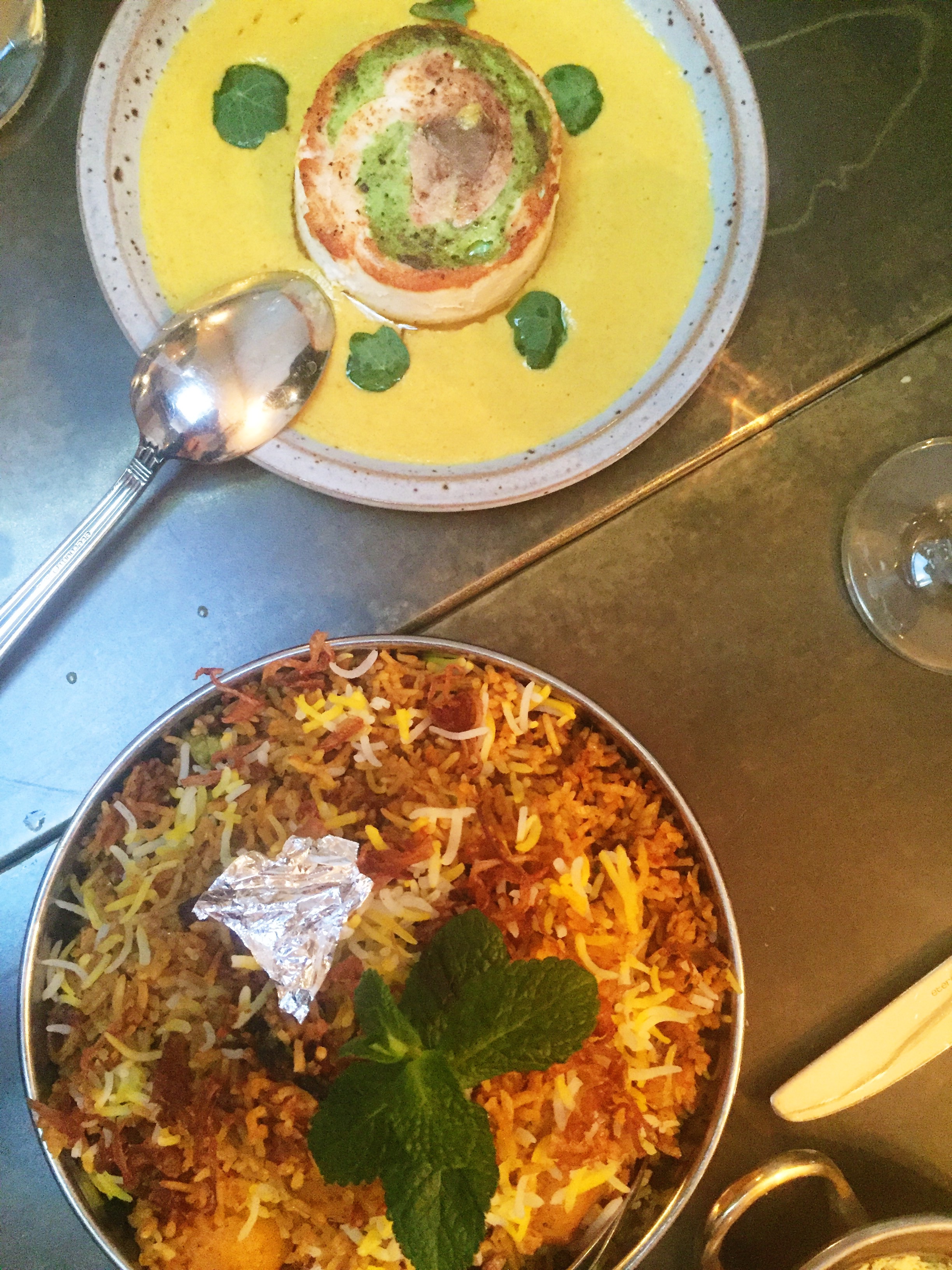
I went with an open mind and an empty belly, but secretly I was thinking, can they have nailed a third fabulous restaurant? The answer came after my first mouthful, an absolute high five, whoop whoop, YES. I spent the meal grinning ear to ear on the combinations of flavours and dishes that were presented to us. We went for the tasting menu – £25 per person, to be shared. The menu concentrates on cuisine from both south west Indian and north west India. The ‘gul’ part is inspired by the King of Punjab’s most famous courtesan and her love of cooking. This food focuses on rich, sumptuous dishes. The ‘sepoy’ (which means soldier) menu draws from the more rustic, coastal style cooking of the south west.

It was the bream and the ‘royal guchi (morels) pulao that defeated my companion and I. We had to save a little room after all for some ‘wild berries and lavender kheer’ to sweeten our palates.  The staff kindly wrapped our leftovers into doggie bags that we could take home.

The restaurant is stylish and yet understated, with an eye catching navy exterior, gold writing type face (important details that I notice) and plum door with lots of foliage. It looks inviting and sets the tone perfectly. As you enter there is a large oak bar, offering some temptingly delicious sounding cocktails as well as a wider-ranging wine list than the other two restaurants. Upstairs, which I didn’t venture, apparently has ‘marble feasting tables providing a touch of luxury and a nod to north India’s ancient royal palaces’. It’s priced slightly more expensive than Gunpowder and Madame D, but not eye-wateringly. I went for a mid-week lunch and it was fairly quiet, but I imagine evenings will be busier and it won’t be long until lunchtimes will follow suit. It’s perfect for a lunch or dinner to be enjoyed at leisure and not hurried. The neighbouring table of 8 gentleman were clearly having a leisured client lunch, so it works for pleasure or work.
The final piece of good news I want to share with you is that in spring 2018 they will be launching their fourth restaurant south of the river at the new development ‘One Tower Bridge’. ‘Gunpowder Market Market’, will focus on Harneet and Devina Baweja’s heritage by serving up homestyle Calcutta cuisine. I know a fair amount about Calcutta cuisine, (my other half is originally from Calcutta) so I am very excited to see what they come up with. Apparently there will also be a bakery, which will turn into a wine bar in evening. I’ll report back once their new venture launches.

In the mean time go seek out their latest venture, Gul and Sepoy. All three restaurants rock and you won’t be disappointed. If you can’t take chilli then perhaps steer clear of Madame D, but it’s not crazy scotch bonnet hot, more like you know your alive kind of hot, if you know what I mean.


Gul and Sepoy 

65 Commercial Street, London, E1 6BD

Lunch: Tuesday -Saturday: 12.oo-2.45pm

Dinner: Monday -Saturday: 5.30-10.30pm

+44 207 247 1407


SaveSave

SaveSave

SaveSave

SaveSave

SaveSave

SaveSave

SaveSave

SaveSave

SaveSave

SaveSave

SaveSave

SaveSave

SaveSave

SaveSave

SaveSave

SaveSave

SaveSave

SaveSave


Indian Stuffed Paratha – easier than you think

The are sooooo many varieties of Indian flat breads to choose from that making the decision on which one to prepare, and eat, can be a tricky business. Paratha are easier to make than you would think. A dough like pancake all warm and pillowy, filled with whatever savoury filling you choose. If you are familiar with the ubiquitous chapati then paratha are considered a close relative. My recipe shows you how to make them with a spiced potato and spring onion filling but you can be as adventurous as you fancy. They are ever so delicious and work really well with just a simple dal. Often the most humblest of foods can be fit for a king or queen. The preparation is pretty minimal and if you are cooking for a few you can prepare the filling earlier on in the day.

So follow these simple steps to create your very own paratha at home.

I suggest making the filling first and then let it cool whilst you make the dough.

Roll out the dough so that it is thin, but not so thin that it splits. Place a round ball of the filling in your hand and then gently place it in the centre of the dough circle. Flatten slightly.

Pull up the edges so that the filling is completely covered.

Turn it over and place some sesame seeds or nigella seeds on top. Flatten it with your hand.

Then gently roll out the dough so that it flattens further. Be careful not to roll too thinly or the contents will escape.

Heat a tawa, or large frying pan, and when it is hot brush a little melted ghee (or butter/oil) on one side of the paratha and place that side into the pan. While this side is toasting, place melted ghee on the other side and then after a minute turn over. Leave for a further 30-60 seconds so that it is nicely bronzing but not burning and then remove from the pan and eat whilst still hot. If you are preparing a few then place in a warm oven while you prepare the next.


Stuffed Paratha

Serves 6

125g plain flour

125g chapati flour/wholemeal flour (you can just use plain flour in which case double up on plain)

1/2 tsp baking powder

2 tbsp yoghurt

1 tbsp oil

1 tsp sugar

1 tsp salt

60 ml water

filling

350g potatoes, approx 3 medium ones (equally you can use sweet potato)

1 spring onion, finely chopped

2 tbsp fresh coriander, finely chopped

1/2 tsp kashmiri chilli powder

1/2 tsp dry mango powder

1/2 tsp ground garam masala

1 green chilli, finely sliced (optional)

sesame/nigella seeds, to garnish

2 tbsp melted ghee/butter/oil

  1. In a large bowl add all of the dry ingredients and mix well, then add the yoghurt and oil.
  2. Slowly add in the water so that a dough forms. Use your hands to form a ball, knead for around 7 minutes so that the dough is pliable and soft. Cover with cling film whilst you make the filling.
  3. To make the filling, boil the potatoes and when soft, drain and mash them.
  4. Add the rest of the ingredients and mix thoroughly.
  5. Returning to the dough, break them into 6 even balls. Using your hands initially flatten a ball, sprinkle with a little flour and using a rolling pin roll into 6-7inch diameter circles.
  6. Using your hands scoop up some of the mashed spiced potato and create a small ball and flatten this is the middle of the dough.
  7. Move the sides of the dough up to the centre so that the spiced potato is securely covered up.
  8. Turn over the round parcel and spoon some sesame seeds on the top and then gently roll out the dough with the spiced potato filling into a round circle once again.
  9. Heat up a frying pan or tawa. When it is getting hot, melt the ghee and then brush some onto the surface of the paratha and place ghee side down onto the pan.
  10. Leave for up to a minute and brush the paratha again with ghee before turning over for a further minute. When the paratha is sufficiently bronzed place onto a warm plate and cover whilst you do the rest or pop in a warm oven.

Paratha are wonderful to have with dal or a curry or if you are really organised, for breakfast, now isn’t that worth getting up for.


Homemade Donuts

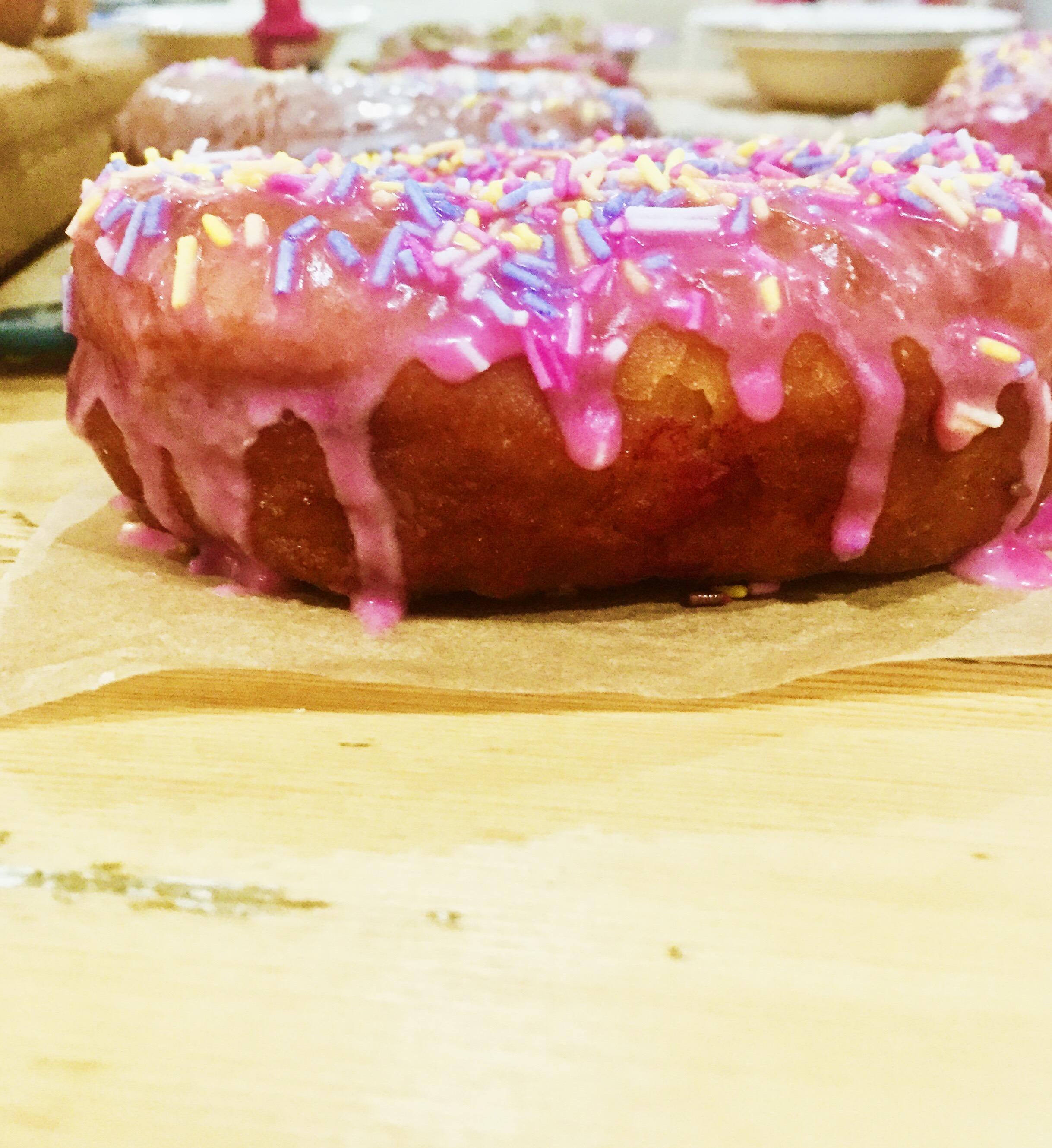
It’s been a whirlwind of half term activities these past couple of weeks and it has only been today that all of mine have returned to school. So apologies that my blog posting has been rather tardy. I thought it would be fun however to show you one of the activities we all got involved in over half term. A rainy day a while back we all made bagels – see here  so this time I thought donuts would be equally satisfying to make.

There is something about making your own that makes them so much more satisfying that store bought. The icing could certainly have been prettier – I think we probably iced when they were still a little warm – but I think the homemade/rustic look gives them an appealing edge don’t you think?

This recipe made us around 16 or so, but it kind of depends on how large your cutter is. They are irresistible light and fluffy to eat and the perfect teatime extravagance .

donuts

300ml whole milk

7g instant quick rise yeast

2 eggs

115g unsalted butter, melted and cooled

50g granulated sugar

pinch of salt

540g bread flour

sunflower oil (for frying)

glaze

icing sugar

milk

salt

sprinkles of your choosing

  1. Warm the milk in a pan and then place in a bowl along with the yeast and give a stir. Leave to rest for 15 minutes, by which time foam should have formed on the top.
  2. Either by hand or using a hand whisk beat together the eggs, butter, yeast/milk mixture, sugar and salt.
  3. Add the flour little by little until it has all been absorbed into the mixture. Cover and leave to rest in a warm room for an hour so that the dough has doubled in size.
  4. Sprinkle flour over a clean surface and turn out the risen dough. Gently roll it out to around 1/2 inch thickness and using a round cutter (3 inch diameter works well), cut out the circles and using a smaller cutter make the central hole. Place each donut onto a square of baking parchment. Once they have all been cut out cover again for a further 40 minutes to allow them to rise.
  5. Heat the oil in a deep pan and when it is hot – test by dropping in a little dough crumb and if it fizzles and rises to the top it is ready – then place 3 or 4 in a pan at once. Leave for around 45 seconds and then turn and leave for a further 30 seconds or until golden brown. Remove with a slotted spoon and place on a cooling rack with paper towels. Repeat until they have all been prepared.

When the donuts have cooled you need to make the glazes.

  1. In a large bowl add icing sugar, a little milk and a pinch of salt. Add the milk gradually so that you get the right consistency. If you want a specific colour icing sugar add the colouring at this stage.
  2. On a side plate get your sprinkles ready.
  3. Gently dip one side of the donut in the icing glaze followed by the sprinkles and return to the cooling rack. Repeat.
  4. Eat immediately – although they do still taste good the following day, they taste the best on the day of preparation.

SaveSave

SaveSave

SaveSave

SaveSave