Pork Larb – the national dish of Lao

IMG_0141


Larb originates from Lao but is also eaten in North Eastern Thailand where many of the Thai people are of Laotian decent. It is, put simply, a meat mince salad (pork, chicken, turkey or duck) that is placed in a lettuce ‘cup’ and then eaten in a couple of delicious bites. They have a similar lettuce wrap recipe in Korea known as ‘Ssambap’ – ssam meaning ‘wrap’ and bap meaning ‘rice’.


IMG_0129

My version has replaced the rice, (which is traditionally toasted then roughly ground (Khao Khua) and sprinkled on the top of the mince when serving to help soak up any of the juices) with roughly ground shelled and oven roasted unsalted peanuts. I like the crunch and taste of the nut combining with the minced meat and fresh herbs. If you want to stay true to the original recipe then just add ground toasted rice in place of peanuts. Try both and see which works for you.

IMG_0120

The combination of fresh crunchy salad leaves, fragrantly spiced mince meat and fresh mint and thai basil (or coriander, but I had run out otherwise I would have thrown that in too) is satisfyingly tasty that one, or three in fact, is never quite enough. It is perfect as a canapé, or as a starter whereby guests can put together their own wraps before popping them in their mouths. Personally I love eating with my hands so any excuse to get everyone to throw themselves into this enjoyable pursuit gets the thumbs up in my books.

IMG_0102

If you tone done on the chilli this dish is also a hit with kids (although my 8 yr old has it as is) as it is a little bit different, packed full of flavours and quite simply good fun to eat, which bottom line is what food and eating should all be about. My dish is more Laotian in style and substance, minus the rice sprinkle. The north east Thailand variety varies again omitting fish sauce and lime juice and instead uses a wide range of spices including cinnamon, star anise, long pepper, cumin, cloves amongst others. I’ll post this version in the future.

IMG_0127

Throw yourself into it, try something different. I can assure you that you one wrap is never enough. This will become a firm family favourite I can guarantee.

Pork Larb 

Serves 15 as a canapé or 6-8 as a starter

2 tbsp sunflower oil (or peanut oil if you have it)

2 banana shallots, finely sliced

1 tsp grated ginger

1 tsp grated garlic

1 tsp lemongrass paste

2 small red chillies, finely chopped (take the seeds out if you like it less hot)

1 kg pork mince

2 limes, juice only

5 tbsp fish sauce

1 tbsp light soy sauce

2 tbsp caster

1/2 tsp red chilli flakes

***********

30g shelled and oven roasted unsalted peanuts, roughly chopped

5 little gem lettuces or similar lettuce

handful of fresh thai basil

handful of fresh mint leaves

handful of coriander leaves

limes wedges to serve

1. In a large pan heat the oil on a medium heat and then add the shallots and fry gently. (Equally 1 large red onion also works well if you cannot get hold of shallots).

2. When the shallots have softened add the garlic, ginger, lemongrass and fresh red chilli and stir together gently.

3. Add the pork mince and move around the pan until all the pink meat has become brown. This will take around 8-10 minutes.

4. Add the fish sauce, light soy sauce, lime juice, caster sugar and red chilli flakes and stir into the mince. Leave to cook on a low heat for a further 5 minutes. Just before serving throw in a few fresh herbs and give a good stir.

5. To serve place a tablespoonful of the mince onto the lettuce cup followed by a couple of mint, Thai basil and coriander leaves and a sprinkling of peanuts (or rice if you want to stay totally traditional). Add a splash of lime juice as required.

It can be eaten at room temperature or slightly warm.

* If your mince has juice, cook it for a little longer with the lid off the pan. That should do the trick. If there continues to be some juice, it is best to strain the mince as it is easier to eat on the lettuce cups if there is no juice. 

you can replace the pork mince, with chicken, turkey, duck or I reckon even tofu would work well.


Chai Masala – Hot Spiced Milk

IMG_0064

I have a new favourite hot beverage – milky chai masala –  which I urge you all to try when it starts getting really cold, wet and windy.  It may not win prizes for appearance, but what it lacks in looks it makes up for in taste.  It’s the perfect drink when you’ve been out in the cold and need warming up on the inside. It requires a spice or coffee grinder – I use this one and really recommend it – maybe something for your Christmas list if you don’t have one.

IMG_0100

I was recently given this recipe from a friend who in turn received it from her Indian neighbour. Like Chinese whispers I have altered  it slightly to suit my tastes but the finished result is equally pleasing. Wafts of black pepper, cloves, cardamom, cinnamon, ginger and nutmeg come together to form a warming and comforting hot beverage that is guaranteed to please. Give it a try and let me know what you think by commenting below. I look forward to hearing from you.

IMG_0068

Chai Masala

milk

1 tsp sugar (or to taste)

1/2 tsp of chai masala spice mix (see above)

********

Spice mix

4 inch long cinnamon stick

1 tbsp black pepper

2 tbsp of seeds from green cardamom

1 tsp cloves

1 level tsp ginger powder

1 tsp freshly grated nutmeg

********

1. Grind the cinnamon stick and black pepper in your spice grinder and then add the green cardamom seeds but not the husks, cloves, ginger powder and freshly grated nutmeg. Blend until all the parts have taken on a powder appearance.

2.  Store in an airtight container.

3. Gently heat the milk until it is boiling hot in a saucepan. When it is hot add half a teaspoon of chai masala spice mix and sugar to taste and continue to heat for another couple of minutes so that the spices infuse. If you think it needs a little more spice then add a little more of the spice mix.

4. Strain into cups immediately. The milky spice taste is so comforting that you won’t be able to resist another cupful.

IMG_0075


Indian Rasam – Spiced Tomato Soup

IMG_0021

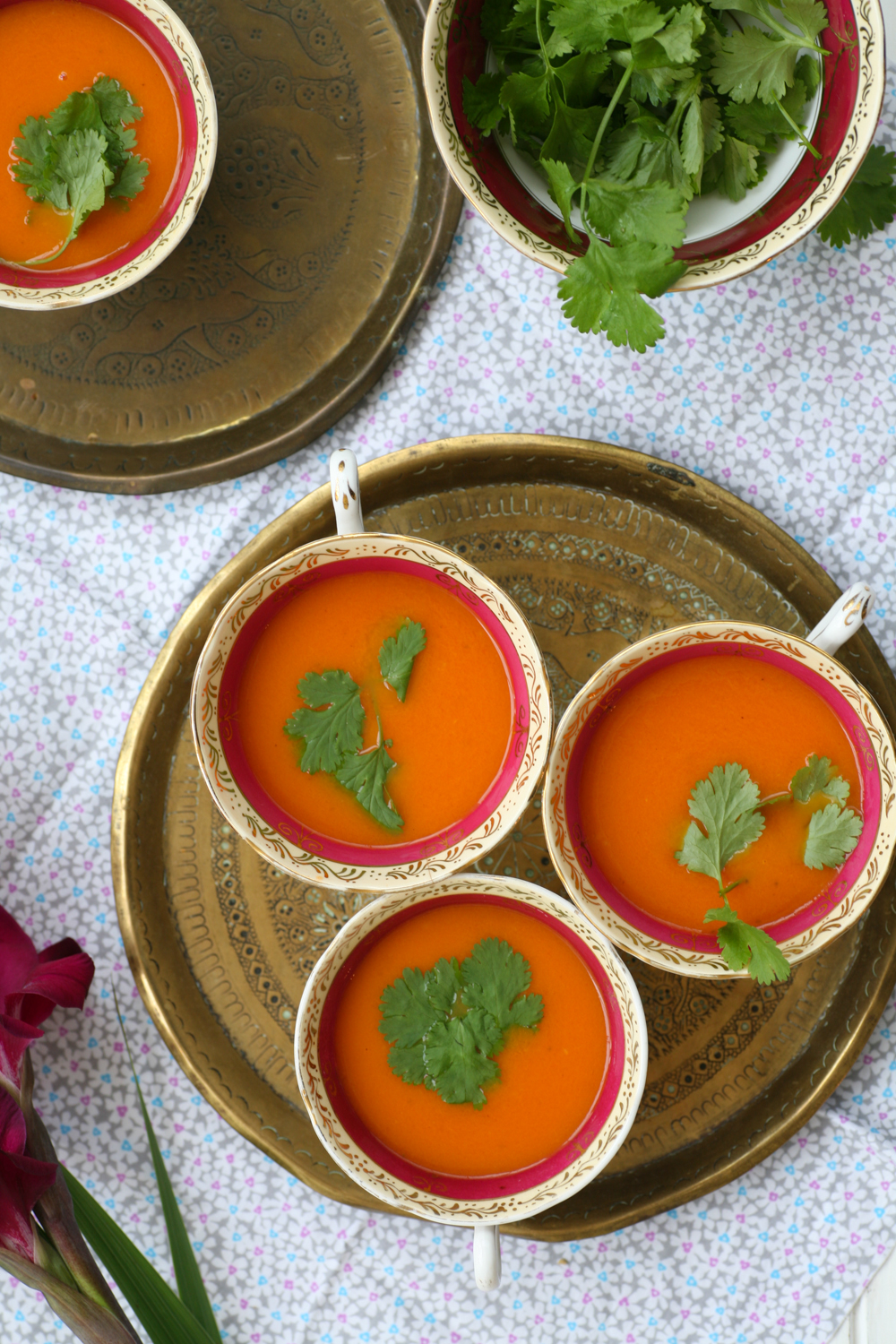
There is nothing more sublime than a spicy hot tomato soup to warm you up and give you that inner glow. If you are feeling under the weather with a cold or fever, which invariably many of us do at this time of year, this is a great way to blast your system with goodness and help pull you through. Rasam, as it is known in South India, translates to ‘juice’ or in Sanskrit rasa means ‘taste’. I think ‘tasty juice’ is the perfect way to describe this warming, fragrant and flavoursome soup. Traditionally it is made with tomatoes or tamarind with a host of spices and fresh curry leaves giving it a comforting aroma and taste.  Being totally addicted to tomatoes I tend to make my rasam with tomatoes as the base note.

IMG_0010

Traditionally it is eaten in India at the end of a meal, but I tend to serve it the opposite way round and kick a meal off with a warming cup of this thin spiced tomato soup to whet the taste buds. It is often served in a mug or cup or can be poured over a bowl of hot steaming basmati rice. It’s also the perfect drink after a long, cold and invariably wet winter walk. With a roaring fire going and a cup of rasam you will feel a state of happiness surround you. Seriously try it and you’ll know what I mean.

IMG_0033

The only tricky (ish) ingredient to source is fresh curry leaves. If you go to your local Asian grocer they are likely to have some, or at least will be able to point you in the right direction. So what are you waiting for – give it a go and leave and comment below to let me know how you get on.

**********

Indian Rasam – Spiced Tomato Soup

Serves 4

2 tbsp sunflower oil

1 heaped tsp of garlic paste/fresh garlic grated

1 heaped tsp of ginger paste/fresh ginger grated

2 large dried red chillies (1 if you prefer it with less of a kick)

12 fresh curry leaves

1/2 tsp of crushed black pepper

1 tsp salt

1 tsp sugar

700g fresh tomatoes, roughly chopped

350ml water

a couple of sprigs of fresh coriander to garnish

black pepper to garnish

1. Warm the oil in a deep non-stick pan and when it is hot add the garlic, ginger, dried red chillies, fresh curry leaves and crushed black pepper and gently move around the pan so that the chillies darken and the ginger and garlic begin to bronze. Keep on a medium heat for a few minutes before adding the tomatoes, salt and sugar.

2. Move around the pan so that the tomatoes begin to soften and are completely covered in all of the ingredients. Then add the water and let it boil for a couple of minutes before lowering the heat and cover for 30 mins.

3. Using a hand blender blend the soup so that it is smooth and then pass through a sieve so that there are no pips or tomato skin and what remains is brilliant red, smooth thin rasam. Heat up the smooth rasam gently in the pan before serving.

4. Pour into cups and garnish with some fresh coriander and black pepper.


IMG_0027


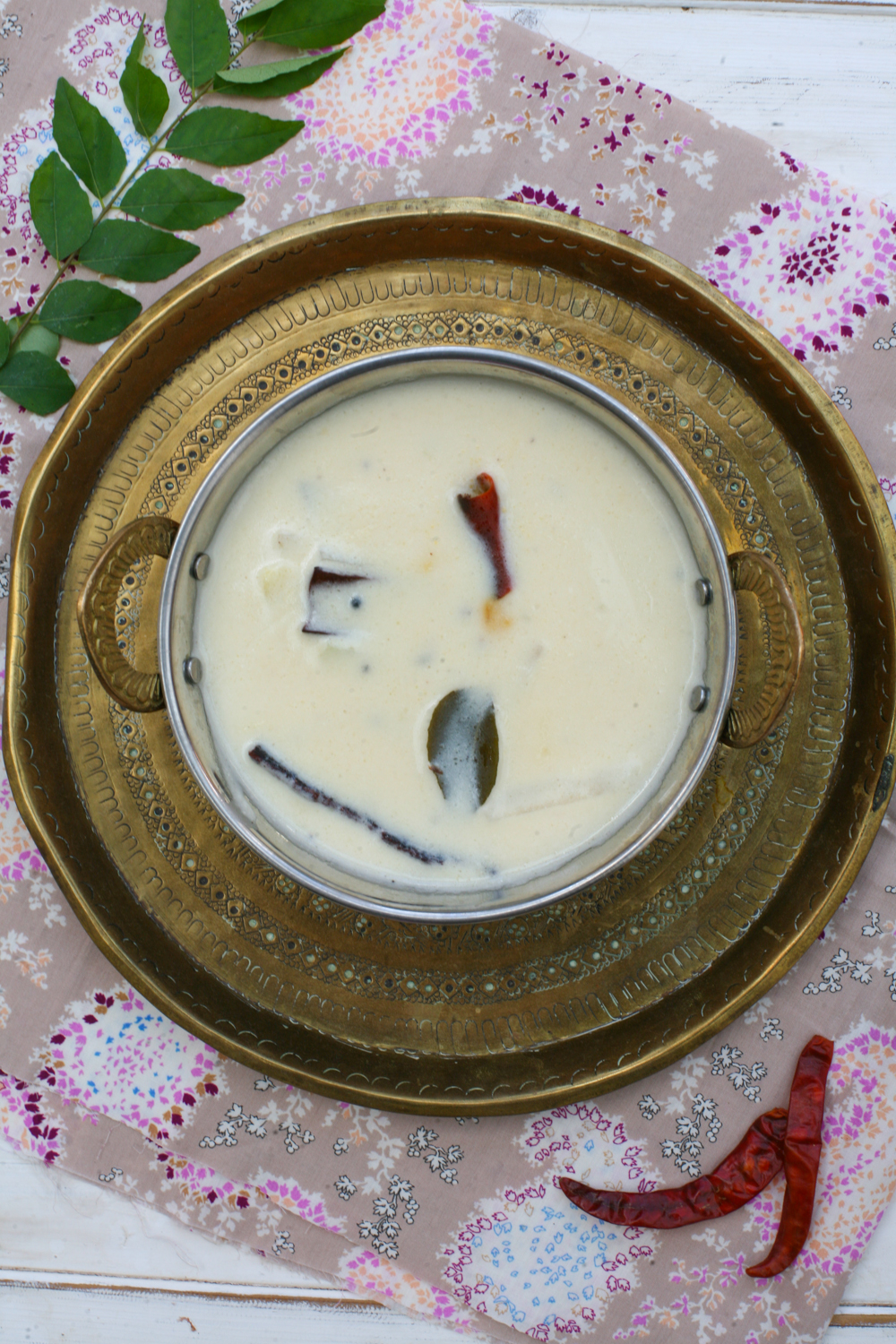
Gujarati Kadhi – a delicately spiced yogurt soup

IMG_9991

It is bucketing down outside this afternoon and I am feeling rather cosy inside out of the rain. After taking the photos for this blog post I had a bowl full of this hot, delicately spiced warming soup. Seriously delicious and quite filling, owing to the yogurt, potatoes and mooli.  Now that Autumn is well and truly here this soup comes into its own and I urge you to try making yourself some.

IMG_0006

It was Durga Puja last weekend – you can read up what goes on exactly at this Indian celebration in my posts from last year and the year before  see here and here. During the festivities at the Hindu temple prasad is often taken. Prasad is literally a religious offering or gift that comes in the form of a meal. Always vegetarian and gently spiced it allows families and friends to come together to share a meal that is blessed during this auspicious occasion. One of the curries we were served was this Gujarati Kadhi. I adored the delicately spiced yogurt soup so much so I was allowed to venture into the kitchens to see how it was being prepared. Huge caldrons of the soup were being constantly stirred over hot stoves before being taken out to hungry worshippers.

IMG_9990

I’ve made my own additions and twists but the taste is pretty similar to the one that I had last weekend. It is so different from any soup or dal I have tried before that it immediately appealed. All the ingredients are pretty easy to pick up at your local supermarket. I have seen gram flour in the big supermarkets here in the UK and I noticed that Waitrose was even selling fresh curry leaves the other day. Times are changing!  Mooli is harder to track down if you don’t live near an Asian grocers so just omit that part if you can’t find it. As with most of my recipes it is quick and easy so if you are feeling adventurous then give this fabulous dish a try.


Gujarati Kadhi

Serves 4-6

500g natural yogurt

2 tbsp gram flour (chickpea flour)

1/2 tsp green chilli paste

1/2 tsp ginger paste

700ml water

1 tsp salt

•••••••••••

1 tbsp ghee/butter

1/2 tsp black mustard seeds

1/2 tsp cumin seeds

3 cloves

2 small cinnamon sticks

2 dried red chillies, broken into pieces

10 fresh curry leaves

pinch of asafoetida

75g mooli (also known as daikon or white radish)/, cut into thin matchsticks

1 small potato, cut into thin matchsticks

1 tsp jaggery/sugar

1. In a large bowl mix the yogurt, gram flour, green chilli and ginger paste, salt and water using a hand whisk.

2. In a deep saucepan add the ghee and when it is melted add the mustard and cumin seeds and after 30 seconds add the cloves, cinnamon sticks, dried red chillies, fresh curry leaves and asafoetida. This is known as tempering.

3. Add the mooli and potato matchsticks and stir into the spices for one minute.

4. Gently pour in the yogurt/gram flour mixture over the potato, mooli and tempering spices and stir continuously to prevent the yogurt from separating.

5. If you find the mixture too thick simply add a little more water.

6. Add the jaggery or sugar if you don’t have any jaggery to hand. Stir into the soup. Simmer for  around 15 minutes or until the potato and mooli matchsticks are softened.

Serve with basmati rice or simply on its own in a bowl.


IMG_0002


Banana, Cinnamon and Nutmeg Loaf

IMG_9959

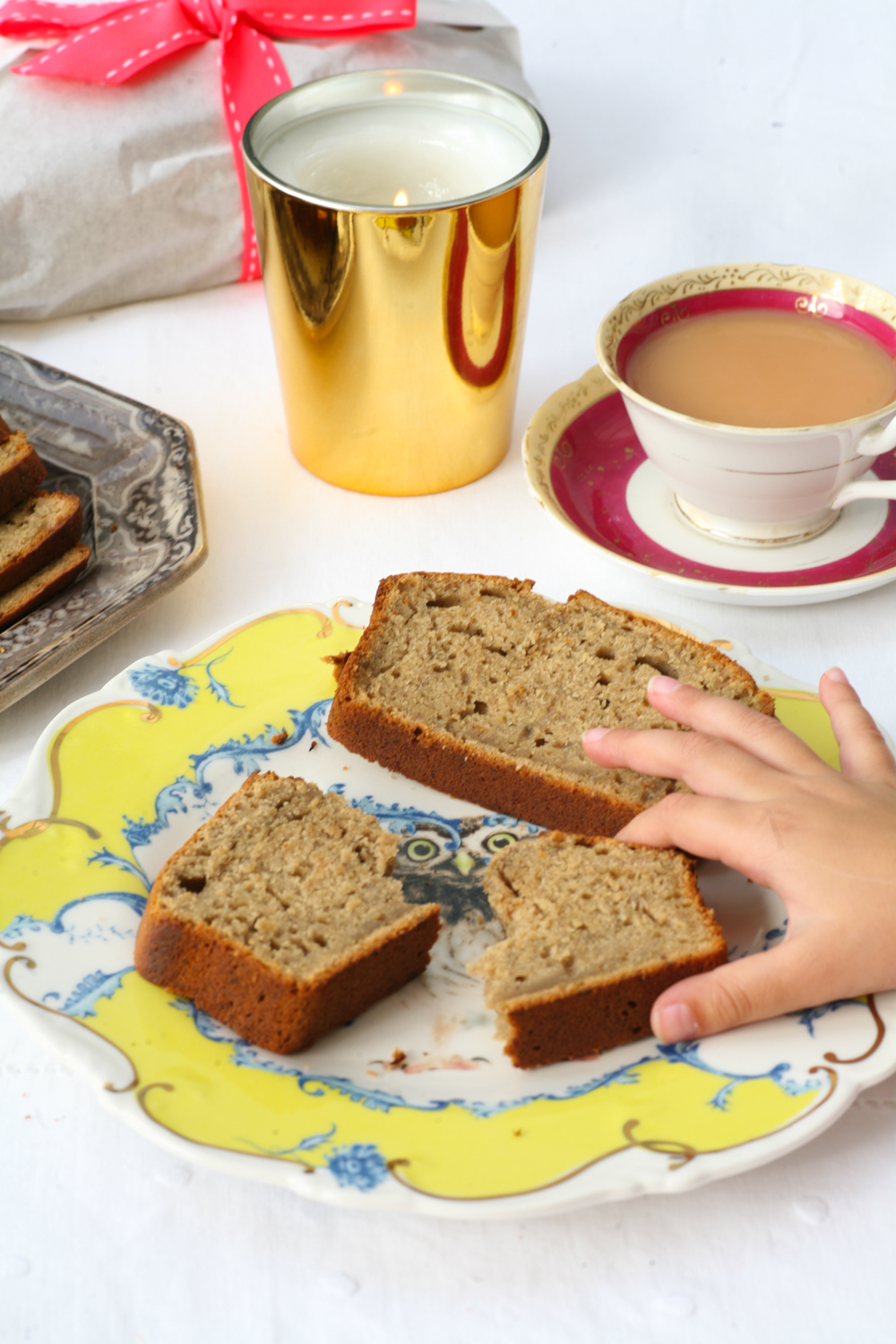
Having afternoon tea is very much a British thing to do. Granted we may not always sit down to tea and scones every afternoon, but given half the chance then we probably would. Copious amounts of tea is drunk throughout the day, but at tea time – around the hour of 4pm, a little sweet treat or savoury dainty might make an appearance if you are lucky.


IMG_9933

It wasn’t always the case. In fact it was Charles II wife, Catherine of Braganza from Portugal, who started the trend of tea drinking in the seventeenth century. From the English royal court it spread to London’s coffee houses and from there into the homes where civilised tea parties would take place.

IMG_9952


If you want a no fuss cake that is easy to whip up, moist and produces delicious baking smells when cooking then look no further. This banana, cinnamon and nutmeg loaf won’t win prizes for appearance in ‘The Great British Bake Off’ but what it lacks in appearance it makes up for in taste.


IMG_9941

So put on the kettle, pour yourself a cup of tea in your favourite fine bone china teacup and sit back and relax with a slice or two of this moist banana, cinnamon and nutmeg loaf.


Happy Days.


IMG_9955


Banana, Cinnamon and Nutmeg Loaf

2 eggs, beaten

90g butter

150g light Muscovado sugar

4 bananas, mashed

1/2 tsp cinnamon

1/4 tsp fresh grated nutmeg

250g self-raising flour

1. Preheat oven to 180 degrees.

2. In a large bowl mix the eggs, butter (which has been at room temperature) and sugar together and when it is smooth add the mashed banana, cinnamon, nutmeg and flour. Stir in throughly. I use a hand whisk but arm power works equally well if you do not have one.

3. Grease your non-stick loaf tin. I don’t tend to line my tin as I find that the loaf easily comes out of the tin when cooked.

4. Place in the oven for 45 minutes. It is done when you place a sharp knife into the centre of the cake and it comes out clean.

5. Place on a rack to cool slightly.

It is lovely to serve warm but equally lasts well for a few days.


Coconut Infused Corn on the Cob with Cumin and Black Mustard Seeds

IMG_9899


Corn on the cob is one of those things that represents the beginning of Autumn for me, although this year we seem to be having a late Indian summer, which is a little bit surreal as the conkers are already falling from the horse chestnut trees. After the rains of last night the air remains warm and humid, the birds are singing and it almost feels like Asia. Whilst I love the traditional way of eating corn on the cob – with lots of butter and maybe a pinch of paprika and a squeeze of lime, I do rather like my Indian version, which makes a refreshing change.


IMG_9916


If you are using fresh corn on the cob it is hard, but not impossible, to cut through the cob to make 3 or 4 smaller pieces. Use a sharp knife and press down firmly. Once you have made an inroad into cutting it you will find that you can simply break off the section. Equally if you want to cook this dish all year round – which I do – you can use frozen sweetcorn which you can buy already chopped up into smaller pieces, which makes it a lot easier and even quicker.

IMG_9902


If you are having an Indian feast why not cook this dish alongside my laal maas or bengali chicken curry or perhaps bengali mustard fish curry or aubergine, peanut and tomato curry as well as a satisfying dal and perhaps some Indian greens. Equally if you are wanting a quick and light supper then this dish and a dal or vegetable curry would be perfect.

*****************

Coconut Infused Corn on the Cob with Cumin and Black Mustard Seeds

Serves 4

1kg frozen mini corn cobs or fresh corn on the cob chopped into smaller pieces

160ml coconut milk

1 tsp salt

2 dried red chillies, broken into smaller pieces

1 tbsp sunflower oil

1 tsp cumin seeds

1 tsp black mustard seeds

1 fresh green chilli

1/2 juice of fresh lime

1 handful of freshly chopped coriander/cilantro leaves

1. On a medium heat place the sweetcorn pieces, coconut milk, salt and dried red chillies in a large pan and place the lid on. If you are using frozen sweetcorn cook for 3 minutes and if you are using fresh cook for 10 minutes. Stir at intervals so that the sweetcorn pieces are nicely covered with coconut milk.

2. Meanwhile in a separate pan heat the oil and then add the cumin and black mustard seeds. Once they begin to pop after 20 seconds add the contents of the pan to the larger pan with the sweetcorn. Stir well.

3. Add the fresh green chilli, fresh coriander and lime juice and let simmer for a further 4 minutes with the lid off so that the coconut milk reduces slightly.

4. Serve immediately and pour the remaining liquid over the cob pieces so they soak up all the delicious flavours.


Black Sesame Paste Soba Noodles with Salmon and Spring Onions

IMG_9857


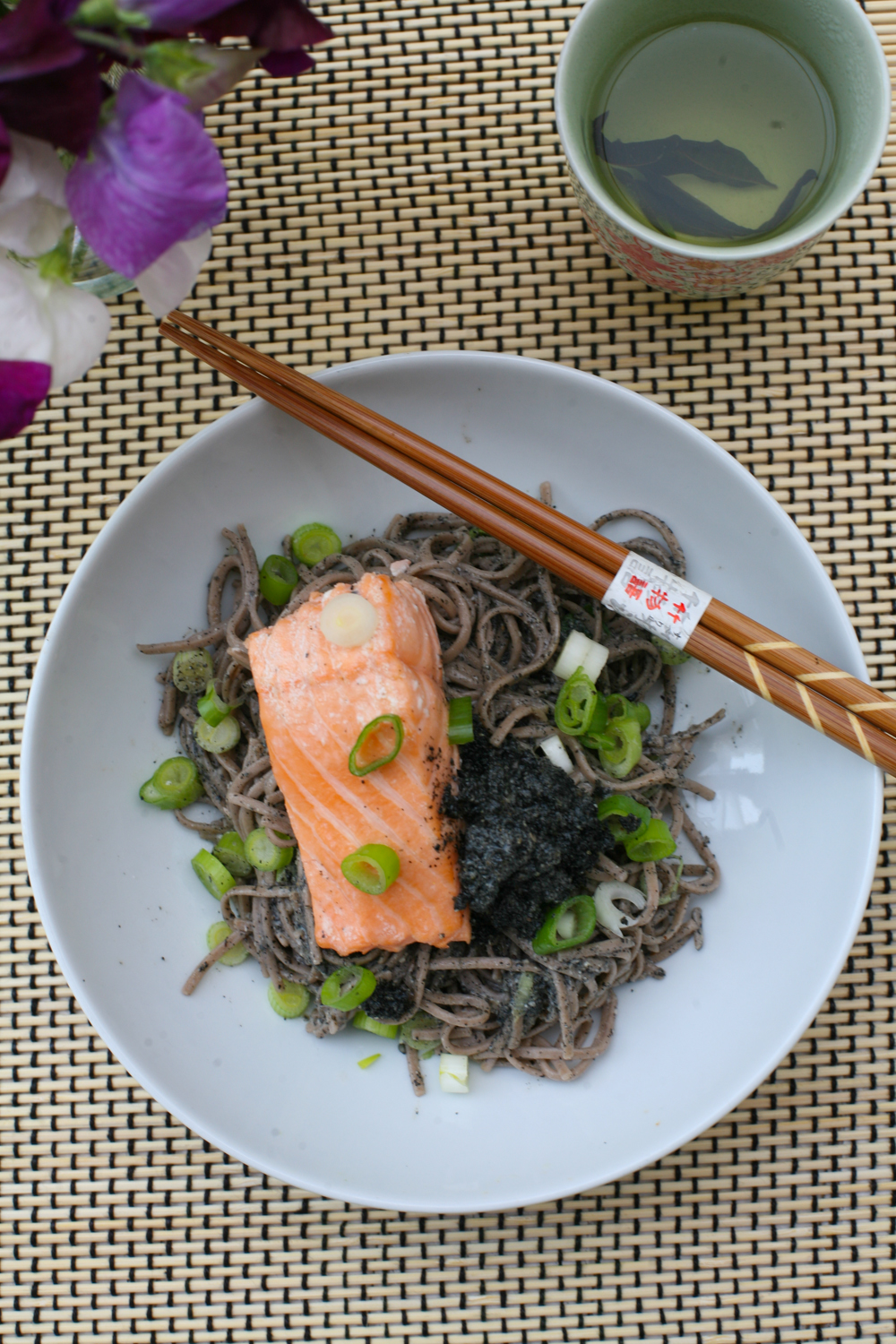
There are some plates of food that when presented in front of you you are a little bit sceptical that the dish will actually taste good. This dish, being predominately grey and black with only a splattering of green and white from the spring onions and the delicate pink from the salmon, is a case in point. You are going to have to trust me on this one when I say that this meal is seriously delicious. It also ridiculously quick (I know I know I say that with most of the dishes I put up on my blog) – it takes the amount of time that you cook your salmon in the oven – 15 minutes.


IMG_9858


Black sesame seeds may require a bit of effort to hunt down – I found mine at my local Asian grocers, but other than that you should be able to get hold of the rest of the ingredients pretty easily. If you don’t have tamari, just use soy sauce – they are very similar.


IMG_9868

I ate mine with a hot cup of fresh lemon verbena tea, which I have become rather addicted to since I was sweetly given a bag full of the stuff last weekend. Have you tried it before? Does anyone grow it in their gardens? Is it easy to maintain? I’d love to know as lemon verbena has a wonderful aroma and taste.

IMG_9864

I hope you get to try this dish very soon. I adore buckwheat soba noodles – I tend to buy the Clearspring variety – they look like this. They’re wheat free noodles, low in fat and a great source of protein and fibre. Go on give this dish a go and leave me a comment below.


Black Sesame Paste Soba Noodles with Salmon and Spring Onions

Adapted from Heidi Swanson’s ‘Super Natural Everyday’ – Black Sesame Otsu

Serves 4

black sesame seed paste

1 tsp sunflower seeds

1 tsp pine nuts

60g black sesame seeds

1 1/2 tbsp demerara sugar

1 tbsp sesame oil

1 1/2 tbsp tamari/soy sauce

2 tbsp brown rice vinegar

pinch of cayenne pepper

*************

350g buckwheat soba noodles

4 salmon fillets – skin removed (optional)

3 spring onions, finely sliced

1 tbsp extra virgin olive oil

**************

1. Preheat your oven (I use a fan oven – if you are not increase the temperature by 10 degrees) to 180 degrees. Equally you can steam the salmon if you prefer. Using a cooking brush gently wipe each salmon fillet with sesame oil. Place in a non stick dish and cook for 15 minutes.

2. Meanwhile, in a frying pan dry roast, on a low heat, the pine nuts and sunflower seeds for a couple of minutes so they begin to bronze. You will need to keep moving the pan to prevent burning. As the pine nuts begin to bronze add the black sesame seeds and move them around the pan for a minute. Transfer to a spice grinder (or pestle and mortar).

3. After whizzing the ingredients for 10-15 seconds so that they are properly blended, transfer the paste into a mixing bowl and add the remaining ingredients to make the black sesame paste. Place to one side.

4. Place the soba noodles in a pan of boiling water and cook according to instructions – should be around 5 minutes on a low heat. Before draining save 100ml of the noodle water and leave in a jug. Drain the soba noodles and run under cold water to prevent further cooking. Before adding the soba noodles to the black sesame paste, remove 1/4 of the paste and place in a separate cup. Add the soba noodles to the large mixing bowl with the remaining black sesame paste, the 100ml of noodle water, extra virgin olive oil and almost all of the spring onions and gently stir into the paste.

5. Serve a generous portion of noodles to each bowl or plate and place the salmon fillet on top along with a dollop of remaining black sesame paste which you have reserved and a scattering of spring onions.

It can be eaten at warm, room temperature or cold. You can replace the salmon with trout or even with tofu gently fried. It would in fact make an original and tasty lunch box alternative.


Decadent Dal Makhani

IMG_9781

This gloriously decadent dal originates from the Punjab region of North India where black urid beans, also known as black gram, are eaten in abundance. It happens to be my husband’s absolute favourite king of dals. Creamy and rich from the butter, ghee (or oil) and double cream (oh don’t let that put you off!) and yet zings of ginger, garlic and tomato accompanied with a delicious spicy masala.

IMG_9792

Whilst we are lucky to still have some warm days, soon the weather will be turning and this dal is definitely one to bookmark for when there is a chill in the air.

IMG_9785

In the Punjab this dal is eaten on special occasions, such as weddings and religious ceremonies. When all the pomp and glory happens you can guarantee that dal makhani will be offered to guests. Do try it and let me know how you get on.

IMG_9808

Hope you all have a lovely weekend.


Dal Makhani

Serves 4-6

250g black urid beans (also known as black gram)

20g fresh ginger, peeled and grated

3 garlic cloves, grated

2 green chillies, finely sliced

241g tin of red kidney beans (this was the amount once drained)

1 tsp salt

*********************

tadka 

2 tbsp sunflower oil or ghee

1 tsp cumin seeds

1/2 tsp fenugreek seeds

pinch of asafoetida/hing

2 garlic cloves, grated

2 tbsp tomato puree

*********************

Just before serving

1 tbsp butter

40ml double cream

1/2 tsp Kashmiri chilli powder

1/2 tsp garam masala

salt to taste

1. Ideally soak the urid beans overnight submerged in a bowl of water. Equally if you plan on eating them in the evening you can soak them in the morning for around 6 hours.

2. Once the lentils have soaked (see above) drain them and then wash them with clean water and drain 3 times so as to get rid of any impurities.

3. Place them in a large deep pan and completely cover so that the water is just above the beans. You can always add more water during the cooking process if it all gets soaked up. Add the finely grated ginger and garlic as well as the green chilli and salt. Bring to the boil and then simmer for 20 minutes. The scum that comes to the top when cooking can be removed with a spoon and discarded.

4. After about 20 minutes the dal should have softened and much of the water reduced. Press a bean between your thumb and forefinger and it should easily be squashed. If it needs to soften a bit more leave it simmering for a further 5 minutes.

5. Strain the lentils and then place them back in the pan along with the drained tinned red kidney beans. Add 100ml of water and simmer for a couple of minutes.

6. In a separate small frying pan add the oil (or ghee if you are feeling a little bit naughty) and when it is hot gently add the cumin and fenugreek seeds. They will begin to pop after about 30 seconds so proceed to add the garlic, asafoetida and then after a minute add the tomato puree and stir in together. Simmer on a low heat for a further minute.

7. Place the contents of the frying pan into the large pan with the urid and red kidney beans and give a good stir. If it is too thick add a little more water. It is very much down to personal taste on how thick or soupy you wish your dal to be. Simmer together for 10 minutes.

8. A few minutes before serving add the butter, double cream, Kashmiri chilli powder and garam masala. Give a good stir and add more salt as required.

Oh so delicious. I hope you agree.

Do leave a comment below. I love to hear from my readers. 


Roasted Butternut Squash and Beetroot with Pistachio Pesto, Feta and Pomegranate Seeds from Persiana

IMG_9722


It was love at first sight. The vibrant butternut squash (the beetroot is my own addition) with dollops of pistachio pesto infused with fresh dill, coriander and parsley, crumbled feta and bejewelled pomegranate seeds. Simple and yet so very right. I did not even need to try it to know that I would love it and include it in my culinary repertoire from that day forth.


IMG_9731


It was served to me by the very likeable Sabrina Ghayour earlier this year at her hugely popular supper club that takes place in her west London residence. Twelve or so hungry diners feasted on a number of mouth watering Persian dishes that were lovingly prepared by Sabrina herself.  Her recipes and ingredients sing to me and I can honestly say that I actually want to cook and eat a large number of them. Dried lime, lamb and split pea stew or saffron chicken, fennel and barberry stew or bamia – bring it on.

IMG_9759

The recipes will really come into their own in the autumn and winter time as there is even a section dedicated  to ‘soups, stews and tanginess’, perfect to serve up and nourish the soul on cold, blistery autumnal days. That said, there are also sections on ‘salads and vegetables’,  ‘roasts and grills’, ‘mezze and sharing plates’, ‘breads and grains’ and finally ‘desserts and sweet treats’ so something for everyone no matter what hemisphere you are living in. The recipes are easy to follow and beautifully photographed. I also particularly love the cover which is not only eye catching with it’s title that rolls off the tongue, but it also has a very tactile cover.  As you pass your hand over it gives the impression that spices and rose petals have really been imbedded into it’s very cover.  Such a clever and original idea.

IMG_9770

This recipe you can eat as is, or accompany it with another in her book. I thought the ‘tray-baked rose lamb chops with chilli and herbs’ (above) would be a particularly delicious combination. If you want to learn more about Persian food and feel comfortable cooking it for yourself then I cannot recommend the book more highly. Sabrina’s chatty, informative and unpretentious style will connect with it’s readers and guide them through the very exciting world of food from Persia.

Roasted Butternut Squash and Beetroot with Pistachio Pesto, Feta and Pomegranate Seeds

adapted slightly from Persiana by Sabrina Ghayour

Serves 4 

1 butternut squash, halved and then chopped into about 6 large pieces (skin left on)

4 beetroot, gently cleaned (be careful not to damage the skin) kept whole and stems left intact

4 tbsp olive oil

sea salt

freshly ground black pepper

150g feta cheese

100g pomegranate seeds

*********

for the pesto

100g shelled pistachio nuts

70g parmesan chopped into rough chunks

olive oil

1 handful of fresh coriander

1 handful of fresh dill

1 handful of fresh parsley

2 tbsp chilli oil

juice of 1 lemon

sea salt

1. Preheat your oven to 180 degrees if using fan oven or 200 degrees if not/gas mark 6.  Place the chopped butternut squash and intact beetroot on a baking tray lined with non-stick baking paper and cover the vegetables in olive oil, pepper and salt. Place in the oven for 50 minutes so the edges of the butternut squash begin to char.

2. Meanwhile to prepare the pesto, place the pistachio, parmesan chunks and a glug of olive oil into a food processor and mix together. If it remains quite thick in texture add some more olive oil to soften it.

3. Add all the herbs, chilli oil and lemon juice and blitz together with a sprinkling of sea salt. Taste to make sure the flavour is well balanced. Leave in the refrigerator until ready to use.

4. To serve, place the roasted butternut squash and beetroot (now cut in two) on a serving platter. Place dollops of the pesto on each vegetable portion, crumble the feta on each portion and around the  platter. Finish by scattering the pomegranate on top.

Voila you have the most pleasing of meals to dive into.


Strawberry, Black Pepper and Spinach Salad with a Red Onion Balsamic Dressing

IMG_9687


I’ve been meaning to post this glorious recipe for ages. It is seriously good and takes no time to whip together. If the truth be told I’ve been eating it all summer, but each time I forget to photograph the food until it’s too late. Today I was ready with my camera to take a few snaps before gorging on this delicious lunch.

IMG_9680

It’s perfect if you want to impress friends as it’s probably a flavour combination they’ve not eaten before so it will take them by surprise…..in a good way.

IMG_9682

It would also work really well for BBQ gatherings or as a starter for a dinner with friends. The flavour combinations of freshly ground black pepper and strawberries is a surprising winner. The dish in itself is sweet, salty and full of umami – read my article here to learn more about umami.

IMG_9697

If you are not able to get hold of fresh spinach, rocket also works really well.

IMG_9673


I originally came across a similar recipe in fellow  food blogger Heidi Swanson’s book ‘Super Natural Everyday‘, which I adore to dip into from time to time.


Here is my version of the recipe. Let me know how you get on by leaving a comment below. I love to hear from my readers.


Strawberry, Black Pepper and Spinach Salad with a Red Onion Balsamic Dressing

Serves 4

3 tbsp balsamic vinegar

1 small red onion or shallot, finely chopped

1/2 tsp salt

1/4 tsp freshly ground black pepper

2 tbsp extra virgin olive oil

90g fresh spinach or rocket

300g fresh strawberries, hulled and finely sliced

30g slivered almonds, toasted

15g parmesan, shaved in curls

1. In a small bowl add the balsamic vinegar, red onion/shallot, salt and pepper. Leave to stand for 10 minutes before adding the oil and whisking gently together. Leave to one side.

2. Place the slivered almonds into a large frying pan to toast. They brown really quickly so do not leave the pan. Use a spatula to move the almonds around the heat to help them bronze evenly. This will not take more than a couple of minutes.

3. In a large bowl add the spinach or rocket, strawberries, slivered almonds and parmesan shavings. To make the curls I use a regular vegetable peeler.  Then add the dressing and gently toss so that the dressing is evenly distributed.

Serve immediately.

If you are preparing ahead of time do not add the dressing until your guests have arrived. The dressing can easily be made in advance.