Bengali Mustard Fish Curry

This post has been a loooooong time coming. Last week was totally full on with both my daughters now in school. There was a catch however, that being that Little Z was to be weaned on gradually with half days over the course of the week and a half, which mean’t that much of my existence was spent ferrying children in a car back and forth to school – six times per day for me to be precise, therefore allowing very little time to actually get on with anything productive.

At the weekend I threw myself into organsing an a friend’s baby shower so was baking and making in preparation for the event. The spread included: a Victoria sponge cake, flapjacks, egg mayo, smoked salmon with horseradish, cream cheese and cucumber finger sandwiches, rainbow coloured fruit sticks (got to keep it healthy!), a carrot cake and a few other sugary treats accompanied by big cups of tea and coffee, oh and not forgetting peach bellinis upon arrival.

IMG_7126

It’s now Tuesday and calm has reigned once more in my life as Little Z stays at school for her first full day. This now gives me the necessary breathing space to get this blog post out to you all.

•••••••••••••••

IMG_7166

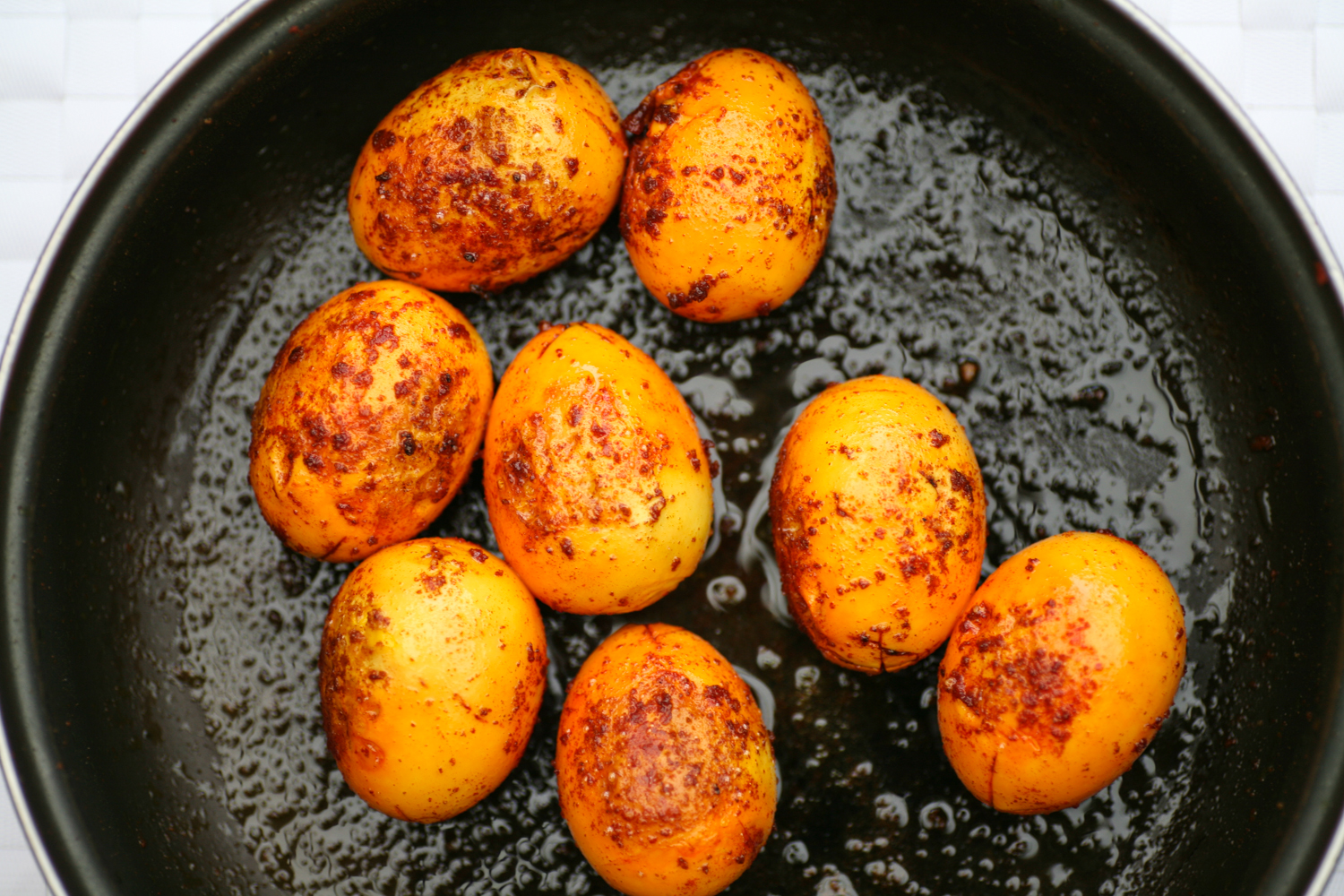
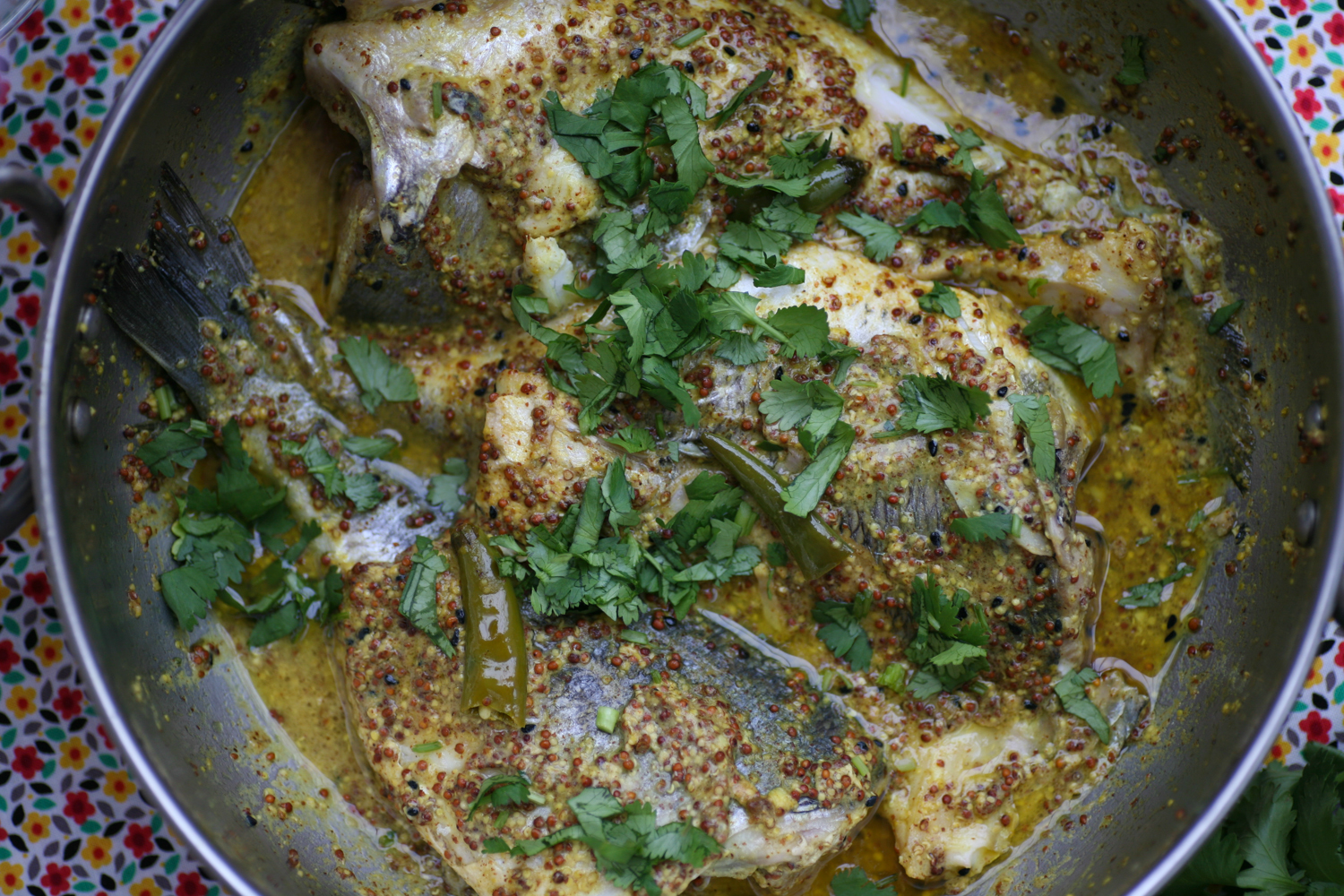
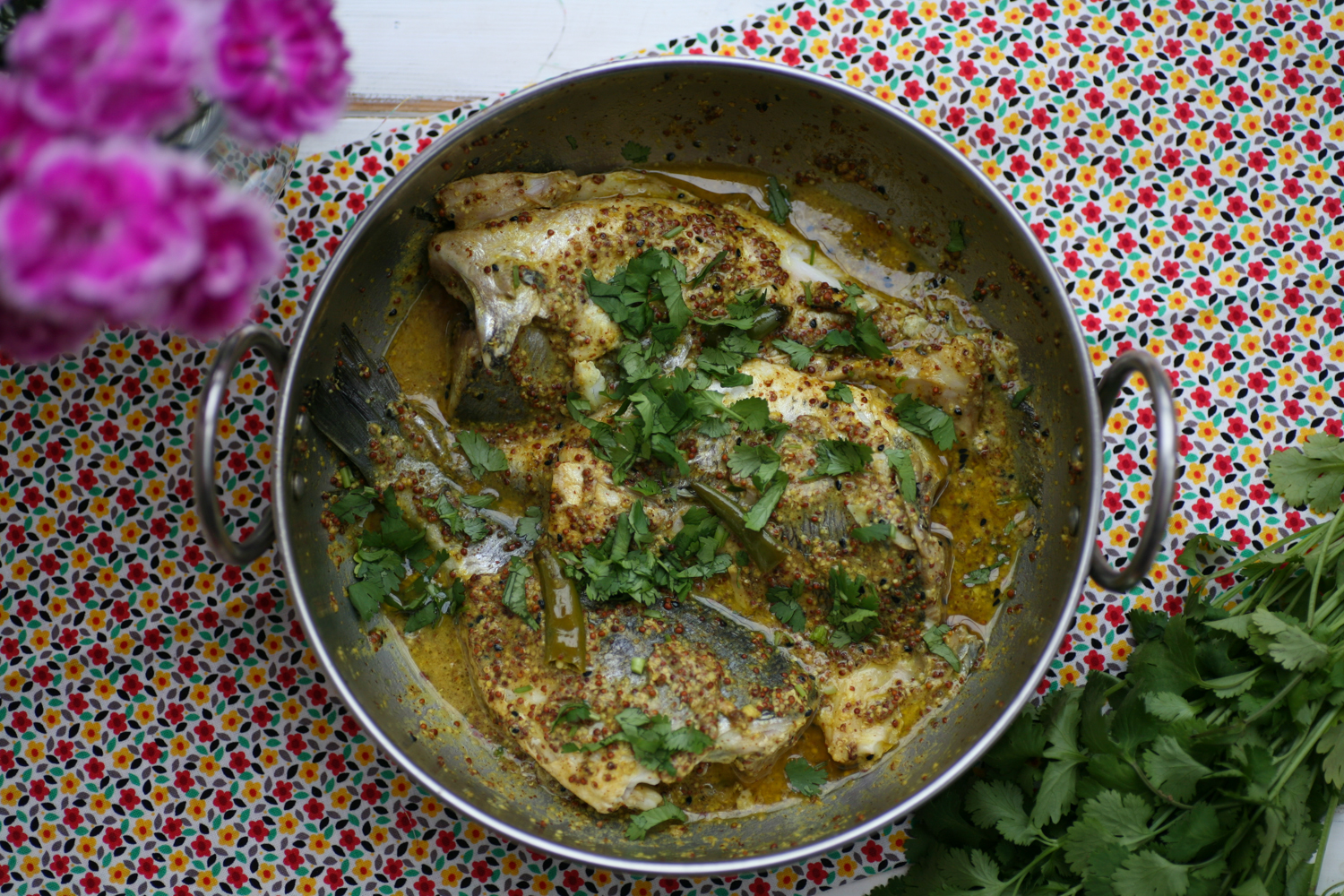
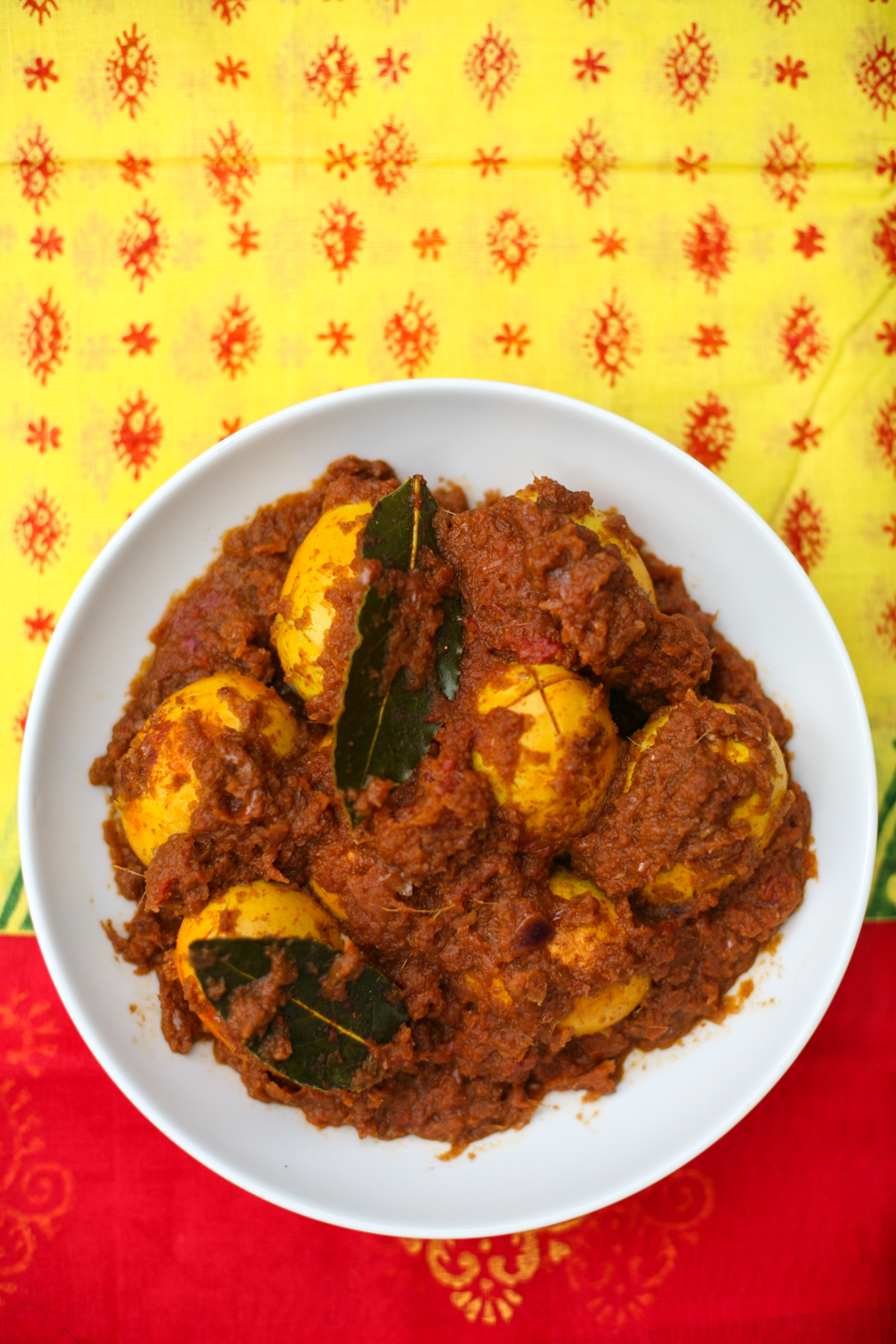
Mustard fish curry – Maach (fish) Jhol (gravy/curry), is probably THE most popular fish dish in Bengal. The Bengali diet includes a lot of fish and mustard oil/seeds/paste is as ubiquitous in Bengali cuisine as pepper is in the west. Traditionally the mustard paste for the curry is made by grinding brown mustard seeds on a ‘sheel nora’ or grinding stone that can be found in traditional Bengali kitchens. I learn’t this recipe however from my husband, Mr B, and my mother in-law who have converted to the quicker version of mixing some smooth Dijon mustard with some wholegrain mustard, which works superbly. Cheating? Well not really, just speeding up the process, which is always a bonus in our otherwise hectic lives.

This time I used sea bream, mainly because it is what I had in my freezer, but mackerel, tilapia, salmon or trout work equally well. Served with a bowl of rice it is perfect for a speedy week(end) night supper.

IMG_7226

Some recipes require that you rub turmeric and salt into the fish first and then deep frying them for a 2/3 minutes and then in a separate pan adding the mustard oil, nigella seeds and mustard paste followed by the fried fish. I have always tended to omit the first part, keeping the dish healthier, but by all means try both versions and see which you prefer. Similarly I often cook the dish with the fish whole, but head removed. However, you can also chop the fish into smaller pieces but do not fillet it as it will not work so well.

Bengali Mustard Fish Curry 

Serves 3 (if serving for 4 add one more fish and an extra chilli or two!)

3 sea bream/mackerel/tilapia/salmon/trout, head removed but kept whole

3 tbsp mustard oil

1 tsp nigella seeds

1/2 tsp chilli powder

1/2 tsp turmeric

3 green chillies, halved (more if you prefer it hot hot)

1 heaped tsp Dijon mustard

3 tbsp wholegrain mustard

pinch of salt

8 tbsp water

1. In a pan/wok/kadai heat up the mustard oil. When it is hot carefully add the nigella seeds, chilli powder and turmeric. Stir for a few seconds before adding both mustards. Stir well.

2. Add the chilli and then place in the fish using a spoon to cover the fish in the mustard juices. Add a pinch of salt and some water and place a lid on the pan so that the fish can steam. Keep the heat low so as not the burn the bottom of the pan. If it is drying out add a little more water or oil if need be. Spoon the juices over the fish from time to time.

3. The fish will be cooked within 10 minutes. Leave to rest. Scatter with chopped coriander before serving. To reheat, simply add a sprinkling of water and warm the pan.

Serve with rice.

IMG_7224


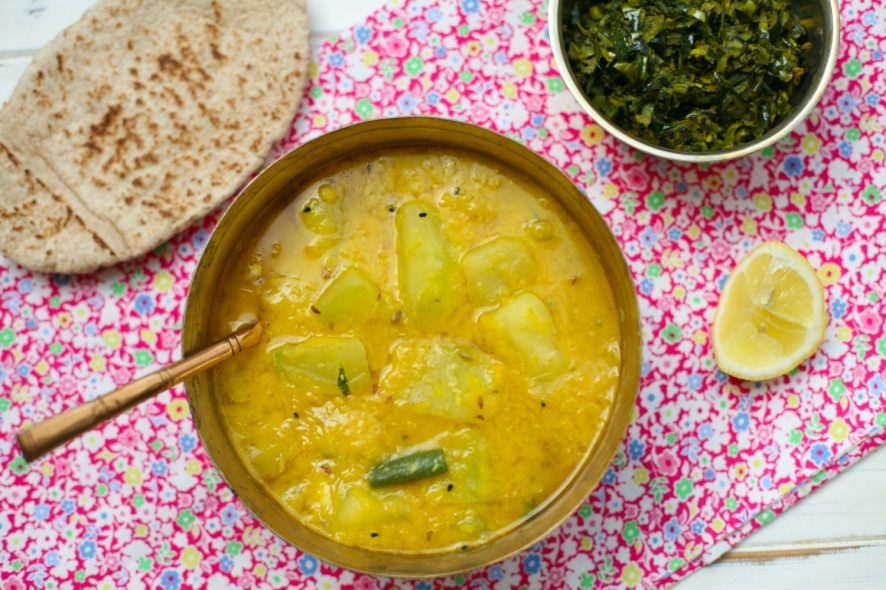
Marrow Dal and Fried Marrow Skin (Khosha Bhaja)

IMG_6968

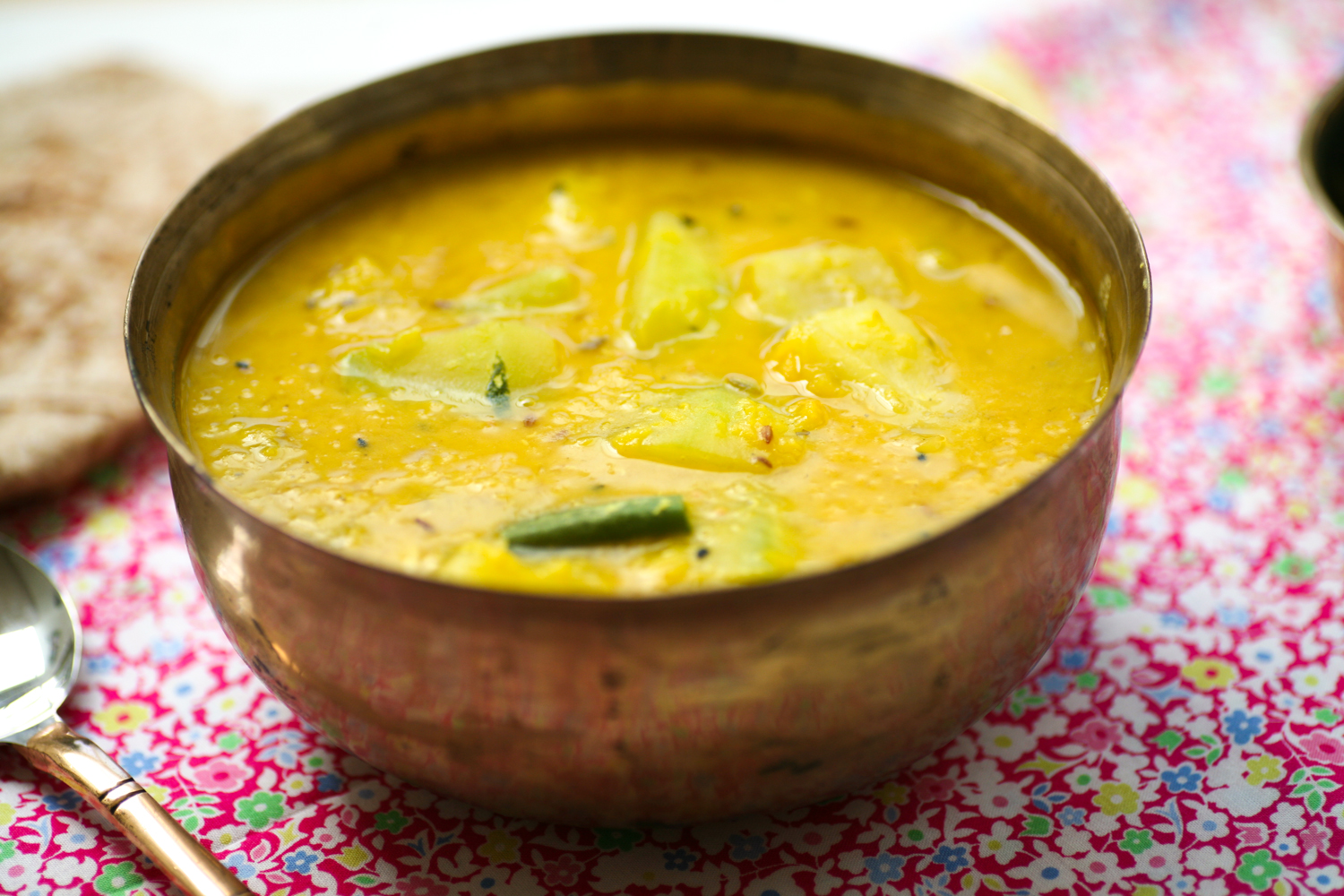
My husband once asked a fellow foodie friend, who used to write for the food section of one of the large weekend newspapers here in the UK, for suggestions of ways to cook with marrow, to which her response was ‘you can start by throwing it in the bin’.  Ever so harsh but she is not alone! Many people often overlook the humble marrow and regard it as tasteless. I can tell you however, that marrow completely comes into its own cooked in Indian dal and even the skin need not be discarded as you can cook a completely separate delicious dish using it.

IMG_6961

In the hot sweltering heat of an Indian summer, eating marrow is the perfect way to cool down as it’s made pretty much made of water. So by combining it with red split lentils to form a dal is a wonderfully satisfying way to eat marrow in all it’s glory. Gardens here in England are bursting with marrows at the moment and although I have none growing in my postage stamp garden both my mother and mother-in-law are supplying me with endless amounts of marrow.

So dive in and give this glorious dal a go. I bet you’ll even surprise yourself as to how good it tastes.

IMG_7031

Marrow Dal

Serves 2-3

125g red split lentils

500g marrow, skinned and cubed (remember to keep the skin)

600g boiling water

1 tsp salt

half tsp turmeric

1 tbsp vegetable/mustard oil

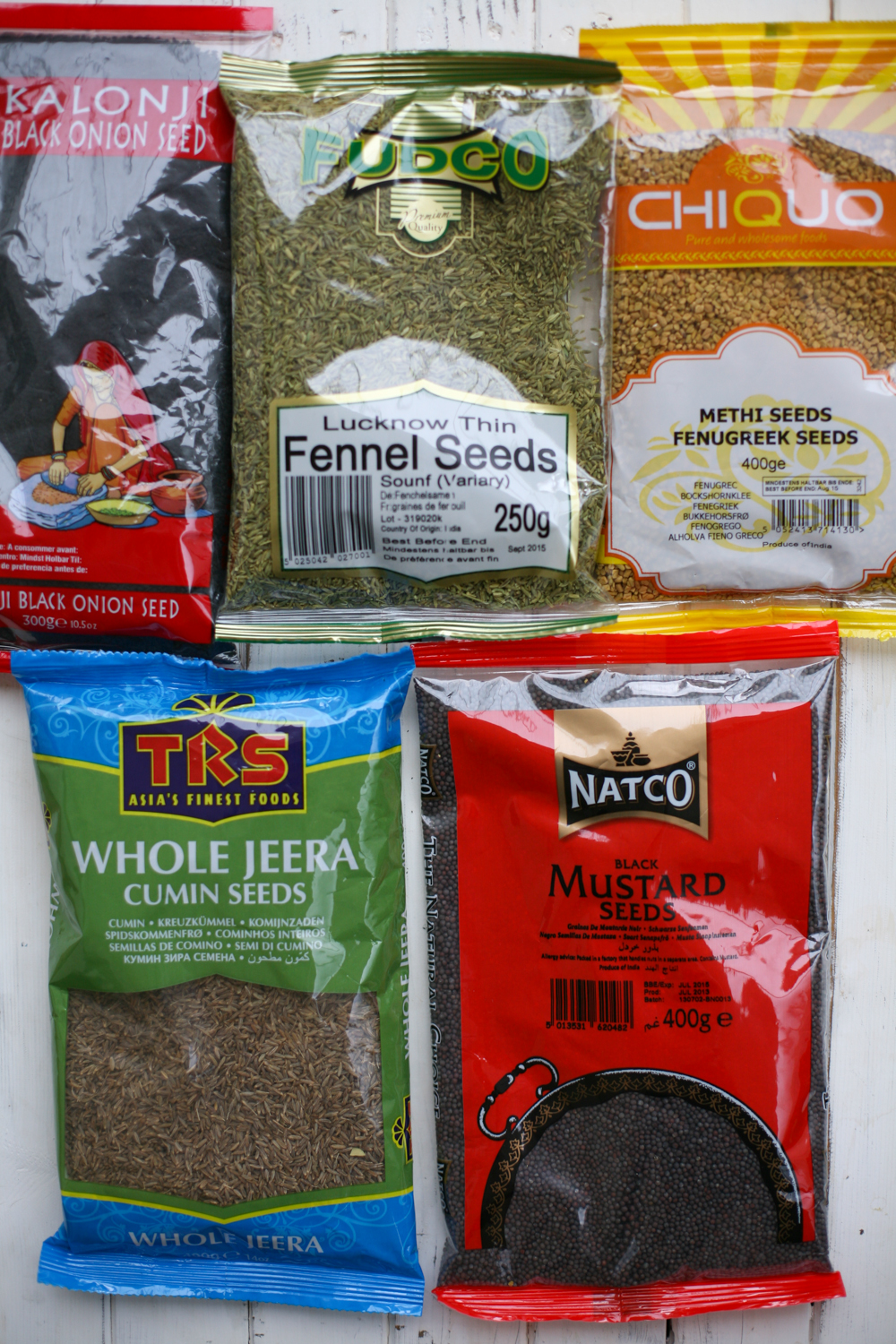
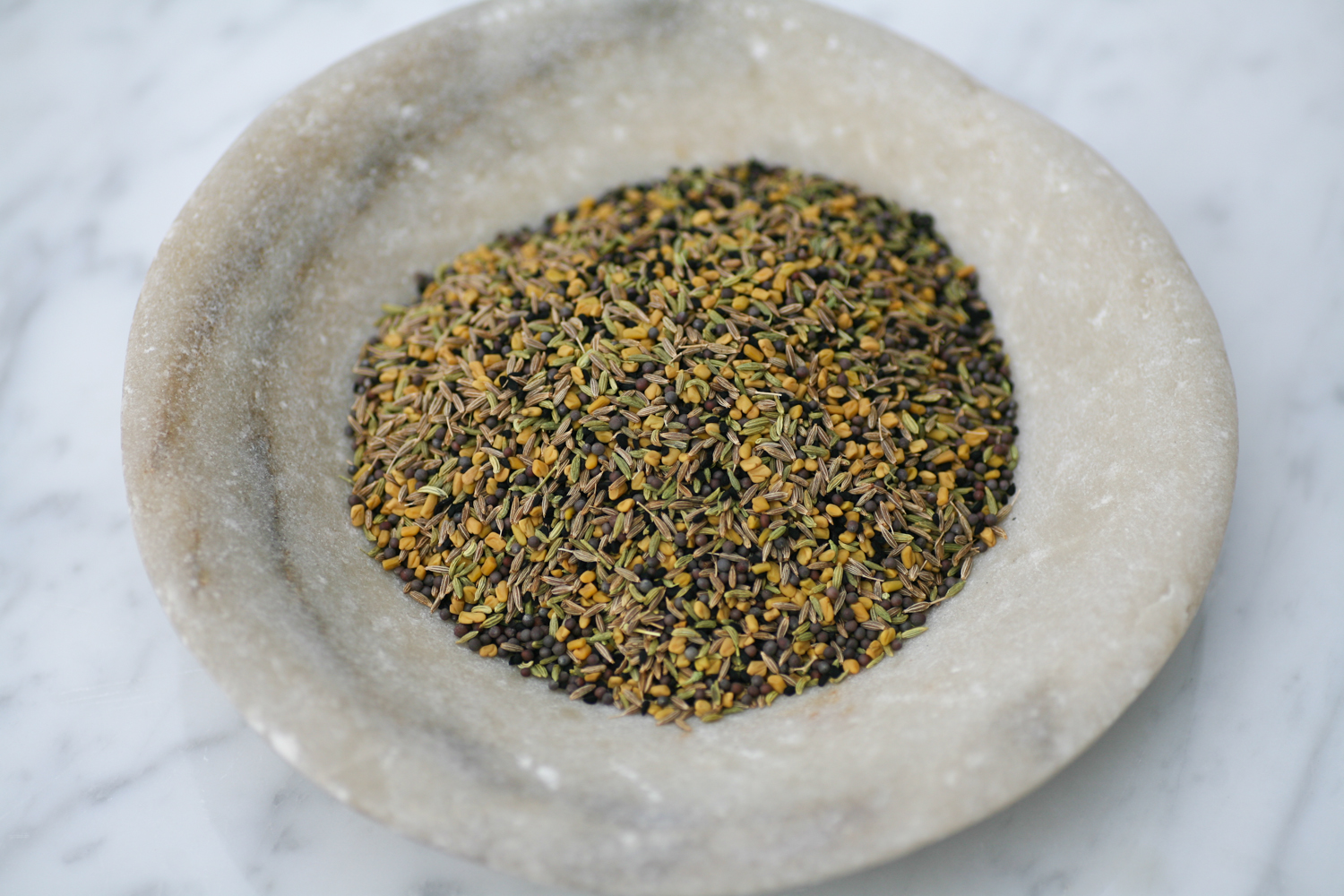
1tsp Panch Phoran (Bengali five spice – see below)

2 green chillies, chopped in two

Panch Phoran is a uniquely Bengali (East India and Bangladesh) five (panch) spice mix. It has a magnificent aroma so I often use it in my red split lentil dals. If you cannot find a packet in your local Asian grocers you can make it yourself by mixing the following seeds together in equal parts: fennel, cumin, nigella, fenugreek and mustard. Store in an airtight container and it will last months. 

1. Rinse the red split lentils under cold water so as to clean them thoroughly. Repeat the process a couple of times.

2. In a saucepan add the cleaned red split lentils and 500g of boiling water. Add the turmeric and leave to simmer for 7-10 minutes. If the lentils begin to dry out add a little more boiling water.

3. Add the marrow and stir into the dal. Add a further 100ml of boiling water and continue to simmer for another 5 minutes.

4. In a separate pan heat the oil and when it is hot gently add the panch phoran. They will begin to pop immediately so keep them moving around the pan. Add the chillies and mix in together. Now pour the marrow dal on top of the panch phoran and chillies and stir in together. Add the salt and then simmer for couple of minutes. Let it cool slightly before serving. You may need to add more salt if required.

In India many people often add a little ghee (clarified butter) on top just before serving to give it that extra delicious taste. If you are watching your waste line simply ignore this step!

***********************************************************

Fried Marrow Skin – Khosa Bhaja

Skin of a marrow

1 tbsp vegetable/mustard oil

1 tsp nigella seeds

1/2 tsp turmeric powder

pinch of chilli powder (optional)

1 green chilli, finely sliced

1 tsp salt

1. Peel the skin of a marrow and slice into fine, small strips. Place in a pan of boiling water and gently simmer for a couple of minutes.

2. Strain and place to one side. Heat a pan with oil and when it is hot add the nigella seeds. After a few seconds add the marrow skin followed by the turmeric, chilli powder, green chilli and salt. Cook on a low heat until the marrow skin begins to bronze.

Serve with the marrow dal above.


Turkey Revisited and Moule Mariniere

IMG_0508
Having been impressed by all that Turkey had to offer last year we decided to return for our summer foray this year, which is a little out of character as we tend to try somewhere new for summer travels. To be fair though, we were exploring  a new area – this time the Bozburun peninsula.
IMG_0470
I favour peace, tranquility and being away from the crowds of mass tourism, so nestling for a couple of weeks in the quiet village of Sogut at the very tip of the peninsula was absolutely the perfect base from which to explore the local area and enjoy the warm waters of the Aegean. It has been described as going back in time, not dissimilar to the south of Spain or France 40 years ago.
IMG_0241
The village itself is small and meanders down the hill towards the sea, offering breathtaking vistas of the nearby islands. The road came to an end at a picturesque harbour where a handful of wooden fishing boats bobbed gently up and down. Along the harbour were a few tavernas offering the freshest fish caught that very day. As the fish were bought in on the fishing boats the women would crouch over the rocks at the water’s edge gutting and cleaning the fish.
IMG_0298
Over the two weeks we alternated between these quaint little eateries (there were four in all) for our evening meal, sitting on the harbour wall, watching the sun gradually dip over the brow of the far away islands.
IMG_0406
Their menus were all fairly similar, but each had their own interpretation of the mezzes. We were somewhat surprised to see that samphire was offered every evening, cooked in garlic, lemon juice and olive oil. 2013 can definitely be remembered as the summer of samphire!
IMG_0566
It tasted less salty than the samphire found in the British Isles and when I asked where it grew, they pointed in-land as opposed to  seawards,  which might explain its less salty taste.
Octopus grilled with garlic, herbs, pink peppercorns and olive oil was another daily staple to the point that I fear that Mr B will start to have cold sweats if he doesn’t have it back at home now and again.  Needless to say a number of the mezzes consisted of aubergine and tomato fusions with the ubiquitous garlic and olive oil, as well as a broad bean based humous and another including beetroot.
We discovered a new soup that really appealed to us. Known as ‘tarhana’ it has been cited as the first ‘instant soup’ invented by Central Asian Turks. The dough that goes into making up the soup takes 5-6 days to ferment, so it really is a labour of love to make and as such I felt it probably wouldn’t get much of a following if I posted it as a blog post in its own right. If I am wrong then let me know and I may well do a post on it in the future.
IMG_0635
Apparently 100 years ago locals would eat a bowl of it for breakfast each morning before embarking on their day’s work. It is truly delicious, and eating it accompanied with a fresh tomato and pickled red cabbage salad and a round or two of gozleme filled with local cheese and cabbage definitely hit the spot.
IMG_0538
The Bozburun peninsular, or to be precise the village of Osmaniye, is one of the most prolific producers of pine honey in the world. We journeyed into the hills to visit the Honey House where we were taken on an informative tour of how honey is produced in the region. All those in the vicinity of the village earn their living from bee keeping and scattered all across the hillside you can see little blue and white boxes housing the bees.  True to its name, the honey itself has a distinctly pine taste to it and I was fascinated to learn that the bees collect a saliva off the pines that has been excreted onto the pine leaves by a totally different insect and it is this liquid that gives the honey its distinctive aroma and taste. You can find out more about the process here.
Other than eating we enjoyed seeing the local area and in particular the local ruins of Phoenix and Amos. The former was scattered all over the surrounding  countryside of Sogut and at a nearby beach – Phoenix Beach – which wins awards in my book as the most off-piste beach to reach, an adventure in itself – you can snorkel and see pots dating back thousands of years.
IMG_0586
I learnt that whilst it has not been thoroughly excavated, archeologists decided that concreting the pots and treasure of the past to the sea bed would be the best course of action to deter would-be-treasure hunters. Maybe this is common practice but I felt this was a rather unusual choice of action.
IMG_0551
We explored the ruins of Amos in 40 degree heat, which was not really the best time to explore the ruins thoroughly, but getting to the ruins took some time to reach as we meandered over the mountains and hairpin bends that make up the Bozoburun peninsular. After exploring the ruins of Patara, Tlos and Letoon last year the ruins of Amos and Phoenix were slightly disappointing, but nonetheless, I do still enjoy a good amble around an ancient ruin.
IMG_0530
As always the locals were friendly and welcoming and made our visit to their region a happy and enjoyable one. I was most impressed with Osman’s gold teeth (see above) – what a legend!
To continue with my seafood diet of the last two weeks I wanted to bring to you my version of the ubiquitous Moule Mariniere, which is long overdue.
IMG_6931
A foolproof recipe that is very quick to prepare and cook, economical and a family crowd pleaser. Enjoy. I hope you all had a wonderful summer holiday wherever that may have been. Leave a comment to fill me in.
IMG_6899
Moules Mariniere
Serves 4
1.5-2kg mussels, cleaned
2 tbsp butter
4 shallots, finely chopped
4 garlic cloves finely chopped
3 bay leaves
200ml single cream
200ml dry white wine
1 tsp salt (optional/to taste)
handful of fresh parsley to serve
crusty bread  to serve
1. Thoroughly clean the mussels under cold running water. Close the open ones with your hands or by tapping them gently and discard the ones that remain open or are broken. Remove any barnacles from the shell and pull away the beards. It’s easiest to pull the beards  back and forth and then they will release from the shell with a little tug.
2. In a pan that is large enough to comfortably fit all the mussels at once with extra room to move them around (if need be cook in two pans and then merge together at the end) melt the butter and then add the garlic, shallots and bay leaves. Once softened add the mussels and stir for a few seconds before placing the lid on top. Leave the mussels to cook in their own steam for 2-3 minutes.
3. Add the cream and white wine and give a good stir and leave for another minute or so.
4. Serve immediately in bowls topped with a scattering of fresh parsley. Serve with a crusty baguette to soak up the juices. Discard mussels that remain closed or are barely open.
IMG_6912

Vietnamese Chicken Rissoles with Shallots, Lemongrass and Garlic

IMG_6830

Vietnamese chicken rissoles, or patties if you prefer, are the perfect simple lunch/supper to prepare for all the family. Little Z, who is four, is always a bit unsure about eating chicken, however, disguising chicken as rissoles seems to really work as they are softer and therefore easier to eat than regular chicken pieces. Other than the dipping sauce, there is no chilli in the rissoles, so they really are family friendly.

IMG_6836

When preparing the rissoles you really want to make sure that the lemongrass and garlic is well chopped up. I chopped them with a knife to begin with before putting them into my spice grinder for a finer texture. The chicken and the shallots also need to be chopped up before whizzing them in a food processor.

IMG_6862

Once the all the ingredients have been combined place some oil into the palms of your hands which will allow you to easily shape your rissoles without them sticking to your hands. Roll them into a ball before flattening them slightly to give a pattie appearance. Cooking time is really short. After heating oil in a pan place five patties in your frying pan and leave them for 3 to 4 minutes before turning them over for a further 3 to 4 minutes. Make sure that the heat is consistent and they do not burn.

IMG_6876

I like to eat them with a fresh salad of tomatoes, red onions and coriander with splashes of nuoc cham sauce over the top, although my daughters prefer theirs with white rice noodles and splashes of light soy sauce. Any leftovers can be stored easily in the fridge and then enjoyed the following day in a baguette with shredded carrots, cucumber and fresh cucumber – similar to the Vietnamese sandwich – Bahn Mi. More on these glorious sandwiches another time.

Chicken Rissoles with Shallots, Lemongrass and Garlic

Makes 15 rissoles (yes myself and a little someone ate two before the photos above)

adapted from the recipe I learnt earlier this year from Van at her fabulous Green Bamboo Cooking School in Hoi An

500g boneless chicken breasts, chopped and then blended

4 lemongrass sticks, finely chopped/blended

4 garlic cloves, chopped/blended

3 banana shallots

2 eggs

1/2 tsp five spice powder

1/2 tsp cayenne powder

6 tbsp plain flour + extra for stopping the rissole sticking to your hands

1 tbsp caster sugar

salt and pepper

oil for frying

1. Finely chop the lemongrass and garlic, initially by hand and then in a spice grinder/blender./mortar and pestle. You want the lemongrass especially to be as fine as possible.

2. After roughly chopping the chicken and shallots place them in a blender until a chicken paste forms. Add the finely chopped lemongrass and garlic and pulse once again. Transfer to a large bowl.

3. Add the eggs, flour, spices and all the other ingredients. Mix well with your hands.

4. Place a little oil in the palm of your hands and then roll some of the chicken paste into your hands to create a ball and then gently press down to create the flattened rissole.

5. Heat a large frying pan with oil and when it is hot gently lower the rissoles into the pan. I usually do mine in batches of 5. Leave the rissoles to cook well on one side (3 to 4 minutes should be sufficient) before turning over and cooking for a further 3 to 4 minutes.

6. When they have browned, place the rissoles onto some kitchen paper to cool.

7. Serve with nuoc cham dipping sauce and a fresh salad

Nuoc Cham Dipping Sauce

juice of 1 lime

2 tbsp sugar

3 tbsp fish sauce

1 tbsp garlic, finely chopped

fresh chilli, finely chopped (optional/to taste)

1. Initially mix the lime juice with the sugar thoroughly before adding the rest of the ingredients. Continue to mix together. This sauce can be made ahead of time and can store easily.


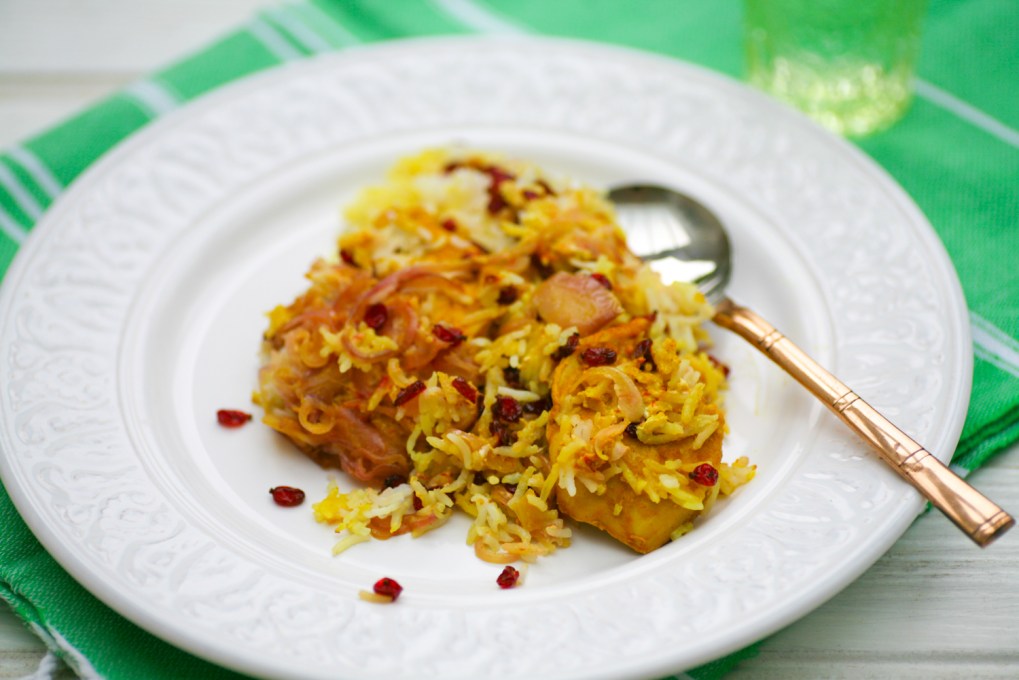
Zereshk Polow – Iranian Chicken with Barberries and Rice

IMG_6663

Fairly recently I picked up a bag of dried barberries (also known as Zereshk or Pipperages) in one of my local Middle Eastern food stores. I do tend to like fruits in savoury dishes, this is customary in Middle Eastern cooking and so I had an inkling that I would probably love them. I posted a photo of my new purchase on twitter and one of my followers,  Sophia – who writes the blog ‘Real Simple Food’ – sweetly tweeted back saying how she enjoyed eating a savoury dish called ‘Zereshk Polow’ growing up, which used barberries.

IMG_6689

I did a bit of digging around on the internet and came up with a number of recipes for the dish. It immediately appealed to me as it incorporated chicken, rice, saffron, turmeric, yoghurt, milk, rice, onions – what’s not to like?

IMG_6685

Since my discovery of the dish I have cooked it a number of times, simplifying it from some of the more detailed ones on the web and those that are rich in butter and egg. The dish originates from Iran although I discovered that barberries are not as exotic as we are led to believe as they once grew in abundance all over Europe, US and Asia. Over time they were eradicated as they were responsible for creating a fungus that caused damage to wheat crops. There were a wide variety of barberries growing in sixteenth century Britain and one of the most loved was called ‘Nutmeg Barberry’, which would typically be served as a garnish for fish such as pike. English kitchens would also use the fruit to make jellies, jams and even ice cream – now there’s an idea!

The barberries themselves are bursting with a citric, tart flavour, not dissimilar to little lime explosions. Their crimson colour adds a jewel like quality to the dish, not unlike pomegranate seeds in their appearance, and this complements the turmeric and saffron in an explosion of colour. It looks inviting don’t you think? As they are dried, they store really easily. When cooking all you need to do is give them a thorough wash and then pop them in the frying pan for around 30 seconds, continuing to move them around the hot pan so that they puff up slightly.

IMG_6726

The final part of the cooking  requires some layering of ingredients before placing in the oven for 30 minutes. See photos below.

IMG_6753

Zereshk Polow (Iranian Chicken with Barberries and Rice

3 large handfuls of basmati rice

3 small red onions (totally 125g weighed), finely sliced

500g chicken breasts/thighs, cut into substantial pieces

4 tbsp butter

1 tsp turmeric

50g dried barberries

1 tsp sugar

4 tbsp milk

1 pinch of saffron

3 tbsp plain yoghurt

pinch of rock salt

1. Wash the rice thoroughly in cold water and place into a pan and pour in enough boiling water so that the water is roughly a thumb nail higher than the rice. (I tend to find this calculation works for me!) Cook on a low heat until the rice has absorbed the water and the rice has softened.  Remove from the pan and place in a bowl.

2. Soak the barberries in cold water for 10 minutes. In a pan melt a tablespoon of butter then add the strained barberries followed by the sugar. Move the barberries around the pan so that they begin to puff up. They burn really easily so keep them moving for max 30 seconds and then place to one side.

3. In a small bowl add the milk and saffron, stir and allow to rest. Once the liquid has taken on a yellow hue add the yoghurt and mix thoroughly into the milk and saffron.

4. In a large pan add two tablespoons of butter and gently fry the onions so that they bronze slightly. Gently place the onions into a bowl to rest.

5. Place the chicken in a bowl with the turmeric and mix in throughly. Add another spoonful of butter to the same pan that the onions were in and gently brown the chicken on both sides. Then add 150ml cold water to the pan and allow the chicken to gently simmer uncovered for 15 minutes.  Remove the chicken and place in a bowl to one side and place the liquid with all the extra bits from the bottom of the pan into another bowl.

6. Now for the layering:  In the same pan that you have cooked the onions and chicken – I find my Le Creuset casserole pot works superbly –  add the final tablespoonful of butter and make sure that it fully coats the bottom and the lower sides. Add a layer of rice so that it completely covers the bottom of the pot then place the chicken pieces on top. Next add another layer of rice mixed with the barberries. Then add the onions on the top followed by the yoghurt saffron milk and finally the juicy liquid that you have kept to one side.  Scatter a pinch or two of rock salt over the top.

7. Place in a preheated oven at 150 degrees centigrade  (300F) for 30 minutes with the lid on, allowing the flavours to blend together.

8. Serve straight from the pot when it is still deliciously hot.


Foraging for Samphire on the British Coast

IMG_6645

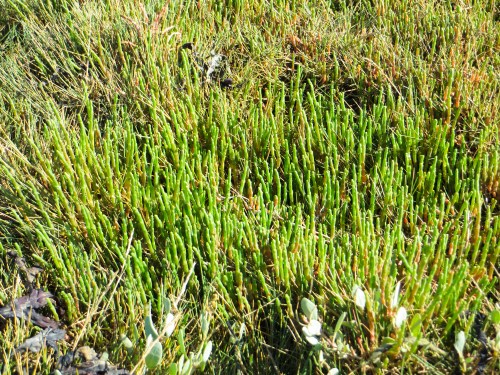
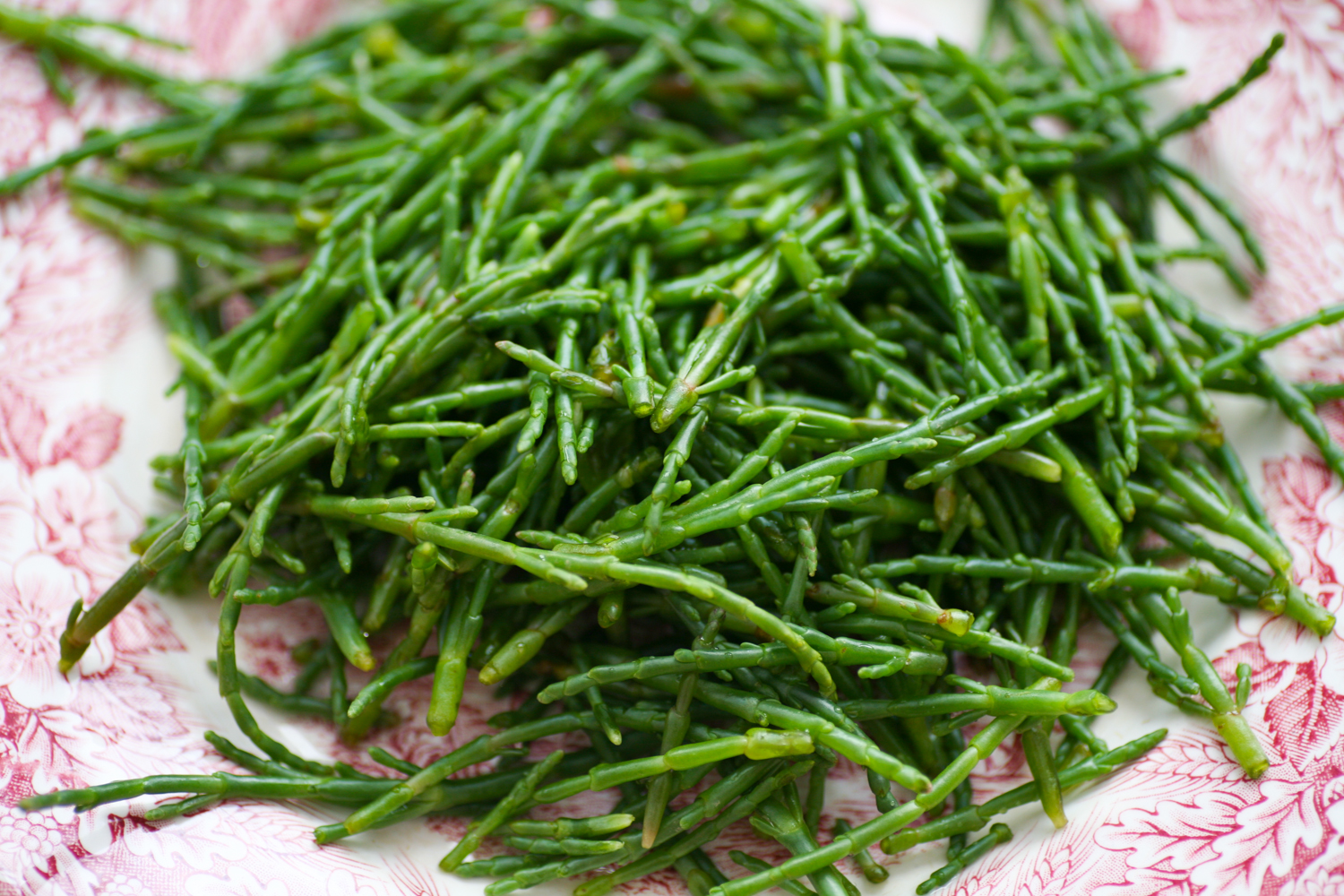
June, July and August are the months to forage for marsh samphire, not to be mistaken for rock samphire, which grows on rocks on land and tastes completely different, I am told. Marsh samphire can be found in abundance in salt marshes and tidal mud flats on the British coast. You may have also come across it by one of it’s other names:  glasswort (its name of old alluding to a time when it was used in making glass and soap); sea asparagus; Saint Peter’s herb (the Patron Saint of Fisherman) or it’s rather grand sounding Latin name ‘salicornia europaea’. I particularly like its less well known name of ‘Mermaid’s kiss’.

IMG_0176

A few years back marsh samphire was not so easy to source in the shops, other than the fishmonger who would grace their fish displays with the vegetable from time to time. Recently I have seen it in the larger supermarkets in the UK being sold in packets on their fish counters. It’s relatively expensive for the amount you get, so if you happen to be on the British coast in the summer, it is well worth having a forage for the vegetable.

IMG_0174

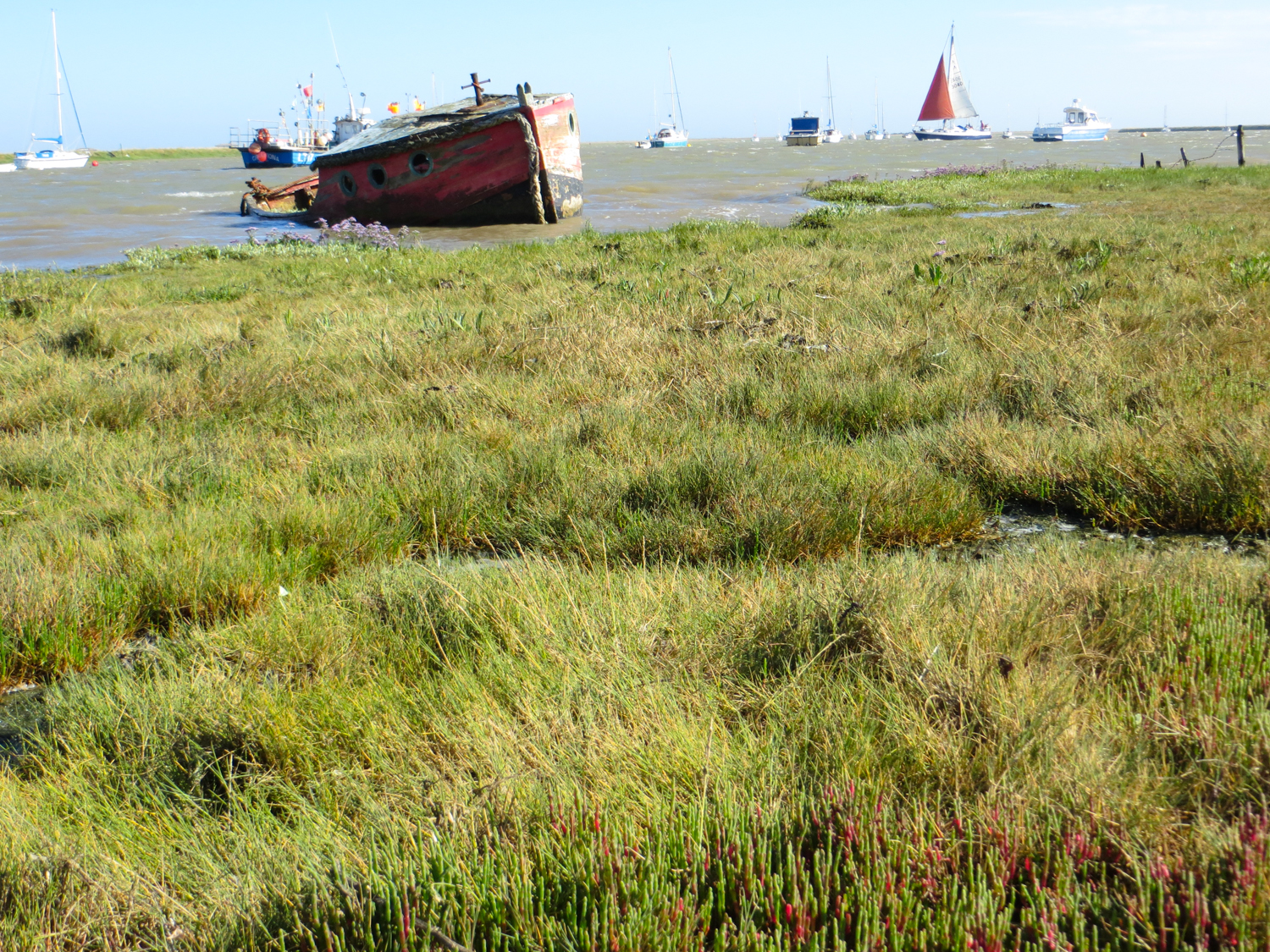
I’ve been spending the last week or so on the borders of Suffolk and Essex, which is perfect hunting ground. I initially came across some growing on the mudflats on Mersea Island and immediately gathered a small amount to prepare for when I returned home. The following day we were passing by the picturesque and historical village of Orford in Suffolk – well worth a detour on many levels – Richardson’s smokehouse, the great Pump Street Bakery, some fine pubs, a small castle, a grade I listed church with Norman remains and a sailing club – all civilised places have a sailing club don’t you find? I had read that Orford was the perfect place to forage for marsh samphire, so bucket and scissors in hand Big A, Mr B and I went a foraging.

IMG_0178

It was not long before we spotted the easily identifiable marsh samphire sprouting up through the tidal mudflats. They almost look like miniature cacti, without any spines or sharp bits. When foraging though you need to be very careful not to pull out the whole plant as it will prevent it from growing further. Simply pinch off the top parts or use a pair of scissors, so that the fibrous stems and roots remain intact. You will find that the the samphire needs to be thoroughly washed a couple of times so that the mud, grit and general nasties are disposed of.

IMG_0179

Whilst it can be eaten raw, I like to cook samphire – boil or steam for a couple of minutes, and then eat with a dollop of melting butter and a squeeze of fresh lemon juice. Absolutely no salt is needed as they taste of the sea so are more than sufficiently salty. They are rich in Vitamins A, C and D and taste  similar to asparagus, albeit more salty!

IMG_6590

They are also a perfect accompaniment for fresh fish and also lamb, although I rather like the way that this blogger has prepared their samphire – see here – Poached Eggs with Samphire and Honey Harissa. How good does that sound?

Are you able to forage samphire near you? Does it grown in your country? How do you eat it? I would love to know so write a comment below for us all to see.

IMG_0185

Fresh Marsh Samphire with Butter and Lemon

A handful of fresh marsh samphire per person

 knob of butter

lemon wedges

1. Trim and wash the marsh samphire a couple of times so that all the mud, grit and stray seaweed is discarded.

2. Boil a large pan of water and place the samphire directly in the water (if steaming put into the steamer). Boil gently for 3 minutes and drain immediately.

3. Plate up and add a knob of butter to each serving and a lemon wedge on the side. Equally you can pre-melt the butter and pour it over the samphire. Both ways work equally well.

Eat immediately when it is hot and enjoy.

Remember no salt is needed. 


Miso Chicken, Slow Baked Tomatoes and Fresh Spinach Salad

IMG_6527

Here in the UK we are enjoying a flashback to the summer of 1976, apparently. I was only one at the time so have no recollection of the ‘great summer’ but we are now into weeks, not days, of glorious warm sunshine with temperatures climbing up to 33 degrees in west London. When the weather is hot I love to get creative with my salads and try out different flavour and ingredient combinations. This one I created awhile ago when a friend, who has certain culinary likes and dislikes was coming over to supper. I started with the miso chicken and spinach and then built from there, digging out interesting ingredients from my fridge and pantry along the way. The overall mix of flavours works really well to the extent that I have now cooked this salad multiple times and thought you would appreciate having it too. It’s great for a picnic, lunch or supper, is hugely versatile and if you keep the chilli oil marinade to one side for guests to help themselves, then the whole family can enjoy the dish.

Miso Chicken Slow Baked Tomatoes and Fresh Spinach Salad

Serves 4-6

 For the Chicken Marinade

500g chicken breasts

3 garlic cloves, grated

1 inch ginger, peeled and grated

2 tbsp sweet white miso paste

1 tbsp sesame oil

1 tbsp light soy sauce

*******

parchment paper

3 tbsp pine nuts, toasted

250g puy lentils

1 avocado, chopped

6 slow baked tomatoes marinated with chilli

chilli oil from the slow baked tomatoes (see above)

250g fresh spinach

1. First you need to flatten the chicken breasts as they will cook under the grill more evenly and quicker if they are thinner. Place a large strip of parchment paper underneath the chicken breasts and another similar sized piece on top. Then using a rolling pin gently hit the chicken pieces which will begin to flatten. Check to see how they are looking and if they need to be a little flatter continue to hit them with the rolling pin. If you overly bash them they will begin to break apart so flatten them to the extent that they still keep in tact.

2. Place the flattened chicken breasts into a freezer bag and then add the grated ginger, garlic, sweet white miso paste, soy sauce and sesame oil. Using your hands massage the ingredients thoroughly into the chicken pieces. Place in the fridge for 30 minutes or longer if you can.

3. Heat up a small frying pan and when it is hot add the pine nuts being careful not to burn them as they toast quickly. Keep them moving around the pan and after a minute they should have toasted nicely.  Place to one side.

4. Heat your grill (you could also use a griddle pan or BBQ!) to 200 degrees centigrade and place the marinated chicken directly onto your oven rack. Place some baking parchment/foil underneath to catch all the bits than fall through the rack – these will also taste great in the salad.  The breasts will need around 6 minutes each side. If they look a little undercooked leave them for a minute or two more and vice versa.

5. In a large mixing bowl add the spinach, chopped/sliced avocado, puy lentils – for speed I often use the Merchant Gourmet brand – see here, pine nuts and slow baked tomatoes marinated in chilli. Whilst you can of course slow bake your own and marinate them in chilli oil (which I will get around to doing so at some point – will make a great blog post) I opt for the Sacla brand – see here. Chop the tomatoes up slightly and then gently mix all the above ingredients together.

6. Once the chicken has cooled slightly slice into stripes and mix gently into the salad along with the bits that had fallen through the rack. Add a little of the chilli oil from the slow baked tomatoes and place extra in a small pouring jug.

7. Transfer the salad to a serving bowl and allow guests to serve themselves. I find it is best eaten at room temperature.

It is surprisingly filling and leftovers the next day taste equally good, so just refrigerate if you have some left over.

IMG_6544


Spicy Virgin Mary with Rosemary Spiced Walnuts

IMG_6440-2

For as long as I can remember I have adored drinking a Spicy Virgin Mary and time and time again I have been a little disappointed by what some pubs pass off as a Virgin Mary here in the UK. Tomato juice with a little tabasco just really doesn’t pass muster, so it’s not unheard of me asking for the necessary ingredients and making my own. Cheeky I know, but hey! In my old life working as a headhunter in the city I would spend a fair amount of time in hotels around London and other European cities meeting up with candidates who wished to remain incognito. I am not a coffee drinker, other than iced coffee and in particular Vietnamese –  for the recipe click here, and there are only so many cups of teas, water and ginger ales you can drink in a day, so my drink of choice, come the afternoon, would be a Virgin Mary.

IMG_6425

The quality of these Virgin Mary cocktails on the whole were excellent, as you would expect from a five * hotel, however, I recall the ones served to me at Browns Hotel, London and The Four Seasons, Canary Wharf – London and Milan were ahead of the pack. They often came accompanied by some little bar snack – nuts, olives or vegetable crisps, which worked so well with the spicy drink.

IMG_6428

So alongside my recipe of a Spicy Virgin Mary I have found the perfect munchy, Rosemary Spiced Walnuts, which is easy to prepare and guaranteed to please those you hand the bowl to. In fact I have prepared it so many times since stumbling across it on fellow food blogger ‘Gastrogeek’s‘ site that it will definitely be imprinted on my mind as the snack for 2013.

IMG_6458

Spicy Virgin Mary

Makes 1 jug around 6 glasses

1 litre of tomato juice

4 tsp Worcestershire sauce

2 tsp tabasco

juice from half a lemon

2 tbsp horseradish

pinch of celery salt (or normal rock salt)

freshly ground black pepper

fresh celery sticks

extra lemon juice for rim of glass

1. Add all the ingredients together and taste. I do like my horseradish so perhaps add one tablespoonful then taste before adding the second.

2. To decorate the glasses first squeeze the extra lemon juice on a saucer and the freshly ground black pepper on another. Place the glasses first on to the saucer with the lemon juice followed by the saucer with the black pepper.

3. Add the Spicy Virgin Mary followed by a stick of celery in each glass and a slice of lemon and some ice.

If you want to ‘bloody’ the drink then just add vodka!

***********

IMG_6477-4

Summer is the season for having friends around for a BBQ and generally chillaxing so I hope you get to try this fab drink/snack combo. What homemade snacks do you like to serve up when friends come over?

IMG_6479

Rosemary Spiced Walnuts

Adapted from the lovely Rejina over at Gastrogeek, who in turn sourced it from Lawrence Keogh, Head Chef at the Wolseley

1 tbsp butter if eating immediately OR a splash of olive oil if cooking ahead of munching

150g walnuts

1-2 tsp light brown sugar

4 springs of fresh rosemary, chopped into small pieces

splash of water

1 generous pinch rock salt

pinch of ground black pepper

1/2 tsp chilli powder (or you could try smoked/hot paprika/cayenne powder)

1. Heat the butter/oil in a saucepan and add the walnuts. Cover the walnuts in the butter/oil and keep them gently moving around the pan allowing the natural oils to resonate.

2. After a couple of minutes add the sugar and allow the nuts to begin to caramalise.

3. Add the chilli powder (I also sometimes make these with smoked paprika), fresh rosemary, rock salt and black pepper. Continue to stir and shake the nuts around, making sure that they do not burn.

4. After a couple of minutes pour into a serving bowl and sprinkle some rock salt on top.

Perfect with a Spicy Virgin Mary.

IMG_6487-6


Vietnamese inspired Salmon, Cucumber, Red Onion and Grapefruit Salad

IMG_6208

Up in my old neck of the woods there is a fantastic restaurant that I love to visit whilst catching up with friends. It goes by the name of Granger & Co, owned by the Australian chef Bill Granger. Bizarrely I have never purchased or been given any of Bill’s cookbook (sorry Bill – take note friends and family ;o) but if any of the dishes at his restaurant are to go by I really ought to get my hands on some copies. The restaurant is always heaving and it’s important to note that they don’t take reservations, so it is always best to go with plenty of time in hand as there may be a wait – max I have ever waited was 20 mins.

IMG_6200

The other day my lunch companion and I were seated to a table immediately – we were in luck – and then cast our eyes over the menu, which quite frankly has all the types of dishes that I would like to eat in a restaurant. Delicate, fresh, exotic, great flavour combinations and healthy, the menu appeals to anyone with a love of food and flavours.  I actually found it hard to make a decision as there were so many things that appealed. I opted for a Vietnamese inspired salmon salad – mainly for two reasons: firstly I have a bit of a ‘thing’ going on for Vietnamese cuisine at the moment which you’ve probably noticed and secondly I was curious to see how the dished compared to those I actually ate in Vietnam recently. It was also light and healthy, which was a bonus!

IMG_6216

It is no exaggeration but every mouthful was an utter delight. Making a mental note of what I was eating I was determind to replicate a similar dish at home and share it with you. I don’t know exactly what Bill used in the dressing but I have made my own twist on the dish. I have cooked it many times since and the response has been really positive. Aside from the red grapefruit, even my seven year old  really loves the dish. As alternative you could always replace the red grapefruit with fresh mango.

Vietnamese inspired Salmon, Cucumber, Red Onion and Grapefruit Salad

Serves 4

4 salmon fillets

2 tbsp light soy sauce

2 tbsp runny honey

1 tbsp sesame oil

*****

2 cucumber, sliced at diagonal angles (see photos)

1 red onion, finely sliced

1 red grapefruit, chopped into bite sized pieces

200g trimmed fine green beans

1 large handful of fresh coriander

*****

2 tbsp mirin

2 tbsp fish sauce

1 tbsp rice vinegar

2 tbsp caster sugar

2 limes, juice only

1. In a bowl place the salmon fillets and add the soy sauce and runny honey and using your hands coat the salmon pieces and leave to marinade in the fridge for 30 minutes.

2. Preheat your oven to 170 degrees.

3. In a frying pan heat the sesame oil and when hot add the salmon skin side down to begin with. Literally allow to bronze slightly for a minute and then turn over gently and leave for another minute. You want to have it so the outside is delicated bronzed but not cooked all the way through. It can begin to turn a lighter pink but you want the remainder of the cooking to take place in an oven gently.

4. Spread out a large piece of  tin foil and place the salmon pieces in the centre, making sure not to break them up. Add the remaining marinade from the bowl over the salmon.  Now you need to create a Papillote effect. It’s very straightforward – all you need to do is create a salmon parcel making sure all the foil edges are closed up so that no air can escape and there is some space above the salmon so don’t enclose it too tightly.

5. Place the salmon parcel in the preheated oven for 15 minutes, by which stage it will have be cooked through and ready to crumble gently on the salad.

6. Whilst the salmon is cooking steam the green beans for a minute or two. You want to make sure they continue to have a good crunch but that the bite is taken off a little with the steaming. Equally you could boil them for a minute and then drain under cold water.

7. Add the green beens to the cucumber, red onion, red grapefruit, fresh coriander and place a good helping on eat plate.

9. Add the mirin, fish sauce, rice wine vinegar, caster sugar and lime juice to create the marinade. Taste to check you have the right balance for you.

8. When the salmon is ready remove from the oven. Gently remove the skin, which will come away easily and place a salmon fillet on the top of each salad, allowing it to crumble slightly. Pour a little of the marinade over the fish and salad and serve immediately. Place the remaining marinade in a small jug for guests to add more should they wish.


Saffron and Cinnamon Honey Served TWO ways – sweet and savoury

IMG_6152

Sometimes the simplest dishes are the best. A plate of freshly steamed samphire with a knob of butter, a moule mariniere with crusty bread to mop up the sauce, a mature chunk of cheddar with a crisp apple, a boiled egg dipped into cumin powder, fresh tomatoes with fresh basil and buffalo mozzarella drizzled in the finest extra-virgin olive oil, fresh asparagus dipped in butter (have you noticed there’s a butter theme going on here!). I could go on but in this day and age when many chef’s are pushing boundaries and creating new flavour sensations and wowing us with their scientific approach to the culinary arts it sometimes comes as a welcome relief to sit down and eat a meal that is not complicated and flash but is simple and truly delicious.

For those who have been following my blog for a while will know, I don’t really have a sweet tooth, well certainly not the kind to have dark chocolate cake/torte/mousse at the end of the meal. Growing up my favourite puddings were rhubarb crumble, pavlova, custard tart and anything with nuts in. Mr B on the other hand loves all the old English puds and often puts a request into my mother at around Christmas time to prepare one or two – things like jam roly poly, spotted dick, treacle pudding, tiramisu – she’s good at making all these, so I let her run with it.

Generally speaking we tend to just pick on fresh fruit at the end of the meal, which is not only delicious but also satisfying and involves no effort or preparation.

I recently came across a pudding however that immediately catapulted itself into the top league of puddings after the first mouthful. It involves 7 ingredients and can be whipped together very quickly.

IMG_6136

Saffron and Cinnamon Honey with Figs and Greek Yoghurt

adapted from Greek.food.com

5 figs, halved

2 large tbsp thick Greek Yoghurt per serving

2 tbsp honey

1 large pinch of saffron

1 large stick of cinnamon

40 g white sugar

300ml cold water

1. In a saucepan place the cold water, sugar, honey, cinnamon stick and saffron and stir thoroughly until the sugar has completely dissolved. Simmer gently for around 15-20 minutes. Do not over cook as the liquid will turn into a thick toffee substance, which you do not want to happen.

2. On a serving plate/bowl add a generous dollop of Greek yoghurt and place three fig halves on top of each mound of yoghurt.

3. Finally gently spoon the scented honey over the figs and yoghurt having removed the cinnamon stick first and serve.

Note: You can also gently heat the figs in the honey for a minute on both sides, however I tend to prefer them fresh with the honey drizzled on top. Try both and see which you prefer.

As you are likely to have some sweet scented honey left over the following Scandinavian influenced open sandwich works a treat with the sweetness of the honey and the saltiness of the cheese and prosciutto/parma ham.

IMG_6183

Open Sourdough Sandwich with Prosciutto, Cheese, Rocket, Peach and Scented Honey

Per Serving you will need:

1 slice of sour dough bread

1 slice of prosciutto

2 slices of cheese – I used Italian Taleggio La Baita above, but crumbled soft goat cheese also works really well

small handful or rocket/arugula

1/2 (half) peach

drizzle of scented honey (re above recipe)

pinch of coarse black pepper

Serve

I tend to make this open sandwich in the following order: bread, prosciutto, cheese, rocket, peach (or can be before rocket), honey and black pepper.

It makes a very satisfying lunch as the flavours compliment each other so well. For this photo shoot above I used white flat peaches but I think the sweet yellow flesh peaches would probably look more attractive on an open sandwich.

IMG_6162