Bun Cha – Vietnam’s culinary jewel

IMG_6057

On a recent trip to Vietnam Mr B, Big A and Little Z (husband and two daughters) stopped off in Hanoi for a couple of days before heading south to Hoi An and it was during this stay I discovered a dish known as Bun Cha (pronounced Boon Cha – even the name of it appeals) that will stay with me forever. There have been certain times in my life that I have, often unexpectedly, had a meal that was off the delicious charts and consequently imprinted on my memory. This was one of them.

IMG_6080

We had booked ourselves onto a guided tour of ‘real’ Hanoi with Hanoi Kids – which I cannot recommend more highly if you are planning a visit. The personal tours are conducted by local university students who show you their beloved Hanoi. The hope is that the students can improve their English and you enjoy an original type of tour. The tours are free so it’s a win win for everyone, although it’s only polite to pay for their lunch and drinks and leave a tip at the end (although there is no pressure to leave one).

Van and Nhung (our designated Hanoi Kids for the day) collected us from our hotel in Old Hanoi and after a few minutes discussion on what kind of things we enjoy doing they whisked us off to a few places they thought we should see, both on the tourist trail and the more hidden places.

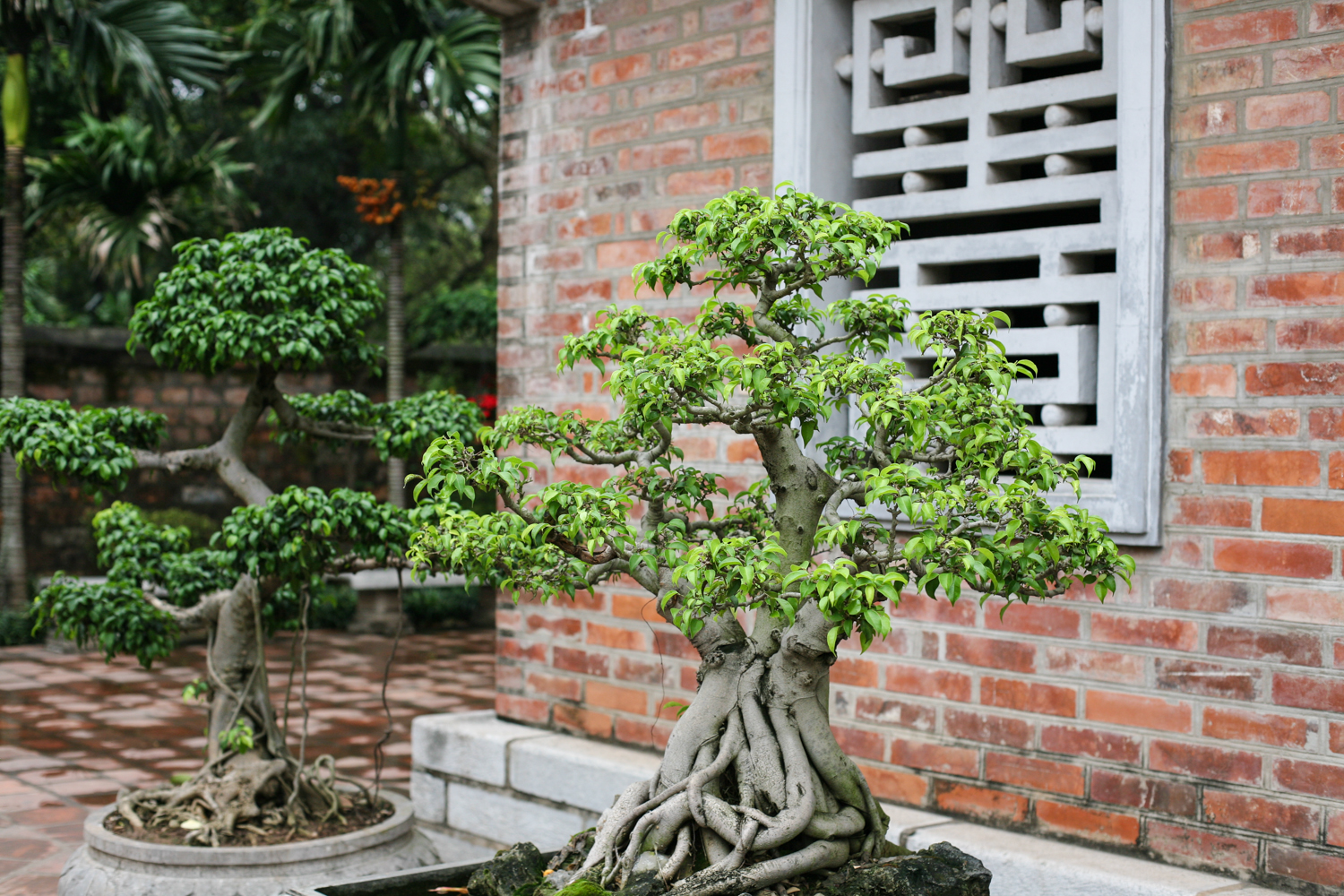
Despite the tourists who flock to ‘The Temple of Literature’, the site of Vietnam’s first university, the place was breathtakingly calm and serene as recently graduated students wafted around in their stunning ‘ao dai’ – the national dress for Vietnamese women.

IMG_4794

The temple is a place for them to take cherished photographs of themselves in all their finery having completed their studies; their graduation photographs if you will.
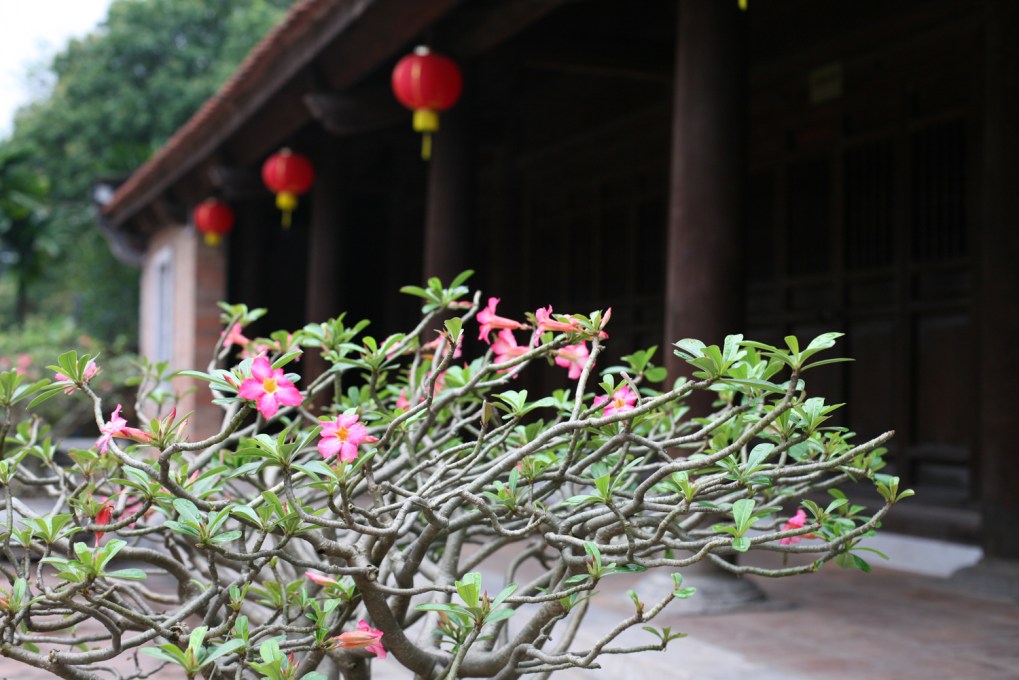
IMG_4799We wandered around the large complex taking in our surroundings before heading back to the cool of our transportation and on to the next destination.

IMG_4800

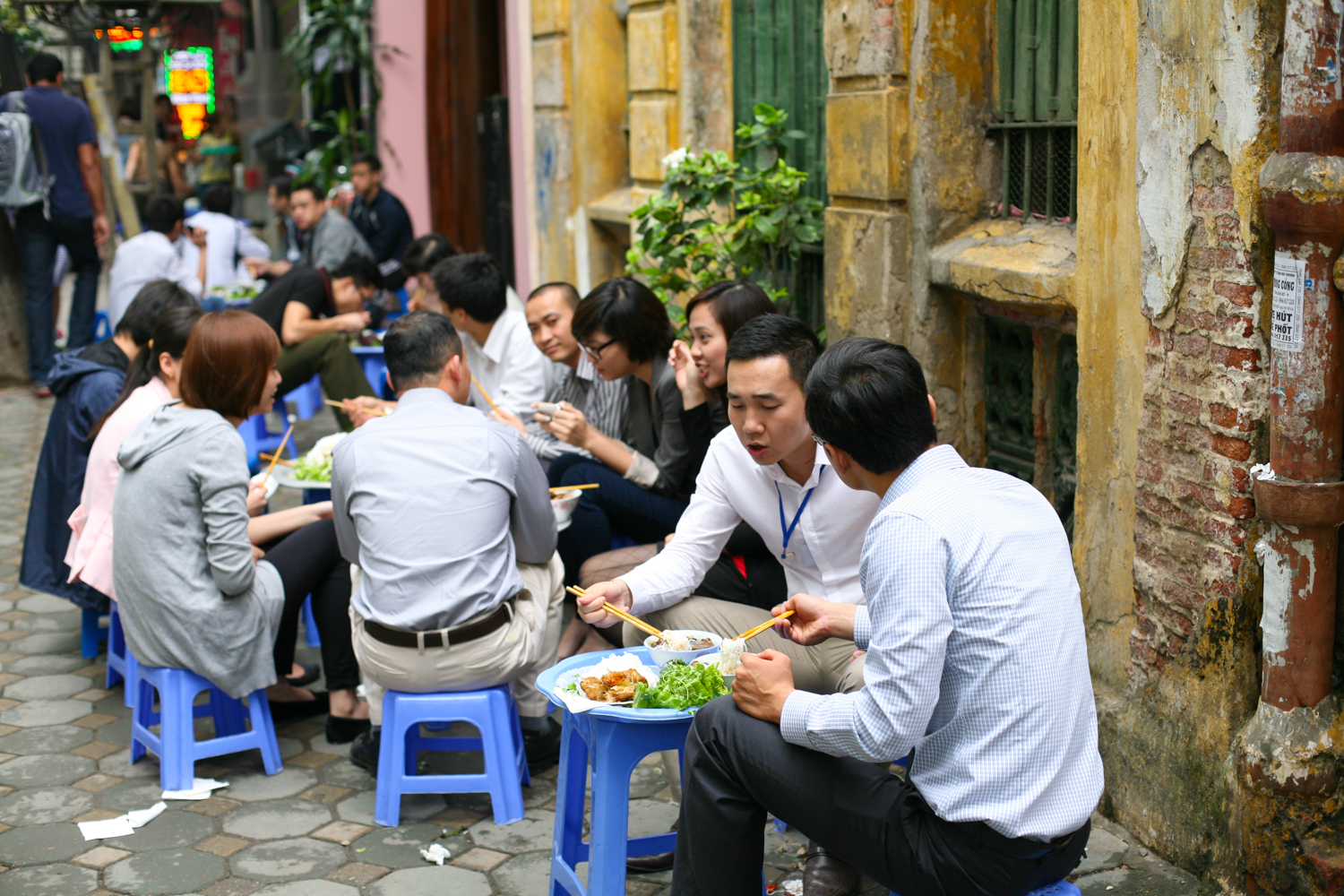
After a morning of soaking up the some of Hanoi’s sites Van and Nhung promised to take us to one of their favourite Bun Cha establishments. New to Bun Cha we were open to their suggestion. Our driver dropped us off by the pavement where we found a collection of little tables with miniature blue stools where local Vietnamese were feasting on Bun Cha.

IMG_4818

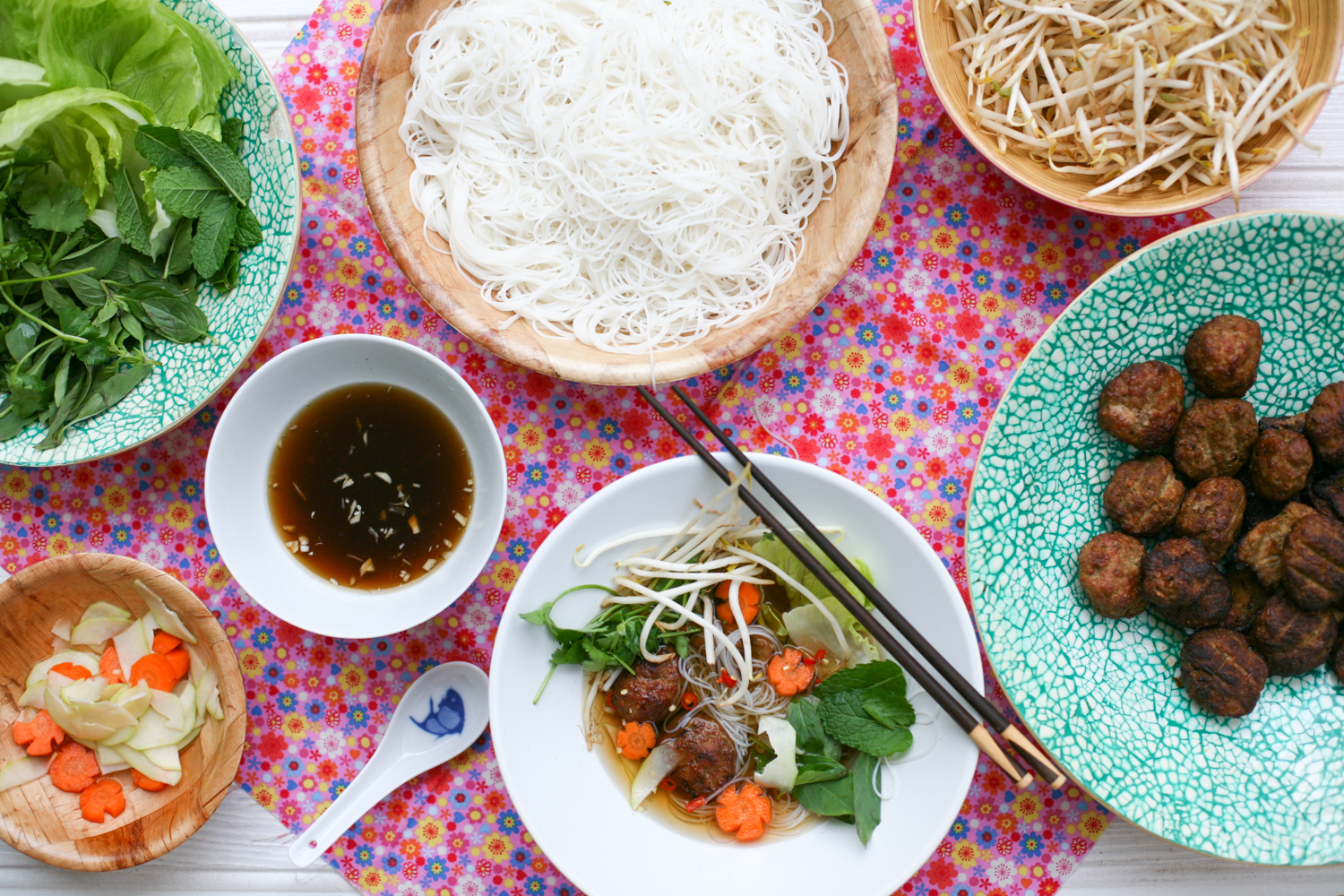
We were shown to a table and waited briefly for our meal to arrive. A large tin platter was placed on the small table, which we were huddled around and upon it were six bowls of broth filled with BBQ pork slices and patties. In the middle of the platter where mountainous piles of noodles, fresh herbs, lettuce and bamboo shoots.

IMG_4822

The simplicity of the spread did not reveal the resplendent flavours that came to the fore after the first mouthful. Without exception we were all in culinary nirvana; even Little Z who has not such a developed palate – being 3 yrs old – devoured every mouthful. The atmosphere of eating in a local eatery with traffic and bikes whizzing by only added to the charm. All the tables were filled with locals, not a tourist in sight (apart from us that is).

At £2 a head it is without doubt the best cheapest meal I have ever eaten. If you are in Hanoi do check it out you won’t be disappointed. The address is : Bún Chả 34 Hàng Than, 34 Hàng Than, Hoàn Kiếm, Hanoi.

The afternoon was spent on foot touring the streets of Old Hanoi,which is no easy feet I tell you. Crossing a road in Hanoi is a tricky business, but with our guides on hand we managed to stay alive to tell the tale.

IMG_4840

Some like to take a more leisured approach to daily life!!

IMG_4848

We ambled around Hoan Kiem Lake, which is the heart of Hanoi. Within the frenetic metropolis the lake offers peaceful walks in the relative shade of the tree lined walkways. We visited the temple in the lake and heard about the legend of the giant tortoise and the sword.

IMG_4865

The rest of the afternoon we spent wandering down the laberinth of narrow roads that make up Old hanoi, stopping off at temples and markets and of course sampling the famous egg coffee at Cafe Giang, a coffeehouse that’s been around for decades. (39 Nguyen Huu Haan) and is delightfully charming hidden down a dark little alleyway (we would never have found it without Hanoi Kids), over two floors scatted with it’s miniature tables and wooden stools, much to Mr B’s chagrin, as he is a good six foot tall. The girls loved it however as the seating arrangements in Hanoi were perfect for them.

So for those who have no immediate trips to Hanoi planned, fear not, here is the simple but truly delicious Bun Cha recipe that you can make at home. Don’t be put off by the length of ingredients, it is far more straightforward than it may appear and if you don’t have all the herbs just use one or two of those listed. Equally if you find green papaya too hard to source just add carrot. Ideally marinate the pork mince and slices and leave in the fridge overnight if you have time/remember. Failing that a couple of hours marinating will also be sufficient.

Bun Cha

Serves 4

Pork Patties and Slices

300g pork shoulder

300g pork mince

6 shallots, minced

6 garlic cloves, minced

2 spring onions, very finely chopped

1 tsp sugar

2 tsp fish sauce

2 tsp dark soy sauce

2 tsp salt

2 tsp honey

1 tsp freshly ground black pepper

To Serve

1 handful of mint leaves

1 handful of coriander leaves

1 handful of Thai Basil

1 large handful of bean sprouts

1 large handful of lettuce leaves

500g rice vermicelli noodles, cooked

Side of Pickles

quarter of a green papaya, thinly sliced

1 large carrot, sliced into carrot flowers (or simply sliced)

2 tsp salt

1 tbsp caster sugar

2 tbsp rice wine vinegar

Dipping Sauce

2 tbsp fish sauce

2 tbsp caster sugar

2 tbsp rice wine vinegar

250 ml water

1 chilli, sliced thinly

2 garlic cloves, diced finely

juice of half a lime

1. In a mixing bowl combine the pork mince with HALF of all the ingredients in the ‘Pork Patties and Slices’ section. Thinly slice the pork shoulder to around 1/2 cm depth, 5cm length x 4cm width approximately. Place in a separate bowl with the other HALF of the remaining ingredients.  Cover both bowls and leave in the fridge to marinate overnight or for a couple of hours.

2. Next prepare the side of pickles by slicing the carrots, or if you are feeling ambitious make little carrot flowers. Simply peel the carrots and then make V cuts lengthways, without going all the way through the carrot. This way when you slice the carrot horizontally little carrot flowers have been formed. Peel and slice the green papaya and then put both the vegetables into a bowl with the salt. Set aside for 10 minutes before rinsing off the salt in water. Drain thoroughly and then place in a new bowl with the sugar and the rice vinegar. Leave to rest for an hour. This will allow the vegetables to absorb the sugary vinegar flavour.

3. Prepare the dipping sauce by mixing all the ingredients together. Leave to one side.

4. Cook the rice vermicelli according to the packet – few minutes normally in boiling water. Drain under cold water and leave to one side.

5. After marinating the pork, make small patties using your hands, similar to how you would make meatballs. It is easiest to form the balls if your hands have a little oil on them. Once you have formed a ball, gently flatten the pattie so that it is easier to handle when cooking.

6. If you want to be really authentic then you could BBQ the meats but as it is not always BBQ weather here in the UK, I find the oven grill works equally well. Preheat the oven grill to 180 degrees (I use fan oven). Place the slices and patties on the grill rack and grill for just under 10 minutes (or until nicely turned brown) before turning and grilling for a further 10 minutes.

To serve: 

It’s a great dish for people to help themselves so place the herbs/lettuce/bean sprouts, dipping sauce, side of pickles and noodles in separate bowls. To heat up the noodles simple pour boiling water over them and drain them thoroughly! Then place the meat on a separate plate. Ideally serve in small little round bowls like those served in Hanoi (see photo above). My bowls are a little too large really so aim for a small bowl if possible. Guests pour a little dipping sauce in their bowl followed by a couple of slices of pork and a couple of pork patties and  pickles. Then you dip a bit of vermicelli and fresh herbs/lettuce/bean sprouts into the bowl and then eat. The flavours and textures will sing to you and you will be finishing off bowls of the dish before you know it. If you run out of dipping sauce it is easy to prepare a fresh batch. Both my hosts in Hanoi did not finish off the sauce as it is sweet, although I couldn’t resist finishing off every last mouthful.

Pasta Pasta Pasta at La Cucina Caldesi Cooking School

IMG_5915

“I am not a glutton – I am an explorer of food”
― Erma Bombeck

Last week I booked myself onto the full day pasta course at La Cucina Caldesi cooking school, which is attached to the Italian restaurant, with the same name, on Marylebone Lane in central London. I was keen to learn from an Italian pro on the various skills and techniques required to make different types of pasta and gnocchi and the sauces that accompany them.

IMG_5920

Cooking courses are always very good fun, not least because you are thrown together with a diverse bunch of kindred fellow foodies who are all eager and receptive to learn. As well as getting to cook a number of dishes together you also get to feast on them over a long lunch with a glass or two of wine.  The ringmaster for the day was the formidable Stefano who tells things straight and does not suffer fools….just don’t mention the ‘pepper lady’ to him, but clearly is a warm hearted Italian from Parma – well via Lewisham, with a good sense of humour.

The workshop included a lengthy list of recipes ranging from green fettuccine with rabbit ragu to potato gnocchi with tomato, sausage and fennel seed ragu, scialatielli – fresh pasta ribbons with herbs and parmesan, cannelloni, ravioli, gluten free pasta, spinach pasta, clams with chilli, garlic, white wine and ribbons pasta and that glorious spaghetti alla Puttanesca, which is a tomato sauce filled with olives, capers, anchovies, garlic and herbs.

From the word go Stefano set a good pace as we had a lot of ground to cover. First we discussed sauces and he showed us how to make a range of good old honest tomato sauces. The class discovered that we all use too little salt and not enough extra virgin olive oil (has to be extra virgin folks there is no going back now) but once we’d ironed out these failings we all stepped up to the plate and were more liberal with both ingredients.

IMG_5981

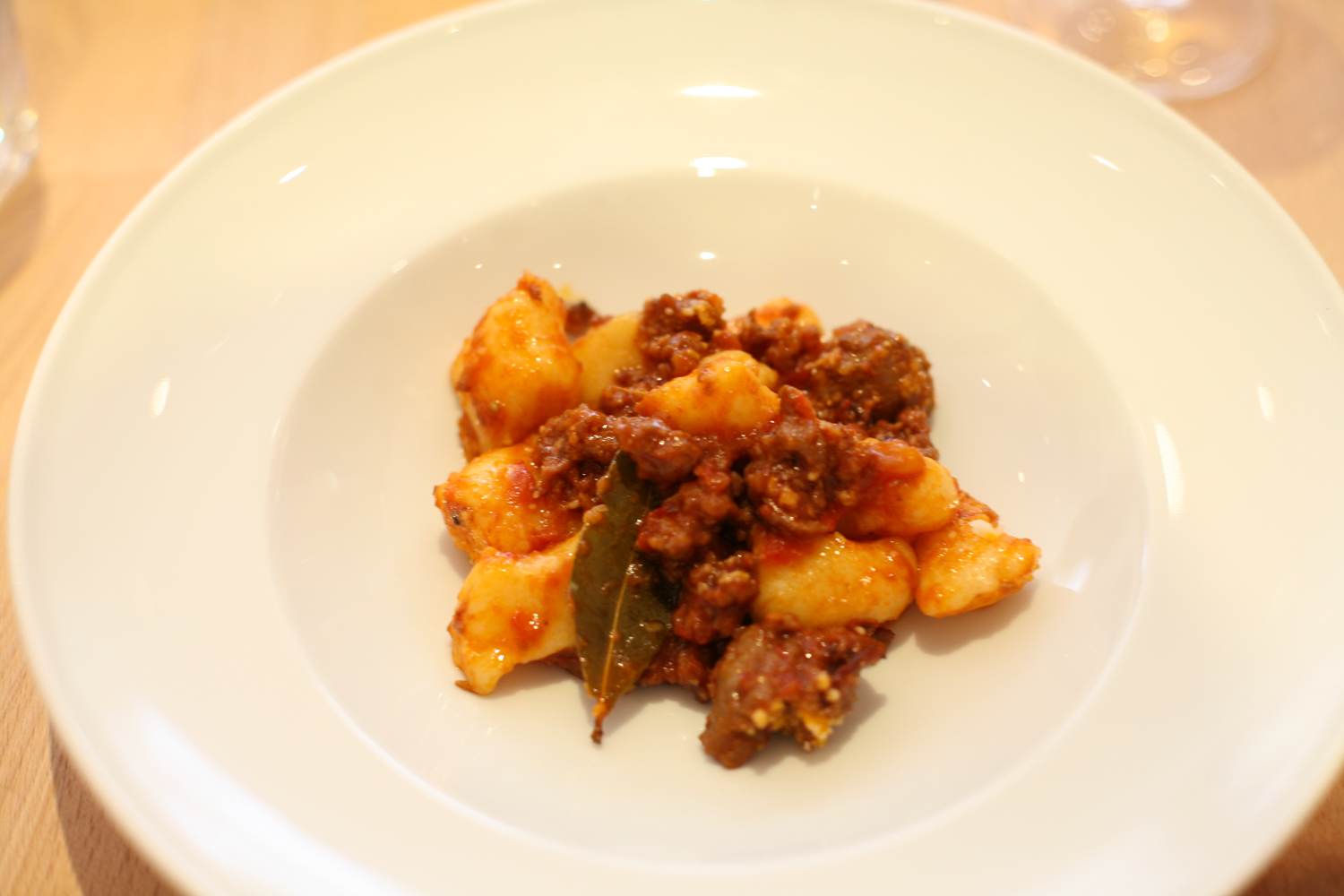
Making gnocchi was surprisingly very straightforward or perhaps it was the case that Eric, our chosen classmate, made it look easy, to bind the potato, ’00’ flour, egg, salt and pepper. After a large dough ball was created it was separated for the group so that we could all have some dough to work with and create the gnocchi itself. Once the dough is made, it takes a very short time to prepare and then cook them as they only require a couple of minutes in boiling water. Thankfully we had a tasty sausage, tomato and fennel seed ragu ready to incorporate with the gnocchi so that we could sit down and enjoy our hard labour.

IMG_5984

Something that I for one am guilty of is that quite often I serve a pasta dish at home and then I place the sauce on top. This one act alone gives the game away that I am not a genuine Italian mamma, although the fact that I don’t look the slightest bit Italian I guess doesn’t help! Italian pasta dishes are mixed together with the sauce before they hit the plate, so that when the dish comes to the table the pasta and the sauce are already the best of friends.

IMG_5999

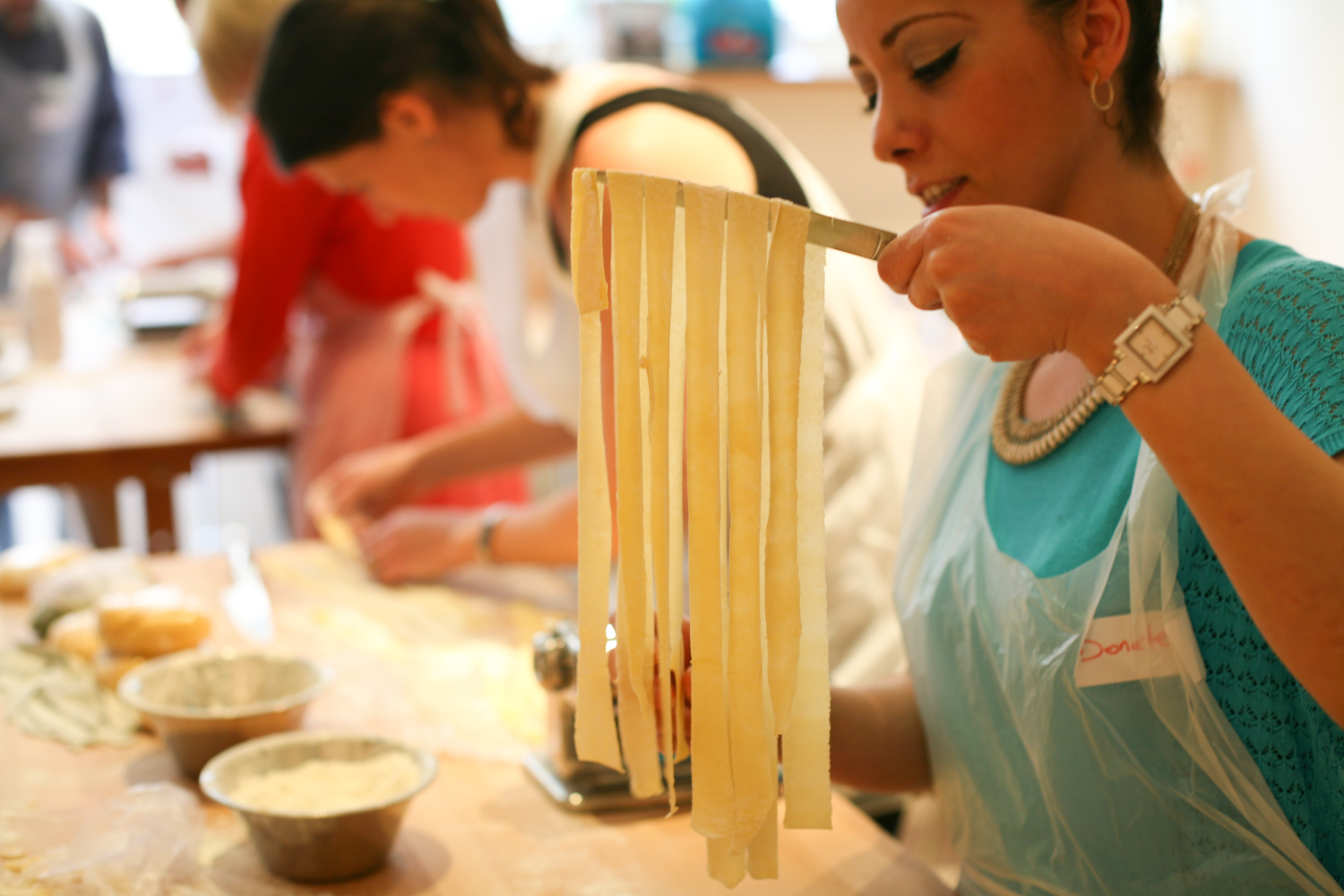
We all got very stuck into making the pasta ribbons. Stefano taught us a nifty little trick to prepare them, which I have been practicing at home ever since. In a nutshell: roll out some pasta and then feeder through all the settings on your pasta machine. Make sure you scatter a good helping of flour underneath as well as on top of the pasta and cut into 40cm pieces. Leave to dry out for a couple of minutes before placing your pasta rectangle horizontally in front of you and folding in each end, making sure to do two, three or four folds each end before they almost reach each other in the centre. Then cut through the pasta vertically leaving a finger size between the next cut. Then slip the knife under the middle of the pasta running horizontally and then lift and voila your pasta should look like the one above and below. It was a very satisfying action to achieve.

The ravioli was also very enjoyable to make. So much so I made more when I got home for my dinner guest and then the following day to feed the girls. The ones I made at home I filled with ricotta, parmesan, chives and pink peppercorns. You can get so creative with the fillings that I am looking forward to experimenting over the coming months.

After almost 6 hours on our feet – bar some time to sit down and enjoy the food – exhausted and very full indeed we all bid our farewells and dispersed into the metropolis clutching our goodie bags of leftover fresh pasta for us to use at home. The day flew by ever so quickly and I feel I took away some new skills. If you are thinking of going on a course at La Cucina Caldesi one recommendation would be eat a very light breakfast….you have been warned!


Potato gnocchi with a sausage, tomato and fennel seed ragu

A recipe I learned during the course at La Cucina Caldesi

Gnocchi

1kg floury potatoes (King Edward, Maris Piper or Desiree)

1 heaped tsp salt

sprinkling of black pepper

300g ’00’ flour

1 egg

Ragu

6 Italian pork sausages (if you live in the UK you can order on line from here or here)

6 tbsp extra virgin olive oil

2 garlic cloves, lightly crushed

1 onion (red or white), finely chopped

1 tbsp fennel seeds

2 bay leaves

125ml red wine

3 tbsp tomato puree

400g tin of whole Italian plum tomatoes

To make the ragu:

1. Remove the sausages from their casings and chop up the meat using your hands.

2.Heat up the olive oil in a frying pan over a medium heat and the garlic. After 2 minutes add the onion and seasoning and allow the onion to become translucent – this will take 5 minutes on a low/medium heat.

3. Throw in the fennel seeds and bay leaf and stir into the onions and garlic.

4. Add the sausage meat and fry for around 7 minutes or until cooked through. You will need to stir the meat regularly to stop it sticking.

5. Add the red wine and allow to reduce for a couple of minutes. Then add the tomato puree and tinned tomatoes and stir well.

6. Leave the ragu to gently simmer for 10-15 minutes allowing the flavour to work together.

To make the gnocchi:

1. Boil the potatoes in their skins in salted water until tender, which can take up to an hour.

2. Peel the potatoes whilst hot using a fork and sharp knife and then pass the potatoes through a food mill (see photo of the potato and gnocchi shots).

3. On a clean flat surface empty out the ground potatoes and add the flour, egg and seasoning and knead together into a dough.

4. On a lightly floured work surface roll the dough into a 2cm thick sausage shape and then cut into 2cm long pieces. Place in a tray which has been lightly scattered with semolina or flour.

5. As gnocchi freezes very well it is advisable to make double portions and freeze half. When you want to use again, cook from frozen and allow an extra minute or two cooking time.

6. Place the fresh gnocchi in a pan of boiled salted water. When they rise to the surface strain and place in a large bowl/plate ready for the sauce.

Place the cooked gnocchi in a large bowl and pour in the sauce and mix together gently with a spoon. Ladle into bowls/plates or into a large serving platter.

IMG_6055


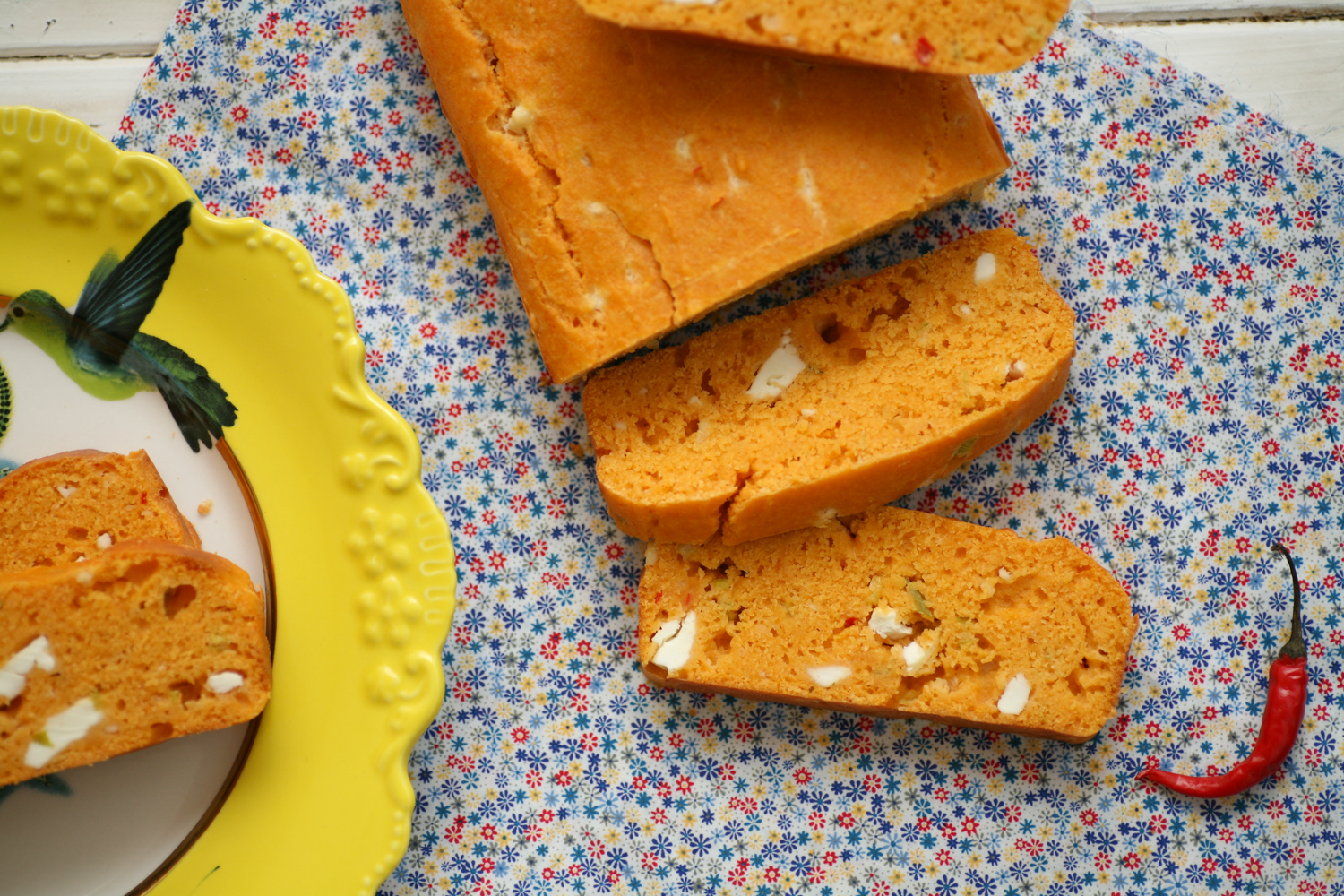
Chilli, Feta and Spring Onion Cornbread

IMG_5883

Cornbread is not commonly known about, or eaten for that matter, here in the UK and yet it is the most wonderfully moreish and perfect little bread that works so well with a soup or salad or as a savoury alternative to scones with jam and clotted cream at tea time – not that I eat scones and jam with clotted cream every tea time……only on special occasions!

IMG_5896

My eldest is often famished after a day at school followed by clubs so naturally likes to have a little snack before supper and this bread is a big hit – even with the chilli in. The bread allows you to be creative and put whatever little filling takes your fancy. I like to use feta as it has the perfect saltiness to go with the chilli and the spring onion adds an additional layer of flavour, which I love. Equally courgette and ricotta or caramelised onion and goats cheese would also work really well. Do you have a favourite combination? I would love to hear so please leave a message in the comments section below for us all to see.

IMG_5894

I use Greek yoghurt and milk in my cornbread but you can also use buttermilk, try them both out and see which you prefer. For this recipe I used one egg this time, but if I use small eggs then I often pop in two. As for chilli, jalapeno works well or you can use a milder/hotter one or even dried chilli flakes. Have a go, experiment and let me know what you think. It’s perfect with my Mexican tortilla soup.

IMG_5912

Chilli, Feta and Spring Onion Cornbread

Dry ingredients

160g fine cornmeal (polenta)

60g plain flour

1 tsp sweet smoked paprika

2 tsp baking powder

pinch of salt

1 red chilli (or 2 if you want that extra kick)

75g crumbled feta

1 spring onion, finely chopped

Wet ingredients

125ml Greek yoghurt

125ml milk

juice of half a lime

1 large egg (or 2 small eggs)

2 tbsp olive oil

1. Pre heat the oven to 180 degrees c.

2. Grease some baking parchment and place in your loaf tin. Mine is 24x14cm. By all means use a smaller tin – your loaf will just have more depth, which is good. Without baking parchment you may find your loaf is harder to remove from the tin after baking.

3. Mix all your dry ingredients together in one bowl.

4. Place all your wet ingredients together in another bowl/jug and then add the wet ingredients to the dry ingredients. Fold in gently with a wooden spoon.

5. Pour into your tin and level off with a spatula. Place in the oven for 25 minutes, or until it is golden and firm to touch on the top.

6. Remove from the oven and allow to stand for at least 5 minutes before taking the bread out of the tin and removing the baking parchment.

 Serve warm or toasted with Mexican tortilla soup


Mexican Tortilla Soup

IMG_5849

It’s been half term this week so until now I ‘ve not had a second to sit down and actually write a blog post. I had wanted to put up one of my ‘en papillote’ recipes, but although I ended up eating three fish meals ‘en papillote’  this week each time it was in the evening and by the time the little parcels of deliciousness came out of the oven the lighting was frankly too dark to get a good shot. Lightening or rather natural lightening is key to good food photography and whilst I am still learning I feel it is important to heed this one basic rule. When I started food blogging two years ago, virtually to the day, my food photography was pretty appalling and whilst I have not got to where I want to be quite yet, it has at least improved. This shot was taken at night and I look back at it now and cringe – in fact I think I may even re blog the recipe – Chilli Crab Linguini – with more appealing photographs as the recipe is a keeper and perfect for a midweek supper.

Anyway I digress, the recipe for today’s blog is straightforward and perfect for a light lunch. It uses a spoonful of the chipotle sauce that I blogged about a couple of months ago – hands up whose attempted to make it? I made another batch of 7 pots the other day as all the others had finished. By all means buy a ready made chipotle sauce but if you have a little bit of time (it really does not take long) I really urge you to try making your own chipotle sauce – recipe here.  The chipotle gives the soup an earthy, delicately spiced flavour – for those who have not tried chipotle chillies before they are NOT ‘blow your mind’ type of chillies but more of a smokey, gently spiced chilli that keeps you coming back for more. My seven year old loves the soup and does not find it too spicy for her palate.

Mexican Tortilla Soup

adapted from Thomasina Miers – Mexican Food Made Simple

Serves 6

4 tbsp olive oil

2 onions, sliced

3 garlic cloves, chopped

1 corn tortilla, broken up

1 tbsp of chipotle sauce

2 (400g) tins of tomatoes

1 tbsp brown sugar

1 tsp fresh oregano (or dried)

1.5 litres chicken/vegetable stock

salt and pepper to taste

Garnish

2 corn tortillas, chopped into 1 inch strips

vegetable oil, for frying

4 pasilla dried chillies, deseeded and stems removed (or you could use ancho)

100g feta cheese, crumbled

handful of fresh coriander, chopped

half a lime per serving

(You can also add avocado and sour cream although I omitted them for this shoot)

1. In a large pan – I find my large casserole Le Creuset pot is perfect for this – add the olive oil and when it is hot add the onion and gently cook for around 10 minutes before adding the garlic and the broken up corn tortilla. Leave these three ingredients to cook for another five minutes.

2. Now add the chipotle sauce, brown sugar, tinned tomatoes, oregano and a sprinkling of salt and pepper. Leave to cook for another 10 minutes before adding the stock and simmering for a further 10 minutes.

 3. Using a hand blender, blend the soup until smooth and then let to simmer gently for a few more minutes.

4. While the soup is simmering, place the pasilla chilles in a bowl of warm water for 10 minutes and then remove the stems and deseed. Pat dry with kitchen paper.

5. Heat up some vegetable oil in a small pan. You want to make sure that there is enough vegetable oil so that the tortilla will float on the top. I find that 200ml is more than enough – (you can reuse this oil fyi!). When it is hot and small bubbles are rising to the surface, gently add the strips of corn tortilla. They will sizzle immediately and begin to bronze quickly so move them around the pan for a few seconds so that they are bronzed all over. Remove with a slotted spoon and place on kitchen paper before transferring to a bowl.

6. Delicately place the chillies in the remaining oil. If they are still wet at all they will spit so be vigilant when placing them in the oil. Move them around in the oil for a few seconds then also place on kitchen paper. Chop up into bite sized portions and place into a bowl.

7. Crumble the feta, roughly chop the coriander and half the limes. (if you are using avocado – chop this is up into small cubes). Place in bowls on the table so that the hungry masses can add whichever garnish they wish to their Mexican tortilla soup.

Also if you are using sour cream, place in a bowl so those who wish can an add a dollop to their soup. I had this all ready and then forgot to photograph the sour cream on the soup as well. A case of being hungry so quickly wanting to photograph the soup and then eat with the rest of the family!


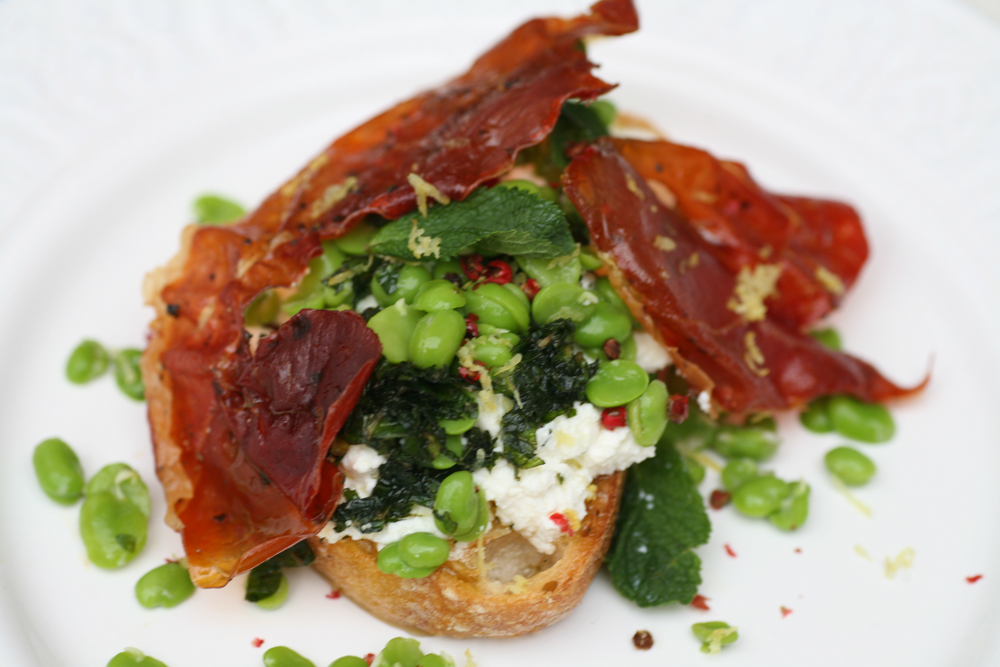
Broad beans, lemon zest ricotta, fresh mint oil, parma ham with pink peppercorns

IMG_5822

I have been meaning to a write blog post on this recipe for sometime now as I seem to be averaging eating it once a week in the last month or so. It’s one of those recipes that once you’ve prepared it you want to dive in and eat it so I needed to be speedy with the camera work, hence the lack of lots of photos.  It is absolutely perfect for a lunch either by yourself or if you have a few friends coming over. The bright greens and the complimenting flavours of lemon, broad beans, mint, olive oil, garlic, ricotta, parmesan, parma ham and pink peppercorns really appeal to me. The pink peppercorns I managed to source in Turkey last year and they have the most wonderful flavour. Whilst I imagine a quick trip to Turkey may not be realistic you’ll be glad to hear that you can find them at most supermarkets – they are definitely worth seeking out as they have a very distinct flavour – very different from the black variety.

I stumbled across this recipe years ago in Skye Gyngells book ‘A Year in My Kitchen’ and as far as I’m concerned it’s a winning recipe. The only slightly time consuming part is taking the skins off the broad beans – which to be fair does not really take that long, especially if you have a friend to chat to whilst you are sharing the podding together.

IMG_5769

Other than this time, I always prepare the dish with fresh broad beans but for some reason the two places that normally stock them this morning had run out, so I had to suffice with frozen. They tasted equally good, although they were a slightly smaller in size, which made peeling them take a little longer. I reckon if you have a glorious sunny day with friends coming over for lunch this is the perfect dish. To accompany it, a glass of Riesling or ginger cordial would always go down a treat. A great wine merchant called Symposium, based in the picturesque town of Lewes in East Sussex, I always find comes up trumps with recommending great drinkable wines. I’m based in London and they always seem happy to deliver a case or two to me when I am needing to stock up. If you are interested send Henry an email henry@symposium-finewine.co.uk and he’ll send you their wine list.

Broad beans, lemon zest ricotta, fresh mint oil, parma ham with pink peppercorns

Adapted from Skye Gyngell’s book ‘A year in my kitchen’

Serves 4

1kg of fresh broad beans in their pods (or 500g podded/frozen)

250g fresh ricotta

50g parmesan, finely grated

1 lemon, zest and juice

8 slices of parma ham

1 garlic clove

handful of fresh mint

75ml olive oil

pinch of pink peppercorns per serving

sour dough bread (or ciabatta)

1. If using fresh broad beans, take them out of their pods and place into a pan of boiling water for under 1 minute. If you are using frozen broad beans you need to leave them in the boiling water for 3 minutes. Strain and run under cold water immediately and then peel off  the outer shell of the broad beans and discard.

2. Take a large handful of fresh mint and finely chop up all of it bar a few leafs that you will sprinkle over the top at the end. Place the finely chopped mint leaves in a bowl with 75ml of olive oil and leave to infuse for 15 minutes or longer.

3. Place the ricotta into a bowl and add the finely grated parmesan. Stir together and then add most of the zest from one lemon – the remaining zest you will sprinkle on the dish at the end. Add the juice from half a lemon.  Stir in all together and leave to one side.

4. In a preheated oven – 180 degrees – place the parma ham on baking parchment with a drizzle of olive oil and black pepper. Leave to crisp up in the oven for 10 minutes.

5. Slice some sourdough bread and place in the toaster or under a grill for it to become golden. Once toasted cover with a little olive oil and fresh garlic.  Place on a serving plate.

6. Add a spoonful or two of the  lemony ricotta/parmesan to the toast. Add a scattering of broad beans followed by some mint drizzle and then lay two slices of parma ham over the creation followed by some of the remaining lemon zest, fresh mint leaves and a good pinch or two of pink peppercorns. I find that no salt is necessary as the parma ham and parmesan more than make up for the lack of salt.

Eat at room temperature.

IMG_5820


Cau Lau – Hoi An Special Noodles with Marinated Pork

IMG_5745

This Vietnamese pork and noodle dish is wonderfully fragrant and tasty and very straightforward to put together. It is known as Cau Lau in Vietnam and is a speciality of the world heritage town of Hoi An. Cau Lau is a noodle that is made from rice and water – nothing new there I hear you say – but wait – the water is supposedly from a well in Hoi An. Into the collected well water the locals place the ash of the La Gai Leaf, which they burn. The water and ash are then left over night to rest and then it is this water that is then used to make the noodles, which gives them a light brown hue. As they are tricky to come by in London, I have replaced them with the rice ribbon noodles, but frankly you can use whichever noodle you have to hand.

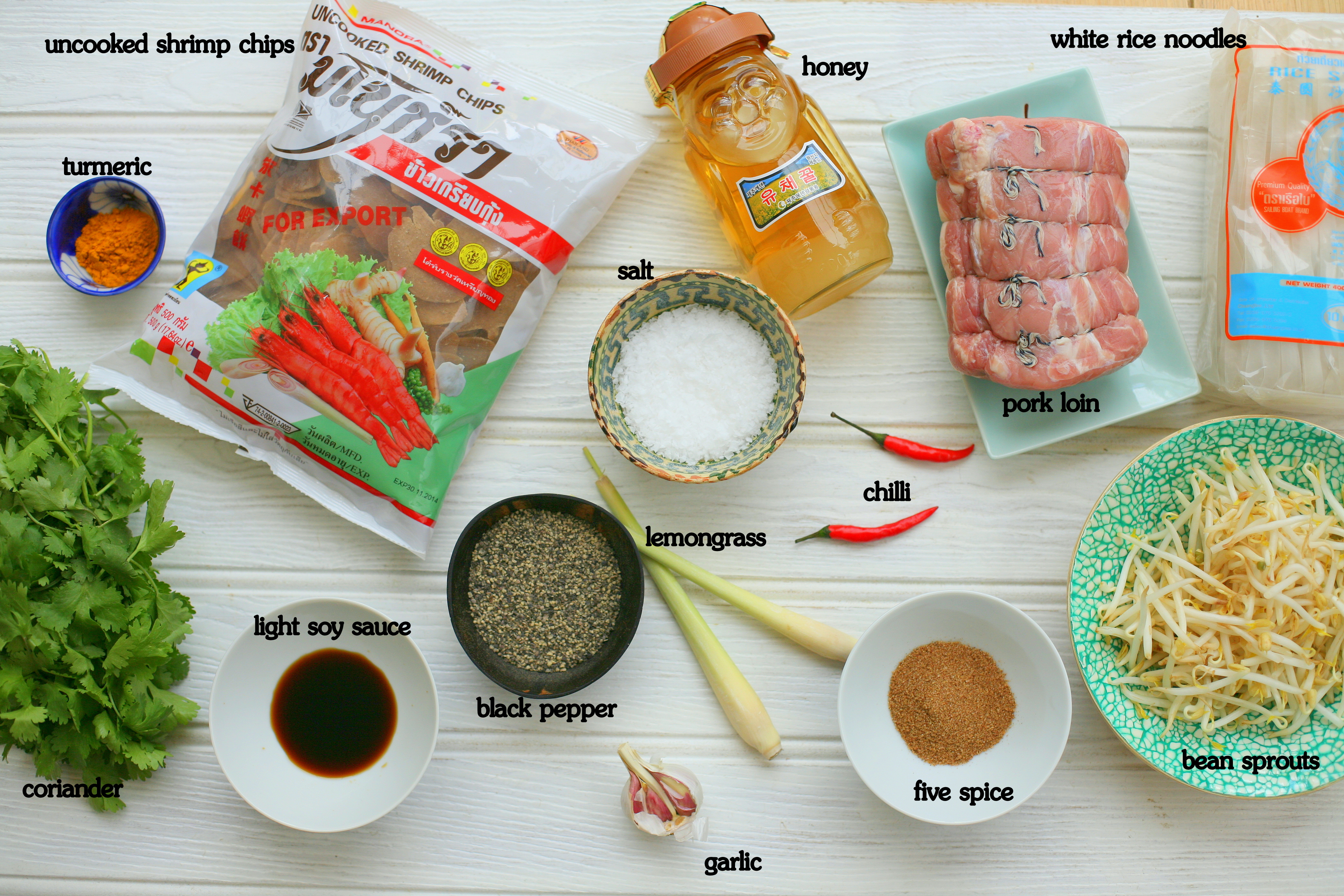
So this is what you need:

IMG_5624

The only ingredient absent from this photo is ‘sweet basil’, which I managed to source before devouring the meal. It is not a absolutely necessary but definitely adds a delicate fragrant flavour if you are able to get hold of some.

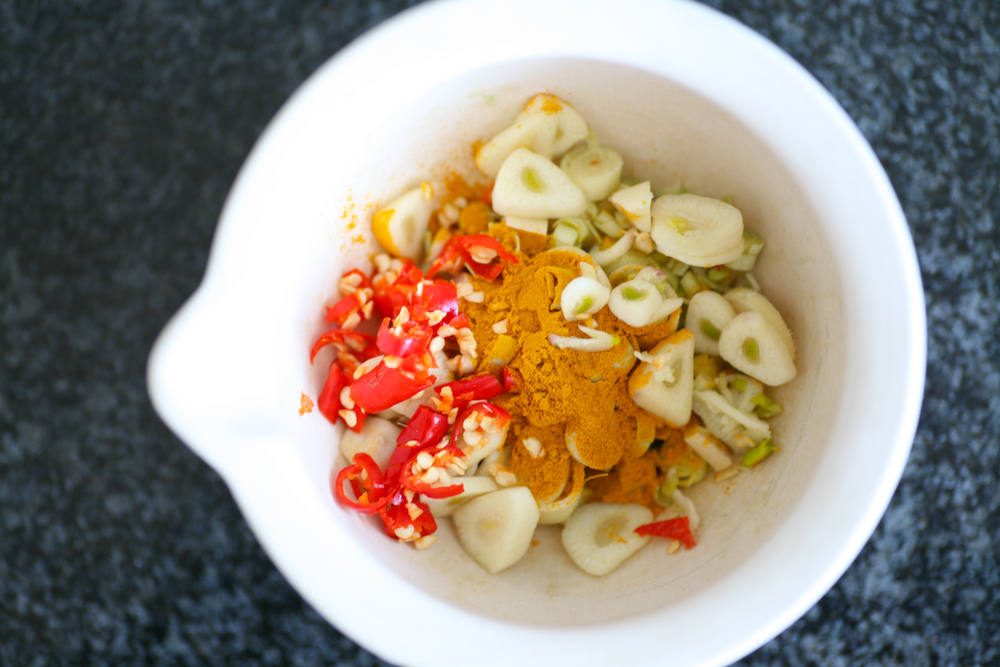
IMG_5627

Place the chilli, turmeric, garlic and lemongrass into a mortar, as above and give it a good grind with your pestle. If you don’t have one simply use a bowl and the end of a rolling pin, works wonders!

IMG_5647

Then add the honey, soy sauce, five spice powder, salt and pepper to taste and you will end up with a marinade to pour over your pork loin.

IMG_5653

Keep the fat on the pork loin and cut into 6 pieces. Using your hands cover and mix the marinade over all the pieces and then leave the meat to marinade in your fridge for ideally a few hours or even overnight if you can.

IMG_5655

In a large, slightly deep, pan pour in some oil and bronze each piece of pork on both sides.

IMG_5663

Then add the marinade along with enough water to just cover the pork. Simmer and cover for around 45 minutes, by which time the pork will be tender and the sauce will have reduced by around half.

IMG_5667

Before serving remove the fat from the pork and discard and finely slice the pork. Follow the instructions for the noodles. For ribbon rice noodles I simmered them for around 5-7 minutes in boiling water and then strained them and ran them under cold water for a second. Whilst the rice noodles are cooking place a little oil in a pan and when it is hot add a handful of uncooked shrimp chips for 10 seconds, by which time they will puff up and curl.

IMG_5720

When serving place a good helping of noodles into a bowl followed by the sliced pork loin on top. Ladle a generous spoonful or two of the remaining marinade/sauce on top followed by a small handful of bean sprouts, coriander and sweet basil on the side. Lastly add the shrimp chips and a slice of lime. Serve hot and enjoy.

Cau Lau- Hoi An Special Noodles with Marinated Pork

Adapted from The Green Bamboo Cooking School recipe in Hoi An

serves 4

800g pork loin, cut into 6 pieces

small handful of bean sprouts per serving

small handful of uncooked prawn chips per serving

small handful of fresh coriander and sweet basil per serving

 1 packet of white rice ribbon noodles (see photo)

1 lime, quartered

Marinade

5 pieces of garlic, finely sliced

1 tsp ground turmeric

 2 lemongrass, finely chopped

2 chillies, finely chopped (remove seeds if you prefer less of a kick!)

2 tbsp of five spice powder

5 tbsp light soy sauce

2 tbsp honey

salt and pepper to taste

1. Using a pestle and mortar, or bowl and end of a rolling pin, crush the lemongrass, chilli, garlic and turmeric for a few minutes. Once the ingredients have broken down add the five spice powder, soy sauce and honey.

2. Place the pieces of pork loin (with fat on) in a bowl and cover with the marinade using your hands. Place cling film over the bowl and place in the fridge for at least an hour – you could leave over night if you have time.

3. Using a fairly deep pan, heat up a little oil and bronze both sides of the pork loin. Then pour in the marinade and add enough water to the pan so that the pork loins are just covered. Simmer for 45 minutes at which point the sauce will have reduced by almost a half and the pork loin will be tender.

4. When the pork is cooking, in a separate pan add some oil and when it is hot place a small handful of uncooked shrimp chips into the oil and cook for 10-15 seconds, by which time the chips will have puffed up and lightened in colour. They burn really quickly so don’t take your eyes off them during this part. Place to one side on some kitchen roll. Repeat until you have enough to put a few on each serving.

5. Heat up some boiling water and add the rice noodles for the time specified on the packet – which is usually around 5-7 minutes. Strain and run under a cold tap briefly and separate into each bowl.

6. Using a spatula take the pork loin out of the sauce, remove the fat and slice thinly. Place the pork slices onto the noodles and add a ladle of the sauce on top of the pork and noodles. Add a small handful of bean sprouts, coriander, sweet basil and shrimp chips to the bowl along with a wedge of fresh lime.


Homemade Cajun Chicken Salad with Quinoa, Bulgar Wheat and Red Chard

IMG_5544

As those who have been sweetly following my blog for a while now will know, I adore healthy, appetising salads that combine and fuse together different meats, fish, vegetables, fruits and pulses. Whilst a simple green or rocket salad tastes sublime with a splash of lemon or a vinaigrette, I always like to prepare new flavour combinations that really lift a salad and take it to a new dimension. If you take a look under my recipe library above you will see a good variety of salads that I like preparing and eating. Purests may well say they are not salads as they are substantial meals unto themselves, but in my book they come under ‘salads that rock’, I hope you agree.

IMG_5529

At the moment, wonderful vibrant red chard is available so I bought a bunch hoping to do something creative with it. I adore the brightness of the stems – similar looking to rhubarb.  When it is young it is similar to spinach in that it can be digested raw or cooked. Rich in nutrients, it’s a winner in a salad from a health and looks perspective.

IMG_5520

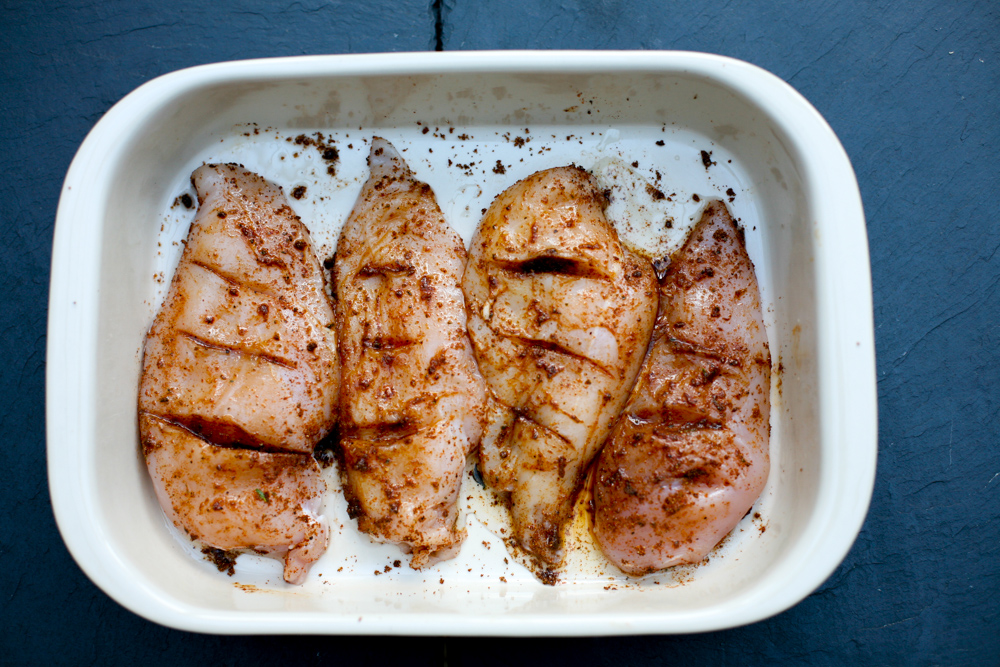
When you make my Cajun rub, make sure you properly smother it over the chicken breasts. I find that making a few incisions into each breast helps release the flavours all through the chicken.

IMG_5528

I would be lying if I said that I have been eating quinoa (pronounced keen-wah) and bulgar wheat for years, but the truth of the matter is that aside from health food stores, it wasn’t readily available. Today, however, it is accessable in most mainstream food stores, certainly in London. My packet looked like this. After rinsing it through with cold water it simply needs boiling for 12 minutes and viola it is ready to eat.

Have you got any great salad combinations that work well together? If so I would love to hear so leave a comment below so we can all share ideas.

Homemade Cajun Chicken Salad with Quinoa, Bulgar Wheat and Red Chard

Serves 4-6

to make the Cajun rub

1/2 tsp ground cinnamon

1/2 tsp cayenne pepper

1 tsp garlic powder

1/2 tsp rock salt

1/2 tsp black pepper

1/2 hot paprika

2 tsp of fresh thyme

1/2 tsp fresh nutmeg

2 tbsp olive oil

*********

500g chicken breasts (4 chicken breasts, skins removed)

120g red and white quinoa with bulgar wheat

1 litre fresh cold water

250g new potatoes

150g fresh red chard, chopped into fine short strips

2 handfuls of fresh seedless red grapes, halved

1/2 lemon juice

seasoning

1. Preheat the oven to 180 degrees.

2. Start by making the Cajun rub. Combine all the ingredients, except the olive oil. Stir together and if you have a spice grinder give them a quick whizz in there so that they are perfectly blended together.

3. Lay your chicken breasts in an ovenproof dish and make a few incisions into the breasts so that you can push the rub into the incisions to give it that extra flavour. Place the Cajun rub all over the chicken breasts on both sides and then add the olive oil so that that the chicken is not dry.

4. Place in the oven for 25 minutes, turning the breasts once during cooking.

5. In a pan boil the 1 litre of water and when it is boiling add the red and white quinoa and bulgar wheat and leave to simmer for 12 minutes. Then drain and leave to one side.

6. Boil the new potatoes for up to 15 minutes in a separate saucepan with boiling water. Drain and leave to one side

7. Wash the red chard and pat dry. Finely slice the shard – as if you were making coleslaw. Wash the grapes and slice in half.

8. Finely slice the Cajun chicken, making sure not to get rid of the Cajun juices that will remain in the ovenproof dish.

9. In a mixing bowl add a little of the chicken, chard, quinoa and bulgar wheat, grapes and new potatoes. Give them a gentle mix with your hands before adding the same ingredients again in small portions so that they all mix well together. Add the lemon juice and the Cajun juices in the ovenproof dish. Season as necessary.  Transfer to a serving bowl/platter.

It can be eaten at room temperature or when the chicken, potatoes, quinoa and bulgar wheat is still warm.

IMG_5546


Won over by Vietnamese Iced Coffee

IMG_5456

This week has been SPECTACULAR on the weather front. London has been basking in the sunshine and everyone has had a spring in their step. Overcoats and leather boots have been put away (temporarily of course!) and spring/summer clothing have made an appearance. Everyone seems happy, even the flowers in the garden seem relieved that the cold spell may well and truly be behind us.

IMG_5492

The weather was so bright and warm that one evening, Big A, Little Z, my ma and sister all sat outside for our Vietnamese starter of fresh Vietnamese spring rolls. I taught the home team how to roll their own rolls and then they made their own, which was a great experience, especially as we were all seated on the lawn out the back of my house. I will do a blog post on making these in due course!

IMG_5506

Since my recent trip to Vietnam I have returned home a new women, in the sense that I have found a coffee that I don’t mind sipping, and may well go as far as saying I rather like. Granted it is probably because of the condensed milk, but hey ho, it’s a coffee beverage that I find pleasurable to drink.  I know I am probably in the minority who is not a coffee drinker, but with Vietnamese coffee I make an exception. Whilst it is delicious hot, I decided to make some iced coffee to sip in the warm weather.

IMG_5453

I picked up one of these rather handy stainless steel coffee filters in Vietnam, but they are easy and reasonable to source on line here. Whilst they are easy to use and do not take up any space in the cupboard, I did find the filter let some coffee grains through, which didn’t particularly bother me, but if anyone knows a way to stop this I would love to hear. Just leave a comment below.

IMG_5498

As for the coffee itself I picked up the variety above from Vietnam  and it smells and tastes divine. Again it is easy to source in the UK or from Europe for that matter from this online site and I am sure there are similar sites in your country of origin too. The coffee comes in varying strengths, but since I am a newby to the coffee scene I went for the weakest.

IMG_5469

Creamy and oh so decadent, this iced coffee was perfect for a hot day. Part of the fun is the ritual in preparing it and I especially love the way the coffee initially sits on top of the condescend milk until the point of giving it a good stir.

IMG_5487

Vietnamese Iced Coffee

1 cup

1 Vietnamese filter 

1 tbsp of ground Vietnamese coffee (or 2 tbsp if you prefer it stronger)

1 large tbsp of condensed milk

boiling water (to fill the glass/cup)

iced cubes

1. Place the condensed milk in the bottom of your glass/cup.

2. Removing the internal filter from your Vietnamese filter cup, add a spoonful of finely ground coffee into the bottom of the stainless steel filter cup (more if you like it stronger).

3. Place the filter mechanism (the part to the far left of image 3 here) on top of the blended coffee and add the boiling water to the Vietnamese filter cup and place the filter lid on top.

4. The coffee will gradually trickle through to the condensed milk. Leave it a couple of minutes to allow the coffee to filter through.

5. Once this has happened stir it with a teaspoon so that the coffee becomes a milky brown colour. Add a few ice cubes and stir once again.

If you make your Vietnamese coffee another way I would love to hear your tips and suggestions. Leave a comment below for everyone to see.


Fish Balls in a Sweet Smoked Paprika and Tomato Sauce

IMG_5401

After spending the whole of the Easter holidays in Asia, both Hong Kong and Vietnam, it is great to finally come home to London;  as the saying goes: ‘absence makes the heart grow fonder’. Whilst I loved ever minute of our travels from exploring new environs, cultural sites, the beach (of course) and experiencing the amazing cuisine that both countries have to offer, there is something wonderfully homely and satisfying about preparing your own meals and sourcing your own ingredients. Mark Bittman from ‘The New York Times’ has written a fascinating article on why home cooked food is the way to go. Check it out here.  Crazy as this may sound, I kind of missed not getting stuck into some serious cooking, that said I was very lucky to get a place at ‘The Green Bamboo Cooking School’ in Hoi An, which gave me a wealth of new exciting Vietnamese recipes to cook and share with you all.

Hong Kong is pork crazy and whilst I love my pork, I decided that fish and vegetarian meals were going to be on the menu, certainly for the first week or two once I returned. The very first meal I cooked when I got back were these lovely fish balls, which are so easy to put together. Big A loved getting involved and helping me to prepare them. I made a large batch and then had the leftovers for lunch the following day.

Serve with couscous, rice or pasta and you have yourself a simple and deliciously healthy meal. I did not put any fresh chilli in either the sauce or fish balls, but you could easily pop in a finely chopped one if you are in need of that extra spicy kick!

IMG_5433

Fish Balls in a Sweet Smoked Paprika and Tomato Sauce

adapted from Yotam Ottolenghi and Sami Tamimi’s recipe ‘Cod Cakes in Tomato Sauce’ in their book Jerusalem.

Serves 4

sauce

glug of olive oil

2 small/medium sized white onions, finely chopped

1/2 (half) tsp of sweet smoked paprika – I use and totally rate this one

1 heaped tsp cumin powder

1 tsp salt

125ml white wine

1 tin of chopped tomatoes, blended

1 tsp caster sugar

4 garlic cloves, finely chopped

150ml water

fish balls

600g cod (or any white fish that has been sustainably caught), boned and skin removed

100g white breadcrumbs

2 tsp ground cumin

1 tsp salt

2 eggs

1 large handful of flat leaf parsley

1 large handful of fresh coriander

1. First you need to start making the sauce. Place a glug (a little) olive oil into a large frying pan and when it is hot add the onions. Stir and turn the heat down slightly to make sure that they do not burn. As they begin to soften after a few minutes add the sweet paprika, cumin powder and salt and then after a couple more minutes add the garlic and stir together. Leave to cook steadily for a few minutes.

2. Next add the white wine and stir into the spiced onions and let simmer for a couple of minutes before adding the blended tinned tomatoes (it is not essential to blend, but I like having the sauce slightly smoother for this recipe) and caster sugar. Stir together and simmer gently for 20 minutes on a low heat so that the flavours can mature and work together.

3. Meanwhile in a large mixing bowl use your hands to blend all the fish ball ingredients together and then roll in the palm of your hands small, bite sized, round fish balls. I made around 30 with these proportions.

4. In a large frying pan heat a glug of olive oil. When it is hot gently place the fish balls in the pan so that they are lightly bronze. I suggest doing this in stages as it takes no more than a few minutes cooking time – remember to turn them over so that they are bronzed all over.

5. After you have bronzed your first batch place them gently in the sweet smoked paprika and tomato sauce and continue to add the rest of the fish balls until they are all sitting in the sauce. Add a little water – around 150ml, or a little more if needed, so that the fish balls are just covered and then let simmer on a low heat for a further 15 minutes. Add more seasoning if necessary.

6. Serve hot with couscous, rice or pasta.

Good old comfort food. Enjoy. It’s good to be home.


Vietnamese Pho Bo – Beef Noodle Soup and finding the perfect cooking course in Hoi An

IMG_5336

Vietnamese cuisine is to put it simply, ‘heavenly’. After my first bite of a Banh Mi, from Banh Min 11, back in London, not that long ago, I knew that it was going to be a culinary love affair. Since arriving in the motherland it has not disappointed. Each meal we have eaten has been a multitude of delicate, fragrant flavours – spices that sing to you and dance on your tongue.

IMG_5119

Herbs feature heavily in most dishes and add real fragrant lift. I was sufficiently enthused that I am going to attempt to grow some of them back in London – for example Vietnamese mint (which I should have no problems growing!), Vietnamese basil, saw tooth coriander, Vietnamese lemon balm, garlic chives. There is a great explanation of Vietnamese herbs here.

IMG_5076

I was keen to attend a cooking course in the UNESCO World Heritage Site of Hoi An and so set about researching a course that best suited my needs. I was given a few recommendations, however, I decided that a course run by the very affable Van, who runs ‘Green Bamboo Cooking School’ suited my needs perfectly.

IMG_5197

The course run by Van offered a detailed tour of the fresh food markets, where we picked up our ingredients; convivial fellow pupils; personal touches by Van who runs the course in her own home; unhurried tutoring over seven hours; a generous range of recipes manifesting itself in a memorable group lunch and a souvenir goodie bag to take home. Throw in door to door service as Van kindly ferried us to and from our hotels, and it is no surprise that Trip Advisor has over 210 positive comments for this class with no dissenters.

IMG_5126

I am pleased to say that course surpassed even my high expectations. Van was charming, spoke excellent English and a was a natural teacher. She also converted me to Vietnamese coffee – the condensed milk being the key.

My fellow students were a really lovely bunch of enthusiastic foodies – three Australians, two Norwegians and two Swiss and all of us had huge grins on our faces all day, clearly revelling in the fact that we had chosen such a perfect course. Here are few photos of the day. Scroll down.

I elected to cook the unofficial national dish of Vietnam – pho bo, beef noodle soup (pronounced ‘fur’). You can find pho stalls on most streets in Vietnam, but to cook it well is the tricky part. I was keen to understand how to cook it from scratch and to make that perfect pho broth. First stop was the market to buy the beef, which was as fresh as it gets as the cow had been slaughtered that very morning. We bought the beef fillet and 1kg of beef bones. Normally Van would have bought the spine, but there had been a run on spine bones that morning from a hotel restaurant, which had bought the lot. So instead we had a range of other beef bones and some shin to add to the flavour.

IMG_5104

Back at Van’s house the first trick I learnt was to gently char the skin of some ginger, shallots and garlic over a flame as this would give the broth a deep smokey flavour.

IMG_5133

It takes no more than a couple of minutes on each side.

IMG_5145

I then removed most of the skin of the ginger, using that back of a teaspoon and also the skin from the shallots and garlic, which is very easy at this stage as they virtually pop out.

After properly cleaning the beef bones, place them in a large pan of boiling water so as to get rid of any scum from the bones before cooking. Submerge them in boiling water for under a minute and then place them into a second large saucepan, which has also has boiling water in it. Discard the water from the first saucepan. You then need to add the charred ginger, garlic and shallots

Continue to add the following ingredients to the pan: 2 chillies, stick of cinnamon, 1 large white onion, 5 star anise, 5 Chinese apples. I had not come across Chinese apples before, but they tasted delicious. As they may be difficult to source for some people, dates work equally well. Add some sugar and salt and if you fancy, some beef stock as well (I decided to omit the beef stock, to see how it would taste in its natural state).

IMG_5146

Place a lid on the top and leave to boil away gently for a further 2 to 3 hours. Add more seasoning to taste and beef stock if necessary.

IMG_5154

Meanwhile, very finely slice the beef fillet and leave in the fridge until ready to use.

IMG_5279

Before serving have individual bowls of bean sprouts and fresh pho noodles/rice noodles, (the noodles you have submerged into boiling water for 30 seconds and drained) at the ready. In a large ladle add a little of the raw beef and submerge it into the pho broth so that the broth fills the ladle. Using a fork or chop sticks, move the beef around in the boiling stock in your ladle for 30 seconds (that magic number) so that it cooks through and ladle it over one of the bowls of noodles that you have prepared.

Add a generous amount of fresh herbs, including Asian basil, coriander, spring onions along with a quarter of a lime and chilli sauce to taste. You can also have a small bowl of soy sauce on the side, should you wish to add a little, as well as some sliced green papaya and fresh sliced chilli.

IMG_5283

IMG_5284

I was delighted by the results and despite having eaten a ridiculous amount of the tastiest Vietnamese food, cooked by my fellow foodies, I managed to see off a bowl of my pho bo.

IMG_5289

Eight happy and well fed people were then deposited back to their hotels, along with a goodie bag provided by Van.

I hope that you too will try this tasty version of pho. Watch this space for more Vietnamese recipes over the coming months.

Pho Bo (Beef Noodle Soup)

Adapted from Van’s recipe, who runs Green Bamboo Cooking School

Serves at least 8

500g fresh pho noodles/rice noodles

300g beef fillet

1 kg beef bones – ideally spine bones or shin

5 litres boiling water

1 tbsp beef stock

******************

5 star anise

1 large stick of cinnamon

1 roasted fresh ginger

5 roasted shallots

1 large roasted bulb of garlic

5 dried Chinese apples/dates

1 whole white onion, peeled

2 red chillies, left whole or chopped in two

2 tsp salt and pepper

1 tbsp raw sugar

**********

50g fresh bean sprouts

50g fresh Asian basil

50g fresh coriander

50g spring onion, finely sliced

2 limes, cut into quarters

green papaya, finely sliced

chilli paste to taste

soy sauce, to taste (optional)

2 fresh chillies, sliced (optional)

1. Wash the beef bones under a tap and then place to one side. Meanwhile bring two large pans of water to the boil. In the first add the beef bones and submerge them for just under a minute and then transfer them to the second saucepan. Discard the water from the first saucepan.

2. Over a gas flame place the garlic, shallots and ginger on a metal grill directly above the flame, allowing them to char/roast. After a couple of minutes turn them over so that both sides are equally charred. Using the back of a teaspoon, peel off a little of the skin of the ginger.

3. Add them to the bones and boiling water, along with the onion, chillies, dried Chinese apples/dates, cinnamon stick and star anise. Add the salt, sugar, pepper and beef stock it you wish and place a lid on the pan and let  it boil gently for 2-3 hours.

4. Meanwhile, very finely slice the beef fillet and return it to the fridge.

5. Before serving, warm the noodles by placing them on a slotted spoon and submerging them in boling water for 30 seconds. Drain and place in individual bowls. Add the bean sprouts to each of the bowls.

6. In a large ladle add a little of the thinly sliced beef fillet and submerge into the pho broth so that the ladle is completely full and the beef is submerged. With a fork or chop sticks move the beef around in the ladle so that it ‘cooks’ through properly.  Pour over the noodles. Please note the pho broth needs to be boiling/bubbling away at this stage so that the beef fillet is cooked properly. 

7. Add the fresh herbs, lime, spring onions, green papaya and chilli paste/soy sauce/fresh chillies to taste.

8. Serve immediately and enjoy piping hot.