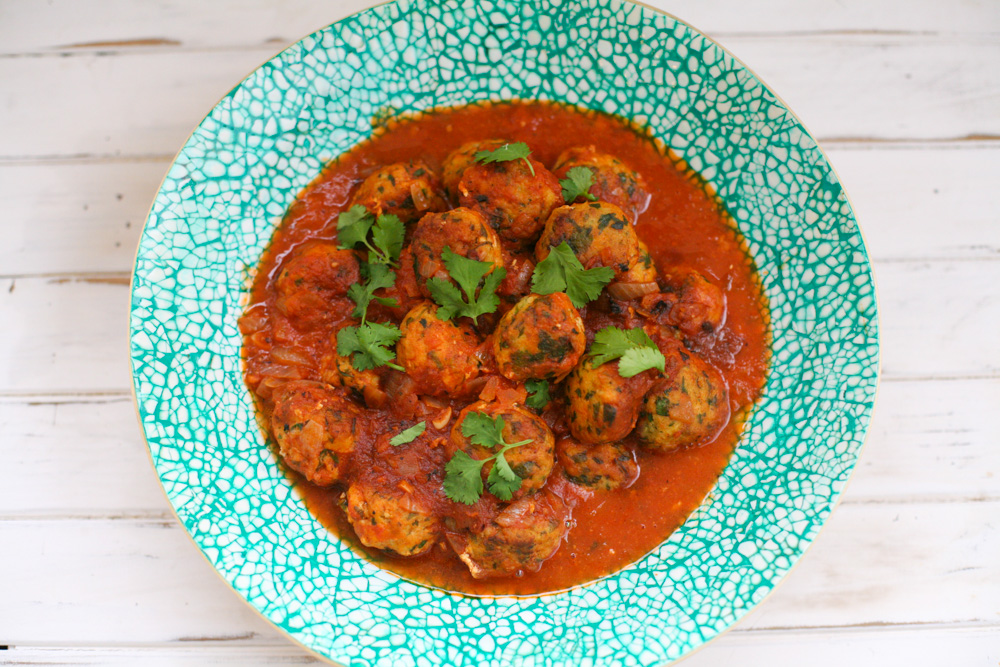
Rezala – Lamb Rib Chop Curry with Rose Water and Saffron

IMG_4595

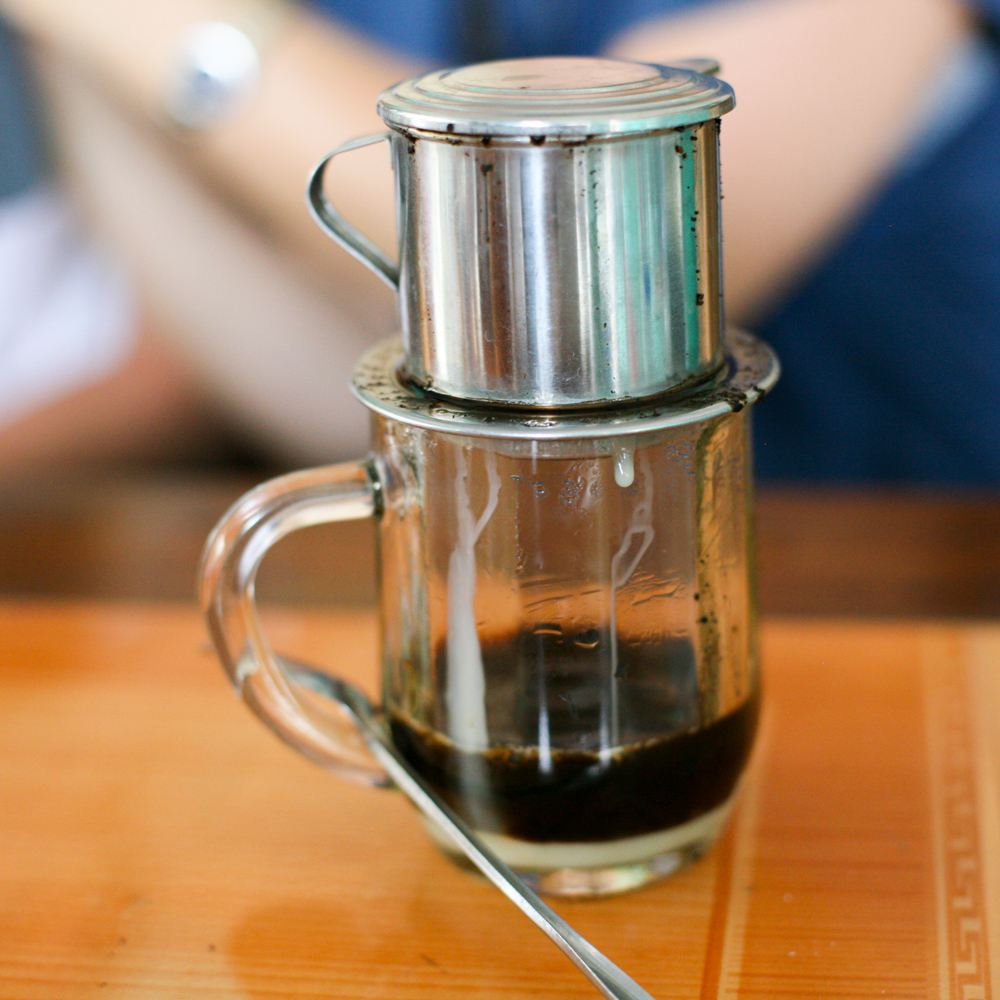
Tomorrow I am heading off to Asia once again, returning to Hong Kong, but also managing to squeeze in a long overdue visit to Vietnam. I’m looking forward to visiting my favourite eating haunts that I discovered on my last visit to Hong Kong in December/January, as well as scoping out new restaurants that I never had time to visit. As for Vietnam, well I cannot wait to see what it has to offer on the food front. I am definitely going to be seeking out the ubiquitous Pho – the legendary Vietnamese soup and Banh Mi, which I fell in love with after eating my first here in London, it’s basically a Vietnamese version of a sandwich but is off-the-charts incredibly tasty. I am also looking forward to sampling a variety of Vietnamese spring rolls and hoping I can remember how to make them when I come back home so that I can share the recipes with you. Whilst I am not a coffee drinker I hear the coffee in Vietnam is out of this world and may even win over a non-coffee drinker….so let’s see.

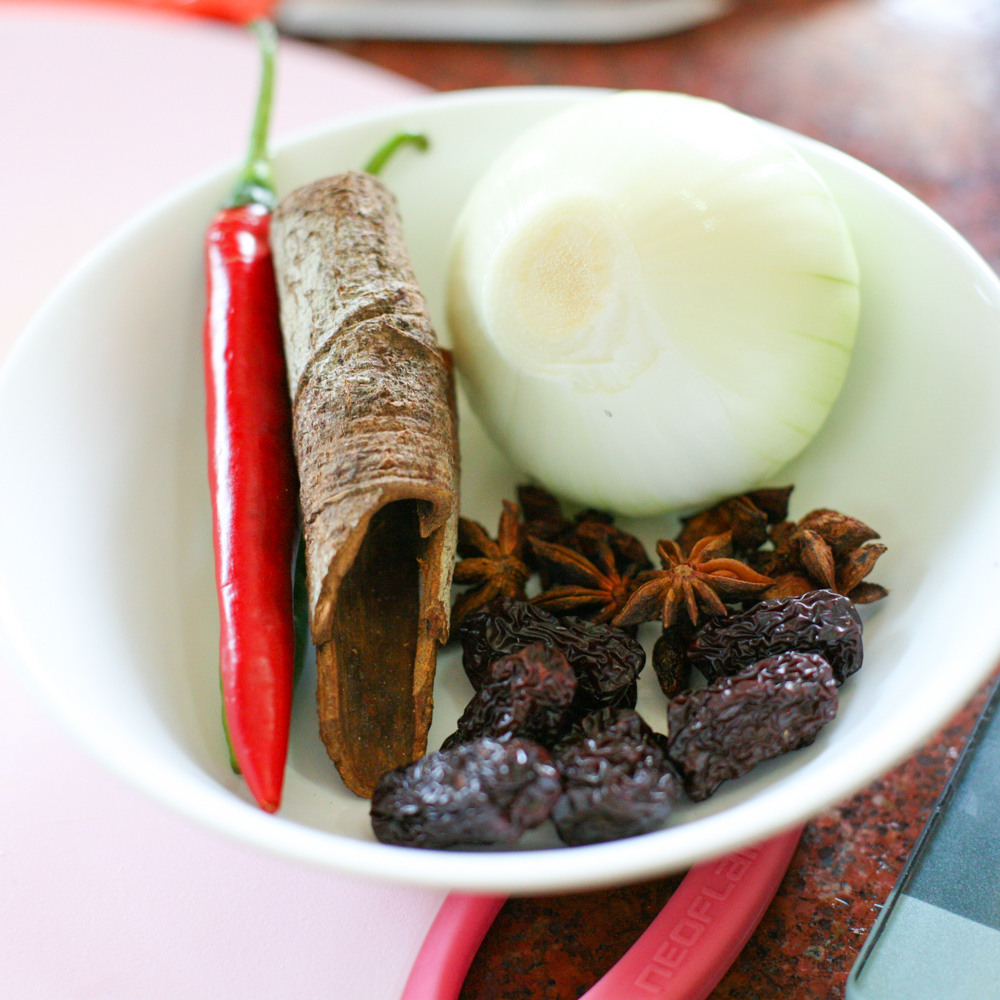
In the meantime the dish I wanted to leave you with today, and one that I hope that you will try, is a Bengali dish known as ‘Rezala’, whose roots lie with the Muslim rulers of the Mogul era. It is both fragrant and sweet and yet there are some sharp notes from the lime that compliment the overall taste of the dish. Other flavours resonate from the dish as well including: cloves, cardamom, saffron, ginger, garlic, cumin and chilli powder. It is a dish that heightens the senses and beckons you to eat more….so you’ve been warned!

Rezala – Lamb Chop Curry with Rose Water and Saffron

Adapted from Mridula Baljekar’s recipe in ‘Curry Lovers Cookbook’

Serves 6-8 (or 4 with leftovers for another day!)

3 medium sized onions, chopped

splash of water

3 garlic cloves, crushed/chopped

3 tsp grated fresh ginger

6 cloves

18 peppercorns

8 green cardamom pods

4 small pieces of cinnamon bark

14 lamb rib chops

2 medium sized onions, very finely sliced

200ml natural plain yoghurt

75g butter

vegetable oil

1 tsp salt

1 tsp ground cumin

1 tsp chilli powder

1 tsp sugar

juice of half a lime

pinch of saffron – place into a small bowl with 1 tbsp of hot water for 10 minutes

1 tbsp rose water

rose petals

1. Place the three chopped onions into a blender with a splash of cold water and blend until you have a smooth puree.

2. Place the puree into a large bowl along with the grated ginger, garlic, cloves, cardamom pods, peppercorns and cinnamon bark and stir together before adding the lamb rib chops. Use your hands to  coat the lamb fully. Cover with cling film and place in the fridge for a few hours – or overnight if you can. Remember you need to bring the meat back up to room temperature before cooking it!

3. Heat some oil in a large pan and gently fry the remaining 2 onions, which need to be finely sliced. Gently fry until the onions have browned, which will take around 6 minutes. Remove the onion from the oil and place on some kitchen paper so as to soak up the oil.

4. Using the same pan, fry the marinated lamb chops for 5 minutes before reducing the heat and simmering on a low heat covered for another 5-7 minutes.

5. In a separate pan mix the butter and yoghurt together, stirring constantly for around 5 minutes before stirring into the lamb chops, along with the salt, cumin and chilli powder. Cover and gently cook for 50 minutes.

6. Finally add the sugar and stir into the curry before adding the lime juice, saffron and rose water. Mix well and simmer for a few minutes.

Serve with the fried onions and a scattering of rose petals. The sweet smells coming from this dish are sublime. Eaten with rice or naan, this dish is very memorable. I hope you agree.

IMG_4590


Bengali Prawn Curry

IMG_4683

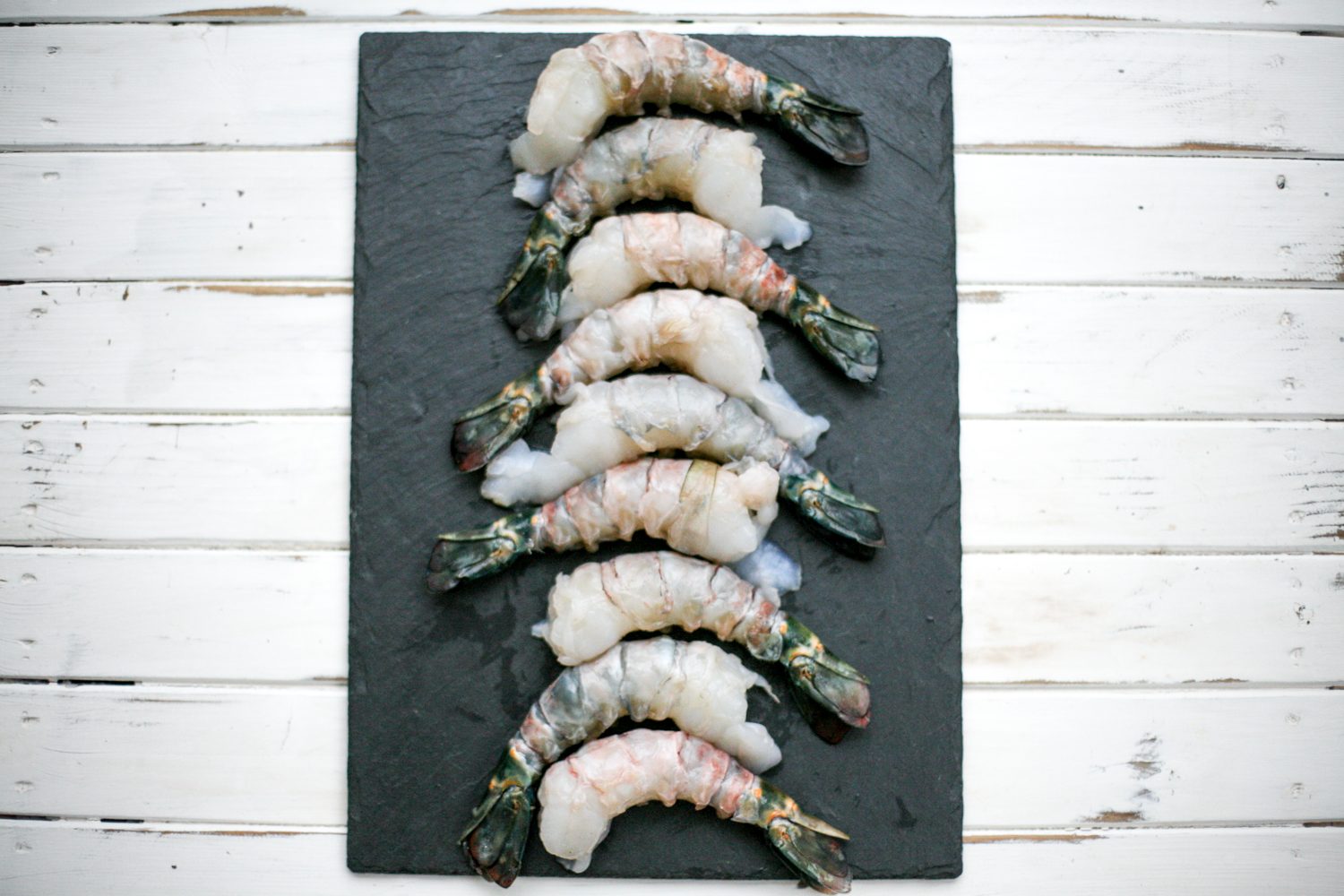
This Bengali prawn curry is one that was passed on to me by my mother-in-law and is, without doubt, my favourite of all prawn curries. The sweet undertones from the desiccated coconut and prawns blends superbly with the black mustard seeds and chilli powder, giving it a gently kick. I love to cook it using the king of all prawns, but it tastes equally good if you cook it using the smaller varieties as well. I do prefer to keep the tails mind you, both for appearance and because it holds the prawns together well, so if you can find prawns with shells and tails on I would always opt for those as opposed to buying the ones that have already been shelled and deveined.

IMG_4611

The prawns will be a greyish colour when you buy them. I bought frozen prawns and then let them defrost slowly over night in the fridge before peeling and deveining them in the morning. They remind me of the giant grilled prawns I would eat most evenings when I was staying on the shores of Lake Malawi for my honeymoon, many moons ago.

IMG_4620

Within seconds of being gently cooked the prawns will turn a fabulous pink and begin to curl into themselves. They only need a minute or so cooking on each side to seal them.

IMG_4629

The sealed prawns waiting to go into the curry sauce. The meatiness of them makes them a very satisfying and filling meal.

IMG_4641

Once the prawns have been added to the curry sauce let them simmer gently for a few minutes, making sure you coat the prawns sufficiently in the delicious sauce. Sprinkle ground garam masala over the prawns and give a little stir, before serving with basmati rice.

Bengali Prawn Curry

Serves 3-4

600g prawns, peeled, deveined but tails left on (I used 9 frozen super king prawns)

1 medium sized white onion, finely chopped

3 garlic cloves, finely chopped

1 inch piece of fresh ginger, skin removed and grated

vegetable oil

2/3 bay leaves

1 tsp black mustard seeds

25g (or 4/5 tbsp) desiccated coconut

1 tsp turmeric powder

1 tsp sugar

1 tsp chilli powder (less if you prefer it less hot)

1 tsp cumin powder

1 tsp coriander powder

1 tsp salt (you may wish to add one more – taste first)

2tbsp chopped tin tomatoes

200ml boiling water

1 tsp ground garam masala

1. Heat a couple of tablespoons of vegetable oil in a fairly deep frying pan or karahi. On a low heat add the prawns, in stages if your pan is on the small side, so as to seal them. They will curl up slightly and take on a vibrant pinkish hue. After a minute or so turn them over so that both sides are sealed. Then turn them on to their backs so as the top side is also cooked. Remove from the pan and place on a plate to one side, whilst you finish cooking the remaining prawns.

2. Add a little more vegetable oil if it is running dry and keeping the oil at a low heat add the black mustard seeds. They will burst open and sizzle so make sure the oil is not too hot as they will spit! Add the bay leaves and stir with the black mustard seeds.

3. Add the onion, garlic and ginger to the pan and cook gently for around 5/6 minutes until they begin to bronze in colour.

4. Add all the spices apart from the garam masala, as well as the salt and sugar.  Stir together and add the tinned chopped tomatoes.

5. Add 200ml of boiling water and add the desiccated coconut. Bring to the boil gently stirring and add the prawns. Gently cover the prawns in the sauce and simmer for a few minutes. Taste and add more salt if necessary.

6. Add the ground garam masala over the prawns, give a quick stir and serve immediately.

Serve with basmati rice.


Bagel Mania

IMG_4461

As far as blog posts are concerned this post is definitely up there on the memorable stakes. Yes, it’s a labour of love, but I can assure you the wait and effort is more than worth it. In fact we all agreed that we had never tasted bagels so fresh and tasty, this was, of course, because they had just come out of the oven and we had toiled hard to make them ourselves.

IMG_4457

We’d headed out of London for the weekend to dog sit for my parents who live in the rolling Sussex countryside. I thought that bagel making would provide the perfect morning’s entertainment, with the results making a truly satisfying lunch.

IMG_4388

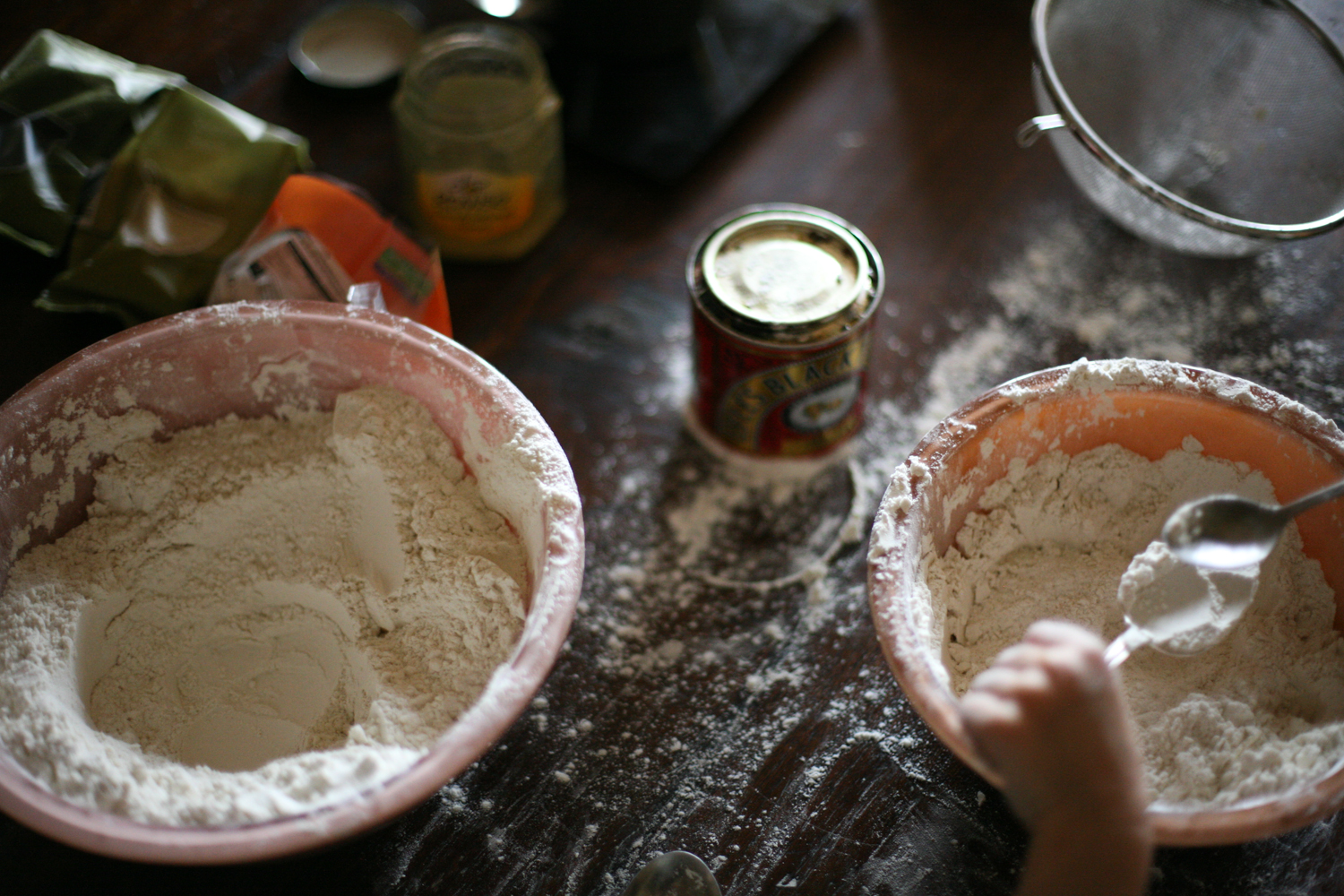
Big A and Little Z had their own bowls to make the dough and whilst a little flour, salt and yeast found itself out of the bowl, the majority made its way into the dough itself!

IMG_4389

Honey is added to the vegetable oil then poured into the dough mixture.

IMG_4400

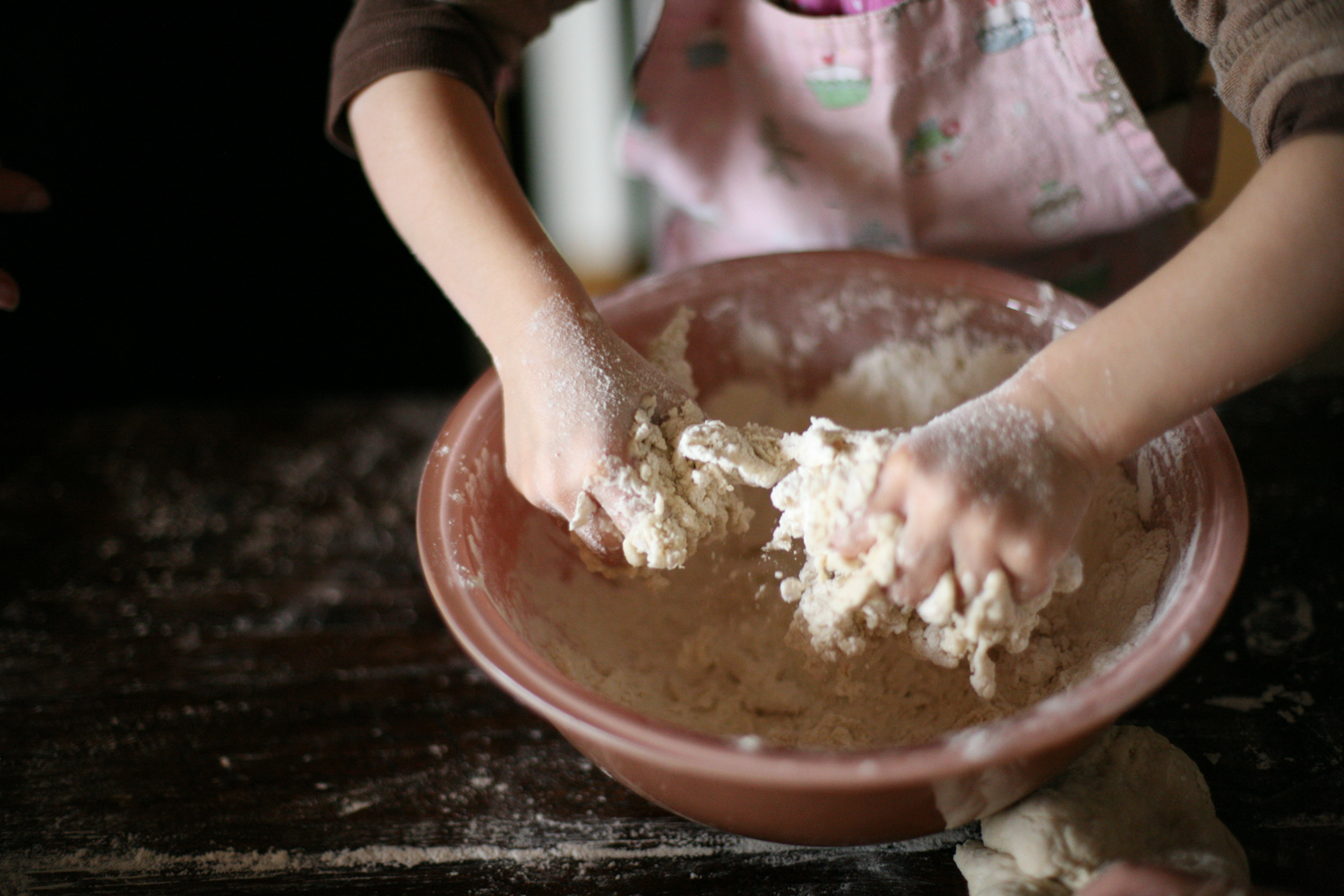
Really getting involved in the dough-making is so rewarding, as Little Z found out.


IMG_4406

Big A had a natural ability at kneading the dough for ten whole minutes.

IMG_4414

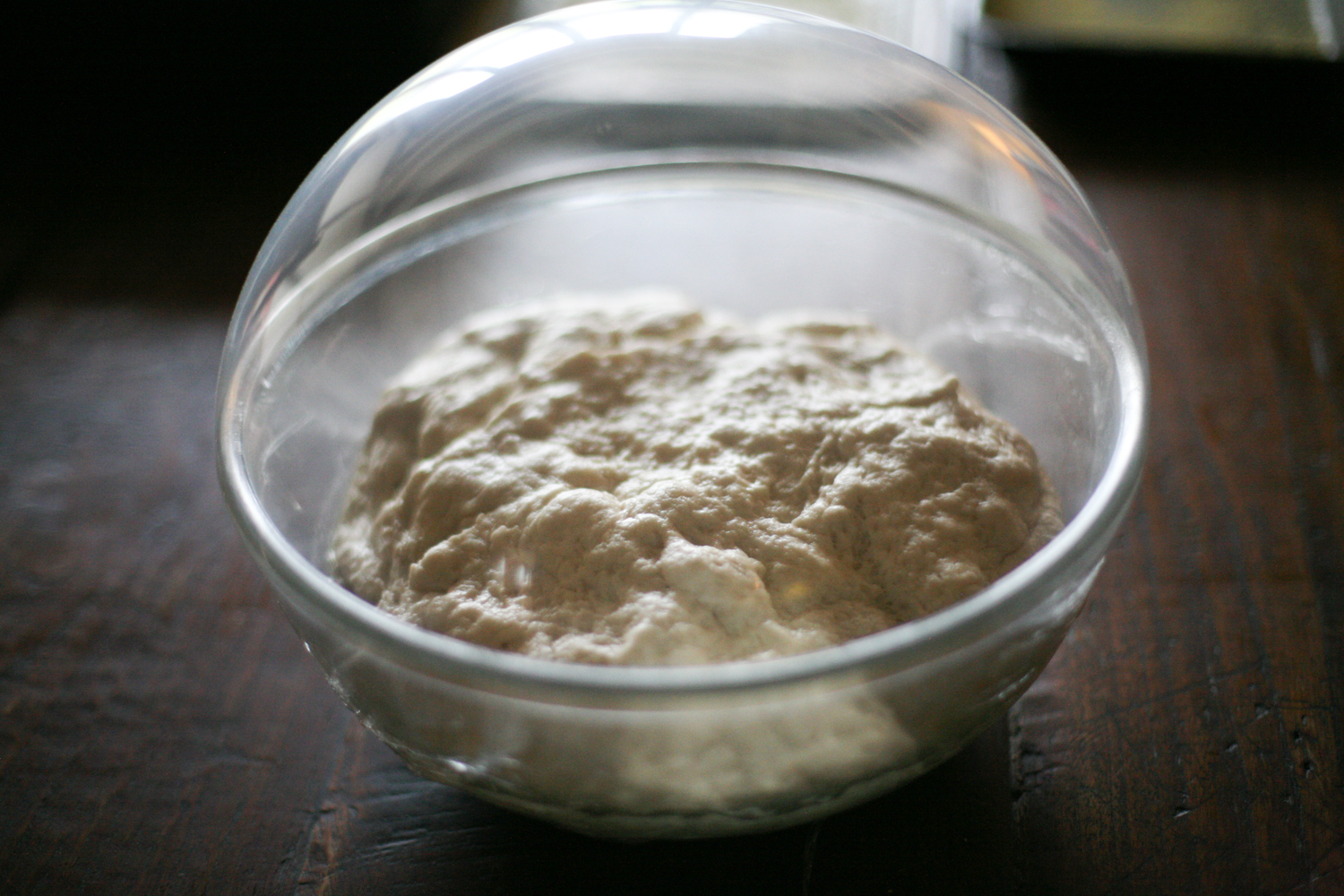
Once the dough had been given a good work out we combined Little Z and Big A’s dough and created one large ball. Rub a little vegetable oil around a large bowl and all over the dough, and place inside the bowl. You need to cover the bowl tightly with cling film and leave it somewhere warm – but not hot for 2 hours. The airing cupboard  provided the perfect place.

IMG_4418

By the time we returned the cling film had created a huge dome like structure over the bowl and the dough had doubled in size.

IMG_4426

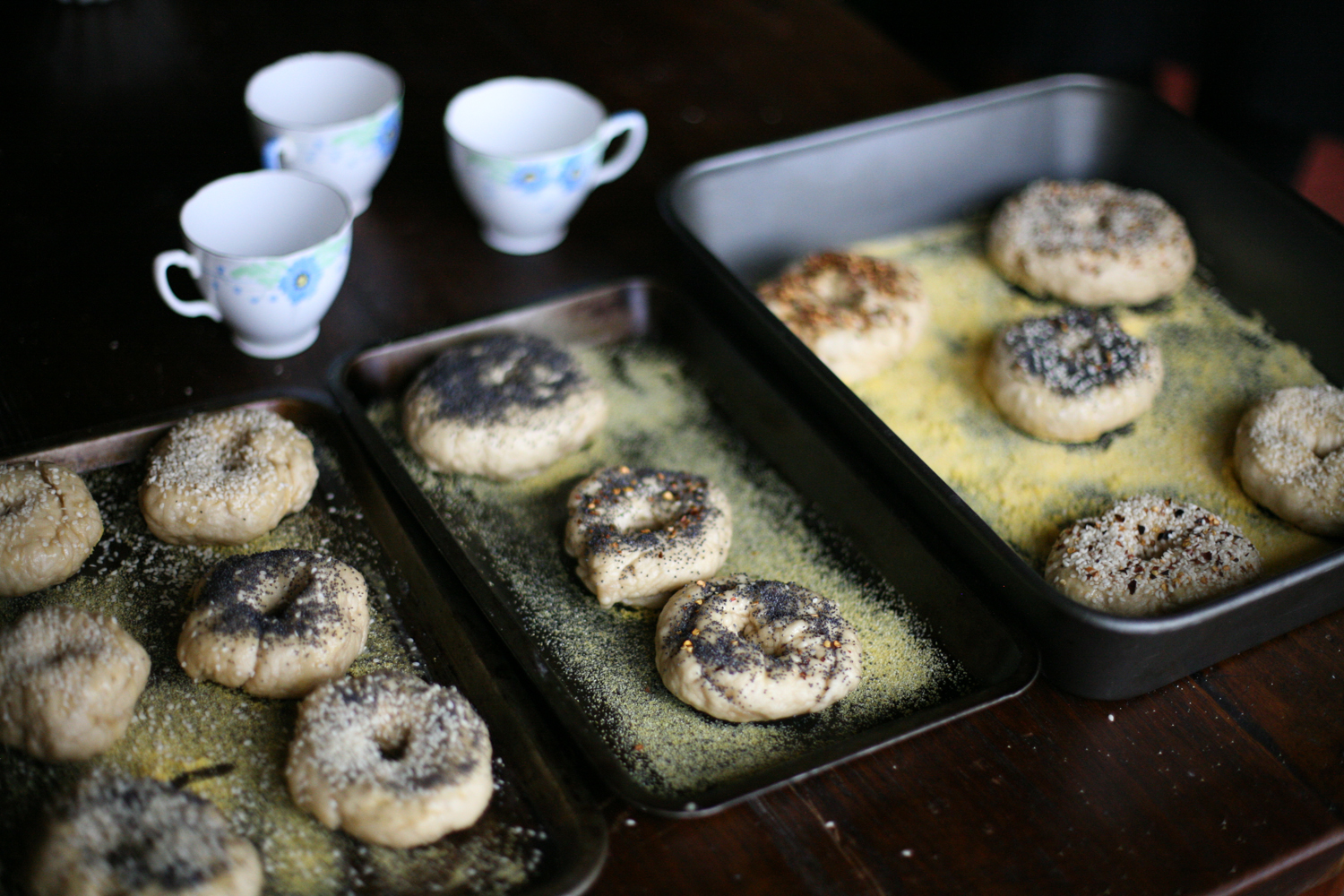
We decided to cover our bagels with either chilli flakes, black poppy seeds or sesame seeds, but you could also cover them in black onion seeds, grated cheese, cinnamon sugar or whatever takes your fancy.

IMG_4428

The best way to shape your bagel is to roll it into a ball and then to use the end of a wooden spoon and push through the centre. Once it has reached through the dough, keep the handle on the surface and wriggle it around until a hole is created to the size that you want the hole to be. You can also shape it further with your hands. When the desired shape is reached place to one side for ten minutes so as to let the dough relax into shape.

IMG_4434

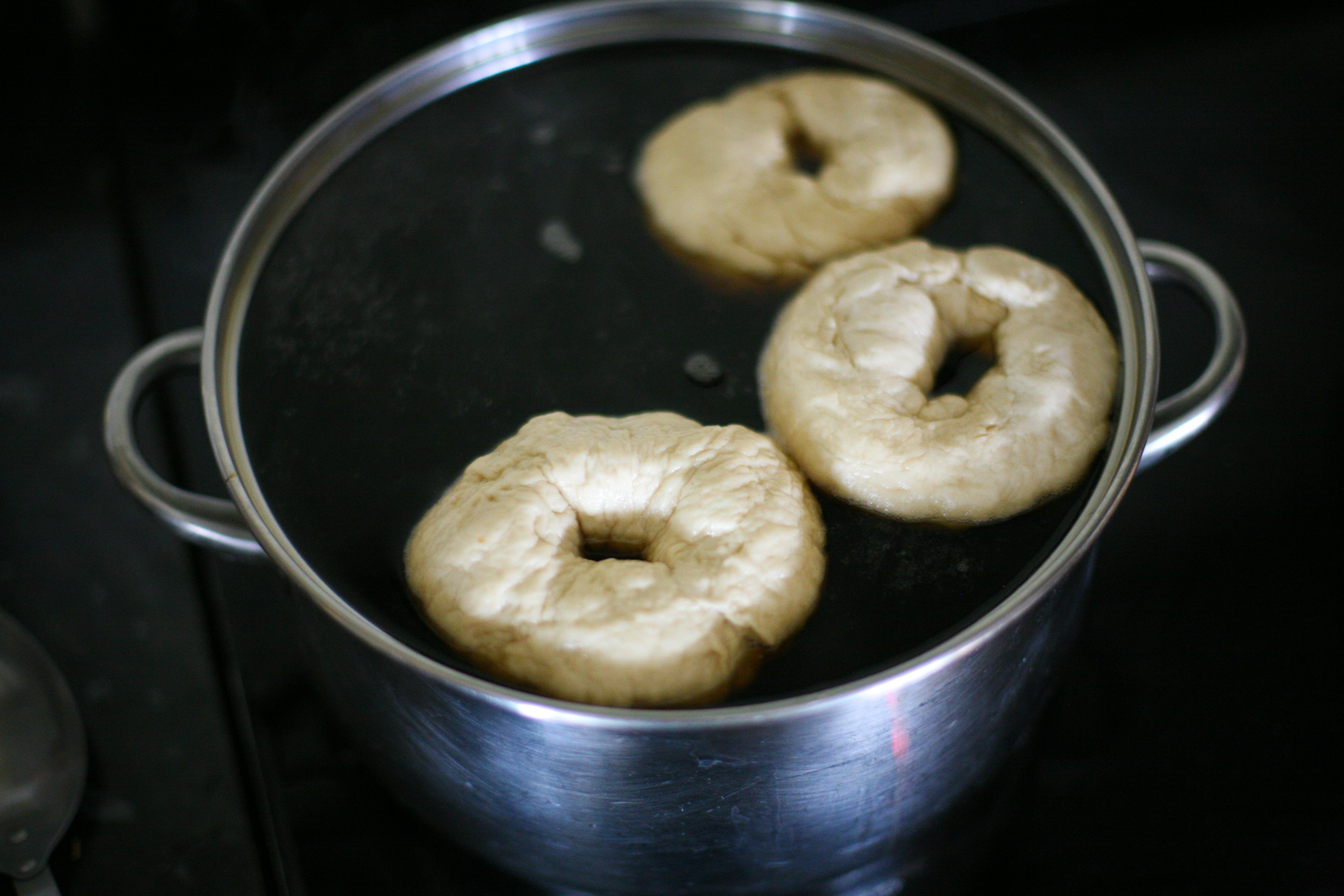
Now this part is really unusual, but doing it will allow your bagel to have that wonderful soft sponginess in the dough, once it is baked. Don’t skip it, even if you think you’ve read the instructions wrongly…..because you haven’t, you do actually need to BOIL the bagels briefly for one and a half minutes each side by placing them in a saucepan of boiling water and black treacle, (I know sounds crazy right?) that is simmering away.

IMG_4436

After the brief dunk in boiling treacle water and a thorough drain, place the bagels on lightly oiled baking trays that are sprinkled lightly with polenta – this is to stop the bagels sticking to the tray. Brush a beaten egg gently over all the bagels and then decide on your choice of topping and sprinkle over the bagels, pressing down gently so that the toppings stay in place.

IMG_4449

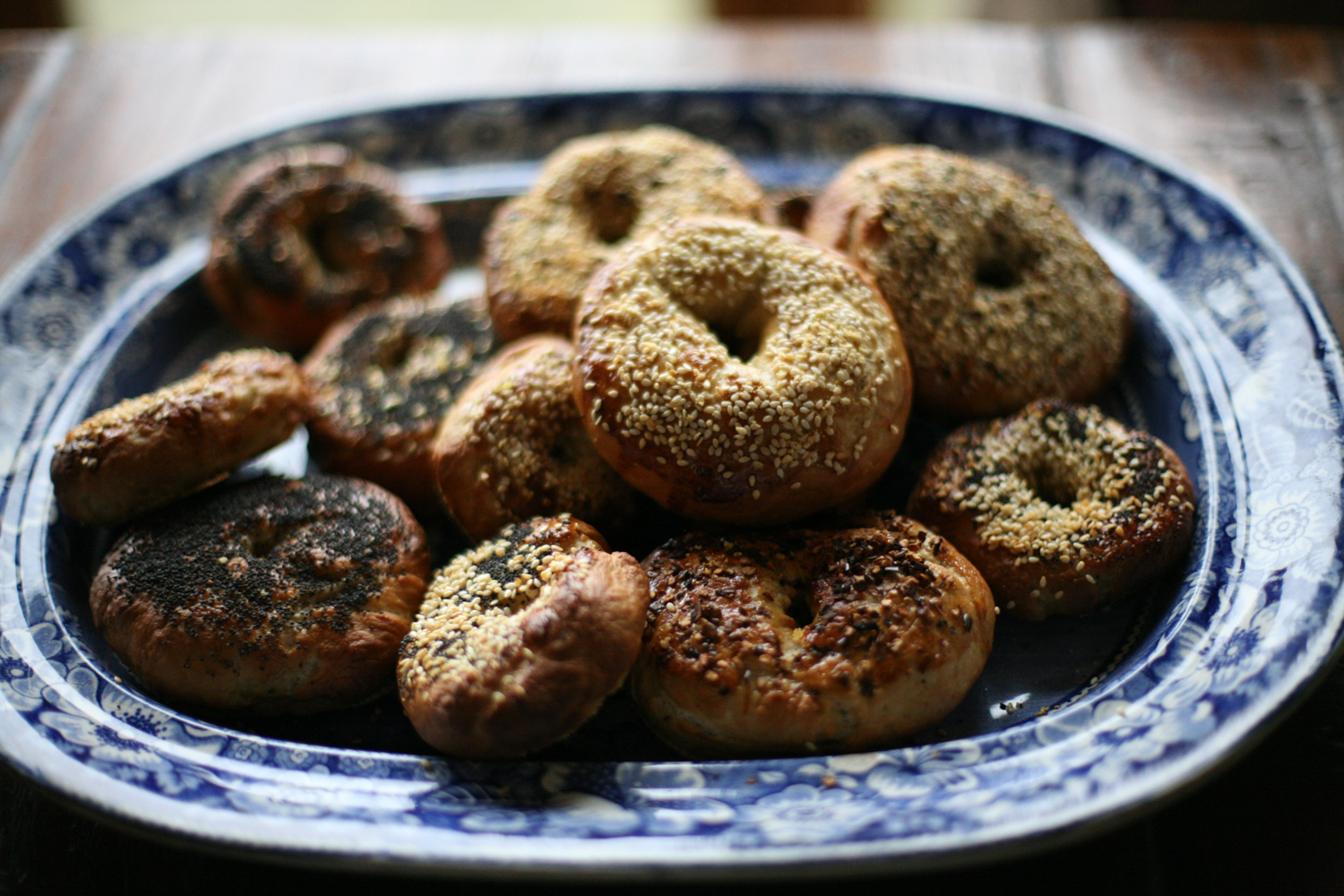
Freshly baked straight out of the oven. At this point, our stomachs were rumbling and we were ready to dive into our lunch.

IMG_4464

More choices…..what filling to place in our bagels. We opted mainly for either:

* Grilled bacon, soft cows cheese or cream cheese, rocket and a spoonful of my chipotles sauce.

0r

* Smoked salmon, cream cheese, avocado and rocket with a splash of lemon juice.

IMG_4471

Other than Little Z we all had two (a little piggy I know but oooh they were soooo good!) and the remainder we ate the following day for breakfast.

After such a good feast we decided to don our country coats and wellies and head out with Tessie the dog for a good old long walk across the fields and through the woods. A perfect day to spend a Saturday.

IMG_4517

Tessie loves to dive into hollow trees!!

Homemade Bagels

makes 14

adapted from Rachel Allen:Bake!

675g strong white bread flour

3 tsp salt

10.5g fast-acting yeast

375ml warm water

3 tbsp honey

2 tbsp vegetable oil

3 tbsp black treacle/molasses

polenta, for sprinkling

1 egg, beaten

toppings of your choice (chilli flakes, sesame seeds, black poppy seeds)

1. Sift the four, salt and yeast into a large bowl and create a well in the centre.

2. Place the warm water, honey and oil into a measuring jug and pour the liquid in in stages, using your hands to begin to make the dough. This stage is rather messy and sticky so take your time not too add too much liquid at once.

3. Once all the flour has come together to form a dough, transfer to a flat surface and sprinkle a little extra flour and then knead the dough for a good ten minutes. I tend to push the dough away with one hand and then fold the dough towards me and then turn it slightly before repeating the process. You’ll be able to pick up a good pace.

4. Lightly oil a large bowl and pour a little oil in your hands and smooth it on the dough, which you have made into a ball. Place the dough in the bowl and cover tightly with cling film. Place in a warm (but not hot hot) place for around 2 hours – the airing cupboard worked perfectly – when the dough will have doubled in size.

5. Place 6 pints of water into a large deep pan and bring to the boil. Add the black treacle and stir in throughly. Once it has come to the boil, let the treacle water simmer gently on a low heat.

6. Preheat an oven to 220 degrees centigrade (425F).

7. Meanwhile, once the treacle water is heating up, take the dough out of the bowl and place on a surface sprinkled with a little flour and knead it briefly before breaking it off into small balls for you to then make into individual bagels. The best way I found to make the bagel is to place the end of a wooden spoon into the centre of the ball, which you have flattened slightly. When it pierces through the bottom of the dough, give the wooden spoon a good twist around so that a larger hole is formed. You can then reshape slightly with your hands. Place to one side until you have used up all the dough. More hands make light work at this stage!! You will need to leave the bagels to stand for 10 minutes before moving onto the next stage, however, by the time you have finished shaping your last bagel the first few you made will be ready to be boiled.

8. Place no more than 4 bagels into the boiled simmering black treacle water and turn over after 90 seconds and leave for another 90 seconds. Then drain thoroughly and place on lightly oiled baking trays that have a sprinkling of polenta on them.

9. Brush each bagel lightly with whisked egg and then cover with your choice of topping.

10. Place in the oven for 15 minutes, by which stage they will be bronzed and ready to eat. If you would like a more bronzed bagel then turn the bagel over for a few more minutes extra cooking, although I don’t think that you’ll need it.

Eat whilst still warm for the perfect bagel.

Filling ideas:

* smoked salmon and cream cheese *goats cheese and red onion *salt beef, mustard and gherkin *bacon, soft cows milk cheese, chipotle sauce and rocket * cheddar and chutney *tuna, tomatoes and capers

What’s your favourite topping and filling? Would love to hear.


Chipotles En Adobo – a store cupboard essential

IMG_4384

If there is ONE new thing you do this year I urge, beg and plead you to try making your own ‘chipotles en adobe’, homemade chipotle sauce to you and me. If you like chutneys, relishes and jellies, and chilli of course, then this is culinary nirvana. OK, you probably think that I am going a little over the top here, but seriously you will thank me once you have made some pots of this sauce. It’s addictive and tastes seriously good, so much so that it is not unheard of for me to have it with my breakfast (whether it be french toast/fried egg toastie/grilled tomatoes/bacon buttie – basically it goes with anything, well maybe not cereal!) and then again at lunch time by placing a little dollop of it in my sandwich.

IMG_4286

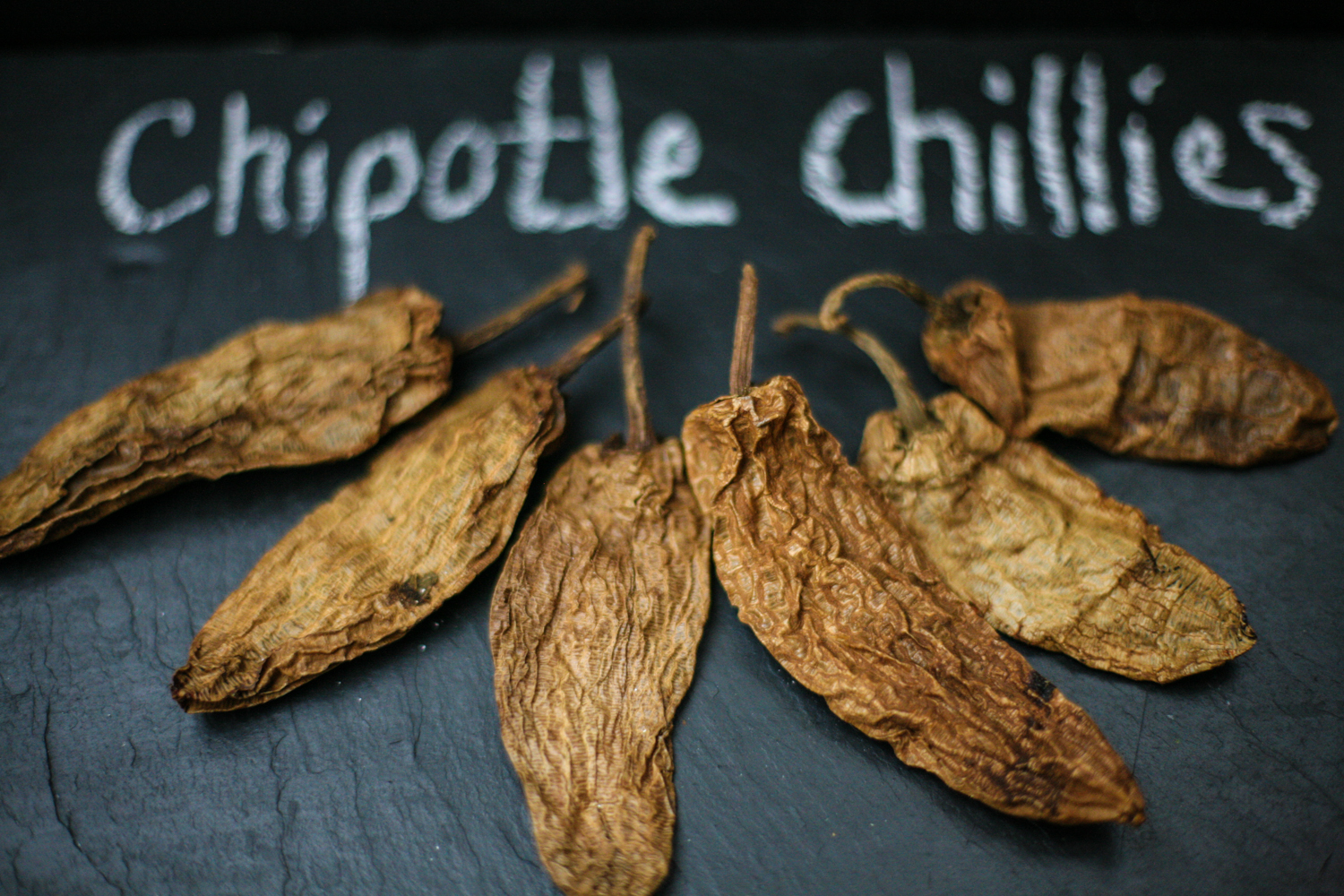
Chipotles chillies, originate from Mexico and are in fact a smoked and dried jalapeno chilli. They are not like their spicier cousins, such as the serrano or the chile de arbol, instead they have wonderful smokey notes that give warmth and a little spicy kick that beckons you back for more.  They are sold dried or in an adobo (sauce).

IMG_4292

Now I can just hear you all saying ‘where on earth can I get hold of those types of chillies’? Yes it does take a little bit of forward planning, but as I don’t have a farmers market next door or a store that holds them near by, I get mine online from a range of Mexican grocers including Mex Grocer. It takes literally a few minutes to log on and order and hey presto within a couple of days you have your beautiful dried chipotles chillies. I imagine if you live in the US they are likely to be even easier to source as I know that Mexican food and products are far more commonplace than they are here in the UK.

IMG_4294

Making the sauce is incredible straightforward and the sweet smells coming from the cooking pot are wonderful.
IMG_4311

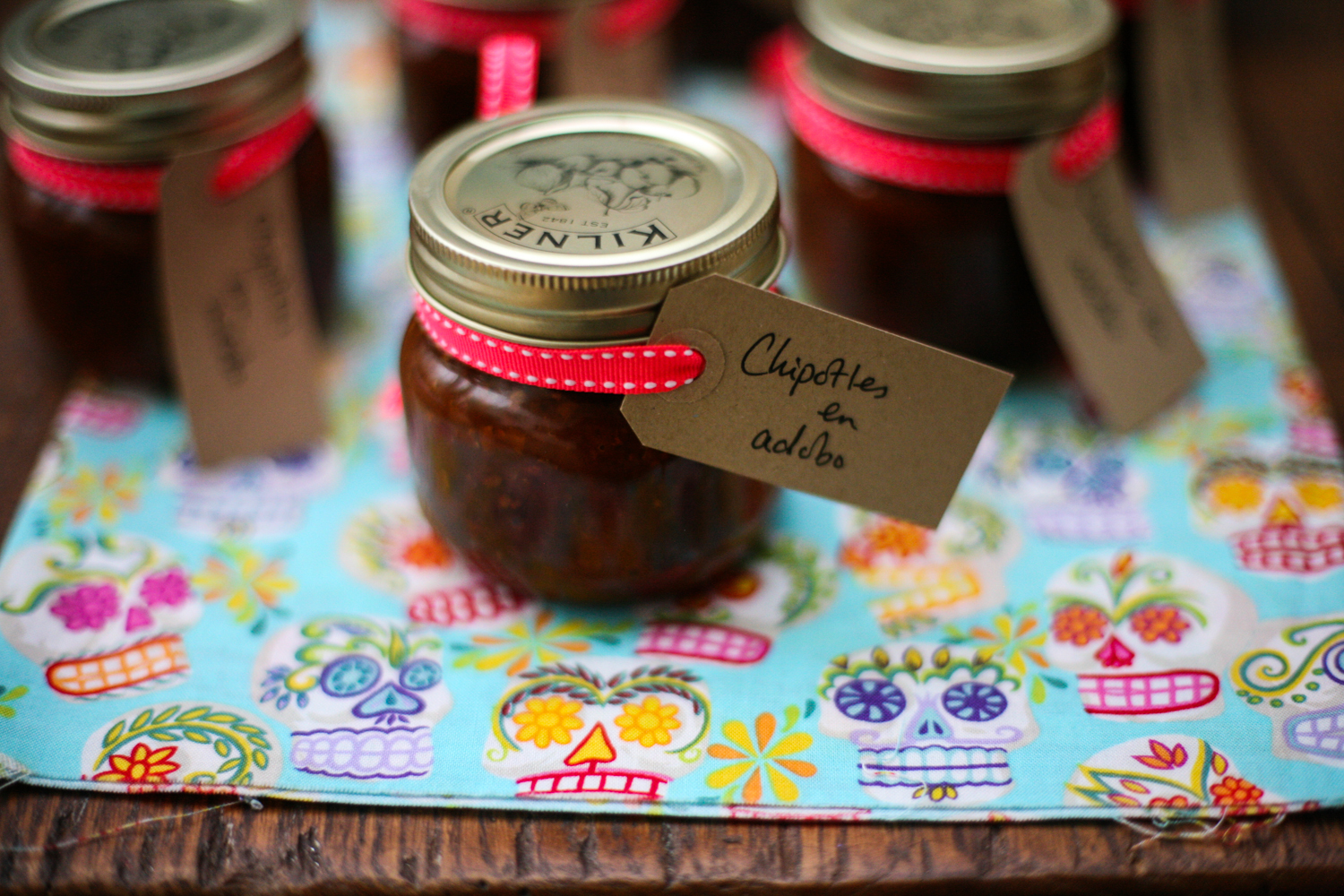
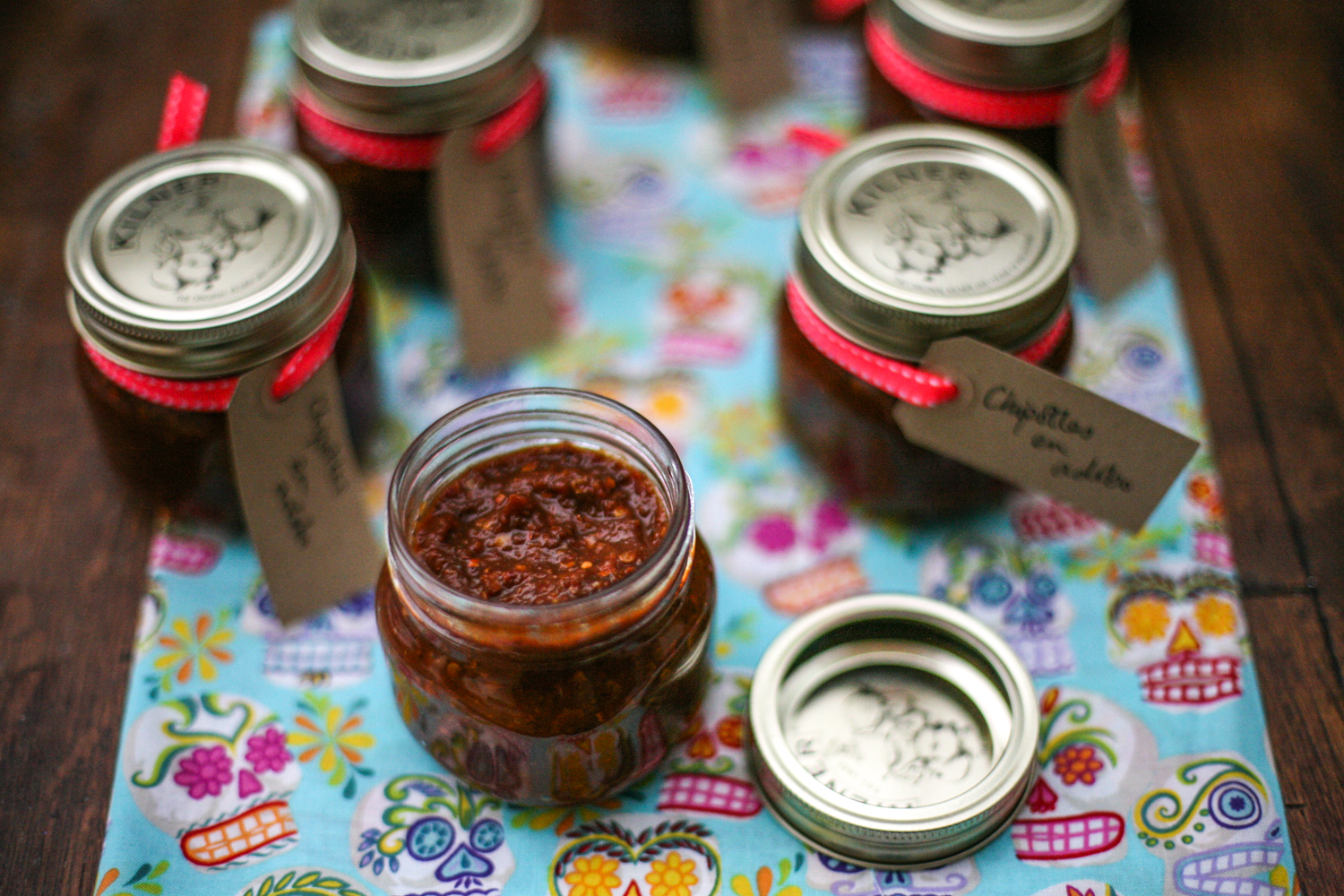
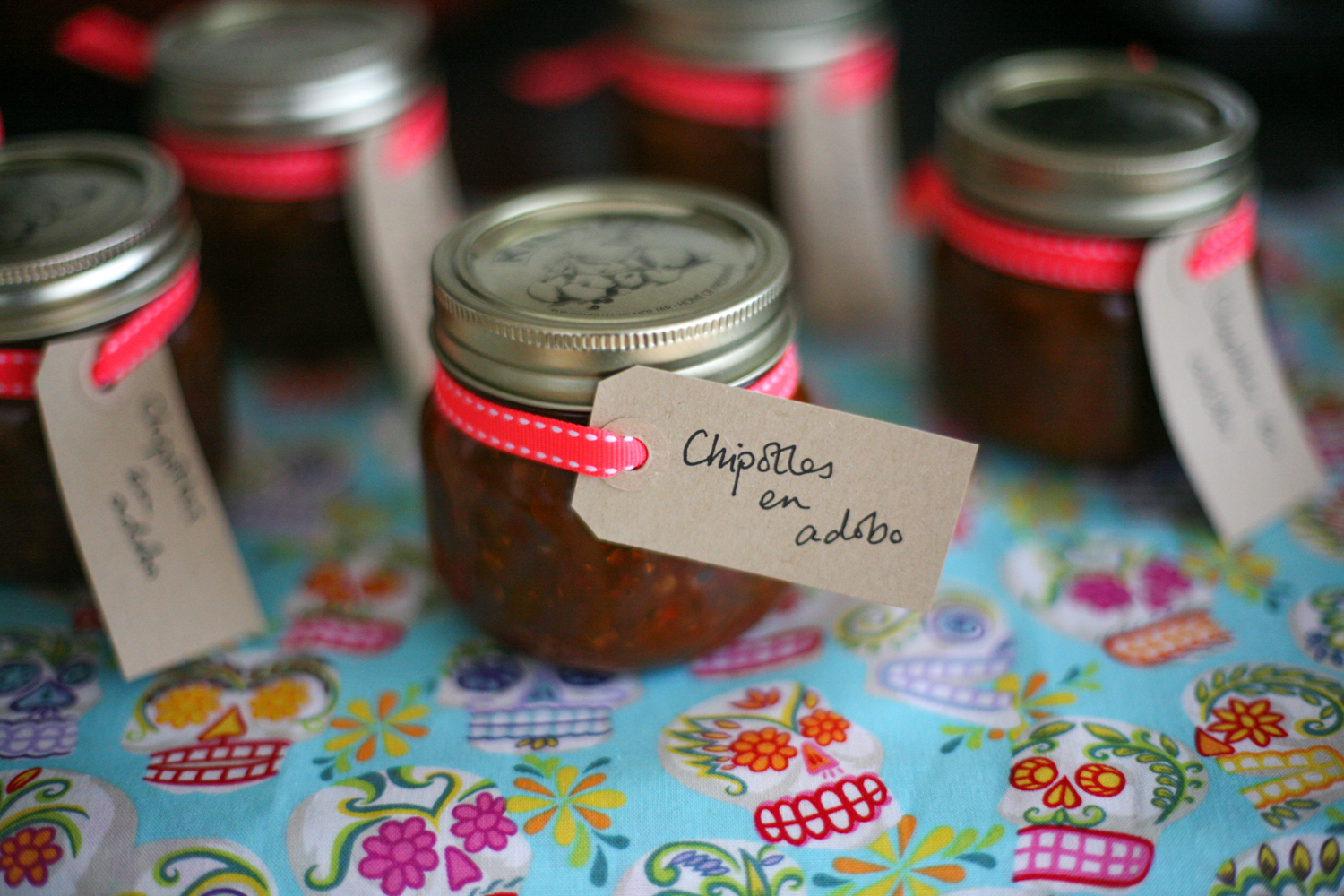
The sauce itself lasts for months so it’s great to have a private hoard in the store cupboard for personal consumption, although I will probably give a couple of my pots away to those I deem worthy of such culinary pleasures – basically family and friends who I know like chillies.

IMG_4323

IMG_4340

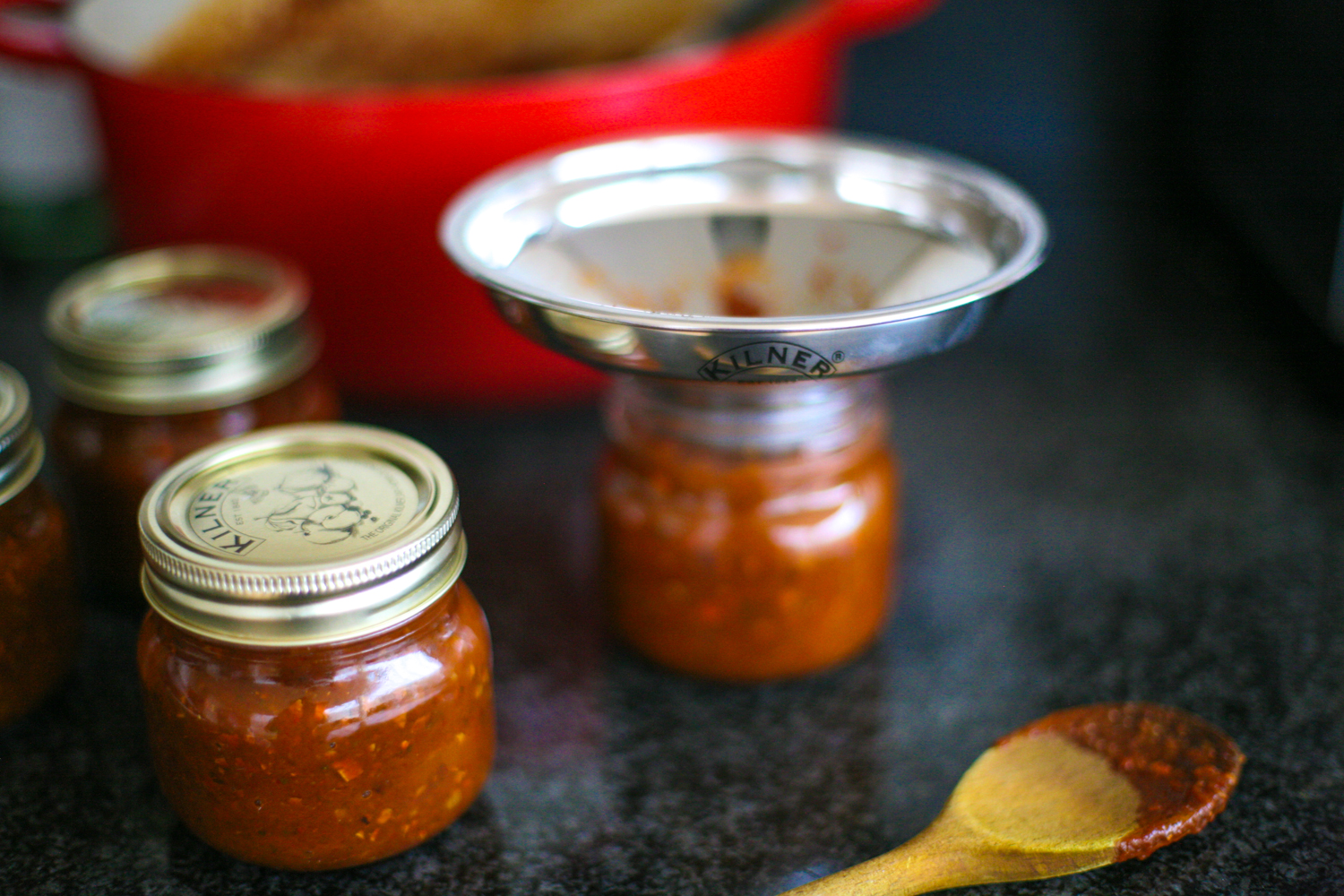
My life has been made so much easier since I invested in my kilner wide neck funnel (see photo above). I know it will get a lot of use with all the chutneys and jams I make over the course of a year.

IMG_4370

IMG_4347

Chipotles En Adobo

adapted from Thomasina Miers’s recipe in Mexican Food Made Simple

Makes 6 jars

200g chipotle chillies

1 white onion, chopped

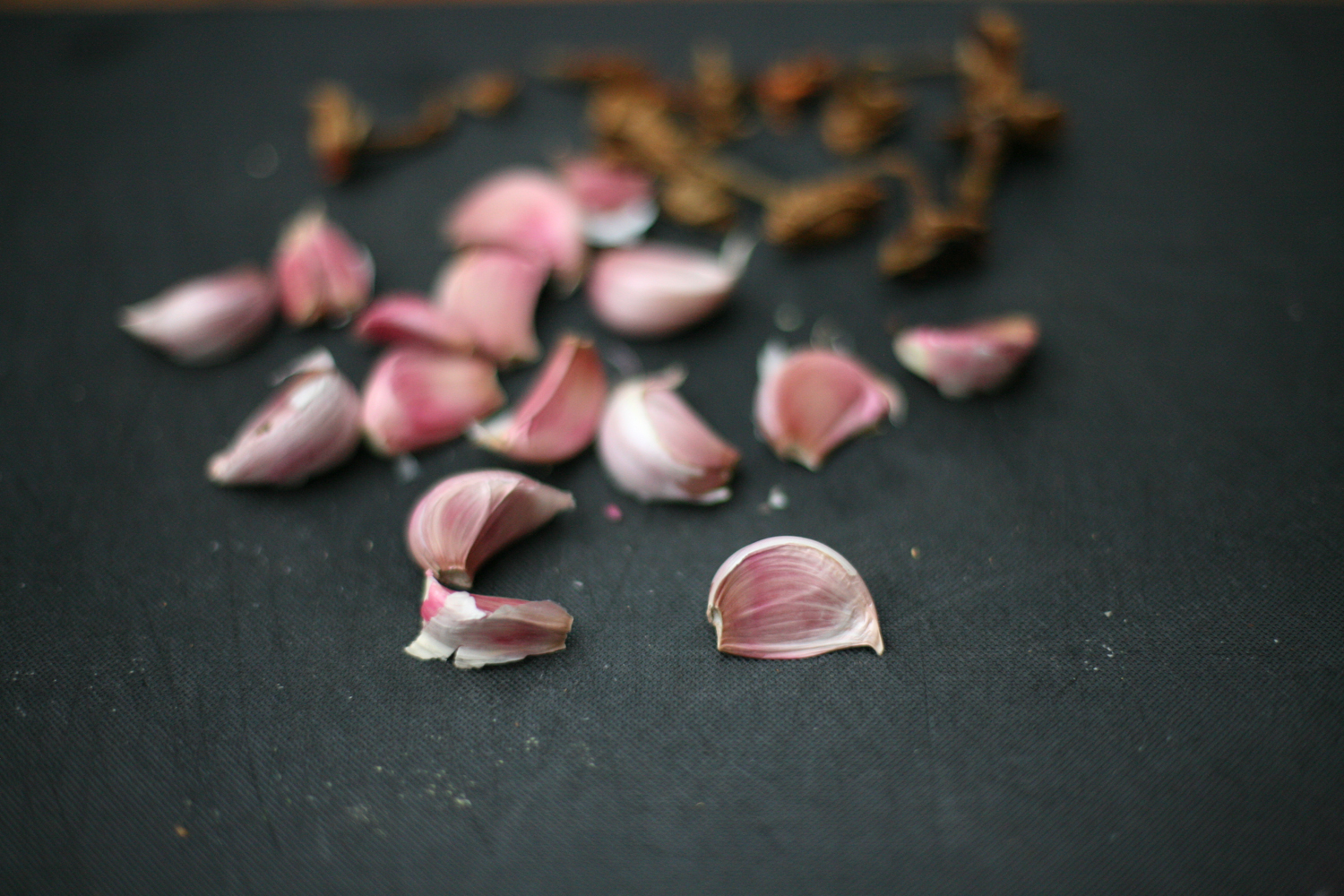
1 bulb of garlic, peeled and chopped

3 tbsp fresh oregano

2 tbsp fresh thyme leaves

2 bay leaves

1 tsp cumin seeds, crushed

4 tbsp olive oil

350ml white wine vinegar

50ml balsamic vinegar

1 tbsp black treacle

3 tsp tomato puree

6 tbsp demerara sugar

2 tbsp sea salt

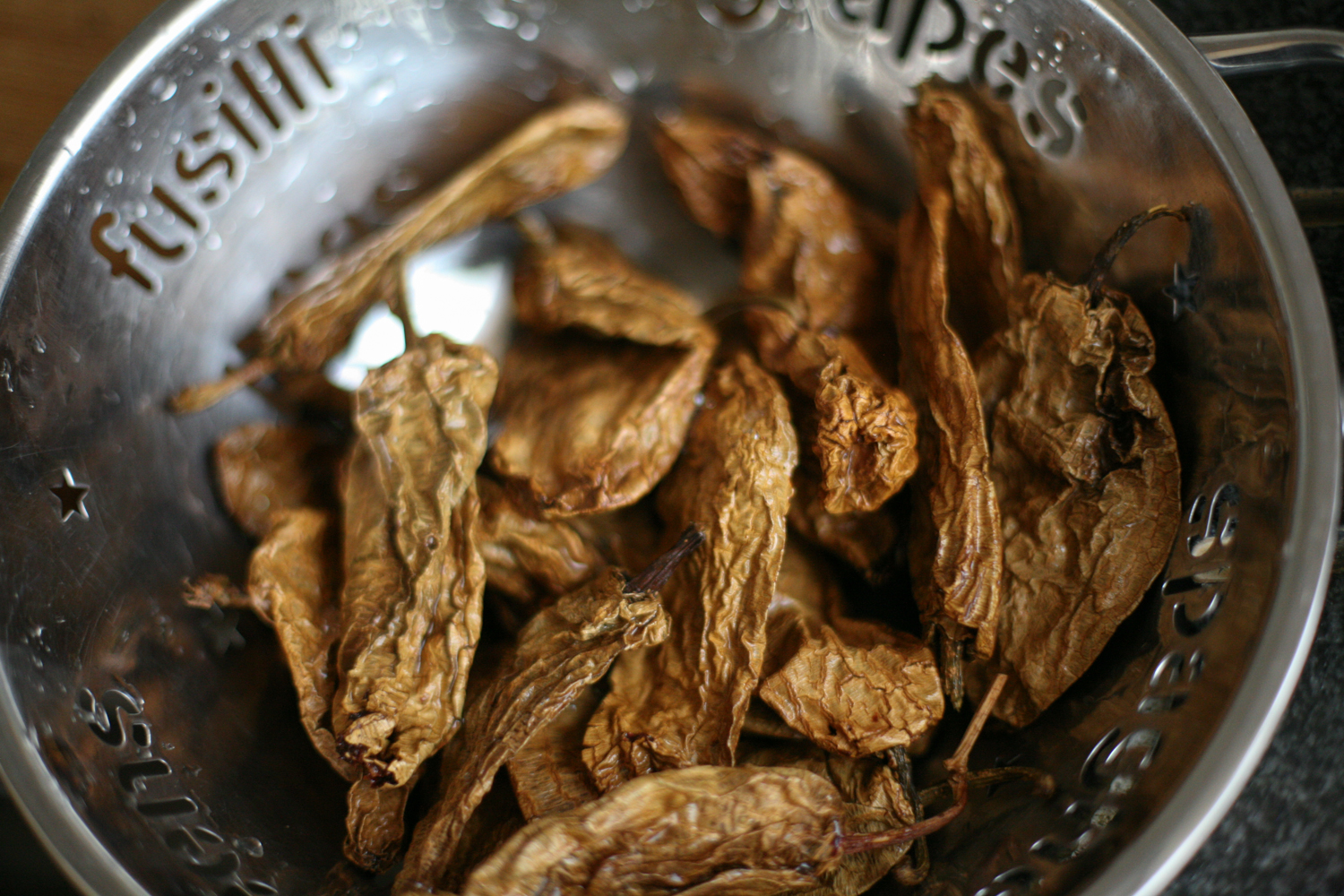
1. Cut the storks off the tops of all the chillies and then place them in a colander and wash in cold water.

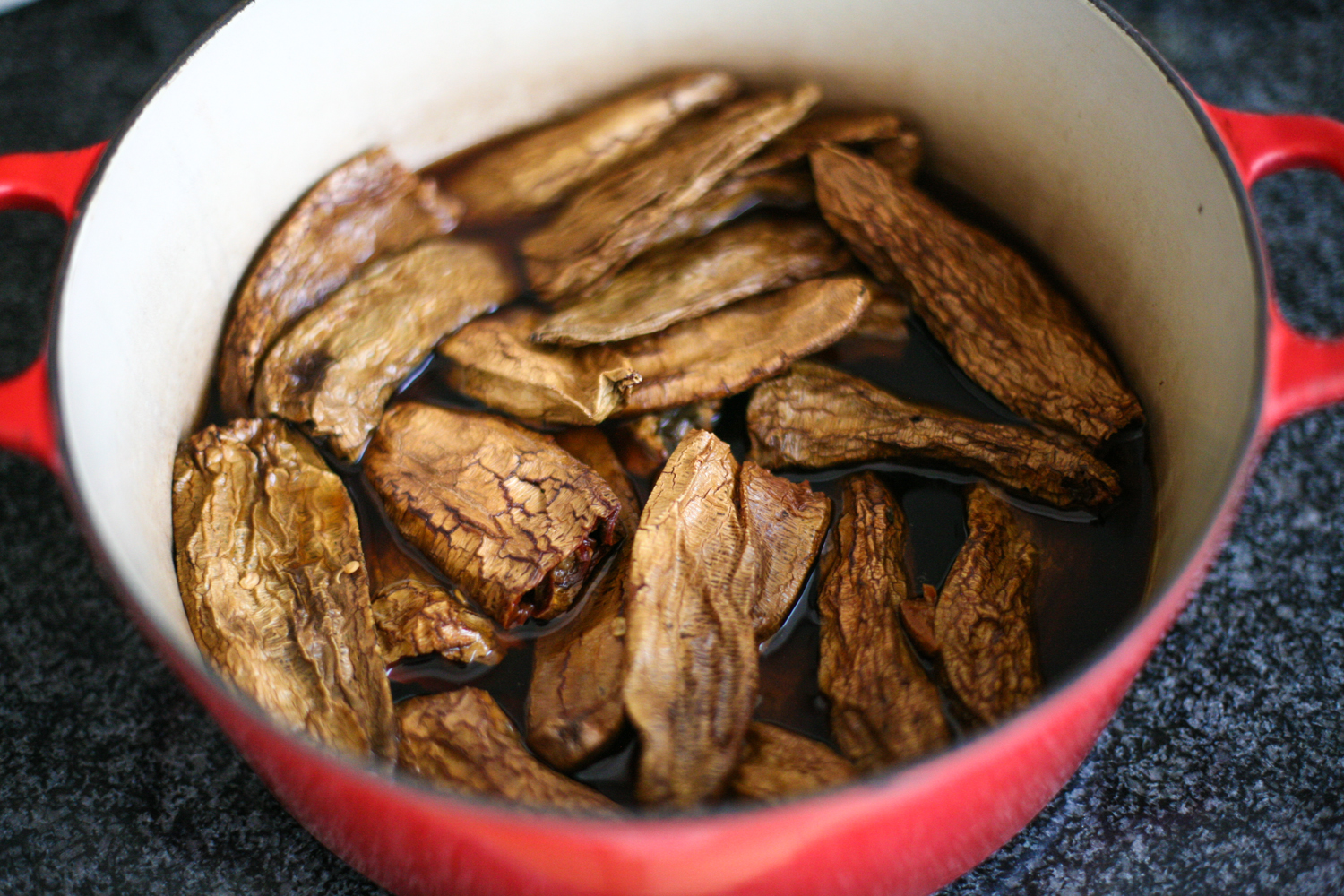
2. Transfer to a large pan and cover with water and simmer gently for around half an hour, by which time the chillies will be soft. Strain the water and place six of them into a blender along with the onion, garlic, herbs, cumin and 200ml of water. Blend until smooth.

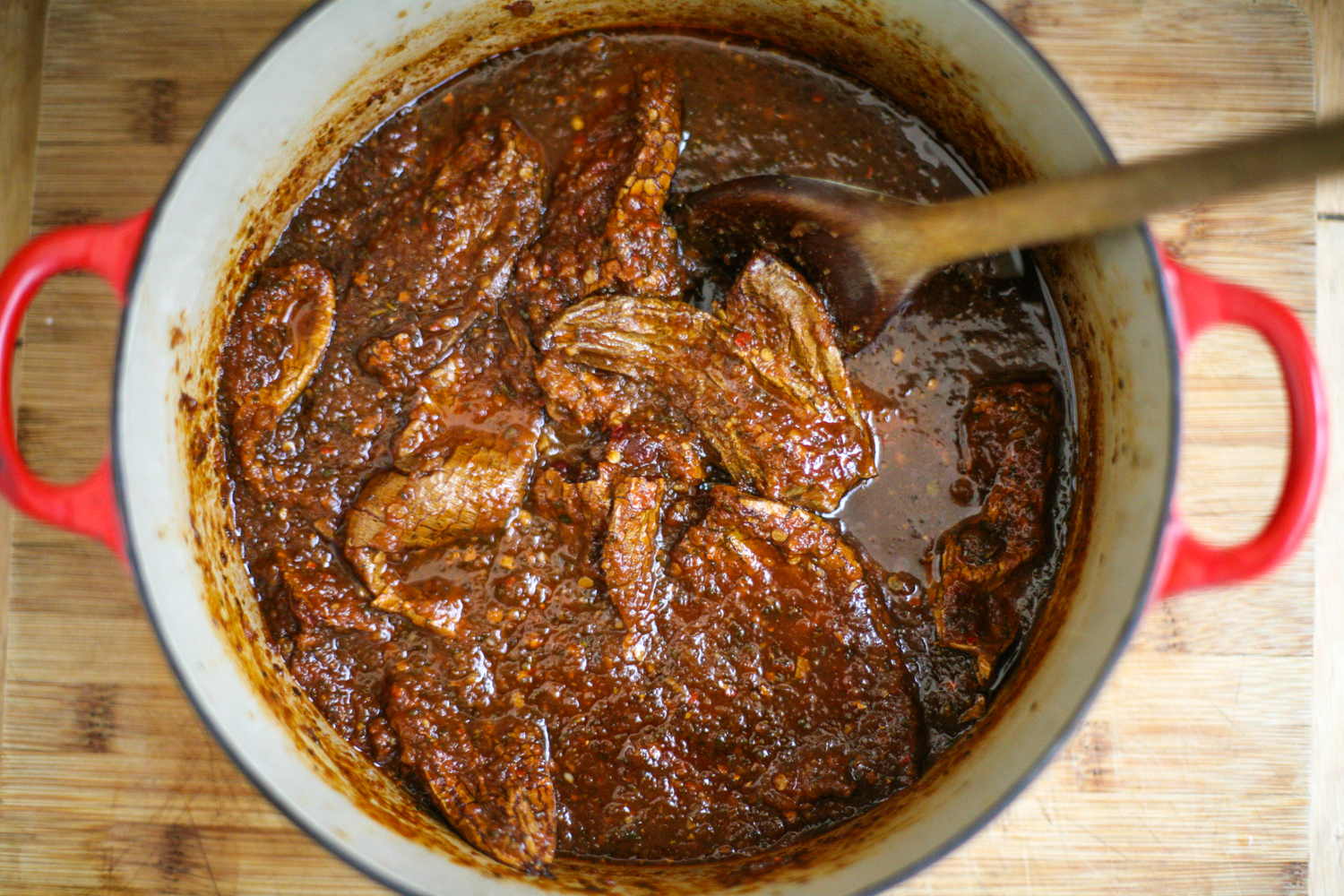
3. Heat up a large pan (my Le Creuset pot is perfect for this) with the olive oil and when it is very hot add the blended chilli paste and stir continuously for a couple of minutes before adding the tomato puree, sugar, salt, vinegars, black treacle, along with 100ml of water. Turn the heat down and simmer for a few minutes before adding the remaining chillies.

4. Simmer gently for a further 15 minutes, stirring throughout.

5. Transfer the sauce to a blender (or use a hand blender) and blend once again until you have a smooth sauce.

6. Place into your steralised jars and store in a dark, cool place.

This amount makes 6 small kilner jars, as shown in the photos. Whilst it lasts for months, I can bet that it won’t last too long once you have tried it as you’ll be putting it in and on everything.

Best of luck, a little bit of effort will reward you royally.


Chicken, Mango and Avocado Salad

IMG_4273

Grey days deserve brightening up and there is no better way to lift ones mood, than to indulge in a rather bright and summery looking salad….. in winter. I recently had this salad at a cheery little deli/restaurant on the Kings Road (they have two branches now at differing ends of the Kings Road) called Megan’s, where the staff are attentive and cheerful and there is a constant flow of customers coming in to have breakfast, lunch or to indulge in tea and cake, either to-go or to linger for a while in the warm haven of the restaurant. There is a positive buzz, not least because the food is fresh and inviting and made on the premises. It’s casual, unstuffy eating where you queue in line at the salad and hot bar and take your pick.

What initially attracted me to the chicken, mango and avocado salad was the colour – the bold yellow balancing beautifully with the reddish pink of the radish and the green from the salad leaves and coriander. The blend of flavours and textures complimented each other so well and I like the fact that the chicken had been delicately romancing with the dressing.

I took a mental note of what was in the salad and swore to conjure up a similar one in my home and then to share with you all when I had got it right. Of course it works brilliantly in the summer months, but I think a splash of colour and a healthy salad in the winter is fabulously refreshing. You can choose to have your grilled chicken warm or at room temperature, both work equally well so it is up to your personal preference.

What recipes do you cook when you need to brighten up your day?

IMG_4256

Chicken, Mango and Avocado Salad

serves 4

Romaine lettuce, chopped

300g chicken breasts

1 avocado

1 mango

bunch of coriander, roughly chopped

approximately 6 radishes, sliced

salt and pepper

dressing

1 tsp dijon mustard

1/2 tsp whole grain mustard

3 tbsp olive oil

1 tbsp white wine vinegar

1 clove of garlic, crushed

1. Preheat the grill to 180 degrees and cook the chicken for around 20 minutes, turning half way through.

2. Slice, cut and chop the remaining salad ingredients and place in a large bowl.

3. Mix the dressing ingredients together and place to one side.

4. When the chicken is cooked, slice the chicken breasts into strips of edible bites and place into the large bowl.

5. Add a little of the dressing and then gently toss together with all the salad ingredients.

6. Place in a serving platter for guests to serve themselves, with a small jug with the remaining dressing on the side.


Steak, Guinness and Mushroom Pie

IMG_4110

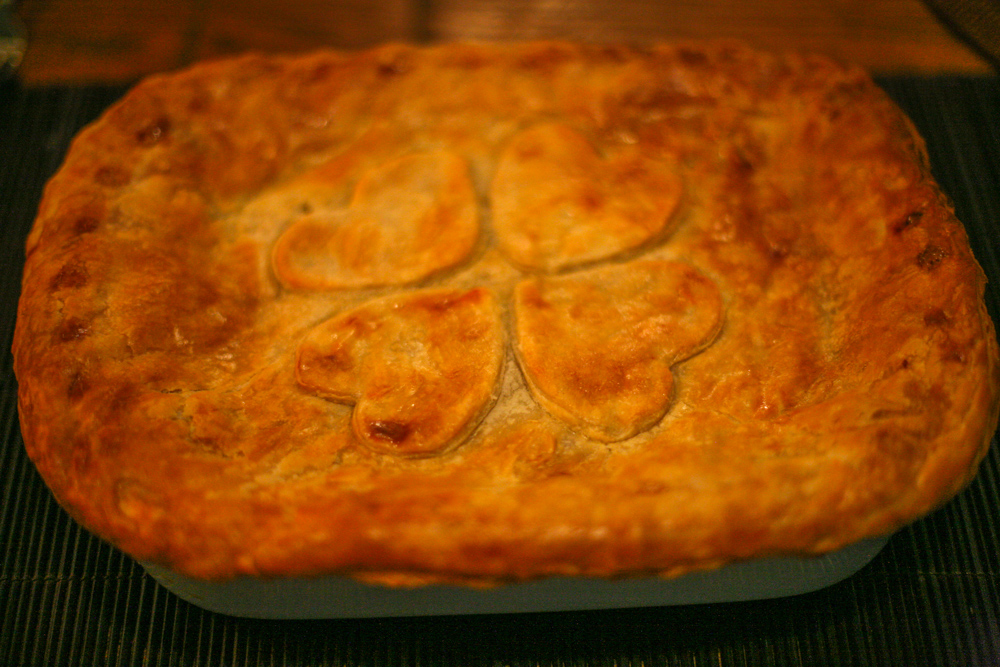
For those who like their meat traditionally made, this pie is seriously off the charts TASTY. I rarely cook pies as I regard Mr.B’s frame as requiring no extra investment from the pastry department, but when I do I really savour and enjoy every mouthful. Whilst the photo above shows the pie pre pastry topping, the ones lower down show it in all its glory. I apologise though for the rather poor quality of photographs. Normally I shoot my photographs earlier in the day so as to catch natural light, but for this post I wanted to eat the pie as soon as it emerged from the oven in the evening…..so I took the photos with candlelight….BIG mistake as they really don’t do the dish justice. Anyway I hope you will overlook the photographs here this once and just trust me when I say this pie is an absolute winner.

IMG_4122

You’ll need to get hold of a bottle of Guinness, which gives the pie a fantastic depth of flavour. The pie doesn’t require a whole bottle so you will have some to sip whilst the pie is cooking!

IMG_4128

We had some guests over for Valentines dinner, hence the pastry hearts on top of the pie.

IMG_4136

Happily our guests were very happy to receive such comfort food on a cold February evening and we all found it very easy to over-indulge. In these days of calorie counting and healthy eating at every corner, it was very refreshing to have some warming, nourishing food with no attempt at modernisation or  a “skinny version”. Indeed after the sacrifices of January, pairing this with some mature, spicy Rhone red wine was blissful.

IMG_4139

Steak, Guinness and Mushroom Pie

adapted from Good Housekeeping Step-by-Step Baking

Serves 6

700g stewing steak, cubed (from your reliable local butcher)

flour, for coating

salt and pepper

175g bacon lardons/pancetta or bacon chopped into small pieces

50g butter

2 white onions, peeled and diced

2 garlic, finely chopped

1 tbsp fresh thyme

1/2 tsp ground allspice

300ml/1/2 pint Guinness

150ml (1/4 pint) beef stock – I use this

2 tbsp tomato paste

2 bay leaves

400g button mushrooms

Pastry

300g plain white flour

175g butter

1 tsp salt

180-200ml iced water

1 egg, whisked with a little water

1. In a mixing bowl place the cubed stewing steak, a little dusting of flour and salt and pepper. Mix together gently with your hands.

2. In a large pan dry fry the bacon/lardons/pancetta gently until it has browned and then remove with a slotted spoon.

3. In the same pan place half the butter and cook the stewing steak in batches, for around 5 minutes each batch. Add the fresh thyme, onions, garlic and allspice to the steak and stir in well together. After 10 minutes, by which time the onion and garlic will be nicely cooked, add the bacon.

4. Pour in the Guinness, beef stock, tomato paste and bay leaves and gently simmer for one hour, by which time the beef will be deliciously tender.

5. Heat the remaining butter in a separate pan and add the mushrooms until they are lightly browned and then add to the stewing steak. Give a good stir before placing into a pie dish and discarding the bay leaves. Leave to cool completely before adding the pastry topping. (see first photo in the post!)

6. To prepare the pastry sift the flour and salt into a bowl and cut the butter into very small cubes before placing into the flour. Using your finger tips, lightly rub the butter into the flour so that it begins to form a crumbly consistency. Add a little water at a time to form a dough ball. Place on a clean dry surface and knead together until it is smooth. You may need to add a little more flour if it is too sticky! Wrap in cling film and leave in the fridge to chill for around 20 minutes.

7. Roll the pastry out so that it sufficiently covers the pie dish. The one I use is 31x22x6cm. Gently cut around the pie dish where there is excess pastry. With the extra overhanging bits of pastry, create pastry leaves, hearts, stars, words, basically whatever takes your fancy, to place on top of your pie. Using your thumb and index finger pinch the pastry gently around the edges so as to give a wave effect. Lightly brush the pastry with the whisked egg and use a little water to keep any parts of the pastry in place.

8. Place in a preheated oven at 180 degrees (if using fan, ten degrees more if not) for 35 minutes or until the pastry is golden.

Serve immediately with mashed potato, red cabbage or greens.


Pecan Puffs

IMG_4052

When we arrived back from Hong Kong in the New Year we headed out to the countryside to stay with my parents in order to celebrate Christmas (part 2) with them, my siblings and their partners. The tree was down by this stage, twelfth night had long gone, but that aside my parents sweetly replicated the Christmas that they had had on December 25th again for us as we were back in the UK. Anyone passing by the house would have thought we had all gone completely mad as carols were playing and mulled wine was wafting through the house. We ate turkey, wore silly cracker hats and played parlour games. My mother went to town, as usual, on the food which we all greatly devoured.

It was whilst we were lazing away the hours that I stumbled across a little pot filled with the most delicious, crumbly biscuits I had ever eaten. They were completely heavenly as well as being very addictive and perfect to nibble away at whilst having a cup of tea (we English love our tea) by the fire in the late afternoon.

IMG_4043

It transpired that they had been sent from the US, lovingly made by a friend of my sister and her beau. Needless to say they did not last long as the whole family took a liking to them.

I urged my sister to track down the recipe so that I could try and make them myself. I had to do all the US conversions from cups to grams and somewhere along the line with my conversions they went wrong. They still tasted delicious but they were not as puff like as the originals as they were coming out of the oven a lot flatter.

IMG_4022

Finally after a few false starts I found the right balance of the ingredients and the delicious puffs returned. They are meant to be crumbly when you bite into them and certainly not the same texture as a biscuit. In as far as they are quick to devour they are also quick to make. Big A and Little Z love to get involved and prepare them with me as they are very straightforward to make.

I rather like the idea of putting them in little packets tied with a bow and given to friends and loved ones. How impressed will the receivers of such fancies be when they taste your pecan puffs. Trust me they will be begging you for the recipe. Send them this way of course. x

IMG_4034

Pecan Puffs

Inspired by Lainy in the US

Makes around 30 (depending on size)

240g unsalted butter, cubed at room temperature

120g pecan nuts, finely ground

240g plain flour, sieved

50g icing sugar

1 tsp salt

1 tsp vanilla essence

1. Finely grind the pecan nuts in a blender and place to one side.

2. Line a couple of baking trays with baking parchment and again place to one side.

3. In a large bowl add the sieved flour, icing sugar and salt.

4. Add the cubed butter to the flour bowl and using your hands begin to mix the ingredients together, softening the butter into the flour as you do so. Once it all begins to come together, add the vanilla essence and the ground pecan nuts.

5. Once all the ingredients have been thoroughly mixed together form a large ball and break off small pieces, a little smaller than a hens egg, but bigger than a quails, and roll in the palm of your hands into a ball and then slightly flatten, but not so much that it is completely flat.

6. Place each pecan puff on to a baking tray so that they are well spread out. I tend to leave a couple of inches around each puff . Whilst you are preparing the puffs preheat the oven to 160 degrees centigrade.

7. Place in the oven for 16 minutes and then leave to firm up before placing them on the cooling rack. When they are completely cool sift icing sugar over the top. Voila your pecan puff is ready to be devoured.


Duck Vindaloo

IMG_4092

Sometimes I think it’s good to eat a meal that really makes you feel alive, something that has some real zing to it. I understand though that loving chilli and things hot and spicy really divides opinion and that it is definitely something that you build up a tolerance to over time, similar to swimming in cold water in fact. It’s good to have a gradual build up rather than jumping in at the deep end whether it be cold water or chilli. On this basis I have shown you how to cook a hot vindaloo as well as a more mild version, but one that still has a pleasant kick to it.

I rather like using duck for a change, but should you wish you could also easily cook this with chicken. Pork vindaloo is probably the most well known Goan version – which you can follow the recipe to HERE, however, duck adds an interesting and tasty alternative, which I urge you to try.

I suggest you probably try the more subtle version first and then gradually build up the chilli content should you require more of a kick. I would love to hear how you get on so do leave a message in the comments box below….go on, don’t be shy.

Duck Vindaloo

Serves 4 (or 2 if you are very hungry)

4 duck legs (or 1 duck jointed)

2 sticks of cinnamon

5 cloves

2 green cardamom pods, slightly split open

3 white onions

10 garlic cloves

2 inches of fresh ginger

5 dried red chilli (2 if you prefer it milder) I use the small Thai variety

5 small green chilli (2 if you prefer it milder) I use either serrano or finger chillies. Use Jalapeno if you prefer it less hot

1 tbsp cumin seeds

1 tsp turmeric

3 tbsp white wine vinegar

5 small/medium potatoes, peeled and quartered

1 tbsp sugar

1-2 tbsp butter/ghee

300ml water

1. Place the duck in a deep pan filled with cold water so that it covers the duck legs. Prick the duck a few times with a fork so that the spices can penetrate into the meat. Add the cinnamon stick, cardamom pods and cloves to the pan and bring to the boil and then simmer gently for 1 hour.

2. Using a blender, blend the onions, garlic, green chillies and fresh ginger. In a spice grinder grind the cumin seeds and dried chillies and then transfer them to the blender with the onions, garlic etc.

3. Add the turmeric, sugar and white wine vinegar and give it another final blast in the blender so that a smooth paste is formed.

4. Once the duck has been boiling for one hour, drain the water away and place to one side.

5. Heat a frying pan/karahi/wok and add the butter/ghee and when it has melted brown the duck legs on both sides and place to one side.

6. Using the same pan add the blended curry paste to the pan and gently fry until it becomes dry. You may need to stir it a few times to make sure that none of it burns on the bottom – cook on a relatively low heat!

7. Add the potatoes and duck to the paste along with the water and simmer gently until the water has disappeared and the potatoes have softened. You may need to add a little more water if the potatoes have not cooked through and the water has dried up.

8. Serve with rice or chapati along with a dal (see my recipe library for a list of my dals)


Bengali Khichuri – perfect for convalescing and detoxing

OLYMPUS DIGITAL CAMERA

If you are feeling a little under the weather, have the winter blues or just fancy some good old Indian comfort food, then read on, this post is especially for YOU>>>>>>>

Khichuri is a traditional Ayurvedic Indian dish, consisting of rice and lentils, that is given to those who are convalescing, detoxing  or fasting, it’s also really popular during puja time. Whilst it can be eaten in its pure form of rice and lentils (no onions or garlic), most khichuri that I have eaten consists of a vegetable or two thrown in as well. It’s the perfect dish to prepare if you need to use up any vegetables before they go off.  The Anglo-Indian dish of ‘kedgeree’ was inspired from khichuri and although it tastes very different the consistency is similar.

My eldest daughter (Big A) has been poorly recently and this is what I prepared for her as it is both nourishing and easy to digest.

There is no set rule on which lentil you need to use or vegetable for that matter. I tend to opt for red split lentils as they are the quickest to cook and need no soaking, although mung beans are also good to use (they do need soaking) as they are known for their ability to remove toxins from the body. My version includes carrot, courgette and and peas. Other vegetables would work equally well so if you have squash, marrow, cauliflower, pumpkin, green beans in the fridge (garden) pop one or two of them in and it will taste divine.

I have not included chilli in this dish as I was feeding it to my daughter, however, if you need a chilli buzz yourself just pop it in (whole or chopped) during  number 2 on the steps below.

OLYMPUS DIGITAL CAMERA

Bengali Khichuri

Serves 2-4

100g red split lentils

100g white rice (if using brown it will take twice as long!)

900ml boiling water

1 carrot, peeled and diced

1 large handful of fresh/frozen peas

1/2 courgette, partly peeled and diced

1 tsp of fresh ginger, finely grated

1 tsp garlic paste

4 green cardamom pods

1 tsp cumin seeds

1/2 white onion, finely chopped

1/4 tsp of garam masala powder

1/2 tsp turmeric

pinch of asafoetida/hing

1 tsp salt

freshly ground pepper

1 tbsp ghee/butter/or a splash of oil

fresh coriander to garnish

1. Rinse the rice and red spilt lentils a couple of times in cold water so as to get rid of any impurities and than place in a large saucepan with 900ml of boiling water and the chopped carrots and simmer gently for 15 minutes.

2. Meanwhile place the ghee/butter/oil in a saucepan and gently fry the onion. After 5-7 minutes add the cumin seeds, ginger and garlic and mix into the onions. Following this add the turmeric, garam masala, asafoetida and stir once again. Take a spoonful of the boiled rice and lentils and mix into the saucepan ingredients and then return it back into the main rice and lentil saucepan.

3. Stir all the ingredients together and add the courgettes and peas (or any other greens you need to finish up). Simmer for a further 5-7 minutes and add salt and freshly ground pepper to taste. You may find you need to add a little more water, but just enough to make sure that the rice and lentils do not stick to the bottom of the pan. It is not meant to be the same consistency as a soupy dal.

4. Serve into bowls with a sprinkling of fresh coriander.

OLYMPUS DIGITAL CAMERA


Wintery Warm Lentil and Goats Cheese Salad with a Fresh Basil dressing

OLYMPUS DIGITAL CAMERA

We’ve been having some glorious flurries of snow here in the UK, which has been rather exciting for us all. A blanket of snow makes London look magical and the silent, crisp air entices you outside to enjoy what nature has to offer. Whilst it is bitterly cold, returning to the warmth after some jollities in the fresh air is a welcome respite and I for one like nothing more than getting stuck into some cooking and baking. Big A and Little Z set about baking some biscuits, in fact lots of biscuits – I’ll blog this recipe once I have completely perfected it for you. Eating some warming, comforting food is totally necessary in this weather and lentils are the perfect food to tuck into.

The recipe today is great for the winter months, but can also be a fantastic dish in the spring and summer months eaten at room temperature and simply crumble the goats cheese instead of warming it. So if you are reading this in a hotter climate, fear not, you too can also cook the dish and be equally satisfied.

The trick though with this ‘salad’ is in the timing.  So if you are going to eat it warm please read the following.

1) A few hours before you intend to eat the salad place the tomatoes sliced in the oven and cover with caster sugar, salt and freshly ground black pepper. Put them on a low heat (100 degrees centigrade or less even) to gently slow roast away. You want the tomatoes to shrivel up at the sides and the slow roasting will give them an incredible depth of flavour. Seriously off the charts kind of taste. 

2) Place the sliced red onion rings on a baking tray covered in balsamic vinegar, caster sugar, olive oil, fresh thyme, salt and pepper and roast in the oven (180 degrees centigrade) for 25 minutes. If you do not have a separate oven to do this – as the tomatoes will need a lower heat – cook the onions first and then just heat them up in the low heat oven when the tomatoes are cooking to re-warm them.

3) Wash the lentils thoroughly then add cold water to cover them along with all the ingredients (listed below) and gently let them boil away for around 20 minutes. It is really important not to over cook them as they will become soft and soggy. You want to have them so that they still keep their shape.

4) Blend up the basil oil while the above is cooking away.

5) Plate up and whilst you are doing this place the goats cheese in a warm oven for a minute or two to warm it up then place on top of the lentils and drizzle with basil oil.

Whilst the ingredients length looks rather long…..please do not be put off as it really takes no time at all – bar the slow roasting of the tomatoes, which need to be cooked slowly over time. Everything, except warming the goats cheese in the oven, can be done ahead of time and then simply warmed up for a few minutes in the oven prior to serving.

Wintery Warm Lentil and Goats Cheese Salad with a Fresh Basil Dressing

adapted from Skye Gyngell’s recipe in her book ‘A Year in My Kitchen’

Serves 4-6

roasted tomatoes

6 plum tomatoes, halved

1 tbsp caster sugar

1 tbsp rock salt

liberally ground black pepper

———————————-

roasted red onions

5 red onions, sliced into circles

75g caster sugar

3 tbsp olive oil

3 tbsp balsamic vinegar

handful of fresh thyme

salt and pepper

————————————-

flavoursome lentils

400g lentils (I used a combination of green and small darkish green lentils but puy is also good!)

1 white onion, peeled and quartered

handful of fresh flat leaf parsley

2 garlic cloves, peeled

1 carrot, peeled and cut into three parts

2 inch piece of fresh ginger, peeled and cut into a few pieces

1 red chilli, kept whole

2 bay leaves

1 tbsp of fresh coriander stalks

———–

2 tbsp tamari (or soy sauce)

2 tbsp sherry vinegar

1 tbsp sesame oil

—————————————

basil oil

2 bunches of fresh basil

150ml extra virgin olive oil

1 garlic clove, peeled

salt and pepper

————————————

fresh goats cheese

6 slices of fresh goats cheese

—————

1) In the order of the above. Place the halved tomatoes into an oven proof dish and scatter with caster sugar, salt and pepper and place in the oven at a low temperature – 100 degrees centigrade works well – for up to 2 hours.

before slow roasting

OLYMPUS DIGITAL CAMERA

slow roasted to perfection!

OLYMPUS DIGITAL CAMERA

2) Slice the onions into circles and scatter in a roasting tin along with the balsamic vinegar, caster sugar,olive oil, salt, pepper and thyme and mix together well with your hands. Place in an oven at 180 degrees centigrade for 25 minutes.

before roasting

OLYMPUS DIGITAL CAMERA

3) Wash the lentils and then cover with cold water. Add the carrot, red chilli, onion, garlic, ginger, fresh parsley, bay leaves, coriander stalks and bring to the boil and then gently simmer for 20 minutes (or what is advised on the packet). Be careful not to over cook the lentils. 

lentils ready for the boil

OLYMPUS DIGITAL CAMERA

4) Place the fresh basil in a food mixer and blend. Slowly add the olive oil to the chopped basil and add salt and pepper to taste. If you prefer to have more of an oily basil then just add a little more olive oil. I rather like to have it so that you can add little dollops to the plate. (see below)

OLYMPUS DIGITAL CAMERA

5) Drain the lentils and remove the added ingredients as their job to flavour the lentils is now complete. When the lentils are still hot add the tamari, sherry vinegar and sesame oil and mix together.

6) Slice the goats cheese and place on an oven proof dish and place in the oven for a minute or two.

7) Plate up the lentils and add a generous helping of roasted onions, tomatoes and the goats cheese in the middle on the top with some dollops or drizzle of fresh basil oil and leave the rest in a separate bowl for guests to help themselves to more as they see fit.

8) Tuck in and enjoy along with some fresh bread on the side. It is absolutely heavenly. I know I often say that but seriously all the above effort is SO worth it.

Aside from the roasting of the tomatoes, this dish took me 30 mins to cook and plate up.