Balinese Black Rice Pudding – it certainly caught my attention

balinese black rice pudding

balinese black rice pudding

For those of you who have been following my blog, you’ll know how much I LOVE my savoury food and tend to dismiss the sweeter things in life. Other than being pregnant the first time round where I craved pain au chocolat fairly regularly, I have never particularly had a sweet tooth. Even as a child I was definitely more of a crisps than sweets gal. However, occasionally, very occasionally, a dessert grabs my attention and makes me sit up and go wow. I had one of these wow moments recently when I was holidaying in Bali.

Picture this:

We had stopped to rest for lunch at a restaurant overlooking the impressive Mount Batur, Bali’s largest active volcano.

P8093022

The restaurant offered a buffet service, which allowed Mr B, big A, little Z and me to try a range of authentic Balinese cuisine. Normally I would stop after the mains, but for some reason I was tempted to try a rather sultry and gloopy looking black rice dish, which had a purple crimson hue to it.

IMG_1611

I don’t know why, because it certainly wouldn’t win a beauty contest, but I think I was curious to see what it would taste like and what the red lumps were exactly (see photo above).

We’ve all had white rice pudding, but black? Settled back in my seat, enjoying the vista I tried a small mouthful and to my utter surprise it tasted REALLY good. I starred into the bowl, trying to figure out why it tasted so heavenly. Within the rice pudding the ‘red lumps’ turned out to be mouthful size chunks of banana, which had been stained deep crimson due to the rice. They tasted delicious and worked so well with the chewy sweet and slightly nutty black rice. It was sweet, but not sickly sweet, and I was able to polish off a small bowl.

I was so impressed by the dish that I managed to find the chef who had actually cooked it and he talked me through how he had made it. I tend to have a habit of doing this when I eat a dish that is sensational and that I think I can replicate back at home. I figure that chefs must quite like it when occasionally someone takes a great interest in a dish that they prepare. I imagine if everyone followed suit then it would be annoying, but I am hoping that I’m in a minority so they don’t mind telling me!

Anyway where were we…….

Taking down a mental note of the ingredients, and a couple of photographs as reminders, I left the restaurant completely won over by this understated dessert that certainly packs a punch. I hope you enjoy it as much as I do, and thats coming from a savoury eater!

Balinese black rice pudding with banana

Serves 6

200g/8oz, black glutinous rice (ketan itam), can be found in Asian stores

100g palm sugar, can be found in general supermarkets

600ml of water

1 vanilla pod

2 bananas, chopped to mouth sized pieces

coconut milk/cream, for serving (optional)

1. Place the black glutinous rice in a bowl and rinse it through with water a couple of times so as to clean it throughly and dispense of loose husks. Then leave it to stand overnight soaking in water, so that the water is sufficiently above the rice.

2. Empty the water from the rice bowl and place the rice in a pan along with 600ml of boiling water. Simmer gently, uncovered, for 45-55 minutes, stirring intermittently so that the rice does not stick to the bottom of the pan.

3. After 20 minutes, place the chopped banana pieces into the pan, along with the palm sugar (I use granules, but palm sugar blocks would work equally well. As an alternative brown sugar is an option but does not have the same sweet tones of palm sugar).

4. At this stage also add the vanilla from the vanilla pod. To do this use a sharp knife to cut open the pod and then, with a teaspoon, scrap out the vanilla contents. A teaspoon of vanilla essence could be used as a replacement to a vanilla pod.

5. Around 45-55 minutes of simmering all the water will have been absorbed and the rice will be soft.

6. Serve immediately. A spoonful of coconut milk compliments this dessert perfectly.

black glutinous rice (ketan itam)

black glutinous rice (ketan itam)


Childhood memories – Japanese Chicken Katsu Curry

OLYMPUS DIGITAL CAMERA


This post is dedicated to my sister who has always adored Japanese Chicken Katsu Curry. That’s not to say that I don’t, because I certainly do, but not in the same way as my sister. A few years ago when I visited her in Vancouver she ordered it in a Japanese restaurant hoping that it would bring back the same happy childhood  memories of the dish. Sadly the disappointment on her face when she tried their offering was plain to see, so I made it my mission there and then to try and find the recipe of our youth.

You may be wondering why we were eating such cosmopolitan food at such a young age in 80’s rural England. Our blessing was that my family had close links with a Japanese boarding school called the Rikkyo School. Most half term holidays we would welcome a couple of Rikkyo students, who were the same age as ourselves, into our home, as their parents lived overseas. We always looked forward to the arrival of our new guests and spending time in their company. Reserved, with gentle, quiet manners, our home and food must have seemed so alien to what they were used to.

In return for our hospitality we were invited to their annual open day. We so looked forward to this day, in fact it was definitely up there as one of our favourite days of the year, along with the village fete, Christmas, Easter, bonfire night and halloween. It transported us to another world that was completely new to us. I think that it was these childhood experiences which gave my whole family a genuine fondness and fascination with all things Japanese. To this day I visit a Japanese hairdressers whenever I need a haircut, not least because it transports me to Japan without having to get on a plane and the service is exemplary.

Anyway back to the ‘open day’.

The day consisted of watching displays of jujitsu and kendo, visiting their classrooms and seeing all the work they had done over that year, going to a Japanese tea ceremony, visiting the haunted tunnel which they had put together, going to a music concert, but most of all we enjoyed having lunch and sampling their delicious food, especially the chicken katsu curry with Japanese sticky rice.

So you can see where this fondness for the dish began.

Happy memories.

Chicken Katsu Curry 

Serves 4

4, chicken breasts

200g panko breadcrumbs

plain flour, enough for coating

5 eggs, whisked

Curry

1 onion, chopped

1 garlic clove, crushed

50g butter

2 golden delicious apples, peeled and chopped

1 tsp fresh ginger, grated

1 pint of water

2 bananas, sliced

2 tbsp honey

1/2 tsp of turmeric

1 tsp of curry powder

salt and pepper, a couple of pinches to suit tastes

100 ml cold water

4 tsp of cornflour

2 carrots, chopped into bite size chunks

1 very large  potato, chopped into bite size chunks

(optional – 1 onion, chopped into bite size quarters)

1. Place half the butter into a saucepan on a low heat and add the onion and garlic. After a couple of minutes add the apple and grated ginger. Stir regularly to prevent burning for another few minutes.

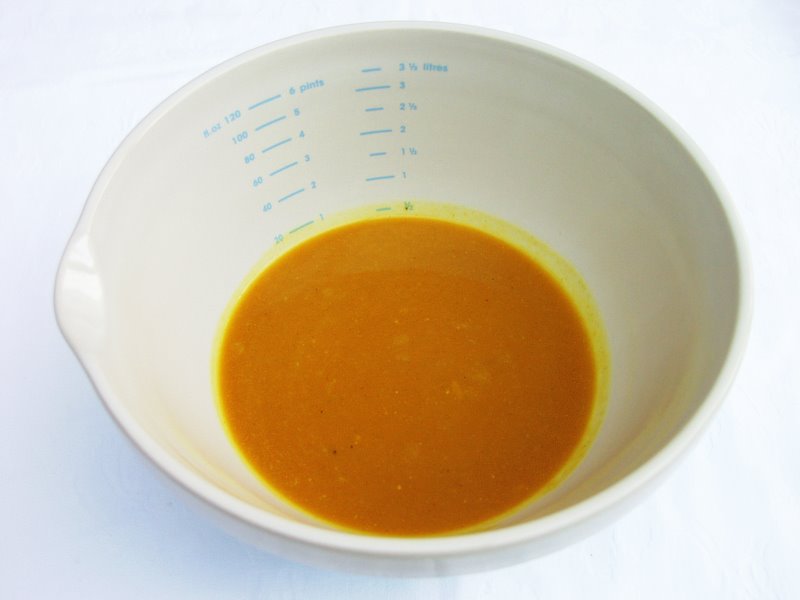
2. Now add 1 pint of water to the pan along with 2 bananas, honey, turmeric and curry powder. Bring to the boil and then simmer. To thicken the curry you need to now add the cornflour to 100 ml of cold water. Stir into the curry and then continue to simmer for a further 20 minutes. If you think it needs a little more water at this stage do not be afraid to add a little more. If you over water then just add a little more cornflour. Season with salt and pepper.

chicken katsu curry

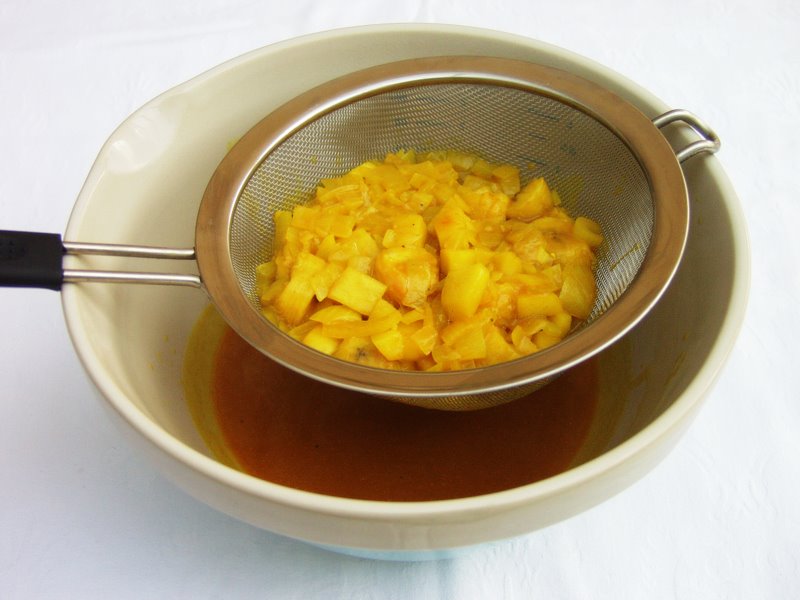
3. Strain the contents of the pan through a sieve so that you are left with a smooth liquid. Set aside. (please note: another time I may try using my hand whisk to blend all of the mixture together so that I do not waste any ingredients – if you do this and it works then please let me know!)

                           chicken katsu curry                                

chicken katsu curry

4. In the same pan you had been using for the curry mixture, add the remaining butter and warm on a low heat. Now add the chopped carrots and potato. At this stage you could also had an onion quartered into mouth sized segments! Continue to stir for a couple of minutes, making sure the vegetables do not burn. Now add the strained curry sauce that you have put to one side and gently simmer for 30 minutes, or until the potato and carrots are soft.

OLYMPUS DIGITAL CAMERA

5. In separate bowls place the flour, whisked eggs and Japanese panko bread crumbs. By all means use ordinary breadcrumbs but you will find that panko have a coarser texture to ordinary breadcrumbs, which give a certain edge to this dish. They are also more delicate and absorb less oil than western breadcrumbs. They can be found at Asian supermarkets, although I managed to get mine on line at Amazon.

OLYMPUS DIGITAL CAMERA

chicken katsu curry

6. Flatten the chicken slightly using a rolling pin so that it is of even thickness and hence will cook evenly in the oil. Then place the chicken breast in the flour and coat both sides, then move it to the egg bowl and do the same procedure and then move on to the panko breadcrumbs. I like to have a good coating of breadcrumbs so I repeated this last procedure – egg -breadcrumbs-egg-breadcrumbs.

7. Warm a deep pan or wok with oil and so that it become very hot. Sprinkle a few panko breadcumbs into the pan and if they sizzle the oil is hot enough. Then gently place the breaded chicken into the oil moving it gently in the oil. Cook for up to three minutes and then turn over and repeat so that the chicken is thoroughly cooked through. Then take out and place on some kitchen roll. At this stage it is good to make some some incisions into the chicken to make sure it is properly cooked through. If need be you will have to place in the oil a little longer, but be careful not to over cook.

OLYMPUS DIGITAL CAMERA

8. Repeat the procedure with all four chicken breasts and place on a warm plate in a low oven whilst you are preparing the next chicken breast.

9. Evenly slice the chicken and pour the warm sauce on top with some Japanese sticky rice on the side. Red-dyed pickled daikon and shredded cabbage are also eaten with this dish, although I did not manage to source them this time.

OLYMPUS DIGITAL CAMERA


Crab, fennel, chilli flake and lemon bruschetta – an uplifting lunch for the start of the new school year

OLYMPUS DIGITAL CAMERA

School started again today for big A, so it was a return to the old routine of getting up early – although at the moment we have no problem there as the jet lag hasn’t completely worn off as yet.

After a breakfast treat of crepes with ham, cheese and eggs – for the girls, not me I might add, we did the school run. All morning whilst little Z and I were busying ourselves I was looking forward to trying out a recipe that I recently spotted in the Australian food magazine ‘Gourmet Traveller’. If you have not come across the magazine before I urge you to take a look at their website at the very least. The fusion of food and travel appealed to me and I thought that the articles were well written and interesting and the photographs stunning. Australia is approaching spring and of course we are heading towards autumn, so perhaps their recipes are slightly out of sink with what us Brits would be thinking about cooking. That said this recipe appealed to me greatly and I felt that it could easily bridge the seasons.

It’s an ideal snack, light lunch or starter and would go down nicely with a glass of crisp white wine. The combination of crab, fennel, lemon and chilli flakes is sublime and the fact that it is easy to prepare further adds to its appeal. I think you will agree this one is a winner.


Crab, fennel, chilli flakes and lemon bruschetta

Adapted from ‘Gourmet Traveller’

Serves 4

Sour dough loaf, sliced

120g tin of crab meat. By all means use freshly cooked crab meat if you have it to hand but I find the tinned variety reasonable and hassle free

1 tsp fennel seeds, crushed

juice of 1/2 a lemon

1/2 tsp of chilli flakes

25 ml of olive oil

half a lemon, thinly sliced. Meyer lemon if you can get hold of them. Equally you can substitute the lemons with 2 tsp of lemon juice and 1 tsp of finely grated rind. 

1/2 fennel bulb, thinly sliced

1 handful of flat leaf parsley, coarsely chopped

1 garlic clove, halved

*  Mix the crab meat, lemon juice, fennel seeds and chilli flakes together with your hands and add the olive oil.

* Now gently add the lemon slices (or finely grated rind – see above), fennel bulb and parsley and season to taste.

* Using a griddle pan, or in my case non-stick grill plates from my sandwich and panini maker, place a couple of slices of sour dough bread on the plates for approximately a minute. If you are using a griddle pan, turn the bread only once. Repeat until you have toasted enough bread for your needs.

* Once the bread is toasted sufficiently so that griddle lines appear, rub the cut-side of garlic onto the toast.

* Place the crab mixture on top of the toast and serve immediately.


Stunning Bali – in every sense

Bali Landscape

We returned very late last night from our galavanting in the tropics. Bali continues to be heavenly and a million miles away from the hustle and bustle of cosmopolitan London. Although we have only been away for just over two weeks it seriously feels that we have been away for a month or so. We have experienced so much and met some wonderful characters who added to the charm of the trip. The slower pace of life, the culture, landscape, food and general cheeriness of the Balinese people makes Bali a fantastic holiday destination if you are seeking some serious time out and a change of scenery. Our taste buds went into overdrive sampling local cuisine: from babi guling (suckling pig) to tongkol sambal matah (grilled tuna in shallot and lemongrass dressing) to burbur injin (Balinese black rice porridge with banana) – yes can you believe it I actually really liked a pudding. Watch this space and I will be sharing some of these recipes with you over the coming months. I may pass on the babi guling as that may be tricky for me to replicate quite so easily, but I will certainly be showing you a number of other dishes, as well as sambals and marinades.

I don’t know about you but when I’ve been eating the same type of food over a prolonged period (ok maybe two weeks isn’t prolonged, but you get my drift right?) no matter how tasty it is, I really yearn for different kinds of food. I recall holidaying in Italy a number of years ago and after two weeks of eating pasta – which was divine mind you – Mr B and I sneaked off to one of the Chinese restaurants in Florence to fill our bellies with some spicy food. We felt a little guilty but enjoyed our chilli kick. I am kind of getting that same feeling now that I have returned to England, so rather that rushing to replicate all those delicious dishes I experienced, I will put them up gradually.


As we are all suffering from jet lag I’ll put up a new recipe later this week. In the mean time I will leave you with a few photos taken in Bali.

Its good to back. Having hot humid weather is great, but I’m a sucker for the seasons and even though the rain has just kicked in, this temperature suits me.

IMG_1649

I particularly like this photo of the gecko as you can see the reflection of the beach and sea if you look closely at the centre of the photo.

IMG_1224

IMG_1560

IMG_1313

IMG_1248

IMG_1514

IMG_1656

Ever thought your shopping bags were heavy to carry? Well spare a thought for these ladies who swiftly walked by me with their heavy loads. Incredible.


We are off to the island of the gods

OLYMPUS DIGITAL CAMERA

Our family summer holiday beckons. We are heading to the island of the gods – or as it is more recognisably known, Bali. Its been over a decade since Mr B and I have visited this wonderful island and we felt it was time to return, this time with big A and little Z in tow. Its a long way from London town, but we feel that the marathon journey is worth it when we get to this lush green island. We are heading for the jungle first for a week where we hope to be woken by the morning calls of unfamilar wild life. There will be lots to explore and the rhythm of daily life will change considerably. It will do all of us the world of good – well that’s the plan anyway.

I am not so sure how easy it will be for me to blog, so apologies in advance if it is not as frequent as you are use to. I am hoping to adopt some new recipes on my travels and any that make the grade I will certainly share with you.

When going on a journey it is comforting to have a few home comforts or in my case, home made morsels, to nibble on during the flight/drive/sail (delete as appropriate!). These parmigiano reggiano caraway (thats quite a mouthful!) biscuits should go down a treat with the girls and Mr B in moments of hunger on the flight. You can make the same biscuits with cheddar cheese as well, just use whatever variety of hard cheese needs eating in your fridge, and in my case its parmigiano reggiano. There are a number of potential ‘extras’ you can add to the biscuits, such as caraway, sesame or poppy seeds or chilli flakes on the outer rim so experiment and see which you like the best. Within the biscuits themselves I would also add a pinch or two of cayenne pepper, but since the girls will be eating them, and we are going on a journey, I will keep them as plain and simple as possible whilst retaining their moreish quality.

OLYMPUS DIGITAL CAMERA

They are great to freeze – pre cooking – so make a large amount and bring out the rolls as and when you need them. I also find they are great as a little canape when hosting dinners.

Parmigiano-Reggiano Caraway Biscuits

Makes between 50-60 small round biscuits

125g parmigiano reggiano (or any hard cheese – cheddar works equally well), grated

125g cold butter

200g plain flour

1/2 tsp of cayenne pepper, optional

1 egg

pinch of salt

2 tbsp of caraway seeds

1. For speed and ease I tend to use my blender and I literally put all the ingredients in together and whizz for around 30 seconds and by this time all the ingredients have come together to create a dough like ball. If you are doing it all by hand then sift the flour and then mix in the butter, cayenne pepper and salt with your finger tips to create a bread crumb consistency. Then add the grated cheese and the egg, which should then help to bind the ingredients together. If it is too dry then add a tsp of water or if it is too wet then add a little more flour to bind it all together to create a ball.

2. Place on a floured surface and knead so that the ingredients are well bound together.

OLYMPUS DIGITAL CAMERA

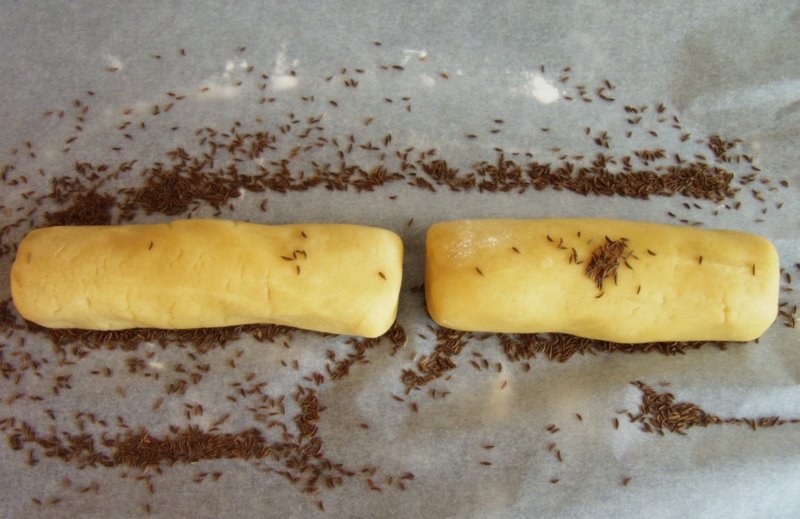
3. Roll out your dough into a long sausage shape and cut in two if necessary. Then using either greaseproof paper or cling film place the rolled dough in the centre and spread the caraway seeds over the dough. It is best to gently roll then over the seeds so that they are spread as evenly as possible.

OLYMPUS DIGITAL CAMERA

OLYMPUS DIGITAL CAMERA

4. Wrap the dough in the greaseproof paper or cling film and either put straight into the freezer to use at a later date or place in the fridge for few hours. You will find that it holds together and is better to cut once it has had some time to rest in the fridge.

OLYMPUS DIGITAL CAMERA

5. After some time in the fridge, unwrap the dough and slice it evenly into small biscuits using a sharp knife.

6. Preheat your oven to 180 degrees and while it is heating up grease a baking tray and evenly spread out the biscuits.

7. Place in the oven between 8-10 minutes. They are ready just as they are beginning to bronze. Be careful not to overcook, so do check regularly. They are delicious warm or will store for a few days in an airtight container.

I couldn’t resist this last shot when little Z’s hand crept into the photo frame eager to try one of the biscuits.

OLYMPUS DIGITAL CAMERA


Florentine Lemongrass soup

OLYMPUS DIGITAL CAMERA

Spinach is one of those super foods that you can literally feel the goodness seeping into your body with every mouthful. When Catherine de Medici became Queen of France in 1533, she was so taken by spinach that she insisted it be served at every meal. Dishes that are cooked with spinach are known as ‘Florentine’, after Catherine’s place of birth – Florence. Hence the name I have given this delicious soup.

I know I tend to say this a lot in my blogs, but this really is super easy and takes no time at all – so perfect for a light lunch or for a starter when guests are coming over. You can prepare it in advance, freeing you up to have proper conversation without the worry of having to prepare the starter. Have you ever tried making souffles for a starter? Well believe me, the results are delicious, but it does involve a lot of care and attention and time away from your guests to get it right.

You can absolutely use fresh spinach here, but I often tend to use frozen as I always have bags of it in the freezer. This soup is versatile in that it tastes equally good in the summer or winter.

Florentine Lemongrass Soup

Serves 4-6

3 garlic cloves, chopped

1 onion, chopped

2 tbsp of olive oil

2 green chillies, deseeded and chopped

2 tsp of lemongrass paste (I use Barts)

1kg of spinach, frozen or fresh

2 pints/40 fl oz vegetable stock

400ml tin of coconut milk

juice of 2 limes

single cream to garnish, if desired

salt and pepper

1. In a large saucepan heat the olive oil and then fry the onions gently until they begin to become transparent – this should not take more than six minutes. Then add the garlic and chillies continuing to stir for a few minutes.

2. Add the vegetable stock and lemongrass paste and gently simmer for five minutes. Then add the frozen or fresh spinach and cover until they have completely wilted/defrosted. Once this has happened use a hand blender to blend the soup thoroughly.

OLYMPUS DIGITAL CAMERA

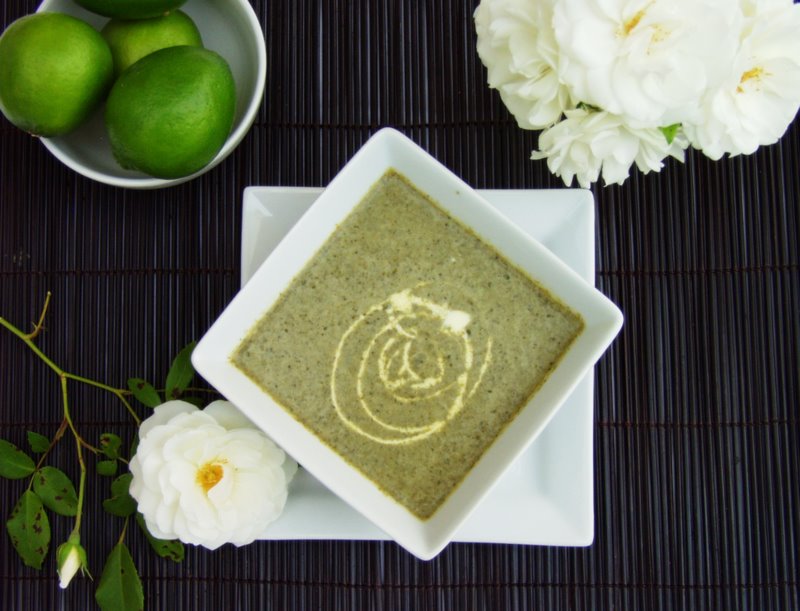
3. Add the coconut milk and lime juice and blend once again. Season to taste and garnish with single cream if desired.

OLYMPUS DIGITAL CAMERA


My mother’s memorable strawberry ice-cream courtesy of the ‘Cooking Cannon’

Does anyone remember the legendary ‘Cooking Canon’? A rather charming, bearded, portly member of the English clergy who, in many respects, was one of the first ‘celeberity chefs’, along with eccentric Fanny Craddock, to grace our screens in the early eighties. Long before Delia was on the scene this was my mother’s go-to cooking bible! He published three cookery books: The Cooking Canon, The Cooking Canon Entertains and Simply Divine.

I only discovered the other day that the strawberry ice cream, which my mother always makes and continues to do so, originally came from ‘The Cooking Canon’. It’s delicious creamy and easy to make and as a real bonus, you don’t need to go out and buy an expensive ice cream maker. Strawberries epitomize the joys of summer and what better way to celebrate the sun’s rays than a bowl of home-made strawberry ice cream. It may not be exotic or original but it certainly hits the spot. I hope you agree.


Now it may shock some of you to hear that the ice cream is not in fact made with fresh strawberries – my mother has tried using them but the results are not as good she assures me. Instead she has gone down the route of using tinned strawberries. Shock horror.

You still with me?

Please don’t be alarmed. I assure you, you will be pleasantly surprised by the results.

Homemade Strawberry Ice-Cream

290g/8oz tin of strawberries (or anything around that amount)

150g/6oz icing sugar

1 pint of double cream

1 plastic/metal tray or container

1. Take the tin of strawberries and pour out about one quarter of the liquid, reserving to make a fruit salad at a later date

2. Blend the strawberries with the other ingredients and freeze for 40 minutes in your container. I have always used a plastic container and it works out well.

3. Stir and freeze again for a minimum of a couple of hours.

4. Scatter some fresh strawberries over the ice cream and serve to what will be happy family and friends.


Asian Vinaigrette

Summer is the season for salads and even a plain green salad can taste crisp and cleansing with a delicious vinaigrette or salad dressing to accompany it. My default dressing is always the typical french vinaigrette of olive oil, lemon, white wine vinegar, whole grain mustard, a little garlic and a sprinkling of salt and pepper. I fancied a change so came up with this  fresh, zingy, Asian influenced dressing, which gives a pretty standard green salad some edge – and all salads deserve to have a little ‘edge’ now again.

Its super easy and quick to prepare. If you have an old jam jar I suggest putting all the ingredients into that and then, with the lid on, giving the ingredients a good shake about to give them a thorough mix together.

Let me know what you think! My guess is that you’ll be pleasantly surprised by the results.

Here’s how to make it.

Asian Vinaigrette 

Serves 4-6

1 old jam jar

3 limes, squeezed

1 tsp of sesame oil

1 tsp of light soy sauce

1 tsp of nam pla fish sauce

1 to 2 tsp of white sugar

half a tsp of chilli flakes

In an old, clean jam jar squeeze three limes and then add all the ingredients. You may find that you need a little more sugar or another lime juice so be prepared perhaps to add a little more of one or two of the ingredients. I find that it does not need any salt as this is provided by the soy sauce. Shake the contents of the jar thoroughly and taste to see if the vinaigrette is to your liking.


Monkfish curry with tamarind, coconut, ginger and coriander – inspired by Skye Gyngell

This curry is always a crowd pleaser. The talented Skye Gyngell, of Petersham Nurseries fame, does the decadent lobster version in her book ‘A Year in My Kitchen’ and I have tweaked her recipe slightly to suit my style of cooking, but the essence of this recipe stems from Skye, I sadly take no credit.

So the main things I have done differently to Skye are:

1. Blending the onions after they have been cooked on a low heat. I found that I preferred a slightly smoother texture, but not blending them works equally well. It’s just a personal choice.

2. I have only used one 400g can of coconut milk. I find that it is more than sufficient.

3. I use a little less sugar.

4. I have omitted the toasted coconut flakes to serve – mainly because my husband finds it a bit of a coconut overkill, but again this is down to personal choice.

5. Skye uses a whole tamarind pods and breaks off a little piece as she needs them. She soaks these pieces in hot water for 20 minutes.

In the photo above I put 1 tablespoon of caster sugar as Skye suggested, however, with hindsight, I would reduce this amount but half. Add a little, then taste it to see if it needs any extra sweetness.

Monkfish curry with tamarind, coconut, ginger and coriander 

Serves 4

850g of Monkfish, cut into 2 inch pieces

2 onions, peeled and finely sliced

5cm piece of fresh root ginger, peeled and grated or diced

4 garlic cloves, peeled and finely chopped

2 red chillies, chopped

1 tbsp of coriander seeds, toasted

5 ripe tomatoes, chopped

1 tbsp caster sugar

3 tbsp fish sauce

3 tbsp of tamarind water

1 x 400g can of coconut milk

To garnish: either unsweetened dried coconut flakes, lightly toasted or coriander leaves

1. Break a small piece of tamarind (the blocks that you can buy NOT the paste) into a bowl and cover with boiling water. Leave to stand for 15 minutes. Following this strain the liquid into another bowl. Really press the pulp into your strainer with the back of a spoon and then put the extra strained pulp into the water. Tamarind has a wonderful sour taste,which adds real depth and balance to a dish. I absolutely adore it.

2. Cut the monkfish into 2 inch pieces, or larger if you prefer, and clean under cold water. Set aside.

3. Heat a small frying pan and when it is hot, gentle toast the coriander seeds for 30 seconds so they begin to brown, then set aside.

4. Heat a little olive or vegetable oil in a pan over a medium heat. Add the onions and cook until they become translucent. This will take around 5 minutes.

5. Put the ginger, garlic, chillies, toasted coriander seeds and tomatoes in a blender and whizz to a paste. Then place the translucent onions into the paste and whizz again briefly. Transfer the contents back into the pan and simmer for 5 minutes, stirring frequently. If you prefer it less smooth then obviously do not blend the onions.

6. Add the sugar, fish sauce, tamarind water and coconut milk and stir so that the contents are merged into the tomato and onion sauce. Simmer for a further 5-10 minutes. Add the monkfish and add additional seasoning if it requires it. Keep the heat on medium/low heat stirring occasionally for no more than 10 minutes. Be careful not to break up the monkfish!

7. Ladle into a warm bowl or soup plate and garnish with coriander leaves or coconut flakes. Serve with a bowl of steamed rice.


Carrot and Walnut Muffins in the most adorable cases

OLYMPUS DIGITAL CAMERA

When I was strolling around Gastown, the almost gentrified area of downtown Vancouver, I ambled into a rather delightful home interiors store called Orling & Wu. A treasure trove of throws, cushions, lamp shades, wallpapers and candles, clearly artfully chosen by its two owners. Within the store I came across the most stunning selection of muffin case designs that I have ever seen. They were utterly gorgeous and the type of cases that inspire you to throw a tea party in order to show them off, they certainly deserve the attention.

IMG_0193

On closer inspection I learned that the cases were sourced closer to home – in Sweden of all places. The company Kala:s far:m designs and creates these little gem muffin, cake and cupcake cases. In each delicately boxed case there is a recipe – what an ingenious idea – and in mine was carrot muffins, which I thought I would share with you. I’ve altered it slightly, so below you will find my version. I don’t have a sweet tooth at all, but these muffins taste really good and deliciously moist, I may even be converted.

Carrot and Walnut Muffins

Fills 20 cases

300g/12 oz granulated white sugar

200ml olive oil

3 eggs

3 carrots, grated

250g/10 oz self-raising flour

2 tsp baking powder

1/4 tsp ground nutmeg

1 tsp ground cinnamon

1/2 tsp salt

50g/2 oz walnuts

1. Preheat the oven to 150 degrees centigrade.

2. Beat the sugar and oil in a mixing bowl and then add the eggs.

3. Grate 3 carrots and add these to the mixture.

4. Mix the flour, baking powder, nutmeg, cinnamon, almost all the walnuts (save a few if you are going to do some butter cream on the top) and salt and stir into the egg and sugar mixture.

Carrot and Walnut Muffins

5. Carefully spoon the mixture into the muffin cups so that just over half the muffin cup is full. If you fill them to the top they will spill over the sides when they are in the oven.

6. Place in the oven for 15-17 minutes at 150 degrees centigrade and then leave to cool prior to putting any butter cream on top.

OLYMPUS DIGITAL CAMERA

Butter cream

I tend to leave some of my muffins butter cream free as I know some people prefer them without a topping so the proportion below will cover about half of the muffins. Do double quantities if you want to cover all of them.

75g/3 oz unsalted butter

175g/7 oz icing sugar

a few drops of warm water

1. Take the butter out of the fridge when you begin to make the muffins themselves, so that it softens.

2. Beat the butter and icing sugar until fluffy. To save time I used an electric mixer but good old fashioned arm power will work equally well. If you need to soften the icing then add a few drops of warm water.

3. Sprinkle with chopped walnuts.

OLYMPUS DIGITAL CAMERA

4. Enjoy !