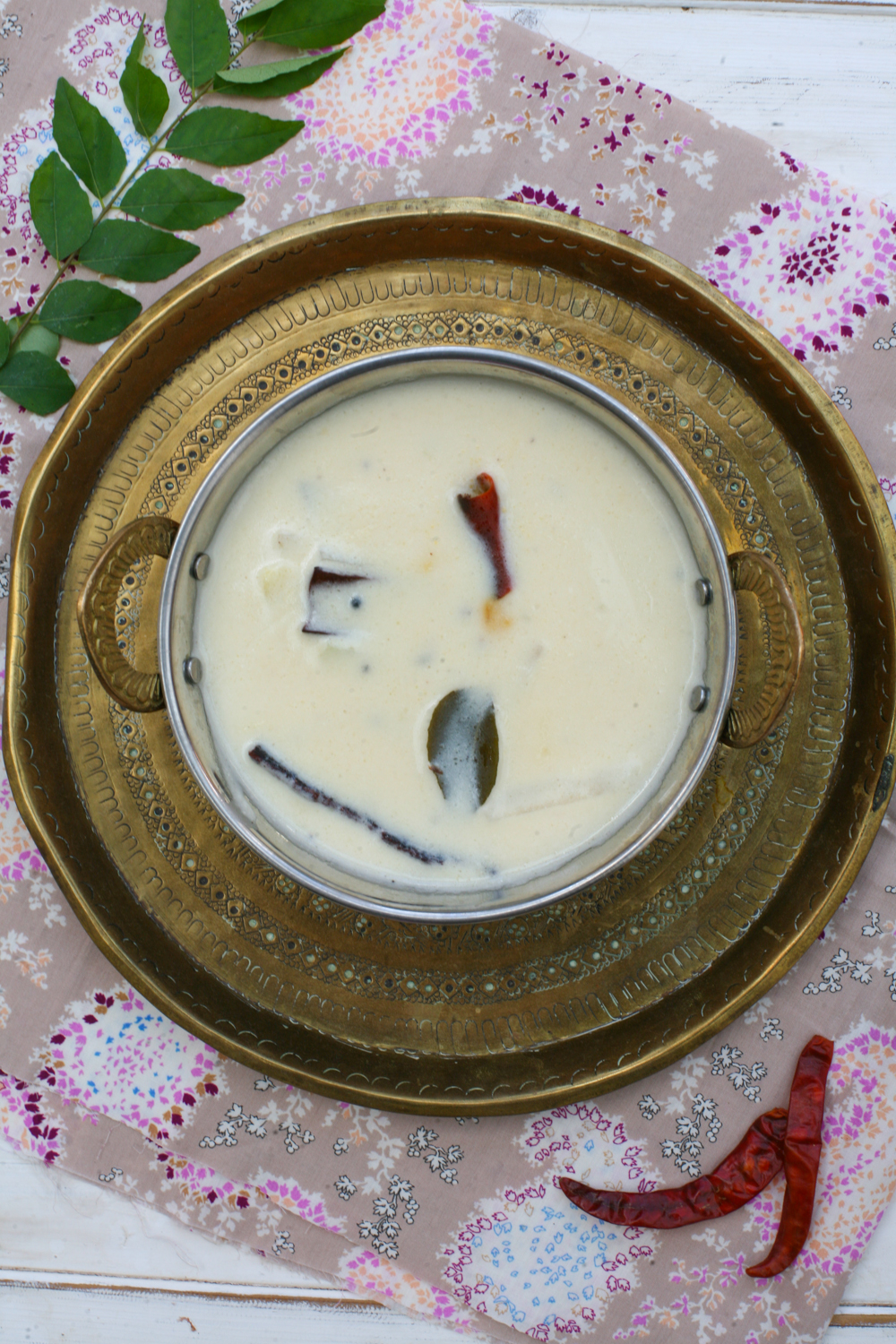
Gujarati Kadhi – a delicately spiced yogurt soup

IMG_9991

It is bucketing down outside this afternoon and I am feeling rather cosy inside out of the rain. After taking the photos for this blog post I had a bowl full of this hot, delicately spiced warming soup. Seriously delicious and quite filling, owing to the yogurt, potatoes and mooli.  Now that Autumn is well and truly here this soup comes into its own and I urge you to try making yourself some.

IMG_0006

It was Durga Puja last weekend – you can read up what goes on exactly at this Indian celebration in my posts from last year and the year before  see here and here. During the festivities at the Hindu temple prasad is often taken. Prasad is literally a religious offering or gift that comes in the form of a meal. Always vegetarian and gently spiced it allows families and friends to come together to share a meal that is blessed during this auspicious occasion. One of the curries we were served was this Gujarati Kadhi. I adored the delicately spiced yogurt soup so much so I was allowed to venture into the kitchens to see how it was being prepared. Huge caldrons of the soup were being constantly stirred over hot stoves before being taken out to hungry worshippers.

IMG_9990

I’ve made my own additions and twists but the taste is pretty similar to the one that I had last weekend. It is so different from any soup or dal I have tried before that it immediately appealed. All the ingredients are pretty easy to pick up at your local supermarket. I have seen gram flour in the big supermarkets here in the UK and I noticed that Waitrose was even selling fresh curry leaves the other day. Times are changing!  Mooli is harder to track down if you don’t live near an Asian grocers so just omit that part if you can’t find it. As with most of my recipes it is quick and easy so if you are feeling adventurous then give this fabulous dish a try.


Gujarati Kadhi

Serves 4-6

500g natural yogurt

2 tbsp gram flour (chickpea flour)

1/2 tsp green chilli paste

1/2 tsp ginger paste

700ml water

1 tsp salt

•••••••••••

1 tbsp ghee/butter

1/2 tsp black mustard seeds

1/2 tsp cumin seeds

3 cloves

2 small cinnamon sticks

2 dried red chillies, broken into pieces

10 fresh curry leaves

pinch of asafoetida

75g mooli (also known as daikon or white radish)/, cut into thin matchsticks

1 small potato, cut into thin matchsticks

1 tsp jaggery/sugar

1. In a large bowl mix the yogurt, gram flour, green chilli and ginger paste, salt and water using a hand whisk.

2. In a deep saucepan add the ghee and when it is melted add the mustard and cumin seeds and after 30 seconds add the cloves, cinnamon sticks, dried red chillies, fresh curry leaves and asafoetida. This is known as tempering.

3. Add the mooli and potato matchsticks and stir into the spices for one minute.

4. Gently pour in the yogurt/gram flour mixture over the potato, mooli and tempering spices and stir continuously to prevent the yogurt from separating.

5. If you find the mixture too thick simply add a little more water.

6. Add the jaggery or sugar if you don’t have any jaggery to hand. Stir into the soup. Simmer for  around 15 minutes or until the potato and mooli matchsticks are softened.

Serve with basmati rice or simply on its own in a bowl.


IMG_0002


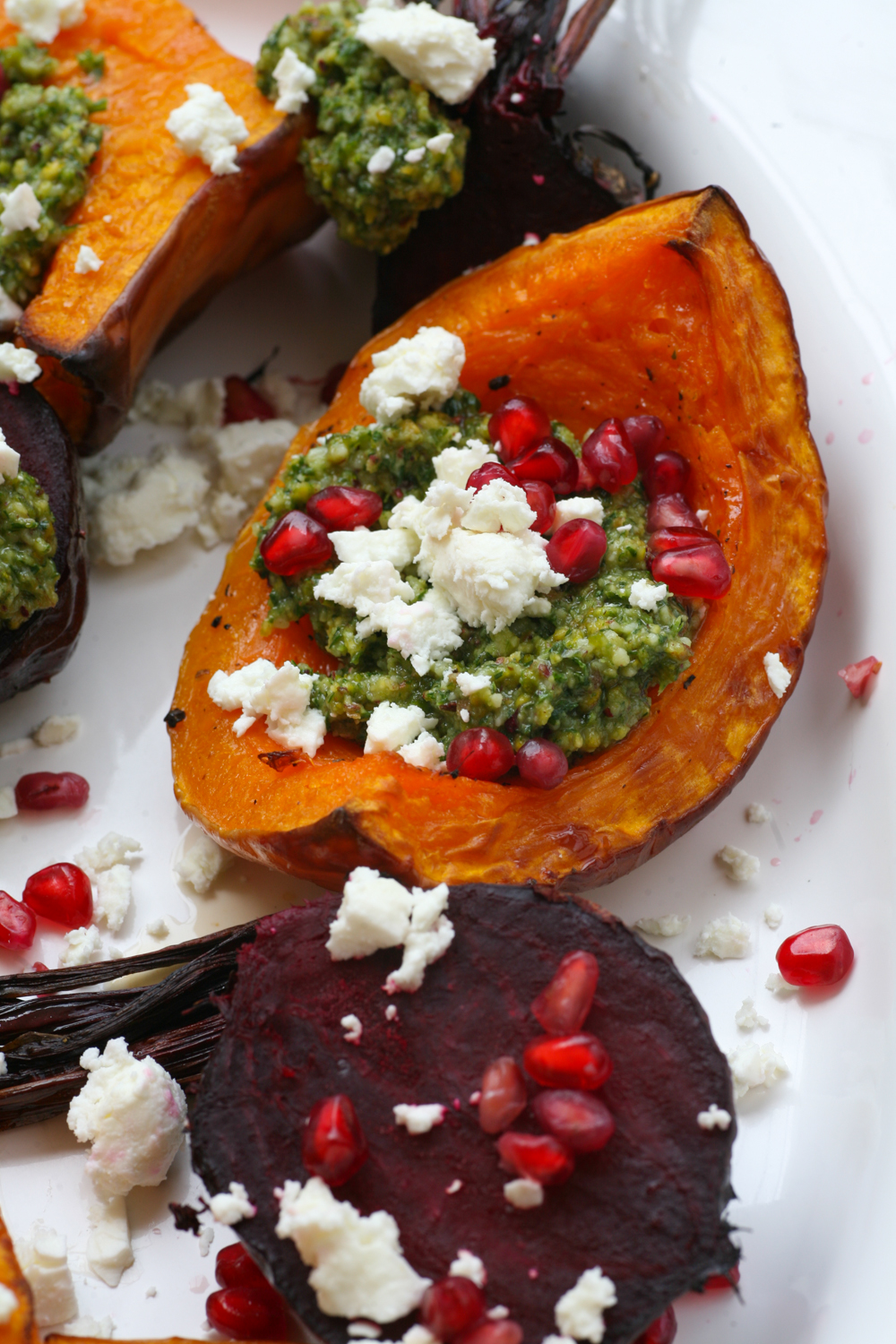
Roasted Butternut Squash and Beetroot with Pistachio Pesto, Feta and Pomegranate Seeds from Persiana

IMG_9722


It was love at first sight. The vibrant butternut squash (the beetroot is my own addition) with dollops of pistachio pesto infused with fresh dill, coriander and parsley, crumbled feta and bejewelled pomegranate seeds. Simple and yet so very right. I did not even need to try it to know that I would love it and include it in my culinary repertoire from that day forth.


IMG_9731


It was served to me by the very likeable Sabrina Ghayour earlier this year at her hugely popular supper club that takes place in her west London residence. Twelve or so hungry diners feasted on a number of mouth watering Persian dishes that were lovingly prepared by Sabrina herself.  Her recipes and ingredients sing to me and I can honestly say that I actually want to cook and eat a large number of them. Dried lime, lamb and split pea stew or saffron chicken, fennel and barberry stew or bamia – bring it on.

IMG_9759

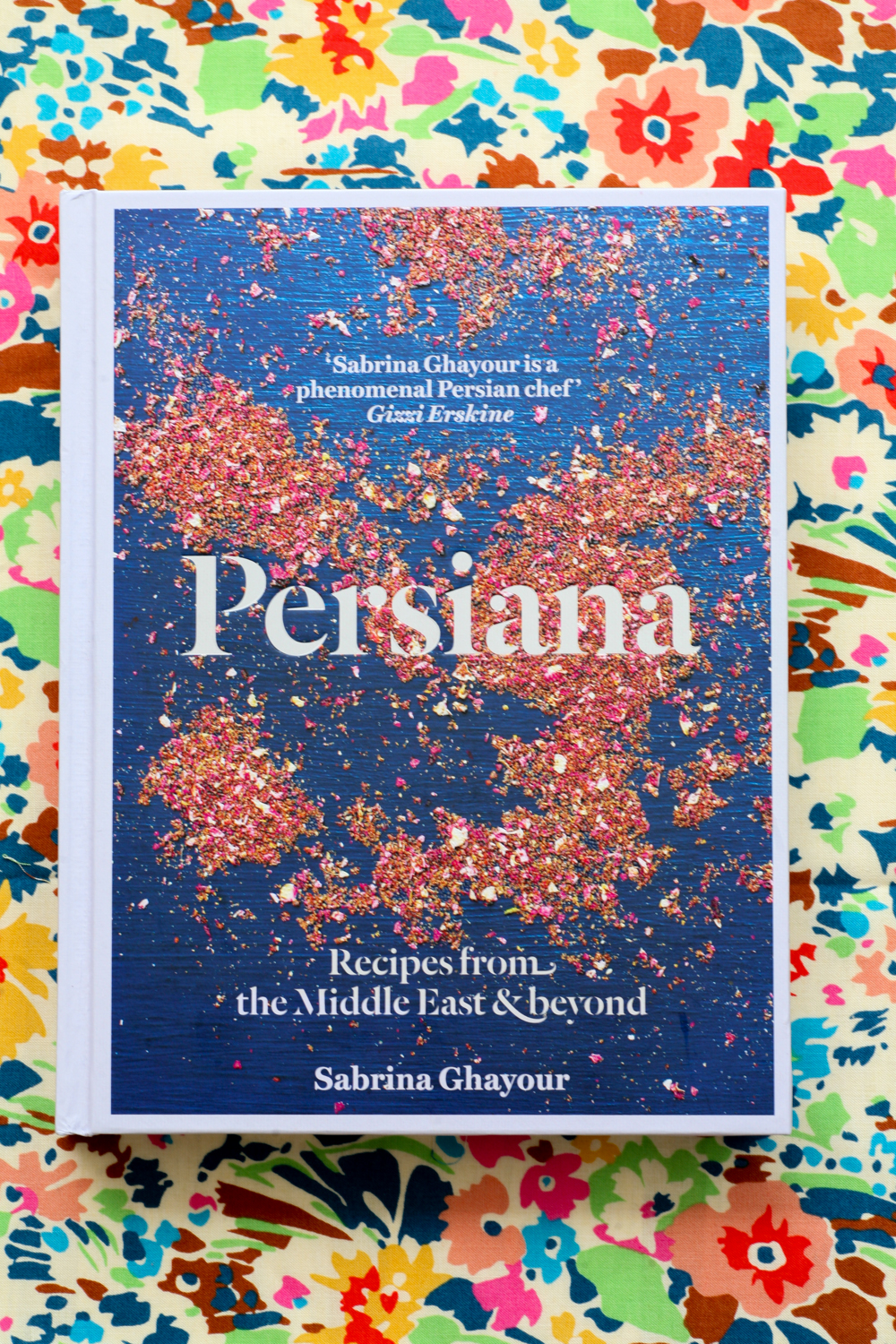
The recipes will really come into their own in the autumn and winter time as there is even a section dedicated  to ‘soups, stews and tanginess’, perfect to serve up and nourish the soul on cold, blistery autumnal days. That said, there are also sections on ‘salads and vegetables’,  ‘roasts and grills’, ‘mezze and sharing plates’, ‘breads and grains’ and finally ‘desserts and sweet treats’ so something for everyone no matter what hemisphere you are living in. The recipes are easy to follow and beautifully photographed. I also particularly love the cover which is not only eye catching with it’s title that rolls off the tongue, but it also has a very tactile cover.  As you pass your hand over it gives the impression that spices and rose petals have really been imbedded into it’s very cover.  Such a clever and original idea.

IMG_9770

This recipe you can eat as is, or accompany it with another in her book. I thought the ‘tray-baked rose lamb chops with chilli and herbs’ (above) would be a particularly delicious combination. If you want to learn more about Persian food and feel comfortable cooking it for yourself then I cannot recommend the book more highly. Sabrina’s chatty, informative and unpretentious style will connect with it’s readers and guide them through the very exciting world of food from Persia.

Roasted Butternut Squash and Beetroot with Pistachio Pesto, Feta and Pomegranate Seeds

adapted slightly from Persiana by Sabrina Ghayour

Serves 4 

1 butternut squash, halved and then chopped into about 6 large pieces (skin left on)

4 beetroot, gently cleaned (be careful not to damage the skin) kept whole and stems left intact

4 tbsp olive oil

sea salt

freshly ground black pepper

150g feta cheese

100g pomegranate seeds

*********

for the pesto

100g shelled pistachio nuts

70g parmesan chopped into rough chunks

olive oil

1 handful of fresh coriander

1 handful of fresh dill

1 handful of fresh parsley

2 tbsp chilli oil

juice of 1 lemon

sea salt

1. Preheat your oven to 180 degrees if using fan oven or 200 degrees if not/gas mark 6.  Place the chopped butternut squash and intact beetroot on a baking tray lined with non-stick baking paper and cover the vegetables in olive oil, pepper and salt. Place in the oven for 50 minutes so the edges of the butternut squash begin to char.

2. Meanwhile to prepare the pesto, place the pistachio, parmesan chunks and a glug of olive oil into a food processor and mix together. If it remains quite thick in texture add some more olive oil to soften it.

3. Add all the herbs, chilli oil and lemon juice and blitz together with a sprinkling of sea salt. Taste to make sure the flavour is well balanced. Leave in the refrigerator until ready to use.

4. To serve, place the roasted butternut squash and beetroot (now cut in two) on a serving platter. Place dollops of the pesto on each vegetable portion, crumble the feta on each portion and around the  platter. Finish by scattering the pomegranate on top.

Voila you have the most pleasing of meals to dive into.


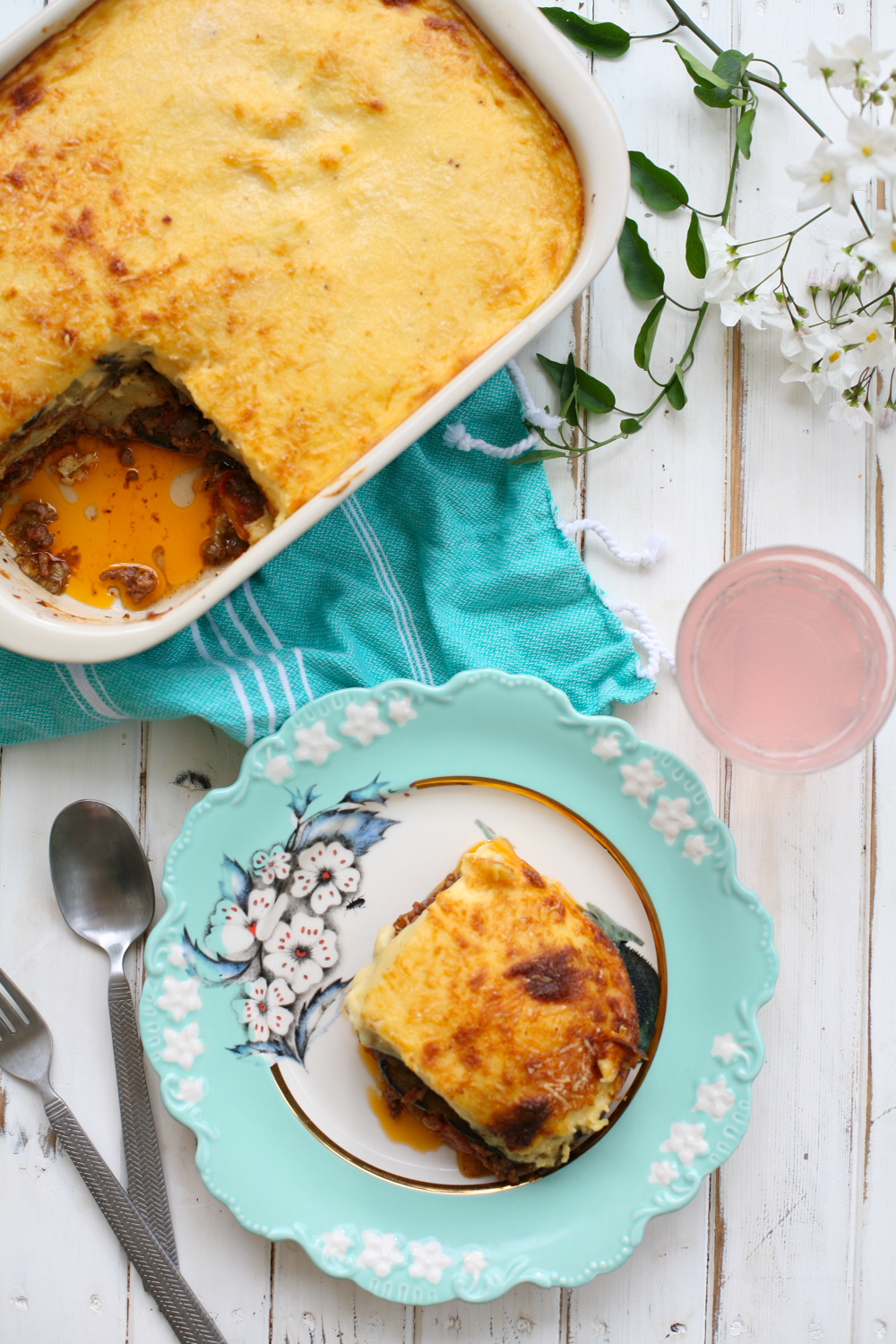
Moussaka and a Greek Escape

IMG_9602

Before I headed off to the Greek Island of Kefalonia – you know the one that Captain Corelli’s Mandolin was based and filmed, my Italian friend in London said I HAD to seek out a certain restaurant where he had tasted, and I quote, “the best Moussaka in my life”.


IMG_1857


IMG_1723

IMG_1738

I didn’t need to be told twice. With no restaurant name and only scant directions to go by (on the left hand side at the top of the road as you leave the famous Myrtos Beach….. if you are interested), we did manage to find the restaurant. It was called ‘Alexandros’ and yes the Moussaka was heavenly and without doubt the best we had sampled. So much so it has inspired me to recreate it back in Blighty.

IMG_1801


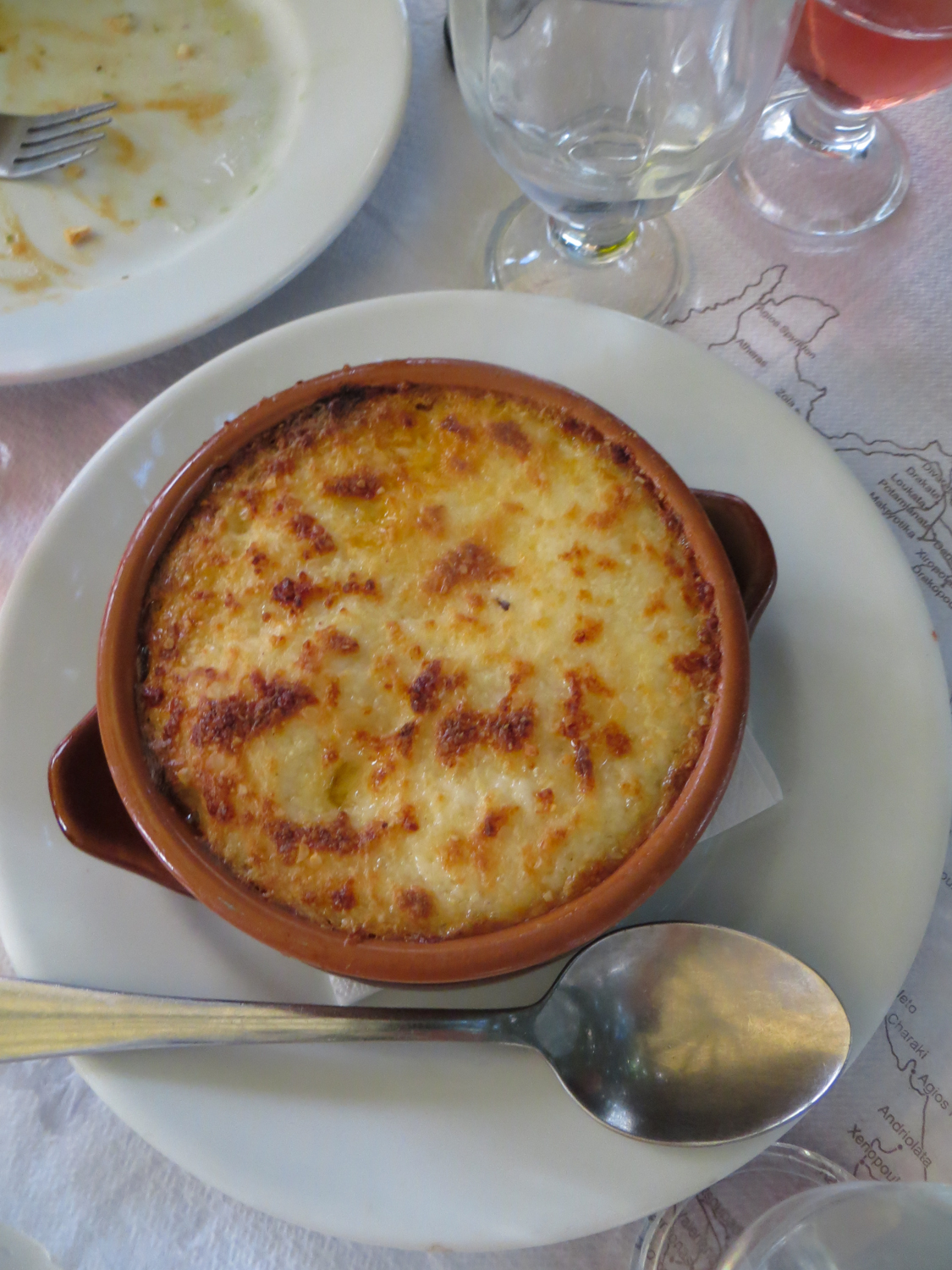
Here is a photo of the legendary Moussaka. Pipping hot in its own terracotta pot. It looks similar to an English Cottage or Shepherds pie, but don’t be fooled. This moussaka was filled with aubergine, slices of potato and delicately spiced lamb mince. Oooooh it was so good. Thanks Carlo for the tip!

IMG_1689

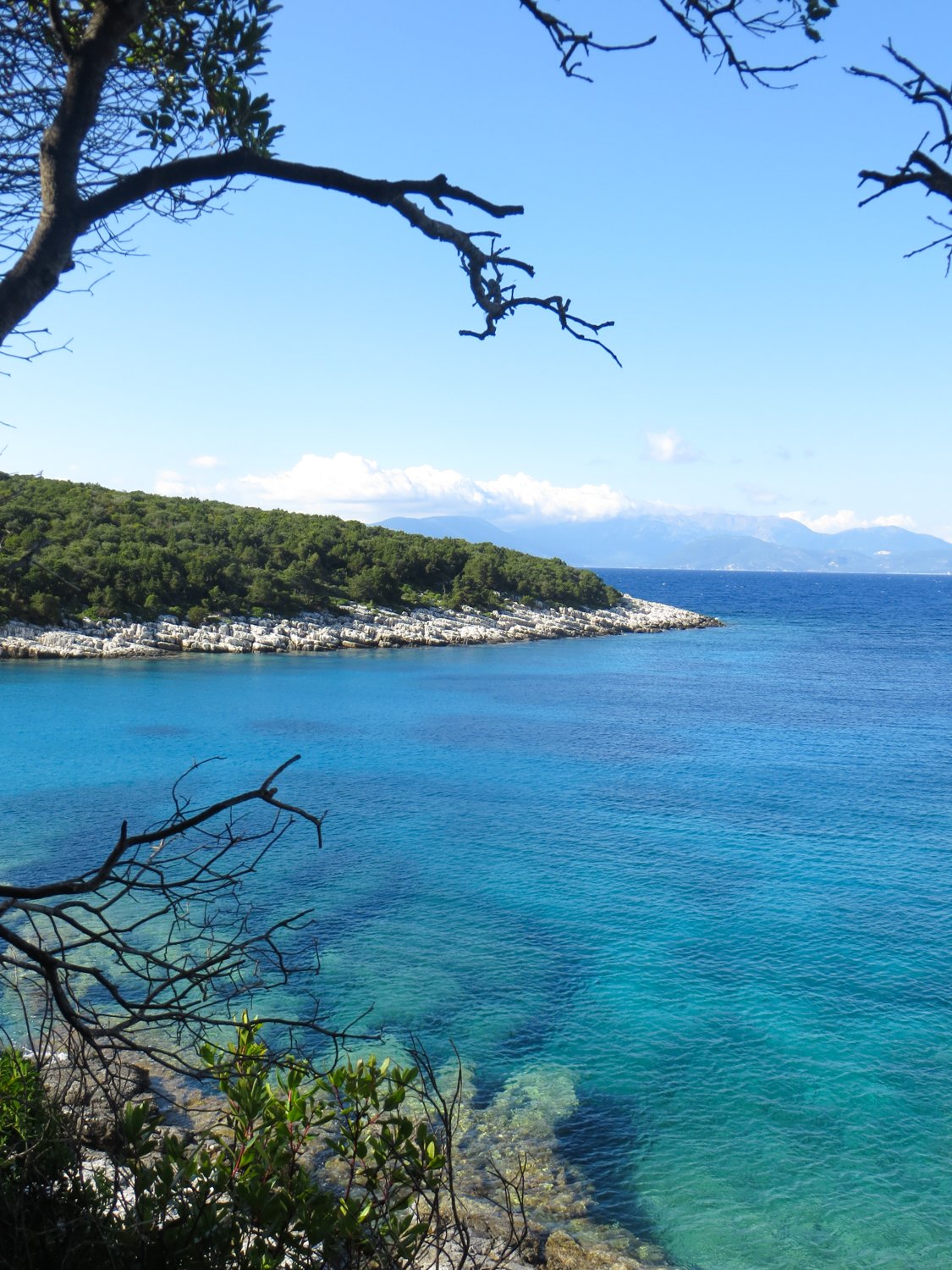
Other than eating we did a lot of swimming in glorious hidden beaches or  in the pool (see photos below). We were based in the north of the island in a wonderful villa in a little rural hamlet outside the charming town (although to be fair it is more of a village) of Fiscardo, which is a mecca for those who love yachting (aka my father who was with us). It’s quiet, calm and peaceful and my idea of the perfect relaxing holiday.

IMG_1804

IMG_1695

A short drive up the coast is picturesque Assos with it’s sheltered harbour – another great spot for swimming and  for exploring it’s ruined Venetian castle on the hill facing the town.

IMG_1765


It’s pretty remote and most of the people living there are working the ‘tourist’ season, so much so that only around 40 people remain through the winter months. We were told that in the northern part of the island (which includes Assos) around 300 hundred people remain on the island. Flights onto the island stop at the end of October and do not resume again until spring. If you need to reach the island you have to get there the old fashioned way – by boat. We contemplated for some time what it must be like to live there in a place where everything shuts down for 6 months of the year. The inhabitants must feel so isolated from the worries of the outside world. It made me think of the film ‘The Wicker Man’.

IMG_1731

IMG_1849


After swimming around this glorious bay I climbed up into the woods to take the photo above. I then stumbled across the sign below about 20 feet from where I was standing.  Needless to say I was back in the water quick smart!


IMG_1847IMG_1685


IMG_1734

IMG_1721

IMG_1692

IMG_1691

IMG_1875

IMG_1873

So I hope you will try my version of Moussaka. It’s delicately spiced with cinnamon, all spice, nutmeg, dried oregano and bay leaves, and similarly to Alexandros I have also added potato as well as aubergine. You can prepare most of the dish a day in advance, apart from the béchamel sauce and the potatoes, which are best prepared just before you start layering the ingredients.


So here the steps you need to take to make this deliciously Greek dish.


IMG_9600


Greek Moussaka

Serves 6

1 tbsp olive oil

1 white onion, finely chopped

2 garlic cloves, crushed

3 bay leaves

1 tsp ground cinnamon

1/2 tsp ground allspice

1 tsp ground nutmeg

400g lamb mince

390g chopped tomatoes (fresh or tinned)

1 tsp sugar

1 tbsp red wine vinegar

1 tsp oregano

50 ml red wine

370g potatoes (I used 1 very large potato), thinly sliced

2 aubergine, finely chopped width ways

olive oil for frying

*****************************

Bechamel Sauce

70g plain flour, sieved

70g butter

50g parmesan, freshly grated

pinch of salt

pinch of ground nutmeg

600 ml milk, warmed

2 eggs, whisked

1. Warm the olive oil in a large pan and then add the onion and gently cook for 5 minutes, before adding the garlic and cooking for a further minute.

2. Add all the spices and bay leaves and stir into the onion and garlic. Now add the lamb and use a wooden spoon to break up the mince. Stir well.

3. After 10 minutes the lamb should now all be brown, with no pink meat remaining. If there is any pink meat cook for a little longer.

4. Add the tomatoes, sugar, red wine vinegar, red wine and stir into the mince. Leave to simmer for a further 15-20 minutes, then leave to cool.

5. In a separate pan boil some water and place the sliced potatoes into the pan. Simmer for 10 minutes. You do not want the potato to be soft, instead take it out of the water just before it becomes soft. Strain and place in a bowl of cold iced water to prevent it cooking further. Place to one side.

6. In a large frying pan add a little olive oil and then place some of the sliced aubergine in the pan to bronze. It is best to do this in batches. You will find that the aubergines will probably need a little more oil during cooking as they do tend to soak it up fast. After 5 minutes turn and fry for a further 5 minutes so that both sides have begun to bronze. Remove from the pan and place on kitchen paper.

7. To make the béchamel sauce, heat the milk in a pan to warm – although do not boil it. Then place in a pouring jug.

8. In a separate pan add the butter and when it is melted add the flour and stir together. Gradually add the warm milk, stirring each time some more milk is added. Add a pinch of salt and ground nutmeg followed by half of the parmesan cheese. Simmer gently for a few minutes, by which time the sauce will be thick. Leave to cool.

9. Once it has cooled add the eggs and stir into the sauce.

10. To layer up the moussaka, first add some of the aubergine so that it coves the bottom of the dish. The dish I use is 12×9 inch. Then add half the mince followed by the potato, followed by the rest of the mince and another layer of aubergine. The final topping is the béchamel sauce, which completely covers all the other ingredients. Sprinkle the remaining parmesan on the top.

11. Place in a preheated oven at 180 degrees and cook for 35-40 minutes when the top begins to bronze.

Serve once it has begun to cool slightly as it will be very hot when it comes out of the oven.

Happy Holidays everyone.

IMG_9618


New York Wanderings and a Traditional Bengali Chicken Curry

IMG_1529

I’ve been doing a spot of travelling since my last blog post, hence the slight delay. Mr B and I celebrated our 10 year wedding anniversary with a long weekend in New York. It’s been a decade since I last visited so was really eager to catch up with friends and immerse myself in a city that has the most wonderful, infectious energy and of course, never sleeps.

IMG_1515

We parked ourselves in The Standard, East Village with it’s fabulous vistas spanning the whole of Manhattan with it’s floor to ceiling windows; I never tired of the view from our bedroom.

photo-15

The hotel totally lived up to our (high) expectations and the staff made a real effort to make our stay extra special. Would I return? Most definitely.

IMG_1497

Sunrise on our first morning from our room

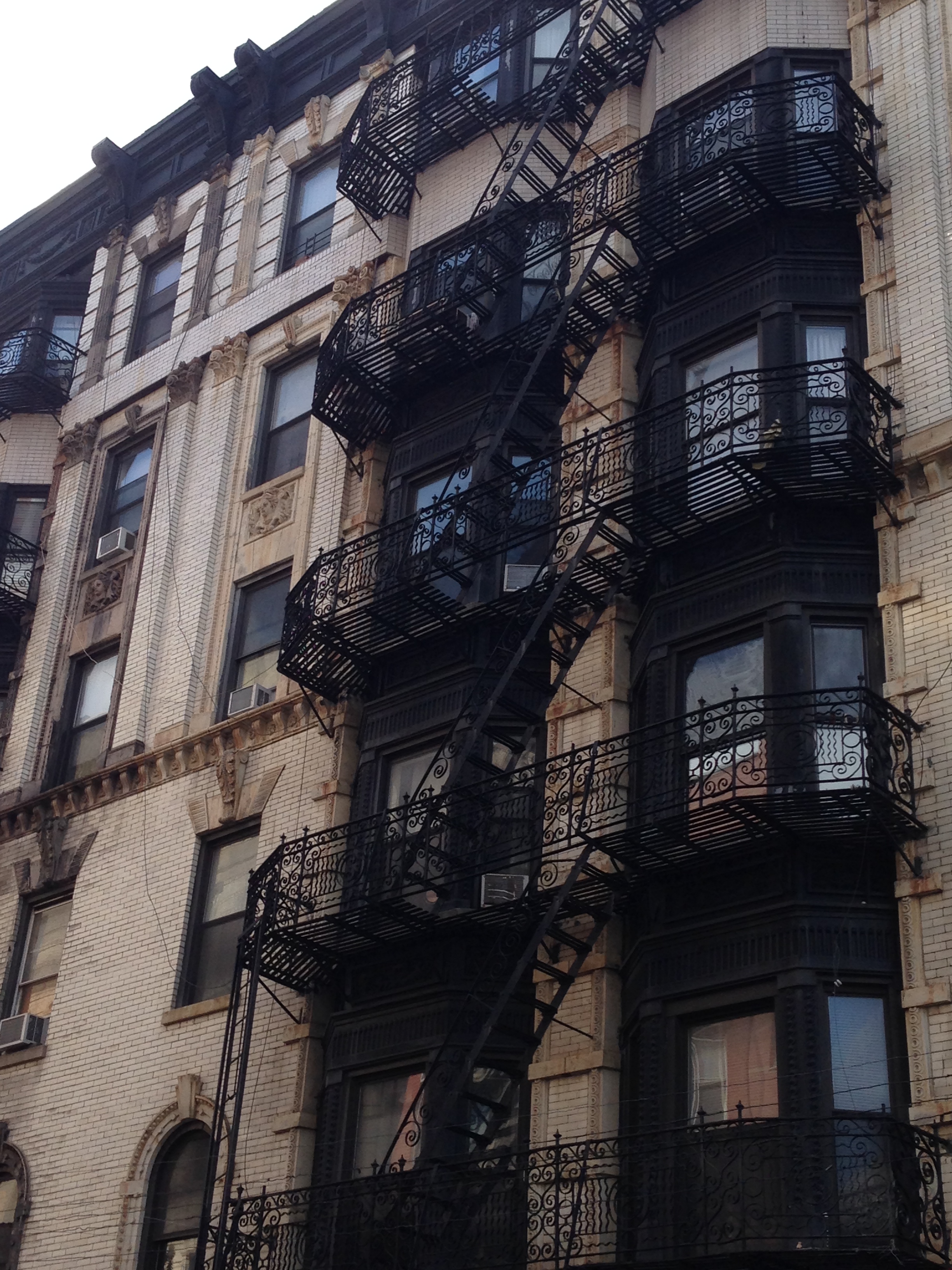
We walked and walked and walked for hours on end, exploring the little streets in the Villages and Soho with it’s stunning wrought ironwork on the sides of the buildings.

photo-14

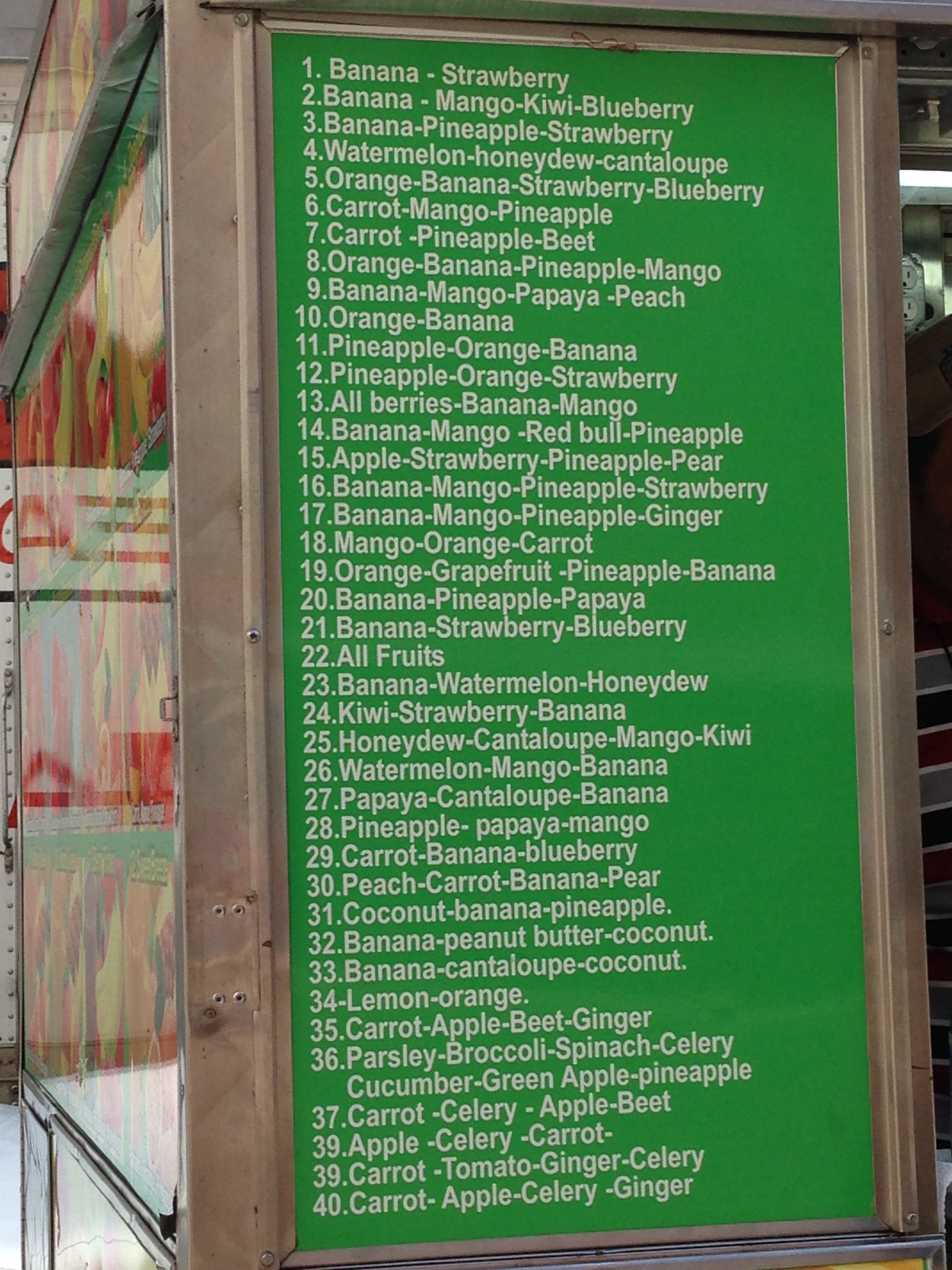
To give us bursts of energy we would refuel with fresh juices from the juice trailers parked in the streets. With around 80 different juice combinations to choose from it was hard to decide which one to pick. At around $4 a pop they are great value and ridiculously healthy – a win win.

photo-16

They cleanse the body and totally refresh the tired wanderer. Competitively priced and they would do so well here in London – a great business idea for a budding entrepreneur!!

IMG_1518

The stunning High Line with the old tracks visible

The High Line really impressed us – a great example of urban regeneration. It’s a stunning elevated greenway mile that used to be the New York central rail road spur, known as the West Side Line. It spans the meat packing district all the way up to Chelsea and is cleverly designed with shrubs, plants and trees interspersed with benches and seating areas around and on top of the old tracks. I particularly loved the raised seating, similar to an amphitheatre that looks over one of the roads with a huge glass window.

IMG_1537

Clever designs and architecture throughout the High Line

Instead of watching a movie you sit and watch the traffic buzz beneath you. Later in the day when I was passing underneath it in a taxi it almost looked like an advertising poster, and then I saw the people moving around. A clever effect and a fun way to be creative with the old rail road.

IMG_1535

Walkways along the High Line 

The peace and serenity that the High Line offers is a welcome respite from the manic life that goes on down below. If you are planning a trip my recommendation would be to go early as it definitely becomes crowded as the run rises higher in the sky.

IMG_1506

Me sitting on the attractive wooden seating on the High Line

Friends beckoned us over to Brooklyn, a place I definitely want to explore further on my next visit, to an area that is gentrifying and that has become rather hip – called Dumbo. Looking across at Manhattan from the Brooklyn side of New York, gave a new perspective to this sprawling city. The sun was shining and the crowds were out and if the ice cream queue at The Brooklyn Ice Cream Factory had anything to go by the area of Dumbo has become hugely popular.

IMG_1543

Looking back at Manhattan from Dumbo in Brooklyn

A couple other must-see destinations for foodies is the Italian food emporium of Eataly, which is just by the famous Flatiron building, which in itself is a piece of interesting architecture worth seeing.

IMG_1563

 The famous Flatiron building

It’s only a matter of time before we’ll see an Eataly in London, having already got branches outside the US in Dubai, Japan, Istanbul and Italy itself.  The shop is bursting at the seams with delicious Italian produce, and yet it has a calm serenity that makes wandering around it very pleasant indeed. There are bars and a couple of cafes (the one on the roof is perfect for sunny summer days and has a huge selection of beers) and it’s quite acceptable to browse around the store with a glass of wine in your hand. All very civilised if you ask me.

photo-17

The other food mecca worth seeking out is Chelsea Market, not far from the High Line, so perhaps the perfect pit stop after a High Line stroll. It’s a stunning food court with a great atmosphere and an incredible choice of eateries, bars and cafes.

photo-18

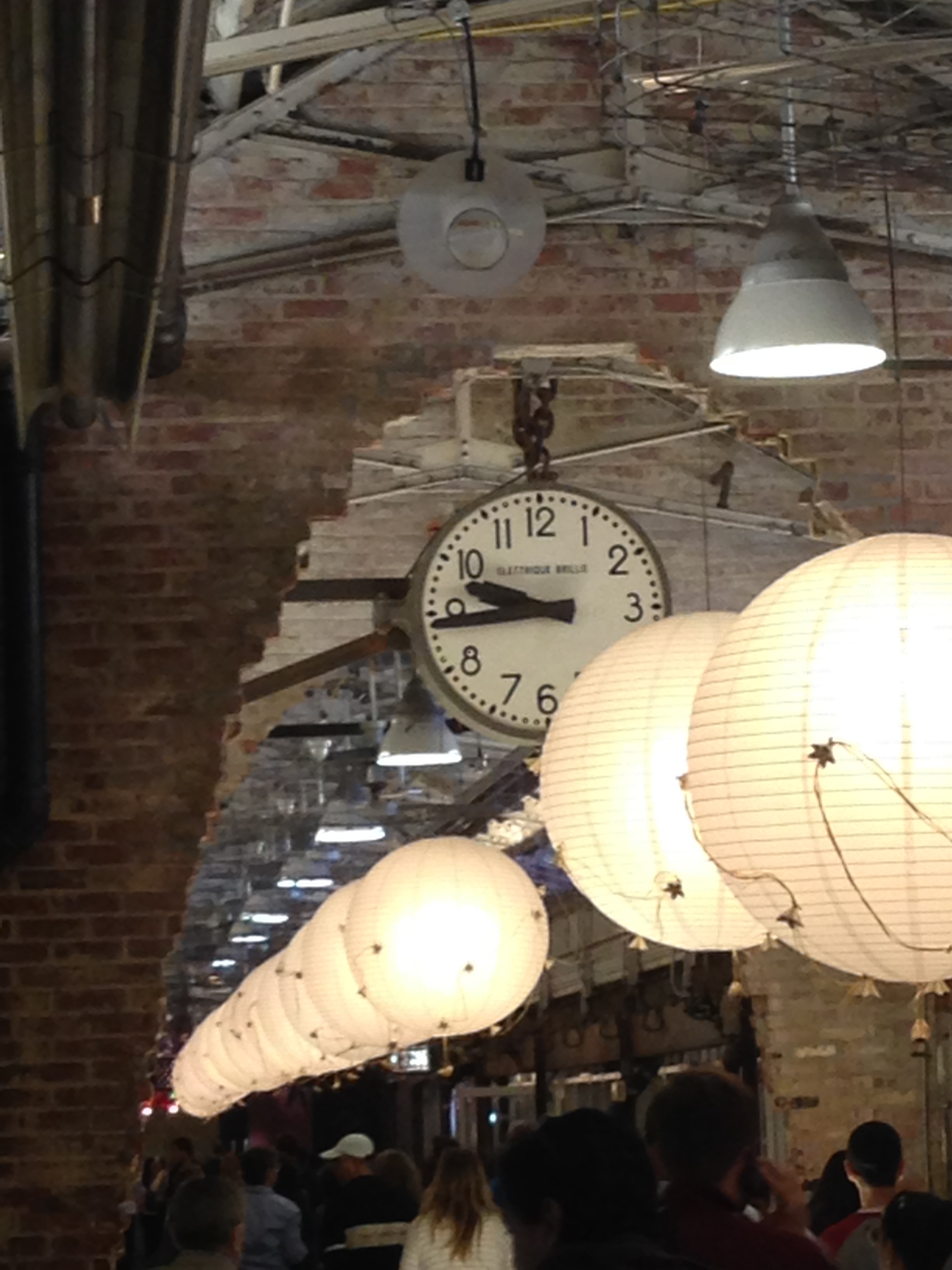
strolling through Chelsea Market – loving the exposed bricks

Aside from eating, walking and socialising we managed to squeeze in a little culture with a visit to the ‘The Frick Collection’ . Based in the Upper East Side it gave us a great excuse to explore the neighbourhood and central park. The collection itself is fascinating and housed in the mansion of the wealthy industrialist Henry Frick, one of America’s greatest art collectors who died in 1919. His house contains many masterpieces of paintings, sculptures and decorative art that the public are freely allowed to view and admire. He bequeathed the house and all it’s contents to the public upon his death. It’s a relatively small collection so won’t take too long to amble around so is easy to fit into a quick stop in New York. Go visit.

New York is jammed full of incredible restaurants. A list of some of those we visited is listed below:

The Dutch – happening bar with tasty American food and an exciting wine list. Based in Soho.

Lafayette – sister restaurant to The Dutch (we did not realise this at the time). Larger in size to The Dutch and a little more formal. More French style menu.

Atrium – This Dumbo restaurant is buzzy with a delicious brunch/lunch menu. Mr B found the pulled pork bun too small for his liking – I on the other hand found the size spot on. Interesting foliage structure upon the main wall.

Spice Market – based in the Meatpacking District across the road from Soho House. Old kid on the block but still going strong. Large restaurant so not intimate and filled with locals, but seriously tasty Asian food.

Noho Star – Neighbourhood cafe in East Village. Highly recommend the spicy Mexican Huevos Rancheros. Deeeelish.

Cafe Standard – Within the Standard Hotel East Village, this hip eatery is always buzzing and has a great menu with delicious juices.

*******************

Back in London we craved spicy Indian food so rustled up one of our favourite chicken curries. We tend to cook it on the bone (seriously it tastes much better this way), but if the thought of cooking and eating off the bone doesn’t appeal simply cook the curry with breast and boneless chicken thighs instead.

Eating nourishing, homely food also really helps with jetlag ;0)

IMG_9187

Traditional Bengali Chicken Curry

Serves 4-6

3 tbsp vegetable oil

1 large onion, roughly chopped

1 chicken, cut into 10/12 pieces and skin removed

1 tsp turmeric powder

1 tsp cumin powder

1 tsp coriander powder

1 tsp Kashmiri chilli powder

4 cloves

5 cardamom pods, split open

1 pieces of cinnamon bark, split into three

2 tsp salt

8 garlic cloves, kept whole

2 tsp of fresh ginger paste

4 medium potatoes, chopped in two

2 or 3 large carrots, chopped into 1 inch pieces

1 tbsp natural yoghurt

2 tbsp of tinned chopped tomatoes

1. In a large deep pan heat up the oil. Place the onion in the oil and gently fry until the onion becomes translucent and soft. This should take around 5 minutes.

2. Add the chicken pieces to the pan and allow them to whiten completely. Turn them at intervals so that all sides of the chicken pieces are white. This will take around 10 minutes.

3. Once whitened add all the spices and salt followed by the potatoes, garlic cloves, carrots, tomatoes and yoghurt. Stir in well so that the chicken and vegetables are completely coated in the spices.

4. On a medium heat allow the curry to cook through, stirring at intervals. No extra water is needed as the chicken pieces release plenty of water during cooking.

5. After 40 minutes the curry should be completely cooked. Using a knife make sure the carrots and potatoes are soft. If they remain hard, stir into the sauce and cook for another 10 minutes.

Serve with rice or Indian bread. As it is on the bone it is easier to eat the traditional Indian way – with your right hand -but I’ll leave that for you to decide.

Chana Masala at L’atelier des Chefs by St Paul’s Cathedral

IMG_8345

A stone’s throw away from the iconic St Paul’s Cathedral in the heart of the city of London you will find Foster Lane and nestled down it at number 10, the cookery school and cook shop, ‘L’atelier des Chefs‘. This is one of two – the other is in Wigmore Street – soon to be three locations of the cooking school, with a further 17 across the water in France.

IMG_8368

Originally set up by two French brothers, Nicolas and Francois Bergerault who wanted to bridge the gap between chefs and the day to day cook. The ethos of the company was to bring people back in the kitchen, around the table and share the love of cooking. The brothers have hired passionate and skilled chefs to teach cooking classes to budding food enthusiasts. Classes range from half an hour, whereby you cook one dish over a lunch time or after work, to a four hour ‘chefs masterclass’, therefore appealing to those of all standards and budget. Class sizes also range from small intimate groups to larger corporate events/team bonding; there is even a class for kids so everyone is included and encouraged.

IMG_8367

I headed down there earlier this week with my mother in tow. I enlisted the pair of us on the Indian cooking session. Whilst I am very comfortable around the spice rack and cooking Indian food, my mother, who is a fabulous cook, is slightly less comfortable cooking a curry. I was keen to see if the session would appeal to both of us.

IMG_8310

We were greeted by friendly staff who offered us teas and coffees before class began. There were seven of us in our class and we were introduced to chef Daniel Stevens who has just returned from an extended visit to Kochi in Kerala, India, where he has been working closely with Lily Vanilli and Atul Kochhar in their new joint venture, Bloomsburys Cafe, which focuses on celebrating Kerala flavour in Western style patisserie.

IMG_8290

Introductions over we rolled up our sleeves, washed our hands and began slicing, dicing and chopping away. Over the course of the morning we all helped to prepare a lamb rogan josh (lamb curry), chana masala (chickpea curry), vegetable pakoras (similar to an onion bhaji) with a tamarind chutney and saag aloo (potato and spinach curry). We all took turns with stirring and adding ingredients and all tasted for spiciness and saltiness along the way. I liked how Daniel allowed the class to decide if more salt, spice, sourness or sweetness was required in a particular dish. After all Indian cooking is not an exact science like baking where exact measurements are integral to the success of the cake or bread. Indian cooking allows you to be a little flexible with measurements and a more ‘go with the flow approach’ to creating a dish – something that definitely appeals to my style of cooking.

Time raced by and after two hours we had prepared all the dishes. We all sat down on a long table, admired the curries we had created and dived in before anything got cold. We all agreed that the morning had been a real success. We had all picked up new tricks and skills and unanimously agreed that we would all be able to replicate the same dishes again in the comforts of our own home kitchens. Would we return? Most definitely. In fact a couple of my class mates were already on their third return visit and if that isn’t the seal of approval on a fun and informative cooking school, I don’t know what is.

After squeezing in second helpings we were given goodie bags to take home some more. We said our goodbyes and headed out into the rain with a glow in our bellies and a spring in our step.

Chana Masala

Adapted from the L’atelier des Chefs recipe.

Serves 4-6

250g tinned chickpeas

2 tbsp vegetable oil

3 whole cloves

1 whole cinnamon stick

3 green cardamom pods, split open

2 medium sized white onion, finely sliced

1 tsp turmeric

1 tsp red chilli powder

2 tsp ground coriander

2 inch fresh ginger, peeled and finely grated

2 whole garlic, finely grated

4 tomatoes, chopped into small bits

150ml vegetable stock

1 handful of fresh coriander

2 tsp rock salt

1 lemon, juice

1. Heat a saucepan and add the vegetable oil. When it is hot add the cloves, cardamom pods and cinnamon stick and allow the aromas to be released. After a minute add the onion to the pan and cook on a medium heat for around five minutes until it begins to soften and brown.

2. Now add the turmeric, chilli powder and ground coriander and give a good stir. Add the garlic and ginger and stir to make sure they do not burn at the bottom of the pan. Adding a very little water helps to prevent burning!

3. Add the tomatoes and allow them to soften for a few minutes before adding the vegetable stock and chickpeas and allowing the curry to simmer and soften gently. Allow the juice to soak up and if it becomes too dry then just add a little more water.

4. After ten minutes add some salt to taste and then turn off the heat and scatter the fresh coriander on top. Before serving add some lemon juice

Chilli and Mint was a guest of L’atelier des Chefs. You can find more details about the course and other courses on offer here.


Prague Adventures and Spiced Mulled Wine

IMG_0903

I’ve been on a little jaunt across to Prague since my last post. As is customary around this time of year my family like to spend a few days somewhere really cold where we can wrap up warm (I wore five layers most days), visit the christmas markets, eat lardy food and soak up a bit of culture. Prague hit the spot and besides I have always wanted to return as my last visit was interrupted the whole time by work calls from London. This time I vowed to turn off my phone and all communication with the outside world.

IMG_0973

The best way to explore any city is by foot or bike, although across cobble stones the former mode of transport is by far more advisable. So for three full days we walked around the old city across the bridges, through the various squares, visiting the cathedral, churches and palace and taking in some art – both old and new. Our days of walking were interspersed with tasty pit stops. My girls loved to eat these wonderful hot pastry rolls that were dipped in cinnamon sugar.

Whilst Mr B and I enjoyed sipping some festive mulled wine/gluhwein/vin chaud/glogg. Nothing beats drinking mulled wine when the outside temperature is close to zero. It warms you up from the inside out and gives you that renewed energy to keep exploring a little longer in the cold elements.

IMG_1084

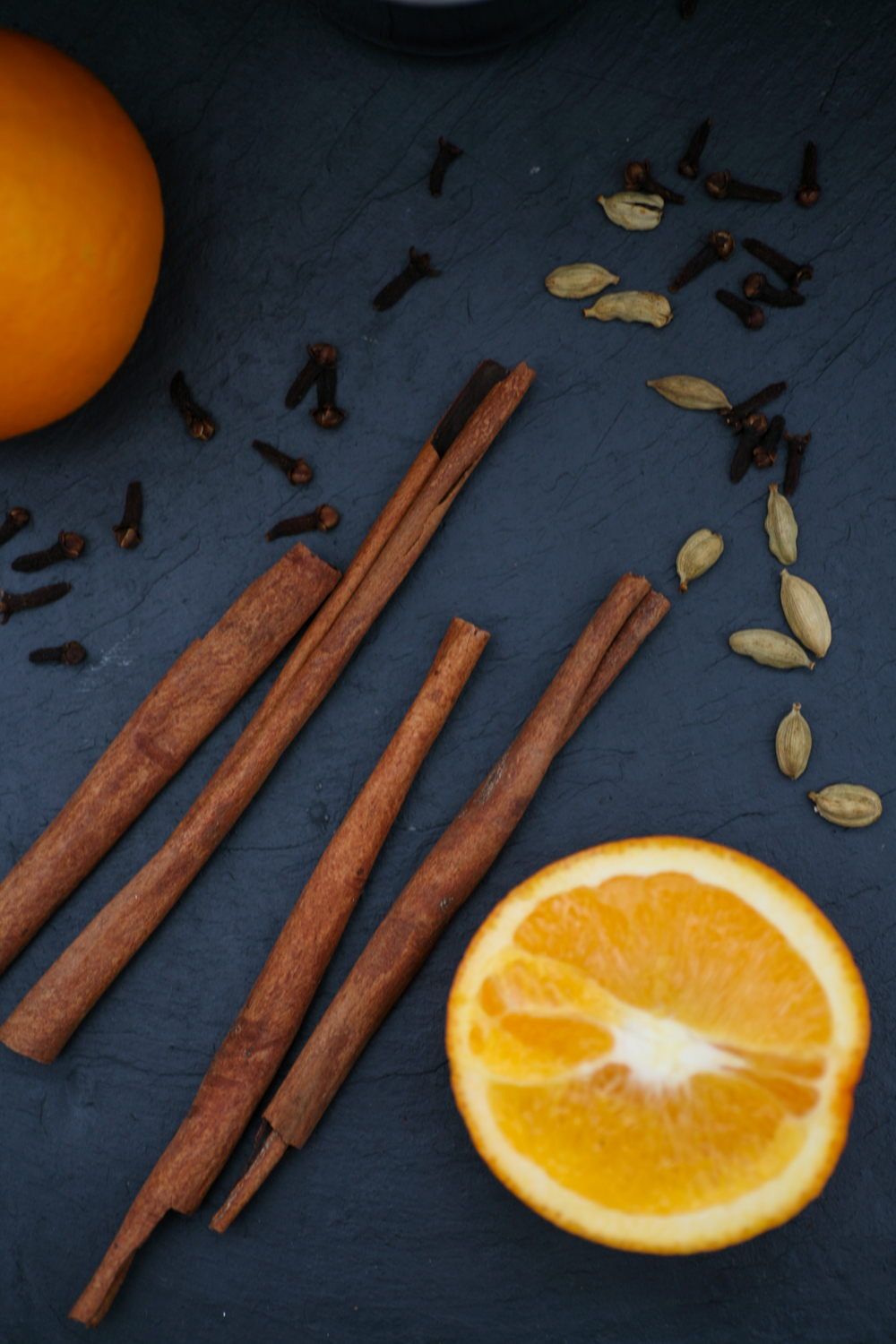
It’s brilliantly easy to make yourself and is a great winter warmer for the holiday period. Over the Christmas break you can guarantee that I for one will be drinking a glass or two after our Boxing day walk. The warming smell of the cinnamon and cloves bubbling away in the red wine on the stove evokes so many happy memories.  I recommend using the cheapest bottle of red plonk that you can get your hands on – save your Chateaux Margaux for another occasion!

IMG_7847

Spiced Mulled Wine

Serves 6 (a couple of glasses each!)

2 bottles of cheap red wine

150g (or 100g if you prefer it less sweet!) caster sugar

1/2 freshly squeezed orange juice

1 tsp cloves

4 cardamom pods

2 sticks of cinnamon split in two

100ml port (optional)

a pinch of freshly grated nutmeg

1 tsp allspice

200ml water

orange peel strips to serve

1. In a large pan add the caster sugar and half a pint of red wine and stir until completely dissolved.

2. Add the remaining ingredients aside from the orange peel strips and simmer gently for 45 minutes.

3. Strain the liquid before serving and gently pour the hot spiced mulled wine into individual glasses or mugs and add a orange peel strip to each one.

You can make in advance and then reheat when needed. You can also store in the fridge overnight to be reheated the following day.

Note: If you have some muslin cloth you could add all the spices to this cloth and then simply remove before serving, instead of straining. 

IMG_7852

IMG_7822

I bid you all a very happy Christmas and will be back with my next post in the New Year. Thank you for always stopping by and supporting me with your comments and likes over the last couple of years. Merry Christmas to you all.

Torie x

Take a sneak peek at a few of the other sights we saw in Prague below.


Turkey Revisited and Moule Mariniere

IMG_0508
Having been impressed by all that Turkey had to offer last year we decided to return for our summer foray this year, which is a little out of character as we tend to try somewhere new for summer travels. To be fair though, we were exploring  a new area – this time the Bozburun peninsula.
IMG_0470
I favour peace, tranquility and being away from the crowds of mass tourism, so nestling for a couple of weeks in the quiet village of Sogut at the very tip of the peninsula was absolutely the perfect base from which to explore the local area and enjoy the warm waters of the Aegean. It has been described as going back in time, not dissimilar to the south of Spain or France 40 years ago.
IMG_0241
The village itself is small and meanders down the hill towards the sea, offering breathtaking vistas of the nearby islands. The road came to an end at a picturesque harbour where a handful of wooden fishing boats bobbed gently up and down. Along the harbour were a few tavernas offering the freshest fish caught that very day. As the fish were bought in on the fishing boats the women would crouch over the rocks at the water’s edge gutting and cleaning the fish.
IMG_0298
Over the two weeks we alternated between these quaint little eateries (there were four in all) for our evening meal, sitting on the harbour wall, watching the sun gradually dip over the brow of the far away islands.
IMG_0406
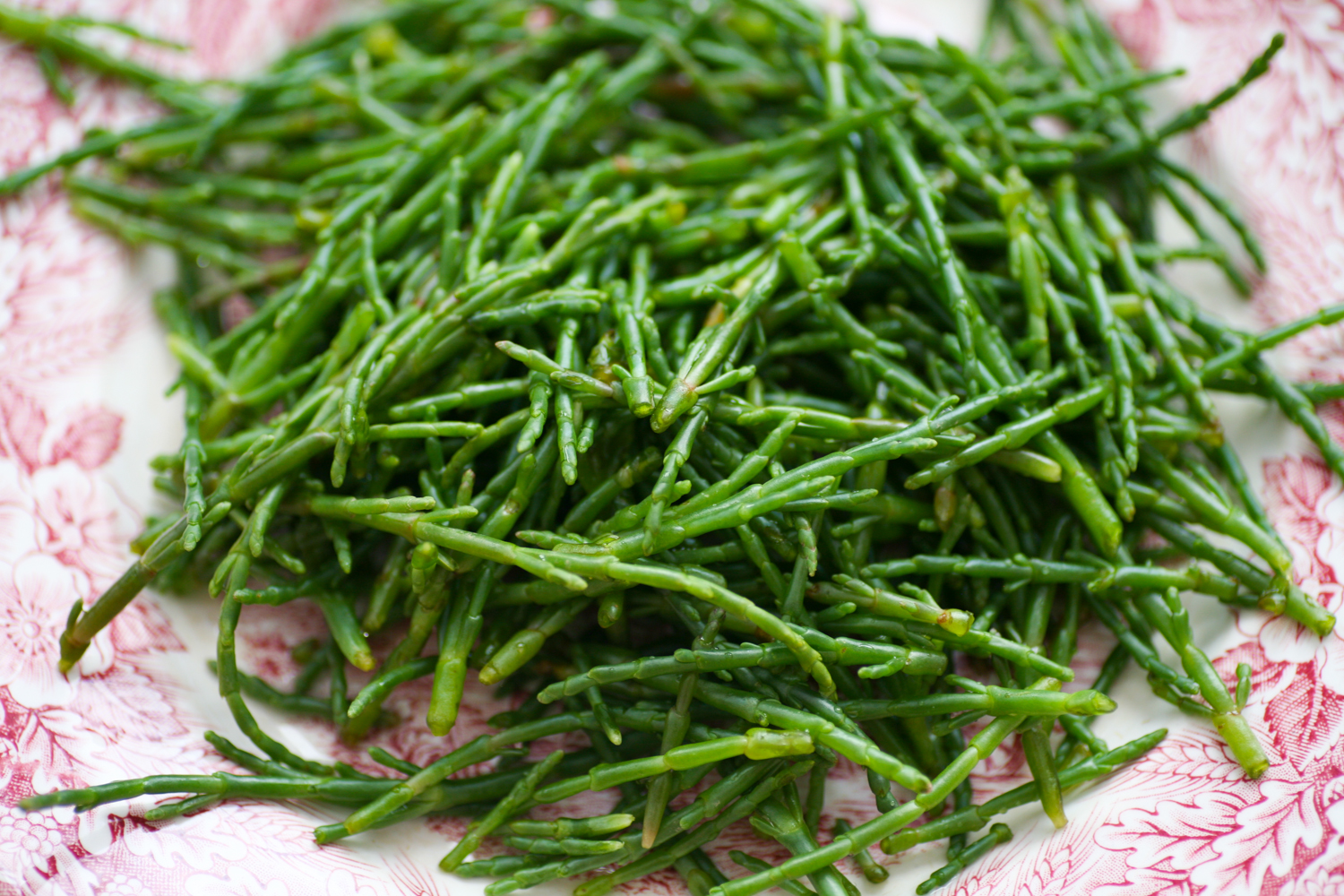
Their menus were all fairly similar, but each had their own interpretation of the mezzes. We were somewhat surprised to see that samphire was offered every evening, cooked in garlic, lemon juice and olive oil. 2013 can definitely be remembered as the summer of samphire!
IMG_0566
It tasted less salty than the samphire found in the British Isles and when I asked where it grew, they pointed in-land as opposed to  seawards,  which might explain its less salty taste.
Octopus grilled with garlic, herbs, pink peppercorns and olive oil was another daily staple to the point that I fear that Mr B will start to have cold sweats if he doesn’t have it back at home now and again.  Needless to say a number of the mezzes consisted of aubergine and tomato fusions with the ubiquitous garlic and olive oil, as well as a broad bean based humous and another including beetroot.
We discovered a new soup that really appealed to us. Known as ‘tarhana’ it has been cited as the first ‘instant soup’ invented by Central Asian Turks. The dough that goes into making up the soup takes 5-6 days to ferment, so it really is a labour of love to make and as such I felt it probably wouldn’t get much of a following if I posted it as a blog post in its own right. If I am wrong then let me know and I may well do a post on it in the future.
IMG_0635
Apparently 100 years ago locals would eat a bowl of it for breakfast each morning before embarking on their day’s work. It is truly delicious, and eating it accompanied with a fresh tomato and pickled red cabbage salad and a round or two of gozleme filled with local cheese and cabbage definitely hit the spot.
IMG_0538
The Bozburun peninsular, or to be precise the village of Osmaniye, is one of the most prolific producers of pine honey in the world. We journeyed into the hills to visit the Honey House where we were taken on an informative tour of how honey is produced in the region. All those in the vicinity of the village earn their living from bee keeping and scattered all across the hillside you can see little blue and white boxes housing the bees.  True to its name, the honey itself has a distinctly pine taste to it and I was fascinated to learn that the bees collect a saliva off the pines that has been excreted onto the pine leaves by a totally different insect and it is this liquid that gives the honey its distinctive aroma and taste. You can find out more about the process here.
Other than eating we enjoyed seeing the local area and in particular the local ruins of Phoenix and Amos. The former was scattered all over the surrounding  countryside of Sogut and at a nearby beach – Phoenix Beach – which wins awards in my book as the most off-piste beach to reach, an adventure in itself – you can snorkel and see pots dating back thousands of years.
IMG_0586
I learnt that whilst it has not been thoroughly excavated, archeologists decided that concreting the pots and treasure of the past to the sea bed would be the best course of action to deter would-be-treasure hunters. Maybe this is common practice but I felt this was a rather unusual choice of action.
IMG_0551
We explored the ruins of Amos in 40 degree heat, which was not really the best time to explore the ruins thoroughly, but getting to the ruins took some time to reach as we meandered over the mountains and hairpin bends that make up the Bozoburun peninsular. After exploring the ruins of Patara, Tlos and Letoon last year the ruins of Amos and Phoenix were slightly disappointing, but nonetheless, I do still enjoy a good amble around an ancient ruin.
IMG_0530
As always the locals were friendly and welcoming and made our visit to their region a happy and enjoyable one. I was most impressed with Osman’s gold teeth (see above) – what a legend!
To continue with my seafood diet of the last two weeks I wanted to bring to you my version of the ubiquitous Moule Mariniere, which is long overdue.
IMG_6931
A foolproof recipe that is very quick to prepare and cook, economical and a family crowd pleaser. Enjoy. I hope you all had a wonderful summer holiday wherever that may have been. Leave a comment to fill me in.
IMG_6899
Moules Mariniere
Serves 4
1.5-2kg mussels, cleaned
2 tbsp butter
4 shallots, finely chopped
4 garlic cloves finely chopped
3 bay leaves
200ml single cream
200ml dry white wine
1 tsp salt (optional/to taste)
handful of fresh parsley to serve
crusty bread  to serve
1. Thoroughly clean the mussels under cold running water. Close the open ones with your hands or by tapping them gently and discard the ones that remain open or are broken. Remove any barnacles from the shell and pull away the beards. It’s easiest to pull the beards  back and forth and then they will release from the shell with a little tug.
2. In a pan that is large enough to comfortably fit all the mussels at once with extra room to move them around (if need be cook in two pans and then merge together at the end) melt the butter and then add the garlic, shallots and bay leaves. Once softened add the mussels and stir for a few seconds before placing the lid on top. Leave the mussels to cook in their own steam for 2-3 minutes.
3. Add the cream and white wine and give a good stir and leave for another minute or so.
4. Serve immediately in bowls topped with a scattering of fresh parsley. Serve with a crusty baguette to soak up the juices. Discard mussels that remain closed or are barely open.
IMG_6912

Foraging for Samphire on the British Coast

IMG_6645

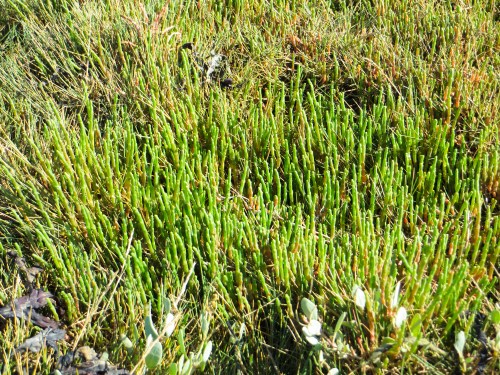
June, July and August are the months to forage for marsh samphire, not to be mistaken for rock samphire, which grows on rocks on land and tastes completely different, I am told. Marsh samphire can be found in abundance in salt marshes and tidal mud flats on the British coast. You may have also come across it by one of it’s other names:  glasswort (its name of old alluding to a time when it was used in making glass and soap); sea asparagus; Saint Peter’s herb (the Patron Saint of Fisherman) or it’s rather grand sounding Latin name ‘salicornia europaea’. I particularly like its less well known name of ‘Mermaid’s kiss’.

IMG_0176

A few years back marsh samphire was not so easy to source in the shops, other than the fishmonger who would grace their fish displays with the vegetable from time to time. Recently I have seen it in the larger supermarkets in the UK being sold in packets on their fish counters. It’s relatively expensive for the amount you get, so if you happen to be on the British coast in the summer, it is well worth having a forage for the vegetable.

IMG_0174

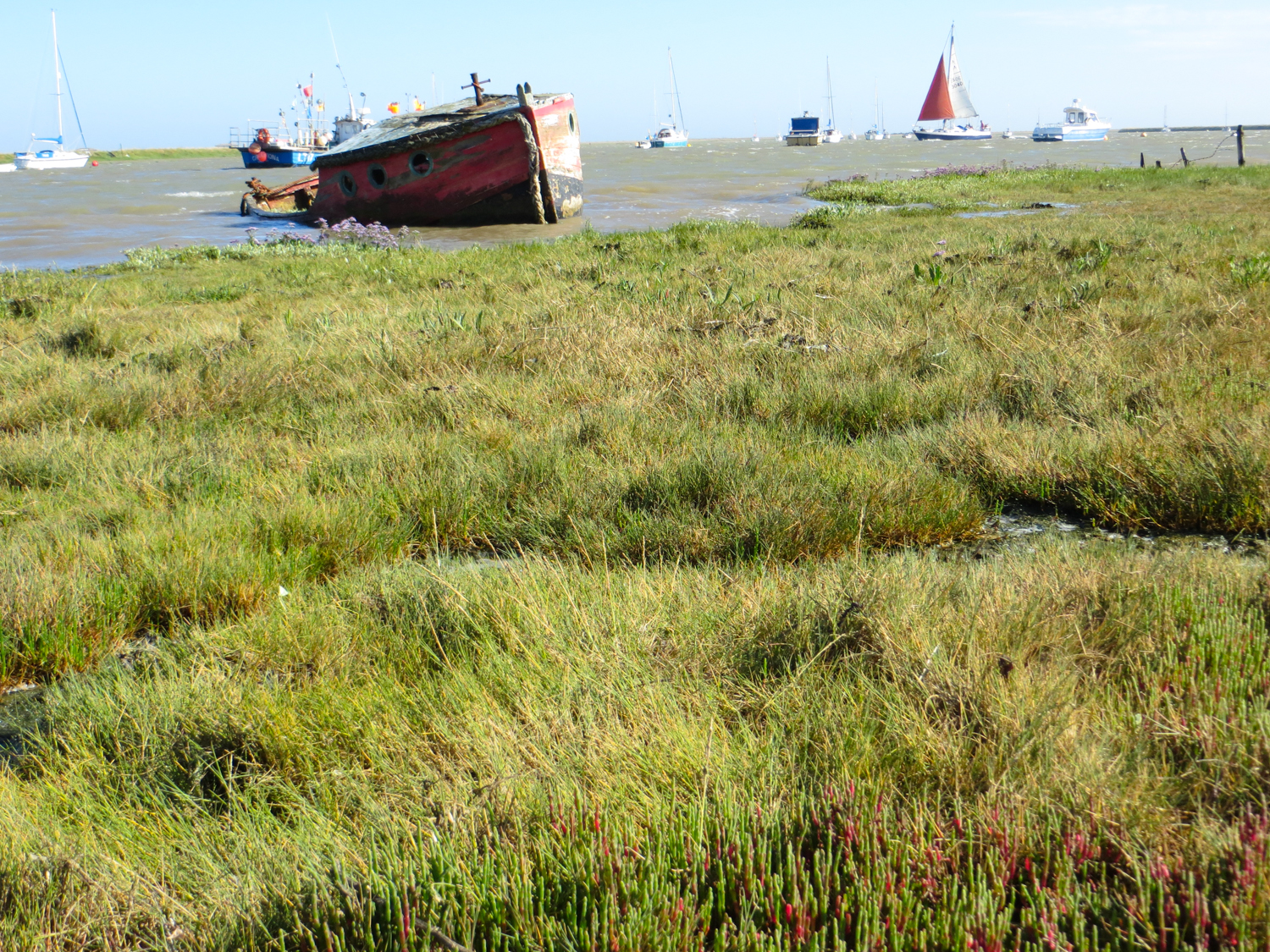
I’ve been spending the last week or so on the borders of Suffolk and Essex, which is perfect hunting ground. I initially came across some growing on the mudflats on Mersea Island and immediately gathered a small amount to prepare for when I returned home. The following day we were passing by the picturesque and historical village of Orford in Suffolk – well worth a detour on many levels – Richardson’s smokehouse, the great Pump Street Bakery, some fine pubs, a small castle, a grade I listed church with Norman remains and a sailing club – all civilised places have a sailing club don’t you find? I had read that Orford was the perfect place to forage for marsh samphire, so bucket and scissors in hand Big A, Mr B and I went a foraging.

IMG_0178

It was not long before we spotted the easily identifiable marsh samphire sprouting up through the tidal mudflats. They almost look like miniature cacti, without any spines or sharp bits. When foraging though you need to be very careful not to pull out the whole plant as it will prevent it from growing further. Simply pinch off the top parts or use a pair of scissors, so that the fibrous stems and roots remain intact. You will find that the the samphire needs to be thoroughly washed a couple of times so that the mud, grit and general nasties are disposed of.

IMG_0179

Whilst it can be eaten raw, I like to cook samphire – boil or steam for a couple of minutes, and then eat with a dollop of melting butter and a squeeze of fresh lemon juice. Absolutely no salt is needed as they taste of the sea so are more than sufficiently salty. They are rich in Vitamins A, C and D and taste  similar to asparagus, albeit more salty!

IMG_6590

They are also a perfect accompaniment for fresh fish and also lamb, although I rather like the way that this blogger has prepared their samphire – see here – Poached Eggs with Samphire and Honey Harissa. How good does that sound?

Are you able to forage samphire near you? Does it grown in your country? How do you eat it? I would love to know so write a comment below for us all to see.

IMG_0185

Fresh Marsh Samphire with Butter and Lemon

A handful of fresh marsh samphire per person

 knob of butter

lemon wedges

1. Trim and wash the marsh samphire a couple of times so that all the mud, grit and stray seaweed is discarded.

2. Boil a large pan of water and place the samphire directly in the water (if steaming put into the steamer). Boil gently for 3 minutes and drain immediately.

3. Plate up and add a knob of butter to each serving and a lemon wedge on the side. Equally you can pre-melt the butter and pour it over the samphire. Both ways work equally well.
Eat immediately when it is hot and enjoy.

Remember no salt is needed. 


Bun Cha – Vietnam’s culinary jewel

IMG_6057

On a recent trip to Vietnam Mr B, Big A and Little Z (husband and two daughters) stopped off in Hanoi for a couple of days before heading south to Hoi An and it was during this stay I discovered a dish known as Bun Cha (pronounced Boon Cha – even the name of it appeals) that will stay with me forever. There have been certain times in my life that I have, often unexpectedly, had a meal that was off the delicious charts and consequently imprinted on my memory. This was one of them.

IMG_6080

We had booked ourselves onto a guided tour of ‘real’ Hanoi with Hanoi Kids – which I cannot recommend more highly if you are planning a visit. The personal tours are conducted by local university students who show you their beloved Hanoi. The hope is that the students can improve their English and you enjoy an original type of tour. The tours are free so it’s a win win for everyone, although it’s only polite to pay for their lunch and drinks and leave a tip at the end (although there is no pressure to leave one).

Van and Nhung (our designated Hanoi Kids for the day) collected us from our hotel in Old Hanoi and after a few minutes discussion on what kind of things we enjoy doing they whisked us off to a few places they thought we should see, both on the tourist trail and the more hidden places.

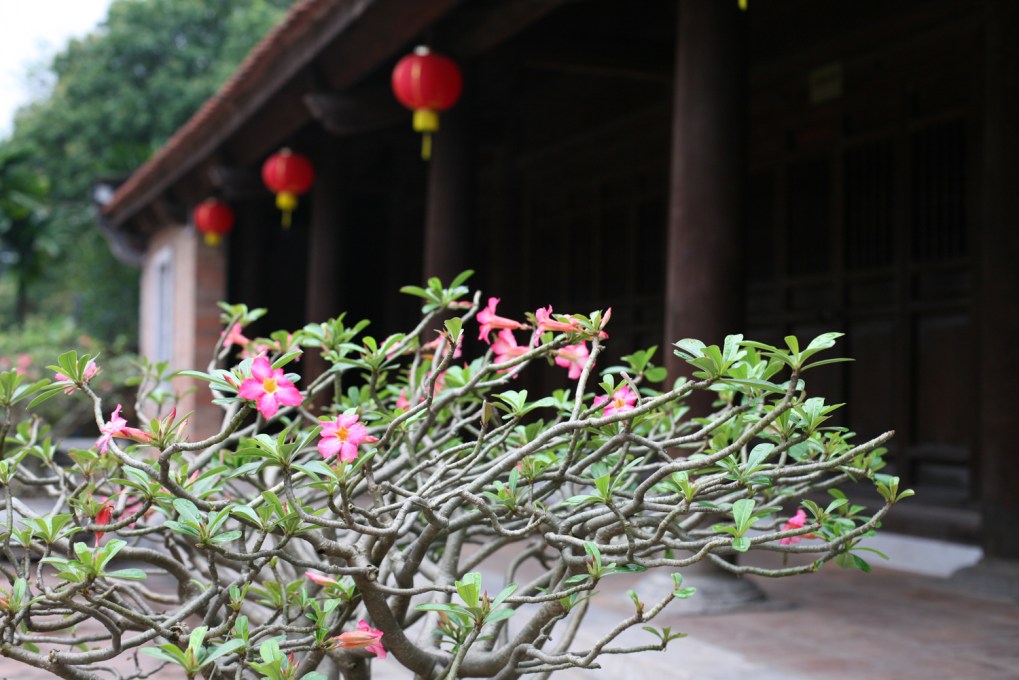
Despite the tourists who flock to ‘The Temple of Literature’, the site of Vietnam’s first university, the place was breathtakingly calm and serene as recently graduated students wafted around in their stunning ‘ao dai’ – the national dress for Vietnamese women.

IMG_4794

The temple is a place for them to take cherished photographs of themselves in all their finery having completed their studies; their graduation photographs if you will.

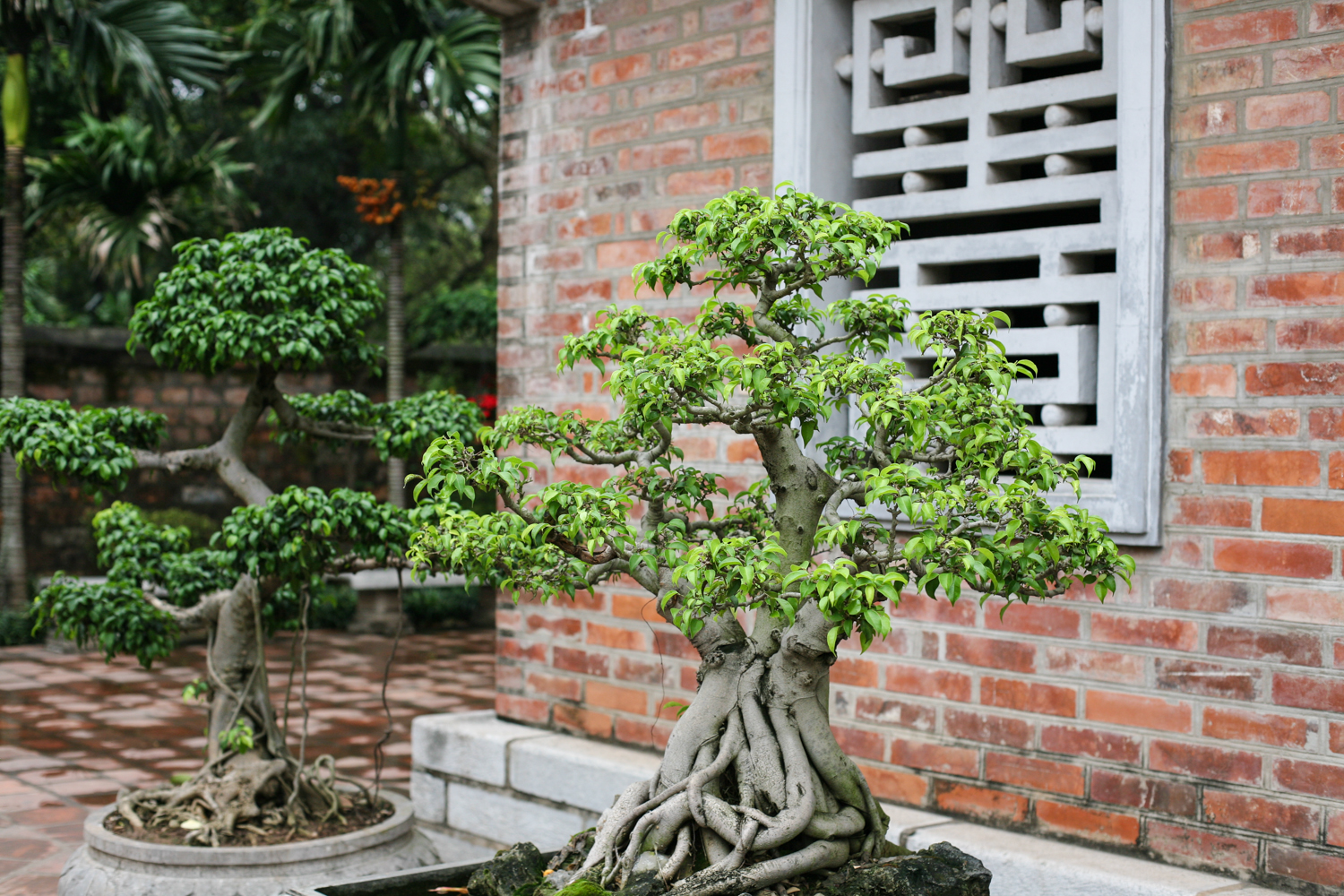
IMG_4799We wandered around the large complex taking in our surroundings before heading back to the cool of our transportation and on to the next destination.

IMG_4800

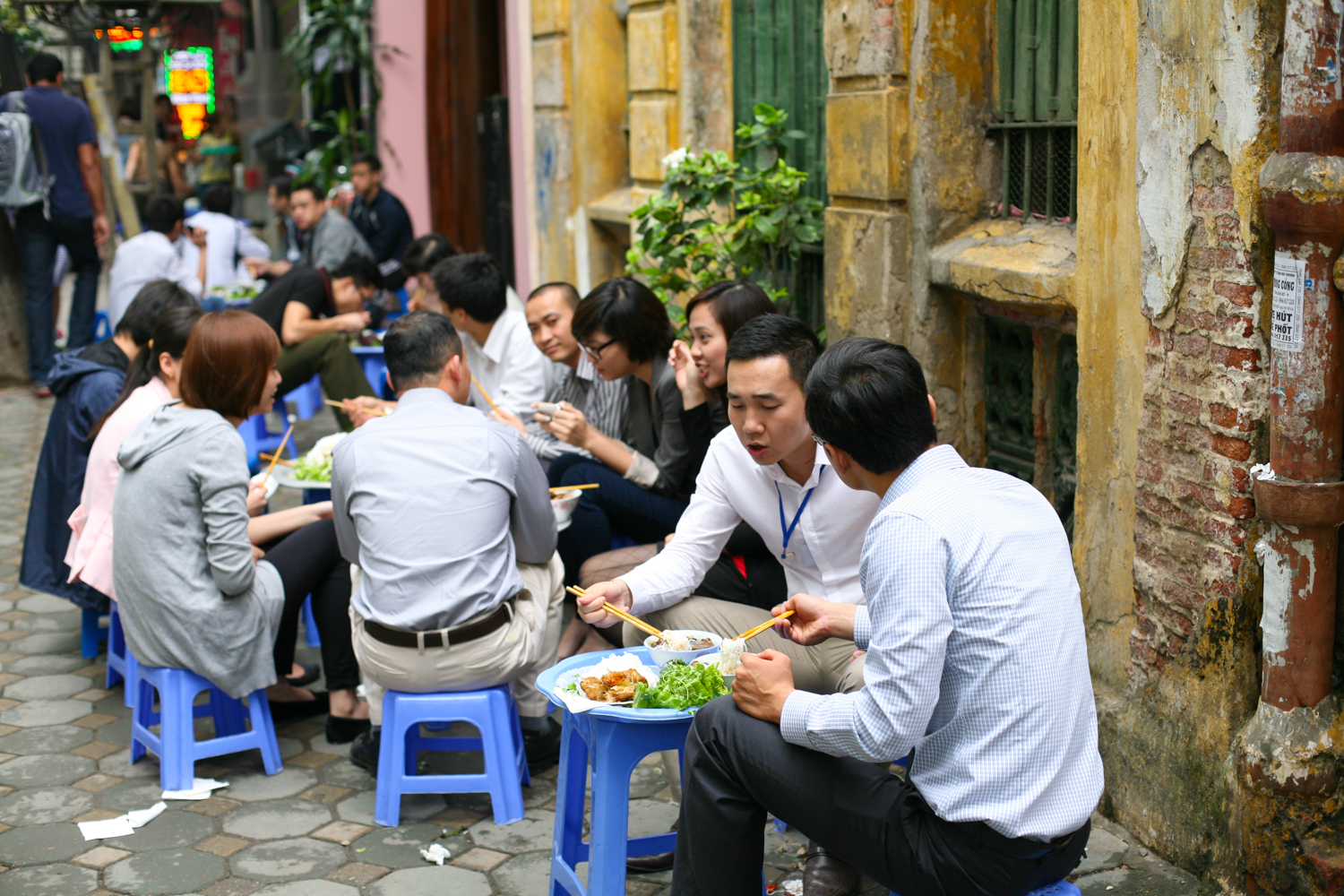
After a morning of soaking up the some of Hanoi’s sites Van and Nhung promised to take us to one of their favourite Bun Cha establishments. New to Bun Cha we were open to their suggestion. Our driver dropped us off by the pavement where we found a collection of little tables with miniature blue stools where local Vietnamese were feasting on Bun Cha.

IMG_4818

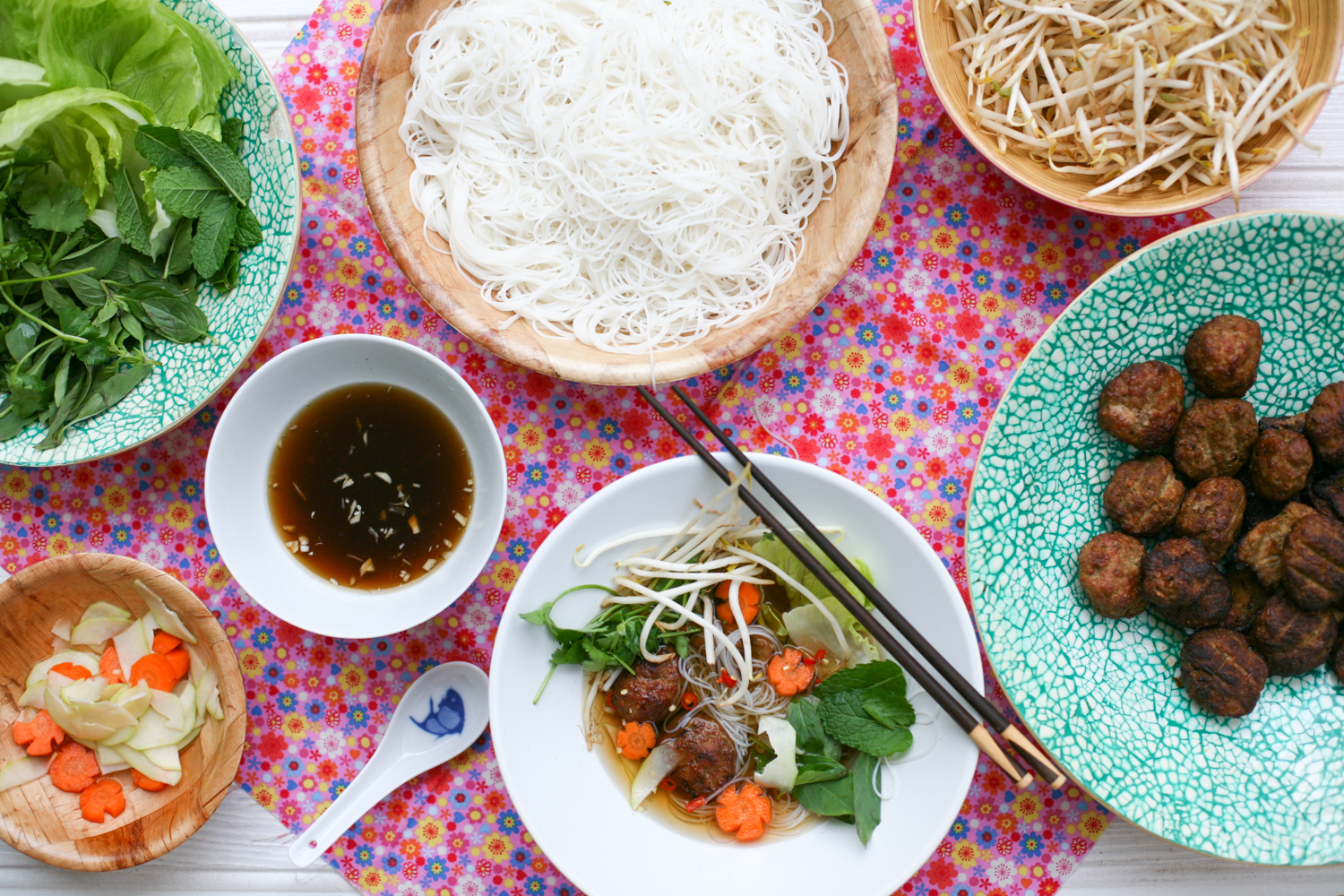
We were shown to a table and waited briefly for our meal to arrive. A large tin platter was placed on the small table, which we were huddled around and upon it were six bowls of broth filled with BBQ pork slices and patties. In the middle of the platter where mountainous piles of noodles, fresh herbs, lettuce and bamboo shoots.

IMG_4822

The simplicity of the spread did not reveal the resplendent flavours that came to the fore after the first mouthful. Without exception we were all in culinary nirvana; even Little Z who has not such a developed palate – being 3 yrs old – devoured every mouthful. The atmosphere of eating in a local eatery with traffic and bikes whizzing by only added to the charm. All the tables were filled with locals, not a tourist in sight (apart from us that is).

At £2 a head it is without doubt the best cheapest meal I have ever eaten. If you are in Hanoi do check it out you won’t be disappointed. The address is : Bún Chả 34 Hàng Than, 34 Hàng Than, Hoàn Kiếm, Hanoi.

The afternoon was spent on foot touring the streets of Old Hanoi,which is no easy feet I tell you. Crossing a road in Hanoi is a tricky business, but with our guides on hand we managed to stay alive to tell the tale.

IMG_4840

Some like to take a more leisured approach to daily life!!

IMG_4848

We ambled around Hoan Kiem Lake, which is the heart of Hanoi. Within the frenetic metropolis the lake offers peaceful walks in the relative shade of the tree lined walkways. We visited the temple in the lake and heard about the legend of the giant tortoise and the sword.

IMG_4865

The rest of the afternoon we spent wandering down the laberinth of narrow roads that make up Old hanoi, stopping off at temples and markets and of course sampling the famous egg coffee at Cafe Giang, a coffeehouse that’s been around for decades. (39 Nguyen Huu Haan) and is delightfully charming hidden down a dark little alleyway (we would never have found it without Hanoi Kids), over two floors scatted with it’s miniature tables and wooden stools, much to Mr B’s chagrin, as he is a good six foot tall. The girls loved it however as the seating arrangements in Hanoi were perfect for them.

So for those who have no immediate trips to Hanoi planned, fear not, here is the simple but truly delicious Bun Cha recipe that you can make at home. Don’t be put off by the length of ingredients, it is far more straightforward than it may appear and if you don’t have all the herbs just use one or two of those listed. Equally if you find green papaya too hard to source just add carrot. Ideally marinate the pork mince and slices and leave in the fridge overnight if you have time/remember. Failing that a couple of hours marinating will also be sufficient.

Bun Cha

Serves 4

Pork Patties and Slices

300g pork shoulder

300g pork mince

6 shallots, minced

6 garlic cloves, minced

2 spring onions, very finely chopped

1 tsp sugar

2 tsp fish sauce

2 tsp dark soy sauce

2 tsp salt

2 tsp honey

1 tsp freshly ground black pepper

To Serve

1 handful of mint leaves

1 handful of coriander leaves

1 handful of Thai Basil

1 large handful of bean sprouts

1 large handful of lettuce leaves

500g rice vermicelli noodles, cooked

Side of Pickles

quarter of a green papaya, thinly sliced

1 large carrot, sliced into carrot flowers (or simply sliced)

2 tsp salt

1 tbsp caster sugar

2 tbsp rice wine vinegar

Dipping Sauce

2 tbsp fish sauce

2 tbsp caster sugar

2 tbsp rice wine vinegar

250 ml water

1 chilli, sliced thinly

2 garlic cloves, diced finely

juice of half a lime

1. In a mixing bowl combine the pork mince with HALF of all the ingredients in the ‘Pork Patties and Slices’ section. Thinly slice the pork shoulder to around 1/2 cm depth, 5cm length x 4cm width approximately. Place in a separate bowl with the other HALF of the remaining ingredients.  Cover both bowls and leave in the fridge to marinate overnight or for a couple of hours.

2. Next prepare the side of pickles by slicing the carrots, or if you are feeling ambitious make little carrot flowers. Simply peel the carrots and then make V cuts lengthways, without going all the way through the carrot. This way when you slice the carrot horizontally little carrot flowers have been formed. Peel and slice the green papaya and then put both the vegetables into a bowl with the salt. Set aside for 10 minutes before rinsing off the salt in water. Drain thoroughly and then place in a new bowl with the sugar and the rice vinegar. Leave to rest for an hour. This will allow the vegetables to absorb the sugary vinegar flavour.

3. Prepare the dipping sauce by mixing all the ingredients together. Leave to one side.

4. Cook the rice vermicelli according to the packet – few minutes normally in boiling water. Drain under cold water and leave to one side.

5. After marinating the pork, make small patties using your hands, similar to how you would make meatballs. It is easiest to form the balls if your hands have a little oil on them. Once you have formed a ball, gently flatten the pattie so that it is easier to handle when cooking.

6. If you want to be really authentic then you could BBQ the meats but as it is not always BBQ weather here in the UK, I find the oven grill works equally well. Preheat the oven grill to 180 degrees (I use fan oven). Place the slices and patties on the grill rack and grill for just under 10 minutes (or until nicely turned brown) before turning and grilling for a further 10 minutes.

To serve: 

It’s a great dish for people to help themselves so place the herbs/lettuce/bean sprouts, dipping sauce, side of pickles and noodles in separate bowls. To heat up the noodles simple pour boiling water over them and drain them thoroughly! Then place the meat on a separate plate. Ideally serve in small little round bowls like those served in Hanoi (see photo above). My bowls are a little too large really so aim for a small bowl if possible. Guests pour a little dipping sauce in their bowl followed by a couple of slices of pork and a couple of pork patties and  pickles. Then you dip a bit of vermicelli and fresh herbs/lettuce/bean sprouts into the bowl and then eat. The flavours and textures will sing to you and you will be finishing off bowls of the dish before you know it. If you run out of dipping sauce it is easy to prepare a fresh batch. Both my hosts in Hanoi did not finish off the sauce as it is sweet, although I couldn’t resist finishing off every last mouthful.

Pasta Pasta Pasta at La Cucina Caldesi Cooking School

IMG_5915

“I am not a glutton – I am an explorer of food”
― Erma Bombeck

Last week I booked myself onto the full day pasta course at La Cucina Caldesi cooking school, which is attached to the Italian restaurant, with the same name, on Marylebone Lane in central London. I was keen to learn from an Italian pro on the various skills and techniques required to make different types of pasta and gnocchi and the sauces that accompany them.

IMG_5920

Cooking courses are always very good fun, not least because you are thrown together with a diverse bunch of kindred fellow foodies who are all eager and receptive to learn. As well as getting to cook a number of dishes together you also get to feast on them over a long lunch with a glass or two of wine.  The ringmaster for the day was the formidable Stefano who tells things straight and does not suffer fools….just don’t mention the ‘pepper lady’ to him, but clearly is a warm hearted Italian from Parma – well via Lewisham, with a good sense of humour.

The workshop included a lengthy list of recipes ranging from green fettuccine with rabbit ragu to potato gnocchi with tomato, sausage and fennel seed ragu, scialatielli – fresh pasta ribbons with herbs and parmesan, cannelloni, ravioli, gluten free pasta, spinach pasta, clams with chilli, garlic, white wine and ribbons pasta and that glorious spaghetti alla Puttanesca, which is a tomato sauce filled with olives, capers, anchovies, garlic and herbs.

From the word go Stefano set a good pace as we had a lot of ground to cover. First we discussed sauces and he showed us how to make a range of good old honest tomato sauces. The class discovered that we all use too little salt and not enough extra virgin olive oil (has to be extra virgin folks there is no going back now) but once we’d ironed out these failings we all stepped up to the plate and were more liberal with both ingredients.

IMG_5981

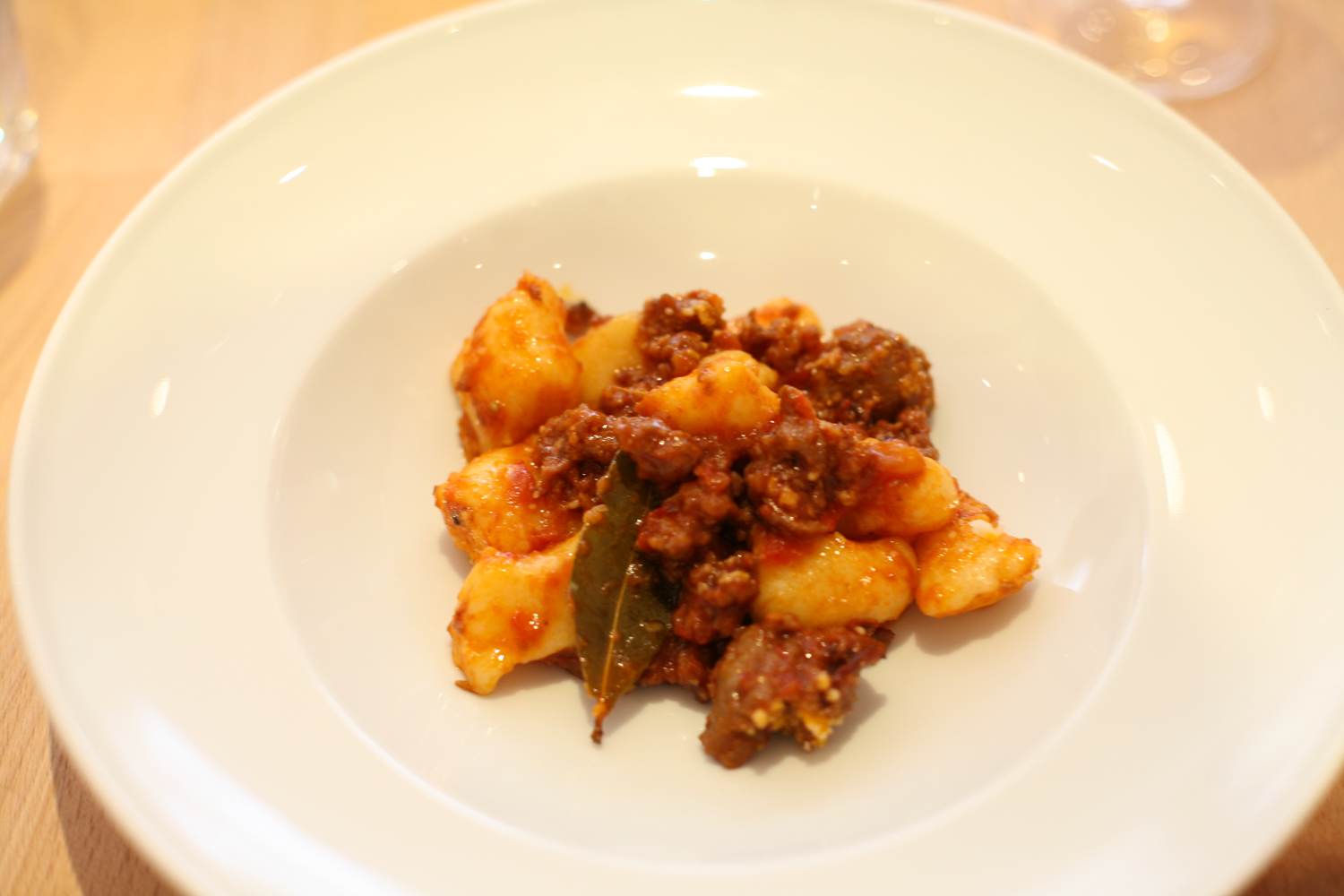
Making gnocchi was surprisingly very straightforward or perhaps it was the case that Eric, our chosen classmate, made it look easy, to bind the potato, ’00’ flour, egg, salt and pepper. After a large dough ball was created it was separated for the group so that we could all have some dough to work with and create the gnocchi itself. Once the dough is made, it takes a very short time to prepare and then cook them as they only require a couple of minutes in boiling water. Thankfully we had a tasty sausage, tomato and fennel seed ragu ready to incorporate with the gnocchi so that we could sit down and enjoy our hard labour.

IMG_5984

Something that I for one am guilty of is that quite often I serve a pasta dish at home and then I place the sauce on top. This one act alone gives the game away that I am not a genuine Italian mamma, although the fact that I don’t look the slightest bit Italian I guess doesn’t help! Italian pasta dishes are mixed together with the sauce before they hit the plate, so that when the dish comes to the table the pasta and the sauce are already the best of friends.

IMG_5999

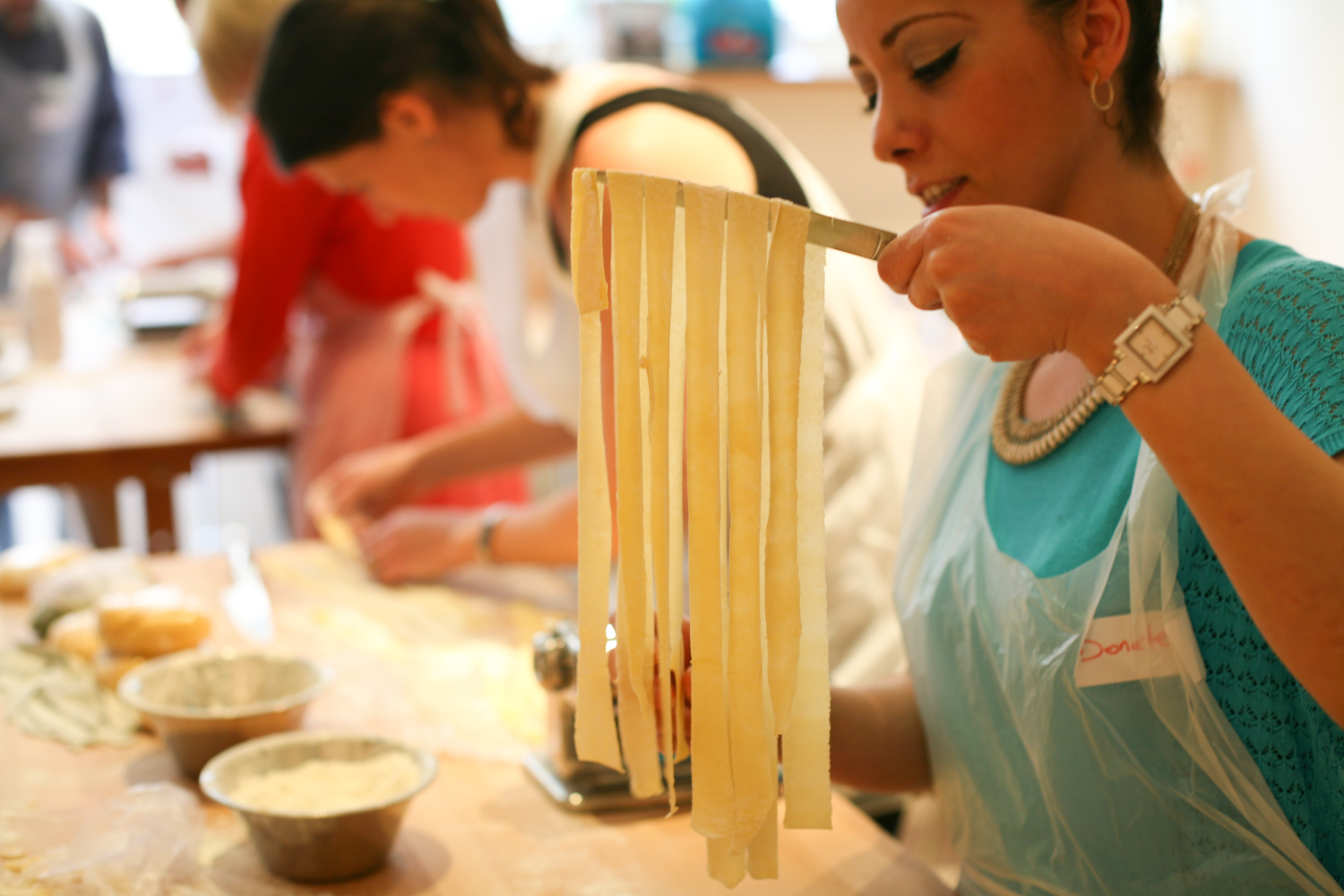
We all got very stuck into making the pasta ribbons. Stefano taught us a nifty little trick to prepare them, which I have been practicing at home ever since. In a nutshell: roll out some pasta and then feeder through all the settings on your pasta machine. Make sure you scatter a good helping of flour underneath as well as on top of the pasta and cut into 40cm pieces. Leave to dry out for a couple of minutes before placing your pasta rectangle horizontally in front of you and folding in each end, making sure to do two, three or four folds each end before they almost reach each other in the centre. Then cut through the pasta vertically leaving a finger size between the next cut. Then slip the knife under the middle of the pasta running horizontally and then lift and voila your pasta should look like the one above and below. It was a very satisfying action to achieve.

The ravioli was also very enjoyable to make. So much so I made more when I got home for my dinner guest and then the following day to feed the girls. The ones I made at home I filled with ricotta, parmesan, chives and pink peppercorns. You can get so creative with the fillings that I am looking forward to experimenting over the coming months.

After almost 6 hours on our feet – bar some time to sit down and enjoy the food – exhausted and very full indeed we all bid our farewells and dispersed into the metropolis clutching our goodie bags of leftover fresh pasta for us to use at home. The day flew by ever so quickly and I feel I took away some new skills. If you are thinking of going on a course at La Cucina Caldesi one recommendation would be eat a very light breakfast….you have been warned!


Potato gnocchi with a sausage, tomato and fennel seed ragu

A recipe I learned during the course at La Cucina Caldesi

Gnocchi

1kg floury potatoes (King Edward, Maris Piper or Desiree)

1 heaped tsp salt

sprinkling of black pepper

300g ’00’ flour

1 egg

Ragu

6 Italian pork sausages (if you live in the UK you can order on line from here or here)

6 tbsp extra virgin olive oil

2 garlic cloves, lightly crushed

1 onion (red or white), finely chopped

1 tbsp fennel seeds

2 bay leaves

125ml red wine

3 tbsp tomato puree

400g tin of whole Italian plum tomatoes

To make the ragu:

1. Remove the sausages from their casings and chop up the meat using your hands.

2.Heat up the olive oil in a frying pan over a medium heat and the garlic. After 2 minutes add the onion and seasoning and allow the onion to become translucent – this will take 5 minutes on a low/medium heat.

3. Throw in the fennel seeds and bay leaf and stir into the onions and garlic.

4. Add the sausage meat and fry for around 7 minutes or until cooked through. You will need to stir the meat regularly to stop it sticking.

5. Add the red wine and allow to reduce for a couple of minutes. Then add the tomato puree and tinned tomatoes and stir well.

6. Leave the ragu to gently simmer for 10-15 minutes allowing the flavour to work together.

To make the gnocchi:

1. Boil the potatoes in their skins in salted water until tender, which can take up to an hour.

2. Peel the potatoes whilst hot using a fork and sharp knife and then pass the potatoes through a food mill (see photo of the potato and gnocchi shots).

3. On a clean flat surface empty out the ground potatoes and add the flour, egg and seasoning and knead together into a dough.

4. On a lightly floured work surface roll the dough into a 2cm thick sausage shape and then cut into 2cm long pieces. Place in a tray which has been lightly scattered with semolina or flour.

5. As gnocchi freezes very well it is advisable to make double portions and freeze half. When you want to use again, cook from frozen and allow an extra minute or two cooking time.

6. Place the fresh gnocchi in a pan of boiled salted water. When they rise to the surface strain and place in a large bowl/plate ready for the sauce.

Place the cooked gnocchi in a large bowl and pour in the sauce and mix together gently with a spoon. Ladle into bowls/plates or into a large serving platter.

IMG_6055