Vietnamese Pancakes – Bahn Xeo

IMG_0773

Savoury food for breakfast has always been my kind of thing. Other than the pain au chocolat craving I had when I was pregnant with my first, savoury food has always been my go to breakfast choice. As such Asian food in general is my idea of heaven. Curry for breakfast, a bowl of hot steaming Vietnamese pho or Vietnamese Bahn Xeo (Vietnamese pancakes), and I am in culinary nirvana. These kind of foods I could eat all day so I am not necessarily suggesting you start cooking Vietnamese pancakes before the school/office run but having the recipe in mind when you want to try something new at any time of day.

IMG_0791

Banh Xeo (pronounced Ban say-oh – see video below if you want to sound like a pro) are thin crisp pancakes made with rice flour, coconut milk (or beer in fact), turmeric, and water. Traditionally they are filled with both pork (thinly cut pork belly strips) and prawns, but for mine I have omitted the pork and used just prawns. If you are vegetarian you could equally use some fried tofu, which would taste really good. Xeo actually means ‘sizzling’ in Vietnamese and it is this sound that you want to hear when the pancakes are crisping up. They are also known as ‘happy pancakes’ and you’ll see why after you have tasted your first mouthful.

IMG_0766

I pick up my rice flour from my local Asian supermarket or you can easily buy it online, it’s also only a matter of time before the bigger supermarkets will start stocking it too. I rather love the packaging of the one that I use – it’s got happy flour written all over it!


IMG_0768

The turmeric gives the lovely bright yellow hue to the pancakes and I also put in coconut milk. Some central parts of Vietnam do not use coconut milk and instead opt for beer to give the pancakes an extra crispiness, but I personally love the coconut taste to the pancakes.

IMG_0788

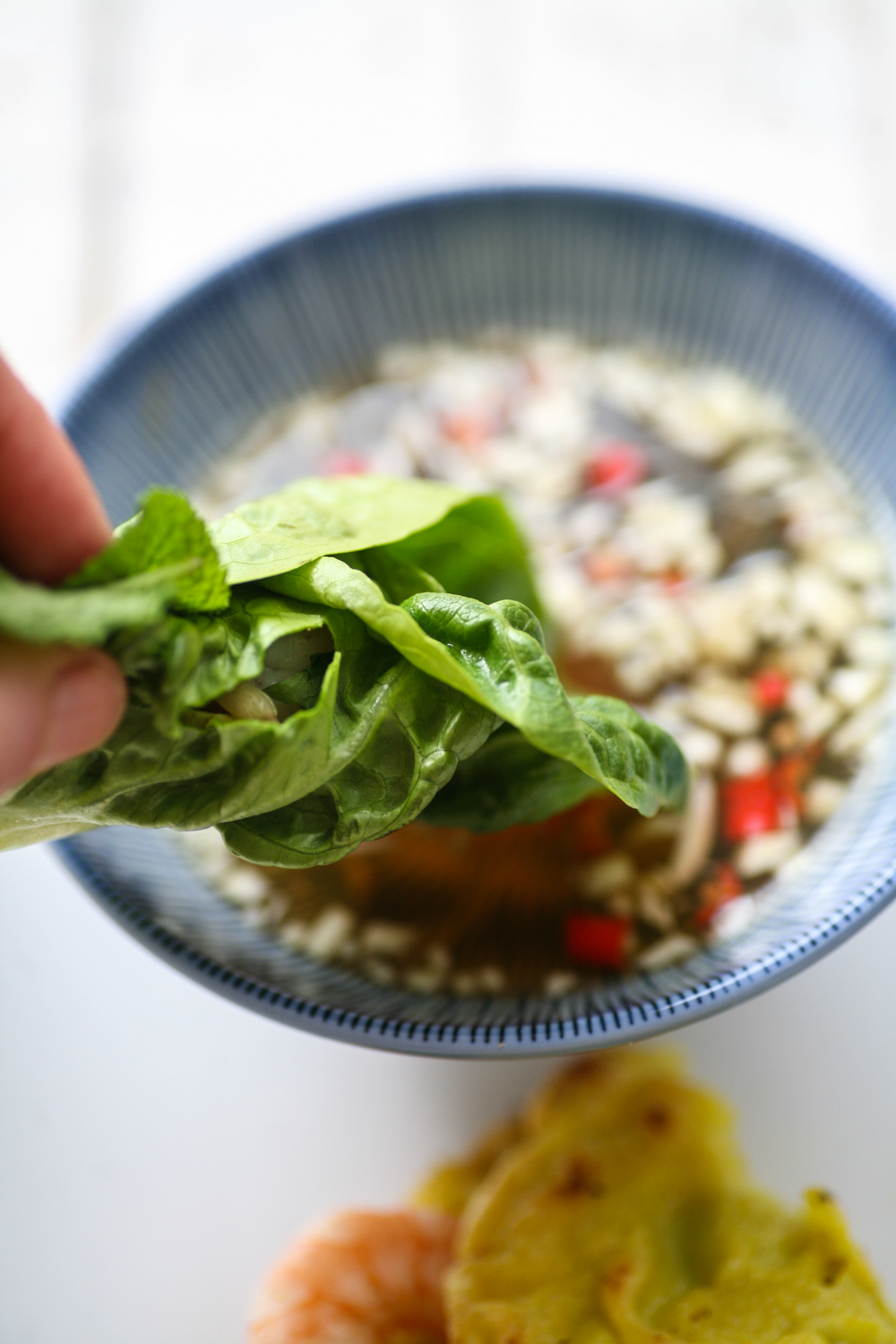
Now eating the crispy pancakes can be done in a couple of ways. You can either simply use a knife and fork and eat it like that, or in Vietnam you are often provided with a spoon and large lettuce leaves along with fresh herbs such as coriander and mint. You break off a little of the pancake …..like so

IMG_0797

and then place it on the lettuce leaf, along with the herbs …..

IMG_0804

and then roll it so you are able to pick it up and dip it in your nuoc cham dipping sauce. Easy hey. I cannot stress how delicious this is, so much so that I am craving more of these writing this post. Seriously seek out rice flour and give these a shot – I promise you you won’t regret it.
IMG_0806


Vietnamese Pancakes – Bahn Xeo

Makes 7 Pancakes

Pancake batter

250g rice flour

1/2 tsp ground turmeric

pinch of salt

400ml coconut milk

250ml cold water

*******

1 tsp coconut/groundnut oil (to go into the pan for each pancake made)

 for the filling

350g king prawns, shelled and deveined

4 spring onions, finely sliced on the diagonal

125g beansprouts

a handful (per person) of mixed herbs: coriander, mint, thai sweet basil


Nuoc Cham Dipping Sauce

2 tbsp rice vinegar

5 tbsp fish sauce

2 small red chillies, finely chopped

2-3 tbsp caster sugar

2 garlic cloves, finely chopped

200ml cold water

1 lime, juice only (optional)

To Serve

3x cos lettuce, broken up into lettuce cups


1. First you want to make the batter. Mix all the ingredients together with a whisk so that the mixture is smooth and not too thick in consistency. You want to make it a similar consistency as if you were cooking regular European pancakes. Place to one side to rest ideally for at least 30 minutes.

2. To prepare the nuoc cham dipping sauce place the garlic and chilli in a bowl followed by the water, sugar, fish sauce, vinegar and lime (if using). Stir well so that the sugar dissolves. Place to one side.

3. Next prepare the filling. Place a small amount of coconut oil in a pan and cook the prawns on a medium low heat for 3 minutes, turning and stirring as you do so. Once they have become pinker in colour, transfer them to a plate.

4. Heat a large non-stick skillet or frying pan and when it is hot add 1 tsp of coconut oil (or ground nut oil) and then ladle in one spoonful of the pancake mixture. Move it around the pan immediately so that it is completely covered. Lower the heat and let it cook for 3 minutes.

5. Place some beansprouts over one half of the pancake, along with some spring onions and place a lid on the pan for a further 2 minutes.

6. Now remove the lid and place the prawns on top of the beansprouts and spring onions. Cook for one more minute checking to see that the underside of the pancake is beginning to bronze slightly and crisp up. Place some fresh coriander, mint, Thai basil on top of the prawns and then fold one half of the pancake over the other. Leave to cook for 20 more seconds and then place on a serving plate with more fresh herbs and some lettuce cups.

To Serve:

Serve immediately when it is hot. Cut a bite sized portion off the pancake and place on a lettuce leaf. Add a few more herbs and then roll so that you can pick it up and dip it into the nuoc cham dipping sauce.

The video below shows you how to eat it.


Fragrant Lemongrass and Ginger Salmon Broth – full of goodness

IMG_0742

I have a weakness for broths, pho and laksa. Seriously I dream about eating hot, steaming broths in road side cafes in some Asian country that has been lovingly created by the mama or papa of the household. My favourite eating experiences have been these low key affairs that are often quite unexpected. It’s the balance of sweet, sour, spicy and saltiness that gets me every time.

IMG_0740

I regularly try to replicate them here at home in London. The flavours, smells and textures take me to those foreign lands without the need for stepping foot on a plane. I guess that generally is the way I like to cook – foods from foreign lands that excite the taste buds and give you a warm inner happy glow. It sounds cheesy but it is so true. One of my mini me’s is a bit under the weather but has not lost her appetite so I said I would cook her a feast for lunch that would perk her up. Ok, it was kind of an excuse for me to have another broth pick-me-up too in all honesty.

IMG_0743

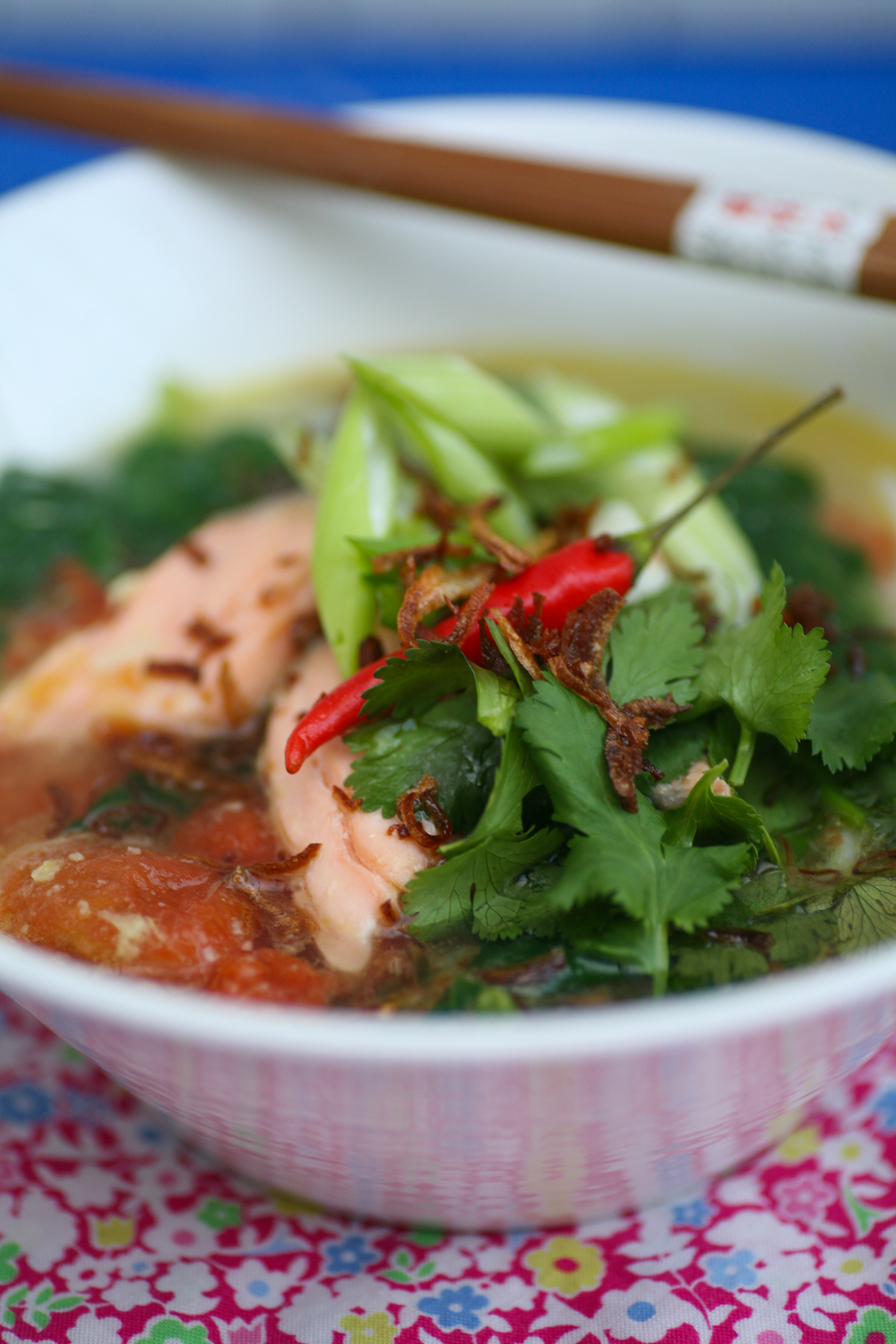
I decided to work with some big bold flavours such as the lemongrass, garlic and ginger and give them the centre stage in this dish. The sour came from the lime and kaffir lime leaves, the saltiness from the fish sauce and salmon, the sweetness from the tomatoes and a sprinkling of caster sugar and the spiciness (for me only) with the red chilli. I then added layers of crunch and flavour with the spring onions, fresh coriander and fried shallots. Instead of adding fish stock I added chicken stock which I think works far better for this type of dish.

IMG_0753

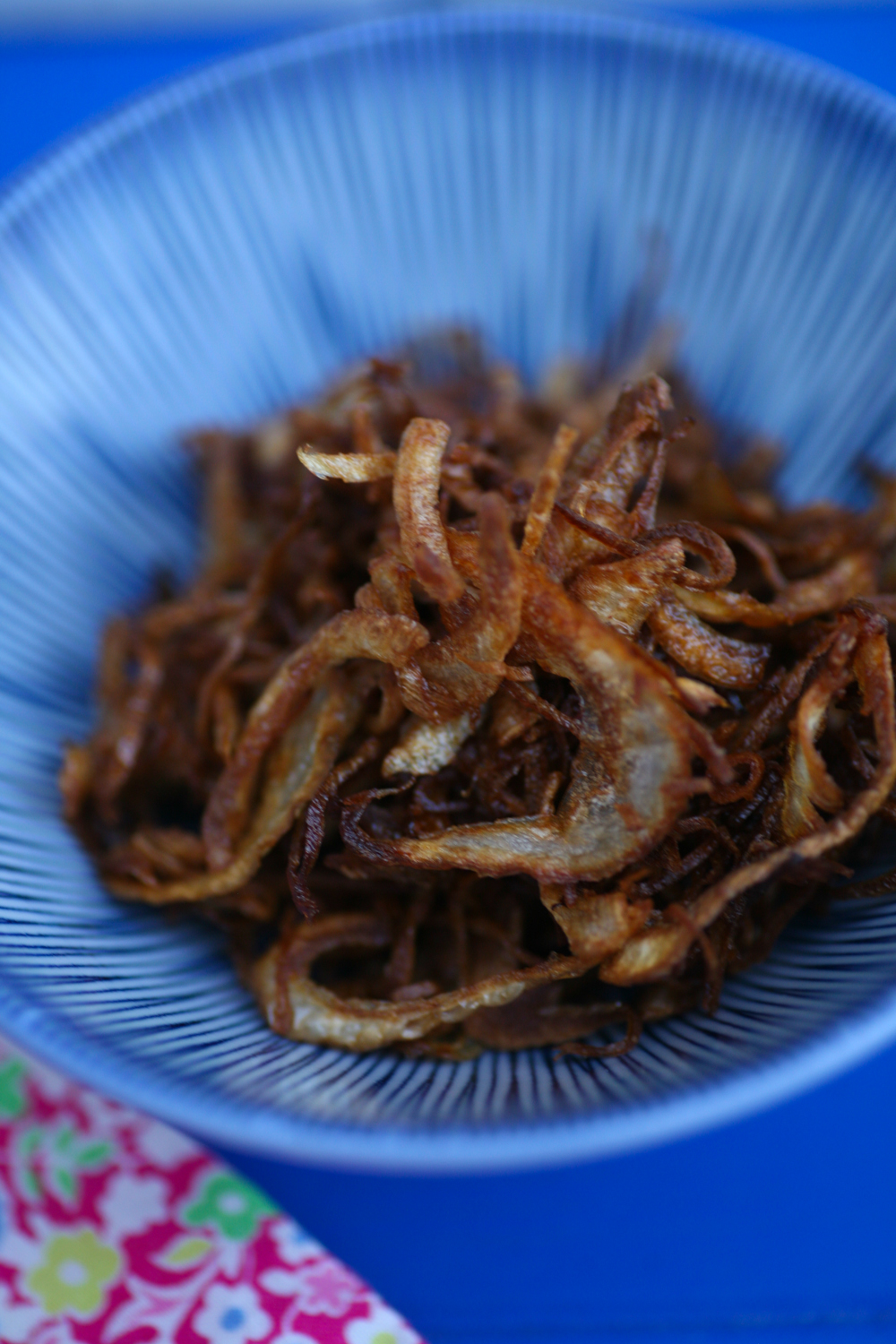
Crispy shallots are seriously addictive and add a wonderful crunch and flavour to the meal. I chose to add rice noodles that partly filled the bottom of my bowl and then added the broth on top. It wants to be 3/4 broth 1/4 noodles.


IMG_0751

Take a look at that close up. It’s making me hungry again just looking at. I adore fresh coriander and mouthfuls of that with the broth, sweet tomatoes, chilli, shallots and spring onions is absolutely sublime. Seriously you have to try it.  You heard it hear first. Give it a go and let me know. My kids LOVE it so don’t presume that because it’s a little ‘exotic’ they won’t. I just leave out the chillies of course!
IMG_0759


Fragrant Lemongrass and Ginger Salmon Broth

serves 4

1 banana shallot, finely sliced

vegetable oil to fry the shallot

2 lemongrass, roughly sliced

4cm fresh ginger, peeled and roughly sliced

5 garlic cloves

1 tbsp groundnut/olive oil

2 kaffir lime leaves

1 litre boiling water (or 500ml if using fresh chicken stock)

1 chicken stock cube/500ml of  fresh chicken stock

1 tablespoon fish sauce

1 tsp caster sugar

10 small tomatoes, halved

60g sugar snaps

4 handfuls of fresh spinach

juice of 1/2 a lime

200g fresh salmon, thinly sliced

150g rice noodles

To Serve

fried shallot (from above)

handful of fresh coriander

2 spring onions, sliced at an angle

2 red chillies, finely sliced (optional)


1. First warm a small pan with vegetable oil and heat. Add a small slither of shallot and if it fizzles it is ready to add the whole sliced shallot. Keep it at a high heat, but not so hot that they burn, and stir at intervals. After around 6 minutes the shallots will bronze and crisp up. At this stage remove them with a slotted spoon and place on a plate with kitchen paper to soak up the oil.

2. Place the ginger, garlic and lemongrass in a small blender and blend. Add 1 tablespoon of water and 1 tsp of oil and blend into a smooth (as possible) paste.

3. In a large, deep pan add some oil on a medium heat and then add the lemongrass paste and kaffir lime leaves and move around the pan for 2 minutes. Add the chicken stock, boiling water, fish sauce, lime juice and caster sugar and simmer for 10 minutes.

4. Cook the rice noodles according to the packet and place to one side.

5. A couple of minutes before serving add the fresh tomatoes, sugar snaps and spinach.

6. A minute before serving add the salmon so that it just cooks through completely but still holds together well.

7. To serve place the noodles in a bowl followed by the broth, vegetables and salmon and then place the spring onion, fresh coriander, fried shallots and red chillies (if you need some extra heat) on top. Serve immediately with chopsticks and a spoon.

Slurping encouraged.


IMG_0741


10 Minute Asian Squid With Noodles

IMG_0355

I love all the traditional feasting around Christmas and the warm, inviting smells that come from the kitchen. Sometimes however, I think it is rather refreshing to have a completely different, spicy type of dish to feed the family over the Christmas week.

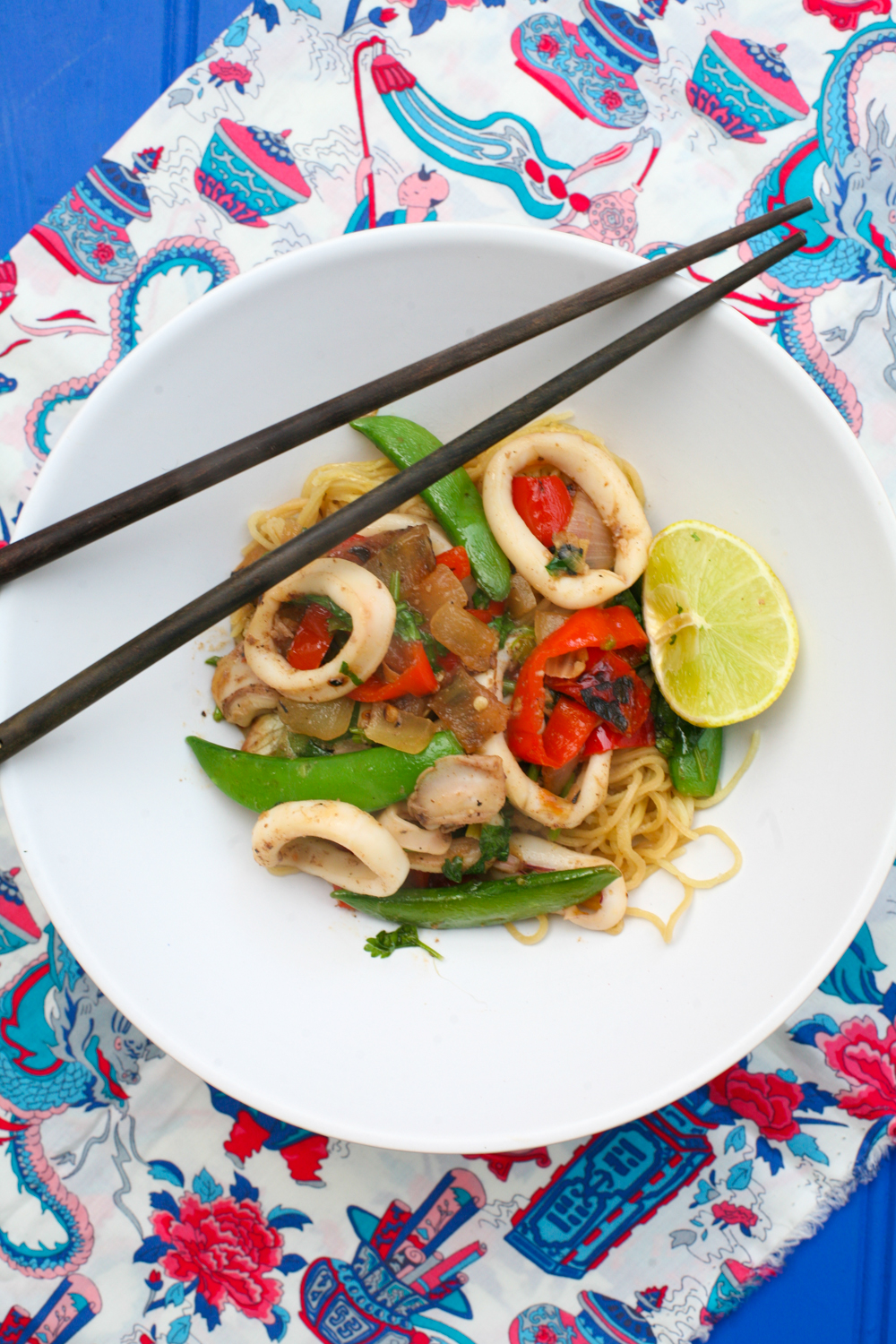
Squid is very economical, especially if you are feeding large numbers and takes minutes to cook. So I imagine you have been feasting royally over Christmas and Boxing Day and you crave something a little lighter and perhaps a chilli kick. You want minimum fuss to prepare a work of wonder. Step forward my ‘Asian Squid with Noodles’ to feed the family. It really is ridiculously easy and quick and you will be rewarded by many happy faces. By all means tone down the chilli if you are feeding to little ones (I tend to do a separate one for my youngest).

IMG_0366

I find the best place to buy squid is fresh from the fishmonger or from the fresh fish counter at your local supermarket. The fishmonger can gut the squid for you so that all you need to do is to cut it into rings. Gutting the squid yourself though can be rather good fun, but perhaps not if you are squeamish. I will do a vimeo of me doing it next time I make this and will then paste it up here for you to see. Watch this space. It’s actually very easy and my daughters actually enjoy helping me with this part.

Wishing you all a Happy New Year.

10 Minute Asian Squid With Noodles

serves 4

2 tbsp sesame oil

1/2 white onion, diced

4 garlic cloves, finely sliced

1 inch of ginger, finely grated

1 red pepper, chopped

2 green chillies, finely sliced

1 handful of fresh sugar snaps

400g squid, cut into rings

1 tbsp five spice powder

3 tbsp light soy sauce

1 handful of fresh coriander

250g medium egg noodles

1 lime, quartered

1. In a bowl add the five spice powder to the squid rings and put to one side.

2. Place the oil into a wok or shallow pan and add the onion, garlic, ginger. Cook on a medium heat for a couple of minutes before adding the red pepper, green chillies, sugar snaps. Cook for a further couple of minutes before adding the five spiced squid.

3. Move around the pan so that ingredients do not burn. Add the soy sauce and continue to cook for 3 more minutes.

4. Boil the egg noodles according to the packet and then drain and serve into bowls.

5. Just before serving add the fresh coriander to the squid.

6. Spoon the Asian squid onto the noodles, place the lime on top and serve immediately.


Black Sesame Paste Soba Noodles with Salmon and Spring Onions

IMG_9857


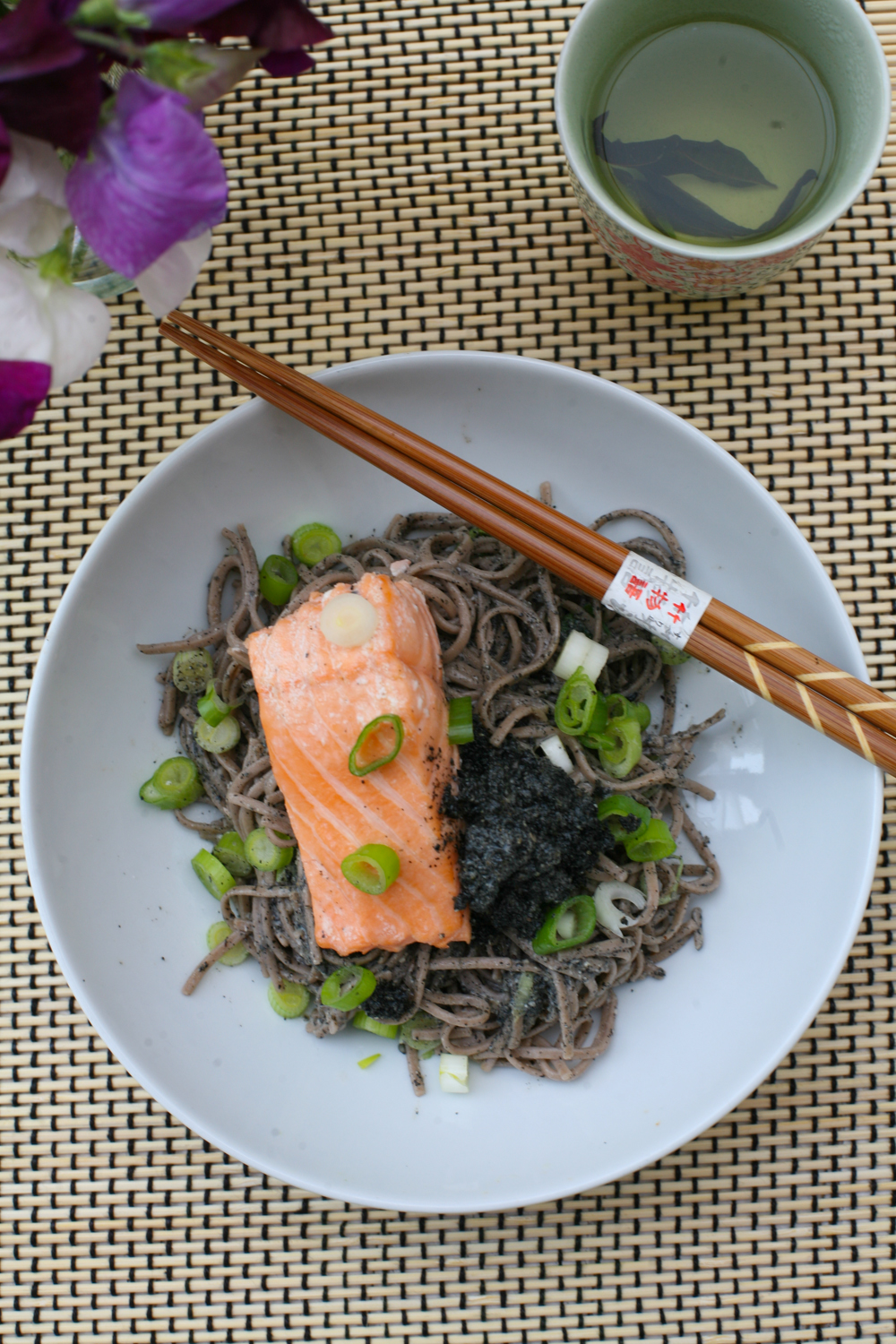
There are some plates of food that when presented in front of you you are a little bit sceptical that the dish will actually taste good. This dish, being predominately grey and black with only a splattering of green and white from the spring onions and the delicate pink from the salmon, is a case in point. You are going to have to trust me on this one when I say that this meal is seriously delicious. It also ridiculously quick (I know I know I say that with most of the dishes I put up on my blog) – it takes the amount of time that you cook your salmon in the oven – 15 minutes.


IMG_9858


Black sesame seeds may require a bit of effort to hunt down – I found mine at my local Asian grocers, but other than that you should be able to get hold of the rest of the ingredients pretty easily. If you don’t have tamari, just use soy sauce – they are very similar.


IMG_9868

I ate mine with a hot cup of fresh lemon verbena tea, which I have become rather addicted to since I was sweetly given a bag full of the stuff last weekend. Have you tried it before? Does anyone grow it in their gardens? Is it easy to maintain? I’d love to know as lemon verbena has a wonderful aroma and taste.

IMG_9864

I hope you get to try this dish very soon. I adore buckwheat soba noodles – I tend to buy the Clearspring variety – they look like this. They’re wheat free noodles, low in fat and a great source of protein and fibre. Go on give this dish a go and leave me a comment below.


Black Sesame Paste Soba Noodles with Salmon and Spring Onions

Adapted from Heidi Swanson’s ‘Super Natural Everyday’ – Black Sesame Otsu

Serves 4

black sesame seed paste

1 tsp sunflower seeds

1 tsp pine nuts

60g black sesame seeds

1 1/2 tbsp demerara sugar

1 tbsp sesame oil

1 1/2 tbsp tamari/soy sauce

2 tbsp brown rice vinegar

pinch of cayenne pepper

*************

350g buckwheat soba noodles

4 salmon fillets – skin removed (optional)

3 spring onions, finely sliced

1 tbsp extra virgin olive oil

**************

1. Preheat your oven (I use a fan oven – if you are not increase the temperature by 10 degrees) to 180 degrees. Equally you can steam the salmon if you prefer. Using a cooking brush gently wipe each salmon fillet with sesame oil. Place in a non stick dish and cook for 15 minutes.

2. Meanwhile, in a frying pan dry roast, on a low heat, the pine nuts and sunflower seeds for a couple of minutes so they begin to bronze. You will need to keep moving the pan to prevent burning. As the pine nuts begin to bronze add the black sesame seeds and move them around the pan for a minute. Transfer to a spice grinder (or pestle and mortar).

3. After whizzing the ingredients for 10-15 seconds so that they are properly blended, transfer the paste into a mixing bowl and add the remaining ingredients to make the black sesame paste. Place to one side.

4. Place the soba noodles in a pan of boiling water and cook according to instructions – should be around 5 minutes on a low heat. Before draining save 100ml of the noodle water and leave in a jug. Drain the soba noodles and run under cold water to prevent further cooking. Before adding the soba noodles to the black sesame paste, remove 1/4 of the paste and place in a separate cup. Add the soba noodles to the large mixing bowl with the remaining black sesame paste, the 100ml of noodle water, extra virgin olive oil and almost all of the spring onions and gently stir into the paste.

5. Serve a generous portion of noodles to each bowl or plate and place the salmon fillet on top along with a dollop of remaining black sesame paste which you have reserved and a scattering of spring onions.

It can be eaten at warm, room temperature or cold. You can replace the salmon with trout or even with tofu gently fried. It would in fact make an original and tasty lunch box alternative.


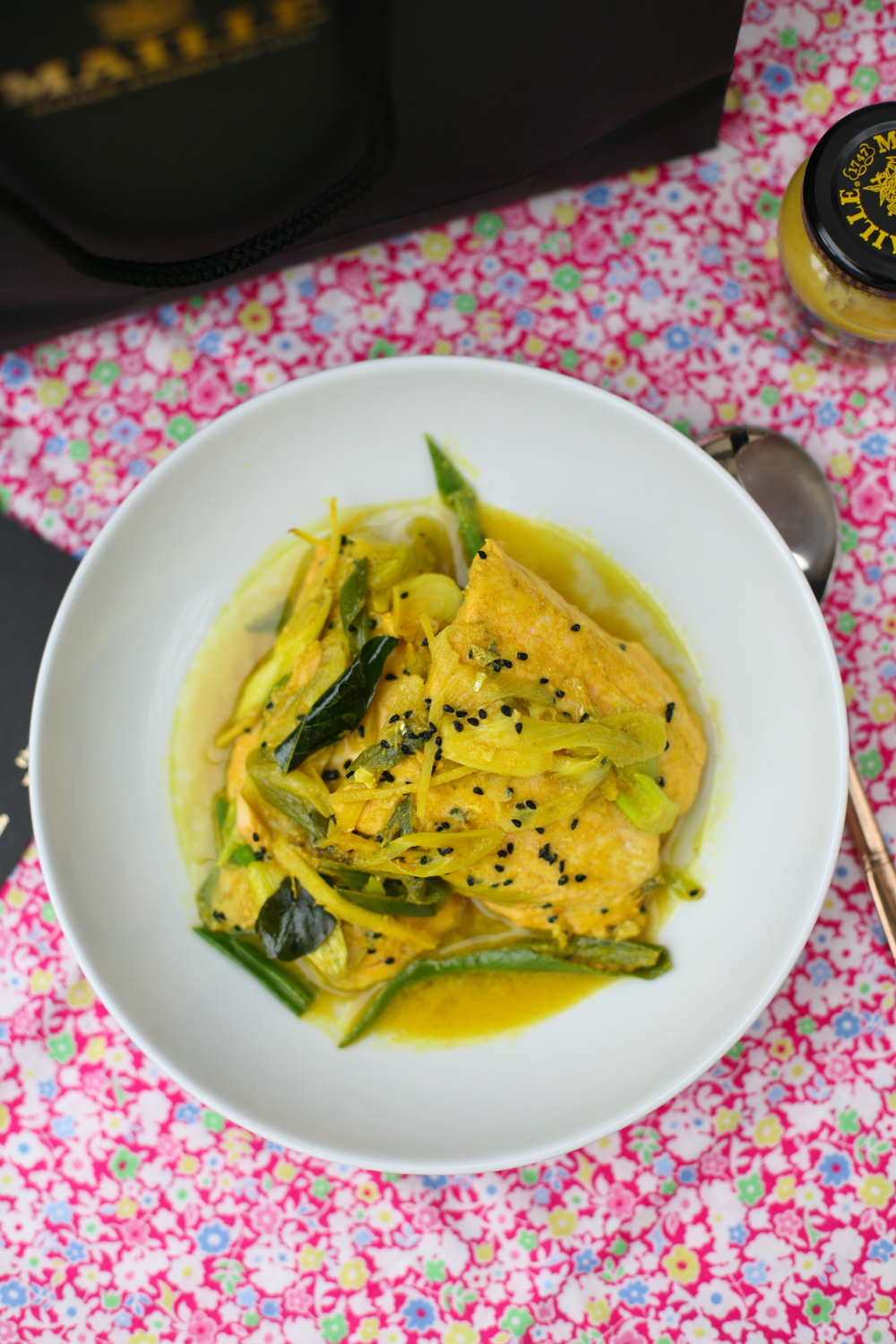
Mustard, Coconut and Colombo Spices Salmon Curry

IMG_8841

A couple of weeks ago I was approached on behalf of Maison Maille the purveyor of fine mustards, oils and vinegars, who have been in existence since 1747 and who have recently opened their first London store at 2 Piccadilly Arcadeto be part of the ‘Maille Culinary Challenge‘. It’s open for food blogger and food reviewers and as such I thought I would throw myself into the challenge and create a dish using one of their products in a recipe that I have devised especially for them and which I hope my readers will try and make.

IMG_8852

The recipes entered will be judged on four main criteria: creativity, originality, taste and visual appeal. I hope the curry I have created ticks all the boxes and in addition is easy for others to attempt to make at home. There is nothing more frustrating when you see a fabulous recipe but to create it involves so many steps and ingredients that it actually puts you off.  I want my recipes to be user friendly and to actually encourage people to cook and try new flavours and tastes. There is a whole flavour universe out there waiting to be sampled so be courageous and follow the simple steps below to try this recipe.

IMG_8863

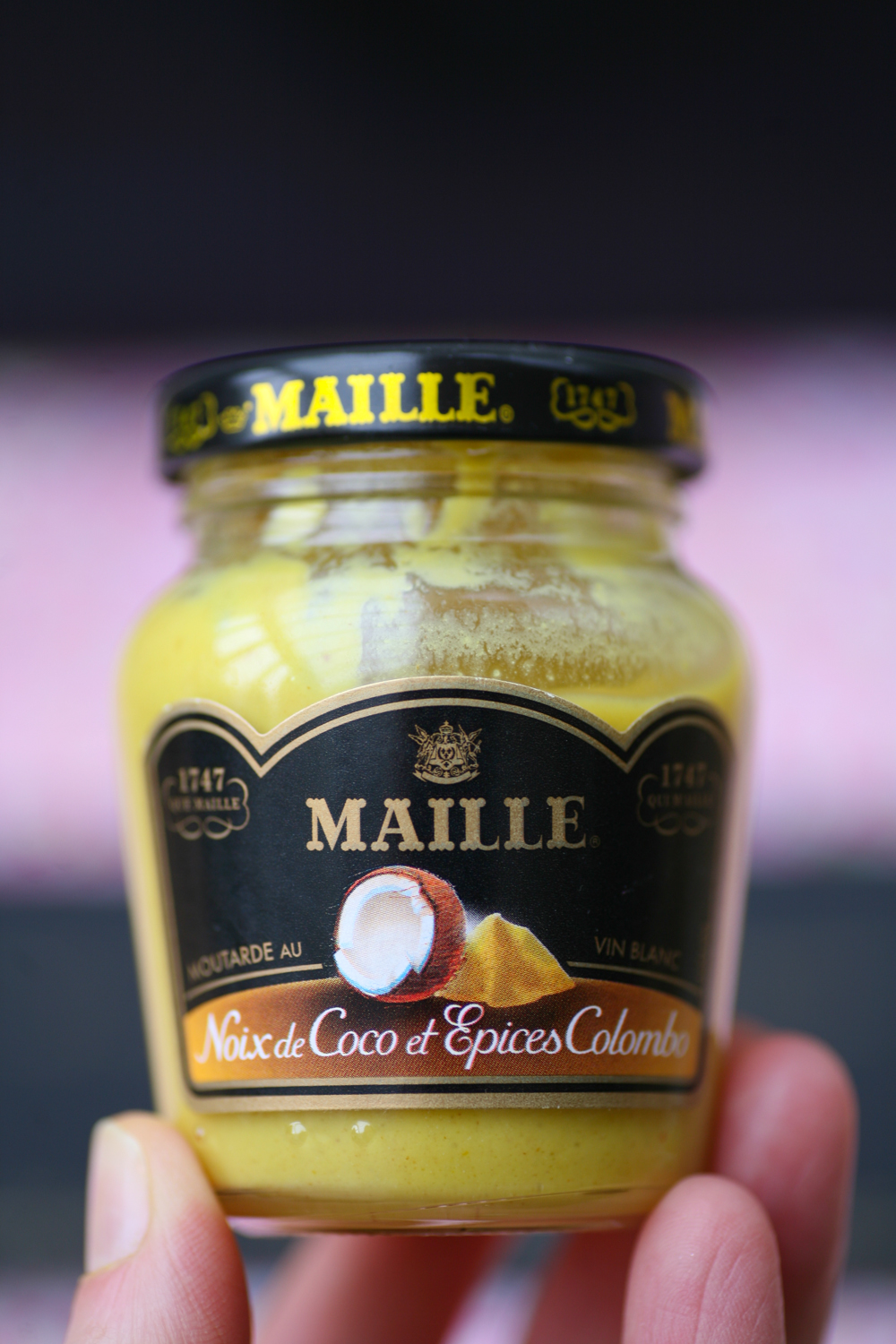
Using mustards, in fish curries in particular, is very common in Bengal where my husband originates from and so I thought that would be a good starting point when coming up with a recipe. I was immediately attracted to the mustard that had coconut and Colombo spices as I thought that they would work really well in a curry. Unlike some coconut curries, which are very creamy, this curry is far more delicate and light and perfect for spring time. I was also conscious not to suppress the wonderful flavours of the mustard, so chose a range of ingredients that I believe complement the mustard perfectly. I hope you agree. Do leave a comment below and let me know what you think. Let’s see what the judges say. Fingers crossed!

IMG_8877

Mustard, Coconut and Colombo Spices Salmon Curry

Serves 4

3 tbsp vegetable oil

1 tsp nigella seeds

2 green chillies, halved lengthways

10 fresh curry leaves (or dried if you cannot find fresh)

15g of fresh ginger, cut into wafer thin batons

2 spring onions, sliced at an angle

1 tsp ground turmeric

600g salmon fillets (5 pieces)

200ml boiling water

2 tsp Maille Noix de Coco et Spices Colombo

1 tsp salt

1/2 tsp caster sugar

1. Gently heat a wide deep pan or karahi with 3 tbsp of vegetable oil. When it is hot add the nigella seeds and move them around the pan and then immediately add the fresh chilli, curry leaves and turmeric. Stir together and then add the ginger and spring onions. Toss in the pan for a minute.

2. Add the salmon fillets – skin side down – and leave them to gently bronze for a further minute. Do not keep touching them as you do not want them to break up.

3. Mix the Maille Noix de Coco et Spices Colombo with 200ml of boiling water and stir thoroughly. Add to the pan so that the salmon fillets are virtually covered.

4. Add the salt and caster sugar and stir gently into the sauce. Spoon some of the liquid onto the salmon and then place a lid on the pan and leave to simmer for 10 minutes. Continue to spoon the liquid onto the salmon fillets a couple of times during the ten minutes. (Depending on the thickness of your salmon the fillets should be cooked by ten minutes. If, when gently cutting into the fillet, it looks a little pink leave for a further couple more minutes with the lid on the pan).

Serve with basmati rice.

******************************

If you are not going to be in London town anytime soon you can order from Maille online HERE if you are based in the UK or France. A few products are on the US site which you can find HERE with more to be added next year.

Thank you to Maille for kindly providing me with the mustard for this post and also the ‘sweet apricot and curry mustard’, which I hope to use in a new recipe soon. 


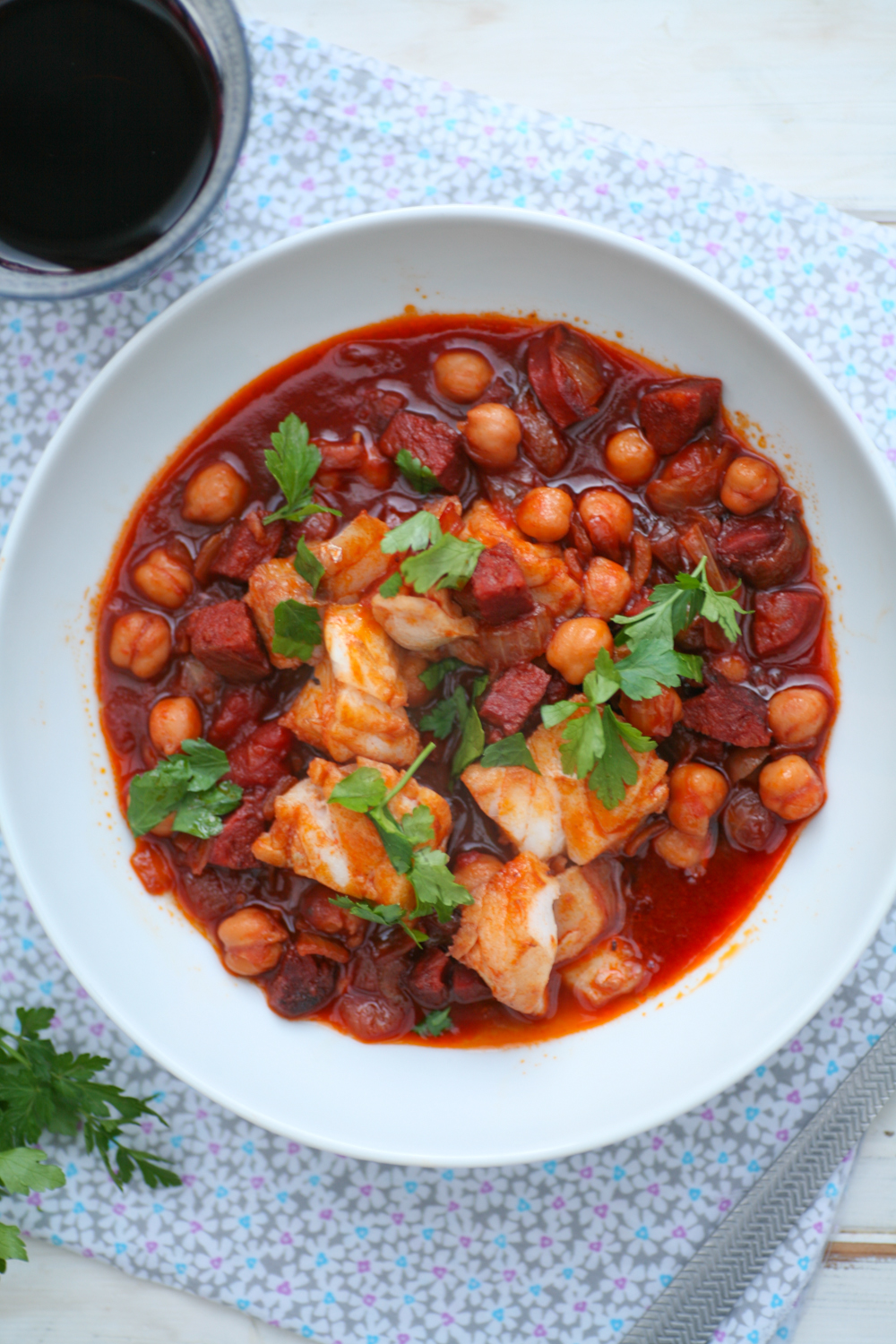
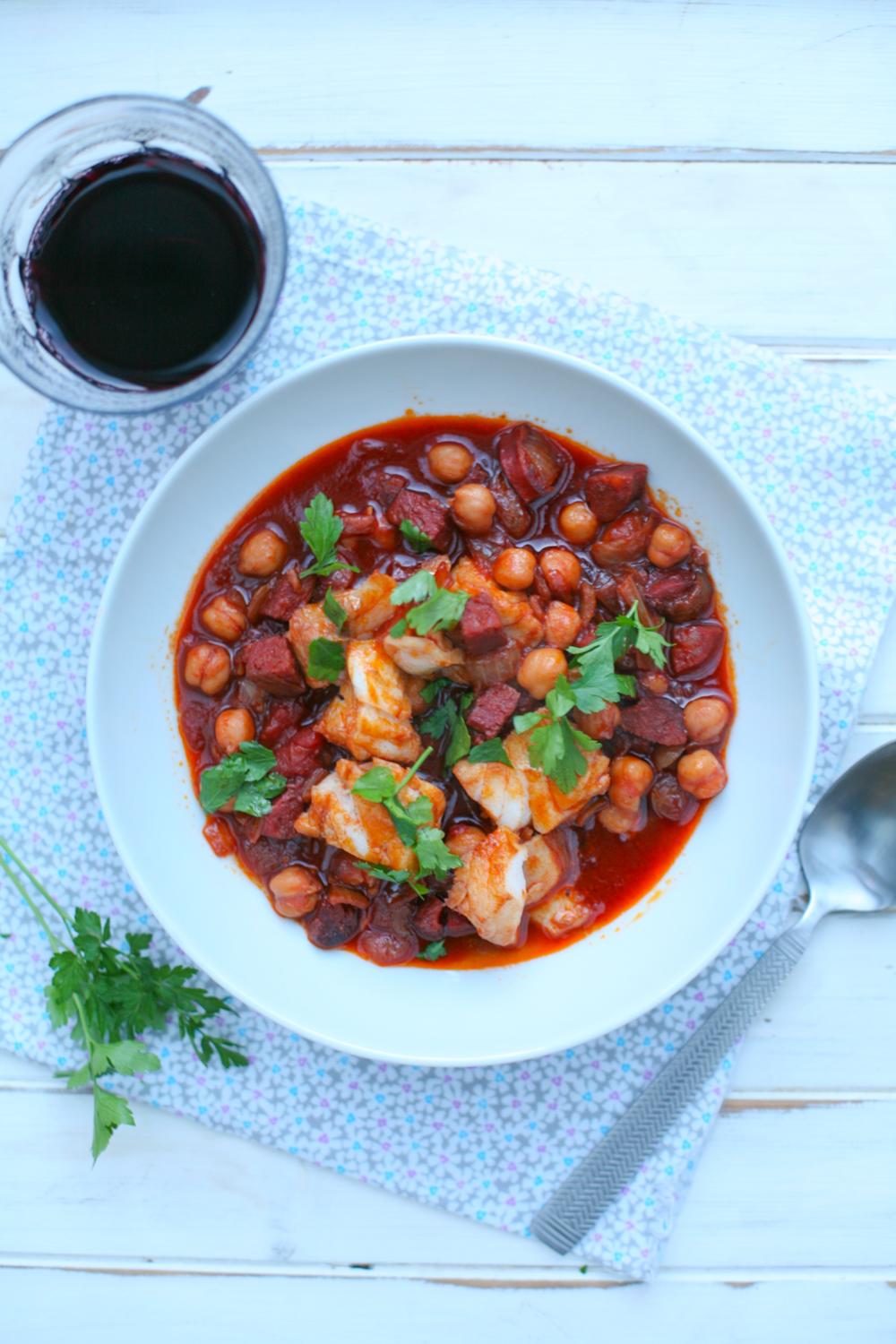
Chickpea, Chorizo and Cod Stew with Fresh Parsley

IMG_8582

My household are on a bit of a cod roll this week. There’s rather a lot of it in the freezer so we decided to cook cod a different way for three nights running – a little bit of a challenge and to prove that you can cook with the same key ingredient in different ways and make it taste completely different. Yesterday it was a Kerala fish curry with my toor dal and tonight we are having my three C stew; the three C’s being chickpea, chorizo and cod. It’s so darn delicious you’ll have to have especially strong willpower to stop yourself picking up your plate and licking every last drop of sauce. I find serving it with fresh crusty bread normally works a treat where mopping is concerned.

IMG_8577

Like most of the recipes on my blog it is very straight forward and if you don’t eat meat you can simply leave out the chorizo as you will still get the wonderful smokiness from the sweet paprika. The basic sauce can be cooked in advance and then the cod added five minutes before you are ready to eat, so it’s also perfect if you are cooking for a crowd and want to just enjoy the moment instead of slaving over a stove when they arrive. I also find that it works well as a very comforting and satisfying mid week meal. In fact it’s perfect to eat at any time, although I would probably pass if it were served at breakfast.

IMG_8589

Like a good old Victoria sponge cake there are many versions of cooking this dish, but here is mine. Let me know what you think. Oh and for those wondering what I will do tomorrow night, well I’ll probably do a tom yam broth with cod instead of prawns or maybe my Cha Ca La Vong – recipe here we’ll see which way the wind will blow in the morning.

Have a good weekend folks.

Chickpea, Chorizo and Cod Stew

Serves 4

3 tbsp olive oil

1 large white onion, chopped

4 garlic cloves, sliced

150g spicy Spanish chorizo, sliced or cubed

1 tsp sweet paprika

1 tsp rock salt

1/2 a 400g tin of plum tomatoes

1 tsp of tomato puree

100ml red wine

300ml boiling water

2 tsp agave nectar (or caster sugar)

400g tin of chickpeas, drained (240g after drained)

500g cod, skinned and cut into 2cm cubes

handful of fresh flat leaf parsley, roughly chopped

optional: bread for mopping up the juices

1. In a large pan heat the olive oil on a medium heat and when hot add the onion and fry gently for 5 minutes before adding the garlic and cooking for another 3 minutes so that the onion is soft and beginning to bronze.

2. Add the chopped chorizo and continue to fry for a further 3 minutes. Add the sweet paprika, rock salt and stir into the ingredients, which will have taken on a deep red colour.

3. Add the plum tomatoes, which you then need to cut up, red wine, tomato puree, boiling water, chickpeas and agave nectar. Let the sauce gently bubble away for 20 minutes. If it becomes too dry add a little more boiling water. Taste and see if you like the balance of sweet and salty, adjust if necessary.

4. Five minutes before eating add the cod and cover with the sauce. Do not stir too much as you do not want the cod to flake. If you can place a lid on the pan as it will allow the fish to cook through nicely.

5. Serve into bowl/plates with a scattering of fresh parsley on top and fresh bread to mop up the sauce.


Moroccan Giant Couscous Salad and a Mung Bean, Carrot and Feta Salad

IMG_8380

I had a few girlfriends over for lunch this week and thought it might be helpful to give you the low down on some of the things I prepared which allowed me to have a stress free time. Planning ahead is absolutely essential. There is nothing worse than having to fret over food last minute when all you really want to be doing is catching up with everyone. I tend to opt for large healthy salads and then prepare a hot soup of some sorts to warm the belly and soul.

IMG_8373

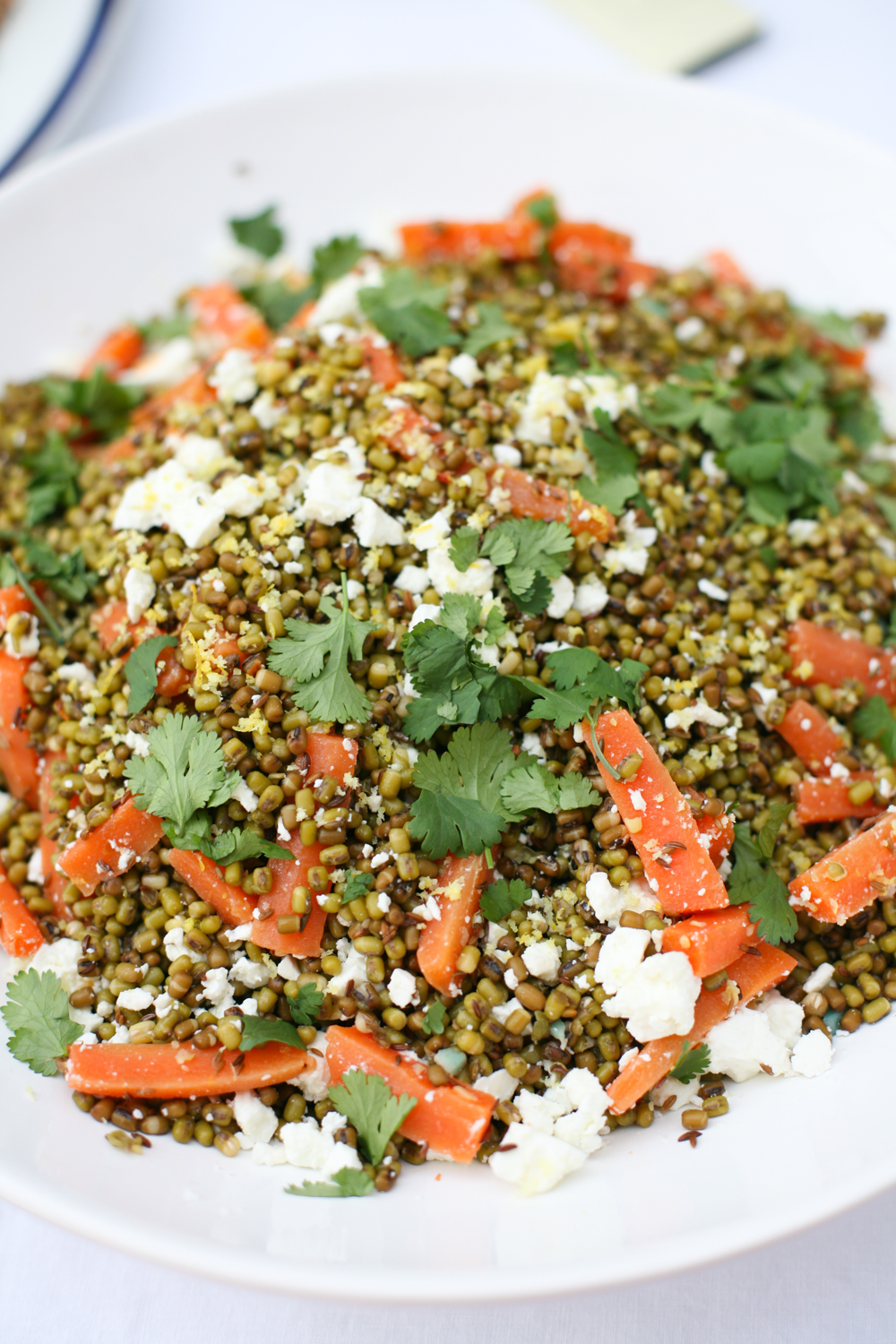
So first up was a mung bean, carrot and feta salad with cumin, caraway and fennel seeds. It requires some forward planning in that you need to soak the lentils overnight, but other than that it is very straightforward and ticks all the boxes for healthiness and importantly tastiness.

IMG_8388

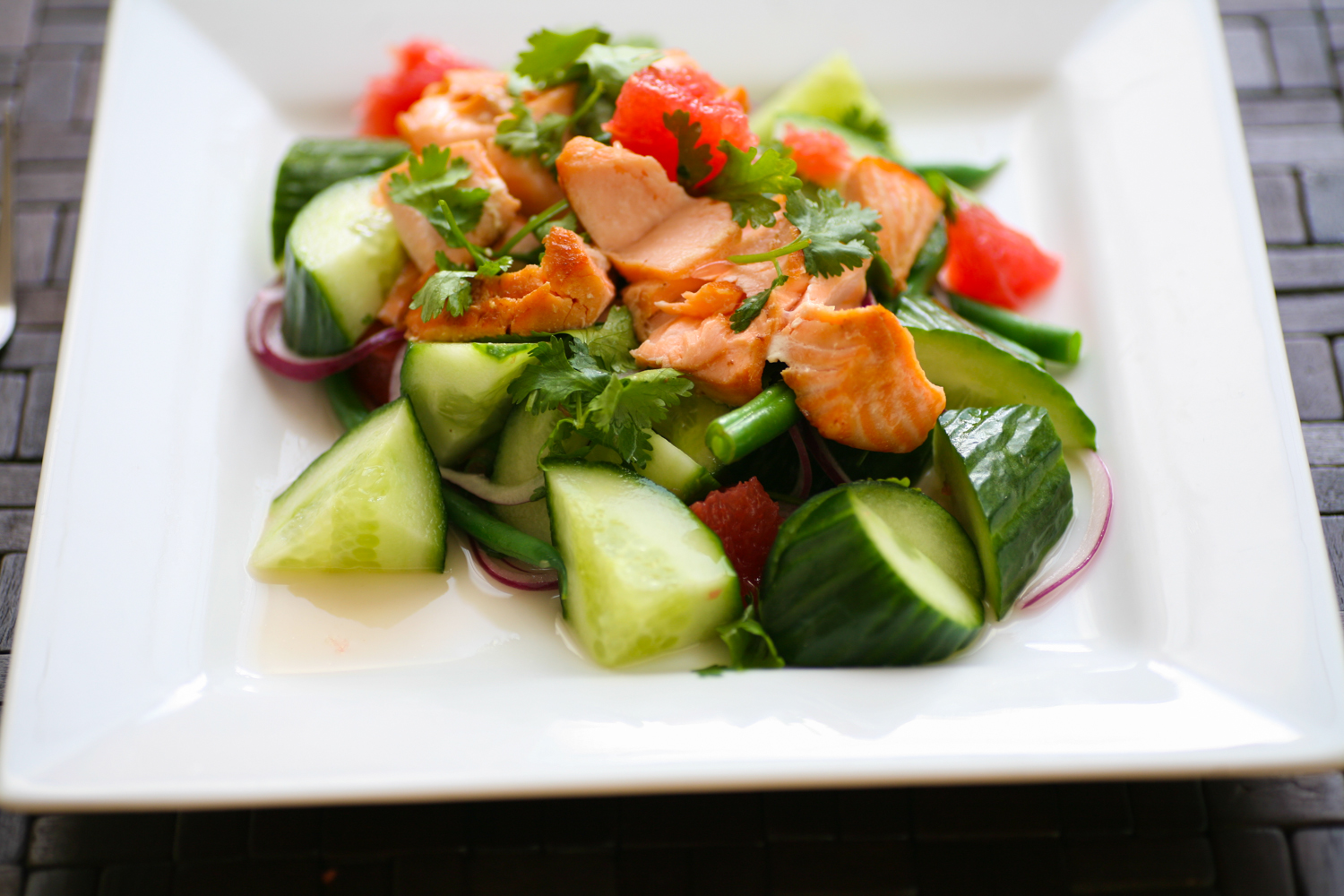
Then I prepared my Vietnamese inspired salmon, cucumber, red onion and grapefruit salad with a mirin lime dressing. I posted it on my blog about a year ago. Check out the recipe here.

IMG_8390

Then I made one of my absolute favourite salads – a miso soy chicken with spinach, lentils, slow baked tomatoes, green  (you can use puy, beluga whatever takes your fancy) lentils and pine nuts. Recipe here. I opted to make my own slow baked tomatoes – you can find a recipe for them at the bottom of the post if you click here. Very easy to prepare and taste so delicious.

IMG_8389

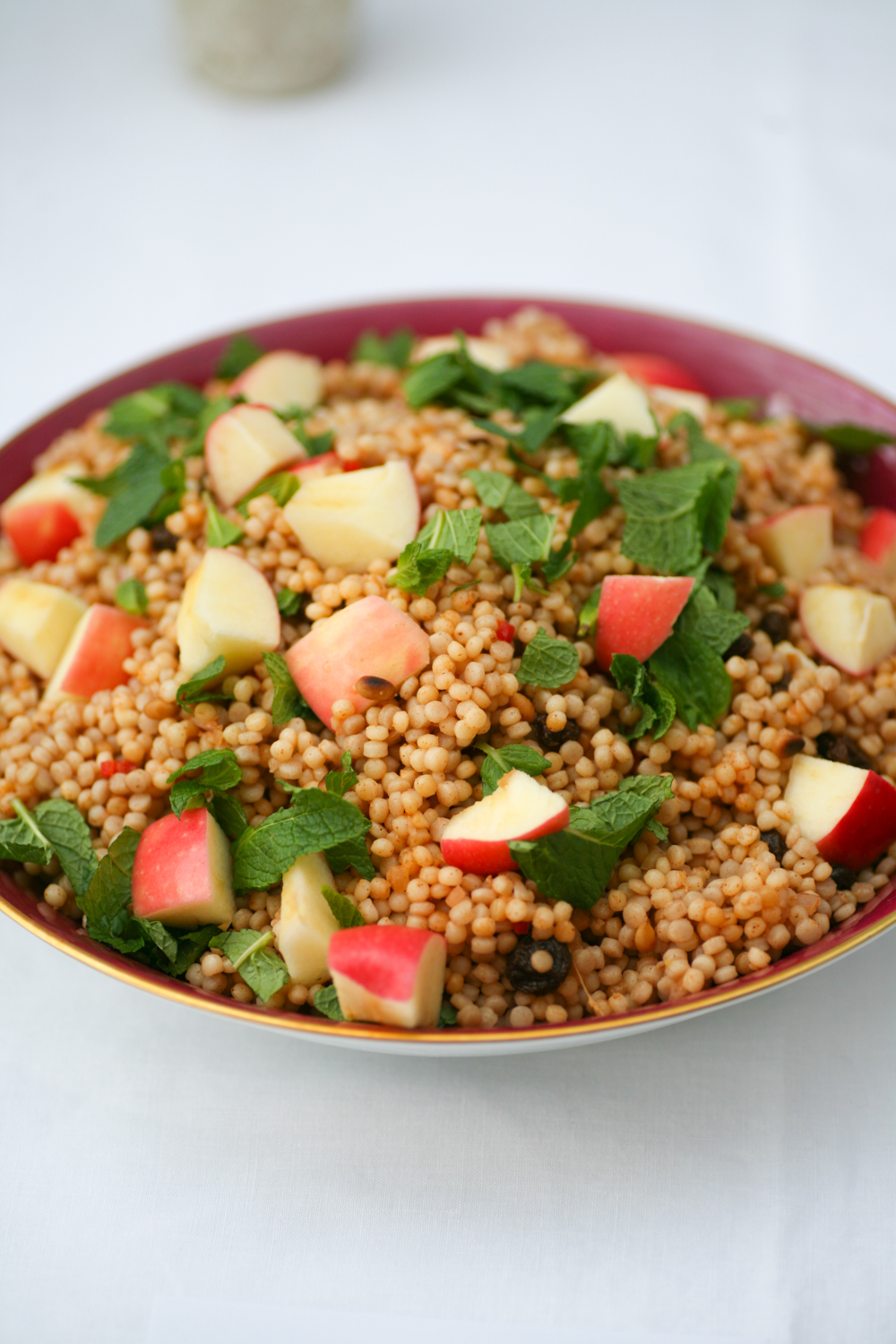
To balance out the flavours, palate and colours I then prepared a Moroccan influenced salad of giant couscous, Moroccan spices, sultanas, pine nuts, fresh mint and pink lady apples. Recipe below.

IMG_8387

Excuse the rather hazy shot of the final ‘salad’, but I opted for shredded duck with pomegranate, spring onions, mint and coriander with a raspberry vinegar dressing. I posted the recipe here on my blog a while ago.

The hot soup that I prepared I completely forgot to take a photo of – so I will do a separate blog post on that another time – but it was a red lentil (I am slightly obsessed by these delicious little beauties), coconut milk and smoked paprika with a chilli oil and fresh coriander sprinkled on top.

Needless to say I cooked far too much of everything so will be eating tasty leftovers for the next few days!

IMG_8386

I’ll leave you with a pretty flower shot. I am so pleased that finally some of the wonderfully colourful and sweet smelling flowers are beginning to grace our florists.

Until next week folks…..

Moroccan Giant Couscous Salad

Serves 4-6

Inspired by a similar recipe from Red Magazine online

300g giant couscous

1 tbsp butter

50g sultanas

1 tsp smoked paprika

1/2 tsp cinnamon powder

1/2 cumin powder

2 shallots, finely chopped

1 garlic, finely grated/chopped

2 tbsp toasted pine nuts

handful of fresh mint, chopped

zest of a lemon

1 red chilli, finely chopped (half if you prefer it less hot)

2 pink lady apples, diced and cored

1. Place the couscous in a pan and completely cover with boiling water. Simmer gently for 6-8 minutes so that the couscous is soft. Strain and run under the cold tap. Shake off the water as much as you can. Place to one side.

2. Using the same pan melt the butter and then add the sultanas so that they are completely coated in the melted butter.  Now add the ground cinnamon, cumin and smoked paprika and simmer for one minute and then place to one side.

3. Dice and core the apple (if serving at a later stage hold off on cutting up the apple until almost ready to serve as it will begin to bronze), deseed the chilli and finely chop. Finely chop the shallots and grate the ginger and garlic cloves.

4. In a mixing bowl add the couscous, the sultanas with all the spices and butter juice and mix together. Now add the shallots, ginger and garlic and continue to fold into the couscous.

5. Scatter the apple on top along with the mint and lemon zest and serve.

Leftovers can easily be stored in the fridge for a couple of days.

*******************

Mung Bean, Carrot and Feta Salad with Cumin, Caraway and Fennel Seeds

Adapted from Yotam Ottolenghi’s recipe in ‘The Guardian’

Serves 4-6

300g dried green mung beans

1 tbsp chilli oil (or olive if you prefer to have less of a kick)

1 tbsp olive oil

1 tsp cumin seeds

1 tsp fennel seeds

1 tsp caraway seeds

2 tbsp white wine vinegar

2 garlic cloves, peeled and finely chopped

1/2 tsp dried chilli flakes

3 good sized carrots cut in to batons

1 tsp salt

1/2 tsp sugar

150g feta, crumbled (not finely)

handful of freshly chopped coriander

1. Soak the dried mung beans overnight in water that completely covers them.

2. The following day, rinse them a couple of times in cold water and then place them in a pan and cover with boiling water. Simmer gently for 25-30 minutes to soften them but so they still retain a bit of a bite.

3. Drain and rinse through cold water and set to one side in a large bowl.

4. In a small pan add the chilli oil (or olive see above) and when hot add the seeds and allow them to start popping, which will take no longer than 30 seconds. Stir a couple of times and then transfer the seeds and oil into the large bowl with the drained mung beans.

5. Add the white wine vinegar, garlic, chilli flakes and stir in together.

6. In a separate large shallow pan lay the carrot batons and almost cover with cold water. Add one further spoonful of olive oil along with the sugar and salt. Simmer on a high heat for 7 minutes by which time the carrots will have soften and the water will have drastically reduced – drain any excess. The sugar will allow the carrots to slightly caramelise.

7. Add the carrots to the mung beans and stir in gently. Add more salt if necessary. Transfer to a serving platter and crumble with feta.

Again this stores well in the fridge for a couple of days.

IMG_8394


Cha Ca La Vong – Vietnamese Fish with Turmeric, Ginger and Dill

IMG_7485

The melodic sounding ‘Cha Ca La Vong’ is one of Hanoi’s famous dishes consisting of white fish (often Vietnamese Snakehead fish) along with fresh turmeric, galangal, ginger, the pungent smelling Vietnamese shrimp paste, spring onions, rice noodles and a generous helping of fresh dill, coriander and mint and a scattering of peanuts.

My version is all of the above except no galangal (unless I happen to chance upon it), turmeric powder instead of fresh turmeric and no Vietnamese shrimp paste. I also find cod or tilapia work best for me, but basically you can use any thick white fish that has been filleted and does not have a propensity to fall apart.

IMG_7466

The flavour combinations work so well and I find it refreshing to give dill centre stage once in a while as I tend to find that it only ever gets partnered with salmon, trout and creme fraiche. The textures also really compliment each other, from the soft and yet delicately fried fish, to the crunchy nuts, the fresh flavoursome herbs and the filling noodles.  I like to accompany the dish with my sweet and sour nuoc cham dipping sauce – see here (at the bottom of the post).

IMG_7439

It’s one of those dishes which is perfect for guests to get stuck in and help themselves.  Part of the fun of it is to create the dish yourself, choosing the amounts of herbs that suit your requirements. I also find that when guests help themselves there is far less wastage as people, on the whole, tend to take what they are going to eat.  Both my daughters adore the dish and for my youngest I tend to make up a separate nuoc cham dipping sauce without fresh chilli.

*****************

Cha Ca La Vong – Vietnamese Fish with Turmeric, Ginger and Dill

Serves 4

600g cod or tilapia, cut into 2 inch chunks

1 tbsp fresh ginger, finely grated (equally you could use ginger paste)

2 garlic cloves, finely chopped (or as above)

1 tbsp fish sauce

1 tsp turmeric powder

1 tsp sugar

1 tbsp plain flour

3/4 tbsp of vegetable oil

6 spring onions, thinly cut on the diagonal

bunch of fresh dill

bunch of fresh coriander

bunch of fresh mint

1 generous handful of unsalted peanuts, slightly crushed

300g rice noodles

1. Place the fish chunks, turmeric, ginger, garlic, flour, sugar and fish sauce in a bowl and gently mix in together so that the fish is completely coated in the turmeric. Cover and leave to marinade in the fridge for a few hours or overnight.

2. Cook the rice noodles according to the packet (normally I boil them for 4 mins) and drain. Run cold water through them and place to one side. When ready to serve pour boiling water through it once, drain and place in a serving bowl.

4. In a different bowl place the fresh coriander and mint and in another place the peanuts.

5. Prepare the nuoc cham dipping sauce. For four people you will need to make two batches of this – see here.

6. In a frying pan add the oil and when it is hot add the fish in batches along with any remaining ginger and garlic from the marinade. Leave for a 2-3 minutes so they begin to crisp before turning over for another couple of minutes. Place the fish on kitchen roll whilst you are cooking the remaining fish chunks.

7. Once the fish has crisped up sufficiently add the dill and the spring onions for up to a minute before placing in a large serving bowl.

8. Allow guests to serve themselves, showing them how to layer up the dish by first placing the noodles in a bowl, followed by the fish, spring onions and dill, mint and coriander, peanuts and then a little nuoc cham dipping sauce over the top.


Bengali Mustard Fish Curry

This post has been a loooooong time coming. Last week was totally full on with both my daughters now in school. There was a catch however, that being that Little Z was to be weaned on gradually with half days over the course of the week and a half, which mean’t that much of my existence was spent ferrying children in a car back and forth to school – six times per day for me to be precise, therefore allowing very little time to actually get on with anything productive.

At the weekend I threw myself into organsing an a friend’s baby shower so was baking and making in preparation for the event. The spread included: a Victoria sponge cake, flapjacks, egg mayo, smoked salmon with horseradish, cream cheese and cucumber finger sandwiches, rainbow coloured fruit sticks (got to keep it healthy!), a carrot cake and a few other sugary treats accompanied by big cups of tea and coffee, oh and not forgetting peach bellinis upon arrival.

IMG_7126

It’s now Tuesday and calm has reigned once more in my life as Little Z stays at school for her first full day. This now gives me the necessary breathing space to get this blog post out to you all.

•••••••••••••••

IMG_7166

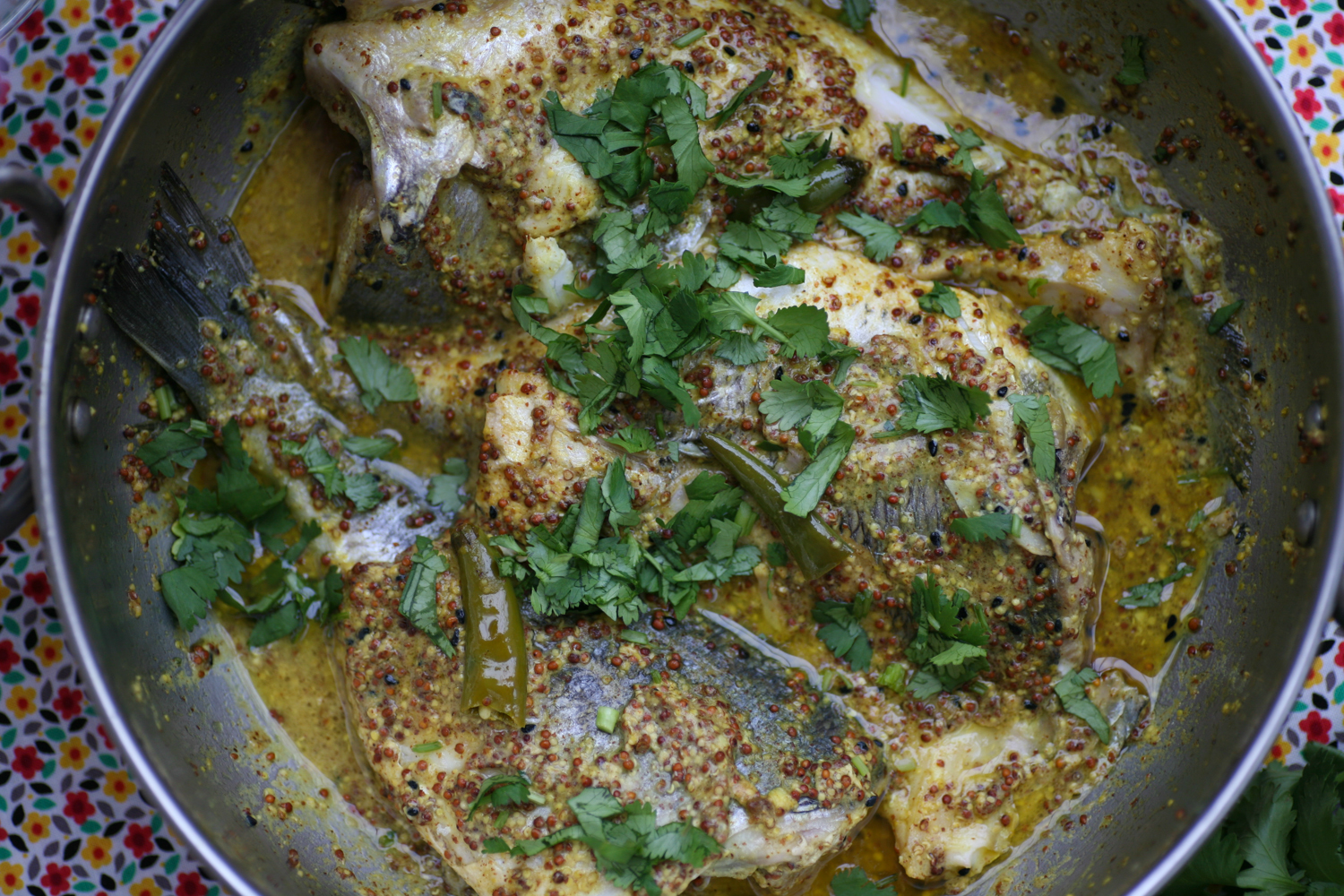
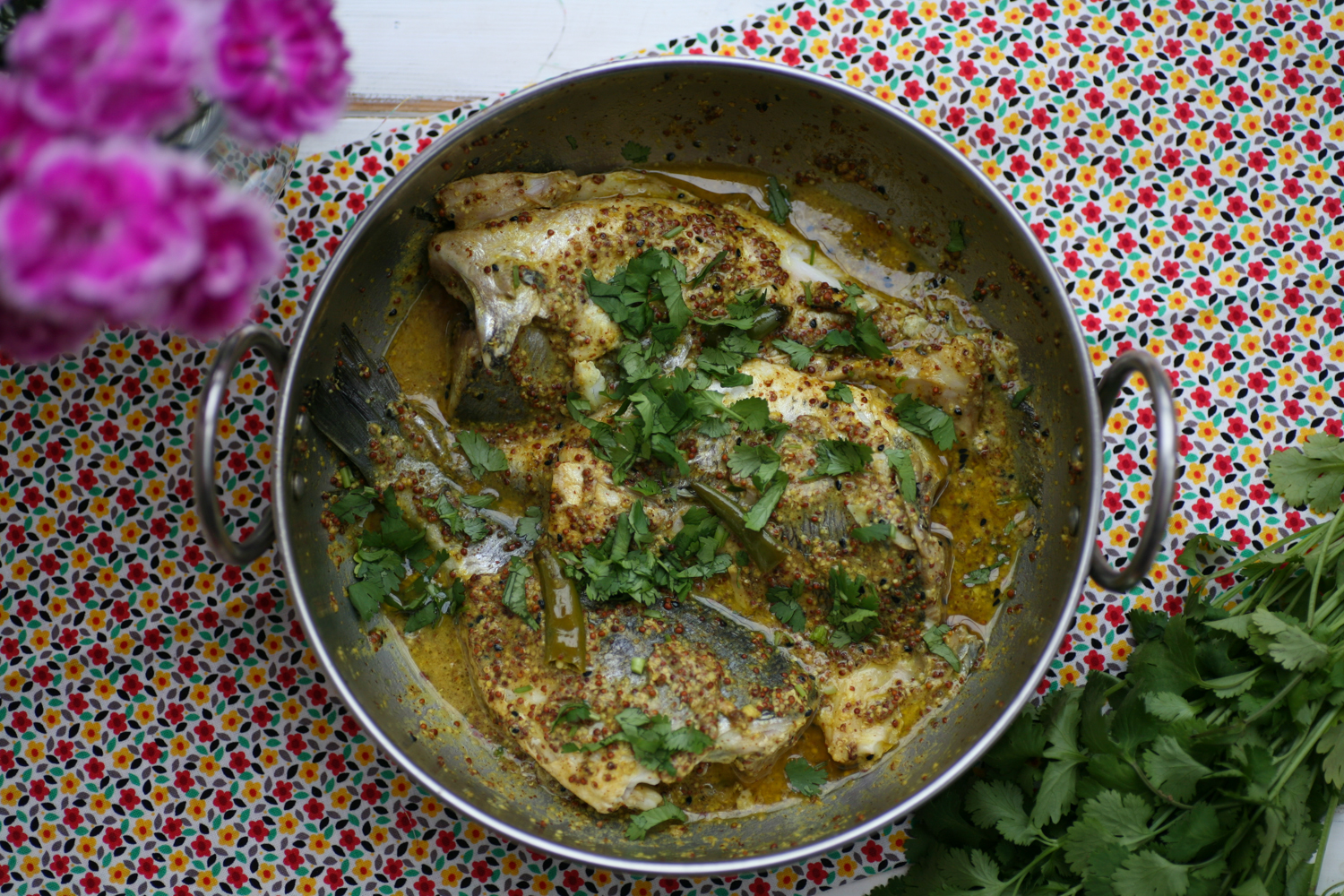
Mustard fish curry – Maach (fish) Jhol (gravy/curry), is probably THE most popular fish dish in Bengal. The Bengali diet includes a lot of fish and mustard oil/seeds/paste is as ubiquitous in Bengali cuisine as pepper is in the west. Traditionally the mustard paste for the curry is made by grinding brown mustard seeds on a ‘sheel nora’ or grinding stone that can be found in traditional Bengali kitchens. I learn’t this recipe however from my husband, Mr B, and my mother in-law who have converted to the quicker version of mixing some smooth Dijon mustard with some wholegrain mustard, which works superbly. Cheating? Well not really, just speeding up the process, which is always a bonus in our otherwise hectic lives.

This time I used sea bream, mainly because it is what I had in my freezer, but mackerel, tilapia, salmon or trout work equally well. Served with a bowl of rice it is perfect for a speedy week(end) night supper.

IMG_7226

Some recipes require that you rub turmeric and salt into the fish first and then deep frying them for a 2/3 minutes and then in a separate pan adding the mustard oil, nigella seeds and mustard paste followed by the fried fish. I have always tended to omit the first part, keeping the dish healthier, but by all means try both versions and see which you prefer. Similarly I often cook the dish with the fish whole, but head removed. However, you can also chop the fish into smaller pieces but do not fillet it as it will not work so well.

Bengali Mustard Fish Curry 

Serves 3 (if serving for 4 add one more fish and an extra chilli or two!)

3 sea bream/mackerel/tilapia/salmon/trout, head removed but kept whole

3 tbsp mustard oil

1 tsp nigella seeds

1/2 tsp chilli powder

1/2 tsp turmeric

3 green chillies, halved (more if you prefer it hot hot)

1 heaped tsp Dijon mustard

3 tbsp wholegrain mustard

pinch of salt

8 tbsp water

1. In a pan/wok/kadai heat up the mustard oil. When it is hot carefully add the nigella seeds, chilli powder and turmeric. Stir for a few seconds before adding both mustards. Stir well.

2. Add the chilli and then place in the fish using a spoon to cover the fish in the mustard juices. Add a pinch of salt and some water and place a lid on the pan so that the fish can steam. Keep the heat low so as not the burn the bottom of the pan. If it is drying out add a little more water or oil if need be. Spoon the juices over the fish from time to time.

3. The fish will be cooked within 10 minutes. Leave to rest. Scatter with chopped coriander before serving. To reheat, simply add a sprinkling of water and warm the pan.

Serve with rice.

IMG_7224


Vietnamese inspired Salmon, Cucumber, Red Onion and Grapefruit Salad

IMG_6208

Up in my old neck of the woods there is a fantastic restaurant that I love to visit whilst catching up with friends. It goes by the name of Granger & Co, owned by the Australian chef Bill Granger. Bizarrely I have never purchased or been given any of Bill’s cookbook (sorry Bill – take note friends and family ;o) but if any of the dishes at his restaurant are to go by I really ought to get my hands on some copies. The restaurant is always heaving and it’s important to note that they don’t take reservations, so it is always best to go with plenty of time in hand as there may be a wait – max I have ever waited was 20 mins.

IMG_6200

The other day my lunch companion and I were seated to a table immediately – we were in luck – and then cast our eyes over the menu, which quite frankly has all the types of dishes that I would like to eat in a restaurant. Delicate, fresh, exotic, great flavour combinations and healthy, the menu appeals to anyone with a love of food and flavours.  I actually found it hard to make a decision as there were so many things that appealed. I opted for a Vietnamese inspired salmon salad – mainly for two reasons: firstly I have a bit of a ‘thing’ going on for Vietnamese cuisine at the moment which you’ve probably noticed and secondly I was curious to see how the dished compared to those I actually ate in Vietnam recently. It was also light and healthy, which was a bonus!

IMG_6216

It is no exaggeration but every mouthful was an utter delight. Making a mental note of what I was eating I was determind to replicate a similar dish at home and share it with you. I don’t know exactly what Bill used in the dressing but I have made my own twist on the dish. I have cooked it many times since and the response has been really positive. Aside from the red grapefruit, even my seven year old  really loves the dish. As alternative you could always replace the red grapefruit with fresh mango.

Vietnamese inspired Salmon, Cucumber, Red Onion and Grapefruit Salad

Serves 4

4 salmon fillets

2 tbsp light soy sauce

2 tbsp runny honey

1 tbsp sesame oil

*****

2 cucumber, sliced at diagonal angles (see photos)

1 red onion, finely sliced

1 red grapefruit, chopped into bite sized pieces

200g trimmed fine green beans

1 large handful of fresh coriander

*****

2 tbsp mirin

2 tbsp fish sauce

1 tbsp rice vinegar

2 tbsp caster sugar

2 limes, juice only

1. In a bowl place the salmon fillets and add the soy sauce and runny honey and using your hands coat the salmon pieces and leave to marinade in the fridge for 30 minutes.

2. Preheat your oven to 170 degrees.

3. In a frying pan heat the sesame oil and when hot add the salmon skin side down to begin with. Literally allow to bronze slightly for a minute and then turn over gently and leave for another minute. You want to have it so the outside is delicated bronzed but not cooked all the way through. It can begin to turn a lighter pink but you want the remainder of the cooking to take place in an oven gently.

4. Spread out a large piece of  tin foil and place the salmon pieces in the centre, making sure not to break them up. Add the remaining marinade from the bowl over the salmon.  Now you need to create a Papillote effect. It’s very straightforward – all you need to do is create a salmon parcel making sure all the foil edges are closed up so that no air can escape and there is some space above the salmon so don’t enclose it too tightly.

5. Place the salmon parcel in the preheated oven for 15 minutes, by which stage it will have be cooked through and ready to crumble gently on the salad.

6. Whilst the salmon is cooking steam the green beans for a minute or two. You want to make sure they continue to have a good crunch but that the bite is taken off a little with the steaming. Equally you could boil them for a minute and then drain under cold water.

7. Add the green beens to the cucumber, red onion, red grapefruit, fresh coriander and place a good helping on eat plate.

9. Add the mirin, fish sauce, rice wine vinegar, caster sugar and lime juice to create the marinade. Taste to check you have the right balance for you.

8. When the salmon is ready remove from the oven. Gently remove the skin, which will come away easily and place a salmon fillet on the top of each salad, allowing it to crumble slightly. Pour a little of the marinade over the fish and salad and serve immediately. Place the remaining marinade in a small jug for guests to add more should they wish.