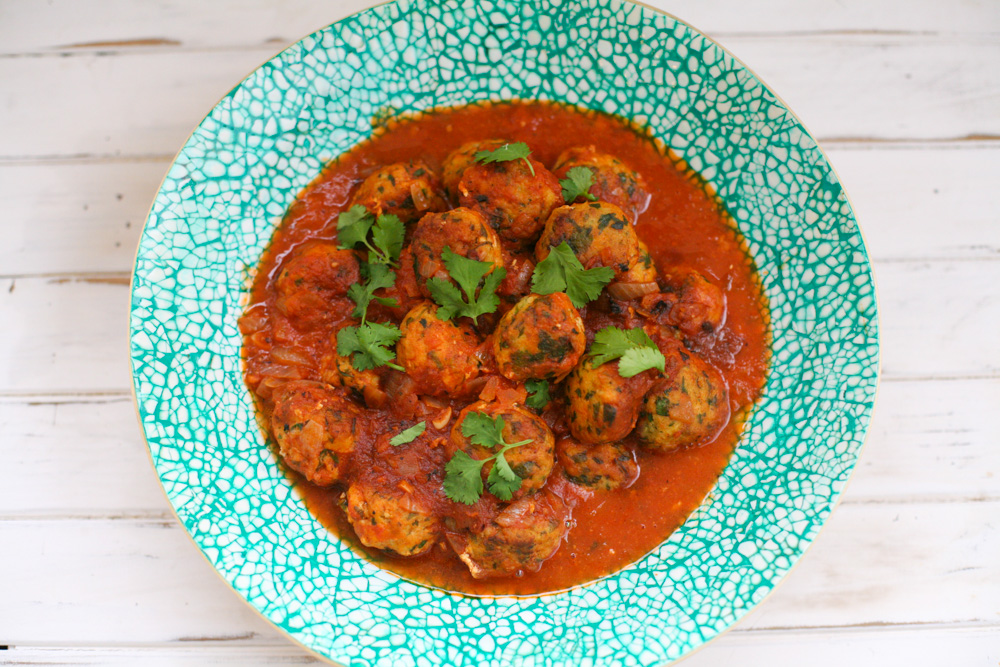
Fish Balls in a Sweet Smoked Paprika and Tomato Sauce

IMG_5401

After spending the whole of the Easter holidays in Asia, both Hong Kong and Vietnam, it is great to finally come home to London;  as the saying goes: ‘absence makes the heart grow fonder’. Whilst I loved ever minute of our travels from exploring new environs, cultural sites, the beach (of course) and experiencing the amazing cuisine that both countries have to offer, there is something wonderfully homely and satisfying about preparing your own meals and sourcing your own ingredients. Mark Bittman from ‘The New York Times’ has written a fascinating article on why home cooked food is the way to go. Check it out here.  Crazy as this may sound, I kind of missed not getting stuck into some serious cooking, that said I was very lucky to get a place at ‘The Green Bamboo Cooking School’ in Hoi An, which gave me a wealth of new exciting Vietnamese recipes to cook and share with you all.

Hong Kong is pork crazy and whilst I love my pork, I decided that fish and vegetarian meals were going to be on the menu, certainly for the first week or two once I returned. The very first meal I cooked when I got back were these lovely fish balls, which are so easy to put together. Big A loved getting involved and helping me to prepare them. I made a large batch and then had the leftovers for lunch the following day.

Serve with couscous, rice or pasta and you have yourself a simple and deliciously healthy meal. I did not put any fresh chilli in either the sauce or fish balls, but you could easily pop in a finely chopped one if you are in need of that extra spicy kick!

IMG_5433

Fish Balls in a Sweet Smoked Paprika and Tomato Sauce

adapted from Yotam Ottolenghi and Sami Tamimi’s recipe ‘Cod Cakes in Tomato Sauce’ in their book Jerusalem.

Serves 4

sauce

glug of olive oil

2 small/medium sized white onions, finely chopped

1/2 (half) tsp of sweet smoked paprika – I use and totally rate this one

1 heaped tsp cumin powder

1 tsp salt

125ml white wine

1 tin of chopped tomatoes, blended

1 tsp caster sugar

4 garlic cloves, finely chopped

150ml water

fish balls

600g cod (or any white fish that has been sustainably caught), boned and skin removed

100g white breadcrumbs

2 tsp ground cumin

1 tsp salt

2 eggs

1 large handful of flat leaf parsley

1 large handful of fresh coriander

1. First you need to start making the sauce. Place a glug (a little) olive oil into a large frying pan and when it is hot add the onions. Stir and turn the heat down slightly to make sure that they do not burn. As they begin to soften after a few minutes add the sweet paprika, cumin powder and salt and then after a couple more minutes add the garlic and stir together. Leave to cook steadily for a few minutes.

2. Next add the white wine and stir into the spiced onions and let simmer for a couple of minutes before adding the blended tinned tomatoes (it is not essential to blend, but I like having the sauce slightly smoother for this recipe) and caster sugar. Stir together and simmer gently for 20 minutes on a low heat so that the flavours can mature and work together.

3. Meanwhile in a large mixing bowl use your hands to blend all the fish ball ingredients together and then roll in the palm of your hands small, bite sized, round fish balls. I made around 30 with these proportions.

4. In a large frying pan heat a glug of olive oil. When it is hot gently place the fish balls in the pan so that they are lightly bronze. I suggest doing this in stages as it takes no more than a few minutes cooking time – remember to turn them over so that they are bronzed all over.

5. After you have bronzed your first batch place them gently in the sweet smoked paprika and tomato sauce and continue to add the rest of the fish balls until they are all sitting in the sauce. Add a little water – around 150ml, or a little more if needed, so that the fish balls are just covered and then let simmer on a low heat for a further 15 minutes. Add more seasoning if necessary.

6. Serve hot with couscous, rice or pasta.

Good old comfort food. Enjoy. It’s good to be home.
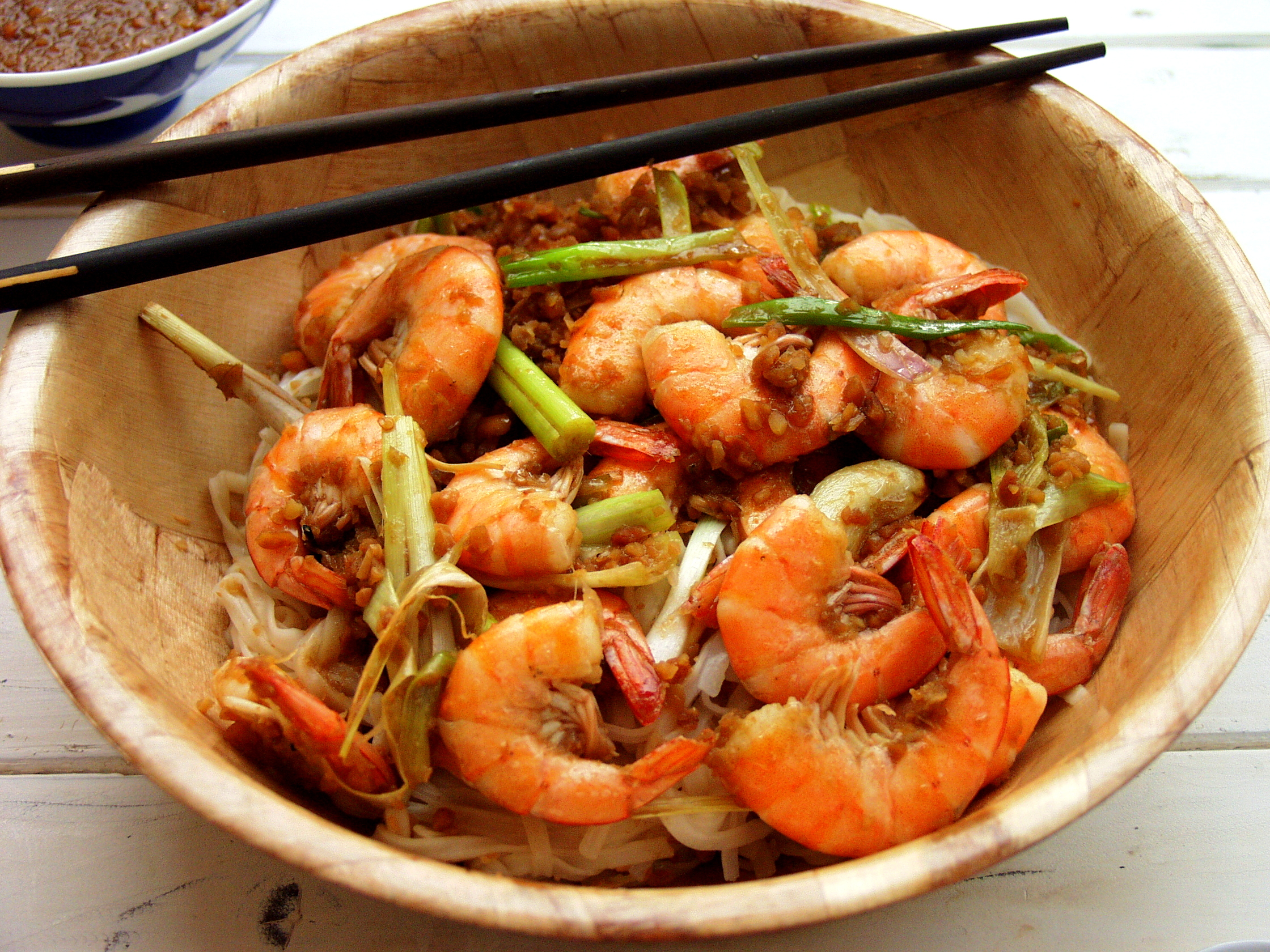

Macha Soul tea with Janice Leung and Satay Prawns with Garlic, Lemongrass and Spring Onions

OLYMPUS DIGITAL CAMERA
This blog post has been a long time coming and for that I apologise to you all. I initially wrote the post on the plane coming back from Hong Kong and was rather chuffed with myself as I had, for once, hours to compose and fine tune it.  I was really satisfied with the end result, but then tragedy stuck as I accidently deleted it upon my return owing to the fact that I wasn’t very familiar with my new computer. So this post is very much an abridged version of the original, which in hindsight was probably far too long and rambling anyway.

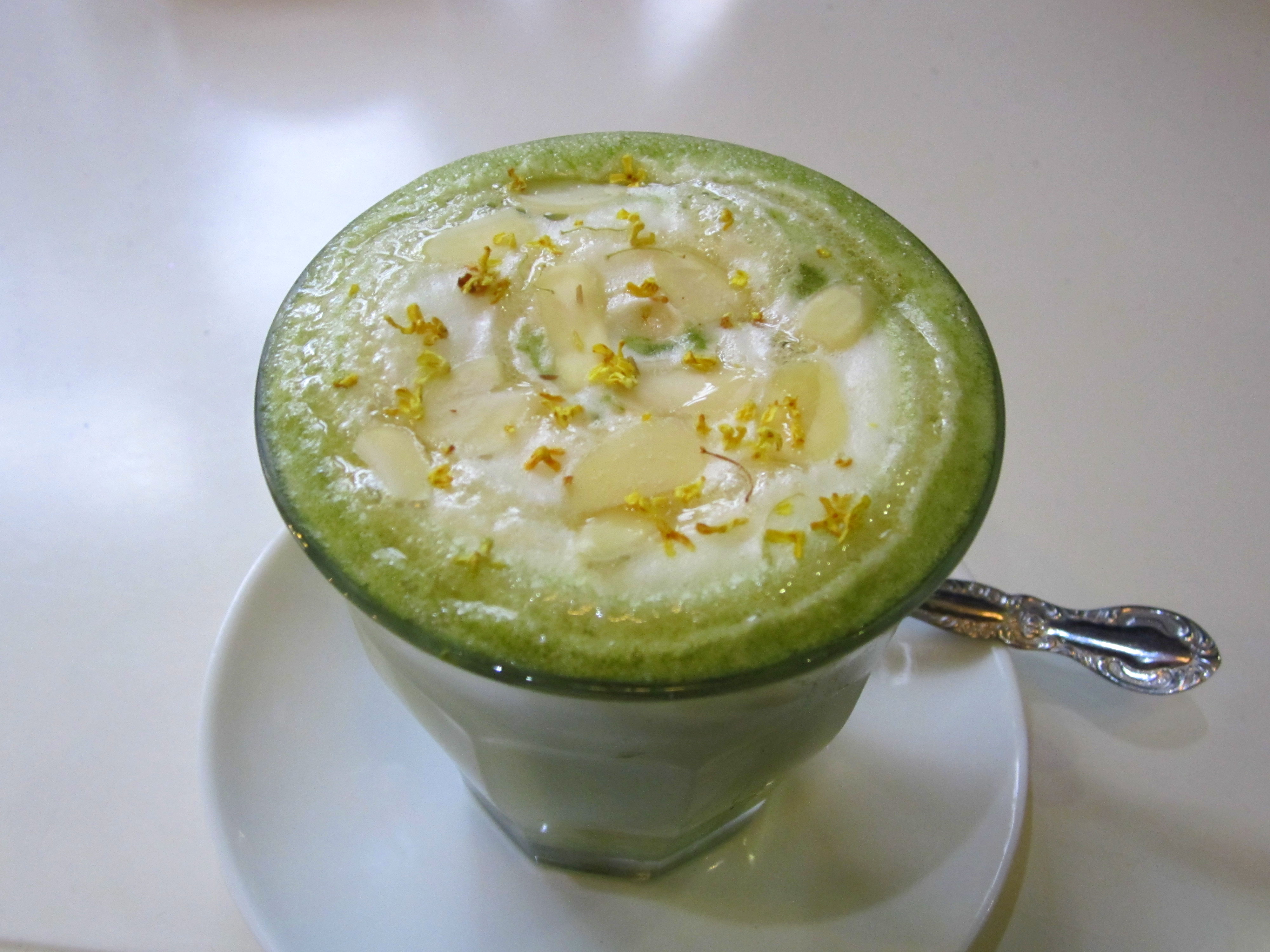
During my recent visit to Hong Kong I was fortunate enough to meet up with one of Hong Kong’s most dynamic food bloggers, Janice Leung, over a delicious cup of creamy ‘matcha soul’ tea, at a charming little tea house called Sinmei in Sheung Wan. Like many of Hong Kong’s gem eateries and cafes it was hidden on the 5th floor of a commercial building away from the hustle and bustle at street level. It was an oasis of calm and serenity with its mix of vintage Chinese and European furniture giving it a somewhat boho shabby chic vibe.

IMG_7166

Matcha soul tea at Sinmei
Prior to setting up her blog: e-ting food, Janice worked as Assistant Editor at Luxe City Guides, so knows her way around Hong Kong (and a number of other cities in fact) better than most. Most recently however Janice, along with her business partner Vincent Poon, have set up Island East Markets which is Hong Kong’s answer to an organic farmers market.
Janice’s motivation for setting up such an enterprise was down to the fact that she found it increasingly difficult to source good organic produce in Hong Kong; the nearest place for her was in Tao Po, over an hours journey from her house, or the  few stalls on Central Pier 7. Typically the fresh fruit and vegetables you see being sold in the various street markets in Hong Kong comes from mainland China where little or no knowledge is known about where or how it was grown and whether pesticides or fertilizers were used.
IMG_6960
A typical Hong Kong fresh vegetable stall
There was definitely a gap in the market to launch such an enterprise and having spent time traveling the globe as well as living and studying in Melbourne Australia, Janice had seen the positive effect that having a local farmers market had on the community and the farmers alike. She was keen to create an environment where people would want to spend time getting to know the vendors, trying the different foods on offer and a place that families could wile away a few pleasant hours on a Sunday.  As well as edibles and fresh produce, there is handcrafted goods made by local artisans, face painting for the kids and talented local bands. I also particularly like the idea that she has organised for local chefs to come and do food demonstrations using the local food on offer at the market to create delicious dishes that people can replicate at home.
There were a couple of key factors, however, that were paramount to the markets success; firstly she needed the support from the local organic farmers in Hong Kong – namely in the New Territories and secondly she needed a site. For the former she was directed to a body of around 70 farmers who were members of the Organic Farmers Association in Hong Kong, which is similar to the Soil Association in the UK. Using this list as a starting point she introduced the idea to the farmers who responded positively. The second factor could have proved tricky had the Real Estate company Swire Properties not offered them a site in Quarry Bay every Sunday. It was an incredible stroke of good luck that allowed the market to breath life. On Sunday’s the road is closed off to traffic and stalls are set up and a relaxed vibe is allowed to resonate.
So far the market has received a positive reception by vendors and customers alike and although it was closed over the Christmas period it opens up again from Sunday 27th January so if you are living or visiting Hong Kong in the future make sure you take some time out on a Sunday to visit Island East Markets on Tong Chong Street and see for yourself Hong Kong’s answer to an Organic Farmers Market, I know for sure that I will be paying it a visit upon my return in April, in fact I can’t wait!
——————————————————
OLYMPUS DIGITAL CAMERA
The recipe for you today was inspired by a visit to a restaurant called ‘The Chairman’ on Kau U Fong in Central. Similar to Janice’s way of thinking the restaurant is also pro ‘local’ and sourcing premium produce from the New Territories, as well as placing emphasis on home-made as opposed to ready-made. Additives and MSG have no place in their kitchen and whilst the menu may not have as widest selection of dishes compared to some restaurants, the dishes that are on offer hit the mark.
The dish below was inspired by one such dish that I sampled in the restaurant. I hope that I’ve done credit to the original.  After a few false starts on the home-made satay sauce, I think I have found one that hit’s the high note. I hope you ‘ll agree.
OLYMPUS DIGITAL CAMERA
Satay Prawns with Garlic, Lemongrass and Spring Onions with Rice Noodles
Inspired by a similar claypot dish at The Chairman Restaurant in Hong Kong
Serves 4-6 (depending if you are serving other dishes as well)
320g fresh King Prawns (heads removed, shell on or just tails on – up to you)
2 tbsp of ground nut oil
7 garlic cloves, peeled (I like my garlic)
3 spring onions, chopped into 2 inch pieces
2 lemongrass, chopped into 2 inch pieces and halved (white part only)
250g rice flat noodles
Peanut Satay
250g dry roasted peanuts, unsalted
1 tbsp Kecap Manis (sweet soy sauce)
1 and a half tbsp palm sugar (or regular if you don’t have this)
1 tbsp of tamarind concentrate (or pulp soaked in 25ml of warm water – you’ll need to squeeze it through a sieve if you do it this way)
pinch of salt
50 ml ground nut oil
200 ml water
for the spice paste you will need:
4 small dried red chillies, deseeded (or more if you want more of a kick)
3 shallots
2 lemongrass (remove the green part)
3 garlic cloves
1 inch fresh galangal (or ginger if you cannot source it)
1. First make the peanut satay sauce. Coarsely grind the peanuts in a blender or food processor (or pestle and mortar) and remove and place to one side.
2. Next place the spice paste ingredients in the food processor and whizz until they are form a smooth as possible paste.
3. If you are using tamarind pulp soak in warm water for 10 minutes and then press through a sieve.
4. Place the oil in a pan and add the spice paste ingredients and let simmer gently for a couple of minutes before adding the crushed peanuts and stirring together.
5. Add half the water, tamarind concentrate (or pulp), kecap manis, palm sugar, salt. Stir in throughly.
6. Place the remaining water, and add even more if necessary, and let similar for a few minutes. Taste test to see if the salt/sugar elements have the right balance. Let cool and place to one side.
————————————————
7. Heat a pan with groundnut oil and when the oil begins to bubble add the garlic and lemongrass and let it gently sizzle for a couple of minutes, stirring occasionally.
8. Add two tablespoons of homemade satay sauce to the pan and stir into the garlic and lemongrass.
9. Place the prawns into the pan and cover throughly with the peanut satay. Add another one or two tablespoons as required. After a couple of minutes add the spring onions and after a minute take off the heat.
10. In a separate saucepan boil the rice noodles for the time specified on the packet – will not be longer than 5 minutes. Drain the noodles and add a further tablespoon of satay sauce so that the noodles are also coated in the satay.
11. Transfer the noodles to a large main dish and place the prawns, garlic, lemongrass and spring onions on top and then let guests/family serve themselves.
Please note homemade satay sauce can be stored in the fridge for a couple of weeks and in the freezer thereafter.
OLYMPUS DIGITAL CAMERA


Roasted Cod with Fennel, Red Onion and Tomatoes in a Lemony Balsamic Jus

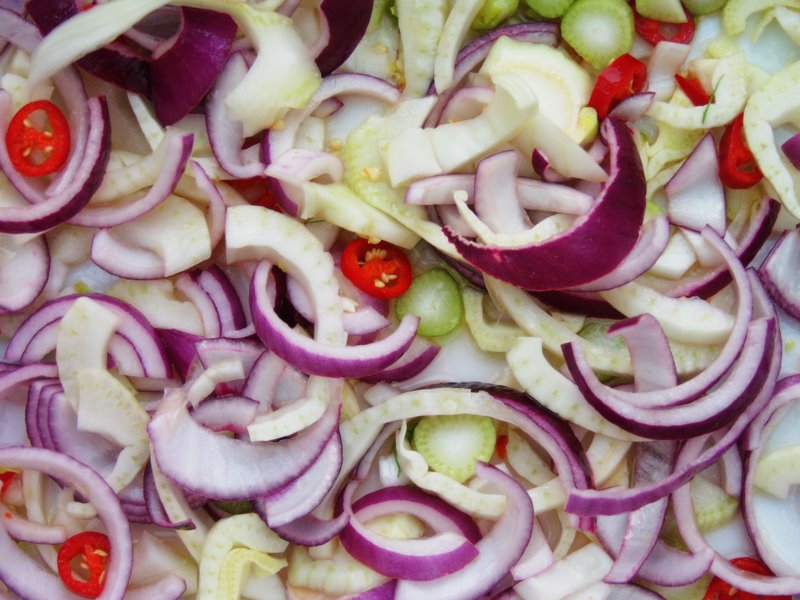
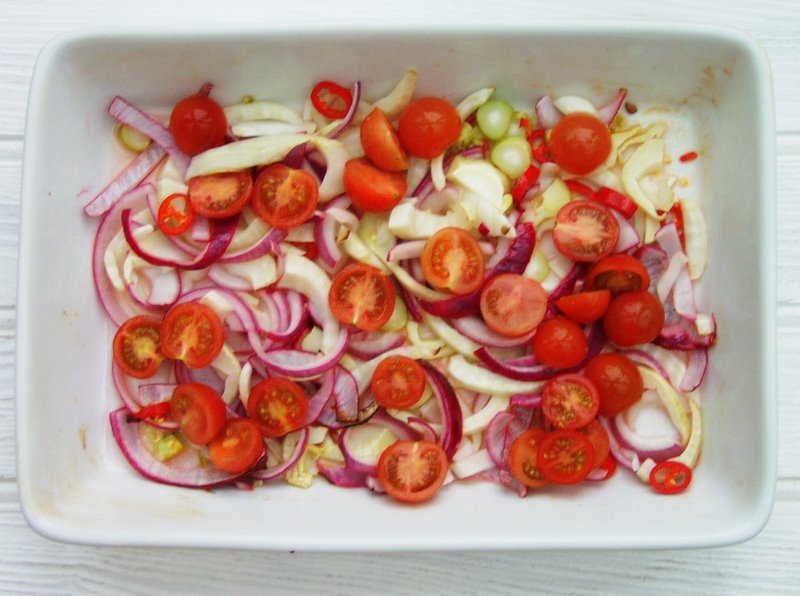
OK I admit it, I wasn’t telling the whole truth when I put together the grand title for this dish. It only takes a passing glance at the photo above for you to see that there is a sprinkling of fresh chilli in this dish. It’s totally NOT essential, so if your palate prefers the absence of chilli – or if you are feeding it to little ones, then please omit the chilli part as it still tastes really good.

We try and eat fish and seafood a couple of times a week, which reminds me, I must put up another of my squid recipes as squid gets a big thumbs up in our household. My six year old, known as big A in this blog (as she is my eldest daughter) has loved it for as long as I can remember; she is a joy to cook for as she eats and tries everything. She has her sights set on junior Masterchef, way to go girl.

This dish is perfect with white fish and cod works particularly well as it does not flake too readily during cooking. This dish is rustic and juicy and has the definite thumbs up from Mr B. There are a lot of flavours going on in the dish, from the sweetness of the balsamic vinegar, red onions and tomatoes to the subtle aniseed taste of the fennel and the wonderful kick from the chilli. I find they compliment each other so well, I hope you agree.

Roasted Cod with Fennel, Red Onion and Tomatoes in a Lemony Balsamic Jus

Adapted from a recipe by ‘Delicious Magazine’

Serves 2-4

600 g filleted cod

1 red onion, roughly chopped

1 fennel bulb, thinly sliced (set the fronds to one side)

juice of one lemon

2 tbsp olive oil

200g cherry tomatoes, halved

3 tbsp balsamic vinegar

1 large red chilli, sliced (not essential)

seasoning, as required


1. Prepare the fennel, red onion and chilli and place in an oven proof dish with 1 tbsp of olive oil and the juice from one lemon. Place in a preheated oven at 180 degrees if you are using a fan oven and 20 degrees more if you are not or gas mark 6, for 10 minutes

2. Add the tomatoes and roast for a further 5 minutes. Now place the cod fillets, balsamic vinegar and remaining olive oil on the vegetables and roast for 10-12 minutes. Do not overdo the cooking of the fish as it will begin to dry out. It needs less cooking time than you think!

3. Serve immediately with the fennel fronds scattered on top to garnish. I like to eat this with rice, although it would also work equally well with little cubed roast potatoes.


Fishing for Inspiration

Billingsgate Fish Market

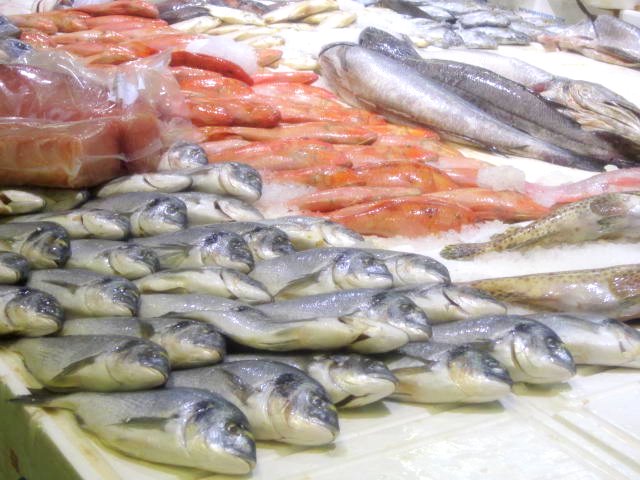
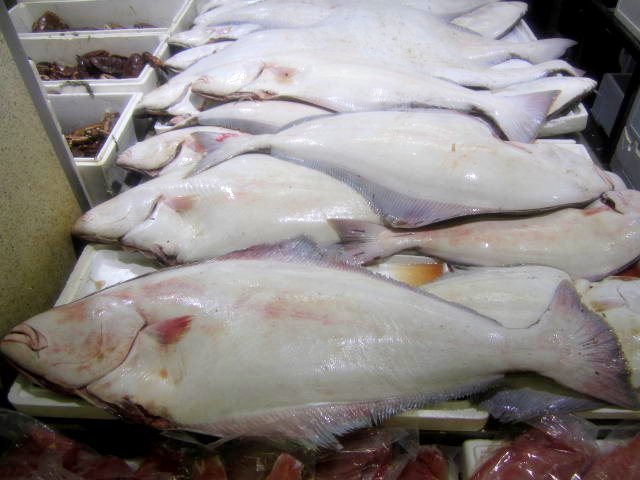
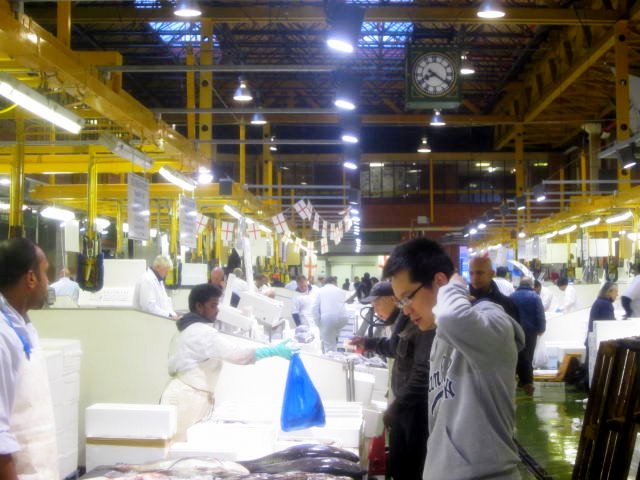
Mr B and I are buzzing. Yesterday we paid a visit to the oldest fish market in the UK, known as Billingsgate Fish Market. Its been operating for the past 800 years in Londinium and although the sites have changed over the centuries, the buzz and frenetic activity of buying and selling has no doubt remained the same.

Billingsgate Fish Market

Billingsgate Fish Market

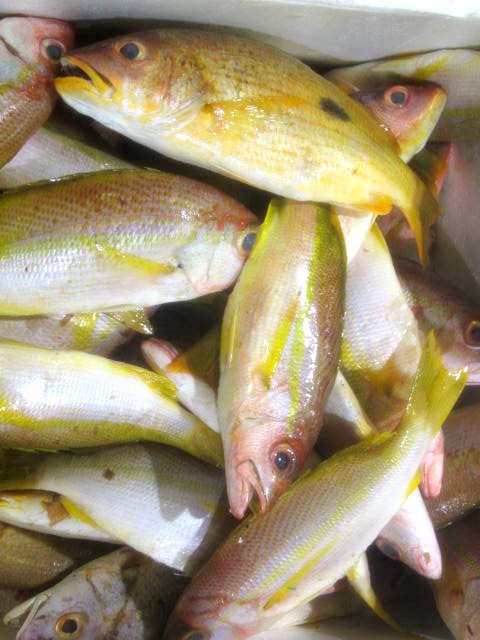
As well as serving the fishmongers, caterers and restaurants around the country the general public are also welcome to come and buy an incredible variety of fish and shell fish at good honest prices – 50p an oyster anyone?

Its open from tuesday through to saturday from 5am until 8.30am – although the fish may have all been sold by 8am so its best to be there early. You’ll notice in the photo below the time was 8.20am on a Saturday and there were still some punters able to buy a good selection of fish. In the week though I hear the fish is all sold by 8am.

Billingsgate Fish Market

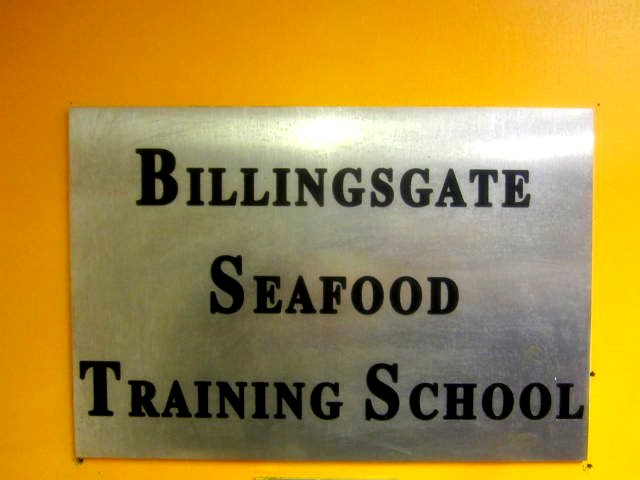
Situated just above the fish market is the Billingsgate Seafood Training School, which was set up 12 years ago as a charity to help educate the children from the local schools about fish and seafood and the benefits of eating it for a balanced diet. I should note that the market it right next door to Canary Wharf, which is one of the key financial districts in London. The local neighbourhoods however are much less affluent than this financial district, and it is these neighbourhoods that the training school was originally set up to benefit. In addition to introducing seafood to children, the school also offers a wide range of courses for adults who want to improve their fish skills. It was one of these courses that Mr B and I signed ourselves up for.

Billingsgate Seafood Training School

For six hours Mr B and I were treated to a range of informative demonstrations and tastings, followed by some hands on knife skills, where we got to gut squid, pocket plaice, fillet gilt-head bream and prepare gurnard. It was very satisfying to be able to actually fillet and gut your own fish. We learned so much that I only hope that we can retain it all and build upon it going forward. Like anything in life it requires practice, so Mr B and I are going to be eating even more fish going forward so that we can practice and finesse our new skills.

Here are a couple of new things we learned during the course:

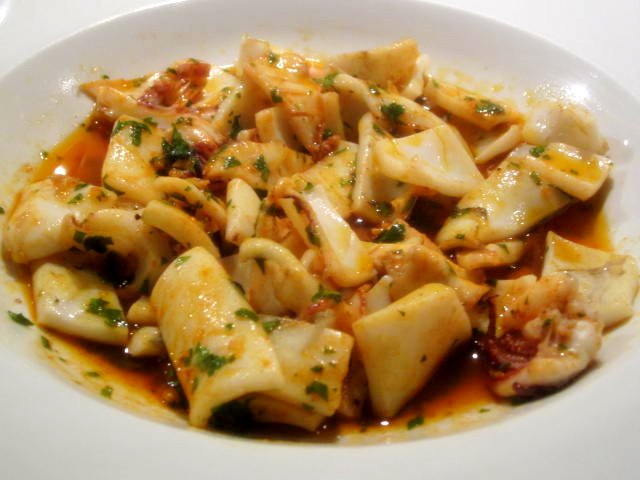
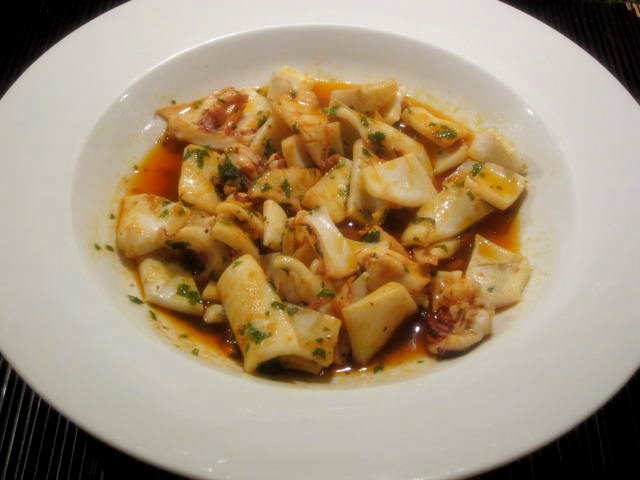
1. You only need to cook squid for 30 seconds in a pan with a little hot oil. We had always cooked it for a few minutes, but it really is not necessary and tastes so much better if you fry it for a shorter amount of time. Equally you can braise it in an low oven for 1 hour 30 minutes – I have yet to ever try this. I’d love to hear from anyone who has a good braising recipe for squid!

2. Only fish that is going off smells fishy. Fish that is fresh has very little aroma, hence when we were in the market you could hardly smell fish.

3. When you buy squid in the supermarket it is often brilliant white in colour. This is because it has been submerged in water to give it more of a glow white look. Squid has more of a grey tinge when it is bought straight from the fisherman/market.

4. Fish requires no more than 10-12 minutes cooking time in a fan oven 200C, non-fan oven 210C  or gas mark 7.

5. When making fish stock do not cook the fishbones, head etc for more that 30 minutes as it may begin to taste bitter.

6. Avoid fish with cloudy and sunken eyes as it indicates they are losing condition. Buy fish that has bright eyes and a clear conea.

Billingsgate Fish Market

Each student was given a recipe booklet of the recipes we sampled during the course. We also all left with a huge bag of the fish that we had prepared during the course. So when Mr B and I arrived home we decided to prepare the marinated squid salad, which we had tried for breakfast in fact, earlier in the day. We were expecting a guest for dinner so thought that it would be a good starter to nibble on. I urge you to try this dish as it is absolutely divine and super easy to make.

Marinated Squid Salad

Marinated Squid Salad

Billingsgate Seafood Training School recipe

Serves 4

300g small squid (or cuttlefish or baby octopus)

7 tbsp olive oil

2 tbsp white wine vinegar

3 cloves of garlic, crushed

1 tsp of smoked paprika (non smoked is also fine)

salt and freshly ground pepper

handful of flat leaf parsley, finely chopped

1. Cut the squid into pieces, strips or rings or both, whatever takes your fancy.

2. Place 1 tbsp of olive oil in a frying pan and when the oil is hot (medium heat) add the squid and fry for about 30 seconds. Remove from the heat and transfer to a serving bowl.

3. Mix the remaining oil with the vinegar, garlic, smoked paprika, parsley, salt and pepper – stir the ingredients together thoroughly. Pour over the squid and mix together well. Leave to marinate for 20-30 minutes. Serve with fresh crusty bread and a green salad.

Marinated Squid Salad

So would we return for another course at Billingsgate? ABSOLUTELY. We can’t wait to return to do a full day course and learn more about preparing and cooking other fish and shell fish. Oh yes, I also now have the Billingsgate Market Cookbook on my christmas wish list!


Stuffed Tomatoes, but no stew!

Autumn is definitely here, although we had a few false starts over the last couple of weeks. The bronzed autumn leaves are scattered all over the grass and the winds are definitely picking up, a cold chill is certainly in the air. The deer in Richmond park have started rutting, which is always a sign that autumn has arrived. So it’s time for the winter coats to be dug out of the closet, dear readers, and the scarves to make an appearance.

With the new season brings a host of new and exciting produce to our tables. Root vegetables, greens, game, and fruits such as succulent figs. Its comfort food time, stews and casseroles and filling soups – I am getting excited thinking about the culinary possibilities in the months ahead.  So let us go forth and seek out the autumn offerings.  I hope to inspire and motivate you all into cooking some recipes you may have not tried before, that will warm your cockles and lift your spirits as the nights draw in.

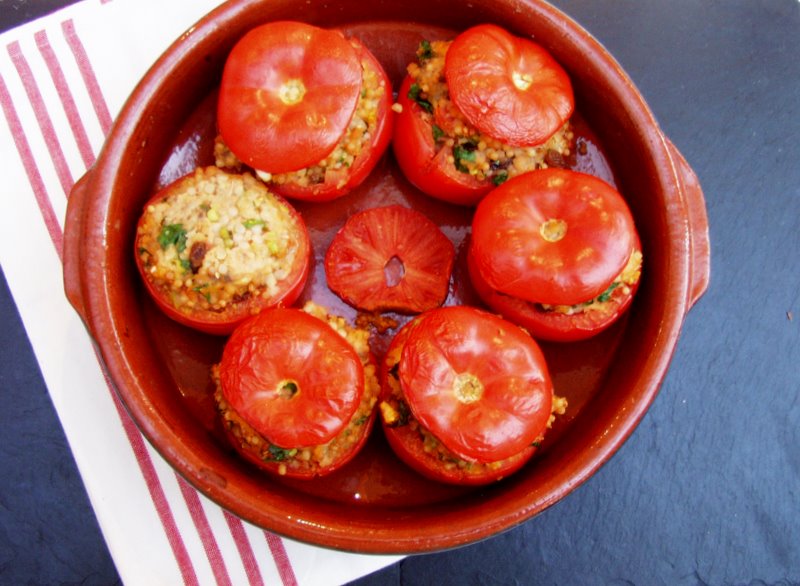
This recipe is perfect for a light autumn supper or lunch and can be found in Clarissa Dickson Wright’s ‘Potty! Clarissa’s One Pot Cookbook’. It’s warming and hearty and if you omit the anchovy fillets then it is ideal also for all you vegetarians and vegans out there. It can be eaten on its own or with a piece of grilled fish on the side or in my case I ate it with some asparagus and melted butter!

Stuffed Tomatoes 

sourced from Clarissa Dickson Wright – ‘Potty! Clarissa’s One Pot Cookbook’

Serves 4

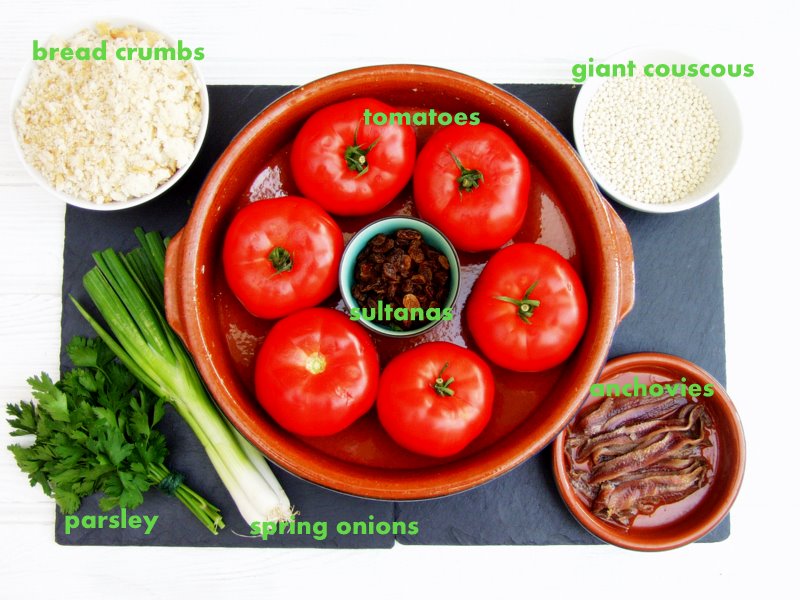
8 large tomatoes

125g couscous

1 tbsp olive oil

100g stale country loaf

2 garlic cloves, finely chopped

bunch of spring onions, finely chopped

60g anchovy fillets in olive oil, mashed (optional)

30 g sultanas

handful of chopped parsley

1. Add boiling water to the couscous, as instructed on the packet. I normally use standard couscous, but for a change I used giant couscous and it worked a treat.  When it is ‘cooked’, if you are using normal sized couscous, add one tablespoon of olive oil to the couscous and stir it in with a fork to loosen it up.

2. Heat the oven to 190 degrees centigrade (170 degrees centigrade for a fan oven), or gas mark 5. Slice the ‘lid’ off the tomatoes and scoop out the interior and then mix the pips and juice into the couscous. Sprinkle a little salt into each tomato set them upside down to drain.

3. Crumble the bread (I use a hand whisk) and mix it with the couscous along with the chopped spring onions, garlic, anchovies (if using), sultanas and parsley.

Season to taste and then stuff your tomatoes and remember to place the lid back onto your tomatoes.

4. Place in a lightly oiled oven proof dish in the oven for 25 minutes. Serve immediately.

ps: for the really observant amongst you, I have intentionally only used 6 and not 8 (as the recipe states) tomatoes. I was feeding two adults and two children so thought 8 might be pushing it a little!


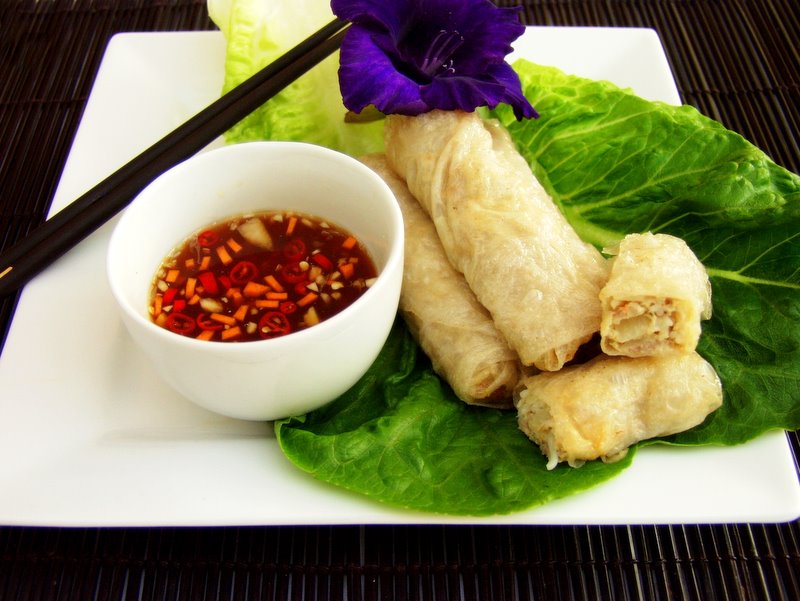
Trang’s Vietnamese Spring Rolls with Nuoc Cham dipping sauce

Not so many moons ago I met a Vietnamese lady when I was on a brief stopover in Singapore. We were both taking advantage of the hotel pool and as we pretty much had the pool to ourselves we struck up conversation. The topic of food naturally came up and I think she could sense my longing to experience the culinary treats of her native homeland. She spoke about her favourite Vietnamese spring rolls and I tried hard to take down a mental note of all the ingredients she was spinning off.

Later that day when I returned to my room I found a couple of hand written notes detailing her Vietnamese spring rolls, or Cha Gio to be precise. I was really touched that she had gone to the effort of writing it down and slipping it under my door. Life is clearly full of wonderful surprises.

Upon returning to London I sent her an email thanking her for the recipe and promising that I would try it out very soon. She then replied with a further recipe for the dipping sauce, known as Nuoc Cham, which would compliment the spring rolls to perfection.

So that brings me to today. Making spring rolls, much like making tortellini, is definitely a communal affair so I rallied the troops…..well slight exaggeration, I rallied a newlywed friend of mine who was up for the challenge.

They were really good fun to make although there are definitely some tips to take on board, before embarking.

Check them out.

1. Don’t wet the rice paper too much. Literally place it in a bowl of warm water and submerge it and spin it once and then remove it. If you leave it in the water for too long, it becomes very difficult and limp to handle.

2. There is definitely a skill in folding the rolls. Keep them tightly folded and secure and after the first turn tuck in both ends before proceeding to roll the rice paper further.

3. Don’t be greedy and overfill. Less is more, definitely comes to mind when rolling these beauties.

4. The oil must be very hot BUT on a low heat, that’s the trick folks. Place a crumb in the oil and if it fizzles, then the oil is ready.

5. The pork meat will cook beautifully, don’t worry that it won’t. 3-4 minutes and the spring roll will be ready.

6. Steaming is also an option – it will take 20 minutes, but I thought that I would try the less healthy option of frying for my first attempt.

So here are the ingredients for the spring rolls.

Vietnamese Spring Rolls  (Cha Gio)

Makes around 20

300g minced pork

120g crab meat, (tinned is fine)

150g bean sprouts

150g of fine rice noodles

1 handful of exotic mushrooms (ideally wood ear mushrooms), sliced

1 western onion, chopped finely

2 eggs

1 tsp salt

22 cm rice paper (I used the Banh Trang variety)

optional ingredient:

1 carrot, thinly sliced

1. Finely chop the onion and then combine it with the mince, egg, noodles, crab, mushrooms, beansprouts, carrots (if using them) and salt.

2. If you are going to use carrot then slice thinly into 2cm long straws.

3. If you are using wood ear mushrooms (I could not find them so opted for exotic mushrooms) you will need to soak them for 30 minutes before slicing them into strips. Similarly you may also need to soak your noodles for 20 minutes in cold water before cutting them to 10cm in length. I used Amoy  ‘straight to wok’ rice noodles, which do not need any soaking.

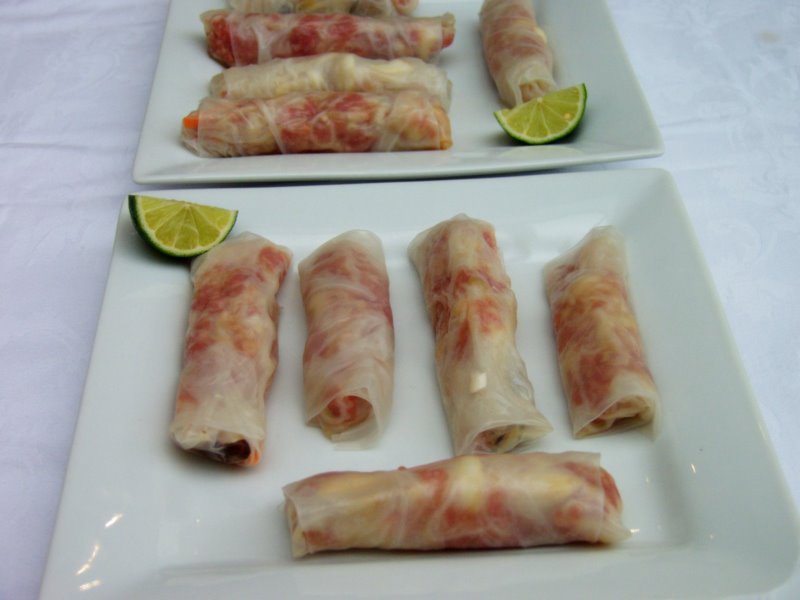
4. Place the rice paper into a bowl of warm water for no longer than 5 seconds. Then lay it out onto a flat surface and add a spoonful of the pork/crab mixture. Tightly roll the rice paper over the filling and after the first roll (so that the mixture is covered), fold in both ends before proceeding to finish the rolling. Rest aside on a plate, making sure that the spring roll is not touching another spring roll. They will tear each other apart from sticking if you place them side by side. I found that they stuck well together (only one broke in the pan, but that was from over filling the rice paper). However, if you find they need some help at sticking the ends together mix a little flour with some water to form a paste and dab a little of this past at the end of the rice paper.

I found a fellow blogger who has produced good step by step photos of the rolling if you care to take a look .

Once you have rolled them all up they should look something like this.

5. Heat a deep pan with vegetable oil. You need to have enough oil so that the spring rolls can be submerged under the oil. Heat the oil to a high temperature and then turn down the heat so that it remains cooking at this low, but hot, heat. If you drop a crumb in the oil and it fizzes you know that the oil is hot enough.

6. Place a couple of spring rolls in the oil at a time so that you can carefully monitor them. Turn them in the oil a couple of times. They should be well cooked through in 3-4 minutes. If you are going to use a steamer they will need 20 minutes cooking time.

Please note they will not turn a golden colour like they do when you go out to a chinese restaurant. This is because they are using egg roll paper, which is different from rice paper. With rice paper they will go crispy BUT will remain with a white ish hue. Let them cool on kitchen roll, which will soak up the grease.

7. Serve with nuoc cham dipping sauce.

If you are vegetarian these will taste really good with tofu as well, so give them a try.

Nuoc Cham Dipping Sauce

1 tbs fish sauce

3tbs boiled water

half a tsp sugar

1 tbs of rice vinegar (or lemon/lime juice)

5 garlic cloves, peeled and crushed

half a carrot, sliced and chopped into small pieces OR shredded

optional extras:

 1 small red birds eye chilli

half a kohlrabi, sliced and cut into small pieces

1 tsp of soy sauce (this will deviate from the traditional recipe but I like the salty balance)

1. Place all the ingredients in a jar with a lid on and give it a good shake. I could not source kohlrabi so simply omitted it and to really throw caution to the wind I added a tsp of soy sauce, apologies to all those purists out there, I could not resist. I also liked having a little chilli to spice things up a bit – sorry I can’t help it. I promise though that when I do a blog on game in the next month or so, I won’t be adding chilli!

2. Add additional sugar, salt, lime to taste.

I hope you will love this gloriously sweet, salty, sour and spicy accompaniment for the spring rolls.

I’d really like to hear how you get on so do post a comment.

happy eating


Crab, fennel, chilli flake and lemon bruschetta – an uplifting lunch for the start of the new school year

OLYMPUS DIGITAL CAMERA

School started again today for big A, so it was a return to the old routine of getting up early – although at the moment we have no problem there as the jet lag hasn’t completely worn off as yet.

After a breakfast treat of crepes with ham, cheese and eggs – for the girls, not me I might add, we did the school run. All morning whilst little Z and I were busying ourselves I was looking forward to trying out a recipe that I recently spotted in the Australian food magazine ‘Gourmet Traveller’. If you have not come across the magazine before I urge you to take a look at their website at the very least. The fusion of food and travel appealed to me and I thought that the articles were well written and interesting and the photographs stunning. Australia is approaching spring and of course we are heading towards autumn, so perhaps their recipes are slightly out of sink with what us Brits would be thinking about cooking. That said this recipe appealed to me greatly and I felt that it could easily bridge the seasons.

It’s an ideal snack, light lunch or starter and would go down nicely with a glass of crisp white wine. The combination of crab, fennel, lemon and chilli flakes is sublime and the fact that it is easy to prepare further adds to its appeal. I think you will agree this one is a winner.


Crab, fennel, chilli flakes and lemon bruschetta

Adapted from ‘Gourmet Traveller’

Serves 4

Sour dough loaf, sliced

120g tin of crab meat. By all means use freshly cooked crab meat if you have it to hand but I find the tinned variety reasonable and hassle free

1 tsp fennel seeds, crushed

juice of 1/2 a lemon

1/2 tsp of chilli flakes

25 ml of olive oil

half a lemon, thinly sliced. Meyer lemon if you can get hold of them. Equally you can substitute the lemons with 2 tsp of lemon juice and 1 tsp of finely grated rind. 

1/2 fennel bulb, thinly sliced

1 handful of flat leaf parsley, coarsely chopped

1 garlic clove, halved

*  Mix the crab meat, lemon juice, fennel seeds and chilli flakes together with your hands and add the olive oil.

* Now gently add the lemon slices (or finely grated rind – see above), fennel bulb and parsley and season to taste.

* Using a griddle pan, or in my case non-stick grill plates from my sandwich and panini maker, place a couple of slices of sour dough bread on the plates for approximately a minute. If you are using a griddle pan, turn the bread only once. Repeat until you have toasted enough bread for your needs.

* Once the bread is toasted sufficiently so that griddle lines appear, rub the cut-side of garlic onto the toast.

* Place the crab mixture on top of the toast and serve immediately.


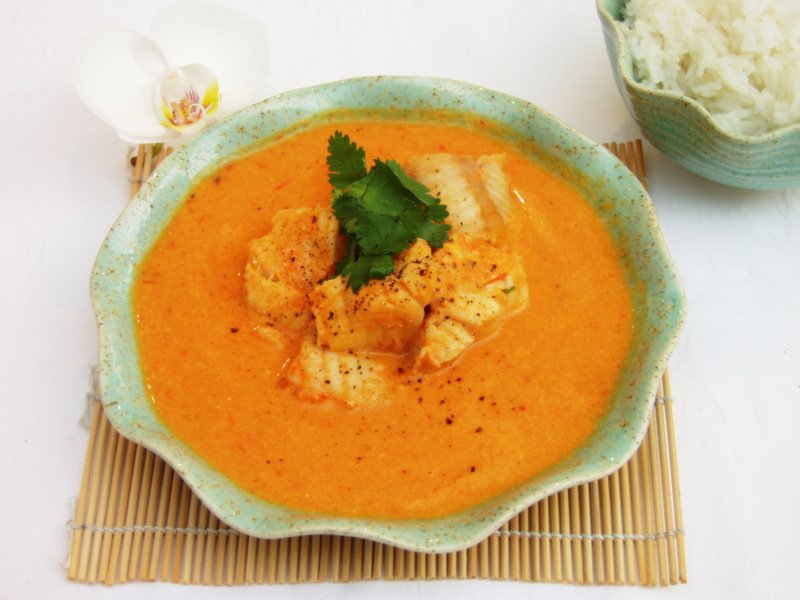
Monkfish curry with tamarind, coconut, ginger and coriander – inspired by Skye Gyngell

This curry is always a crowd pleaser. The talented Skye Gyngell, of Petersham Nurseries fame, does the decadent lobster version in her book ‘A Year in My Kitchen’ and I have tweaked her recipe slightly to suit my style of cooking, but the essence of this recipe stems from Skye, I sadly take no credit.

So the main things I have done differently to Skye are:

1. Blending the onions after they have been cooked on a low heat. I found that I preferred a slightly smoother texture, but not blending them works equally well. It’s just a personal choice.

2. I have only used one 400g can of coconut milk. I find that it is more than sufficient.

3. I use a little less sugar.

4. I have omitted the toasted coconut flakes to serve – mainly because my husband finds it a bit of a coconut overkill, but again this is down to personal choice.

5. Skye uses a whole tamarind pods and breaks off a little piece as she needs them. She soaks these pieces in hot water for 20 minutes.

In the photo above I put 1 tablespoon of caster sugar as Skye suggested, however, with hindsight, I would reduce this amount but half. Add a little, then taste it to see if it needs any extra sweetness.

Monkfish curry with tamarind, coconut, ginger and coriander 

Serves 4

850g of Monkfish, cut into 2 inch pieces

2 onions, peeled and finely sliced

5cm piece of fresh root ginger, peeled and grated or diced

4 garlic cloves, peeled and finely chopped

2 red chillies, chopped

1 tbsp of coriander seeds, toasted

5 ripe tomatoes, chopped

1 tbsp caster sugar

3 tbsp fish sauce

3 tbsp of tamarind water

1 x 400g can of coconut milk

To garnish: either unsweetened dried coconut flakes, lightly toasted or coriander leaves

1. Break a small piece of tamarind (the blocks that you can buy NOT the paste) into a bowl and cover with boiling water. Leave to stand for 15 minutes. Following this strain the liquid into another bowl. Really press the pulp into your strainer with the back of a spoon and then put the extra strained pulp into the water. Tamarind has a wonderful sour taste,which adds real depth and balance to a dish. I absolutely adore it.

2. Cut the monkfish into 2 inch pieces, or larger if you prefer, and clean under cold water. Set aside.

3. Heat a small frying pan and when it is hot, gentle toast the coriander seeds for 30 seconds so they begin to brown, then set aside.

4. Heat a little olive or vegetable oil in a pan over a medium heat. Add the onions and cook until they become translucent. This will take around 5 minutes.

5. Put the ginger, garlic, chillies, toasted coriander seeds and tomatoes in a blender and whizz to a paste. Then place the translucent onions into the paste and whizz again briefly. Transfer the contents back into the pan and simmer for 5 minutes, stirring frequently. If you prefer it less smooth then obviously do not blend the onions.

6. Add the sugar, fish sauce, tamarind water and coconut milk and stir so that the contents are merged into the tomato and onion sauce. Simmer for a further 5-10 minutes. Add the monkfish and add additional seasoning if it requires it. Keep the heat on medium/low heat stirring occasionally for no more than 10 minutes. Be careful not to break up the monkfish!

7. Ladle into a warm bowl or soup plate and garnish with coriander leaves or coconut flakes. Serve with a bowl of steamed rice.


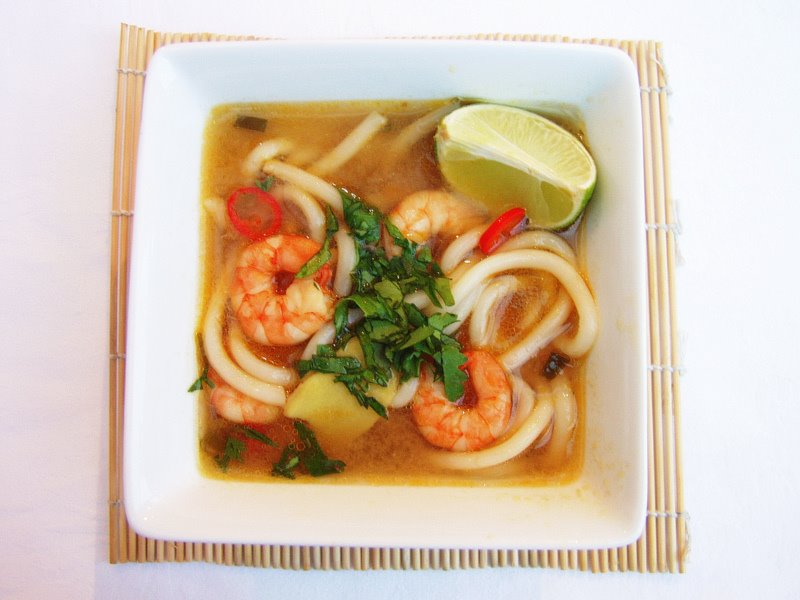
King Prawn Noodle Broth – effortless joy in a bowl

OLYMPUS DIGITAL CAMERA

Do you ever feel too exhausted to cook in the evenings but want a fresh, healthy, comforting dish that you can prepare in lightening speed with very little effort? I think all of us do from time to time, I certainly did this evening. So I put together this wonderfully flavoursome broth in less than 10 minutes. I feel it cleanses the body and heightens ones senses. It’s definitely my kind of dish.

King Prawn Noodle Broth – Serves 2

190g  Jumbo king prawns (or any prawns will do)

1 bag/ 200g of udon noodles (double the amount if you are feeling hungry)

1 tamarind broth cube (Knorr make them)

1 garlic clove, finely sliced

6 thin slices of fresh ginger

half a red chilli, finely sliced

1 lime

1 spring onion, finely sliced

1/2 tsp of lemongrass paste

2 tsp of light soy sauce

1 tbsp sesame oil

1 tbsp of coriander, chopped

1. Thinly slice the garlic, ginger, red chilli and spring onion. Heat the sesame oil in a pan, and when it is hot, add the chopped ingredients and the lemongrass paste, and cook gently for a couple of minutes.

OLYMPUS DIGITAL CAMERA

2. Meanwhile put 600ml of boiling water in a pan on a low heat and break up the tamarind broth cube into the water. Then add the prawns and watch them reduce in size slightly – this will only take a couple of minutes – be careful not to over cook them!

OLYMPUS DIGITAL CAMERA

OLYMPUS DIGITAL CAMERA

3. Place the contents of the pan with the garlic, ginger, chilli, lemongrass and spring onion into the broth along with the udon noodles. Whilst I use udon noodles any type of noodles will work equally well. Experiment and see which you prefer. Cook the noodles for 3 minutes and during this time add the soy sauce and the juice from half a lime.

4. Serve piping hot with chopped coriander on the top with a lime quarter on the side.

If you are feeling under the weather or want a general ‘pick me up’ this warming broth is sure to reinvigorate you. Instead of prawns you could use chicken or for a vegetarian option: broccoli, sugar snap peas, mange tout or pak choi.


Raoul’s Eggs Rock

OLYMPUS DIGITAL CAMERA

England is experiencing the ‘great flood’ take 2. Not literally of course, but after the great weather in April and May to say it has declined would be an understatement. Its Wimbledon week, the crowds are here and the grey clouds are looming large over London town. I feel sorry for the individuals responsible for rescheduling the matches so that they are all played in the two week Wimbledon window. Headache or what! But hey lets look on the bright side (us Brits are good at that) our reservoirs must be full again, there won’t be a hose pipe ban and our gardens are lush bright green.

So with all this wet weather I thought it was high tide (sorry I could not resist) to take a little trek across town to buy some of the tastiest eggs on the planet. If the sun refuses to come out in our skies then I will recreate it on the plate. Well that was my thinking.

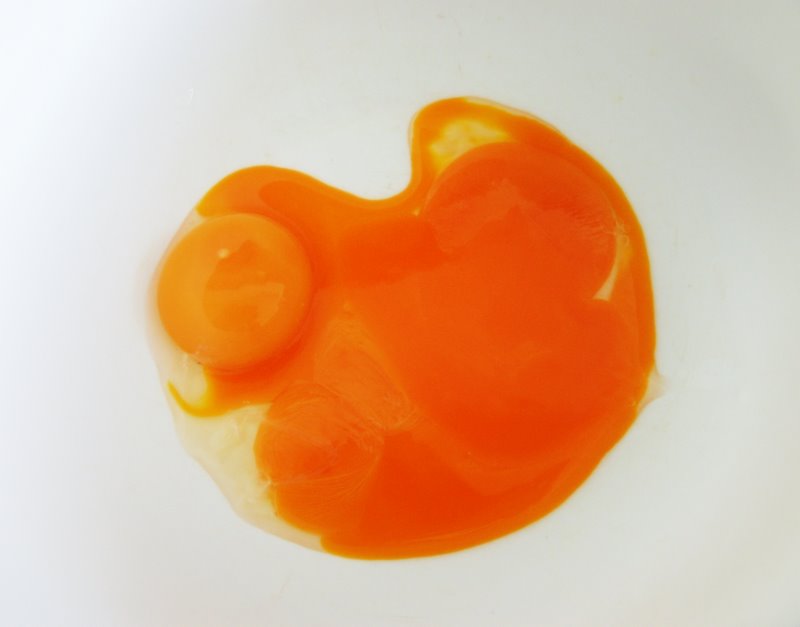
There is this wonderful restaurant/brunch establishment, and grocery store in Maida Vale, called…..you guessed it, ‘Raoul’s‘. The brunch menu is heavenly and it is there that they serve and sell these wonderful eggs, which they source from Italy. They taste incredible and the yolks are so yellow I really wouldn’t be surprised if they had been injected with turmeric.

OLYMPUS DIGITAL CAMERA

I stumbled across this little gem of a place years ago when I was looking for a place to live. I thought Maida Vale looked charming and villagey being nestled by ‘Little Venice’ and not far from Regents Park. When I stopped to gather my thoughts and look through the suggestions the estate agent had given me I refuelled in Raoul’s. It was a defining moment because I fell completely in love with this brunch hangout. With its wonderful eggs benedict royal and fresh fruit smoothies, I was sold. I decided there and then that the property I was going to live in HAD to be in walking distance of Raoul’s. I imagine it never crossed estate agents minds that something as simple as an eatery could convince someone to buy in an area. If I was to pin point it even further I think it was the eggs that won me over.

I think you kind of get my gist on how mind blowing these eggs are.

It wasn’t until I bought a dozen at the weekend that I actually decided to dig a little further and find out more about the eggs in question. All I knew was that they were from Italy. The packaging has changed since I was last there – which was quite a few years ago – and the eggs are imported by a company called ‘Machiavelli Foods‘, which focuses on importing food from Italy to London. On the packaging it says that the ‘hens are fed on a purely vegetarian diet of corn, grain and soy with marigolds and acorns added to help develop the rich and flavourful yolk’. So there you go folks if you want your hens to lay eggs with a deeper, rich, yellower colour, feed your hens marigolds and acorns. For those of you who keep hens let me know how you get on, I am really curious to see  if you notice a difference in the colour of your hens’ yolks. I genuinely would be interested to know.

OLYMPUS DIGITAL CAMERA

I thought I would recreate eggs benedict royale for you to try at home. My hollandaise sauce recipe is fail proof  and super easy (I use a blender) so give it a try.

Hollandaise Sauce 

Serves 4

3 egg yolks

150 g unsalted butter

juice from half a lemon

pinch of salt (optional)

1. Separate 3 egg yolks from the whites. This is easy to accomplish by breaking the egg and then placing the yolk back and fourth between the two broken egg shell halves. Save the eggs whites for later on – you could make an egg white omelet.

OLYMPUS DIGITAL CAMERA

2. Squeeze the juice of half a lemon onto the egg yolks, less if you prefer it less lemony. Add a pinch of salt at this stage, although I personally find it unnecessary if you are going to be using smoked salmon for the eggs benedict royale. Blend the egg yolk mixture for 20 seconds at a medium speed. It should appear slightly lighter in colour.
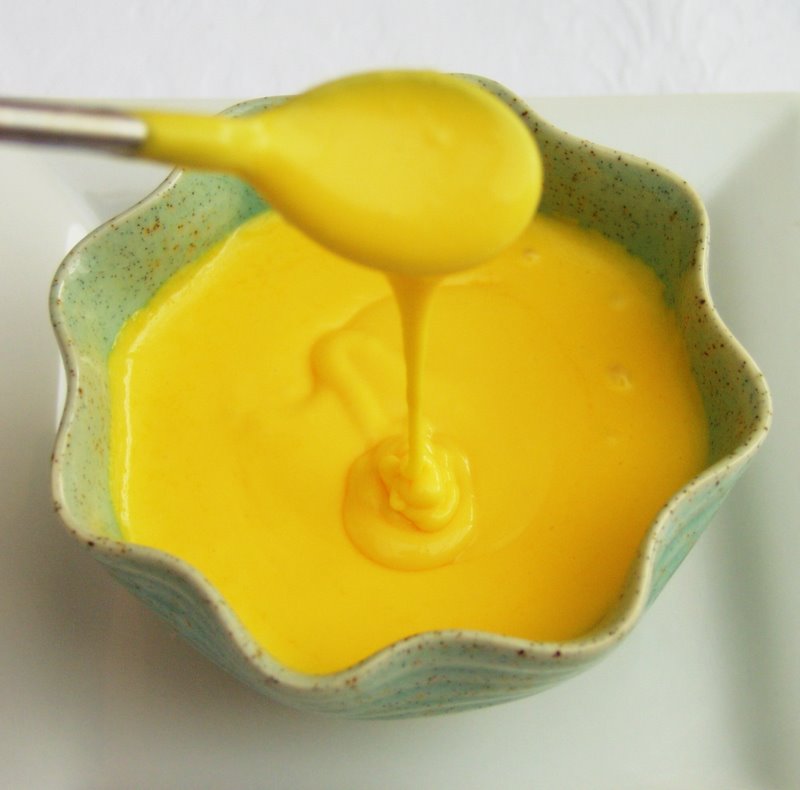
OLYMPUS DIGITAL CAMERA

3. Slowly, and that is the key, heat up the butter, making sure not to let it boil.

4.  When the butter is melted, slowly add it to the egg mixture, continuing to blend (I use the pulse button at this stage)as you do so. The speed of the blender and the heat from the butter will heat the yolks slightly without them scrambling. Blend for a couple of seconds once all the butter has been incorporated into the mixture.

OLYMPUS DIGITAL CAMERA

5. Taste the mixture and add more salt or lemon as you see fit. If you like a thinner consistency then add a little warm water and blend briefly.

OLYMPUS DIGITAL CAMERA

6. Keep the hollandaise sauce warm until you are ready to use by placing the blender container or small bowl you have transfered it into, in a pan of hot tap water.  Use within 1 hour.

As well as eggs benedict royale, hollandaise sauce works really well over asparagus, broccoli, salmon (although that might be a bit 70’s!).

Eggs Benedict Royale

Serves 4

4 white muffins, toasted

4 eggs, poached

few drops of vinegar

cling film (to wrap the poach eggs in)

4 slices of smoked salmon

4 tbsp of hollandaise sauce (see above)

1. Prepare the hollandaise sauce first (see above) and put to one side in a warm place.

2. I have a number of ways to poach eggs but the method I am presently using is the one I saw my brother doing at Christmas when he was preparing brunch for the family. Basically you crack an egg over some cling film – enough so that you can gather the ends up easily and there is some left over (which you can place over the side of a pan). You must make sure that there is no air in the little cling film egg parcels. Place a few drops of vinegar with the egg. It is easy to poach many eggs at once like this by separating them into their own little cling film parcels.

3. Boil a pan of water and place the eggs into the boiling water. Leave for 2/3 minutes.

4. Meanwhile toast the muffins and then separate onto plates placing a slice of smoked salmon onto one half of the muffin. The extra half of muffin I leave to one side so as to mop up the hollandaise sauce and egg at the end.

5. Once the eggs are done, place them directly on top of the smoked salmon and then place a large tablespoon of the hollandaise sauce over the top.

6. Garnish options could be ground pepper, parsley or chives. I personally like to leave it plain as there are so many wonderful flavours coming from the dish already.

OLYMPUS DIGITAL CAMERA