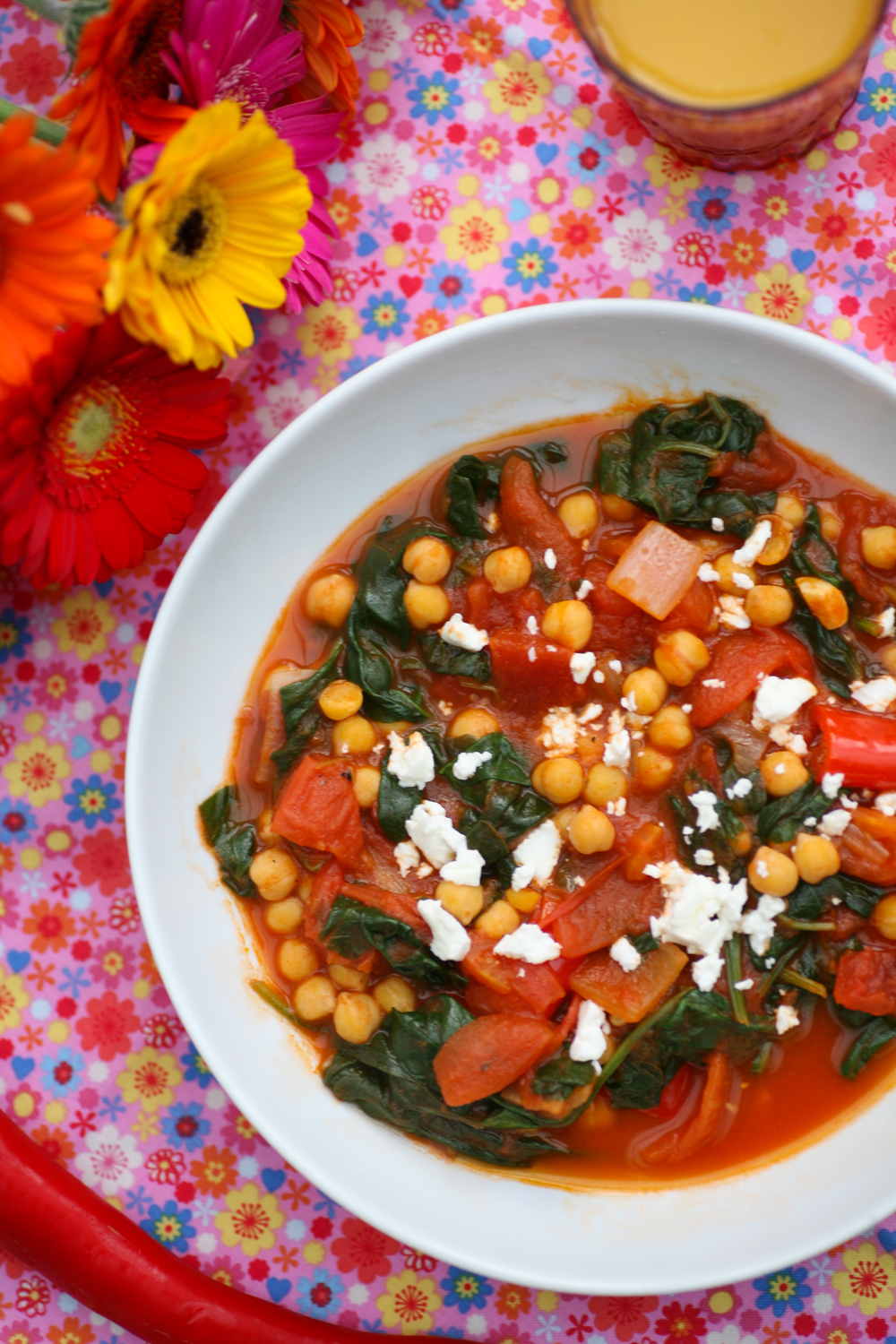
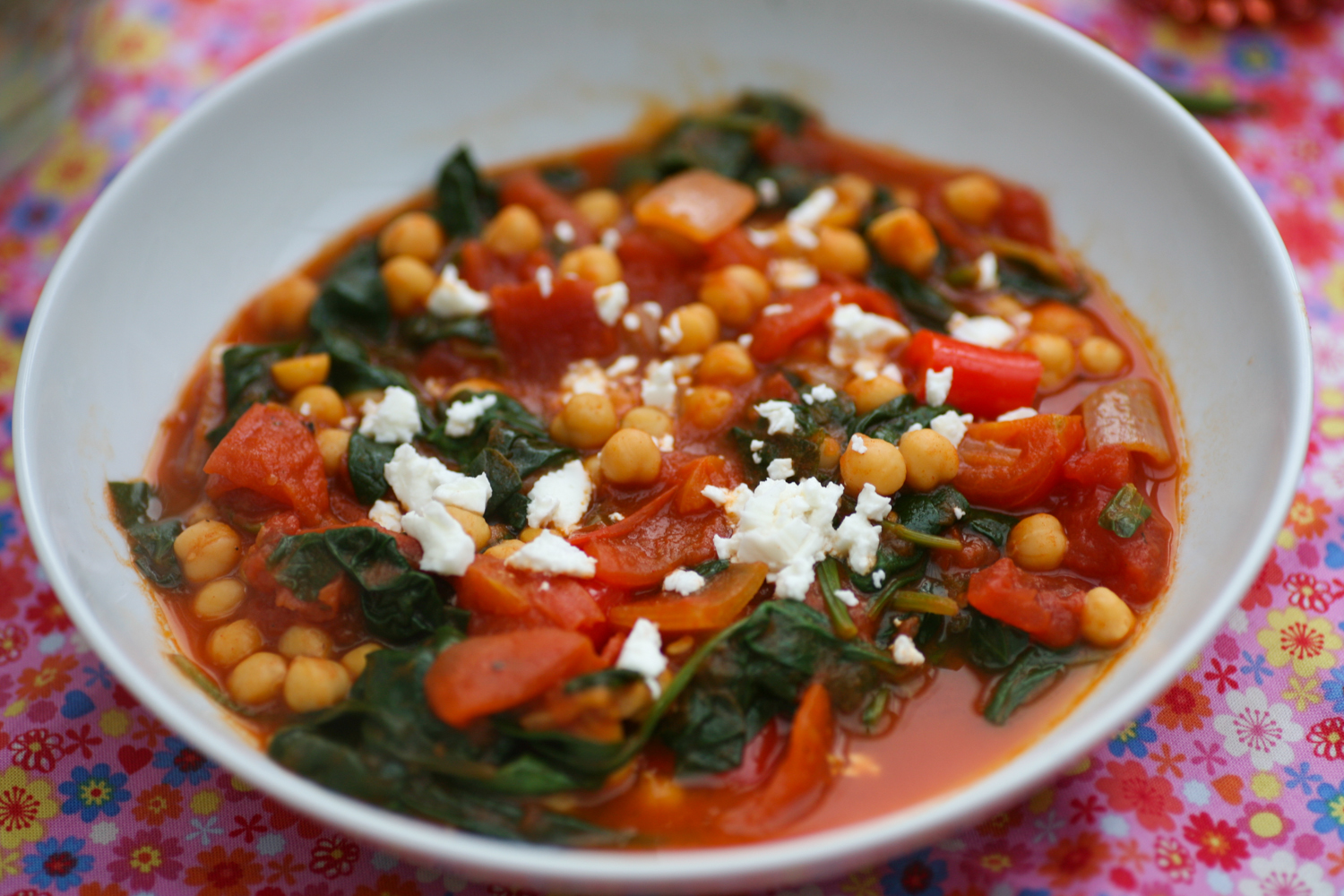
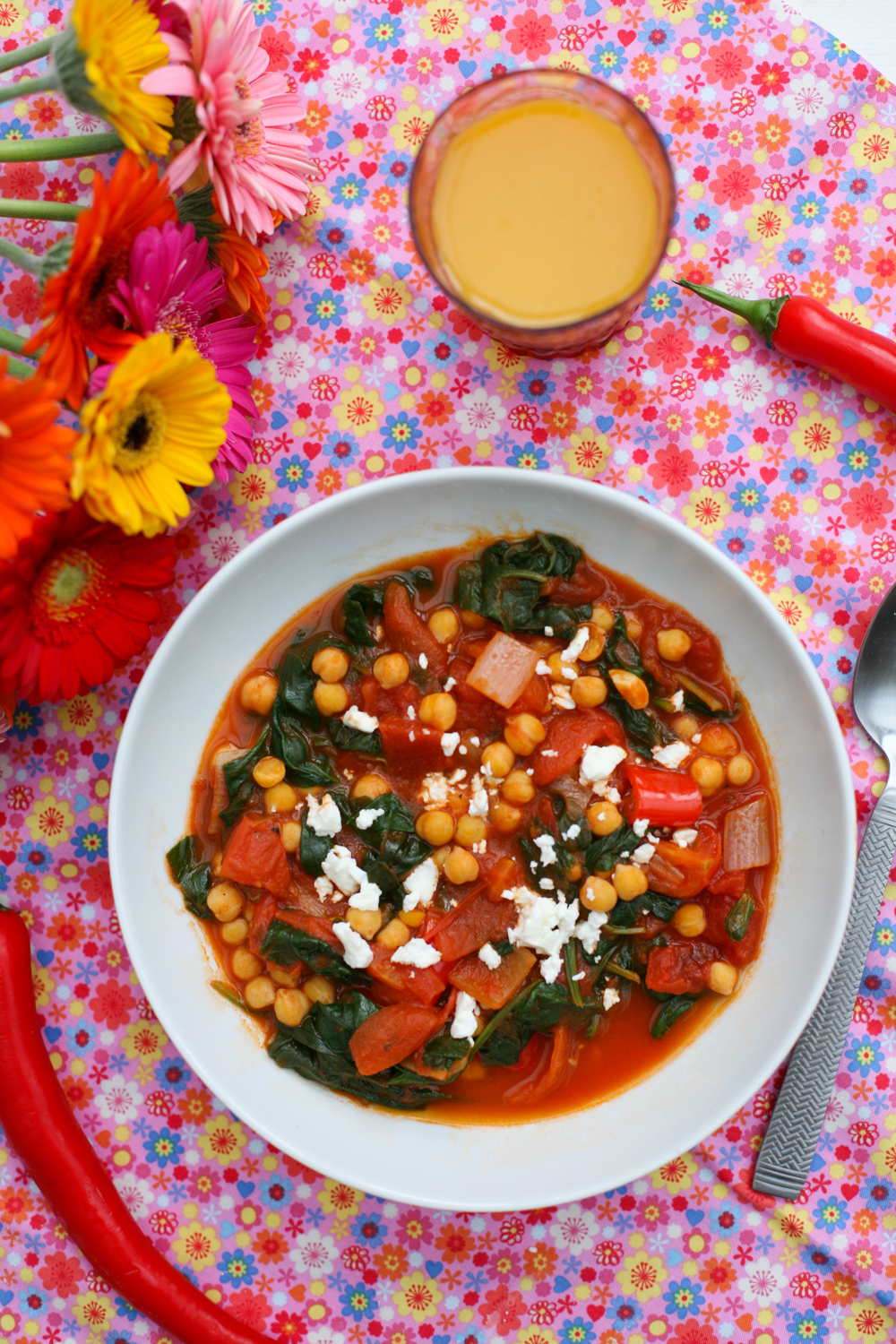
Chickpea, Tomato, Spinach and Feta Soup

IMG_8018

With a guest over recently, I found myself improvising with some ingredients to bulk up lunch. It was an unplanned creation and hence the results were all the more exciting and satisfying.  I literally threw together some ingredients I already had in the house to make a very comforting and warming soup/vegetarian stew. It took under fifteen minutes from fridge to stove to table and the silence as everyone delved into their bowl with concentration, was deeply reassuring. As they came up for air, the verbal endorsements confirmed this.

IMG_8036

It’s important to be able to whip up a meal in a matter of minutes. We all need an arsenal of these for when we have little energy or inclination to cook but want to be nourished by good home-cooked food. You can’t beat home-made soups – not only do they taste better, but you can also monitor exactly what goes into them.

I always have a range of tinned lentils on standby to use for soups, stews and salads, so for this soup I used a tin of trusty chickpeas. Everything else I had in my pantry (aka pull out cupboard…buy hey we can dream!) or in the fridge. I always have a pack or two of feta in my fridge as it can last unopened for around three months.

IMG_7992

Chickpea, Tomato, Spinach and Feta Soup

2 tbsp olive oil

3 garlic, peeled and roughly chopped

1 banana shallot (or small white onion), peeled and roughly chopped

2 large red chillies/chilli peppers (not the hot variety), chopped into inch pieces

4 fresh tomatoes, diced

1 x 400g tin of chopped tomatoes

1 x 400g tin of chickpeas

1 tsp of sweet paprika

1 tsp vegetable bouillon

200ml boiling water

1 tsp rock salt

pinch of black pepper

200g fresh spinach

100g feta, crumbled

1. Heat the olive oil in a large pan and when it is hot, but on a medium/low heat, add the shallot and garlic and gently fry.

2. After a couple of minutes add the chilli/chilli pepper and continue to stir for a further couple of minutes.

3. Add the fresh tomatoes and continue to cook on a medium/low heat until they begin to soften. Add the tinned tomatoes to the pan and stir into the other ingredients.

4. Now add the drained chickpeas, the sweet paprika, vegetable bouillon, salt and the boiling water. Give a good stir and let simmer for a couple of minutes.

5. Finally add the fresh spinach and place a lid on the pan. After a minute give a good stir and add a little more boiling water if necessary. Taste and season.

6. Ladle into bowls and sprinkle with a liberal amount of feta.

All these steps will not take more than 15 minutes max to prepare and cook.

IMG_8034


Panch Phoron – Bengali Five Spice and Red Split Lentil Dal

IMG_7307

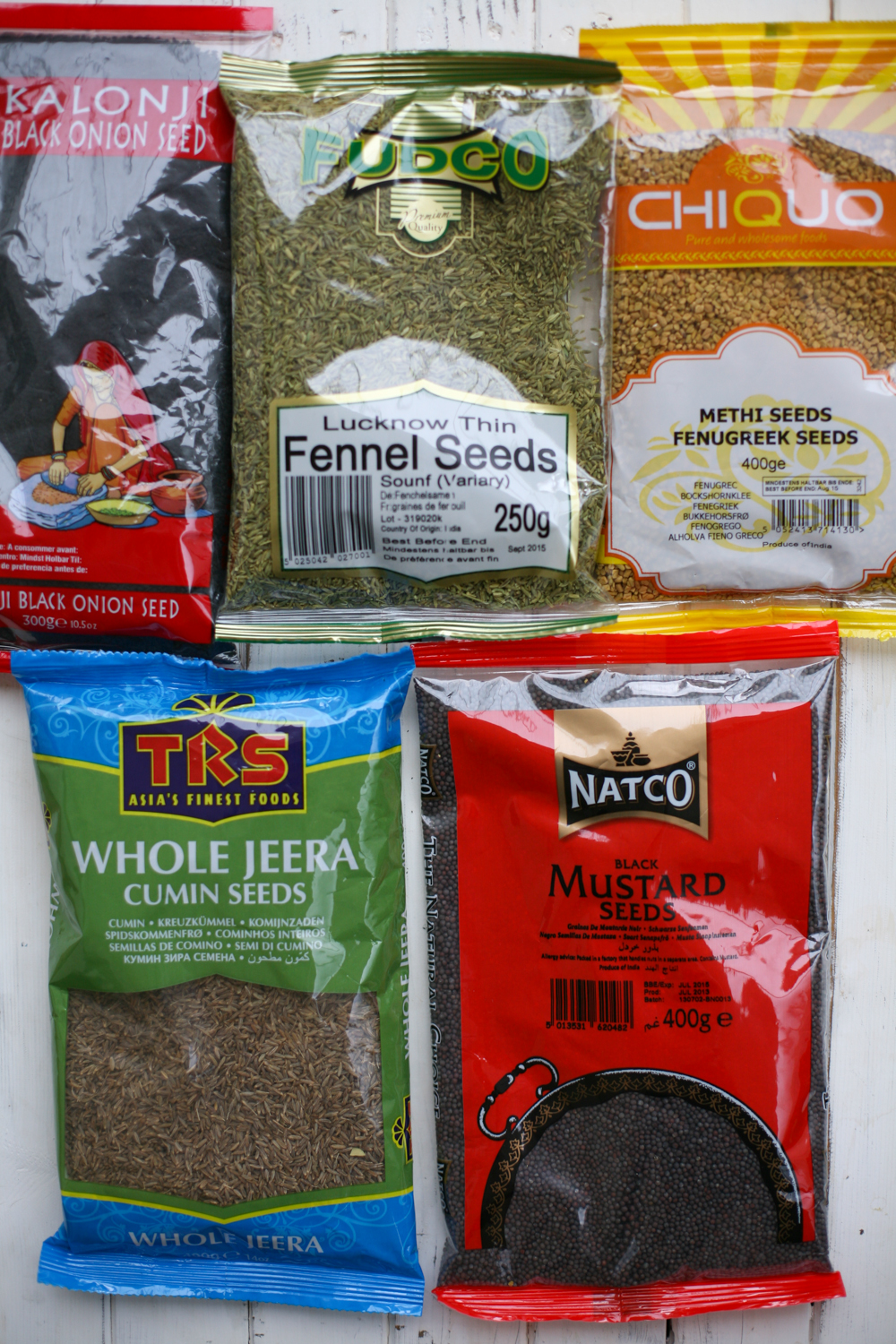
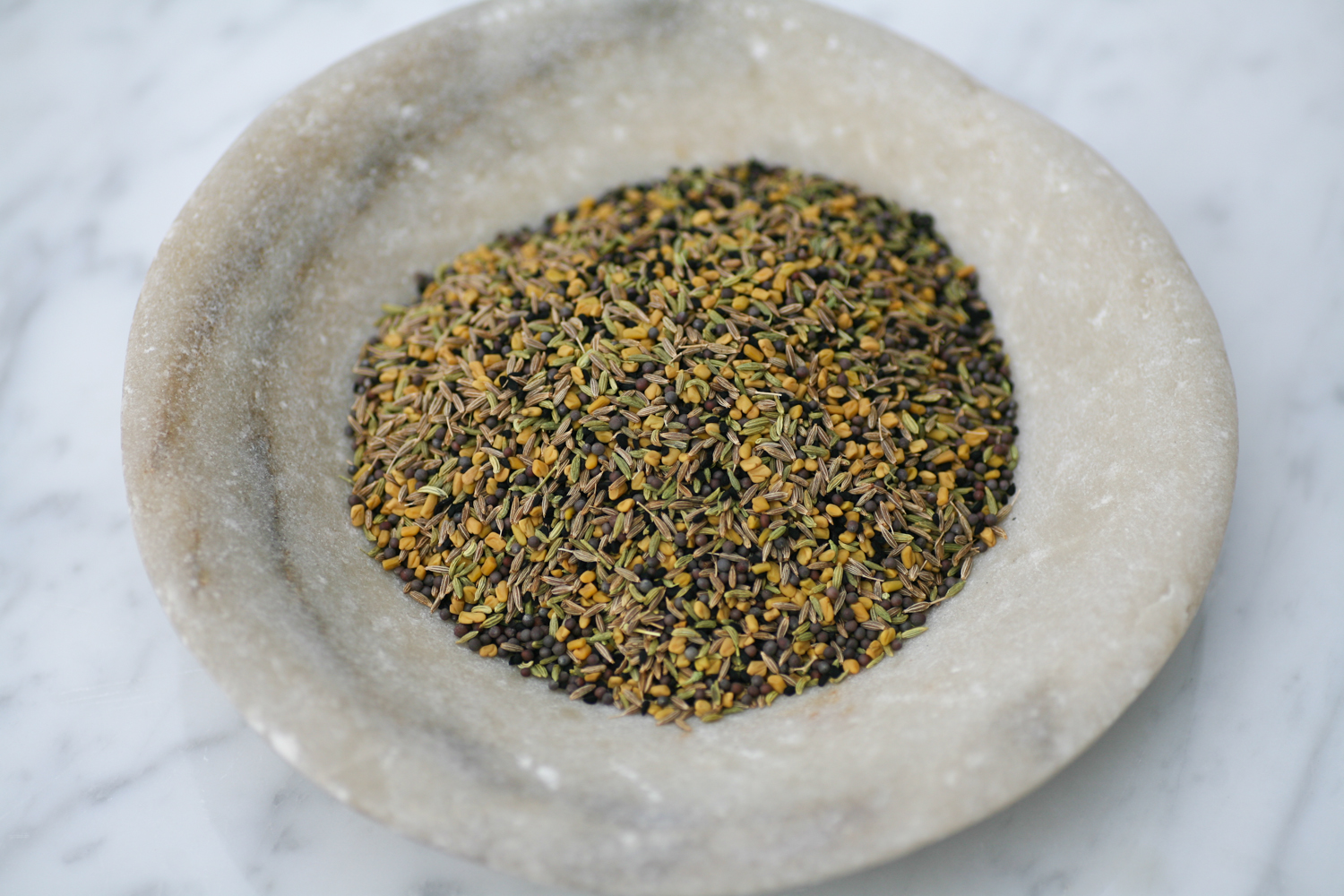
From top right going clockwise: fenugreek, nigella, fennel, black mustard, cumin seeds

We’ve all heard, and no doubt use, Chinese Five Spice, but the Indian equivalent, Panch Phoron, for some reason is not given as much PR and voice in the West and yet across Bengal, it is a spice mix that is commonly used in every home and very much cherished.

When I launched my blog way back in 2011 one of the first recipes that I posted was my absolute comfort food – red split lentil dal. I cook it often as it is ridiculously easy and provides me with a quick-fix nourishing meal. You can choose whatever vegetable, if any, you need to use up, giving the dal a different twist every time you prepare it. A key seasoning to the dal, which imparts the unmistakable flavour, is panch phoron and whilst I am able to source it from a local Indian supermarket, I know that for some people getting their hands on this magic ingredient could be harder.

IMG_7292

So I wanted to show you how to make your own panch poron. Panch in Bengali is five and phoron is spices and these five spices are: nigella seeds (other wise known as black onion seeds, Kalonji or kalo jeera), fennel seeds (mouri or saunf), fenugreek seeds (methi), black (brown or yellow) mustard seeds (rai) and cumin seeds (jeera). The aromatic spices working together provide a  considerable depth of flavour to any dish and especially to dal.

IMG_7312

Unlike most spice mixes these are not ground to a powder but are cooked whole, either dry roasted in pan or placed in a little oil until they begin to pop and release their flavours – this is known as tempering. There are significant health benefits from eating the spices. In short: cumin aids digestion, fennel contains vitamin a, e and c as well as anti-oxidants, fenugreek aids metabolism, mustard seeds contains omega 3 fatty acids as well as being a good source of selenium and magnesium, nigella seeds balance the hormonal system and have healing qualities.

They store for months in an air tight container so if you make up a batch that should last you for some time as you only need a teaspoon or two every time you use it in a dish.

IMG_7321

There are a couple of lentils that do not require soaking over night and take a very short time to cook. Masoor dal or red split lentils, as they are more commonly known, are a staple in my store cupboard. From cleaning thoroughly to cooking, the dal takes no longer than 20 minutes to prepare – and that’s being generous – on average it’s a 15 minute meal to prepare and cook. Oooh Jamie Oliver would be so proud!

IMG_7322

Red split lentils are also very reasonable to buy so all in all this dish is healthy, speedy and economically friendly. A win win surely!

IMG_7358

I eat this dish all year round and like to change the consistency from a more runny, soupy dish to a thicker dal that may be eaten the Indian way, with your hands, accompanied by some rice or naan.  When the months turn colder I tend to gravitate more and more towards dals and soups to warm me up so this really is the perfect autumn meal to give me that inner glow.

Panch Phoron – Bengali Five Spice

Makes enough to last you for months

3 tbsp cumin seeds

3 tbsp fennel seeds

3 tbsp fenugreek seeds

3 tbsp mustard seeds (I tend to use black, but brown/yellow is also fine)

3 tbsp nigella seeds (black onion seeds)

1. In a bowl mix all the seeds together thoroughly and place in an air tight container.

********************************

Red Split Lentil Dal

Serves 2

200g red split lentils (masoor dal)

500ml of water, add more if you would like it a thinner consistency

1 tbsp oil (mustard,vegetable or sun flower oil)

1.5 tsp panch phoron

2 fresh chilli (red or green), chopped in half

1 tsp turmeric

1 tsp salt

5 cherry tomatoes (or carrots, courgette, marrow, peas etc)

optional

fresh coriander, to serve

lemon wedge, to serve

1. Boil the kettle and meanwhile rinse the red split lentils under the tap so as to fully clean them. Then place the boiling water in the pan with the lentils. Boil for about 10 minutes on a low heat, the lentils will become less orange in colour during the boiling.  If you are going to add a carrot you need to add it to the lentils at this stage so that they are soft in time. Please note you may need to add more water if the water is completely soaked up by the lentils.

2. In a frying pan warm the oil and when it is hot add the panch phoron, fresh chilli and turmeric. Once the panch phoron begins to pop and release the flavours – this will be around 15 seconds, give it a quick stir and then add a ladleful of the watery dal into the frying pan and mix the ingredients together.

3. Now place the contents of the frying pan back into the main pot with the red split lentil and stir.

4. Add the quartered tomatoes (or peas, courgette, marrow, spinach) at this stage and simmer gently for a few minutes.  Add salt to taste.  If you want it more soupy, add more water and if you want it thicker, let it simmer for longer.


Mexican Tortilla Soup

IMG_5849

It’s been half term this week so until now I ‘ve not had a second to sit down and actually write a blog post. I had wanted to put up one of my ‘en papillote’ recipes, but although I ended up eating three fish meals ‘en papillote’  this week each time it was in the evening and by the time the little parcels of deliciousness came out of the oven the lighting was frankly too dark to get a good shot. Lightening or rather natural lightening is key to good food photography and whilst I am still learning I feel it is important to heed this one basic rule. When I started food blogging two years ago, virtually to the day, my food photography was pretty appalling and whilst I have not got to where I want to be quite yet, it has at least improved. This shot was taken at night and I look back at it now and cringe – in fact I think I may even re blog the recipe – Chilli Crab Linguini – with more appealing photographs as the recipe is a keeper and perfect for a midweek supper.

Anyway I digress, the recipe for today’s blog is straightforward and perfect for a light lunch. It uses a spoonful of the chipotle sauce that I blogged about a couple of months ago – hands up whose attempted to make it? I made another batch of 7 pots the other day as all the others had finished. By all means buy a ready made chipotle sauce but if you have a little bit of time (it really does not take long) I really urge you to try making your own chipotle sauce – recipe here.  The chipotle gives the soup an earthy, delicately spiced flavour – for those who have not tried chipotle chillies before they are NOT ‘blow your mind’ type of chillies but more of a smokey, gently spiced chilli that keeps you coming back for more. My seven year old loves the soup and does not find it too spicy for her palate.

Mexican Tortilla Soup

adapted from Thomasina Miers – Mexican Food Made Simple

Serves 6

4 tbsp olive oil

2 onions, sliced

3 garlic cloves, chopped

1 corn tortilla, broken up

1 tbsp of chipotle sauce

2 (400g) tins of tomatoes

1 tbsp brown sugar

1 tsp fresh oregano (or dried)

1.5 litres chicken/vegetable stock

salt and pepper to taste

Garnish

2 corn tortillas, chopped into 1 inch strips

vegetable oil, for frying

4 pasilla dried chillies, deseeded and stems removed (or you could use ancho)

100g feta cheese, crumbled

handful of fresh coriander, chopped

half a lime per serving

(You can also add avocado and sour cream although I omitted them for this shoot)

1. In a large pan – I find my large casserole Le Creuset pot is perfect for this – add the olive oil and when it is hot add the onion and gently cook for around 10 minutes before adding the garlic and the broken up corn tortilla. Leave these three ingredients to cook for another five minutes.

2. Now add the chipotle sauce, brown sugar, tinned tomatoes, oregano and a sprinkling of salt and pepper. Leave to cook for another 10 minutes before adding the stock and simmering for a further 10 minutes.

 3. Using a hand blender, blend the soup until smooth and then let to simmer gently for a few more minutes.

4. While the soup is simmering, place the pasilla chilles in a bowl of warm water for 10 minutes and then remove the stems and deseed. Pat dry with kitchen paper.

5. Heat up some vegetable oil in a small pan. You want to make sure that there is enough vegetable oil so that the tortilla will float on the top. I find that 200ml is more than enough – (you can reuse this oil fyi!). When it is hot and small bubbles are rising to the surface, gently add the strips of corn tortilla. They will sizzle immediately and begin to bronze quickly so move them around the pan for a few seconds so that they are bronzed all over. Remove with a slotted spoon and place on kitchen paper before transferring to a bowl.

6. Delicately place the chillies in the remaining oil. If they are still wet at all they will spit so be vigilant when placing them in the oil. Move them around in the oil for a few seconds then also place on kitchen paper. Chop up into bite sized portions and place into a bowl.

7. Crumble the feta, roughly chop the coriander and half the limes. (if you are using avocado – chop this is up into small cubes). Place in bowls on the table so that the hungry masses can add whichever garnish they wish to their Mexican tortilla soup.

Also if you are using sour cream, place in a bowl so those who wish can an add a dollop to their soup. I had this all ready and then forgot to photograph the sour cream on the soup as well. A case of being hungry so quickly wanting to photograph the soup and then eat with the rest of the family!


Vietnamese Pho Bo – Beef Noodle Soup and finding the perfect cooking course in Hoi An

IMG_5336

Vietnamese cuisine is to put it simply, ‘heavenly’. After my first bite of a Banh Mi, from Banh Min 11, back in London, not that long ago, I knew that it was going to be a culinary love affair. Since arriving in the motherland it has not disappointed. Each meal we have eaten has been a multitude of delicate, fragrant flavours – spices that sing to you and dance on your tongue.

IMG_5119

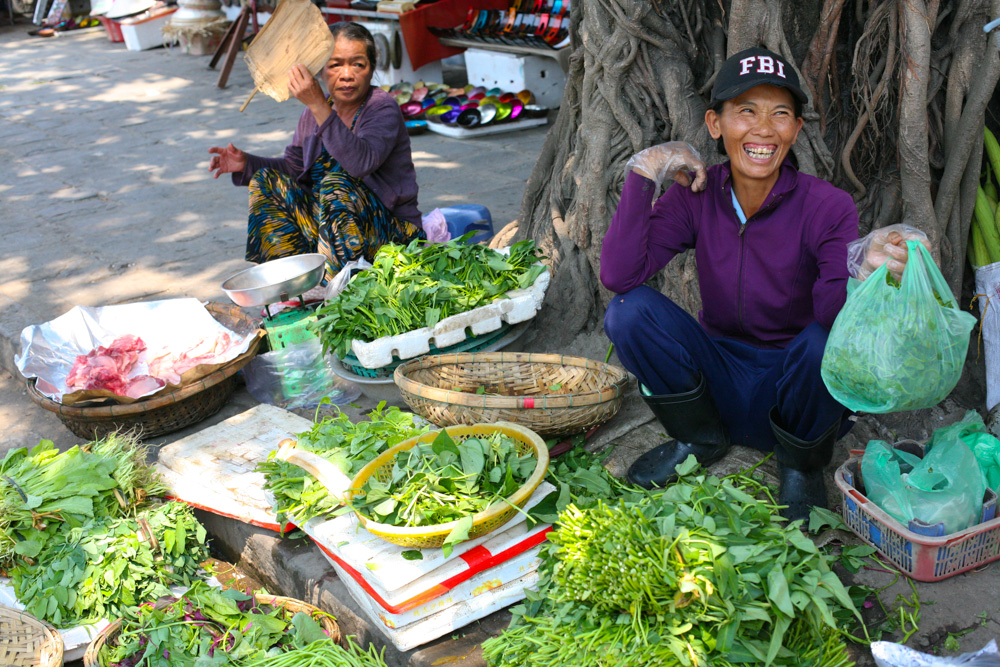
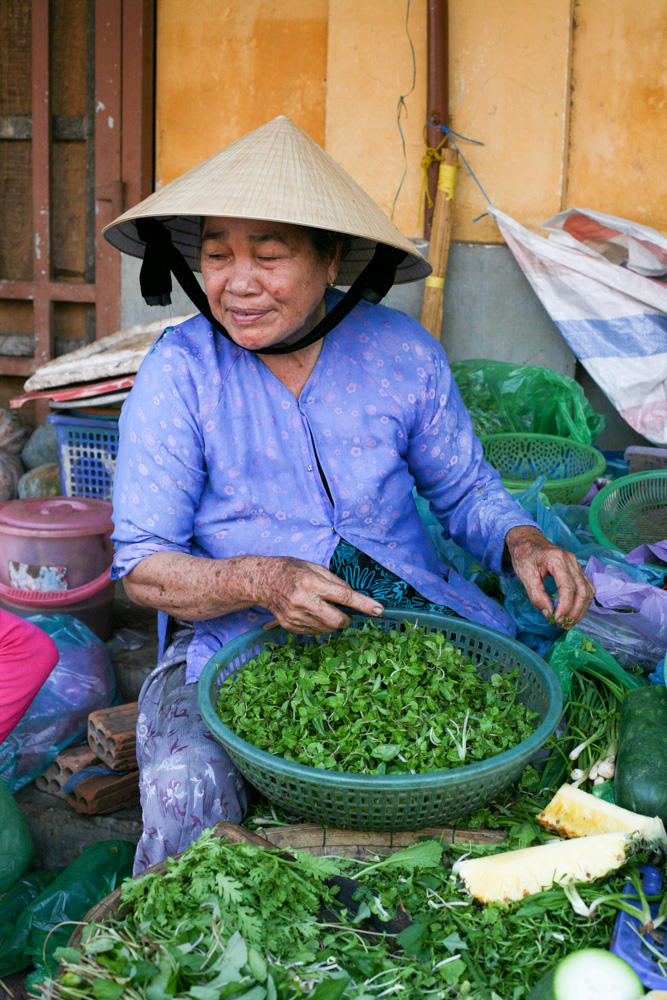
Herbs feature heavily in most dishes and add real fragrant lift. I was sufficiently enthused that I am going to attempt to grow some of them back in London – for example Vietnamese mint (which I should have no problems growing!), Vietnamese basil, saw tooth coriander, Vietnamese lemon balm, garlic chives. There is a great explanation of Vietnamese herbs here.

IMG_5076

I was keen to attend a cooking course in the UNESCO World Heritage Site of Hoi An and so set about researching a course that best suited my needs. I was given a few recommendations, however, I decided that a course run by the very affable Van, who runs ‘Green Bamboo Cooking School’ suited my needs perfectly.

IMG_5197

The course run by Van offered a detailed tour of the fresh food markets, where we picked up our ingredients; convivial fellow pupils; personal touches by Van who runs the course in her own home; unhurried tutoring over seven hours; a generous range of recipes manifesting itself in a memorable group lunch and a souvenir goodie bag to take home. Throw in door to door service as Van kindly ferried us to and from our hotels, and it is no surprise that Trip Advisor has over 210 positive comments for this class with no dissenters.

IMG_5126

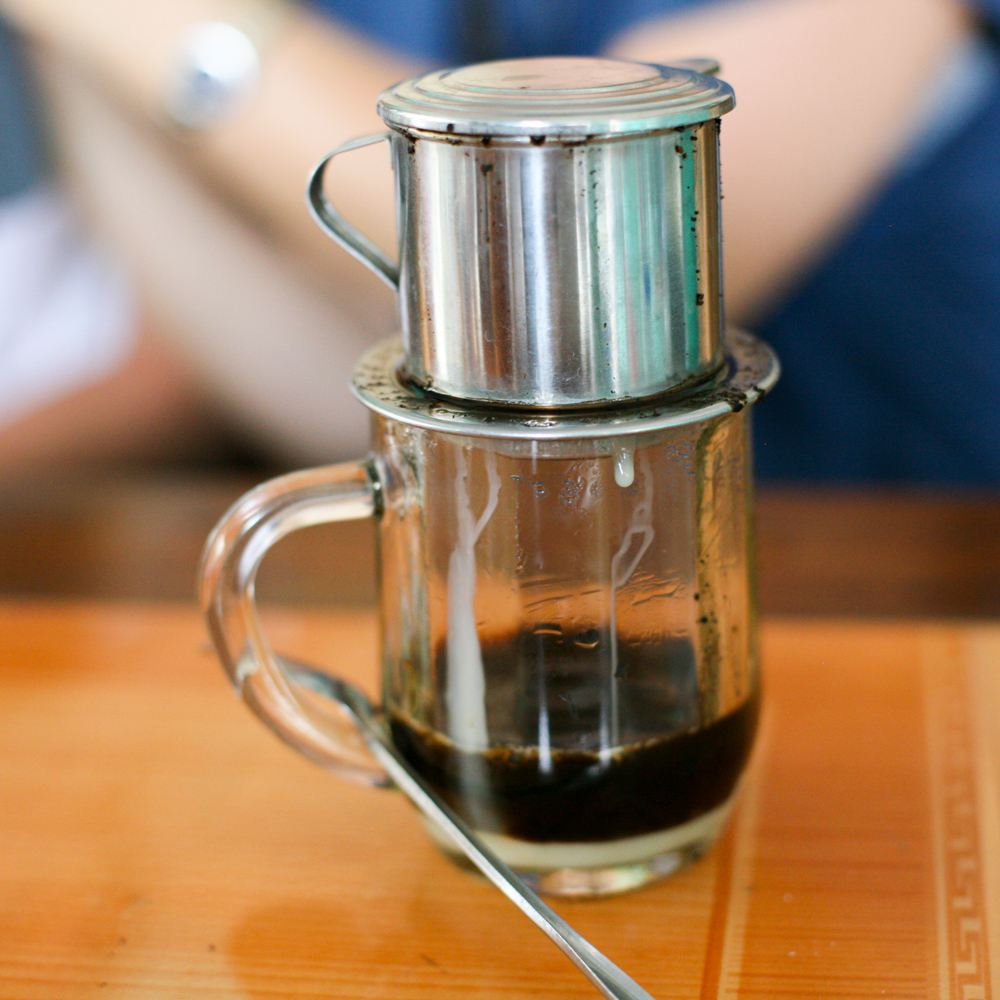
I am pleased to say that course surpassed even my high expectations. Van was charming, spoke excellent English and a was a natural teacher. She also converted me to Vietnamese coffee – the condensed milk being the key.

My fellow students were a really lovely bunch of enthusiastic foodies – three Australians, two Norwegians and two Swiss and all of us had huge grins on our faces all day, clearly revelling in the fact that we had chosen such a perfect course. Here are few photos of the day. Scroll down.

I elected to cook the unofficial national dish of Vietnam – pho bo, beef noodle soup (pronounced ‘fur’). You can find pho stalls on most streets in Vietnam, but to cook it well is the tricky part. I was keen to understand how to cook it from scratch and to make that perfect pho broth. First stop was the market to buy the beef, which was as fresh as it gets as the cow had been slaughtered that very morning. We bought the beef fillet and 1kg of beef bones. Normally Van would have bought the spine, but there had been a run on spine bones that morning from a hotel restaurant, which had bought the lot. So instead we had a range of other beef bones and some shin to add to the flavour.

IMG_5104

Back at Van’s house the first trick I learnt was to gently char the skin of some ginger, shallots and garlic over a flame as this would give the broth a deep smokey flavour.

IMG_5133

It takes no more than a couple of minutes on each side.

IMG_5145

I then removed most of the skin of the ginger, using that back of a teaspoon and also the skin from the shallots and garlic, which is very easy at this stage as they virtually pop out.

After properly cleaning the beef bones, place them in a large pan of boiling water so as to get rid of any scum from the bones before cooking. Submerge them in boiling water for under a minute and then place them into a second large saucepan, which has also has boiling water in it. Discard the water from the first saucepan. You then need to add the charred ginger, garlic and shallots

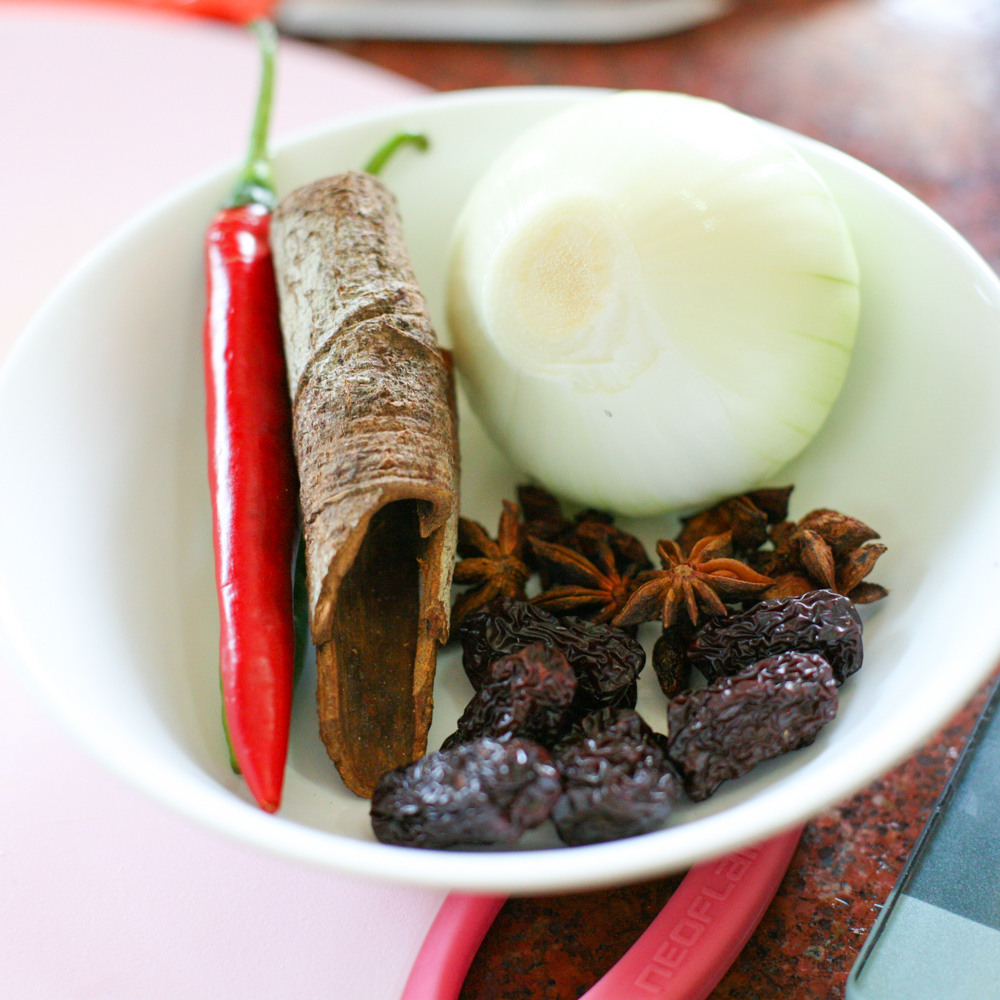
Continue to add the following ingredients to the pan: 2 chillies, stick of cinnamon, 1 large white onion, 5 star anise, 5 Chinese apples. I had not come across Chinese apples before, but they tasted delicious. As they may be difficult to source for some people, dates work equally well. Add some sugar and salt and if you fancy, some beef stock as well (I decided to omit the beef stock, to see how it would taste in its natural state).

IMG_5146

Place a lid on the top and leave to boil away gently for a further 2 to 3 hours. Add more seasoning to taste and beef stock if necessary.

IMG_5154

Meanwhile, very finely slice the beef fillet and leave in the fridge until ready to use.

IMG_5279

Before serving have individual bowls of bean sprouts and fresh pho noodles/rice noodles, (the noodles you have submerged into boiling water for 30 seconds and drained) at the ready. In a large ladle add a little of the raw beef and submerge it into the pho broth so that the broth fills the ladle. Using a fork or chop sticks, move the beef around in the boiling stock in your ladle for 30 seconds (that magic number) so that it cooks through and ladle it over one of the bowls of noodles that you have prepared.

Add a generous amount of fresh herbs, including Asian basil, coriander, spring onions along with a quarter of a lime and chilli sauce to taste. You can also have a small bowl of soy sauce on the side, should you wish to add a little, as well as some sliced green papaya and fresh sliced chilli.

IMG_5283

IMG_5284

I was delighted by the results and despite having eaten a ridiculous amount of the tastiest Vietnamese food, cooked by my fellow foodies, I managed to see off a bowl of my pho bo.

IMG_5289

Eight happy and well fed people were then deposited back to their hotels, along with a goodie bag provided by Van.

I hope that you too will try this tasty version of pho. Watch this space for more Vietnamese recipes over the coming months.

Pho Bo (Beef Noodle Soup)

Adapted from Van’s recipe, who runs Green Bamboo Cooking School

Serves at least 8

500g fresh pho noodles/rice noodles

300g beef fillet

1 kg beef bones – ideally spine bones or shin

5 litres boiling water

1 tbsp beef stock

******************

5 star anise

1 large stick of cinnamon

1 roasted fresh ginger

5 roasted shallots

1 large roasted bulb of garlic

5 dried Chinese apples/dates

1 whole white onion, peeled

2 red chillies, left whole or chopped in two

2 tsp salt and pepper

1 tbsp raw sugar

**********

50g fresh bean sprouts

50g fresh Asian basil

50g fresh coriander

50g spring onion, finely sliced

2 limes, cut into quarters

green papaya, finely sliced

chilli paste to taste

soy sauce, to taste (optional)

2 fresh chillies, sliced (optional)

1. Wash the beef bones under a tap and then place to one side. Meanwhile bring two large pans of water to the boil. In the first add the beef bones and submerge them for just under a minute and then transfer them to the second saucepan. Discard the water from the first saucepan.

2. Over a gas flame place the garlic, shallots and ginger on a metal grill directly above the flame, allowing them to char/roast. After a couple of minutes turn them over so that both sides are equally charred. Using the back of a teaspoon, peel off a little of the skin of the ginger.

3. Add them to the bones and boiling water, along with the onion, chillies, dried Chinese apples/dates, cinnamon stick and star anise. Add the salt, sugar, pepper and beef stock it you wish and place a lid on the pan and let  it boil gently for 2-3 hours.

4. Meanwhile, very finely slice the beef fillet and return it to the fridge.

5. Before serving, warm the noodles by placing them on a slotted spoon and submerging them in boling water for 30 seconds. Drain and place in individual bowls. Add the bean sprouts to each of the bowls.

6. In a large ladle add a little of the thinly sliced beef fillet and submerge into the pho broth so that the ladle is completely full and the beef is submerged. With a fork or chop sticks move the beef around in the ladle so that it ‘cooks’ through properly.  Pour over the noodles. Please note the pho broth needs to be boiling/bubbling away at this stage so that the beef fillet is cooked properly. 

7. Add the fresh herbs, lime, spring onions, green papaya and chilli paste/soy sauce/fresh chillies to taste.

8. Serve immediately and enjoy piping hot.

First impressions of Hong Kong and getting over jet lag

IMG_6478

There is always something rather thrilling about going on a trip or a journey, but when you’ve never visited the destination before there is an added level of excitement and anticipation. The smells, sights, sounds and general fever of the place seize you almost immediately as soon as you step foot on to Hong Kong soil. I always knew that the place would be frenetic with activity but seeing and experiencing it in the flesh is another thing. Hong Kong is buzzing and bustling with people. An initial impression is the sheer number of people who all live here side by side, or perhaps more aptly I should say – on top of, in huge towers reaching to the stars. Vertical living is very a la mode and living in dinky dwellings is standard practice.

IMG_6397

Whilst a lot is packed into Hong Kong there are also places to be found where there is an element of calm and serenity and to watch the world go by. One of the first places that I went to visit was the Man Mo temple, which is the oldest temple in Hong Kong, having being built in 1847. I thought it was necessary to experience the old if I was to truly understand and appreciate the new and besides I always enjoy visiting temples and churches when visiting a new country as I find it helps to better understand the underlying fabric of that country.

IMG_6399

The temple did not disappoint and as I strolled around it I particularly enjoyed the heady aromas from the incense coils that hung from the ceiling. From the outside the temple stands surrounded by tall tower blocks, which makes a slightly surreal sight.

IMG_6400

IMG_6395

Near to the temple I came across this wonderfully vibrant street art that really appealed to me; I think Banksy would definitely approve.

IMG_6427

Getting to know a city I like to amble around on foot as this not only helps me get my bearings but also see what the locals are up to. Street food sellers were out in abundance selling all manners of temptingly delicious snacks to feast upon.

IMG_6456

As our body clock is a little confused at the moment, we are eating at rather random times of the day, that said little Z and big A always seem to be hungry around tea time and therefore are ready for a little cake to give them some energy before more sight seeing then supper. We have come across a number of bakeries selling all manner of wonderful tasting cakes. Egg tarts are popular here as well as buns filled with red bean paste.

IMG_6454

We visited a fish market, but it is unlike the fish markets we have in the West as the fish here were not to eat. Oh no, if you want to find fish and meat to eat as well as vegetables and fruit you need to visit a ‘wet market’ which are scattered all over Hong Kong. I hope to take some photos of these over my stay so watch this space for more on this soon.

IMG_6421

Tropical fish for sale at the Fish Market in Mong Kok

Our first evening meal out in Hong Kong was dim sum at the very popular Din Tai Fung, which is in fact a Taiwanese import. It’s famous for it’s Xiao Long Bao, which are steamed pork dumplings filled with broth and dipped into vinegar and ginger – basically little mouthfuls of joy! I liked the way that they had instructions on how to ‘eat’ the little darlings. How very thoughtful!

IMG_6381

The winner on the dim sum stakes so far though comes from Hutong where we ate delicious tasting dumplings filled with pork and fennel – ones I wouldn’t mind attempting to make when back in London. Another favourite at Hutong was the Chicken Pot with Sichuan peppers, addictively delicious and not as ‘hot’ as you would think!

IMG_6491

As I mentioned we have all been experiencing a bit of jet lag so I decided to make a southing, homely broth for our first lunch on Hong Kong soil. After gathering a few ingredients I made the following dish, which seemed to hit the spot after a long journey. I kept ours vegetarian, but it would taste equally good with a bit of salmon or trout thrown in for a couple of minutes. Here is how to make it.

IMG_6378

Jet lag Noodle Broth

Serves 3 (and enough for seconds)

splash of olive oil

3 garlic cloves, sliced

1 inch of fresh ginger, peeled and thinly sliced

3 tbsp light soy sauce

1 heaped tsp of vegan Bouillon/vegetable stock

boiling water (to cover veg and noodles)

generous handful of Chinese broccoli (Gai Lan) or regular broccoli/spinach/pat choi

6 small tomatoes, halved

3 eggs, boiled, shell removed and halved

2 packs of udon noodles (or 3 if you are serving just adults)

1. Place the eggs into a pan with cold water and when the water has boiled cook the eggs for 4 minutes, less if you like it soft boiled.

2. Meanwhile place a little oil in a medium sized deep pan and when it is hot add the garlic and ginger and stir for a minute before adding the soy sauce.

3. Next add the boiling water so that it reaches a quarter of the way up the pan – you can add more a little later. Add the Bouillon or vegetable stock that you are using and stir well.

4. Add the Chinese broccoli and after 2 minutes add the udon noodles. You may wish to add a little more boiling water at this stage. Taste to see if it requires a little more soy sauce. Add the tomatoes no more than a minute before serving so that they still hold their shape. If you prefer softer vegetables then cook the Chinese broccoli for a little longer, but I find a couple of minutes is more than enough.

5. Serve with a slice or two of boiled egg.

Warming, delicious and ever so quick, before you collapse and have another little sleep.

Other ingredients that would be great to add: fresh chilli, spring onions, fresh salmon/trout, mushrooms.

IMG_6483


Dan Dan Noodles and an alternative Christmas

Christmas this year is going to be somewhat different from our usual traditional Christmases in England, to put it mildly. I have always spent Christmas with my parents, siblings, their partners and my husband and daughters, enjoying good food, mulled wine, long walks in the woods and on the Downs, games (we especially like this one) where we all pretend we’re not that competitive (but we secretly are!), carols and general merrymaking.

This year, however, my husband (Mr B) and our daughters are spending the whole Christmas vacation in the Far East – well, Hong Kong to be exact. Whilst I wasn’t exactly jumping for joy initially at the thought of being away from all the traditional festivities and family in England over that period, I am now thinking of it as an adventure that I will throw myself into and try and embrace.  It won’t be the same as being in England and we won’t try to make it so, instead we’ll have an alternative Christmas that will be exciting in its own right.  There are certain traditions that I will seek out, even over there (I love a good carol), but in many respects it might be refreshing to have a change as a once off.

As bizarre as it might seem, as I have travelled a lot in Asia in the past, I have never been to Hong Kong, so am looking forward to exploring the region and hopefully getting under the skin of what makes Hong Kong tick. I am looking forward to trying the food in particular and somehow I need to adopt a Chinese local to show me the ropes on some of their local specialities. The food markets are also going to be a highlight so if any of you lovely people out there have any recommendations re the above then let me know. On the food front I far prefer low key local as opposed to an ostentatious, flashy restaurant where people prefer to be seen rather than enjoying the food itself – you know what I mean and I am sure you are in agreement! I will blog from Asia so watch this space from mid December.

High up on my Christmas wish list (I hope my family is reading this…..maybe wishful thinking!) is Fuchsia Dunlop‘s book ‘Every Grain of Rice – Simple Chinese Home Cooking’ . For those who don’t know, Fuchsia is a cook and food writer specialising in Chinese cuisine having lived, studied and travelled extensively in China. Back in July (15.7.12 to be exact) there was an article in ‘The Observer’ newspaper with Fuchsia’s recipe for Dan Dan Noodles. I tore it out and promised myself to cook this dish over the coming months. Dan Dan noodles, or Dan Dan Mian, as it is also known, is a real classic Sichuan dish that traditionally is served on street stalls by vendors who carry a long bamboo pole (dan dan) over their shoulders balancing baskets either end full of the soupy noodle dish. There are a multitude of recipes for this dish on the web, but I thought that I would sample Fuchsia’s recipe to begin with.

I can honestly say that this dish is off the charts delicious. Initially when I saw the ingredients I did a double take as I didn’t have them all in my pantry. My local Asian grocers also didn’t have some of the ingredients, in particular: sweet bean/fermented sauce, Chinkiang vinegar and Tianjin preserved vegetables, but this only made me even more determined than ever to get the ingredients necessary to make an authentic Dan Dan noodle dish. My saving grace came from discovering Wai Yee Hong, the online Chinese supermarket, based in Bristol, England. They had everything I needed and delivered the ingredients in a very efficient speedy manner. So if you are at a loss, order on line and the ingredients will be sent to you in a couple of days. Simple and hassle free.

Fuchsia’s recipe serves 2, but I felt it was easier to write it out for 1 person and then you can just double up as necessary depending on how many guests you are serving. I found it easier to make up individual sauces in each bowl and then add the noodles and mince, as opposed to making one bowl and then serving into guests bowls. Basically this way allows for you to alter the sauce slightly depending on personal preference (ie: I omitted the chilli oil when serving my daughters). It’s far more straightforward that it sounds and really takes no time to prepare.

Dan Dan Noodles

Adapted from Fushia Dunlop’s book Every Grain of Rice, whose recipe was printed in ‘The Observer’ 15.07.12. Her original recipe can be found here

Serves 1

(double/ triple/quadruple up according to numbers that you are feeding)

1 tbs vegetable oil

75g pork mince

1 tsp Shaoxing wine

1 tsp sweet bean sauce

1 tsp light soy sauce

100g dried Chinese wheat flour noodles – I use these

For the sauce

1 tsp light soy sauce

2 tsp of chilli oil (I use one that has flakes and shrimp in it), to taste

3 large heaped tsp Tianjin preserved vegetables

1 tsp Chinkiang vinegar

2 spring onion, finely sliced at an angle

300ml noodle cooking water stock (200ml if you are serving in smaller bowls or if you prefer it less soupy)

1. Add the cooking oil to a pan and stir fry the pork mince until it browns in colour.

2. Add the Shaoxing wine and stir into the mince, followed by the sweet bean sauce and soy sauce. Cook together for a few more minutes pressing the mince to the side of the pan with the back of a spoon so that it begins to clump together slightly.

3. In a serving bowl add all the ingredients for the sauce EXCEPT the noodle cooking water stock. If you cooking for others you can alter the quantities of the chilli oil depending on their love of chilli. For my daughters I omit the chilli oil and include all the other ingredients.

4. In a pan boil the noodles for the time it states on the packet – around 4 minutes. Stir them with chop sticks so as to separate them and prevent them from sticking. Noodles are similar to pasta in that you know they are done when the white centre has disappeared.

5. Drain the noodles, making sure to keep the noodle water to one side as this will become your stock. Run the noodles under cold water and drain off completely.

6. Place 300ml of noodle cooking water (or 200ml if you are using smaller bowls) into the serving bowl with the sauce and stir in together. Add the noodles and the mince on top. Give a good stir so that the ingredients are combined well and serve immediately.

The sauce quantities are very much a case of personal taste so if you prefer to add more chilli oil, Tianjin preserved vegetables, spring onions etc then go ahead and experiment to see what you like best. I do NOT add any salt to this dish as I find the soy sauce more than makes up for salt, however, Fushia does add a  1/4 tsp in her recipe so taste and see if you think it needs to be added.

A few other books on my Christmas wish list include:

Jerusalem by Yotam Ottolenghi and Sami Tamimi

Spice Trip: The Simple Way to Make Food Exciting by Stevie Parle and Emma Grazette

Asian Tofu by Andrea Nguyen

Burma: River of Flavors by Naomi Duguid

Are there any others that you think should be on it? I’d love to know of any you would recommend. Don’t be shy and leave a comment below.


Nigella’s Italian Roast Chicken with Leeks, Peppers and Black Olives and Leftover Chicken Soup

We had a family gathering last weekend and I wanted to cook a no fuss meal that would literally cook itself freeing me up to enjoy my guest’s company. So while we all sipped on our Aperol with Prosecco – a drink that I was introduced to this summer when we at our friend’s wedding in South Tyrol (and which has apparently become very in vogue in London this summer!) and caught up on each others news, the chicken and vegetables were nicely roasting in the oven without any need for stirring or turning over.

I paired them with good old roast potatoes (that I had parboiled first and then drained and given a good shake in the saucepan before putting them on a roasting dish with a splash or two of olive oil) that are always a home run at a family occasion. Couscous would work equally well or even mashed potato.

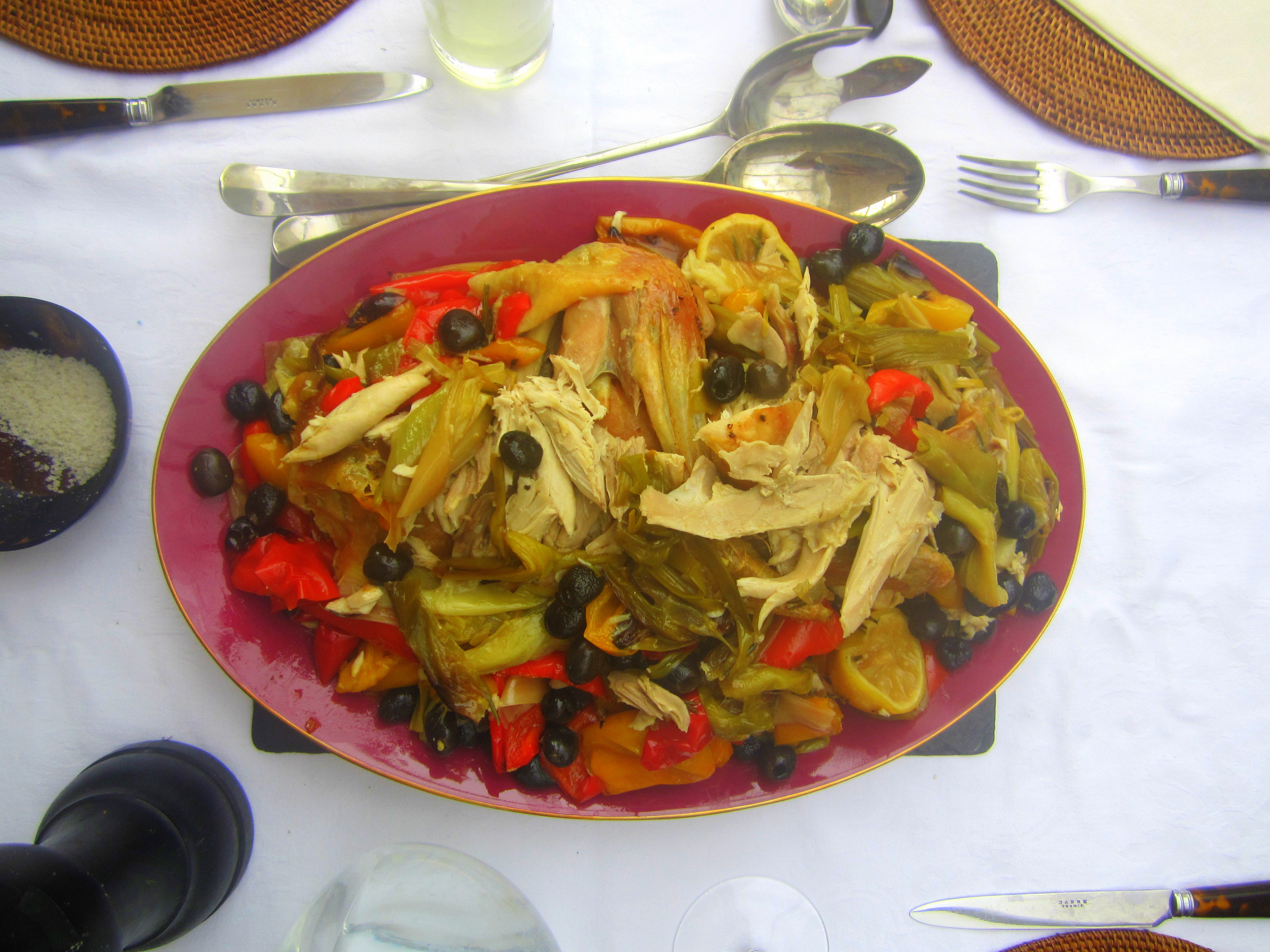
The saltiness from the black olives and the sweetness from the peppers and leeks worked a treat and together they created a delicious gravy to pour over the succulent meat and roast spuds.

I love it when guests can help themselves to what they want as this tends to avoid wastage as they only take what they are going to eat and also it’s a fun and relaxing way to all share a meal together. I chopped (no carving here) the chicken up so that there were lots of options on what meat they could dig into. Around the side I scattered the leeks, peppers and black olives and in a separate gravy jug I gathered all the juices.

With the remaining two carcasses I made some homemade stock, which I then turned into a delicious chicken soup for lunch the followingday. Easy, healthy and no wastage – other than the bones.

Italian Roast Chicken with Leeks, Peppers and Black Olives

adapted from Nigella Lawson’s latest series Nigellissima on the BBC 

Serves 8 (simply halve the quantity for serving 4 people)

2 whole chickens (1.3kg)

2 whole fresh lemons – halved

6 fresh rosemary sprigs

8 leeks, washed and trimmed

6 peppers – red/yellow/orange, quartered

300g black olives

good splash of olive oil

sea salt and pepper

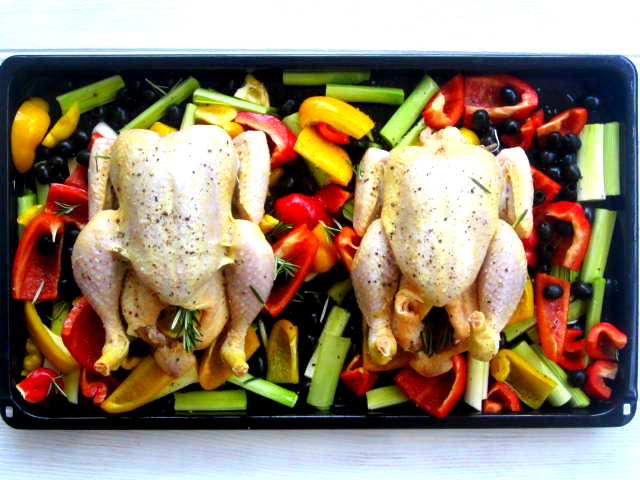
1. Prepare the peppers and scatter them on a large roasting tray along with the leeks, which should be cut to 3 inches in length and then halved. Evenly spread the black olives over the vegetables along with two sprigs of fresh rosemary.

2. Take off any string on the chickens and place a whole lemon – cut in two, into the inside of each chicken along with two rosemary springs in each. Season with pepper and salt and splash the chickens and vegetables liberally with olive oil.

3. Place in a preheated oven at 180 degrees if using a fan oven (200 degrees if not!)  for approximately 1 hour 15 minutes – or until the chickens are bronzed and roasted and the juices are running clear when you cut into the chicken with a sharp knife.

4. Serve on a warm large platter with the chickens cut up in the centre and the vegetables and olives surrounding the meat so that your guests can help themselves.

5. There will be a good amount of juices left in the roasting dish, which you need to transfer to a gravy dish for people to pour over their food.

I served mine with roasted potatoes however, couscous or mashed potato would work equally well.

Homemade Chicken Soup

Serves 4

left over chicken (1 or 2) carcass

1 large carrot, chopped into three

1 medium sized onion, chopped in two

3 bay leaves

water to cover the carcasses

a good glug (half a wine glass) of cheap white wine

1 chicken stock cube (optional)

2 tbsp single cream

juice of half a lemon

pepper and salt

1. Place the chicken carcasses in a large pot and cover with water. Make sure that there are no lemons remaining within the chicken carcasses when you are making the stock.

2. Add the carrot, onion, bay leaves and wine to the pot and simmer gently for an hour and then set aside to cool.

3. Strain the liquid through a sieve and return to the pot along with the carrot and onion. Place the chicken carcasses on the side and remove all the remaining meat with your hands and place into the pot. The meat with easily come away from all the bones. Bits of rosemary will also be on some of the meat from when you first roasted it. Add this to the pot as well as it adds a lovely taste to the soup.

4. Gently heat up the liquid once again and add the single cream, one chicken stock cube (optional), juice from half a lemon, some more water if you want it to go further. Season to taste.

5. Using a hand blender, blend the liquid until it is smooth.

6. Serve piping hot with a quarter of lemon on the side should guests which to add a little more lemon and some crusty bread.


Bavani’s Cinnamon and Ginger Dal (Parripu)

Very recently I was served this comforting and fragrant dal by my Sri Lankan friend, Bavani. It tasted so darn good that I immediately asked her what she put in her red split lentil dal and proceeded to cook it the following night for the toughest of critics….my husband AND father-in-law. Yes I am definitely keen and eager when I come across a good recipe! They both gave it a definite thumbs up and declared it was unlike all the other dals they eat on a regular basis.

Don’t get me wrong I love my red split lentil dal, but this one tastes so completely different that I will definitely be cooking it from time to time. It’s not a true Sri Lankan dal or parripu, as it is known in Sri Lanka, but instead Bavani’s version of lentil soup for the Western diet. A true Sri Lankan dal would contain turmeric, green chilli mustard seeds, curry leaves, curry powder etc, but I think Bavani’s alternative will definitely appeal to a wide audience. It has a gentle chilli kick and subtle cinnamon and ginger undertones, very different from my red split lentil dal which has turmeric and panch phoron.

Red split lentils are the easiest of all lentils to cook as they are cooked in 10 minutes and do not need any soaking first – so perfect for a quick meal when you are tired and exhausted after a manic day. They are also really cheap and most importantly – healthy, so perfect for the bank balance and general well-being.

Bavani’s Cinnamon and Ginger Dal (Parripu)

Serves 4

400g red split lentils

2 tbsp mustard oil (or vegetable if you don’t have mustard)

1 whole garlic bulb, peeled and sliced

1 thai red chilli, thinly sliced

2 cinnamon bark sticks

half tsp of asafoetida

1 tsp cumin powder

2 inch of fresh ginger thickly sliced

2 carrots, sliced into small cubes

1 tsp salt

fresh coriander, chopped to serve

1. Place the red split lentils in a pan and run under cold water and wash through thoroughly, using your hands, a couple of times. This is to clean the lentils before cooking them.

2. Place boiling water into the pan with the red split lentils so that there is a good inch of water above the lentils. During the course of the cooking you may need to add more boiling water if all the water has been soaked up or if you prefer the dal to be more soup like in consistency! The lentils should be cooked after ten minutes – if you place one lentil between your forefinger and thumb it should be soft to touch; the colour will also have lightened.

3. In a large separate saucepan/wok heat the mustard oil and add the garlic and red chilli and gently cook for a couple of minutes before adding the carrots, cinnamon bark, cumin powder, asafoetida and the fresh ginger. (You want to keep the ginger fairly thickly sliced so that they are easy to identify and scoop out before serving). On a low heat mix the ingredients together for roughly 6 minutes.

4. Transfer a large spoonful of the cooked red split lentil dal to the saucepan and mix together and then place all the ingredients BACK into the saucepan with the dal. Stir in throughly and add the salt – to taste.

5. Let the dal simmer for a further five minutes or until the carrots are completely soft. You may find you need to add a little more boiling water at this stage. It is not an exact science but more one of personal taste. Add a little water at a time as you can always add a little more if necessary.

 6. Before serving scoop out the fresh ginger and cinnamon bark. Serve with fresh coriander and eat either on its own, with rice or a chapati.

It also works really well accompanying Speedy Salmon Curry,  Goan Hot and Sour Pork Curry, Chicken Liver Curry, Goat Curry


Beat this Borscht

I hadn’t planned on posting this Borscht recipe on my blog. I’ve cooked Borscht numerous times in the past and it’s always been…well…..fine…but never really much more than that. I then found a new recipe in my soup bible called ‘500 Soup Recipes’, ok my secret’s out, I AM A BIG SOUP FAN, but those who follow me I think you kind of already new that, right?

Anyway, this Borscht recipe is different from all the other Borscht recipes I’ve cooked in the past, namely that it is not smooth. Instead the beetroot are cut into thick strips, rather like chips in fact, along with the carrots and celery and because of this and the muslin bag full of herbs and spices, gives the soup an added dimension that really makes it a winner. I have followed the recipe loosely but the end result got the definite thumbs up from both myself and Mr B.

Beetroot is easy to find at this time of year and since I had just over half a dozen in my fridge that were beginning to look a little bit sorry for themselves, I decided to dedicate a recipe solely to them, well almost solely! The colour is a brilliant deep crimson and stains like crazy, so unless you like living on the edge, definitely don’t wear white when eating or cooking this dish.

As its January Mr B and I are on a bit of a health drive so we didn’t bother with the sour cream, with scattered dill or chives on top. It would have probably made a prettier photograph, but hey my waist line is thanking me for it.

Give it a try and please let me know how you get on, I’d love to hear what you think. Do you prefer it to the smooth variety that is more ubiquitous?

Borscht

Adapted from 500 Soup Recipes by Tim Smart and Bridget Jones

Serves 4-6

7 medium/small uncooked beetroot, peeled

2 carrots, peeled

2 celery sticks

2 tbsp butter

2 onions, sliced

2 garlic cloves, sliced

4 tomatoes, chopped

1 bay leaf

1 large handful of fresh parsley

2 cloves

4 whole peppercorns

2 pints of vegetable stock

75 ml cider vinegar, or to taste

sugar, to taste

salt and pepper, to taste

1 muslin

1. Peel the beetroot and carrots and cut into fairly thick strips. Also cut the celery into bit sized pieces. Heat the butter in a large pan and when it is melted add the sliced onion and stir on a low heat for 5 minutes.

2. Now add the beetroot, carrots and celery and cook for a further 5 minutes before adding the garlic and chopped tomatoes. Stir into the other vegetables and leave to simmer for a further 2 minutes.

3. Using a large piece of muslin, place the bay leaf, fresh parsley, cloves and peppercorns into the centre and tie the four corners together with a piece of string. Place the muslin  into the pan with the end of the four corners sticking out over the top of the pan slightly. Add the stock and make sure that all the vegetables and muslin pouch are submerged as much as possible. Bring to the boil and then simmer for 1 hour 15 minutes or until the vegetables are tender.

4. Discard the muslin pouch and add the cider vinegar. Pour in a little at a time and taste so that it creates the right balance of sweet and sour. Add a sprinkling of sugar if necessary. Season, stir and then ladle into bowls. Add a dollop of sour cream on top with either dill or chives.


Chicken Noodle Soup – fuel for the festive season


I don’t know about you, but if your household is anything like mine, we ALWAYS end up with a little bit of chicken leftover after a sunday roast. The amount though is not enough to have a full on meal again, but there is enough to make a meal from it………………if you get my drift.

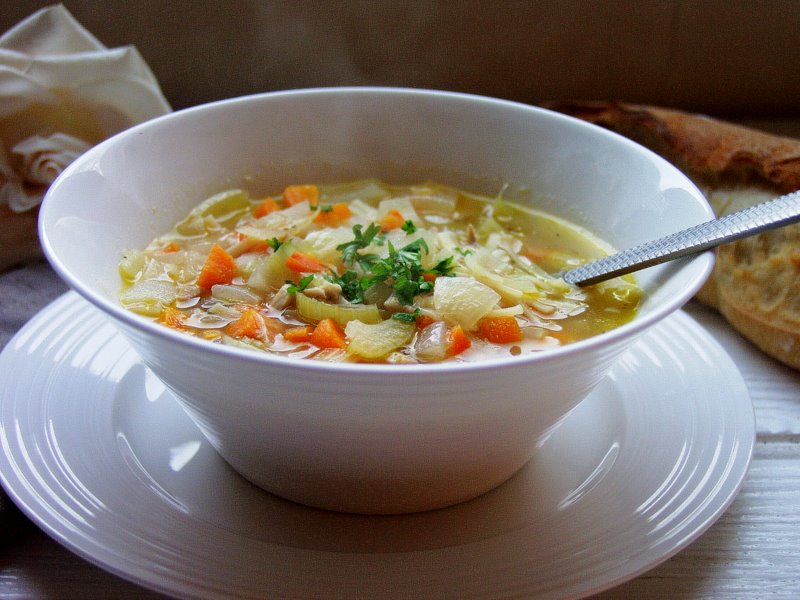
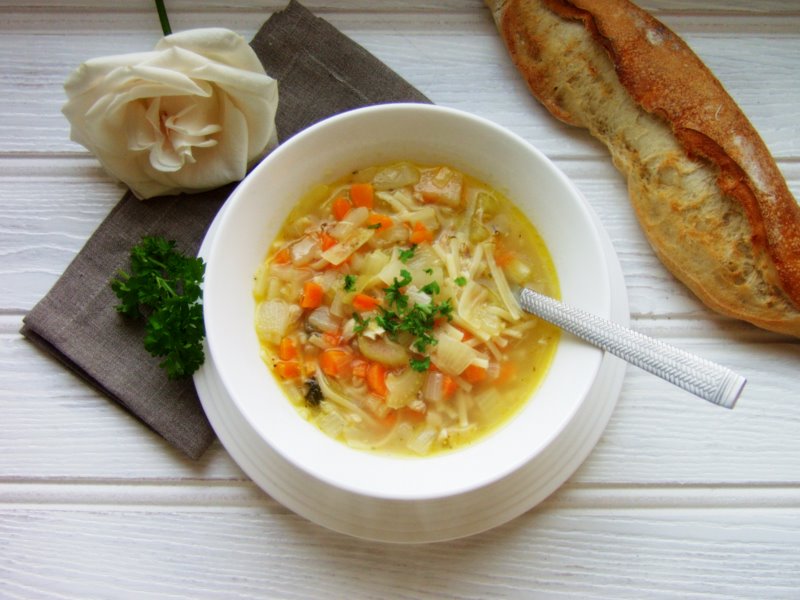
One dish which is great for leftover chicken (or by all means buy a couple of chicken breasts and create if from scratch) is ‘chicken noodle soup’, which accompanied with a fresh baguette to dunk in the juice, certainly hits the spot. Its a great Monday night supper and takes no time to prepare and is a feast for all the family to enjoy and share.

As November fades away and Advent waits eagerly in the wings, I am sure that some good old fashioned comfort food like chicken noodle soup will help us all get through those Christmas engagements that we eagerly accepted. It’s only when we have our diaries in front of us that it begins to dawn on us that perhaps we should have accepted less and had a night in. So, one and all, let us prepare our bodies, minds and spirits for the great social quest that lies before us: the month of December.

Do you have a favourite comfort recipe that warms your cockles and boosts your immune system?

Let the good times roll.

Chicken Noodle Soup

Serves 4-6

100g carrots, peeled and cut into small cubes

1 large onion, chopped finely

1 tsp of crushed garlic

2 celery stalks, chopped finely

glug of olive oil

1 tsp of rock salt

fresh black pepper

fresh sage

fresh parsley

2 tsp dried herbes de Provence

2 bay leaves

half a lemon

1 tsp of vegetable bouillon

1 left-over chicken/2 chicken breasts, chopped into bite sized portions/strips

handful of dried spaghetti or linguine

fresh baguette for dunking

1. Remove all the leftover meat from the chicken and cut into small bite sized mouthfuls and place to one side. Put the remaining carcass in a casserole pot and add the herbes de provence and bay leaves and cover with boiling water.  Simmer gently for 30 minutes and then strain off the liquid. This will become the basis for your soup. Discard the remains of the chicken. If you do not have a leftover chicken to make stock I find bouillon vegetable stock works wonders.

2. Using the same casserole pan, add a glug of olive oil – basically enough so that it pretty much covers the bottom of your pan. Add the onion and let them sweat on a low heat, stirring occasionally. After 5 minutes, add the garlic, carrots and celery stalks and continue to stir. ONLY if you are using fresh boneless chicken breasts – add them at this stage. Place the lid on the casserole pot so that the vegetables really get to sweat. After 3-4 minutes, add a couple of torn sage leaves, rock salt and a good amount of fresh black pepper.

3. Add the chicken stock, which should be between 3-4 pints. Put in a small amount at a time and continue to add until you have the consistency that you like for your soup. Please note, however, that when you add the dried pasta it will soak up a fair amount of the stock, so you need to put in a little more than you think. You will not need more than 4 pints though altogether. Even though I made fresh stock I often like to add a little vegetable bouillon (stock cube), to give it an extra boost. Apologies to you purists out there!

4. Break a handful of dried spaghetti/linguine into the pot. Keep the lengths around 3cm in length. Add half a lemon, squeeze it as you add it to the soup. Stir the soup and gently simmer for 10 minutes or until the pasta is cooked. In the final few minutes add the chicken to the soup and mix all the ingredients together.

5. Serve piping hot in bowls with a scattering of freshly chopped parsley and a baguette for dunking.