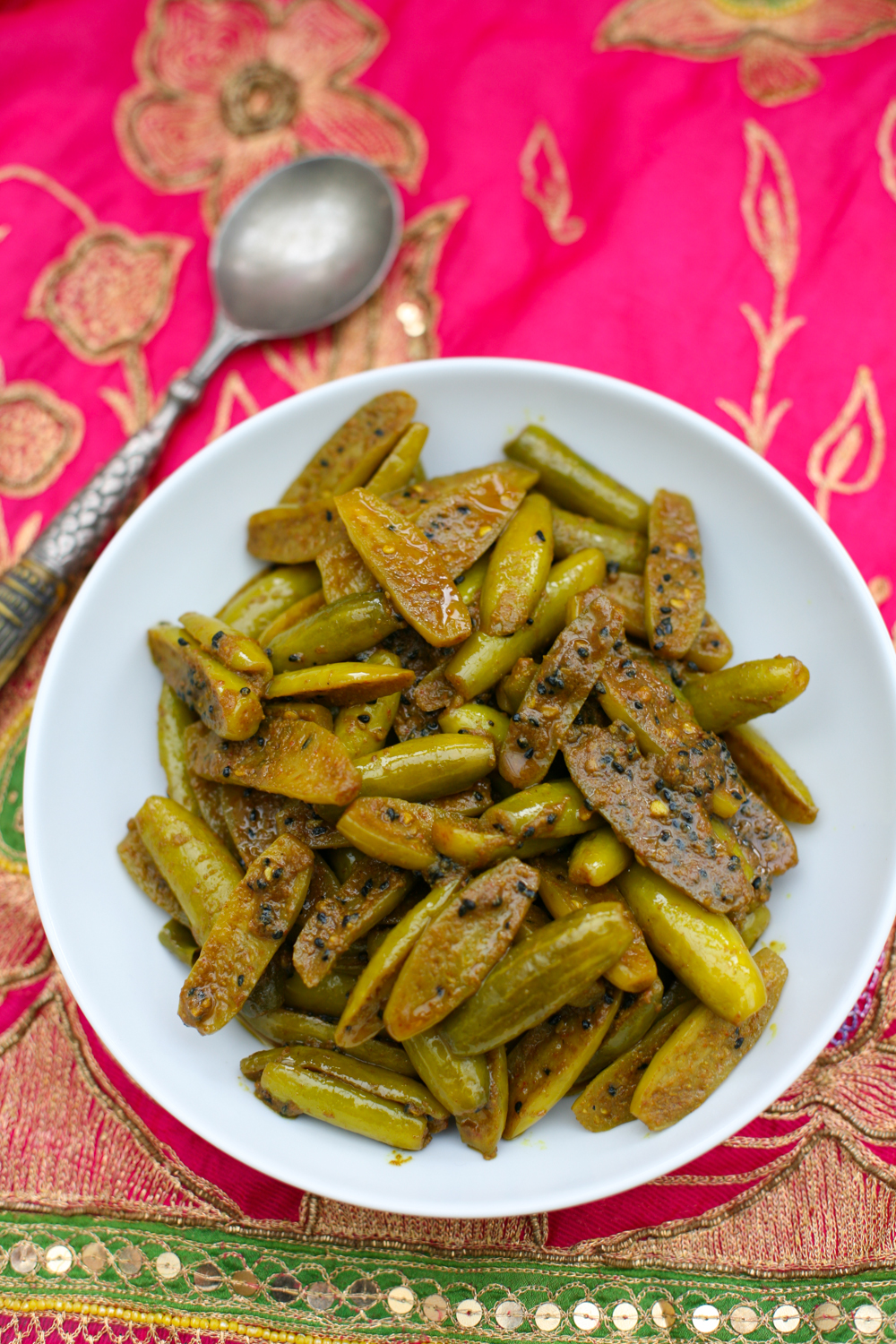
Ivy Gourd Curry – also known as Gentleman’s Toes

IMG_7967

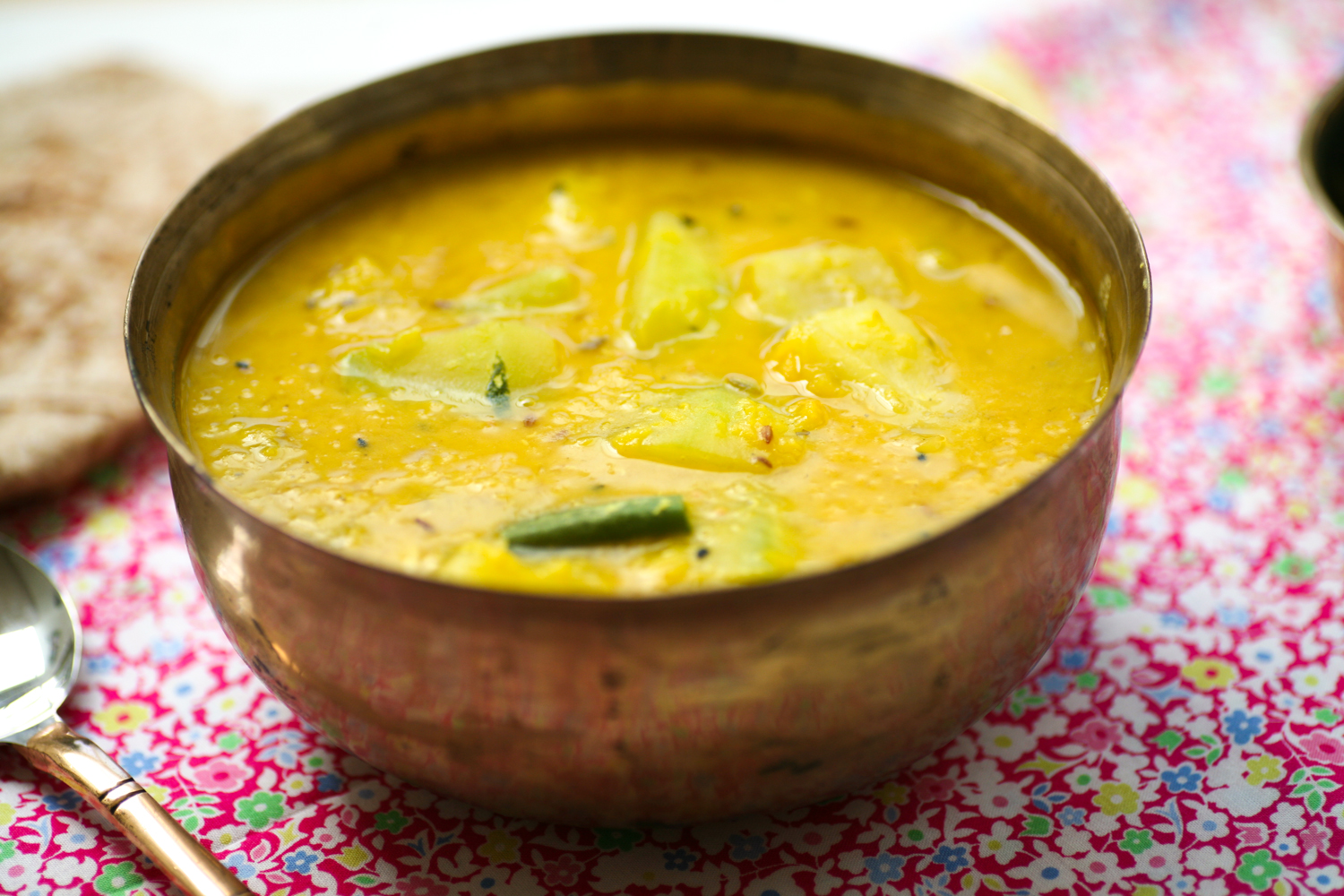
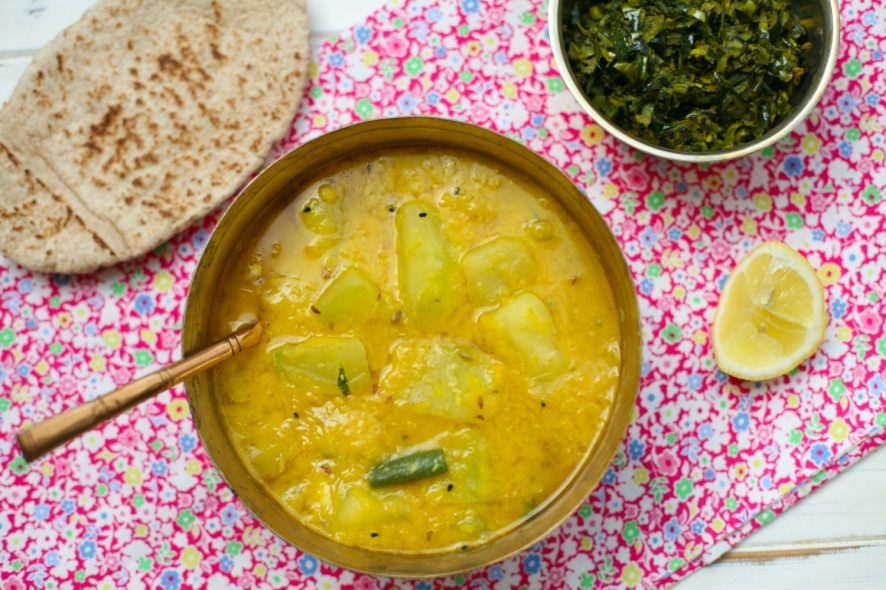
We all know that lady’s fingers is okra right? But gentleman’s toes? I had no idea there was a vegetable with such an unappealing name, I mean seriously who wants to eat a gentleman’s toe?

IMG_7931

My Bengali mother-in-law introduced them to me only recently and since then I have become hooked. They look similar, and taste not dissimilar in fact, to gherkins which we are huge eaters of in my household – seriously we get through jars of them, even my four year old has a weakness for them. Gentleman’s fingers is also more commonly known as ivy gourd or in Bengal they are known as kundri. Baby watermelon or little gourd are two other names by which they are known.

IMG_7952

Granted, you are unlikely to find them at the big supermarkets but head to any Indian subcontinent grocers and you’ll stumble across these fabulous little vegetables. I know for a fact that you can source them in Tooting and I imagine the same goes for Brick Lane, Southall, Hounslow etc. They are commonly eaten in India and are a great source of vitamin A and C. Eaten alongside a dal and you’ll have a very filling and tasty vegetarian supper.

IMG_7976

Ivy Gourd Curry

Serves 4

550g ivy gourds/kundri/gentleman’s fingers, halved lengthways

4 tbsp olive oil

1 green chilli, halved

1 tsp nigella seeds

1 tsp turmeric powder

1 tsp chilli powder

 2 tsp cumin powder

1 tsp coriander powder

2 tsp salt (to taste)

2 tsp sugar (to taste)

2 tbsp water

1. Heat a large pan with the olive oil and when hot add the nigella seeds followed by the green chilli. After  20 seconds add the ivy gourds and stir into the oils and nigella seeds. Leave to cook on a low heat for 5 minutes.

2. Add all the other ingredients and give a good stir and then place a lid on the pan and leave to simmer, stirring a couple of times, for 20 minutes or until the ivy gourd is soft but not mushy!

So simple and yet ridiculously satisfying.

I hope you get to stumble across these little beauties before too long.


Broccoli, White Beans and Lemons with Red Pepper Flakes

IMG_7917A very HAPPY NEW YEAR to you all. I hope that you saw in the new year in style. I tend to opt for more relaxed, low key affairs on New Years eve so that I can wake feeling as fresh as daisy on the first of January. I am always impressed by those who are able to take part in the Hyde Park New Year’s Day run or those who decide to enter the freezing waters surrounding Britain, which is becoming increasingly more popular as the years roll by. Typically my family go on a good long ramble and play board games in front of the fire. This year we’ll be playing a lot of ‘Pucket’, which was given to me this Christmas. It’s hugely addictive and really good fun and I’ve turned into a little demon playing it, much to the annoyance of my siblings. You can purchase your very own board here.

IMG_7916

As is often the way we all start the year with many good intentions, whether that be to exercise more, drink less, eat more healthily, read more, achieve more (* delete as appropriate) but as the months go by some of our good intentions begin to wane. I thought that I would lend a hand however on the eat more healthily part. I can bet that we’ll be seeing numerous detox diets and health programmes in the papers and magazines this coming weekend. I do think it is good idea to cleanse the body but to bear in mind that it is January and it is cold and therefore we do need those hearty dishes now and again to fill our bellies. Pulses, vegetables and fish is a great way to start off the year and to only eat meat products a couple of times a week – avoiding too much diary is also a sensible way to crack on with the year.

IMG_7922

I thought this recipe would be a great one to kick off the year with as you may already have all the ingredients in your kitchen waiting to be thrown together. It’s incredibly quick to prepare and can be eaten hot or cold, on its own or accompanied by some white fish or a crab cake perhaps. Tasty and packed with goodness, it’s definitely a feel good dish. Helen who runs the website ‘Well-Being Secrets’ has written an in-depth piece on the benefits of broccoli here, which is both fascinating and highly informative, so have a read. I also like Joey Bruno’s, founder of Thrive Cuisine, article here.

For those who had a ridiculously large night and are feeling a little worse for wear, might I suggest the health regime starts tomorrow and you tuck into some of these little beauties instead – see here.

Broccoli, White Beans and Lemons with Red Pepper Flakes

adapted from the December 2013 issue of Bon Appetit Magazine

Serves 4

3 large tbsp of olive oil

4 garlic cloves, finely sliced

3 anchovy fillets packed in oil

1 lemon, washed and finely sliced (pips removed)

225g broccoli, chopped into small florets

5 stems of fresh thyme

2x400g tins of cannellini beans, rinsed

200ml water

salt and pepper

generous pinch of red pepper flakes

2 tbsp parmesan, finely grated (plus a little extra for grating on top)

1. Gently heat the oil in a large deep pan and then add the garlic, lemons and anchovies, stirring occasionally to help break up the anchovies. Cook for 5 minutes before adding the broccoli florets and thyme and stirring into the juices from the lemon.

2. After a further 5 minutes add the cannellini beans and water and stir into the other ingredients. Season with salt and pepper, bring to the boil and then reduce the heat to a simmer allowing the flavours to blend together for a further 5 minutes.

3. Add the parmesan and stir into the ingredients and place a lid on the pan and take off the heat.

4. Turn out onto a serving dish and sprinkle with red pepper flakes (chilli flakes could also be an option here in fact) and an extra scattering of fresh parmesan.

IMG_7891

SaveSave


Indian Toor Dal with Tamarind and Ginger

IMG_7774

After the excesses of weekend feasting Monday nights in my household are vegetarian and usually include a dal of some sorts. This past weekend has been a whirl of celebration with my eldest daughter’s birthday sleepover followed by a large family lunch to celebrate, as well as squeezing in a celebration dinner in honour of our talented artist friend, Adele Henderson (you heard it hear first folks) who was displaying some of her charcoal paintings at the prestigious Mall Galleries in London.

IMG_7780

Like soups, which I am a huge fan of, dal is the ultimate homely and warming comfort food. There are hundreds of varieties from all over India, Pakistan and Bangladesh and each week I try and cook a different one from the week before. Some require soaking, and others you can cook straight away. This week I have used toor dal (similar looking but smaller in size to channa dal), which I try to soak if I have the time (either overnight if you are very organized or simply for 20 mins). This simply makes the cooking time quicker, but is not essential to the cooking process. My usual routine is to soak the lentils on Sunday night and then to cook the dal on Monday morning. The whole cooking and preparation time takes no longer than 45 minutes (if you have not soaked and less if you have) so can easily be done prior to leaving the house, or returning later in the day.

This dal contains some wonderful flavours that work so well together. Asafoetida, or hing as it is also known, should be used with caution as it has a pungent smell, but adding a good pinch really adds a depth of flavour, which keeps you coming back for more. If you can use fresh curry leaves then use them, otherwise dried is fine. Fresh curry leaves are wonderfully fragrant and again really add great flavours to the dish. Then there is the sweet and sourness from the tamarind. I tend to opt for concentrate as it is easier to come by in regular grocery shops, however if you have some tamarind you can soak it and then strain it and add the tamarind pulp that is strained through the sieve.

IMG_7739

I tend to cook a generous amount of dal so that I can hopefully have some leftover to eat on Tuesday along with a fish curry; one less thing to prepare is always a bonus.

IMG_7742

Indian Toor Dal with Tamarind and Ginger

400g toor dal

3 tbsp vegetable/sunflower oil

1 tsp of fenugreek/methi seeds

1 tsp cumin seeds

1 tsp black mustard seeds

10 fresh curry leaves

2 inches fresh ginger, finely grated/chopped

a good pinch asafoetida/hing powder

2 small chillies, chopped into three

2 tomatoes, chopped

1/2 tsp chilli powder

2 tsp turmeric powder

1 tsp tamarind concentrate

100ml water

2 tsp salt

1. Soak the toor dal in a bowl of water for 20 minutes or overnight if you are well organized. This simply makes the cooking time a little quicker but is not essential (unlike some lentils which you have to soak over night – red kidney beans and green mung beans for example). Make sure the water is sufficiently above the level of the dal. You rinse it through after so the exact amount is irrelevant.

2. Once the 20 minutes soaking are up, rinse the dal through a sieve and place in a large pan and cover with boiling water. This time the water should only be a little bit above the dal.  Gently cook the dal so that it softens, this will take around 20-35minutes (more of you have not soaked). You may need to add more water if it gets soaked up whilst softening. It’s not an exact science so don’t worry too much on water amounts – sometimes I have it more ‘soupy’ in consistency than others. Remove the scum from the top of the pan, which occurs when  cooking the dal.  When it has softened, leave to rest whilst you finish off preparing the rest of the ingredients. To test it has softened squeeze a lentil between your thumb and forefinger. If it soft it is ready for the next stage, however, if the lentil remains hard you will need to boil it a little longer.

3. In a large karahi or frying pan heat up the oil and then add the fenugreek/methi, cumin and black mustard seeds. They will begin to pop so make sure you keep the heat low. Move them around the pan for 30 seconds before adding the curry leaves and give a good stir.

3. After three minutes cooking time add the chillies, fresh tomatoes and asafoetida/hing,  fresh ginger, chilli powder and turmeric and mix in well together.

4. Once the tomatoes have softened – this will take a few minutes, add the tamarind concentrate and water and stir.  You now want to deposit the pan with the toor dal into your karahi/frying pan with the other ingredients, or vice versa, depending on which pan is larger.  Stir in well together and add a little extra boiling water to clean the pan and then turn that water into the main pan.

5. Add the salt to taste and leave to simmer for a further 5 minutes.

Serve with rice or Indian bread or simply on its own. I often like to squeeze in a little fresh lemon or lime as well.

IMG_7736Cumin seeds top right, black mustard seeds bottom and fenugreek seeds top left.


Aloo Shaak – Potato Curry

IMG_7716

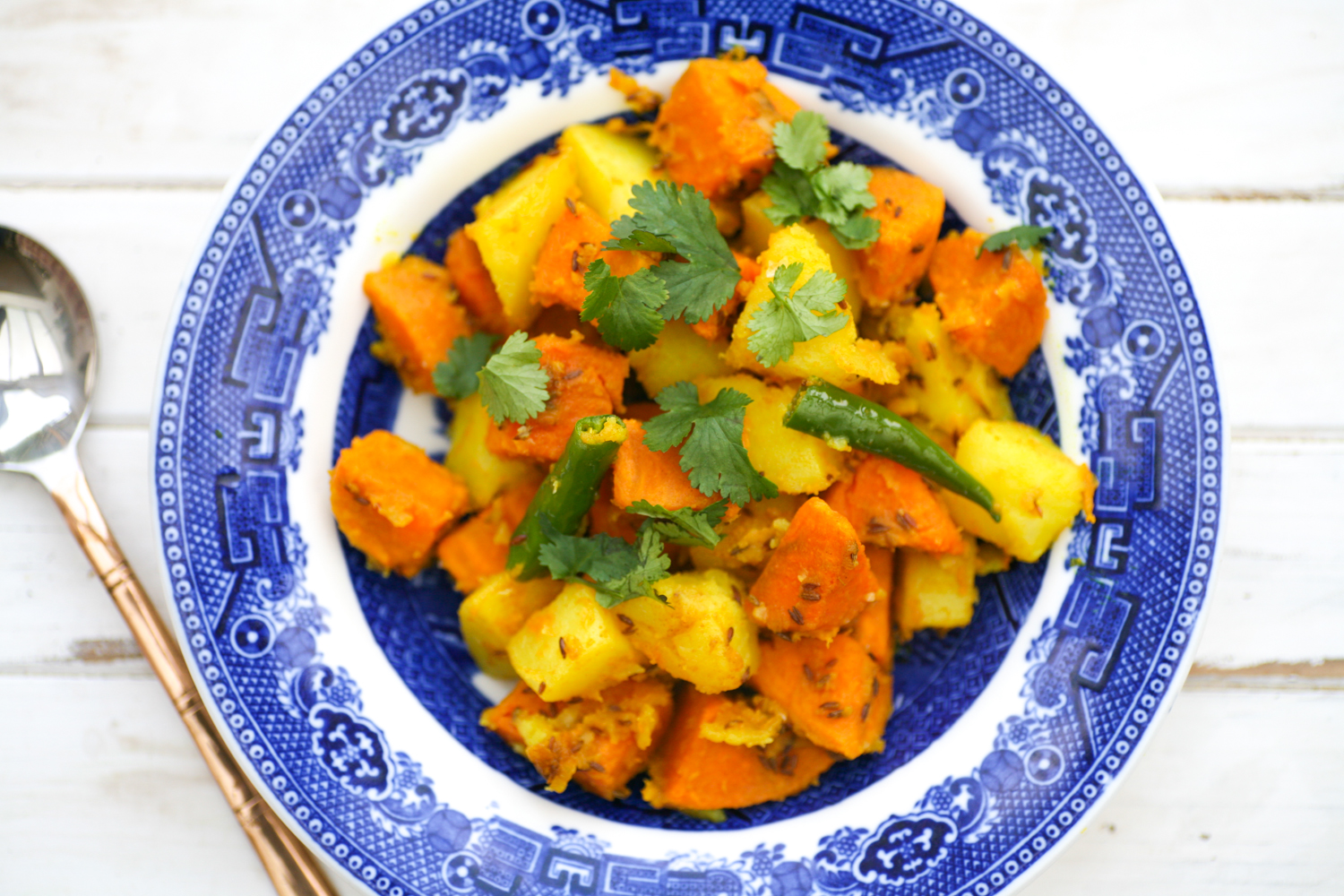
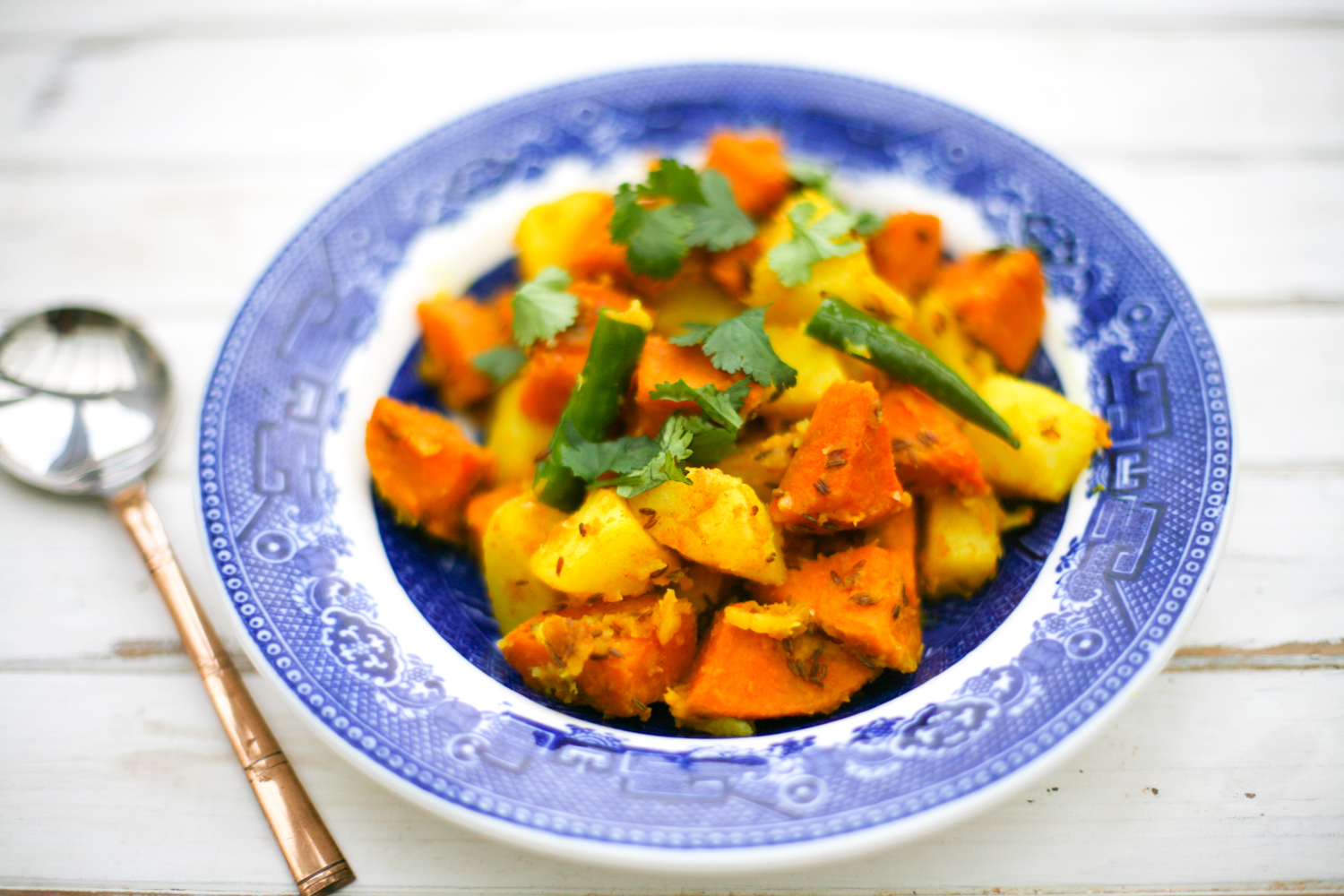
Back in my university days I often used to make myself aloo shaak when I had the munchies. It was so quick, cheap and easy that it made a perfect snack to nourish my hunger. I would place it in a bowl with a dollop of natural set yogurt on the side and then dip the potato cubes into the natural yoghurt. Happy memories.

To this day I continue to cook it and often serve it up with a dal for a vegetarian supper, or as a complimentary dish if I am cooking a larger Indian banquet with a meat and/or fish curry. At this time of year when the cold sets in this bowl of carbs is highly appealing and is easy to feed to the whole family. As I only chop the chillies in two I find that it does not make the dish too chilli, unless of course you actually munch on the chilli – which I always leave for the adults to do.

IMG_7727

On the subject of munching chillies, if you are feeling a little under the weather I really recommend eating a cooked chilli either in a dish like this or one of my dal dishes (see under Recipe Library). Packed full of vitamin c, they give the immune system a good burst and can bring you back to the land of the living if you are feeling under the weather. Just remember if you ever find the chilli too hot, don’t drink a glass of water as that will spread the heat across the tongue, milk and yoghurt however are able to numb it as they contains a protein called ‘casein’, which breaks the bond between the the pain receptors in your tongue and capsaicin, which is an oil found in chilli – the seeds are always the hottest part so you can remove these if you prefer less of a kick.

Aloo Shaak – Potato Curry

Serves 4

600g sweet potatoes, roughly 1 inch cubes

600g white potatoes, roughly 1 inch cubes

3 tbsp vegetable oil

2 green chillies, chopped in two

2 tsp cumin seeds

1 heaped tsp turmeric powder

2 tsp rock salt

Optional: fresh coriander to serve and/or a dollop of natural set yoghurt

1. Place the cubed potatoes in a pan of boiling water for 13 minutes. You want them to begin to be soft, but not completely soft that they just fall apart!

2. Strain the potatoes. In a large pan heat the oil and add the cumin seeds, chillies and turmeric powder. Let the sizzle for 30 seconds before adding the potatoes and coating them in the seeds and powder.

3. Cook the potatoes on a medium low heat for a further 7 minutes, turning carefully a couple of times. Add the salt, stir one last time and then serve. If you find the potatoes are still a little hard, add a little water and place the lid on the pan and they will soften after a couple of minutes.

an alternative way to cook this is to omit the first step and let them fry in the oil with the cumin seeds, turmeric powder and fresh chilli, immediately. Once they begin to bronze add a little water and let them soften. At university I  tended to opt for this version, but now I find that parboiling them first ensures that they soften to how I want them. 

If you like this potato recipe you may also like to try my ‘Curried Potatoes’ another time.


An Indian twist on ‘Greens’

IMG_7668

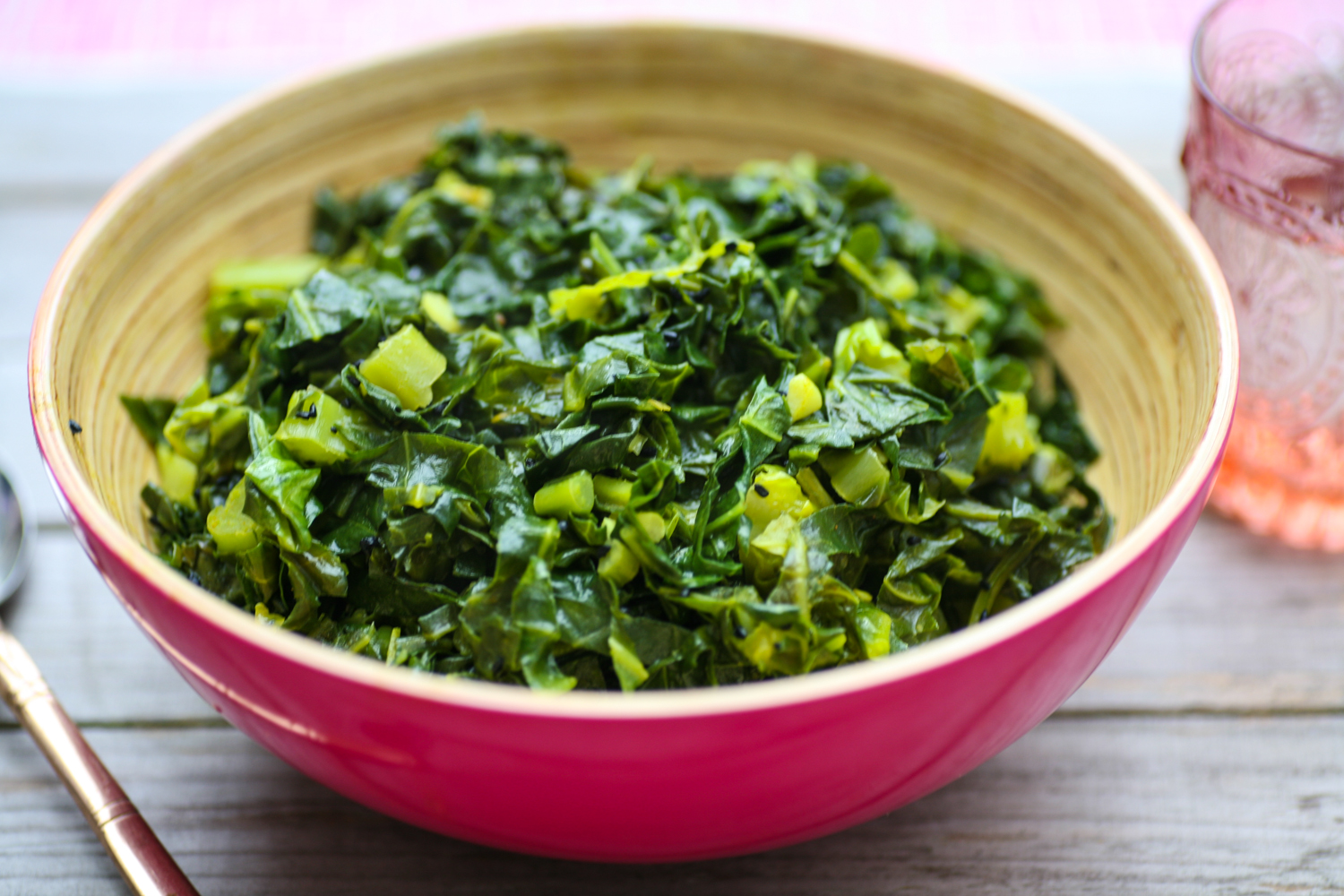
Growing up I am sure we’ve all encountered our parents encouraging us to ‘eat our greens’ and reluctantly forcing, the invariably boiled, greens into our mouths. I have nothing against greens, far from it, I think they are delicious, I just think that a little helping hand from a few Indian spices goes a long way to making a fairly bland dish into an elevated one that you actually want to eat! There was a great article in the Observer back in September 2013 by journalist Tim Lott (see here)  which discusses the issues parents have surrounding making their children eat greens or green vegetables in general. The crux of the matter is that if it doesn’t taste good they are simply not going to enjoy or want to eat it. Also if we use the health mantra on them constantly this in itself is going to be a turn off.  We seem to be caught up in our own worry of putting healthy things in their months, but if we perhaps stand back and relax they will too and a natural love of these healthy foods will develop.

You’ll see in my recipe that I have added fresh chilli to the dish. I find my eldest daughter likes chilli, but with my four year old I simply omit it as she isn’t quite ready for the chilli kick! Chillies range hugely in heat levels so start off with the very mild ones – they tend to be the large ones you buy in the supermarkets. The smaller the chilli the hotter they tend to be in general.

Whilst the dish I want to show you today is vegetarian I also find that greens and kale work wonderfully well with chorizo (or any pork product really) and butter beans. If you have a moment take a look at my caldo verde recipe – here, for inspiration. It’s hearty and straightforward and perfect for cold winter days.

IMG_7657

Indian Greens

Serves 4

1 bunch of greens, washed and finely sliced

2 garlic cloves, sliced

2 small green chillies, finely sliced

2 tbsp sunflower/vegetable oil

2 tsp nigella seeds

1 tsp turmeric

1 tsp salt (to taste)

1. After preparing the greens, garlic and chilli add the oil to a large pan. When the oil is hot add the nigella seeds and turmeric followed by the garlic and chilli. Reduce the heat and stir to avoid the garlic burning.

2. Add the greens and stir thoroughly so that they become totally covered in the other ingredients. Keep stirring for a few minutes and then place the lid on the pan. You may find that you need to add a little water at this stage.

3. Simmer gently and the greens will wilt and reduce in size. Add the salt to taste and more water if necessary. The dish will take no longer than 10 minutes to cook in total.

Simple, straightforward and totally satisfying.

I like to eat them with a dal or my Indian potato curry (blog post on this soon).


Green Tomatoes – Two Ways

IMG_7506

During half time we went and spent some time at my parents house, which is hidden away in the depths of the Sussex countryside. Life slows down and allows you to become at one with nature. I love living in the city and am not the type to rush out to rolling green hills at every opportunity, but that said now and again it really does ones soul the world of good. Breathing in fresh air, getting properly muddy and having walks in the woods. Also if the truth be told I love my folks wood burning fire that warms the house and wafts woody smells throughout.

IMG_7572

My mother is Mrs green fingers and has an enviable vegetable patch, which supplies my father and her with bountiful crops of endless vegetables and fruit. She has been overrun with green tomatoes this year and had a couple of troughs full sitting in her pantry so I asked if I could take one to make into a chutney and a relish back in London.

IMG_7585

The result has been pleasing and I wanted to share both recipes with you. They are perfect to bring out with pretty much any cold meat, especially any type of pork product.

IMG_7596

The photo above and below are of the cucumber and green tomato relish.

IMG_7606

Green tomatoes are simply tomatoes that have not ripened in the sun. Change in weather can mean that some of your crop just aren’t able to make the transition from green to red. That said you can bring the whole plant inside and there are ways to help them turn red – see here for tips, but my mother had already picked the remaining tomatoes, most of which were green.

IMG_7515

To eat raw, whilst still green, would not be advisable as they are tart, however by cooking and making into a chutney or relish brings them into their own and sweetens them enough to make a fabulous little preserve.

IMG_7523

Both recipes require a fair amount of chopping so if you can gather in helpers that will certainly speed up the laborious part of the preparation.  The above photo shows the layered vegetables in the colander sprinkled with salt – they leave them like this overnight.

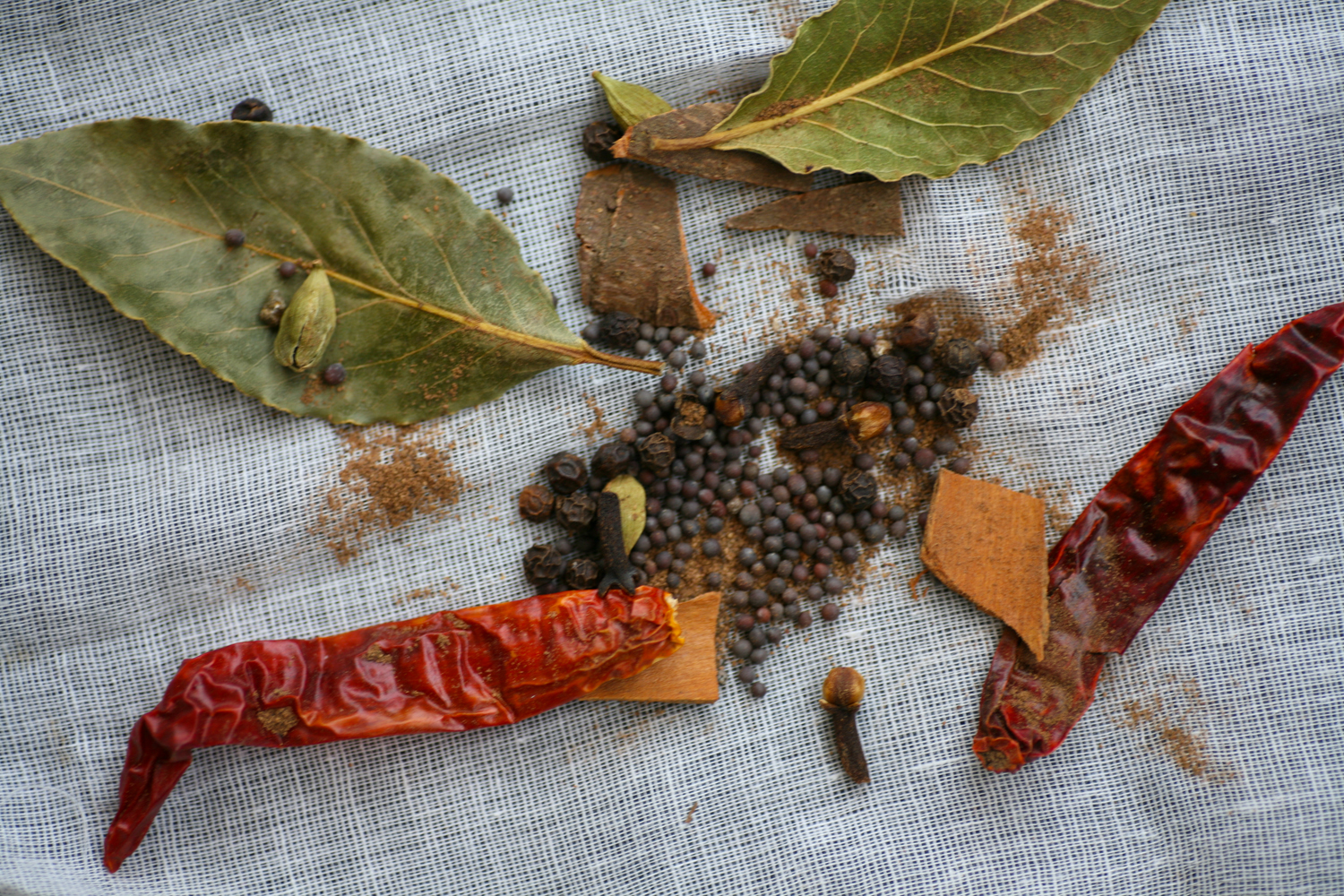
The photo below is the pickling spice that is used in the chutney but not the relish!  I have made my own pickling spice – you can add whatever you fancy, but I decided upon bay leaves, green cardamom, black mustard seeds, dried chillies, whole cloves, cinnamon bark, allspice and peppercorns.

IMG_7534

Once you have made either the relish or chutney – or both, once sealed in jars, leave to rest in a dark, cool place for a couple of weeks for the chutney and 1 week for the relish. The chutney will last longer – around a year, whilst the relish should be eaten within 6 months. Once open store in the fridge and eat with in a couple of weeks.

Both recipes below I have adapted from ‘The Complete Book of Preserves & Pickles’ by Catherine Atkinson and Maggie Mayhew

Green Tomato Chutney

makes approx 8 jars. I mainly use Wares of Knutsford 250ml Mason jars

2.3 kg green tomatoes, chopped

600g cooking apples, chopped – cored and peeled

600g onions, chopped

4 garlic cloves, crushed

1.5 tbsp salt

1 small muslin bag full of pickling spice (see below)

800ml cider vinegar

600g granulated sugar

**********************************

Pickling spice

1/2 tsp allspice

2 bay leaves

3 green cardamom pods

1 tsp black mustard seeds

2 inch piece of cinnamon bark, broken into pieces

4 cloves

5 peppercorns

2 dried red chilli

1 small piece of muslin cloth

some string

You can also add dried ginger, cassia, coriander seeds

1. After roughly chopping all the tomatoes, apples, onions and garlic place them in a large pan (or two if you need to) and add the salt. Add the muslin full of pickling spice, securely tied, along with half the vinegar and bring to the boil.

2. Once it has reached boiling point, reduce the heat and let it simmer for an hour stirring at regular intervals to aid with the softening of the ingredients.

3.  In a separate pan add the remaining cider vinegar and sugar and gently heat, stirring until the sugar has completely dissolved. Once this has happened pour into the main pan and give a good stir. The chutney needs a further hour and a half to simmer and become thick.

4. In the last half hour of number 3. wash the jars and lids in hot soapy water and then place in a cold oven. Turn the oven on to 110 degrees and then let the jars and lids (do not place the lid on the jar) sterilise for 30 mins.

5. Once the jars and lids have sterilised and the chutney has become thick remove the muslin and then spoon the hot chutney into the warm jars and seal. I find this wide neck funnel, immensely useful during this process as it means I keep the rims of the jars clean. I tend to put a waxed disc on top (was side down), although I think with the two piece gold disc and screw band lid it is probably not necessary.

6. Label and store in a cool dark place and leave to mature for a couple of weeks before opening. It will last for up to a year.

IMG_7539

Cucumber and Green Tomato Relish

Makes approx 5 jars

2 cucumbers, cubed 1cm

900g green tomatoes, cubed 1cm

4 onions, finely chopped

1.5 tsp salt

350ml white vinegar

150g demerara sugar

200g granulated sugar

1tbsp plain flour

1/2 tsp mustard powder

1.  Layer the cubed cucumber, green tomatoes and finely sliced onions in a colander placed over a bowl and sprinkle each layer with salt. Leave to drain for minimum 6 hours or overnight if you can.

2. Removing the salty liquid and place the vegetables in a large pan along with 320ml of the white vinegar. The remaining 30ml of white vinegar will be used later! Add both sugars to the pan and gently heat, stirring to allow the sugars to dissolve. Simmer gently for 40 minutes.

3. In a bowl add the flour, mustard powder and remanding white vinegar to form a paste and then add to the relish. Simmer for a further 20 mins or until the mixture is thick.

4. Similarly to point 4. in the instructions for the green tomato chutney, sterilise the jars and then spoon the contents of the relish into each one, remember to push the relish down firmly so that there are no air bubbles. Add the waxed disc, waxed side up (if using) and place the gold disc and screw top lid on top.

5. Store in a cool dark place for a week before using. Use within 6 months. Once opened store in the fridge and eat within a couple of weeks once opened.

Marrow Dal and Fried Marrow Skin (Khosha Bhaja)

IMG_6968

My husband once asked a fellow foodie friend, who used to write for the food section of one of the large weekend newspapers here in the UK, for suggestions of ways to cook with marrow, to which her response was ‘you can start by throwing it in the bin’.  Ever so harsh but she is not alone! Many people often overlook the humble marrow and regard it as tasteless. I can tell you however, that marrow completely comes into its own cooked in Indian dal and even the skin need not be discarded as you can cook a completely separate delicious dish using it.

IMG_6961

In the hot sweltering heat of an Indian summer, eating marrow is the perfect way to cool down as it’s made pretty much made of water. So by combining it with red split lentils to form a dal is a wonderfully satisfying way to eat marrow in all it’s glory. Gardens here in England are bursting with marrows at the moment and although I have none growing in my postage stamp garden both my mother and mother-in-law are supplying me with endless amounts of marrow.

So dive in and give this glorious dal a go. I bet you’ll even surprise yourself as to how good it tastes.

IMG_7031

Marrow Dal

Serves 2-3

125g red split lentils

500g marrow, skinned and cubed (remember to keep the skin)

600g boiling water

1 tsp salt

half tsp turmeric

1 tbsp vegetable/mustard oil

1tsp Panch Phoran (Bengali five spice – see below)

2 green chillies, chopped in two

Panch Phoran is a uniquely Bengali (East India and Bangladesh) five (panch) spice mix. It has a magnificent aroma so I often use it in my red split lentil dals. If you cannot find a packet in your local Asian grocers you can make it yourself by mixing the following seeds together in equal parts: fennel, cumin, nigella, fenugreek and mustard. Store in an airtight container and it will last months. 

1. Rinse the red split lentils under cold water so as to clean them thoroughly. Repeat the process a couple of times.

2. In a saucepan add the cleaned red split lentils and 500g of boiling water. Add the turmeric and leave to simmer for 7-10 minutes. If the lentils begin to dry out add a little more boiling water.

3. Add the marrow and stir into the dal. Add a further 100ml of boiling water and continue to simmer for another 5 minutes.

4. In a separate pan heat the oil and when it is hot gently add the panch phoran. They will begin to pop immediately so keep them moving around the pan. Add the chillies and mix in together. Now pour the marrow dal on top of the panch phoran and chillies and stir in together. Add the salt and then simmer for couple of minutes. Let it cool slightly before serving. You may need to add more salt if required.

In India many people often add a little ghee (clarified butter) on top just before serving to give it that extra delicious taste. If you are watching your waste line simply ignore this step!

***********************************************************

Fried Marrow Skin – Khosa Bhaja

Skin of a marrow

1 tbsp vegetable/mustard oil

1 tsp nigella seeds

1/2 tsp turmeric powder

pinch of chilli powder (optional)

1 green chilli, finely sliced

1 tsp salt

1. Peel the skin of a marrow and slice into fine, small strips. Place in a pan of boiling water and gently simmer for a couple of minutes.

2. Strain and place to one side. Heat a pan with oil and when it is hot add the nigella seeds. After a few seconds add the marrow skin followed by the turmeric, chilli powder, green chilli and salt. Cook on a low heat until the marrow skin begins to bronze.

Serve with the marrow dal above.


Foraging for Samphire on the British Coast

IMG_6645

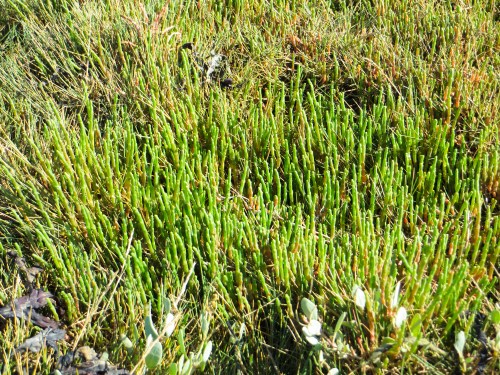
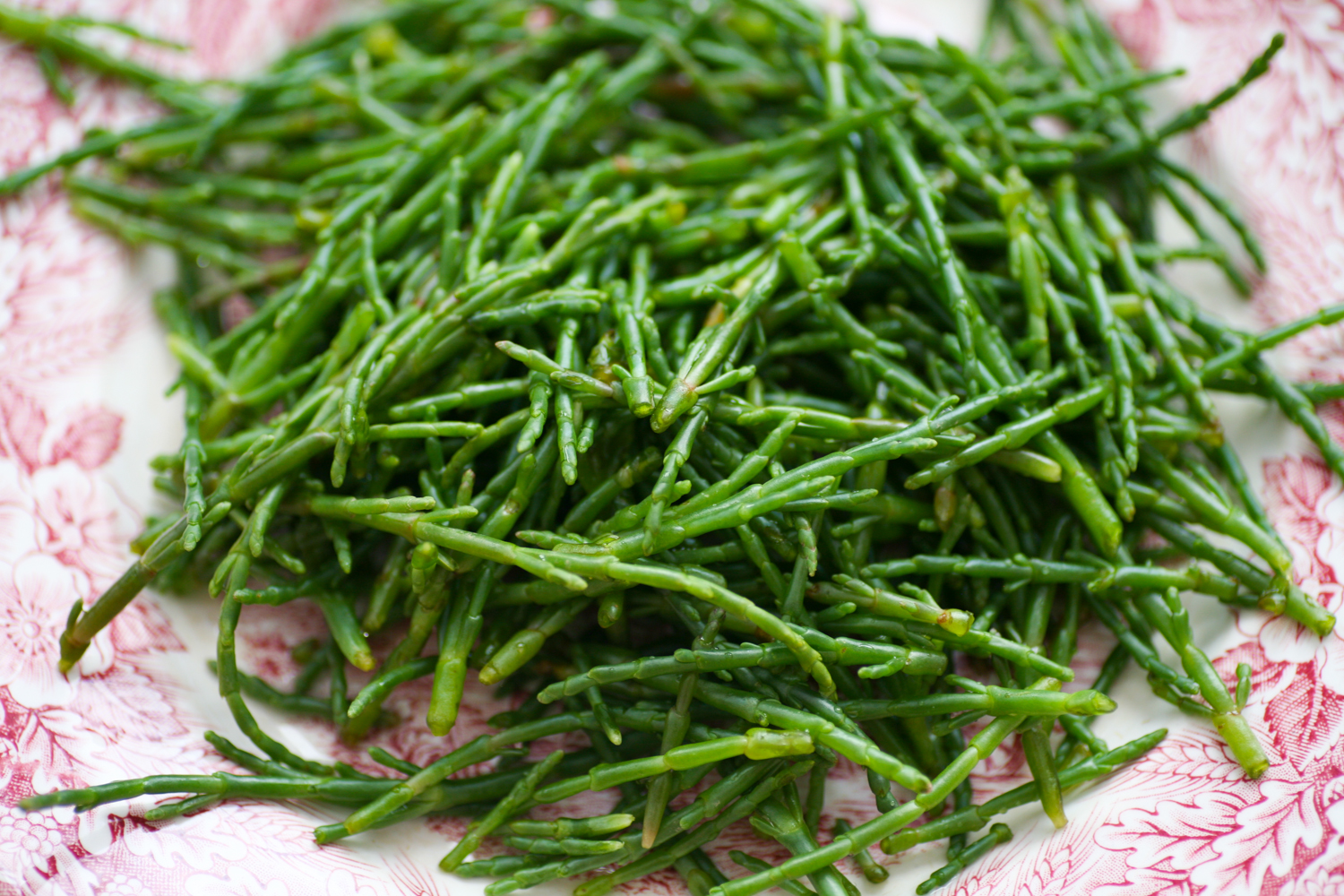
June, July and August are the months to forage for marsh samphire, not to be mistaken for rock samphire, which grows on rocks on land and tastes completely different, I am told. Marsh samphire can be found in abundance in salt marshes and tidal mud flats on the British coast. You may have also come across it by one of it’s other names:  glasswort (its name of old alluding to a time when it was used in making glass and soap); sea asparagus; Saint Peter’s herb (the Patron Saint of Fisherman) or it’s rather grand sounding Latin name ‘salicornia europaea’. I particularly like its less well known name of ‘Mermaid’s kiss’.

IMG_0176

A few years back marsh samphire was not so easy to source in the shops, other than the fishmonger who would grace their fish displays with the vegetable from time to time. Recently I have seen it in the larger supermarkets in the UK being sold in packets on their fish counters. It’s relatively expensive for the amount you get, so if you happen to be on the British coast in the summer, it is well worth having a forage for the vegetable.

IMG_0174

I’ve been spending the last week or so on the borders of Suffolk and Essex, which is perfect hunting ground. I initially came across some growing on the mudflats on Mersea Island and immediately gathered a small amount to prepare for when I returned home. The following day we were passing by the picturesque and historical village of Orford in Suffolk – well worth a detour on many levels – Richardson’s smokehouse, the great Pump Street Bakery, some fine pubs, a small castle, a grade I listed church with Norman remains and a sailing club – all civilised places have a sailing club don’t you find? I had read that Orford was the perfect place to forage for marsh samphire, so bucket and scissors in hand Big A, Mr B and I went a foraging.

IMG_0178

It was not long before we spotted the easily identifiable marsh samphire sprouting up through the tidal mudflats. They almost look like miniature cacti, without any spines or sharp bits. When foraging though you need to be very careful not to pull out the whole plant as it will prevent it from growing further. Simply pinch off the top parts or use a pair of scissors, so that the fibrous stems and roots remain intact. You will find that the the samphire needs to be thoroughly washed a couple of times so that the mud, grit and general nasties are disposed of.

IMG_0179

Whilst it can be eaten raw, I like to cook samphire – boil or steam for a couple of minutes, and then eat with a dollop of melting butter and a squeeze of fresh lemon juice. Absolutely no salt is needed as they taste of the sea so are more than sufficiently salty. They are rich in Vitamins A, C and D and taste  similar to asparagus, albeit more salty!

IMG_6590

They are also a perfect accompaniment for fresh fish and also lamb, although I rather like the way that this blogger has prepared their samphire – see here – Poached Eggs with Samphire and Honey Harissa. How good does that sound?

Are you able to forage samphire near you? Does it grown in your country? How do you eat it? I would love to know so write a comment below for us all to see.

IMG_0185

Fresh Marsh Samphire with Butter and Lemon

A handful of fresh marsh samphire per person

 knob of butter

lemon wedges

1. Trim and wash the marsh samphire a couple of times so that all the mud, grit and stray seaweed is discarded.

2. Boil a large pan of water and place the samphire directly in the water (if steaming put into the steamer). Boil gently for 3 minutes and drain immediately.

3. Plate up and add a knob of butter to each serving and a lemon wedge on the side. Equally you can pre-melt the butter and pour it over the samphire. Both ways work equally well.

Eat immediately when it is hot and enjoy.

Remember no salt is needed. 


Saffron and Cinnamon Honey Served TWO ways – sweet and savoury

IMG_6152

Sometimes the simplest dishes are the best. A plate of freshly steamed samphire with a knob of butter, a moule mariniere with crusty bread to mop up the sauce, a mature chunk of cheddar with a crisp apple, a boiled egg dipped into cumin powder, fresh tomatoes with fresh basil and buffalo mozzarella drizzled in the finest extra-virgin olive oil, fresh asparagus dipped in butter (have you noticed there’s a butter theme going on here!). I could go on but in this day and age when many chef’s are pushing boundaries and creating new flavour sensations and wowing us with their scientific approach to the culinary arts it sometimes comes as a welcome relief to sit down and eat a meal that is not complicated and flash but is simple and truly delicious.

For those who have been following my blog for a while will know, I don’t really have a sweet tooth, well certainly not the kind to have dark chocolate cake/torte/mousse at the end of the meal. Growing up my favourite puddings were rhubarb crumble, pavlova, custard tart and anything with nuts in. Mr B on the other hand loves all the old English puds and often puts a request into my mother at around Christmas time to prepare one or two – things like jam roly poly, spotted dick, treacle pudding, tiramisu – she’s good at making all these, so I let her run with it.

Generally speaking we tend to just pick on fresh fruit at the end of the meal, which is not only delicious but also satisfying and involves no effort or preparation.

I recently came across a pudding however that immediately catapulted itself into the top league of puddings after the first mouthful. It involves 7 ingredients and can be whipped together very quickly.

IMG_6136

Saffron and Cinnamon Honey with Figs and Greek Yoghurt

adapted from Greek.food.com

5 figs, halved

2 large tbsp thick Greek Yoghurt per serving

2 tbsp honey

1 large pinch of saffron

1 large stick of cinnamon

40 g white sugar

300ml cold water

1. In a saucepan place the cold water, sugar, honey, cinnamon stick and saffron and stir thoroughly until the sugar has completely dissolved. Simmer gently for around 15-20 minutes. Do not over cook as the liquid will turn into a thick toffee substance, which you do not want to happen.

2. On a serving plate/bowl add a generous dollop of Greek yoghurt and place three fig halves on top of each mound of yoghurt.

3. Finally gently spoon the scented honey over the figs and yoghurt having removed the cinnamon stick first and serve.

Note: You can also gently heat the figs in the honey for a minute on both sides, however I tend to prefer them fresh with the honey drizzled on top. Try both and see which you prefer.

As you are likely to have some sweet scented honey left over the following Scandinavian influenced open sandwich works a treat with the sweetness of the honey and the saltiness of the cheese and prosciutto/parma ham.

IMG_6183

Open Sourdough Sandwich with Prosciutto, Cheese, Rocket, Peach and Scented Honey

Per Serving you will need:

1 slice of sour dough bread

1 slice of prosciutto

2 slices of cheese – I used Italian Taleggio La Baita above, but crumbled soft goat cheese also works really well

small handful or rocket/arugula

1/2 (half) peach

drizzle of scented honey (re above recipe)

pinch of coarse black pepper

Serve

I tend to make this open sandwich in the following order: bread, prosciutto, cheese, rocket, peach (or can be before rocket), honey and black pepper.

It makes a very satisfying lunch as the flavours compliment each other so well. For this photo shoot above I used white flat peaches but I think the sweet yellow flesh peaches would probably look more attractive on an open sandwich.

IMG_6162


Chilli, Feta and Spring Onion Cornbread

IMG_5883

Cornbread is not commonly known about, or eaten for that matter, here in the UK and yet it is the most wonderfully moreish and perfect little bread that works so well with a soup or salad or as a savoury alternative to scones with jam and clotted cream at tea time – not that I eat scones and jam with clotted cream every tea time……only on special occasions!

IMG_5896

My eldest is often famished after a day at school followed by clubs so naturally likes to have a little snack before supper and this bread is a big hit – even with the chilli in. The bread allows you to be creative and put whatever little filling takes your fancy. I like to use feta as it has the perfect saltiness to go with the chilli and the spring onion adds an additional layer of flavour, which I love. Equally courgette and ricotta or caramelised onion and goats cheese would also work really well. Do you have a favourite combination? I would love to hear so please leave a message in the comments section below for us all to see.

IMG_5894

I use Greek yoghurt and milk in my cornbread but you can also use buttermilk, try them both out and see which you prefer. For this recipe I used one egg this time, but if I use small eggs then I often pop in two. As for chilli, jalapeno works well or you can use a milder/hotter one or even dried chilli flakes. Have a go, experiment and let me know what you think. It’s perfect with my Mexican tortilla soup.

IMG_5912

Chilli, Feta and Spring Onion Cornbread

Dry ingredients

160g fine cornmeal (polenta)

60g plain flour

1 tsp sweet smoked paprika

2 tsp baking powder

pinch of salt

1 red chilli (or 2 if you want that extra kick)

75g crumbled feta

1 spring onion, finely chopped

Wet ingredients

125ml Greek yoghurt

125ml milk

juice of half a lime

1 large egg (or 2 small eggs)

2 tbsp olive oil

1. Pre heat the oven to 180 degrees c.

2. Grease some baking parchment and place in your loaf tin. Mine is 24x14cm. By all means use a smaller tin – your loaf will just have more depth, which is good. Without baking parchment you may find your loaf is harder to remove from the tin after baking.

3. Mix all your dry ingredients together in one bowl.

4. Place all your wet ingredients together in another bowl/jug and then add the wet ingredients to the dry ingredients. Fold in gently with a wooden spoon.

5. Pour into your tin and level off with a spatula. Place in the oven for 25 minutes, or until it is golden and firm to touch on the top.

6. Remove from the oven and allow to stand for at least 5 minutes before taking the bread out of the tin and removing the baking parchment.

 Serve warm or toasted with Mexican tortilla soup