Homemade Mango Chutney

Warmer weather beckons (I hope!) at the end of the week when I’ll be in the sunny Florida Keys and art deco Miami. I was last in the Keys when I was 19 so it’s been some time since I visited its warm shores and admired its glorious sunsets. There is always so much to get ready before embarking on a long journey and since I pride myself on my packing it is left up to me to pack all the clothes. There is definitely an art to effective packing right! The truth of the matter is I hate packing, seriously it is so tedious and tricky to get the balance on what exactly to take. I am hoping that since it will be warmer then in London, I won’t have to take too many clothes and the ones I do will be light weight cotton. Well that’s the plan.

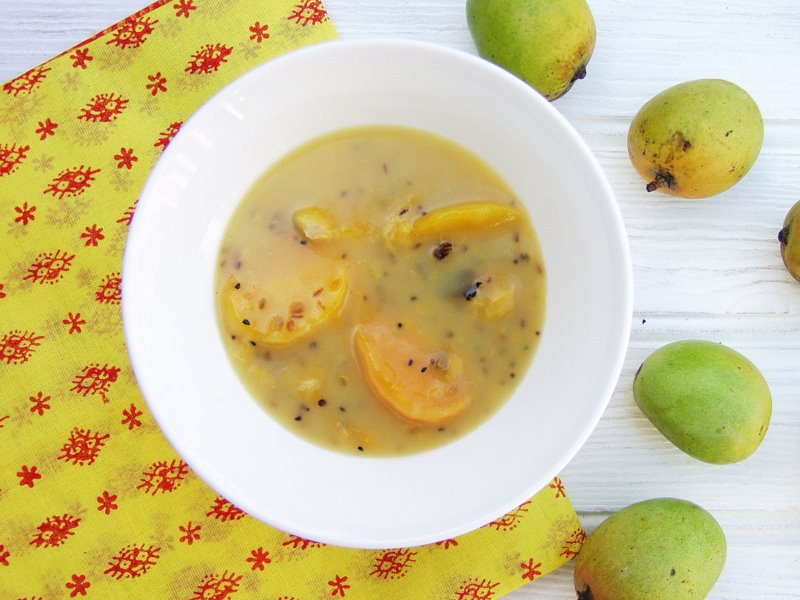
There is nothing that screams sunshine and warm weather more than mangoes. They are undoubtedly the queen of fruits and whilst the yellow ones are juicy and sweet, the unripe ones – they are the green ones by the way – are perfect for chutney making. The sourness combined with spice and salt is a perfect winning combination and cools down the body in hot temperatures. In India a few spoonfuls of the chutney either alongside or after some spicy dal or curry works a treat.

We have all sampled the mango chutney served in curry houses when we order poppadums,  however nothing prepares you for the true deliciousness of this knock out, authentic, fresh mango chutney. It tastes completely different and I love the sweet, sour, salty combination.

Mango Chutney

(or affectionately known as Aam-er Tok by Bengali speakers, which actually translates as sour mango)

Fills a small bowl/jam jar (can last in the fridge for up to a week)

2 small unripe green mangoes/1 large regular green mango, which you find in British supermarkets, skin removed and then sliced or diced

1 tsp mustard/groundnut/vegetable oil

 1 large dried red chilli, cut into two pieces (or 2-3 small dried red chilli)

1 tsp panch phoron 

1/4 tsp turmeric

1 tsp freshly grated ginger (optional)

2 tsp plain flour

three quarters of a tsp salt

110 ml cold water

2/3 tbsp sugar

1. Peel the mango skin and discard. Slice or dice the mango and keep the stone if you are using a larger mango as they are good to suck on post cooking! If you have really unripe green mangoes, which can be very sour, it is best to boil the sliced mangoes in a little water, with a pinch of salt, to remove part of the acidity for two minutes. Discard the water and put the mangoes to one side.

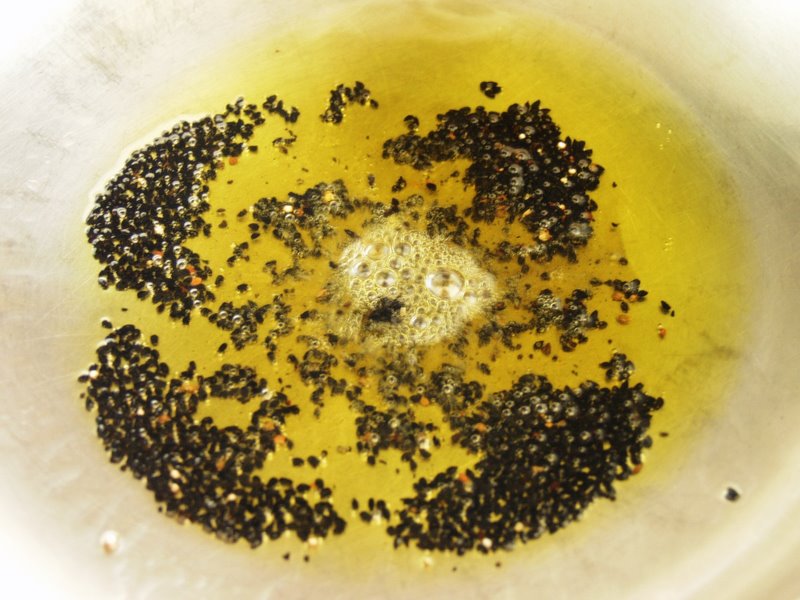
2. Place the oil in a pan and gently heat. When it is hot add the dried red chilli, including the seeds and fry the chilli gently until it darkens slightly in colour, which will take no more than a minute. Warning: you are likely to cough at this stage as the chilli darkens  so do not be alarmed!

3. Add the panch phoron, turmeric and ginger (if adding) to the hot oil as well as the soft mango, salt and 75 ml of water.

4. In a separate bowl add the flour and 35ml of cold water to create a white, smooth liquid. Immediately add this to the pan and stir it into the mangoes. At this stage also add the sugar.

5. Boil gently for 5-6 minutes. If you prefer to have a runnier chutney add a little more water, however, if you prefer a thicker consistency then you will need to boil it for longer.

6. Leave to cool and chill. Serve at either chilled or room temperature, but not hot.

It is wonderful to eat after a heavy curry as it helps to cleanse the palate and digest your food.

Note: In hot climates people tend to prefer the chutney with a stronger sour undertone and as such the amount of sugar they add is less. For those who prefer a sweeter taste then add the amount of sugar that I have specified above.

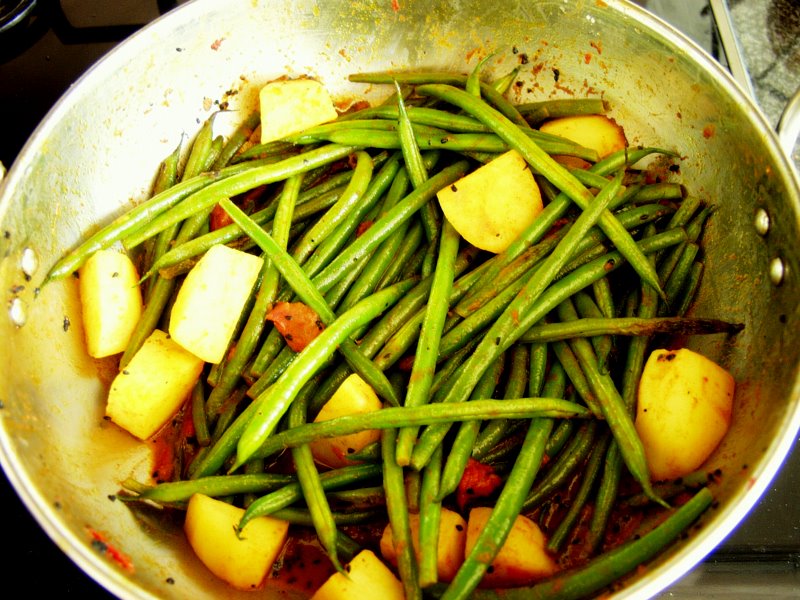
Fine Green Bean and Potato Curry

After every few days if I have not had Indian food (basically my chilli fix) of some capacity I start craving dal, vegetable curry or some succulent fish or meat curry. They are always fun to make and really do not take long to prepare once you know how and best of all they are always guaranteed to bring a smile to Mr B’s face after the stresses of commuting in London town. I am a total believer that the way to a man’s heart is through his stomach – although the same could be said for me come to think of it.

As delicious as steamed or boiled fine green beans are in their own right, this Bengali dish just takes them to a new level and gives them their own identity. It’s definitely one of those dishes that you can rustle up in a short space of time and enjoy with dal (or a meat/fish curry) and some Indian bread or rice, to create a really delicious, healthy (let’s just ignore the cooking oil this once!) and low cost meal.

The ingredient list is short and I always have them in my store cupboard. The only spice that maybe unknown to some of you is kalo jeera – which is also known more widely as nigella seeds. They are really easy to come by and are pretty mainstream even in the supermarkets. I have used mustard oil, but if you do not have this to hand a simple vegetable oil will be equally suitable.

 Fine Green Bean and Potato Curry

Serves 2-3 (accompanied by a dal)

350g fine green beans

1 large potato, peeled and cut into small cubes

2 tbsp mustard oil (or vegetable oil)

1 tsp nigella seeds

1 tsp turmeric

150ml boiling water

2 tbsp of chopped tinned tomatoes

1/2 tsp salt

1/4 chilli powder (optional)

1. Heat the mustard or vegetable oil in a pan and when it is piping hot add the nigella seeds. After 10 seconds add the potato and green beans and stir to coat the vegetables in the nigella seeds.

2. Add the turmeric, salt, chilli powder (optional) and chopped tomatoes and stir once again. After a few minutes add 50 ml of boiling water, stir and place a lid on the pan. Keep on a low heat and simmer gently.

3. Once the water has completely dried up add a further 50 ml of  boiling water, which will help soften the potato and green beans. You will probably need to add a further 50ml of boiling water during cooking as you want the beans and potato to be soft and not crunchy. The dish should be ready between 20-25 minutes. It can be stored easily in the fridge for a couple of days should you not finish it all in one sitting – although if you are like me, you will.

Happy eating.


Baked Sweet Potato Paprika Chips with a Creme Fraiche, Chive and Lemon Dip

It’s been half term and after thinking that we had all managed to get through the winter months with no illnesses, Little Z and Big A both come down with a bug, which is then passed on to my fit and healthy mother. I’m just waiting to be knocked for six myself but am trying not to dwell on the possibility. So instead of being out and about  this week we have been hibernating inside and keeping cosy. With everyone on the mend and appetites returned I made a batch of these delicious morsels to cheer up my loved ones. They were gone in a blink of an eye, so I felt that I must share this simple recipe with you.

Baked sweet potatoes are a delicious addition to any dish, whether it be accompanying, fish, meat or other vegetables. They are also great as pre dinner nibbles if you have guests coming over or if you just simply fancy spoiling yourself or your family. With very little effort you can create these baked paprika chips with a creme fraiche dip and I assure you they are totally addictive.

I am a huge fan of  Santo Domingo Hot Spanish Smoked Paprika which you can buy here, as it has a real kick. As the girls adore them, I bake a batch without paprika or the less hot variety, so they can devour them as well. As an alternative way to serve them as nibbles, I make little paper cones and line each cone with baking parchment, so that the chips do not get stained with newspaper ink. The velvety creme fraiche is a great accompaniment and I like to add chives, as Big A is a big fan, a good splash of lemon juice and a sprinkling of rock salt. Simple and delicious.

Baked Paprika Chips 

Serves 4 -6

900g sweet potatoes, chopped into wedges

1 heaped tsp paprika

2 tbsp olive oil

1 tsp of rock salt

Creme Fraiche, Chive and Lemon Dip

200g creme fraiche,

1 tbsp of fresh chives, chopped finely

1/4 lemon, juice only

pinch of rock salt

1. Wash the sweet potatoes, but do not bother to peal them as the skins taste great when cooked. Chop them into chip/wedge size chunks and place in a large mixing bowl. Add the olive oil, rock salt and hot paprika and mix thoroughly with your hands so that all the pieces are completely covered.

2. In a preheated oven – 180 degree fan oven – place the sweet potatoes on baking/greaseproof paper on top of a baking tray and bake for 30-40 minutes or until they are soft.

3. When the sweet potatoes are baking prepare the dip by mixing all the ingredients together and taste and add more seasoning if necessary.

4. Serve immediately with the dip on the side.


Middle Eastern Okra and Tomato Stew, with a twist

I used to live close to the Edgware Road in London, which is the Middle Eastern part of town, well as Middle Eastern as it can be in London. It has a fairly chilled atmosphere with people spilling out of the cafes onto the pavements smoking their apple tobacco from their hookahs, when the weather permit and the sun shines.

There are two things however that I really miss most about the Edgware Road.

1) Mandalay Burmese restaurant, which as the name states is not Middle Eastern but a Burmese restaurant run by the affable and learned Burmese brothers Dwight and Gary. The restaurant serves good, honest, home cooked Burmese food (cooked by Dwight and Gary’s female relatives). It tastes divine and the whole experience is very memorable. They have a little library up at the front with a few Burmese books, which you can peruse at your leisure whilst waiting for your dining companion to arrive. Whilst it won’t win awards for decor, it wins hands down on charm and substance. You need to book as it is often packed to the rafters.

2) Green Valley Lebanese mini market, which Mr B and I always referred to as ‘Valley of the Kings’ for some reason. It has a wonderful deli selling a huge array of salads, hot bread, stews, cheeses and a butcher selling good quality halal meat, as well as cuts you may not see at your typical English butcher – sheeps’ tongues anyone? In addition, it also sells a vast array of fresh produce and the best baklava in town, which they put together on platters for you. Basically they stock every interesting food product imaginable and this place is like a tardis in the amount of food that it holds. We would make weekly weekend trips to stock up on goodies.

I was back there the other day buying some baklava (it’s worth the trip trust me), when I decided to buy a few little savoury edibles from the deli counter to munch in the car on the way home. Whilst making my selection my eyes rested for a while on the delicious looking okra and tomato stew. Whilst it isn’t so easy to transport and eat in the car, I decided to make some of my own when I got home and add my own little twist to the dish – butter beans. I do love my lentils and pulses and couldn’t resist adding them to the dish – for true purists amongst you simply skip the bit about adding butter beans.

The dish tastes great warm or at room temperature with Middle Eastern flat bread. It takes no time to make and am sure can convert even those who are a little reluctant about eating okra (or lady’s fingers as it is also known).

Middle Eastern Okra, Tomato and Butter Bean Stew

2 onions, chopped

3 garlic cloves,  roughly chopped

400 g of frozen okra (or fresh if you have it to hand)

1 tin of tomatoes, blended

splash of olive oil

1 tin of butter beans (they tend to be around 240g)

half a lemon, juice only

2 tsp of ground coriander

1 tbsp tomato puree

salt and pepper, to season

1. Add a splash of olive oil to a deep pan and when it is hot add the chopped onion and garlic and stir a little until they soften and becomes translucent. This should take around 6 minutes.

2. Whilst the onions and garlic are softening, blend a tin of tomatoes with a hand blender until smooth. Before adding the blended tomatoes, add the ground coriander and seasoning and stir into the onions and garlic.

3. Add the blended tomatoes to the pan along with the tomato puree and lemon juice. Stir thoroughly and let simmer for a few minutes.

4.  Add the butter beans and frozen okra and add a little boiling water so that the okra is fully submerged. Leave to gently simmer for 25 30 minutes, stiring gently, occasionally.

5. Taste and add more seasoning as required and serve with warm Middle Eastern flat bread. It could also be served with cous cous or steamed rice.


Beat this Borscht

I hadn’t planned on posting this Borscht recipe on my blog. I’ve cooked Borscht numerous times in the past and it’s always been…well…..fine…but never really much more than that. I then found a new recipe in my soup bible called ‘500 Soup Recipes’, ok my secret’s out, I AM A BIG SOUP FAN, but those who follow me I think you kind of already new that, right?

Anyway, this Borscht recipe is different from all the other Borscht recipes I’ve cooked in the past, namely that it is not smooth. Instead the beetroot are cut into thick strips, rather like chips in fact, along with the carrots and celery and because of this and the muslin bag full of herbs and spices, gives the soup an added dimension that really makes it a winner. I have followed the recipe loosely but the end result got the definite thumbs up from both myself and Mr B.

Beetroot is easy to find at this time of year and since I had just over half a dozen in my fridge that were beginning to look a little bit sorry for themselves, I decided to dedicate a recipe solely to them, well almost solely! The colour is a brilliant deep crimson and stains like crazy, so unless you like living on the edge, definitely don’t wear white when eating or cooking this dish.

As its January Mr B and I are on a bit of a health drive so we didn’t bother with the sour cream, with scattered dill or chives on top. It would have probably made a prettier photograph, but hey my waist line is thanking me for it.

Give it a try and please let me know how you get on, I’d love to hear what you think. Do you prefer it to the smooth variety that is more ubiquitous?

Borscht

Adapted from 500 Soup Recipes by Tim Smart and Bridget Jones

Serves 4-6

7 medium/small uncooked beetroot, peeled

2 carrots, peeled

2 celery sticks

2 tbsp butter

2 onions, sliced

2 garlic cloves, sliced

4 tomatoes, chopped

1 bay leaf

1 large handful of fresh parsley

2 cloves

4 whole peppercorns

2 pints of vegetable stock

75 ml cider vinegar, or to taste

sugar, to taste

salt and pepper, to taste

1 muslin

1. Peel the beetroot and carrots and cut into fairly thick strips. Also cut the celery into bit sized pieces. Heat the butter in a large pan and when it is melted add the sliced onion and stir on a low heat for 5 minutes.

2. Now add the beetroot, carrots and celery and cook for a further 5 minutes before adding the garlic and chopped tomatoes. Stir into the other vegetables and leave to simmer for a further 2 minutes.

3. Using a large piece of muslin, place the bay leaf, fresh parsley, cloves and peppercorns into the centre and tie the four corners together with a piece of string. Place the muslin  into the pan with the end of the four corners sticking out over the top of the pan slightly. Add the stock and make sure that all the vegetables and muslin pouch are submerged as much as possible. Bring to the boil and then simmer for 1 hour 15 minutes or until the vegetables are tender.

4. Discard the muslin pouch and add the cider vinegar. Pour in a little at a time and taste so that it creates the right balance of sweet and sour. Add a sprinkling of sugar if necessary. Season, stir and then ladle into bowls. Add a dollop of sour cream on top with either dill or chives.


Save the English cauliflower from extinction by EATING it!

It was during a recent family conversation about how cauliflower consumption is in decline, that gave me the idea for this blog. I wanted to do my bit, so as to speak, to give the cauliflower some much needed positive PR and encourage people actually to buy and eat the vegetable.  The sad truth is that if we don’t consume them we will slowly see them disappearing from our farmers’ markets, grocers, supermarkets (delete as required) and they will join the list of other extinct vegetables. A really interesting article was published a couple of  years ago in “The Daily Telegraph” with the heading ‘Cauliflower to make a comeback with environmentally friendly rebranding’ – it’s worth a read so just click here.

I think a lot of people are not too sure what to do with cauliflower, other than the obvious cauliflower cheese, which don’t get me wrong is tasty, especially when you add crispy bacon bits to the topping, but there are so many other delicious things to do with cauliflowers.

So I thought I would share two completely different recipes with you to inspire you to love and eat cauliflower. Broccoli and other so called ‘superfoods’ seem to have taken centre stage due to their health benefits, but the fact is that cauliflower is also very nutritious, perhaps not quite as much as broccoli, but close, and if the truth be told cauliflower has less calories than broccoli. You can check out the facts here if you don’t believe me!

First up…………………………drum roll please……………………. is………………………………………………..

Sweet Piccalilli, which is a gloriously tangy and vibrant looking relish which includes cauliflower as the main ingredient, along with green beens, courgette/marrow, pickled onions and spices. It’s also been referred to as ‘Indian Pickle’, indicating that it’s origin stems from the Indian subcontinent. I recently made a huge batch and then gave a number away as gifts at christmas time. A dollop of this relish is the perfect accompaniment to hams and cheeses, in fact you are guaranteed always to see it on the plate when ordering a traditional ploughman’s lunch at any good English Pub.

This recipe is sourced from my favourite preserves and pickling book called The Complete Book of Preserves and Pickles by Catherine Atkinson and Maggie Mayhew. I have remained pretty loyal to the original recipe other than the fact that I do add a little more flour as I like the piccalilli to be slightly thicker. It’s personal choice, so see how you get on and don’t be afraid to add a little more flour if need be. It is also really important to note that steps 1 and 2 you need to do 24 hours before the next steps can be completed.

Sweet Piccalilli

Makes circa 1.8kg/4lb, which was precisely 7 jars  and I bought them from here.

1 large cauliflower

450g pickling (pearl) onions

900g mixed vegetables (marrow/courgette, cucumber, French green beans)

225g salt

2.4 litres/4 pints cold water

200g granulated sugar

2 garlic cloves, peeled and crushed

2 tsp of mustard powder

1 tsp of ground ginger

1 litre/1 and three quarters distilled (white) vinegar

25g plain flour

1 tbsp turmeric

1. Clean and cut the cauliflower into small edible florets and cut off the ends of the French green beans and cut them into 2.5cm/1inch in length. The pickling onions I use are small, but if you have bought the slightly larger ones you will need to quarter them.

2. In a large bowl place the vegetables in layers and add a sprinkling of salt over each layer. Pour the water over all the vegetables and then cover with cling film and leave to soak for 24 hours.

24 hours later

3. Drain the soaked vegetables and discard the brine. You will need to rinse them well several times in cold water so as to get rid of the salt. You may find it easier to do this in batches.

4. In a large pan (preserving pan if you have one) add the sugar, garlic, mustard, ginger and 900ml/1 and a half pints of the vinegar. Gently heat the pan stirring occasionally until the sugar has dissolved.

5. Add the vegetables to the pan and bring to the boil and then reduce the heat and simmer for 10-15 minutes or until they are almost tender.

6. In a separate bowl stir the turmeric into the flour and then add to the remaining vinegar. Stir this mixture into the vegetables. Bring to the boil and stir and then turn down the heat so that it simmers for another 5-10 minutes allowing the piccalilli to become thick. If it is not the consistency you want, simply add a little more flour and it should thicken up.

7. Into warmed sterilized jars, add the sweet piccalilli and cover and seal. Store in a cool dark place for at least 2 weeks. Use within the year.

——————————————————————————————

The second recipe I wanted to share with you is Cauliflower Curry, which is really straight forward and speedy to make and perfect to eat either on its own or with a bowl of dal on the side; I also like to have mine with a little natural yoghurt. This recipe comes from my mother-in-law who stores all her recipes in her head and never seems to have precise measurements. It’s always a little bit of this and a little bit of that, and the result is always divine.  I think you will be pleasantly surprised at how tasty and simple this dish is to make.

Cauliflower Curry

Serves 2-4 accompanied with another dish such as dal or speedy salmon curry

1 large cauliflower

2 tbsp of mustard oil (or sunflower oil if you do not have mustard oil)

1 tsp  nigella seeds

1 tsp turmeric

1tsp ground coriander (cilantro)

1tsp ground cumin

1tsp garam masala

1 tsp salt

half tsp chilli powder

3 inch cinnamon bark, broken into smaller parts

splash or two of water

1 heaped tsp of ghee or butter, optional

1. Wash and cut the cauliflower into small florets. Do not discard the outer green bits as these too can be used in the curry.

2. In a pan warm up the oil on a low heat and when it’s hot add the nigella seeds. After 10 seconds add the cauliflower and stir into the seeds and the oil. Add the turmeric and then let the cauliflower gently cook away. You want to begin to see the cauliflower bronzing before adding any more of the ingredients, this will take between 5-10 minutes. Keep the oil on a low heat or you will find that the cauliflower will burn, which is not the effect that you want to achieve.

3. Add all the rest of the ingredients, aside from the ghee/butter and water. Stir them all together and then add a small amount of water to help soften the cauliflower and help it cook. Cook for further 10 minutes and then add the ghee/butter and stir into the cauliflower to give it a more buttery taste. This is not essential so try it both ways and see which you prefer.

4. Serve with natural yoghurt.

Do you have any any cauliflower recipes that you cook at home and would recommend? I’d love to hear them.


Stuffed Tomatoes, but no stew!

Autumn is definitely here, although we had a few false starts over the last couple of weeks. The bronzed autumn leaves are scattered all over the grass and the winds are definitely picking up, a cold chill is certainly in the air. The deer in Richmond park have started rutting, which is always a sign that autumn has arrived. So it’s time for the winter coats to be dug out of the closet, dear readers, and the scarves to make an appearance.

With the new season brings a host of new and exciting produce to our tables. Root vegetables, greens, game, and fruits such as succulent figs. Its comfort food time, stews and casseroles and filling soups – I am getting excited thinking about the culinary possibilities in the months ahead.  So let us go forth and seek out the autumn offerings.  I hope to inspire and motivate you all into cooking some recipes you may have not tried before, that will warm your cockles and lift your spirits as the nights draw in.

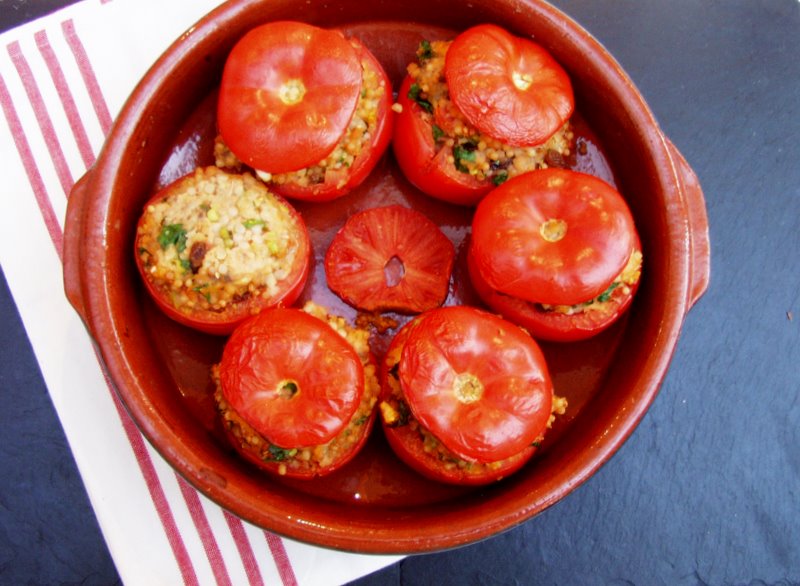
This recipe is perfect for a light autumn supper or lunch and can be found in Clarissa Dickson Wright’s ‘Potty! Clarissa’s One Pot Cookbook’. It’s warming and hearty and if you omit the anchovy fillets then it is ideal also for all you vegetarians and vegans out there. It can be eaten on its own or with a piece of grilled fish on the side or in my case I ate it with some asparagus and melted butter!

Stuffed Tomatoes 

sourced from Clarissa Dickson Wright – ‘Potty! Clarissa’s One Pot Cookbook’

Serves 4

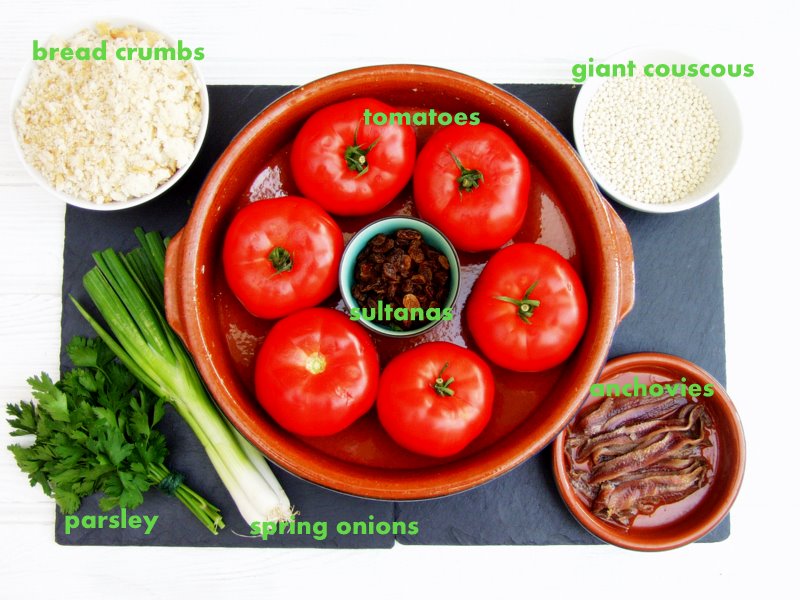
8 large tomatoes

125g couscous

1 tbsp olive oil

100g stale country loaf

2 garlic cloves, finely chopped

bunch of spring onions, finely chopped

60g anchovy fillets in olive oil, mashed (optional)

30 g sultanas

handful of chopped parsley

1. Add boiling water to the couscous, as instructed on the packet. I normally use standard couscous, but for a change I used giant couscous and it worked a treat.  When it is ‘cooked’, if you are using normal sized couscous, add one tablespoon of olive oil to the couscous and stir it in with a fork to loosen it up.

2. Heat the oven to 190 degrees centigrade (170 degrees centigrade for a fan oven), or gas mark 5. Slice the ‘lid’ off the tomatoes and scoop out the interior and then mix the pips and juice into the couscous. Sprinkle a little salt into each tomato set them upside down to drain.

3. Crumble the bread (I use a hand whisk) and mix it with the couscous along with the chopped spring onions, garlic, anchovies (if using), sultanas and parsley.

Season to taste and then stuff your tomatoes and remember to place the lid back onto your tomatoes.

4. Place in a lightly oiled oven proof dish in the oven for 25 minutes. Serve immediately.

ps: for the really observant amongst you, I have intentionally only used 6 and not 8 (as the recipe states) tomatoes. I was feeding two adults and two children so thought 8 might be pushing it a little!


My mother’s legendary ‘Smokey Barbeque Sauce’ and ‘Tarragon and Lemon Chicken’

OLYMPUS DIGITAL CAMERA

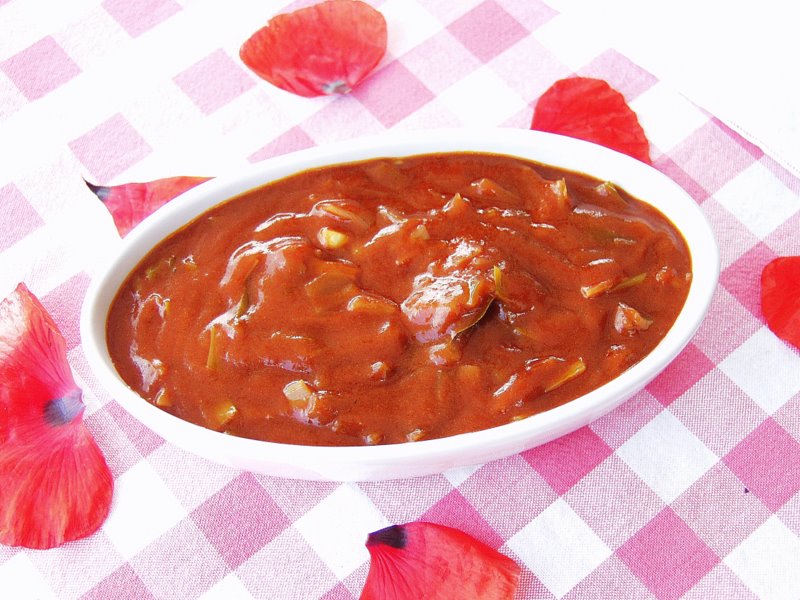
No barbeque is complete without my mother’s legendary smokey barbeque sauce. It’s straightforward to make and always guaranteed to please. There are certain things that you eat as a child that remain in your memory forever and this sauce is definitely one of those happy memory tastes. We were blessed with stunning weather this past weekend – for the Wimbledon finals – so having a barbeque was definitely in order. A glass of Pimms, that ubiquitous English summer tipple, a game of croquet (which is seriously addictive) all in all made for a perfect summer’s day.

OLYMPUS DIGITAL CAMERA

Smokey Barbecue Sauce

Makes approximately 1/2 pint/300ml

25g /1oz butter

1 onion, peeled and finely chopped (although my mother uses leeks as my father has an onion intolerance, which works equally well)

1 garlic clove, crushed

2 tbsp white wine vinegar

150ml/1/4 pint of water or vegetable stock

1 tbsp English mustard

2 tbsp demerara sugar

1 slice of lemon

1 bay leaf

Pinch of cayenne pepper

2 tbsp of Worcestershire sauce

5 tbsp of tomato ketchup

3 tbsp tomato puree

salt

fresh ground pepper

1. Melt the butter in a saucepan and fry the onion (or leek for those with an onion intollerance) and garlic until soft and translucent.

OLYMPUS DIGITAL CAMERA

2. Now add the vinegar, water or stock, mustard, sugar, lemon slice, bay leaf and cayenne. Bring slowly to the boil and simmer for 15 minutes, stirring occasionally.

3. Stir in the remaining ingredients with salt and pepper to taste. Simmer for a futher 10 minutes. I tend to leave the bay leaf in when I serve the sauce as I like the rustic, homemade quality to it.

OLYMPUS DIGITAL CAMERA

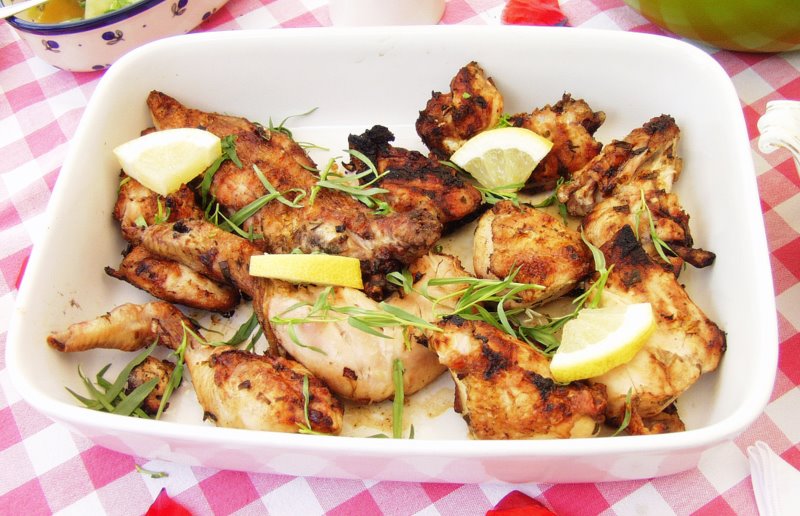
As an alternative to simply just barbequing chicken, which is delicious in its own right, my mother’s ‘Tarragon and Lemon Chicken’ is a good alternative. It’s best to marinade the chicken for as long as possible, ideally overnight and to pierce the skin of the chicken so that the flavours can really be absorbed by the chicken. Serve with a crisp green salad and piping hot new potatoes with a dollop of butter and some chopped up fresh parsley and my mother’s legendary smokey barbeque sauce.

Tarragon and Lemon Chicken  serves 4

3.5lb whole chicken cut into pieces

5 fl oz olive oil

6 tbsp lemon juice

1 onion (or leek), finely chopped

1 large handful of fresh tarragon

1 large handful of fresh parsley (flat leaf or curly), finely chopped

few drops of tabasco

salt and pepper

lemon wedges and fresh tarragon sprigs to garnish

1.  Season the chicken with salt and pepper and then make a few knife incisions into the chicken pieces. This is to enable the marinade to really penetrate the chicken so that it is more flavoursome when it is cooked. In a separate bowl mix together the olive oil, lemon juice, onion (or leek), the handful of tarragon and parsley and tabasco. Then add the chicken pieces and with your hands really work the marinade into the chicken pushing some of the onion and herbs into the small incisions that you have made.   Leave the chicken to marinate in the fridge overnight.
OLYMPUS DIGITAL CAMERA
2.  Take the marinated chicken out of the fridge for over an hour before cooking time and leave to stand at room temperature.
3.  When the barbeque is ready brush the grid with olive oil.  Drain the chicken pieces, reserving the marinade, and place chicken on the grid starting with the bony side down. Brush the chicken pieces with the marinade at intervals during cooking, remembering to turn the chicken so that it is cooked sufficiently.
4.  Barbequing the chicken takes 30 minutes. You know that the chicken is cooked when the juices run clear when pierced with a knife through the thickest part of the meat.
5.  Garnish with tarragon sprigs and serve with lemon wedges.
OLYMPUS DIGITAL CAMERA

Ma Po Tofu – a Sichuan classic


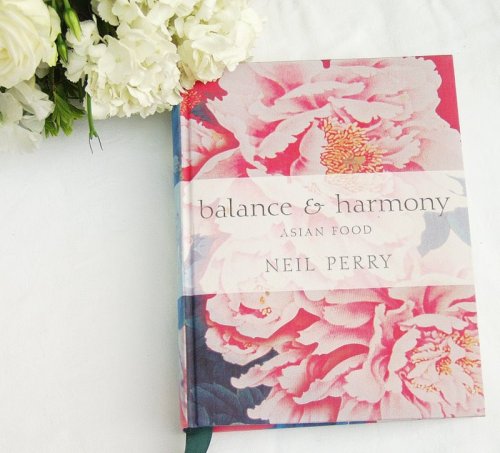
A couple of years ago I stumbled across the most exquisite looking cookery book. Its cover drew me in and before I knew it I was leafing through the pages drooling over the divine recipes. Some of the ingredients I was unaccustomed to, and I think it was this that really attracted me to buy the book. Who wants to remain in their culinary comfort zone, not me, so with a youthful enthusiasm I purchased it. Since it has been in my possession I have lovingly poured over it, and if the truth be told I have even been known to take it to bed to read and study the recipes on numerous occasions. The book in question is called ‘Balance & Harmony, Asian Food’, by the Australian chef Neil Perry, who I had previously never heard of before. I personally find it rare to come across a cookery book where I actually want to cook more than a dozen dishes from it, but with Neil’s book I really want to try them all.

Its beautifully set out into chapters focusing on basic techniques and recipes then moving onto advanced recipes and banquet menus. The dishes are beautifully photographed and styled, interspersed with stunning old prints of Chinese women in traditional dress. If there are prizes for stunning cookery books this would surely win the top prize. Oh, and for the sceptical amongst you, although I am sure there are none, I am not being paid to say any of these kind words about Neil Perry’s book.

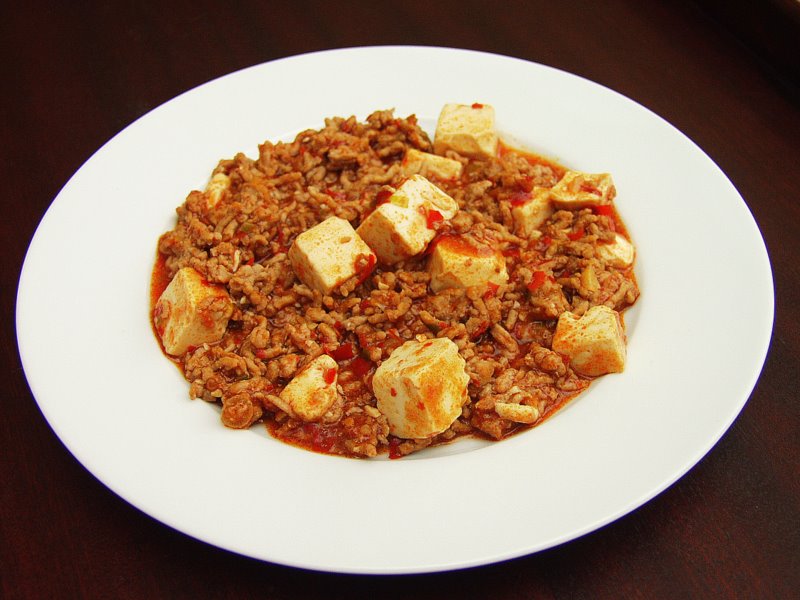
A wonderful recipe from his book to share with you, dear reader, is Ma Po Tofu, or as it is also affectionately known, Pockmarked-Face Lady’s Tofu. Put off?  Don’t be, as you are in for a treat and you’ll be doing cartwheels of delight after your first mouthful. Mark my words.

To read the full story of where this recipe derives its name click here. The dish is a Sichuan classic, and is cooked with pork or beef mince with tofu, in a spicy chilli bean sauce. Not the type of chilli that has you gasping for milk, but one that urges you to have more mouthfuls, so please do not be put off by thinking it will be too hot. Sure it’s feisty, but it has a wonderful balance of sweetness and spiciness, which prevents it being too overpowering. If you are a vegetarian you can also enjoy the dish, by simply omitting the pork or beef. Tofu is easy to find and tastes delicious in this dish. It lasts for ages in the fridge so I usually keep a stock of it ready for when I feel the urge to cook and eat Ma Po Tofu.

Its one of my  favourite things to eat at the moment and is absolutely guaranteed to bring a smile to the face of anyone who eats it.  I’ll introduce you to other recipes from Neil’s book soon, but try this one first and let me know how you get on.

Ma Po Tofu

Serves 2 hungry people

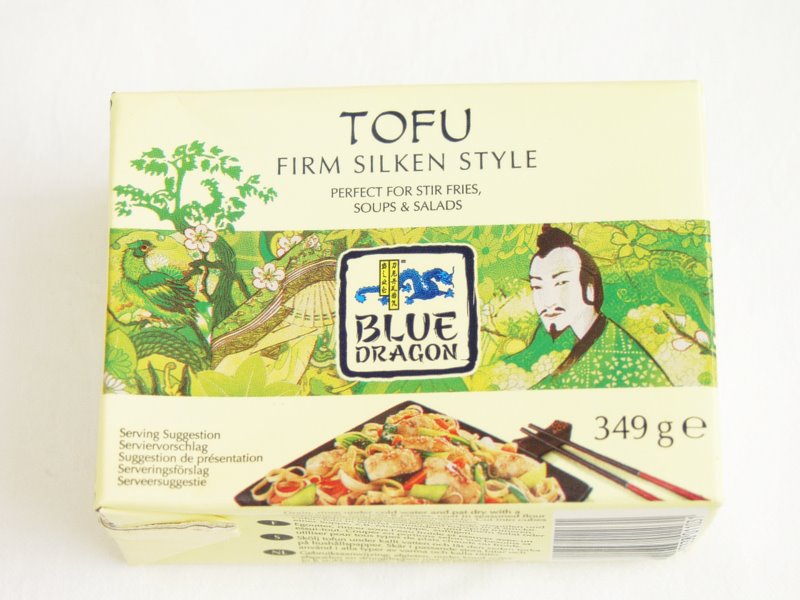
300g of silken tofu, cut into 2cm cubes (I use slightly more, see packet above!)

2 tbsp of vegetable oil

500g minced pork (Neil uses 200g)

1 clove garlic, finely chopped

2 spring onions (scallions), sliced

2 tbsp hot bean paste (I use Lee Kum Kee’s Chilli Bean)

125 ml (4 fl oz/1/2 cup) fresh chicken stock (if you have it, otherwise I tend to use Kallo organic chicken stock cube – sorry Neil)

1 tsp of shaoxing

1 tsp of light soy sauce

1/2 tsp dark soy sauce

2 tsp sugar

1/4 tsp sea salt

a good pinch of Sichuan pepper

1/2 tsp sesame oil

1. Cube the tofu into 2cm/3/4 inch cubes and set aside.

2. Heat the wok/pan until it is smoking and then add the vegetable oil. When the oil is hot add the minced pork and stir-fry until browned. This won’t take longer than 5 minutes.

3. Then add the garlic, spring onion and bean paste and stir into the pork.

4. After a couple of minutes add the stock, shaoxing, soy sauces, sugar and salt and bring to the boil.

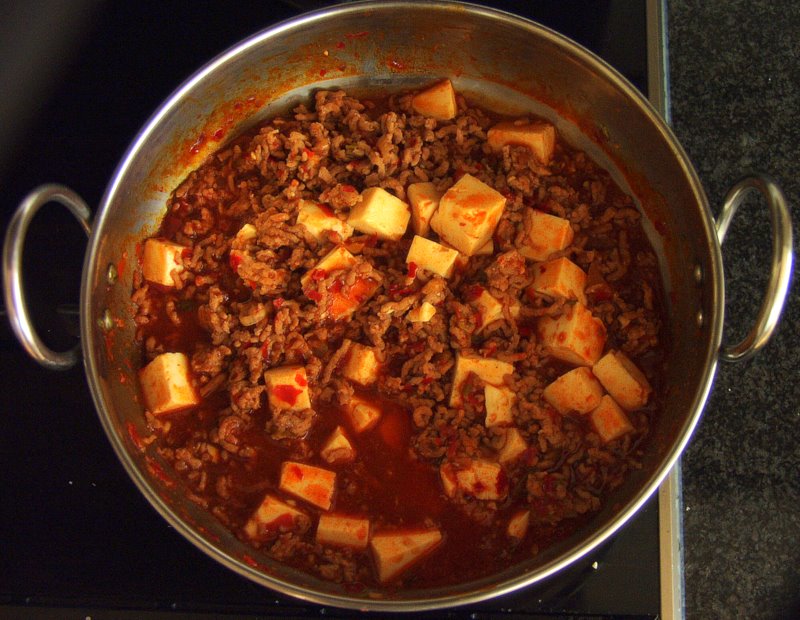
5. Gently add the tofu, being careful not to break the cubes, and reduce the heat to a gentle simmer. Allow the liquid to thicken slightly.

6. Add the Sichuan pepper and sesame oil and gently mix together.

Serve with a bowl of steamed rice.


Want to join the ‘obscure vegetable movement’?

Have you ever been just a little bit curious about what all those rather unusual looking vegetables might actually taste like, when browsing around an Asian food market. Well I certainly have. I’ve been thinking…..we’ve had the ‘slow food movement’, ‘organic food movement’, perhaps now’s the time of the ‘obscure vegetable movement’. Maybe they need a voice, just like the potato did when we all gave them a chance when Sir Walter Raleigh returned with them after his voyage to the Americas, during the reign of Queen Elizabeth I. Perhaps carrots, broccoli, peas, onions, leeks and potatoes need to be knocked off their pedestal of most well loved and consumed vegetables.

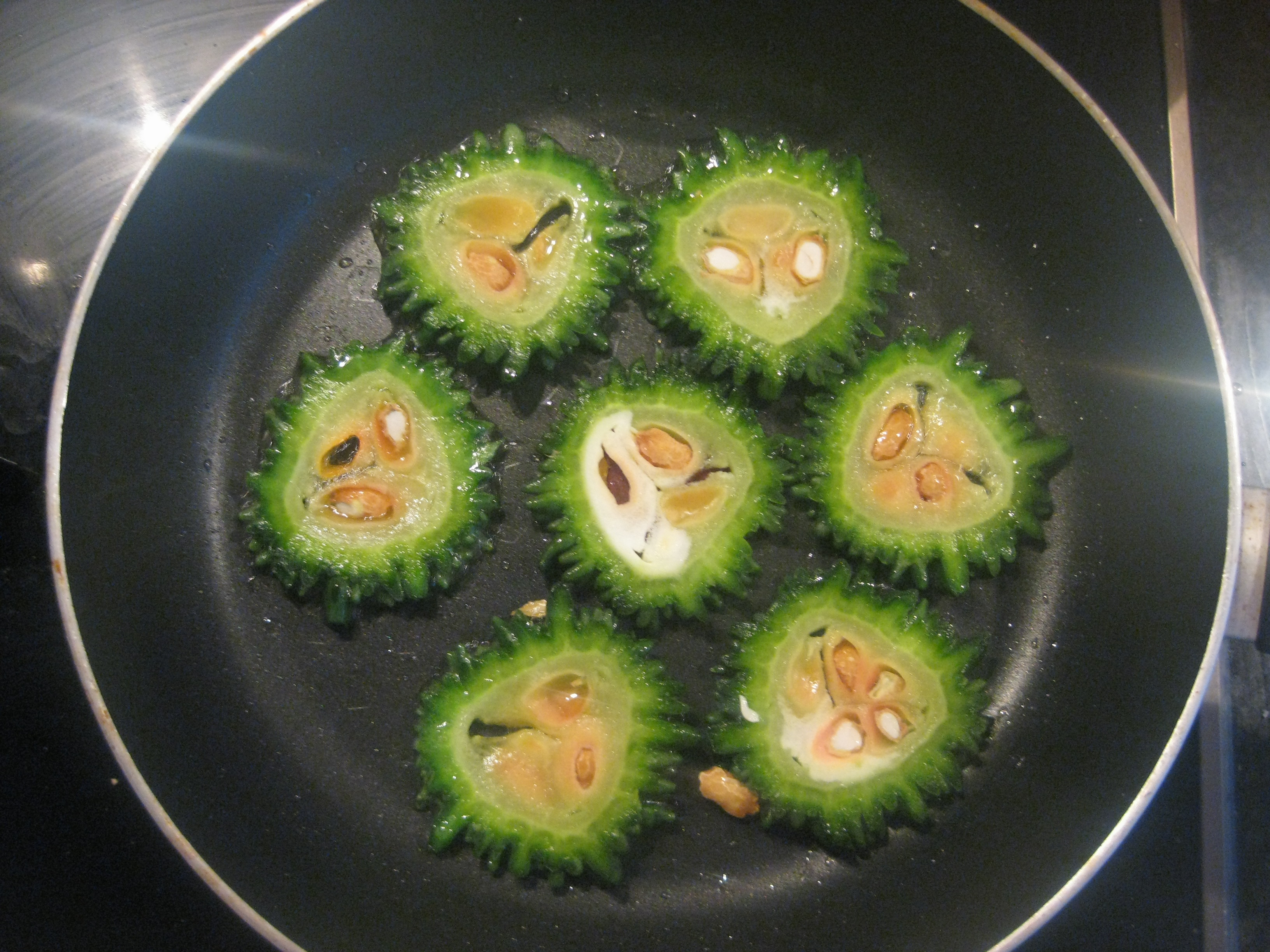
One such vegetable, which I discovered not too long ago, is karela, also known as bitter melon/gourd. It’s completely ubiquitous in the tropics mind you, just a little bit unusual over here in your average food market – unless it’s an Asian one.  Its not a pretty vegetable in the slightest. Warty, green and up to eight inches long it looks slightly like a cucumber, but less appealing.

IMG_5809

It has a really bitter taste, but it is so different from anything I have ever eaten that I actually like the vegetable. It has the same divided opinion as marmite does in the UK. You either love it or hate, nothing in between.

Karela is actually very versatile, but I like to cut it width ways into thin slices and then slowly fry them in a pan until they begin to brown and then turn them over until they brown that side as well. After patting them with kitchen paper I then sprinkle some salt over them and eat them as a snack, or with rice and dahl.

As an alternative you can sprinkle the raw slices with salt and turmeric and then fry them. You can then stop there and eat them or if you feel the need for spice with a kick follow the next step………..

Put a tbsp of oil in a pan and when hot add a pinch of  asafoetida, which is also known as ‘Devils Dung Stinking Gum’ – how cool is that? 1-2 dried red chilli and 1 tsp of mustard powder. Stir for a minute and pour over the karela. Delicious and definitely packs a punch.

IMG_5810

High in iron, it also has a wide range of medicinal qualities and is purported to be the best herbal medicine for liver problems, aid people with psoriasis and diabetes. Curious…………go on give them a try, but be open minded! They are easy to find at any Asian food store, you just won’t be finding them at Tesco quite yet.

IMG_5818