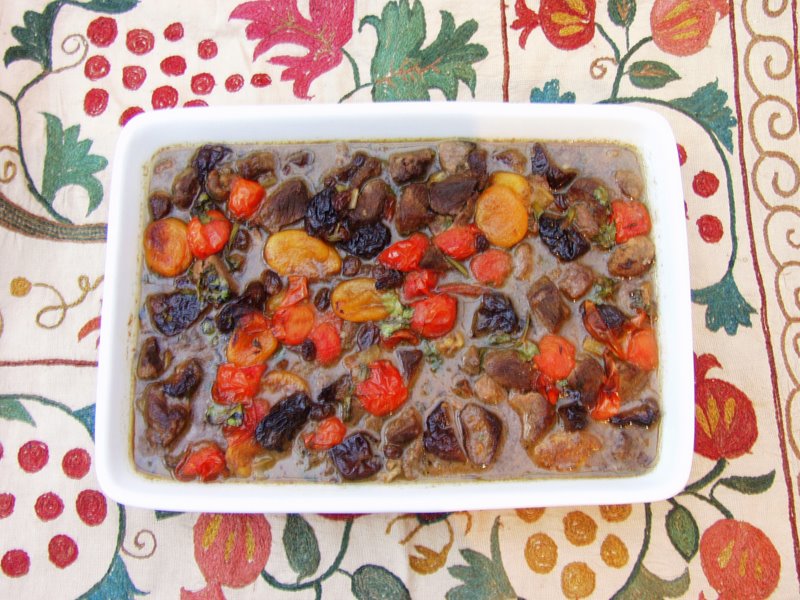
Slow Cooked Lamb with Tomatoes, Dried Fruit and Spices

Winter time calls for hearty stews, casseroles and tagines to lift the spirits and bring joy, warmth and wonderful cooking smells into the home. You can cook them in advance and they are also perfect for leftovers the next day. Cooking with dried fruit divides opinion, but I for one am a huge fan and if someone really dislikes prunes, apricots or raisins I suppose they could easily pick them out so as to avoid eating them, but in many respects I feel they would kind of be missing the point. I think the fruit adds to the depth of flavour and gives it a touch of sweetness that makes this dish stand out from the crowd.

I don’t have a proper tagine dish so I cook mine initially in my Le creuset pot and then transfer it to two oven proof dishes. It works equally well with rice, which you can cook with a couple of cardamom pods, so as to make the dish more exotic, or couscous with a sprinkling of roasted almonds. I have added a chilli to the dish, naturally, but this is optional and tastes equally delicious without.

The amount I cooked was more than sufficient for a large group, so just divide by 2 for a family of 4/5.

Slow Cooked Lamb with Tomatoes, Dried Fruit and Spices

Adapted from a similar recipe by Tana Ramsay’s Family Kitchen

Serves 6

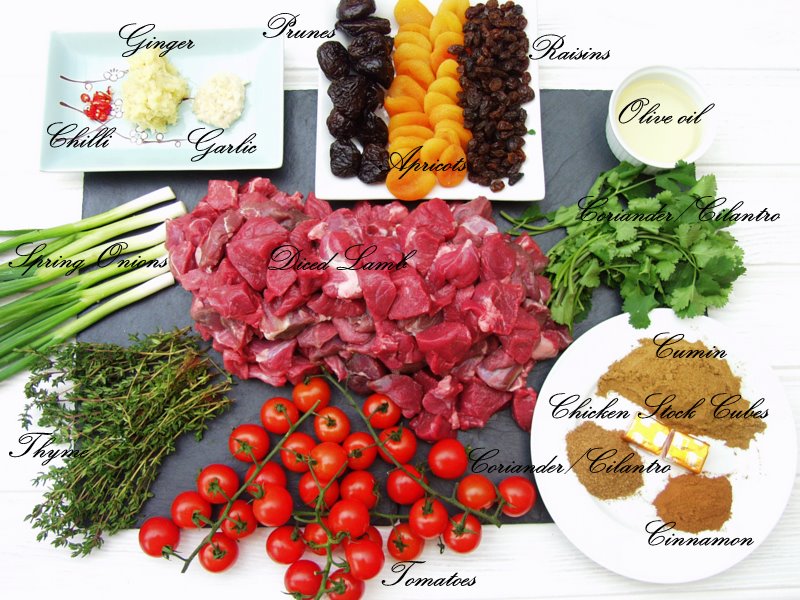
3 tbsp olive oil

1.6kg lamb cut into bite sized portions

2 inch ginger, grated

4 garlic cloves, crushed

1 red chilli, chopped

6 spring onions

2 tsp ground coriander

2 tsp ground cinnamon

1 tbsp ground cumin

1.5 pints chicken stock

32 vine cherry tomatoes

handful of fresh thyme

15 dried apricots

10 pitted prunes, cut in half

50g/4oz raisins

handful of fresh coriander, chopped

rock salt, sprinkling

1) Preheat the oven to 160 degrees

2) Add  2 tbsp olive oil to a deep cooking pot and gently fry the ginger, garlic, chilli and spring onions for a couple of minutes.

3) Place the lamb into the pot and stir gently so that all the lamb begins to cook and change colour from a deep red to a lighter brown. This will take around 6 minutes. Once the lamb has changed colour add the rest of the spices and really stir into the lamb. Add the stock and then transfer into one or two oven proof dishes and place in the oven for 1 hour.

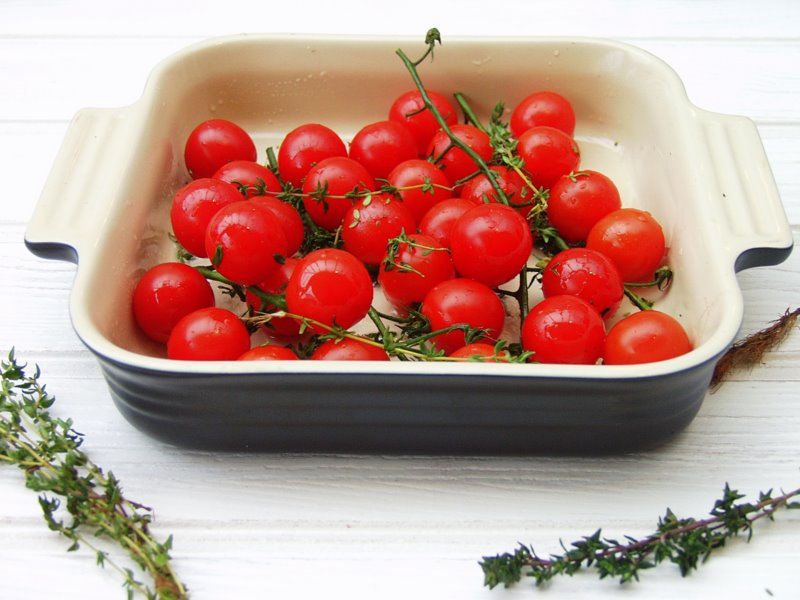
4) Whilst the lamb is cooking place the vine tomatoes in a separate oven proof dish with a few sprigs of thyme, a little olive oil and a sprinkling of rock salt. Place into the oven for 30 minutes so as to intensify the flavour.

5) When the oven roasted tomatoes have finished cooking add these, along with the dried fruits, a small handful of chopped coriander to the main dish and cook for a further 30 minutes. Serve immediately with a little extra fresh coriander sprinkled on top and either rice or couscous on the side.


Save the English cauliflower from extinction by EATING it!

It was during a recent family conversation about how cauliflower consumption is in decline, that gave me the idea for this blog. I wanted to do my bit, so as to speak, to give the cauliflower some much needed positive PR and encourage people actually to buy and eat the vegetable.  The sad truth is that if we don’t consume them we will slowly see them disappearing from our farmers’ markets, grocers, supermarkets (delete as required) and they will join the list of other extinct vegetables. A really interesting article was published a couple of  years ago in “The Daily Telegraph” with the heading ‘Cauliflower to make a comeback with environmentally friendly rebranding’ – it’s worth a read so just click here.

I think a lot of people are not too sure what to do with cauliflower, other than the obvious cauliflower cheese, which don’t get me wrong is tasty, especially when you add crispy bacon bits to the topping, but there are so many other delicious things to do with cauliflowers.

So I thought I would share two completely different recipes with you to inspire you to love and eat cauliflower. Broccoli and other so called ‘superfoods’ seem to have taken centre stage due to their health benefits, but the fact is that cauliflower is also very nutritious, perhaps not quite as much as broccoli, but close, and if the truth be told cauliflower has less calories than broccoli. You can check out the facts here if you don’t believe me!

First up…………………………drum roll please……………………. is………………………………………………..

Sweet Piccalilli, which is a gloriously tangy and vibrant looking relish which includes cauliflower as the main ingredient, along with green beens, courgette/marrow, pickled onions and spices. It’s also been referred to as ‘Indian Pickle’, indicating that it’s origin stems from the Indian subcontinent. I recently made a huge batch and then gave a number away as gifts at christmas time. A dollop of this relish is the perfect accompaniment to hams and cheeses, in fact you are guaranteed always to see it on the plate when ordering a traditional ploughman’s lunch at any good English Pub.

This recipe is sourced from my favourite preserves and pickling book called The Complete Book of Preserves and Pickles by Catherine Atkinson and Maggie Mayhew. I have remained pretty loyal to the original recipe other than the fact that I do add a little more flour as I like the piccalilli to be slightly thicker. It’s personal choice, so see how you get on and don’t be afraid to add a little more flour if need be. It is also really important to note that steps 1 and 2 you need to do 24 hours before the next steps can be completed.

Sweet Piccalilli

Makes circa 1.8kg/4lb, which was precisely 7 jars  and I bought them from here.

1 large cauliflower

450g pickling (pearl) onions

900g mixed vegetables (marrow/courgette, cucumber, French green beans)

225g salt

2.4 litres/4 pints cold water

200g granulated sugar

2 garlic cloves, peeled and crushed

2 tsp of mustard powder

1 tsp of ground ginger

1 litre/1 and three quarters distilled (white) vinegar

25g plain flour

1 tbsp turmeric

1. Clean and cut the cauliflower into small edible florets and cut off the ends of the French green beans and cut them into 2.5cm/1inch in length. The pickling onions I use are small, but if you have bought the slightly larger ones you will need to quarter them.

2. In a large bowl place the vegetables in layers and add a sprinkling of salt over each layer. Pour the water over all the vegetables and then cover with cling film and leave to soak for 24 hours.

24 hours later

3. Drain the soaked vegetables and discard the brine. You will need to rinse them well several times in cold water so as to get rid of the salt. You may find it easier to do this in batches.

4. In a large pan (preserving pan if you have one) add the sugar, garlic, mustard, ginger and 900ml/1 and a half pints of the vinegar. Gently heat the pan stirring occasionally until the sugar has dissolved.

5. Add the vegetables to the pan and bring to the boil and then reduce the heat and simmer for 10-15 minutes or until they are almost tender.

6. In a separate bowl stir the turmeric into the flour and then add to the remaining vinegar. Stir this mixture into the vegetables. Bring to the boil and stir and then turn down the heat so that it simmers for another 5-10 minutes allowing the piccalilli to become thick. If it is not the consistency you want, simply add a little more flour and it should thicken up.

7. Into warmed sterilized jars, add the sweet piccalilli and cover and seal. Store in a cool dark place for at least 2 weeks. Use within the year.

——————————————————————————————

The second recipe I wanted to share with you is Cauliflower Curry, which is really straight forward and speedy to make and perfect to eat either on its own or with a bowl of dal on the side; I also like to have mine with a little natural yoghurt. This recipe comes from my mother-in-law who stores all her recipes in her head and never seems to have precise measurements. It’s always a little bit of this and a little bit of that, and the result is always divine.  I think you will be pleasantly surprised at how tasty and simple this dish is to make.

Cauliflower Curry

Serves 2-4 accompanied with another dish such as dal or speedy salmon curry

1 large cauliflower

2 tbsp of mustard oil (or sunflower oil if you do not have mustard oil)

1 tsp  nigella seeds

1 tsp turmeric

1tsp ground coriander (cilantro)

1tsp ground cumin

1tsp garam masala

1 tsp salt

half tsp chilli powder

3 inch cinnamon bark, broken into smaller parts

splash or two of water

1 heaped tsp of ghee or butter, optional

1. Wash and cut the cauliflower into small florets. Do not discard the outer green bits as these too can be used in the curry.

2. In a pan warm up the oil on a low heat and when it’s hot add the nigella seeds. After 10 seconds add the cauliflower and stir into the seeds and the oil. Add the turmeric and then let the cauliflower gently cook away. You want to begin to see the cauliflower bronzing before adding any more of the ingredients, this will take between 5-10 minutes. Keep the oil on a low heat or you will find that the cauliflower will burn, which is not the effect that you want to achieve.

3. Add all the rest of the ingredients, aside from the ghee/butter and water. Stir them all together and then add a small amount of water to help soften the cauliflower and help it cook. Cook for further 10 minutes and then add the ghee/butter and stir into the cauliflower to give it a more buttery taste. This is not essential so try it both ways and see which you prefer.

4. Serve with natural yoghurt.

Do you have any any cauliflower recipes that you cook at home and would recommend? I’d love to hear them.

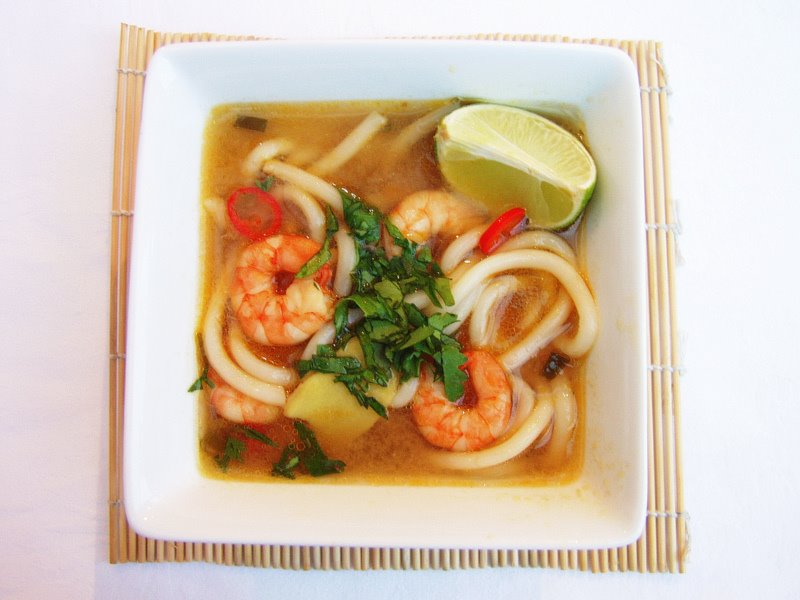
King Prawn Noodle Broth – effortless joy in a bowl

OLYMPUS DIGITAL CAMERA

Do you ever feel too exhausted to cook in the evenings but want a fresh, healthy, comforting dish that you can prepare in lightening speed with very little effort? I think all of us do from time to time, I certainly did this evening. So I put together this wonderfully flavoursome broth in less than 10 minutes. I feel it cleanses the body and heightens ones senses. It’s definitely my kind of dish.

King Prawn Noodle Broth – Serves 2

190g  Jumbo king prawns (or any prawns will do)

1 bag/ 200g of udon noodles (double the amount if you are feeling hungry)

1 tamarind broth cube (Knorr make them)

1 garlic clove, finely sliced

6 thin slices of fresh ginger

half a red chilli, finely sliced

1 lime

1 spring onion, finely sliced

1/2 tsp of lemongrass paste

2 tsp of light soy sauce

1 tbsp sesame oil

1 tbsp of coriander, chopped

1. Thinly slice the garlic, ginger, red chilli and spring onion. Heat the sesame oil in a pan, and when it is hot, add the chopped ingredients and the lemongrass paste, and cook gently for a couple of minutes.

OLYMPUS DIGITAL CAMERA

2. Meanwhile put 600ml of boiling water in a pan on a low heat and break up the tamarind broth cube into the water. Then add the prawns and watch them reduce in size slightly – this will only take a couple of minutes – be careful not to over cook them!

OLYMPUS DIGITAL CAMERA

OLYMPUS DIGITAL CAMERA

3. Place the contents of the pan with the garlic, ginger, chilli, lemongrass and spring onion into the broth along with the udon noodles. Whilst I use udon noodles any type of noodles will work equally well. Experiment and see which you prefer. Cook the noodles for 3 minutes and during this time add the soy sauce and the juice from half a lime.

4. Serve piping hot with chopped coriander on the top with a lime quarter on the side.

If you are feeling under the weather or want a general ‘pick me up’ this warming broth is sure to reinvigorate you. Instead of prawns you could use chicken or for a vegetarian option: broccoli, sugar snap peas, mange tout or pak choi.


Bream me up Scotty!

If you were to open my fridge at any point in time you can pretty much guarantee that you will find some fresh red and green chilli, garlic, ginger and coriander/cilantro lurking within. They are like my kitchen essentials. I adore them I really do. They make what would otherwise be a rather bland dish into one that wants to shout from the roof tops ‘I’m alive and kick ass’. From these ingredients I can pretty much conjure up a feast without too much effort.

Following a glorious full on wedding weekend I thought it was a good idea come Monday to cleanse the body and soul with some tasty bream and some of my kitchen essentials. Its certainly no ‘rocket science’ recipe but it certainly tastes good and can be adapted to suit ones liking to chilli, or not, as the case may be.

I had some wonderful bream in my freezer, which I defrosted the night before to make the dish. Bream is a delicious fish, similar to seabass in texture being firm and sweet.  As an added bonus you can sleep soundly at night, dear reader, with the knowledge that it is not on the endangered list like cod and halibut. Its reasonably priced, simple to cook and not overly boney.  So what’s stopping you? Seek it out and let me know what you think.

This recipe is quite a personal thing in the sense that you can emphasise more or less of the ingredients depending on your preference to them, or not as the case maybe. I tend to cook it with no particular guidelines, however, I realise that this is not very helpful when you are trying to pass on a recipe so here goes at me noting down how to create this gem of a dish.

Bream with chilli, spring onions, garlic and ginger

Preparation time: 5 minutes

Cooking time: 13 minutes

Serves 3 (hungry people or 6 less greedy people)

6 pieces of Bream or 3 Bream

3 spring onions, chopped

4 garlic cloves,  choppped

2 inches of ginger, grated finely

2 chilli, chopped

1 lime, chopped into two

4 tbsp of soy sauce

2 tbsp sesame oil

Handful of chopped coriander/cilantro

Whole grain rice

1. Place the rice in a pan of boiling water and simmer gently for the required time. Whole grain rice takes a little longer than white, normally around 20/25 minutes.

2. Place the oil in a relatively deep pan on a low heat.  When the oil is hot add the garlic, ginger, spring onions and then the chilli. Fry gently for a couple of minutes and then add the bream  pieces. Squeeze in the lime halves and then leave in the pan so that the flavours can blend together.

3. After a minute add half the soy sauce and add a splash of water so as to give more of a steam effect to the cooking of the fish, placing a lid on top.

4. After 5 minutes turn the bream over and cook for a further 5 minutes, so that it is cooked/steamed sufficiently on both sides.

5. Just before you take it off the heat, place a good handful of corriander/cilantro over the fish. This adds a wonderful aroma to the dish.

6. Serve with whole grain rice.

So speedy to prepare and cook that even those with a busy schedule can cook such delights.