Chinese Steamed Eggs – A tasty ‘mouthfeel’ dish

How are you all surviving with the deluge of rain that we are having in the UK? It’s relentless isn’t it. It’s no wonder that us Brits are renown for talking about the weather non-stop, as it is so pertinent to our very existence. At least I have opted for a relaxation/pastime that does not depend on the weather – swimming outside – rain or shine you are always going to get wet. Followed by a sauna, and you can guarantee that your day will always seem brighter.
In a bid to be more consistent on here I wanted to kick off the weekend by sharing a super quick and tasty breakfast or lunch recipe for Chinese steamed eggs, which has a wonderful ‘mouthfeel’ to it. Fuchsia Dunlop talks about ‘mouthfeel’ in her excellent book ‘Shark’s Fin and Sichuan Pepper: A Sweet -Sour Memoir of Eating in China‘ – I highly recommend this book if you have not read it. In Chinese cuisine they have a specific word for mouthfeel – ‘kougan’ and this is often considered equal or as important to flavour. The mouthfeel for this dish comes in the form of a smooth and silky sensation – a term known as ‘hua’. The other sensations in the Chinese vocabulary are ‘cui’ – for anything that is crunchy or crispy, ‘Q’ for anything that is chewy, bouncy or rubbery in texture – noodles being a great example and ‘nuo’ for soft and gelatinous dishes – particularly braised dishes.

It takes around 15 minutes to make (including preparation) but there are a few important steps to remember.

1. After whisking the eggs it is important to strain them – this makes sure that the steamed eggs will be completely smooth.

2. The water that you add to the strain eggs need to be the same amount in weight to the eggs. It needs to be warm so I suggest half the amount is boiling water and the other half is cold. I like to add 1/4 cube of chicken or vegetable stock to the water. Give a good stir to allow the stock cube to dissolve, then strain into the whisked eggs.

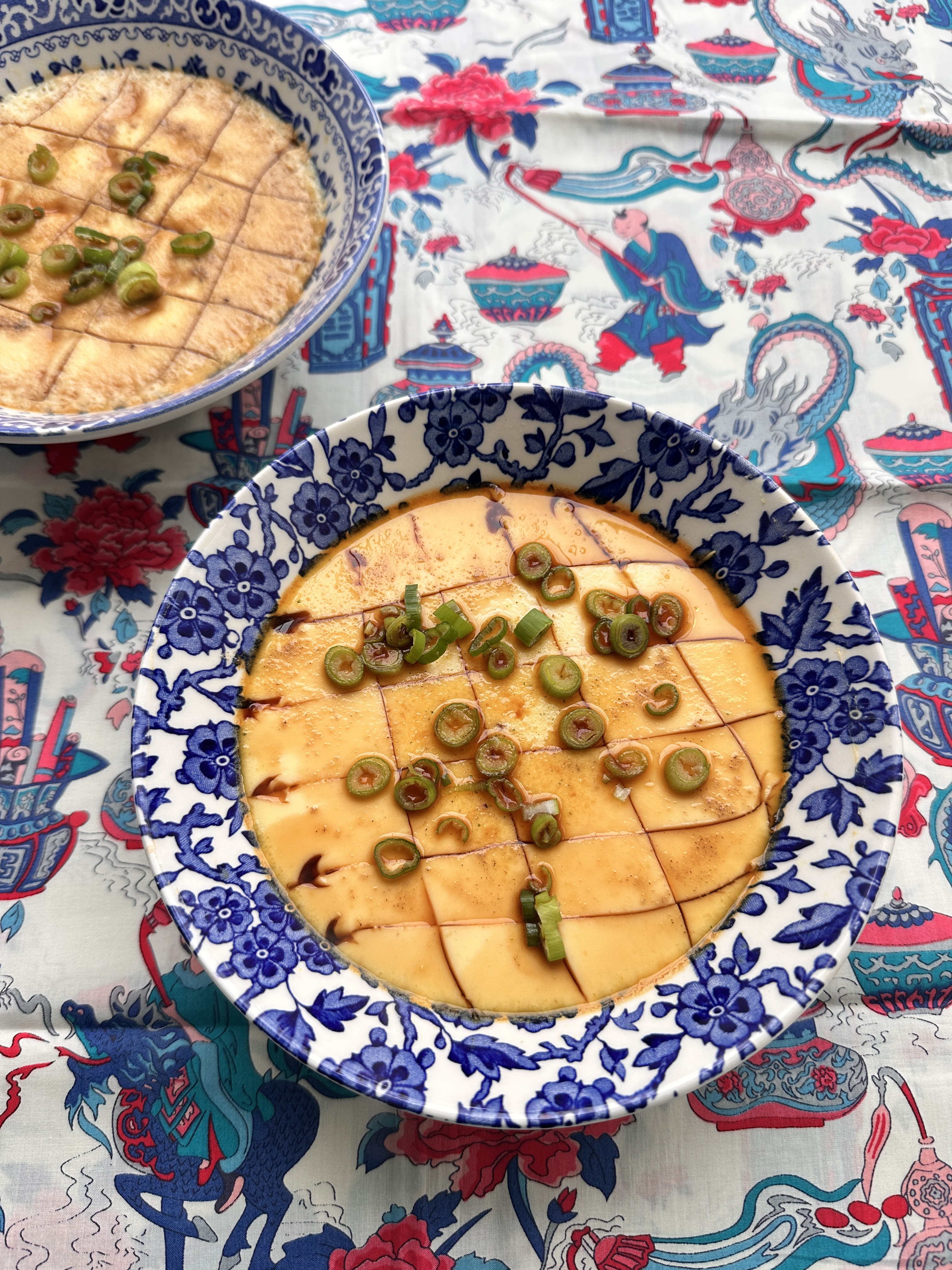
3. Cover the bowl with the egg mixture with some clingfilm with a few little holes in top – this is to prevent in water from the steam dripping into the bowl. (See the photo below which shows the bowl with steamed eggs that had clingfilm in the front of the photo and one without in the back. Without will make the eggs uneven on the surface.

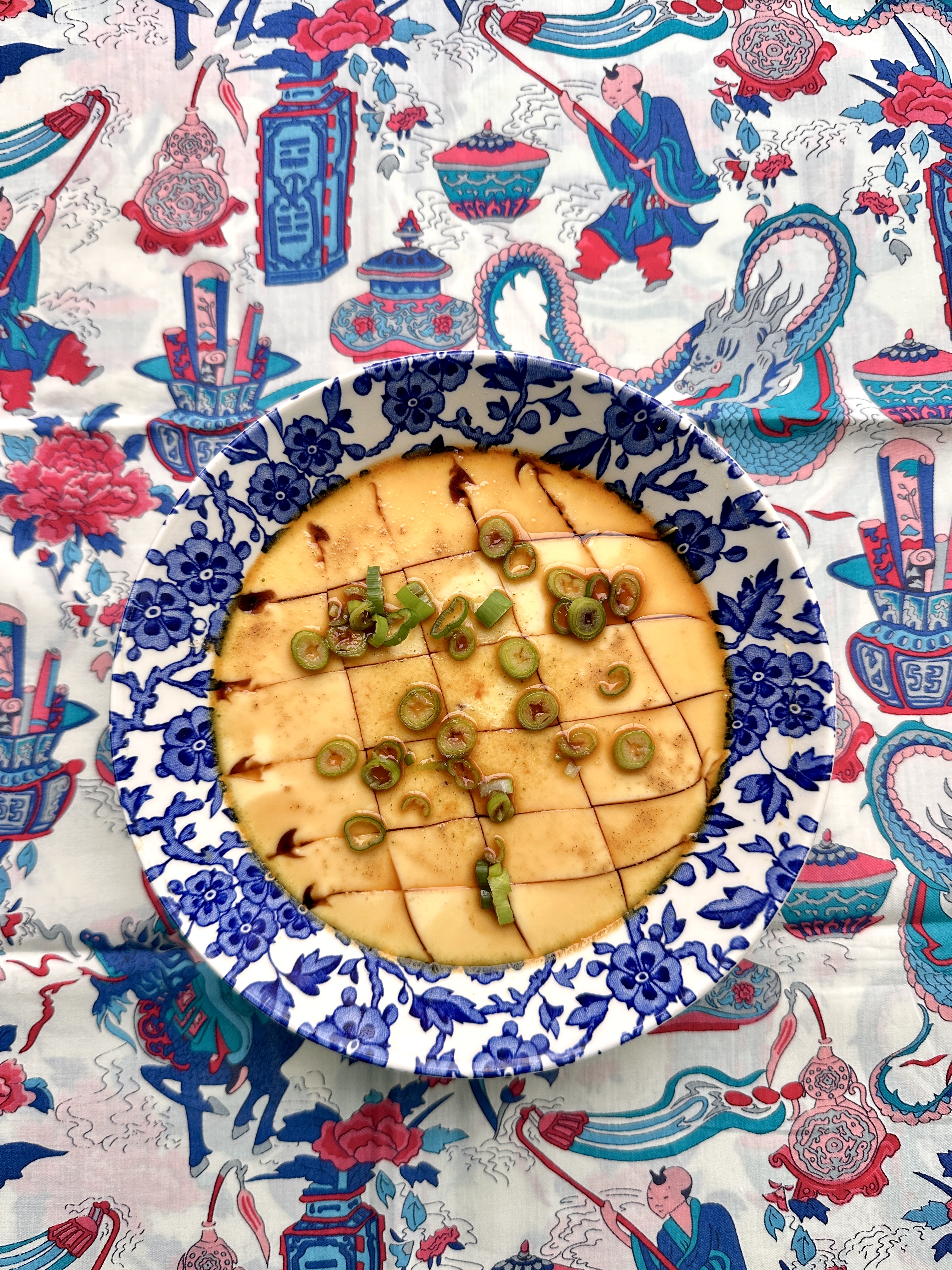
4. Use a sharp knife to make incisions evenly across the top of the steamed eggs, then turn the bowl and make more incisions so that you have a lattice effect.
So below is the recipe in detail.

Chinese Steamed Eggs

Serves 1

2 eggs, whisked

warm water (weight of the eggs + half again 1:1.5 ratio)to get the right temp water mix half boiled water/cold water

1/4 cube of chicken or vegetable stock

1 small spring onion, green part only, finely sliced OR 1-2 chives, finely sliced

1 tsp light or dark soy sauce

1/2 tsp sesame oil

small pinch of white pepper, optional

  1. Place a bowl on a weighing scales and weight the eggs. Make a note of the weight.
  2. Whisk the eggs in a bowl and leave to one side.
  3. Using a separate bowl or measuring jug add the half boiling/half cold so that it is warm and add 1/4 chicken/vegetable stock cube (you don’t want it to be too salty). You are looking for a ratio of 1.5x the weight of the eggs (example: 100ml eggs add 150ml of warm water). Stir well and then add to the bowl with the whisked eggs.
  4. Sieve the eggs and stock and place into your serving bowl. Remove any bubbles that have come to the surface.
  5. Add boiling water to the bottom of your steamer. If you don’t have one simply use a pan that is wider than your bowl. Place a cookie cutter or trivet on the bottom of the pan and cover with boiling water so that the water is up to the cutter/trivet. Bring to a rolling boil.
  6. Cover the serving bowl with cling film and prick it a couple of times with a sharp knife. Gently place in the pan and cover with a lid with a small hole in the top to allow the steam to escape.
  7. Turn the heat down to medium/low and allow to steam the eggs for 9 minutes. Turn off the heat and leave to sit for a further 3 minutes.
  8. You will be able to see that the eggs are nicely steamed and will jiggle a little if you give the pan a little tap. (see the jiggle below)
  9. Be careful removing from the steamer. Remove the clingfilm and then use a sharp knife to make a series of straight incisions along the top and then turn by 90 degrees and make more incisions so that you have a diamond lattice effect.
  10. Spoon the soy sauce and sesame oil on top, followed by a pinch of white pepper and spring onions or chives and dive in and enjoy the ‘kougan’ and comforting taste. I love it and hope you will too.

Please note:I don’t add any salt to the eggs to begin with as I find the chicken/veg stock and soy sauce adds enough salt to the dish.

Have a great weekend everyone. Wrap up warm and stay dry.

Torie
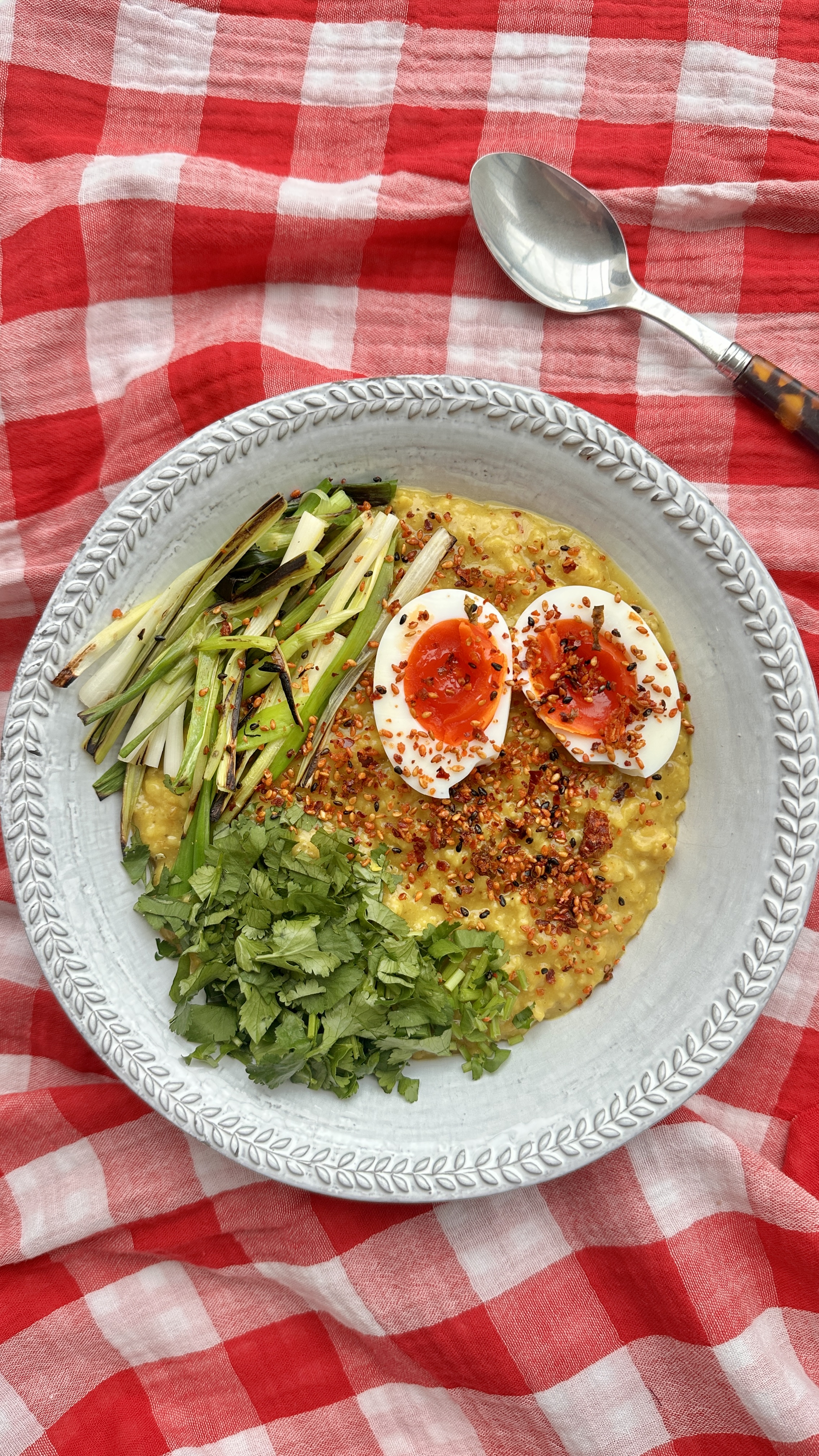

My Go-To Breakfast Choice…..at the moment

I definitely gravitate towards a savoury breakfast pre or post my cold water swim and sauna. As a side note, I am so pleased that the sauna revolution is growing from strength to strength the length and breadth of the UK. It is so good for you and with a cold water plunge or swim is a mood uplifter. Even in the dreary rainy days it is transformational. Trust me – give it go.

Anyway back to savoury breakfasts…..It was only during my first pregnancy that I gave pain au chocolate a look in and really craved them most days. Typically though give me masala dosa, dim appam/egg hopper with chutneys or perhaps idli and sambar, Vietnamese pho or eggs in any form with some miso sesame toast (yes that is a thing from the wonderful August Bakery) with marmite on the side.

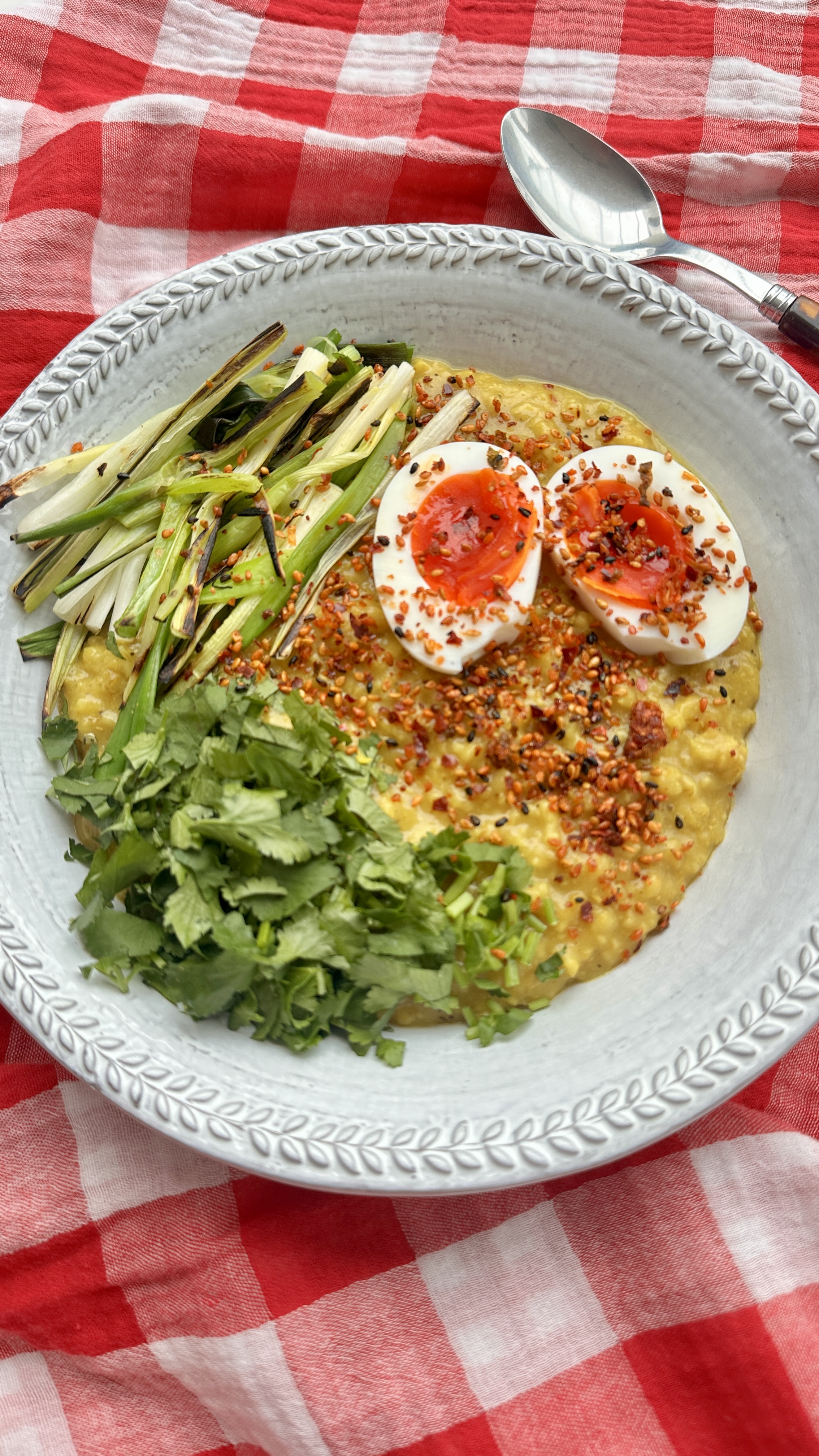
At the moment, however I am gravitating towards an oat congee type affair. Congee, for the uninitiated, is a popular Asian rice porridge which is broken down to become a smooth-ish, thick-ish, comforting soup. Typically the rice is cooked slowly over an hour or two (1:8 or 1:10 rice/water ratio) when the grains break down and burst and the dish becomes creamy and soft. You can make it with white or brown rice, the latter naturally offering a fibre packed meal. It has all manner of toppings – sometimes chicken, pork or fish is added. In Japan it is known as ‘kayu’, in Korea as ‘jus’, in Myanmar ‘hsan pyoke’, in Indonesia ‘bubur’, Thailand ‘jok’ and in the Philippines it is known as ‘lugaw’.

With the dark winter days, coupled with rains and general gloom we are having in the UK, my version of congee will definitely lift the spirits and put a spring in your step. It uses porridge oats instead of rice and uses no oil or butter and literally takes 7-8 minutes to make – the time it takes to boil an egg.

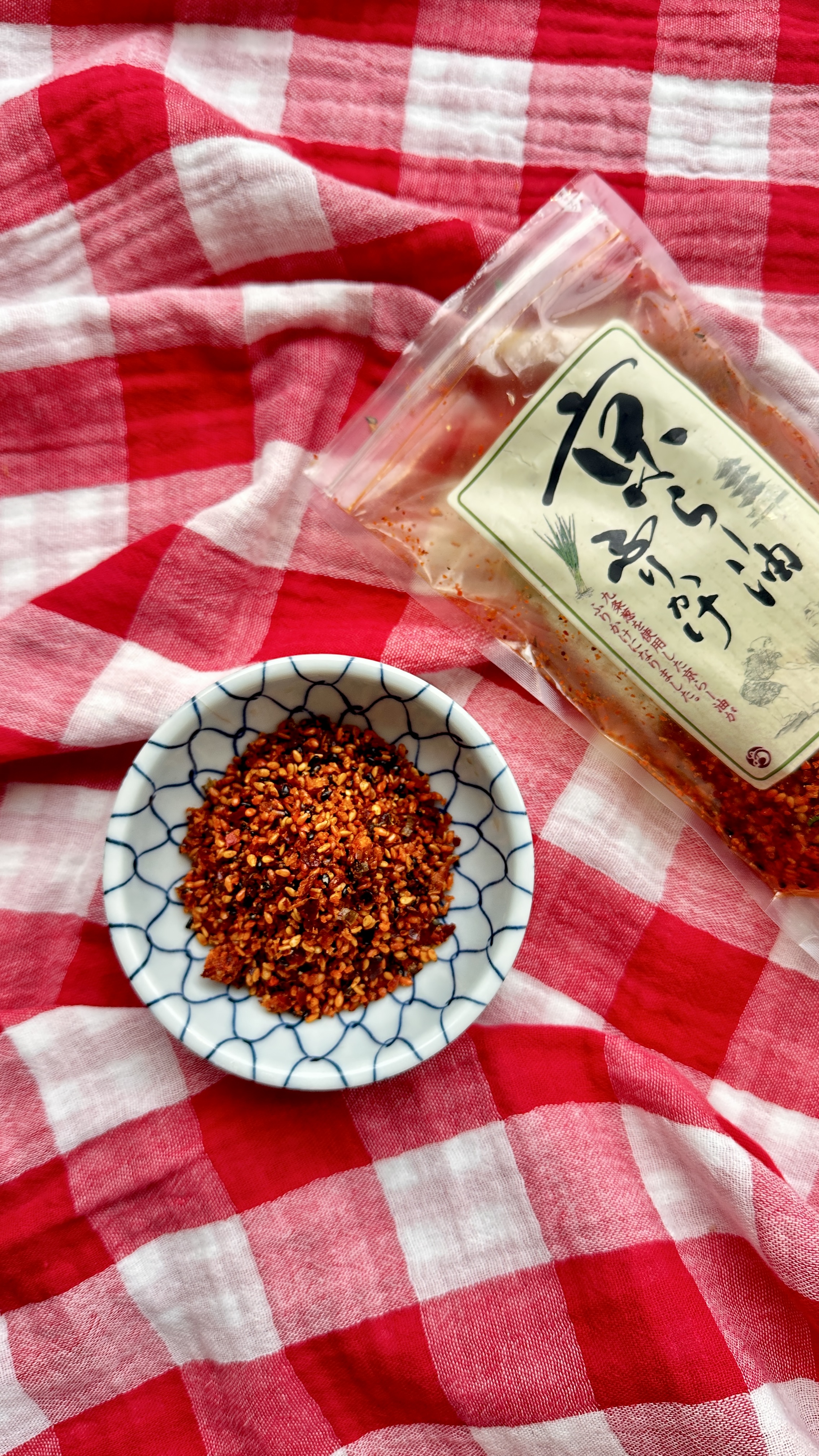
My favourite sprinkle condiment at the moment is known as ‘Kyoto Kyo-Ra-Yu Furikake’ and I love to sprinkle this over the finished dish. I first had it in Japan when I visited in 2023 and 2024 and I am completely hooked, regularly asking friends to bring it back with them when they visit Japan. I have found it online here in the UK – not cheap, but use it sparingly and you won’t be disappointed. It is crunchy with sesame seeds, chilli, garlic and fried Kujo leeks.

So to the recipe itself. I would love to hear what breakfasts/brunches are getting you through these winter months. Comment below and let me know.

Oat Congee with Fresh Turmeric, Black Pepper, Ginger and Garlic

a couple of handfuls of porridge oats (as much as you want to eat)

1/2 tsp fresh or ground turmeric, skin removed

1/2 tsp freshly ground black pepper

1 tsp heaped fresh ginger, finely grated

1 tsp garlic, finely grated

1/2 tsp salt, to taste

1 tbsp soy sauce, dark or light

water to cover

3 spring onions, cut in half and sliced lengthways

1 egg

1 tbsp fresh coriander, leaves and stalks, finely chopped

a sprinkling of Kyoto Kyo-Ra-Yu Furikake or chilli oil or seasoning of your choice


  1. Bring water to the boil in a small saucepan and then gently lower your egg into the water. If you want it soft boiled aim for 6-7 minutes.
  2. In a medium sized pan add the oats – I have purposely not given a precise amount – just use as much as you would use to make porridge. A couple of handfuls should be sufficient.
  3. Finely grate the fresh turmeric (ground turmeric is fine too), ginger and garlic and add these to the oats along with the freshly ground black pepper and salt.
  4. Cover with boiling water so that it is just above the oats and stir well. Add a little soy sauce to taste. Add a little more water to loosen as required. It should only take a few minutes. Turn off the heat when it has softened.
  5. Meanwhile heat a small frying pan and add the spring onions and allow to wilt and lightly char then remove from the heat and keep to one side.
  6. After 7 minutes drain the egg and rinse under cold water. Gently use a teaspoon to break the shell from the egg and remove.
  7. Now to plate up. In a bowl add the porridge/congee and then add the charred and wilted spring onions, freshly chopped coriander (leaves and stalks), gently cut the egg lengthways and lay on top of the porridge/congee. Add a splash more soy sauce if required. Finally sprinkle some Kyoto Kyo-Ra-Yu Furikake or your favourite condiment on top.
  8. Devour and enjoy.

Additions: Instead of spring onions you could add tender stem broccoli, sugar snaps, green beans, mange tout – simply add them in the boiling water with the egg for a minute then slice lengthways (for the tender stem). Sometimes I like to add wilted spinach which I place in a small pan with a splash (literally) of water to help wilt.

PS: It is important to add black pepper with the turmeric, as the piperine compound in the black pepper helps with the absorption of curcumin in the turmeric by 2000%, which boosts its anti-inflammatory effects.

Let me know how you get on. I hope you will love it as much as I do.

Best

Torie


Tomato and Garlic Red Lentil Dal

IMG_0701


This recipe is for all of you lovely people out there who claim you don’t have time to cook. It is super quick, satisfying and great for cold winter nights. It literally takes no longer than 15 minutes to cook from beginning to end. To be fair it is very similar to this dal of mine although it differs in that it has a tin of tomatoes in it, loads of fresh whole garlic (great for ridding those horrible colds and coughs we pick up in winter), and a sprinkling of cumin powder.

IMG_0702

I had a bunch of friends over for lunch the other day and as well as cooking some tasty winter salads had a huge pot of this on the stove. It seemed to go down a treat as there was very little left over once they had gone, another sign that it’s worth giving it a go.

IMG_0700

I like to add a splash of lemon juice liberally at the end, but it’s up to you. Like with all dals they can be made more soupy or firmer depending on personal choice. For this dal I like to make it more soupy so that I can spoon it out of a bowl. If you are cooking it with rice and another dish then maybe you want to add less water. I never really measure the water that goes into it. I always go on how it looks, so my advice is to put in enough water so that it covers the dal by half an inch and then keep adding more boiling water once  the water has soaked up. It’s a winner and so simple. Give it a go and leave me a comment below.

IMG_0697


Tomato and Garlic Red Lentil Dal

Serves 4-6 (4 as a main 6 as a side dish)

300g red split lentil

water, enough to cover the red lentil

1 tbsp groundnut oil

5 (or more) garlic cloves, gently crushed but kept whole

1 tsp panch phoron

1 tsp turmeric powder

1/2 tsp cumin powder

1 tsp salt (to taste)

400g tin of tomatoes

1 lemon, quartered – optional to serve

1. In a deep pan place the red lentils and cover with cold water. Gently wash the lentils using your hand and pour out the murky water. Repeat three times.

2. Add boiling water to the red lentils and cover so that all the lentils are submerged by 1/2 inch. You can add more boiling water once this has soaked up if need be. Boil on a gently heat, skimming off any white residue that comes to the surface. Stir at intervals so that all the lentils cook through and turn from orange to a more yellow colour. Add more boiling water if you prefer it to have a more soupy consistency.

3. In a separate pan heat up the oil and then add the panch phoron. Once they start sizzling add the garlic and move around the pan. After a minute add the turmeric and cumin powder. Keep on a low heat, making sure the garlic and spices do not burn.

4. Add a spoonful of the now yellow lentils to the panch phoron and stir into the spices. Pour the contents of this pan into the pan with lentils and stir in thoroughly. Add a little water to the saucepan to make sure the spices pan is now clear of spices.

5. Add salt to taste and the tin of tomatoes and cook on a low heat for 5 minutes, or until the garlic has softened.

Voila. That simple. Enjoy.