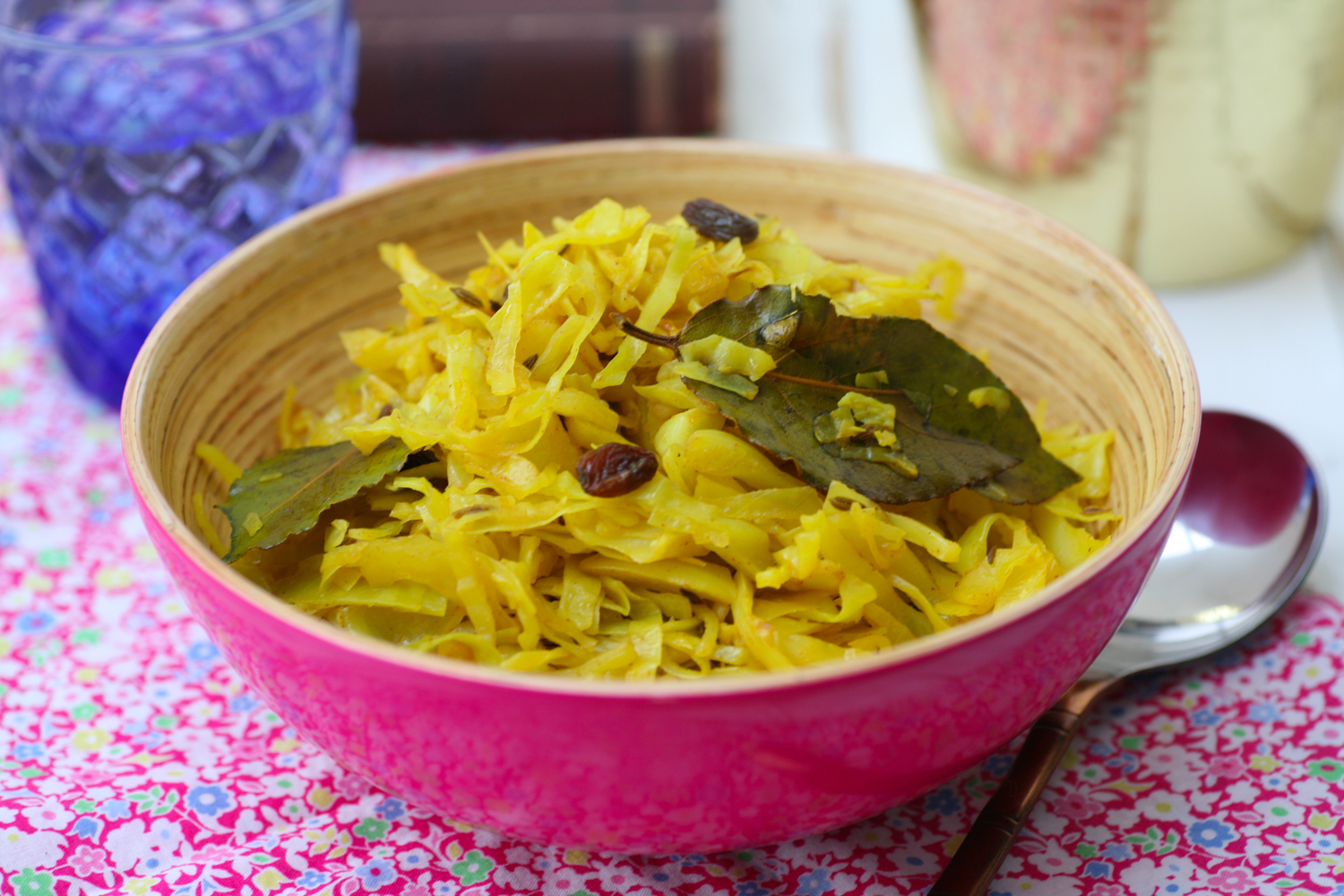
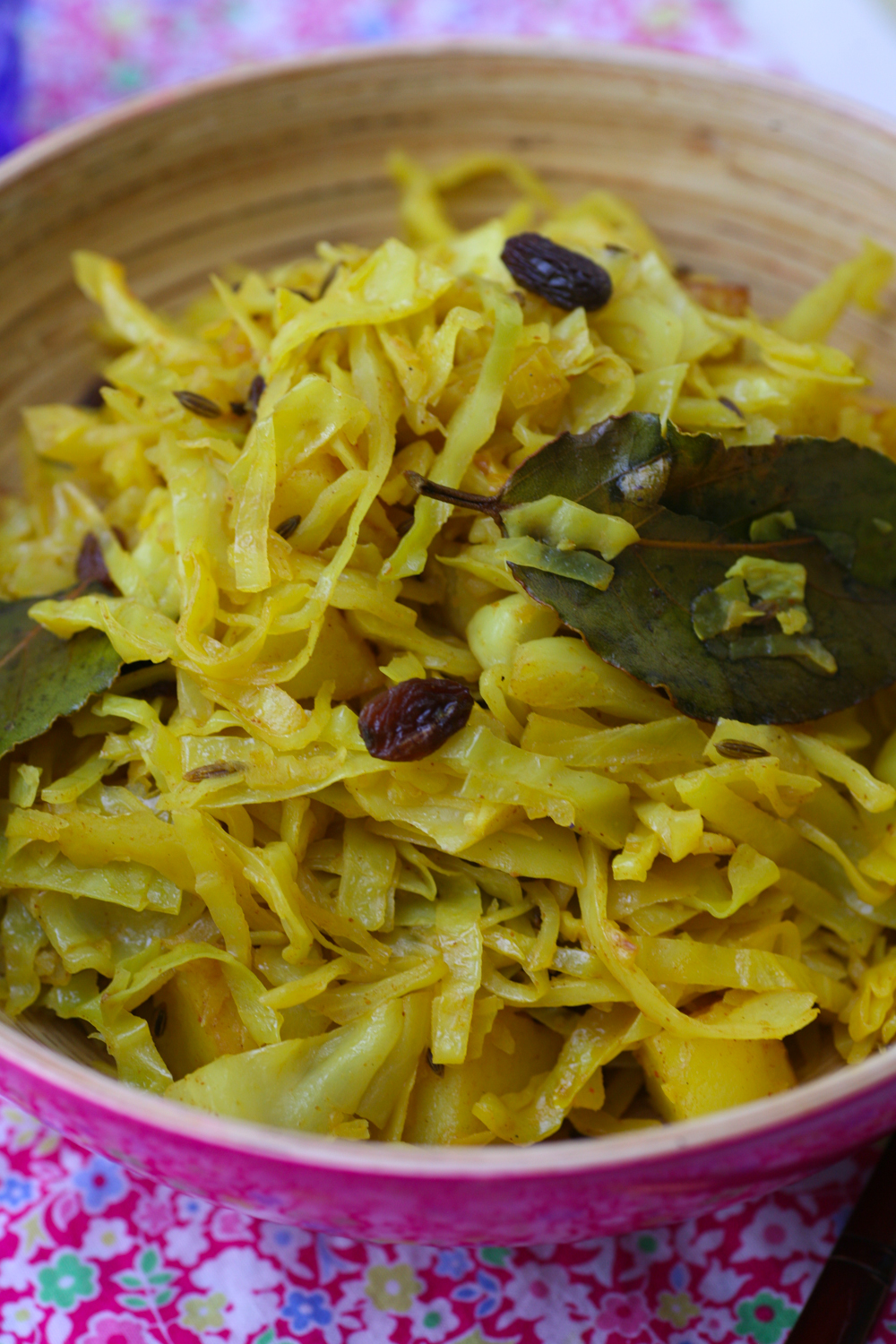
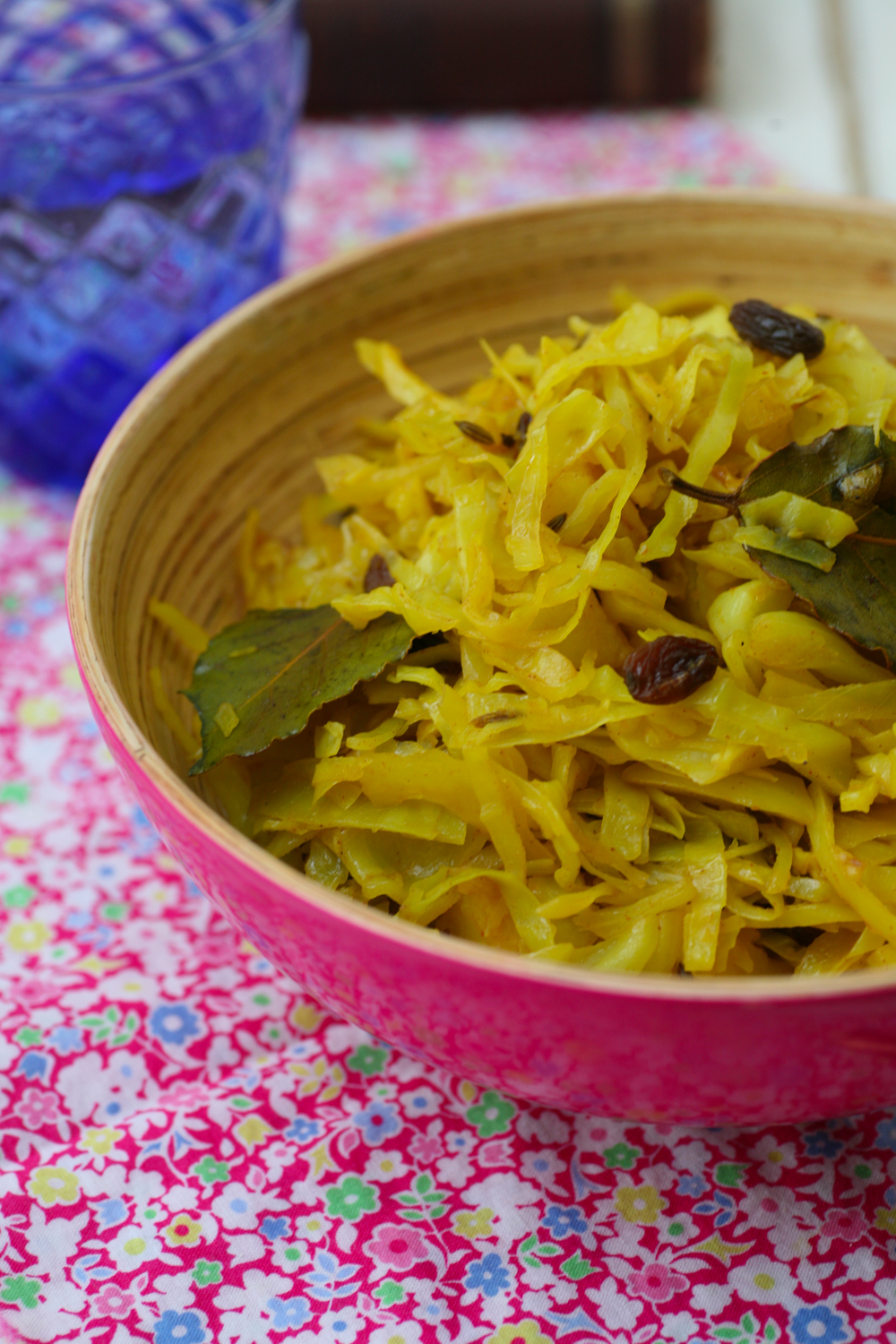
Indian Cabbage with Fennel Seeds

IMG_0274

Oh the humble white (or green for that matter) cabbage. It’s one of those ingredients that cooked with no herbs or spices tastes, to put it simply, bland. It’s kind of like sprouts. Boiling the hell out of the vegetable just does not do it justice. I have a fantastic sprout curry – have you tried making it yet? If not I absolutely urge you to give it a go. I know I am biased but it’s seriously good and will convert even the non sprout lover. Here is the recipe – click here. Go on give it a try. It’s an alternative way to cook sprouts.

IMG_0270

In the meantime may I encourage you to try picking up a regular white cabbage from the market/supermarket/garden (delete as appropriate) and make this ‘Indian Cabbage with Fennel Seed Curry’. Fennel and sultanas gives it a sweetness but combined with the spices, salt and chilli it becomes a very satisfying savoury dish. I often accompany it with a dal and if I am cooking for others I will often do a meat or fish curry as well.

IMG_0267

Indian Cabbage with Fennel Seeds

Serves 4

2 tbsp vegetable/olive oil

1 tsp salt

2 small potatoes, cut roughly into 3cm pieces

2 bay leaves

1tsp heaped fennel seeds

1 tsp ground turmeric

1/2 tsp of chilli powder

1/2 tsp sugar

half a large white or green cabbage, shredded finely

1 handful of sultanas

1. In a large pan add the oil and a pinch of salt and when it is hot add the potatoes and cook on a low heat for 10 minutes so that the potatoes begin to bronze. Remove from the pan and place on some kitchen paper.

2. Wash the cabbage thoroughly under the tap and then drain using a colander. Set to one side.

3.Using the same pan as you cooked the potatoes, add the bay leaves, fennel seeds, turmeric, chilli powder and sugar. Move them around the pan for 30 seconds before adding the finely shredded cabbage and sultanas. Turn the cabbage and sultanas over in the pan so that they are coated in all the spices. Add the fried potatoes, which will begin to soften whilst cooking with the cabbage. Place on a medium to low heat and simmer.

4. As you have washed the cabbage before adding to the pan you probably will not need additional water, however, if it becomes too dry simply add 2/3 tbsp of water to the pan.

5. Simmer for a further 10 minutes or until the cabbage and potatoes have softened.

Easy hey! So what are you waiting for give it a go and let me know how you get on.


IMG_0295


Chai Masala – Hot Spiced Milk

IMG_0064

I have a new favourite hot beverage – milky chai masala –  which I urge you all to try when it starts getting really cold, wet and windy.  It may not win prizes for appearance, but what it lacks in looks it makes up for in taste.  It’s the perfect drink when you’ve been out in the cold and need warming up on the inside. It requires a spice or coffee grinder – I use this one and really recommend it – maybe something for your Christmas list if you don’t have one.

IMG_0100

I was recently given this recipe from a friend who in turn received it from her Indian neighbour. Like Chinese whispers I have altered  it slightly to suit my tastes but the finished result is equally pleasing. Wafts of black pepper, cloves, cardamom, cinnamon, ginger and nutmeg come together to form a warming and comforting hot beverage that is guaranteed to please. Give it a try and let me know what you think by commenting below. I look forward to hearing from you.

IMG_0068

Chai Masala

milk

1 tsp sugar (or to taste)

1/2 tsp of chai masala spice mix (see above)

********

Spice mix

4 inch long cinnamon stick

1 tbsp black pepper

2 tbsp of seeds from green cardamom

1 tsp cloves

1 level tsp ginger powder

1 tsp freshly grated nutmeg

********

1. Grind the cinnamon stick and black pepper in your spice grinder and then add the green cardamom seeds but not the husks, cloves, ginger powder and freshly grated nutmeg. Blend until all the parts have taken on a powder appearance.

2.  Store in an airtight container.

3. Gently heat the milk until it is boiling hot in a saucepan. When it is hot add half a teaspoon of chai masala spice mix and sugar to taste and continue to heat for another couple of minutes so that the spices infuse. If you think it needs a little more spice then add a little more of the spice mix.

4. Strain into cups immediately. The milky spice taste is so comforting that you won’t be able to resist another cupful.

IMG_0075


Indian Rasam – Spiced Tomato Soup

IMG_0021

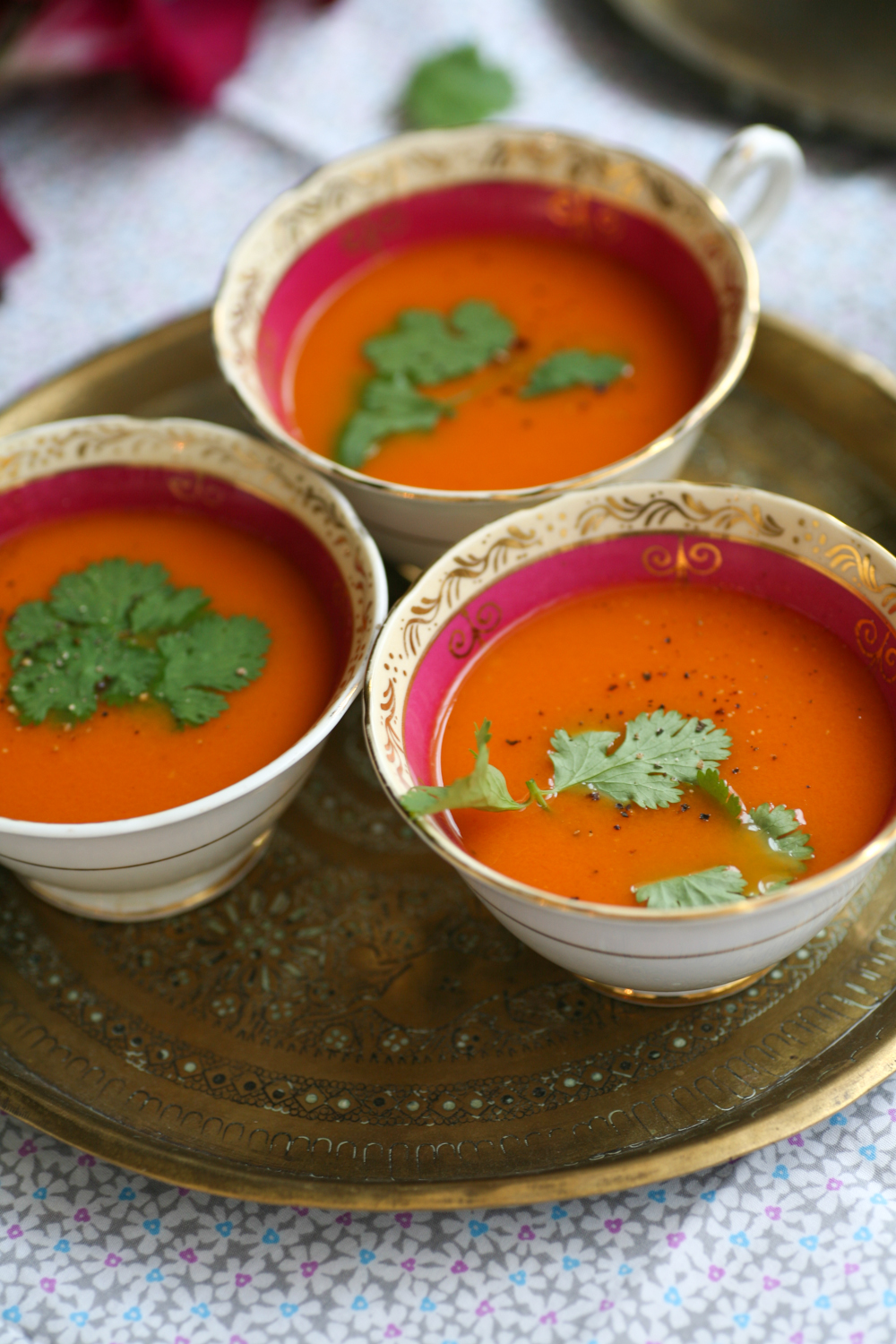
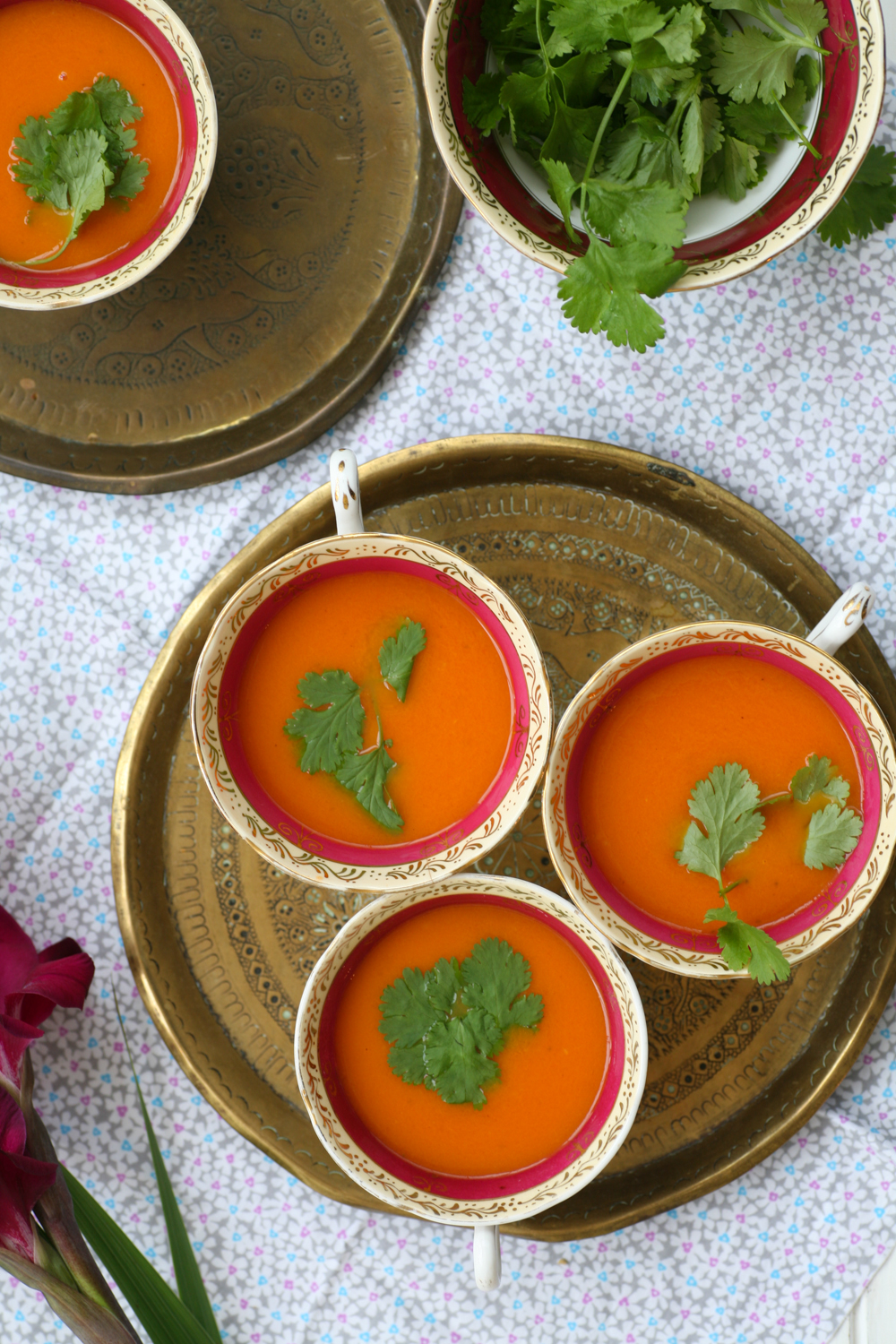
There is nothing more sublime than a spicy hot tomato soup to warm you up and give you that inner glow. If you are feeling under the weather with a cold or fever, which invariably many of us do at this time of year, this is a great way to blast your system with goodness and help pull you through. Rasam, as it is known in South India, translates to ‘juice’ or in Sanskrit rasa means ‘taste’. I think ‘tasty juice’ is the perfect way to describe this warming, fragrant and flavoursome soup. Traditionally it is made with tomatoes or tamarind with a host of spices and fresh curry leaves giving it a comforting aroma and taste.  Being totally addicted to tomatoes I tend to make my rasam with tomatoes as the base note.

IMG_0010

Traditionally it is eaten in India at the end of a meal, but I tend to serve it the opposite way round and kick a meal off with a warming cup of this thin spiced tomato soup to whet the taste buds. It is often served in a mug or cup or can be poured over a bowl of hot steaming basmati rice. It’s also the perfect drink after a long, cold and invariably wet winter walk. With a roaring fire going and a cup of rasam you will feel a state of happiness surround you. Seriously try it and you’ll know what I mean.

IMG_0033

The only tricky (ish) ingredient to source is fresh curry leaves. If you go to your local Asian grocer they are likely to have some, or at least will be able to point you in the right direction. So what are you waiting for – give it a go and leave and comment below to let me know how you get on.

**********

Indian Rasam – Spiced Tomato Soup

Serves 4

2 tbsp sunflower oil

1 heaped tsp of garlic paste/fresh garlic grated

1 heaped tsp of ginger paste/fresh ginger grated

2 large dried red chillies (1 if you prefer it with less of a kick)

12 fresh curry leaves

1/2 tsp of crushed black pepper

1 tsp salt

1 tsp sugar

700g fresh tomatoes, roughly chopped

350ml water

a couple of sprigs of fresh coriander to garnish

black pepper to garnish

1. Warm the oil in a deep non-stick pan and when it is hot add the garlic, ginger, dried red chillies, fresh curry leaves and crushed black pepper and gently move around the pan so that the chillies darken and the ginger and garlic begin to bronze. Keep on a medium heat for a few minutes before adding the tomatoes, salt and sugar.

2. Move around the pan so that the tomatoes begin to soften and are completely covered in all of the ingredients. Then add the water and let it boil for a couple of minutes before lowering the heat and cover for 30 mins.

3. Using a hand blender blend the soup so that it is smooth and then pass through a sieve so that there are no pips or tomato skin and what remains is brilliant red, smooth thin rasam. Heat up the smooth rasam gently in the pan before serving.

4. Pour into cups and garnish with some fresh coriander and black pepper.


IMG_0027


Gujarati Kadhi – a delicately spiced yogurt soup

IMG_9991

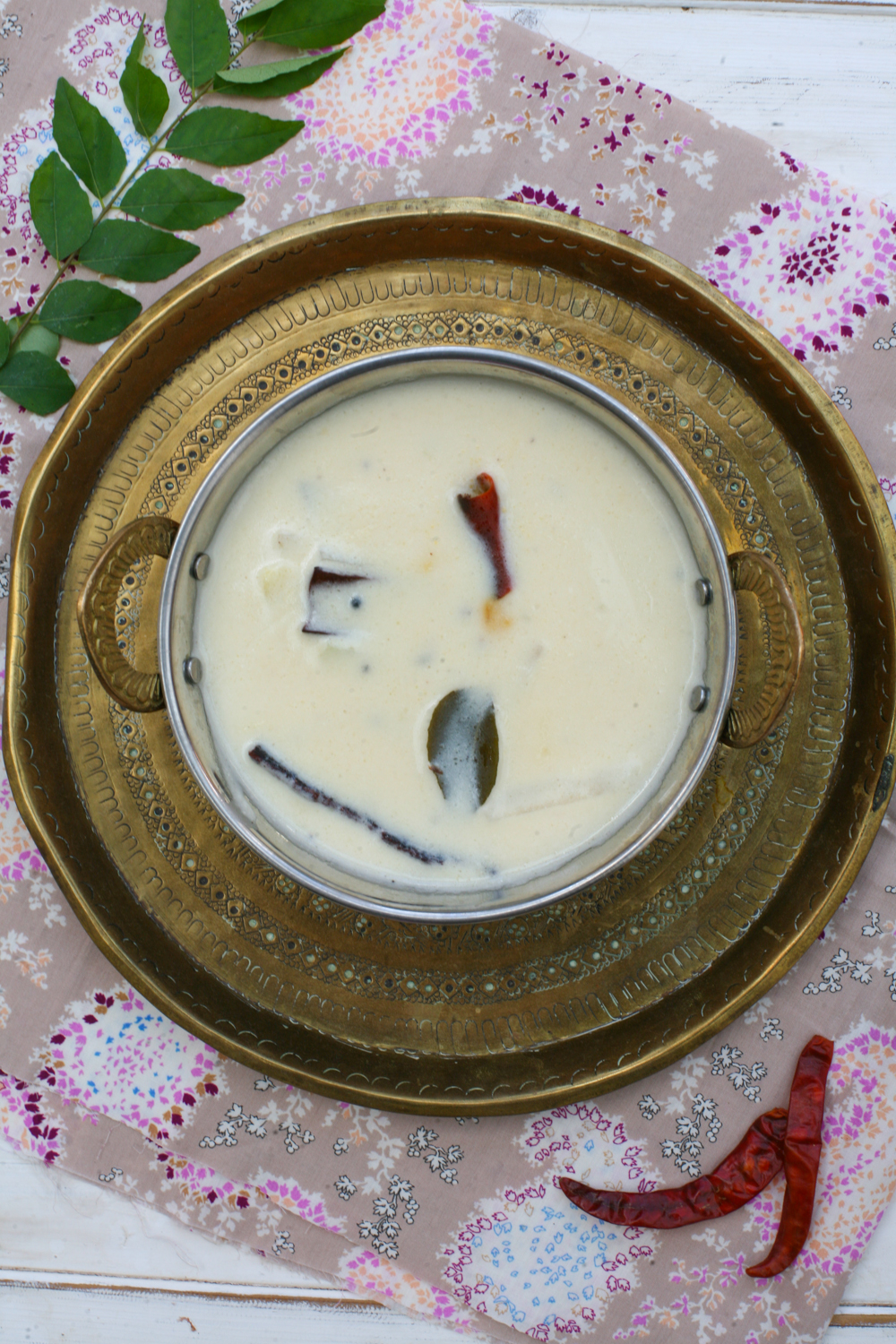
It is bucketing down outside this afternoon and I am feeling rather cosy inside out of the rain. After taking the photos for this blog post I had a bowl full of this hot, delicately spiced warming soup. Seriously delicious and quite filling, owing to the yogurt, potatoes and mooli.  Now that Autumn is well and truly here this soup comes into its own and I urge you to try making yourself some.

IMG_0006

It was Durga Puja last weekend – you can read up what goes on exactly at this Indian celebration in my posts from last year and the year before  see here and here. During the festivities at the Hindu temple prasad is often taken. Prasad is literally a religious offering or gift that comes in the form of a meal. Always vegetarian and gently spiced it allows families and friends to come together to share a meal that is blessed during this auspicious occasion. One of the curries we were served was this Gujarati Kadhi. I adored the delicately spiced yogurt soup so much so I was allowed to venture into the kitchens to see how it was being prepared. Huge caldrons of the soup were being constantly stirred over hot stoves before being taken out to hungry worshippers.

IMG_9990

I’ve made my own additions and twists but the taste is pretty similar to the one that I had last weekend. It is so different from any soup or dal I have tried before that it immediately appealed. All the ingredients are pretty easy to pick up at your local supermarket. I have seen gram flour in the big supermarkets here in the UK and I noticed that Waitrose was even selling fresh curry leaves the other day. Times are changing!  Mooli is harder to track down if you don’t live near an Asian grocers so just omit that part if you can’t find it. As with most of my recipes it is quick and easy so if you are feeling adventurous then give this fabulous dish a try.


Gujarati Kadhi

Serves 4-6

500g natural yogurt

2 tbsp gram flour (chickpea flour)

1/2 tsp green chilli paste

1/2 tsp ginger paste

700ml water

1 tsp salt

•••••••••••

1 tbsp ghee/butter

1/2 tsp black mustard seeds

1/2 tsp cumin seeds

3 cloves

2 small cinnamon sticks

2 dried red chillies, broken into pieces

10 fresh curry leaves

pinch of asafoetida

75g mooli (also known as daikon or white radish)/, cut into thin matchsticks

1 small potato, cut into thin matchsticks

1 tsp jaggery/sugar

1. In a large bowl mix the yogurt, gram flour, green chilli and ginger paste, salt and water using a hand whisk.

2. In a deep saucepan add the ghee and when it is melted add the mustard and cumin seeds and after 30 seconds add the cloves, cinnamon sticks, dried red chillies, fresh curry leaves and asafoetida. This is known as tempering.

3. Add the mooli and potato matchsticks and stir into the spices for one minute.

4. Gently pour in the yogurt/gram flour mixture over the potato, mooli and tempering spices and stir continuously to prevent the yogurt from separating.

5. If you find the mixture too thick simply add a little more water.

6. Add the jaggery or sugar if you don’t have any jaggery to hand. Stir into the soup. Simmer for  around 15 minutes or until the potato and mooli matchsticks are softened.

Serve with basmati rice or simply on its own in a bowl.


IMG_0002


Coconut Infused Corn on the Cob with Cumin and Black Mustard Seeds

IMG_9899


Corn on the cob is one of those things that represents the beginning of Autumn for me, although this year we seem to be having a late Indian summer, which is a little bit surreal as the conkers are already falling from the horse chestnut trees. After the rains of last night the air remains warm and humid, the birds are singing and it almost feels like Asia. Whilst I love the traditional way of eating corn on the cob – with lots of butter and maybe a pinch of paprika and a squeeze of lime, I do rather like my Indian version, which makes a refreshing change.


IMG_9916


If you are using fresh corn on the cob it is hard, but not impossible, to cut through the cob to make 3 or 4 smaller pieces. Use a sharp knife and press down firmly. Once you have made an inroad into cutting it you will find that you can simply break off the section. Equally if you want to cook this dish all year round – which I do – you can use frozen sweetcorn which you can buy already chopped up into smaller pieces, which makes it a lot easier and even quicker.

IMG_9902


If you are having an Indian feast why not cook this dish alongside my laal maas or bengali chicken curry or perhaps bengali mustard fish curry or aubergine, peanut and tomato curry as well as a satisfying dal and perhaps some Indian greens. Equally if you are wanting a quick and light supper then this dish and a dal or vegetable curry would be perfect.

*****************

Coconut Infused Corn on the Cob with Cumin and Black Mustard Seeds

Serves 4

1kg frozen mini corn cobs or fresh corn on the cob chopped into smaller pieces

160ml coconut milk

1 tsp salt

2 dried red chillies, broken into smaller pieces

1 tbsp sunflower oil

1 tsp cumin seeds

1 tsp black mustard seeds

1 fresh green chilli

1/2 juice of fresh lime

1 handful of freshly chopped coriander/cilantro leaves

1. On a medium heat place the sweetcorn pieces, coconut milk, salt and dried red chillies in a large pan and place the lid on. If you are using frozen sweetcorn cook for 3 minutes and if you are using fresh cook for 10 minutes. Stir at intervals so that the sweetcorn pieces are nicely covered with coconut milk.

2. Meanwhile in a separate pan heat the oil and then add the cumin and black mustard seeds. Once they begin to pop after 20 seconds add the contents of the pan to the larger pan with the sweetcorn. Stir well.

3. Add the fresh green chilli, fresh coriander and lime juice and let simmer for a further 4 minutes with the lid off so that the coconut milk reduces slightly.

4. Serve immediately and pour the remaining liquid over the cob pieces so they soak up all the delicious flavours.


Mango Lassi

IMG_9634

“The choicest fruit of Hindustan for garden pride the mango is sought. Ere ripe, other fruits to cut we ban, but mango serves, ripe or not.” says Amir Khusro in his Persian verse.


*****************************

IMG_9652

This is so true. Mangoes are loved the world over, not least in India where the mango is used to make kulfi (Indian ice-cream), chutney – see my recipe here, or as a sweet mango lassi.

At Boro Amma’s (my husband’s granny) house in Kolkata a mango tree stands bearing sweet fruit outside the kitchen window.  The rustle of the leaves in the gently breeze and the sweet scent of the mangoes is always tempting us. When the fruit is tok (sour) we prepare mango chutney, which is heavenly. As the fruit softens we sip on mango lassi, which cools us in the heat of the day.

IMG_9658


This year mangoes imported from India, including the legendary Alphonso mangoes, where banned by the EU after authorities in Brussels found some mangoes infested with fruit flies, which they fear could damage European salad crops. So while it is possible to buy mangoes here in the shops in the UK, we were not able to feast on the lusciously sweet Alphonso, much to the everyone’s chagrin.

IMG_9660

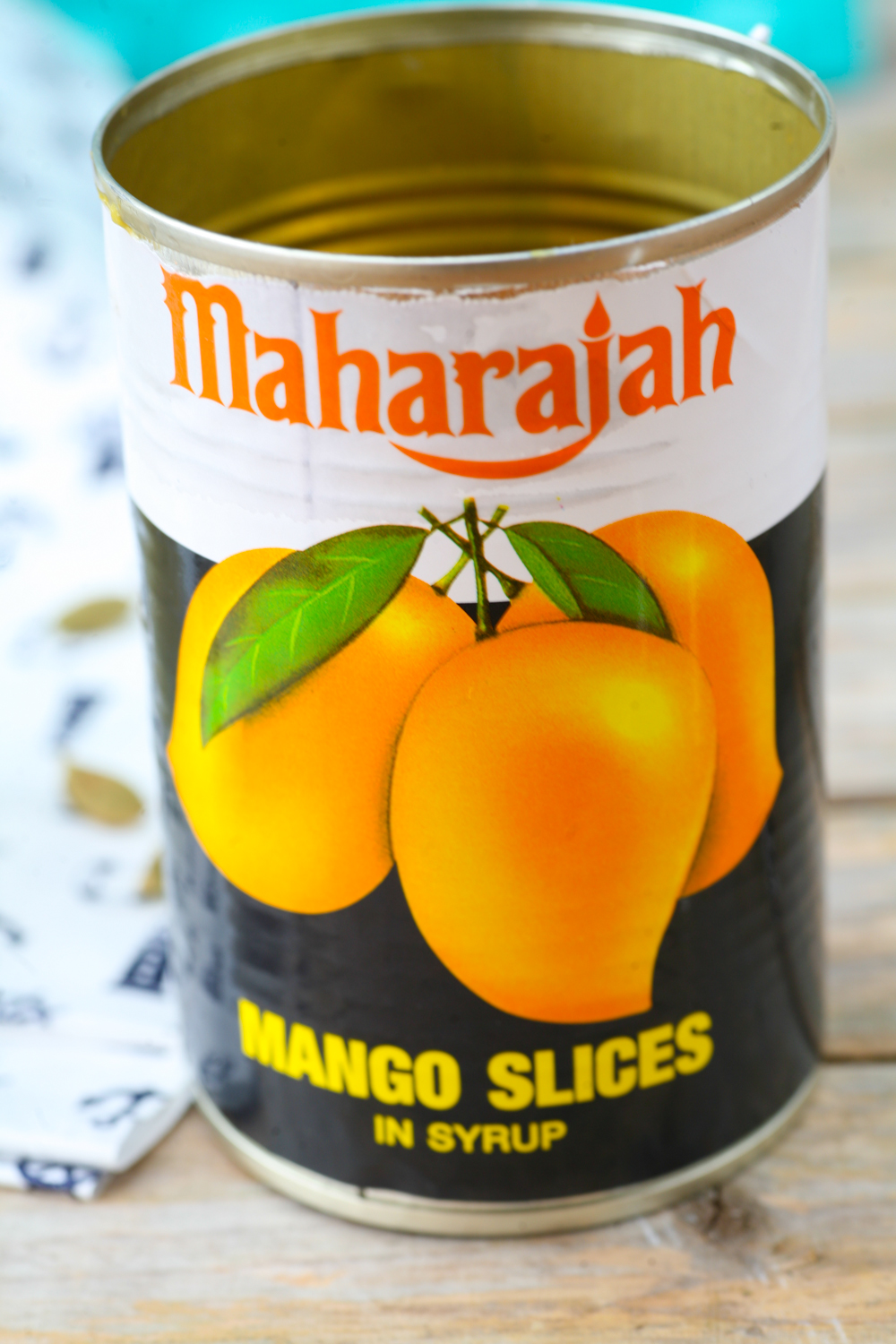
Making mango lassi does not necessarily require fresh mangoes however. Tinned mangoes will also work equally well and for this recipe I used tinned. It’s so simple and sweetly delicious I urge you to try it one hot summers day.

IMG_9638


Mango Lassi

Makes 4 glasses

2 cans of mango slices in syrup (approximately 230g of mangoes per tin after syrup has been drained) or fresh mangoes

250g natural yoghurt

300g milk

3 tbsp maple syrup, to taste

6 ice cubes

1/4 tsp of ground cardamom

1. After straining the syrup from the mangoes add all the ingredients and blend together in a juicer/blender. If you prefer it thinner in consistency simply add a little extra milk or water.

Serve in glasses on warm summer days.


Spicy Black Eye Bean Curry

IMG_9409

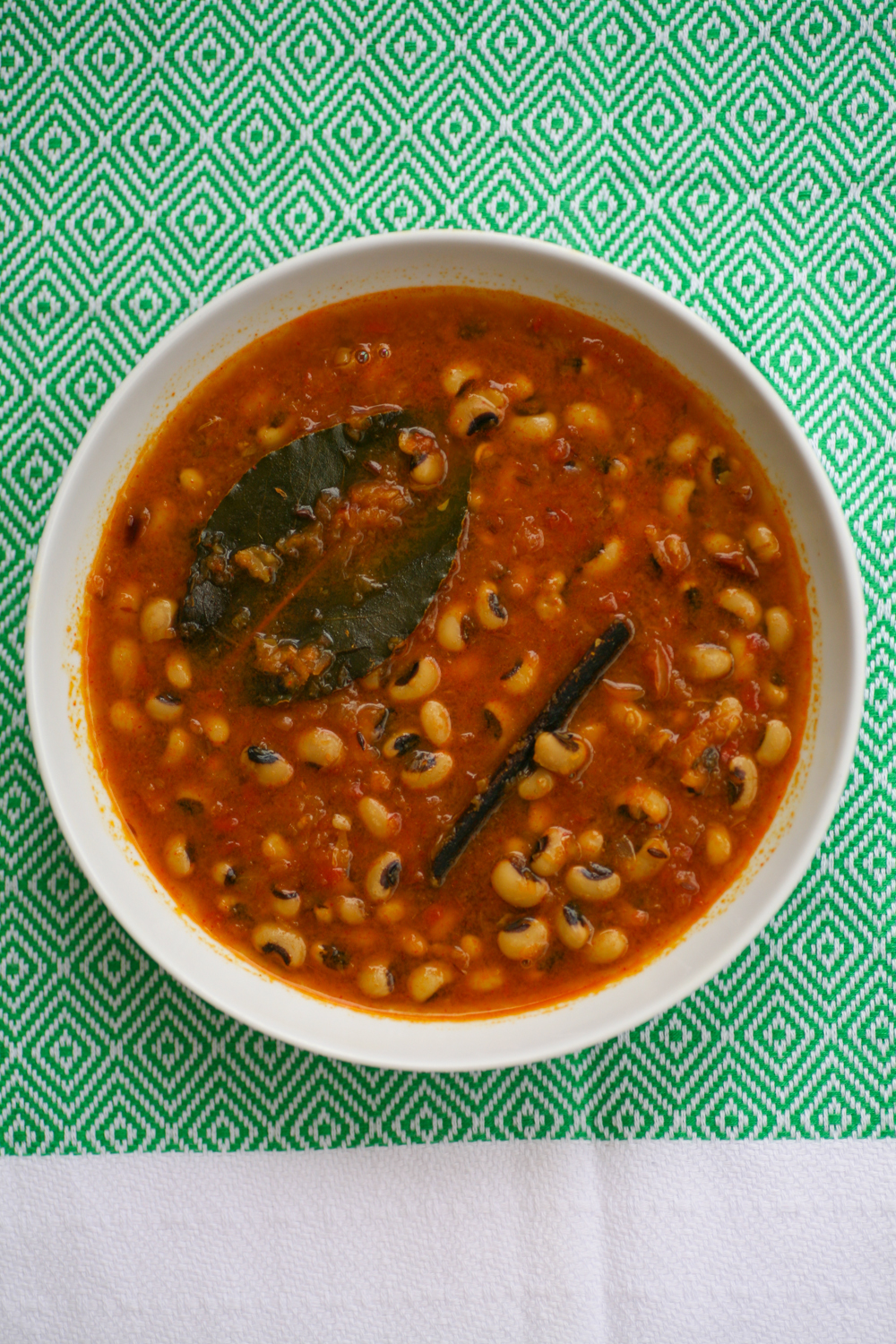
This is my final recipe for June supporting the ‘Curry for Change‘ – Find Your Feet campaign. I hope you have enjoyed my journey through the hamper of goodies kindly supplied to me by Natco Foods as part of the ‘Blogger’s Challenge‘. I have enjoyed experimenting with some ingredients that were new to me and as a consequence will be incorporating them as part of my diet going forward.

Out of the four recipes I posted I’m curious as to which YOU liked the look of most. Was it the Indian Powa Fuel, or my Lotus Seed/Phool Makhana Curry, my Dried Ginger and Lentil Spiced Chicken Balti or the one that I have posted today? Don’t be shy now…be brave and leave a little comment below.

I hope that I may have encouraged you to host a curry evening of your own to support the wonderful charity Find Your Feet – see details on the Curry for Change site. If you do I would love to hear how it went.

Over the next few weeks I will be tempting you with some refreshing, fragrant and tasty summer salads that you can pull together for a BBQ, summer picnic or a leisured lunch at home.

Now I must return to watching Wimbledon. The summer season has begun.

Spiced Black Eye Bean Curry

250g black eye beans

275g/3 medium sized red onion, roughly chopped

250g/3 medium tomatoes, roughly chopped

1 tsp garlic paste

3 tbsp vegetable oil

1 tsp cumin seeds

3 bay leaves

1 3inch stick of cinnamon

4 cloves

1 tsp turmeric powder

1 tsp coriander powder

1 tsp mango powder (also known as amchoor powder)

1 tsp Kashmiri chilli powder

1 tsp garam masala

salt to taste

500ml of cold water

1. Soak the black eye beans in a bowl of cold water overnight. Rinse them the following day and place in a saucepan along with boiling water to cover them. Simmer on a medium heat for around 30 minutes, or until the black eye beans have softened. Drain and place to one side.

2. In a blender add the onions and blend to a smooth paste. You may need to add a little water to help it become more paste like in consistency. Remove from the blender and place in a bowl to one side.

3. Rinse the blender and then add the tomatoes and blend so that a smooth paste forms. Remove from the blender and place in a bowl to one side.

4. In a deep pan or karahi add the vegetable oil and when it is hot add the cumin seeds, bay leaves, cinnamon stick and cloves. Stir them around the pan for 30 seconds.

5. Add the onion paste and a little salt to the pan and lower the heat so that the onion cooks through and begins to bronze slightly. This will take around 10 minutes.

6. Add the garlic paste, followed by the turmeric powder, coriander powder, mango powder, Kashmiri chilli powder and garam masala. Stir in thoroughly to the onion, garlic paste. Cook for a further 3 minutes.

7. Now add the tomato paste along with 50 ml water and simmer gently for a further 5 minutes.

8. Place the black eye beans into the curry and cover them in the sauce along with up to 450 ml of water, depending on how thick you like your sauce to be.

9. Simmer for a further 5 minutes and add more salt if necessary and serve.

Serve with a squeeze of lemon and a dollop of natural yogurt on the side. I like to make homemade chapatis to go alongside this curry. I realise I need to post a recipe on how to make them so watch this space….they are ridiculously easy and great fun for all the family to make.


Indian Powa Fuel

IMG_9365

This week I have another recipe for you that I created using some ingredients from the hamper that Natco foods sweetly provided me for the the Curry for Change bloggers challenge. For those who have not read my two previous posts (shame on you ;o), for the month of June I will be cooking recipes using the ingredients that Natco foods sent me to inspire YOU at home to cook your own Indian food to support ‘Curry for Change’ that in turn supports a wonderful charity called ‘Find Your Feet‘, which does exactly what it says on the tin….help rural communities in Asia find…..their….feet in order to bring them out of poverty and be self sufficient.

IMG_9354

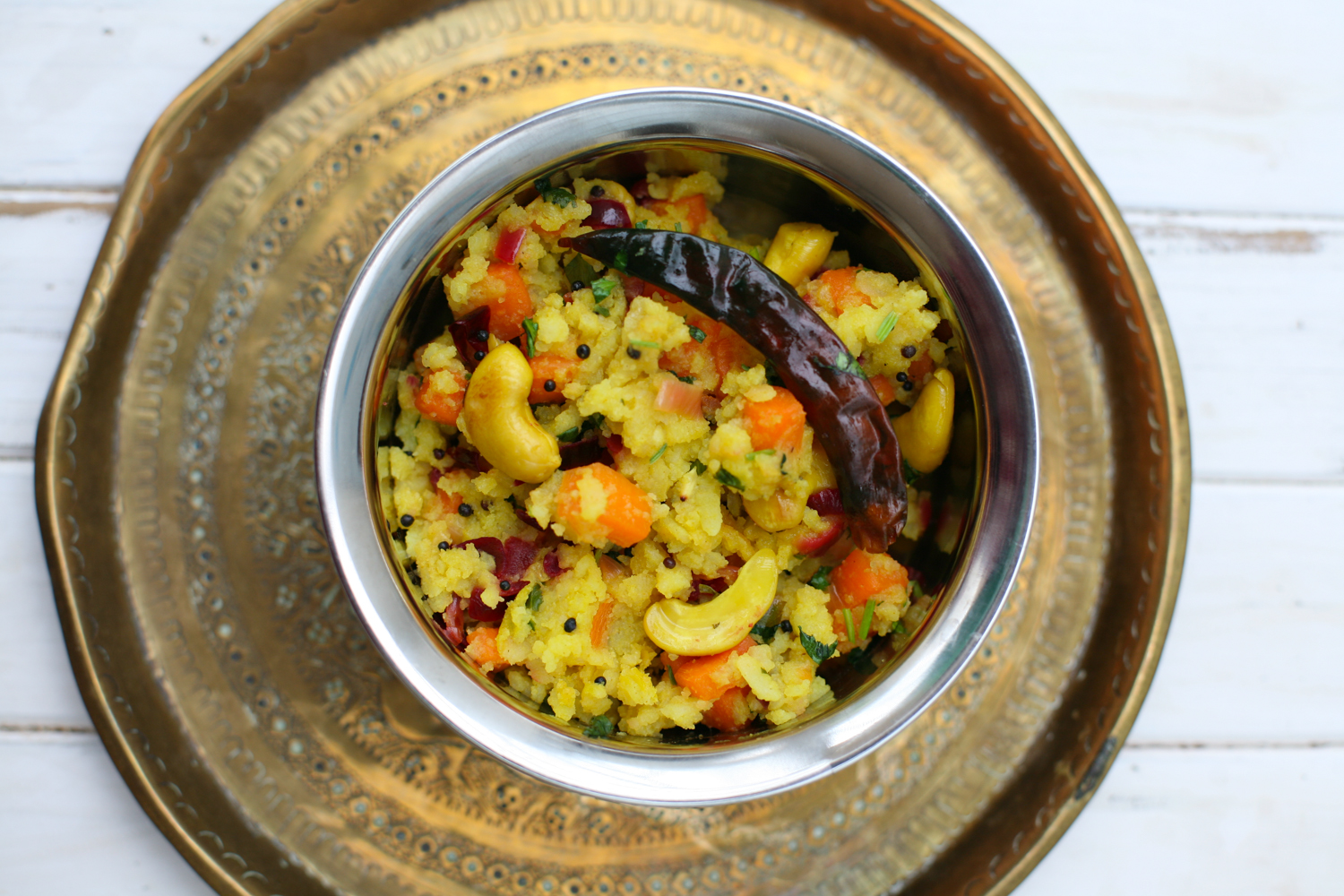
I pulled out a packet of powa flakes from the hamper and decided to create an appetising Indian inspired dish that you too could easily make at home. Powa flakes are flattened pre-cooked rice, that look fairly similar to white Kelloggs corn flakes. Similarly they can be used in sweet dishes, but can also be used in a number of savoury dishes and snacks. I have always tended to eat them as part of a crispy, fried snack, similar to a Bombay mix, but after a bit of researching I decided to use them in a more substantial meal. They are low in fat and high in fibre so tick many boxes from a health perspective. You’re probably wondering where on earth you can buy them. Well any Asian/Indian grocers will definitely stock them or you can order them online from Natco – here.

Unlike rice, that requires a little longer to cook, powa flakes only require soaking in cold water for a couple of minutes. Once they are drained, they only require a few minutes cooking before they are ready to be eaten. I honestly think that they are the perfect ingredient to use after a shattering day at work/looking after the kids (delete as appropriate) when you cannot be bothered to cook. Within 10 minutes this dish is cooked and it is so satisfying and filling. Seriously I think I am onto a winner here. I am totally converted and you will be too if you seek out the powa.

IMG_9378

My eldest, who is 8 years old, absolutely loves this meal and eats it exactly as I do (with chilli). However, it has only really been in the last year that she has been able to eat many of the same curries as me and Mr B. She has been gradually weened on over the years. Children can and do enjoy spice, however, it is best to gradually build up their tolerance and love of spices. My four year old in comparison has made it very clear that she only likes traditional English food and not spicy Indian food. More left for me, Mr B and Big A then.

***********

Indian Powa Fuel

Serves 4

125g powa flakes (medium thickness)

3 tbsp vegetable/olive oil

1 tsp black mustard seeds

1 dried red chilli

2 fresh green chilli, finely chopped

1/8 tsp hing/asafoetida

1/2 (half) tsp of ground turmeric

30g cashew nuts

10 fresh curry leaves

1 small red onion, finely chopped

1 tsp salt

1 lemon, juice only

150g of finely cubed carrots

handful fresh coriander, finely chopped

1. In a bowl cover the powa flakes with cold water.

2. In a karahi, wok or frying pan, add the oil and when it is hot, but on a low heat, add the mustard seeds. They will begin to pop after about 10 seconds.

3. Immediately add the dried chilli, turmeric, hing/asafoetida, cashew nuts, green chilli, curry leaves and stir together. Stir in the pan for a minute.

4. Now add the onion and salt and stir well into the ingredients in the pan. Fry the onion for 5 minutes until softened and then add the lemon juice.

5. Add the finely cubed carrots and place a lid on the pan so that the carrots soften. As they are small this will not take more than a few minutes.

6. Add the drained powa flakes and gently mix into the ingredients in the pan, without making them too stodgy. Sprinkle the fresh coriander around the pan and serve warm immediately.

********

As for the ‘Curry For Change’ competition, well my recipe, which was this one,  sadly did not win. However, two out of the three winners I am twitter friends with so I am thrilled that their recipes made it through. They have now been filmed cooking their winning recipes, so am looking forward to seeing the result, when it goes live on the curry for change site. In the mean time check out their recipes on their sites below and try making them. I would love to hear from you if you try any of the recipes I am cooking this month or any of the winning recipes below. Leave a comment below.

· Ellie Matthews with ‘Spiced Roast Lamb with Butternut Squash and Spinach Dhal’ – http://theyoungdomesticgoddess.blogspot.co.uk/

·         Deena Kakaya with ‘Black Eyed Bean Pakora and Coconut Kadhi’ – www.deenakakaya.com

·         Zoe Perrett with ‘Bombay Bad Boy Chocolate Cheesecake’ – http://culinaryadventuresofthespicescribe.wordpress.com  and http://culinaryadventuresofthecocoanut.wordpress.com


IMG_9380


Lotus Seed/Phool Makhana Curry

IMG_9310

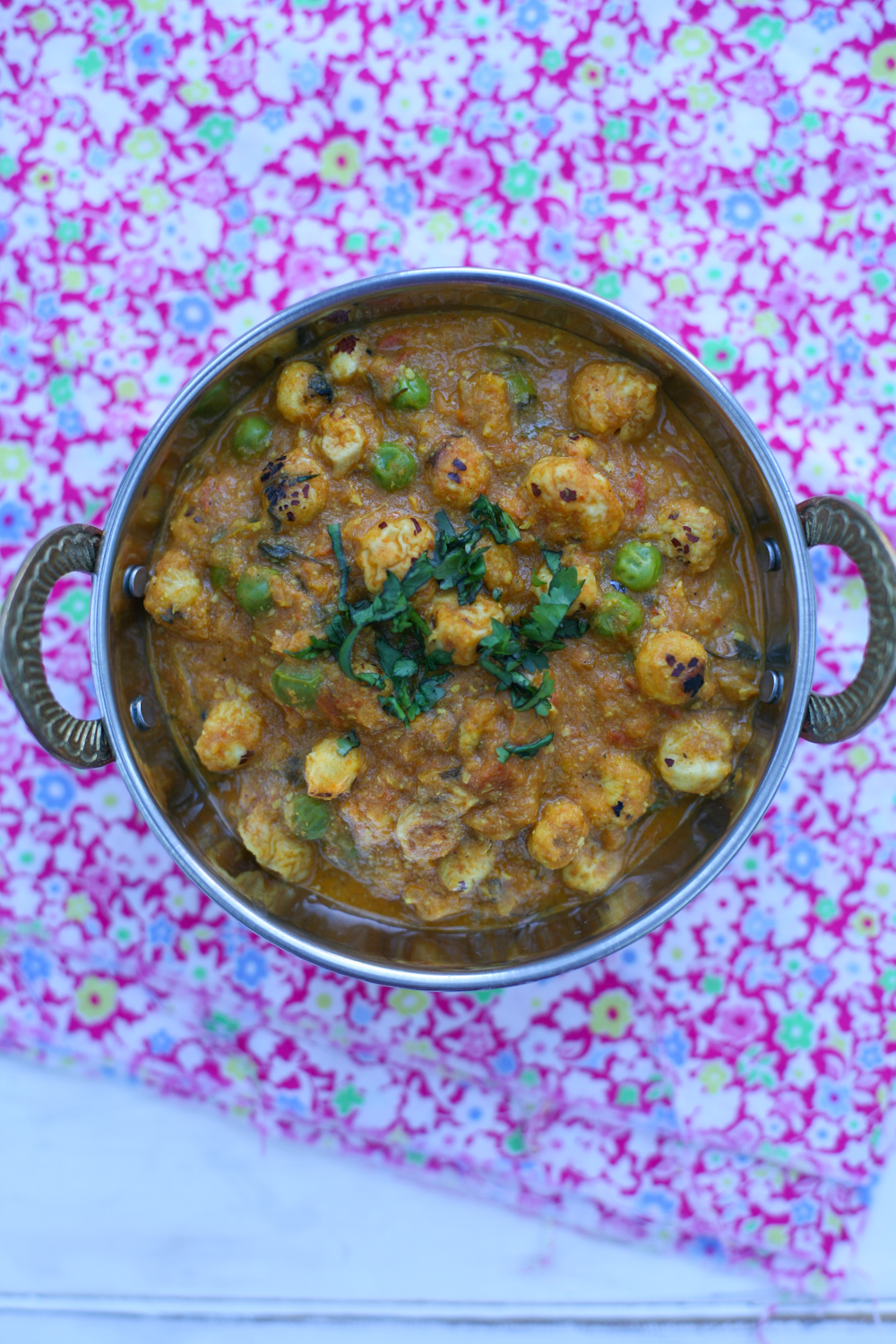
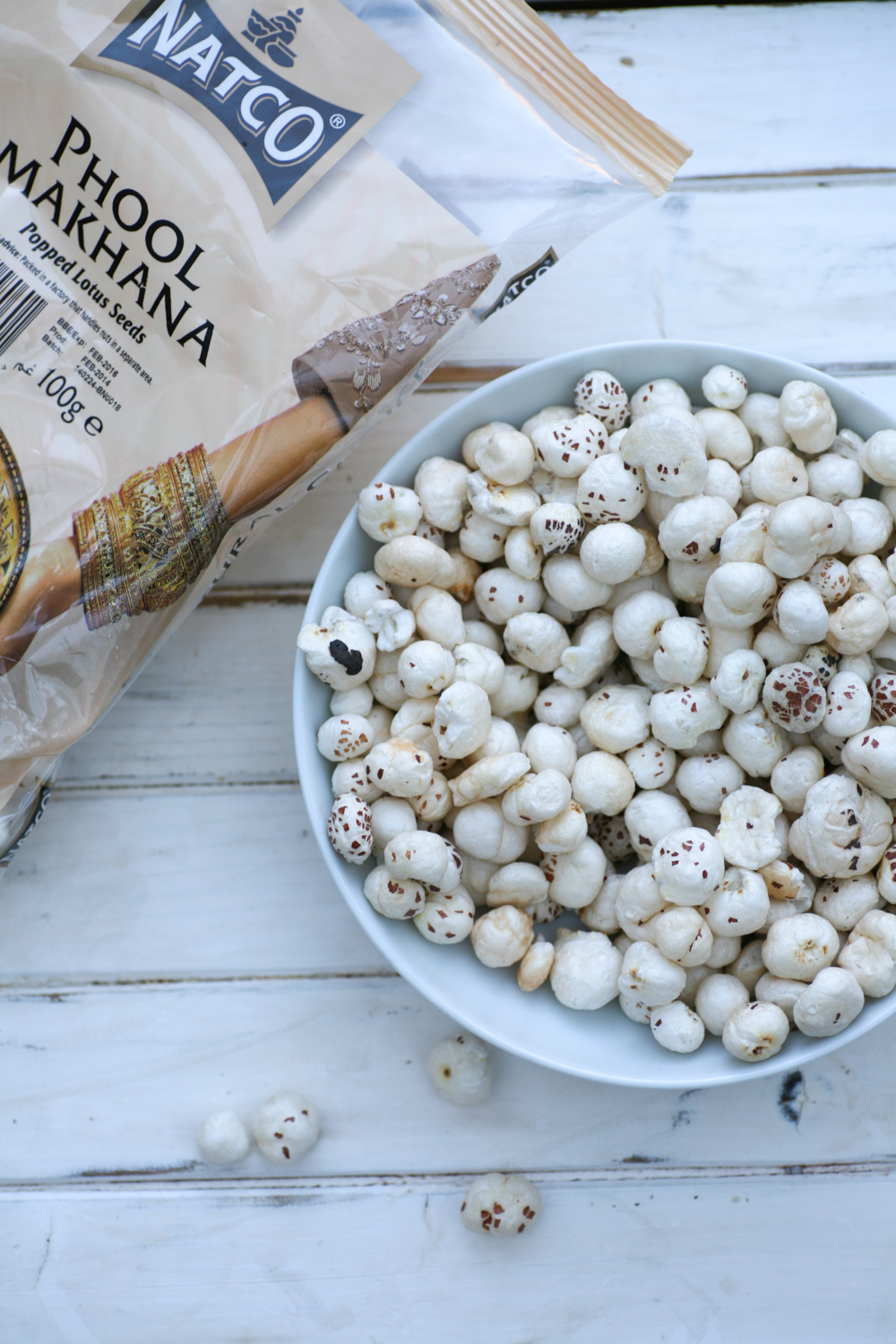
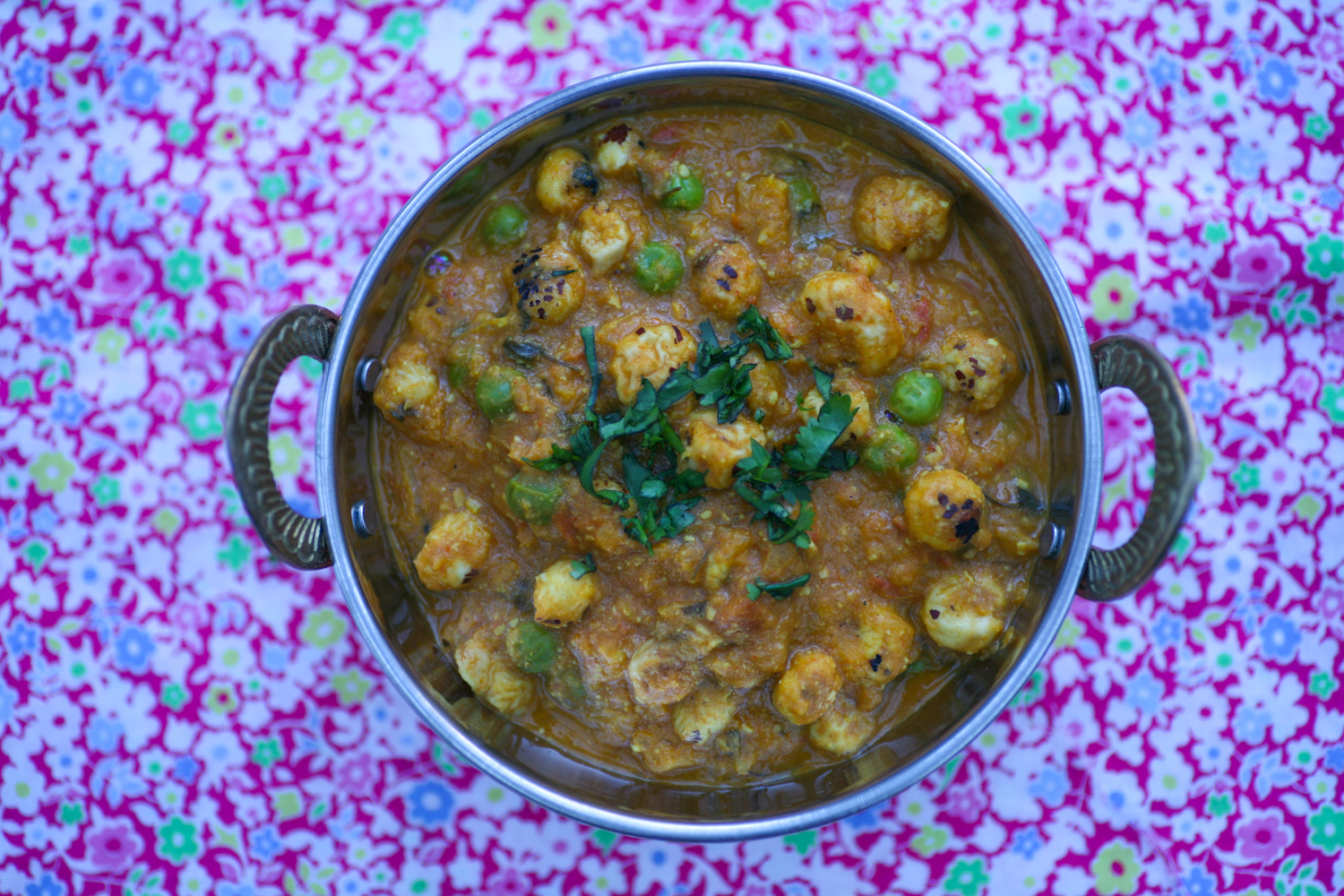
Continuing on the theme of providing an Indian dish for you each week, through the month of June, as part of Curry for Change, I hereby introduce a curry that I imagine many of you have never come across before – Lotus Seeds – otherwise known in India, as Phool Makhana. When Natco foods sent me a huge box of goodies for me to create a dish as part of a competition for food bloggers, (more about this click here from last weeks post), a large packet of phool makhana – popped lotus seeds – definitely stood out. They look very similar to popcorn or little cotton balls.

IMG_9264

In all honesty I had not eaten or even seen lotus seeds before, which was even more of a reason to experiment and give them a try. I discovered that they are greatly valued for their nutritional (powerful antioxidants) and healing properties, especially in Chinese medicine. In India, the state of Bihar produces the most amount of lotus seeds, largely owing to it’s climate and geography. They are  grown in stagnant water of wetlands, ponds and lakes and are completely organic. The seeds themselves can be eaten raw, fried or toasted – I opted for the latter as I was putting them in a curry.

IMG_9344

This curry is a winner for anyone wanting to avoid meat. It’s quick and easy to execute and kind on your waste line. It’s also rather tasty! We try to have meat free mondays, so this curry will definitely be making more appearances going forward. Have a look out for the seeds when you next visit your local Asian grocers.

Oh and if are wondering how I got on with the bloggers curry competition….you are going to have to wait an extra week as I don’t want to spill the beans before it’s official….(clue: it wasn’t me but will reveal more soon ;o)

***********

Lotus Seed/Phool Makhana Curry 

Serves 4 (or 6 if serving with other dishes)

60g lotus seeds/phool makhana

1 tsp olive oil

50g cashew nuts, soaked in 100ml of warm water

1 large onion, finely chopped

2 tbsp olive oil

2 large tomatoes, finely chopped

2 tsp ginger and garlic paste

1 tsp Kasmiri chilli powder (less if you prefer it less hot)

1/2 tsp tumeric powder

1 tsp garam masala

2 tsp coriander powder

1 tsp salt

70g frozen peas

2 tsp dried fenugreek/methi leaves

200ml water

1. Place the olive oil in a non-stick saucepan and gently fry, stirring continuously, the lotus seeds for 5 minutes to allow them to bronze slightly and crisp up.

2. Place in a bowl and leave to one side.

3. In the same non-stick pan gently fry the onion for 5 minutes to allow to soften and become translucent. Add the garlic ginger paste and stir into the onions. After a minute, add the tomatoes and stir into the other ingredients.

4. Now add the Kashmiri chilli powered, turmeric, coriander powder, garam masala and salt. Stir well and leave to simmer for 3 minutes.

5. Transfer the contents of the pan into a blender and then return to the blender once you have a smooth sauce. Continue to simmer for a couple of minutes.

6. Place the cashew nuts, and the water they are soaking in, into a blender to form a paste. I find that my spice grinder works well at blending the nuts smoothly (do not add the water to the spice grinder!) and then stir into the water after they have been ground up. Add to the main pan and simmer for a minute.

7. Add the dried fenugreek/methi leaves and the peas and stir into the smooth sauce along with 200ml of water and simmer.

8. After 5 minutes add the lotus seed and stir thoroughly into the sauce. Simmer for a further couple of minutes then serve.

9. Serve with some chopped fresh coriander and a wedge of lemon.

IMG_9279


New York Wanderings and a Traditional Bengali Chicken Curry

IMG_1529

I’ve been doing a spot of travelling since my last blog post, hence the slight delay. Mr B and I celebrated our 10 year wedding anniversary with a long weekend in New York. It’s been a decade since I last visited so was really eager to catch up with friends and immerse myself in a city that has the most wonderful, infectious energy and of course, never sleeps.

IMG_1515

We parked ourselves in The Standard, East Village with it’s fabulous vistas spanning the whole of Manhattan with it’s floor to ceiling windows; I never tired of the view from our bedroom.

photo-15

The hotel totally lived up to our (high) expectations and the staff made a real effort to make our stay extra special. Would I return? Most definitely.

IMG_1497

Sunrise on our first morning from our room

We walked and walked and walked for hours on end, exploring the little streets in the Villages and Soho with it’s stunning wrought ironwork on the sides of the buildings.

photo-14

To give us bursts of energy we would refuel with fresh juices from the juice trailers parked in the streets. With around 80 different juice combinations to choose from it was hard to decide which one to pick. At around $4 a pop they are great value and ridiculously healthy – a win win.

photo-16

They cleanse the body and totally refresh the tired wanderer. Competitively priced and they would do so well here in London – a great business idea for a budding entrepreneur!!

IMG_1518

The stunning High Line with the old tracks visible

The High Line really impressed us – a great example of urban regeneration. It’s a stunning elevated greenway mile that used to be the New York central rail road spur, known as the West Side Line. It spans the meat packing district all the way up to Chelsea and is cleverly designed with shrubs, plants and trees interspersed with benches and seating areas around and on top of the old tracks. I particularly loved the raised seating, similar to an amphitheatre that looks over one of the roads with a huge glass window.

IMG_1537

Clever designs and architecture throughout the High Line

Instead of watching a movie you sit and watch the traffic buzz beneath you. Later in the day when I was passing underneath it in a taxi it almost looked like an advertising poster, and then I saw the people moving around. A clever effect and a fun way to be creative with the old rail road.

IMG_1535

Walkways along the High Line 

The peace and serenity that the High Line offers is a welcome respite from the manic life that goes on down below. If you are planning a trip my recommendation would be to go early as it definitely becomes crowded as the run rises higher in the sky.

IMG_1506

Me sitting on the attractive wooden seating on the High Line

Friends beckoned us over to Brooklyn, a place I definitely want to explore further on my next visit, to an area that is gentrifying and that has become rather hip – called Dumbo. Looking across at Manhattan from the Brooklyn side of New York, gave a new perspective to this sprawling city. The sun was shining and the crowds were out and if the ice cream queue at The Brooklyn Ice Cream Factory had anything to go by the area of Dumbo has become hugely popular.

IMG_1543

Looking back at Manhattan from Dumbo in Brooklyn

A couple other must-see destinations for foodies is the Italian food emporium of Eataly, which is just by the famous Flatiron building, which in itself is a piece of interesting architecture worth seeing.

IMG_1563

 The famous Flatiron building

It’s only a matter of time before we’ll see an Eataly in London, having already got branches outside the US in Dubai, Japan, Istanbul and Italy itself.  The shop is bursting at the seams with delicious Italian produce, and yet it has a calm serenity that makes wandering around it very pleasant indeed. There are bars and a couple of cafes (the one on the roof is perfect for sunny summer days and has a huge selection of beers) and it’s quite acceptable to browse around the store with a glass of wine in your hand. All very civilised if you ask me.

photo-17

The other food mecca worth seeking out is Chelsea Market, not far from the High Line, so perhaps the perfect pit stop after a High Line stroll. It’s a stunning food court with a great atmosphere and an incredible choice of eateries, bars and cafes.

photo-18

strolling through Chelsea Market – loving the exposed bricks

Aside from eating, walking and socialising we managed to squeeze in a little culture with a visit to the ‘The Frick Collection’ . Based in the Upper East Side it gave us a great excuse to explore the neighbourhood and central park. The collection itself is fascinating and housed in the mansion of the wealthy industrialist Henry Frick, one of America’s greatest art collectors who died in 1919. His house contains many masterpieces of paintings, sculptures and decorative art that the public are freely allowed to view and admire. He bequeathed the house and all it’s contents to the public upon his death. It’s a relatively small collection so won’t take too long to amble around so is easy to fit into a quick stop in New York. Go visit.

New York is jammed full of incredible restaurants. A list of some of those we visited is listed below:

The Dutch – happening bar with tasty American food and an exciting wine list. Based in Soho.

Lafayette – sister restaurant to The Dutch (we did not realise this at the time). Larger in size to The Dutch and a little more formal. More French style menu.

Atrium – This Dumbo restaurant is buzzy with a delicious brunch/lunch menu. Mr B found the pulled pork bun too small for his liking – I on the other hand found the size spot on. Interesting foliage structure upon the main wall.

Spice Market – based in the Meatpacking District across the road from Soho House. Old kid on the block but still going strong. Large restaurant so not intimate and filled with locals, but seriously tasty Asian food.

Noho Star – Neighbourhood cafe in East Village. Highly recommend the spicy Mexican Huevos Rancheros. Deeeelish.

Cafe Standard – Within the Standard Hotel East Village, this hip eatery is always buzzing and has a great menu with delicious juices.

*******************

Back in London we craved spicy Indian food so rustled up one of our favourite chicken curries. We tend to cook it on the bone (seriously it tastes much better this way), but if the thought of cooking and eating off the bone doesn’t appeal simply cook the curry with breast and boneless chicken thighs instead.

Eating nourishing, homely food also really helps with jetlag ;0)

IMG_9187

Traditional Bengali Chicken Curry

Serves 4-6

3 tbsp vegetable oil

1 large onion, roughly chopped

1 chicken, cut into 10/12 pieces and skin removed

1 tsp turmeric powder

1 tsp cumin powder

1 tsp coriander powder

1 tsp Kashmiri chilli powder

4 cloves

5 cardamom pods, split open

1 pieces of cinnamon bark, split into three

2 tsp salt

8 garlic cloves, kept whole

2 tsp of fresh ginger paste

4 medium potatoes, chopped in two

2 or 3 large carrots, chopped into 1 inch pieces

1 tbsp natural yoghurt

2 tbsp of tinned chopped tomatoes

1. In a large deep pan heat up the oil. Place the onion in the oil and gently fry until the onion becomes translucent and soft. This should take around 5 minutes.

2. Add the chicken pieces to the pan and allow them to whiten completely. Turn them at intervals so that all sides of the chicken pieces are white. This will take around 10 minutes.


3. Once whitened add all the spices and salt followed by the potatoes, garlic cloves, carrots, tomatoes and yoghurt. Stir in well so that the chicken and vegetables are completely coated in the spices.

4. On a medium heat allow the curry to cook through, stirring at intervals. No extra water is needed as the chicken pieces release plenty of water during cooking.

5. After 40 minutes the curry should be completely cooked. Using a knife make sure the carrots and potatoes are soft. If they remain hard, stir into the sauce and cook for another 10 minutes.

Serve with rice or Indian bread. As it is on the bone it is easier to eat the traditional Indian way – with your right hand -but I’ll leave that for you to decide.