Mexican Slow Cooked Pork Cheeks With Chipotle, Polenta and Fino

IMG_1969-2

With the clocks having gone back last weekend, the nights are drawing in earlier and winter seems almost knocking at our door. With the colder months set out before us, hearty food comes into its own. It’s with this in mind that I came up with this wintery of dishes. The type of meal that you can only really do justice to after a long bracing walk. Pork cheeks, if you have never tried them before, are flakey, succulent and a real treat to have now and again. I cook them at a low temperature (130 degrees) for 3 hours, which gives a similar texture to pulled pork. I have combined them with a Mexican influenced sauce, which envelopes the pork cheeks making them irresistibly tasty.

IMG_1977

I have paired the dish with a glass of Fino, which cuts through the sweet, sticky richness of the pig cheeks sauce. I ordered both the pork cheeks and Fino from Basco Fine Foods, which are Spanish food importers and supplies based in Yorkshire. They have won many gourmet food accolades and have a wide selection of really tasty food and drink, perfect for the Christmas season. They are well priced and even do next day deliver, which is a real bonus.

IMG_2005

I have paired the pork cheeks with creamy polenta, which is the perfect partner to soak up all the tasty sauce. I know polenta divides people but please trust me when I say it really comes into its own in this dish.

IMG_1980

So I hope you get to give this one a go over the winter months. Let me know how you get on and if you are on instagram take a photo of it and use the #chilliandmint and tag me @chilliandmint so I can see. It comfortably feeds 6 people as you’ll find that two pig cheeks are very filling.

IMG_2019

Mexican Slow Cooked Pork Cheeks With Chipotle 

serves 6

4 whole dried chipotle chillies, seeds removed if you prefer it less hot

1.2 kg pork cheeks

flour for dusting

2 tbsp vegetable oil

1 tsp cumin seeds

350g red onion, finely chopped

1 tsp salt

3 carrots, finely chopped

5 garlic cloves, finely chopped

1 cinnamon stick

2 bay leaves

2 tbsp tomato puree

3 tbsp white wine vinegar

2 tbsp balsamic vinegar

1 handful of fresh oregano

2 tbsp demerara sugar

700ml vegetable stock

50ml Fino En Rama

1/2 juice of an orange

  1. Preheat an oven to 130 degrees.
  2. Place the dried chipotle chillies in a pan of boiling water so that they are covered and simmer for 30 mins.
  3. Place some plain flour on a plate and then dust all the pigs cheeks. Heat a large pan and add a little vegetable oil and bronze the pigs cheeks in batches. This will take a couple of minutes on each side. Place to one side to rest.
  4. In the same pan add a little more vegetable oil and add the cumin seeds followed after 20 seconds by the red onions and salt. After 5 minutes add the carrots and garlic and simmer gently for a further 5 minutes.
  5. Meanwhile drain the chipotle and remove any seeds. Using a blender, blend them into a smooth paste.
  6. Add the cinnamon stock, bay leaves, tomato puree, chipotle paste, both vinegars, the Fino En Rama, fresh oregano and demerara sugar.
  7. Return the pig cheeks to the pan and coat them in the sauce.
  8. Add the vegetable stock so that the pig cheeks are submerged and place them in the oven for 3 hours.

**********

Perfect Polenta

200ml milk

600ml water

1/2 tsp salt

150g powdered coarse polenta/cornmeal

1 heaped tbsp butter

  1. Heat the milk and water in a pan and add the salt.
  2. When the milk/water has boiled add the powdered polenta and whisk so that it become smooth and mixes completely with the water/milk.
  3. Whisk every few minutes, on a low heat, for 10-15 minutes so that the polenta remains smooth. Add a little more milk if you feel it is a little too thick. It will begin to come away from the sides. Taste to see if it is done and serve immediately.

Note: This post was kindly sponsored by Basco Fine Foods.

IMG_1975

SaveSave

SaveSave


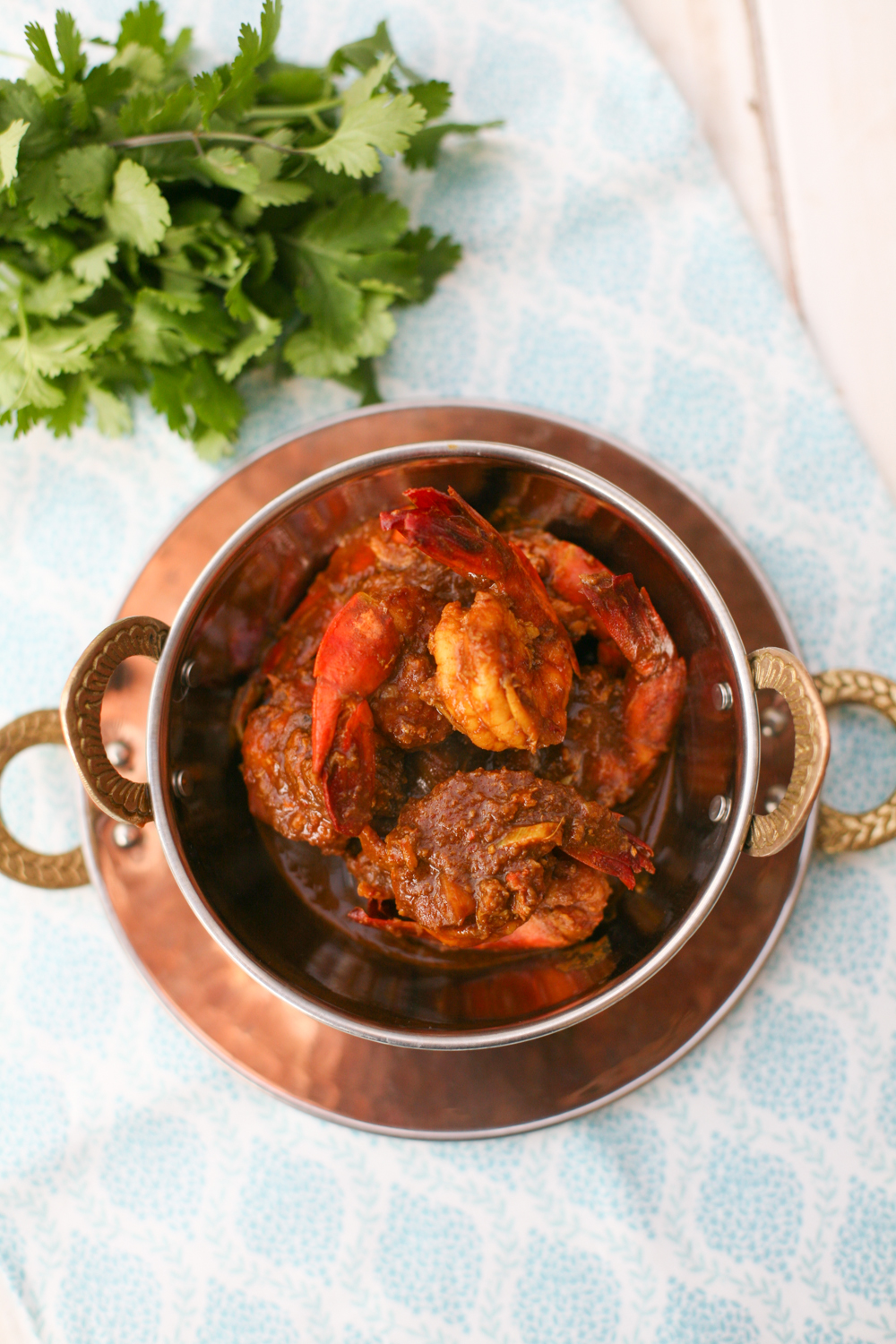
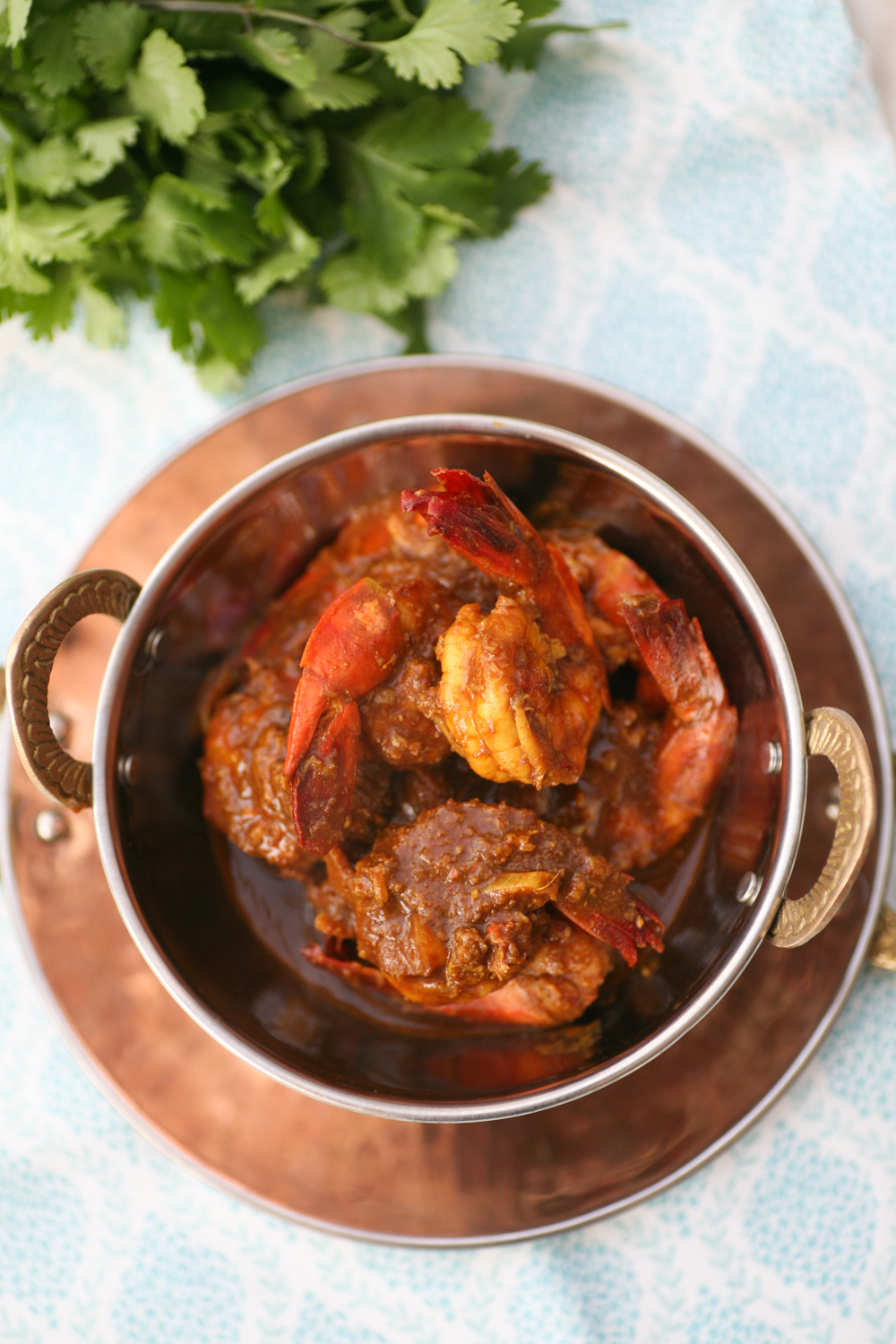
Prawn and Tamarind Curry

IMG_1830

Prawn curries are one of my favourite. Earlier this year another of my prawn recipes made its way into Delicious Magazine – see here – have you tried it yet? Decadent and spoiling, prawns are incredibly tasty, especially if they are of the king prawn variety. I am also a huge fan of tamarind, which has a very sweet and sour taste to it. So married together prawns and tamarind create a very satisfying meal.

IMG_1800

These beauties start off grey, but rest assured as soon as they are cooked in the oil they turn pink almost immediately. I leave the tails on, more for cosmetic reasons than for any other. The rest of the shell is removed, but not discarded (next week I will show you what to do with all those discarded shells and heads), and the black vein that runs along the prawns back is discarded completely.

IMG_1809


Other than peeling and deveining the prawns, this dish is incredibly quick to make and totally doable on a busy work week. Taking time to eat a delicious, comforting meal in the evening I think is so important. If you invest a little bit of time in preparation you really are rewarded with a memorable feast.

IMG_1838


Prawn and Tamarind Curry

serves 4

600g king prawns, peeled but keep the tails on, devein

1 tsp salt

1 tbsp tamarind paste

1 tsp ground coriander

1 tsp ground cumin

1/s tsp Kashmiri chilli powder

1/2 tsp turmeric powder

2 tbsp vegetable oil

5 garlic cloves, finely chopped

1 tsp grated fresh ginger

1 tsp salt

150 ml of boiling water

fresh coriander leaves to scatter when serving

  1. Peel, devein (make an incision down the back of the prawn to reveal a black vein, remove with a sharp knife and discard) and keep the tails on, scatter with the salt and then place to one side. Don’t forget to keep those shells and heads and I will show you how to make a magnificent prawn broth which turns into a prawn bisque next week!
  2. In a small bowl add the tamarind pulp, ground cumin and coriander, chilli powder and turmeric. Stir to form a smooth paste.
  3. Heat the oil in a pan on a medium low heat and then add the garlic and ginger. After a minute add the prawns and stir for a further minute so that they become a lovely pink colour.
  4. Add the tamarind paste and coat the prawns. Immediately add the boiling water and stir. Simmer gently for a further 5 minutes.
  5. Serve immediately with either rice, puri or other Indian flat bread.

So simple and yet utterly delicious

IMG_1829


Coconut Chutney (and a top tip at removing a coconut shell)

IMG_1775

Have you ever had trouble getting into a coconut or rather removing the outer shell so that the sweet flesh within is easy to tuck into? If you have then you are going to love the following tip.

All you need to do is the following:

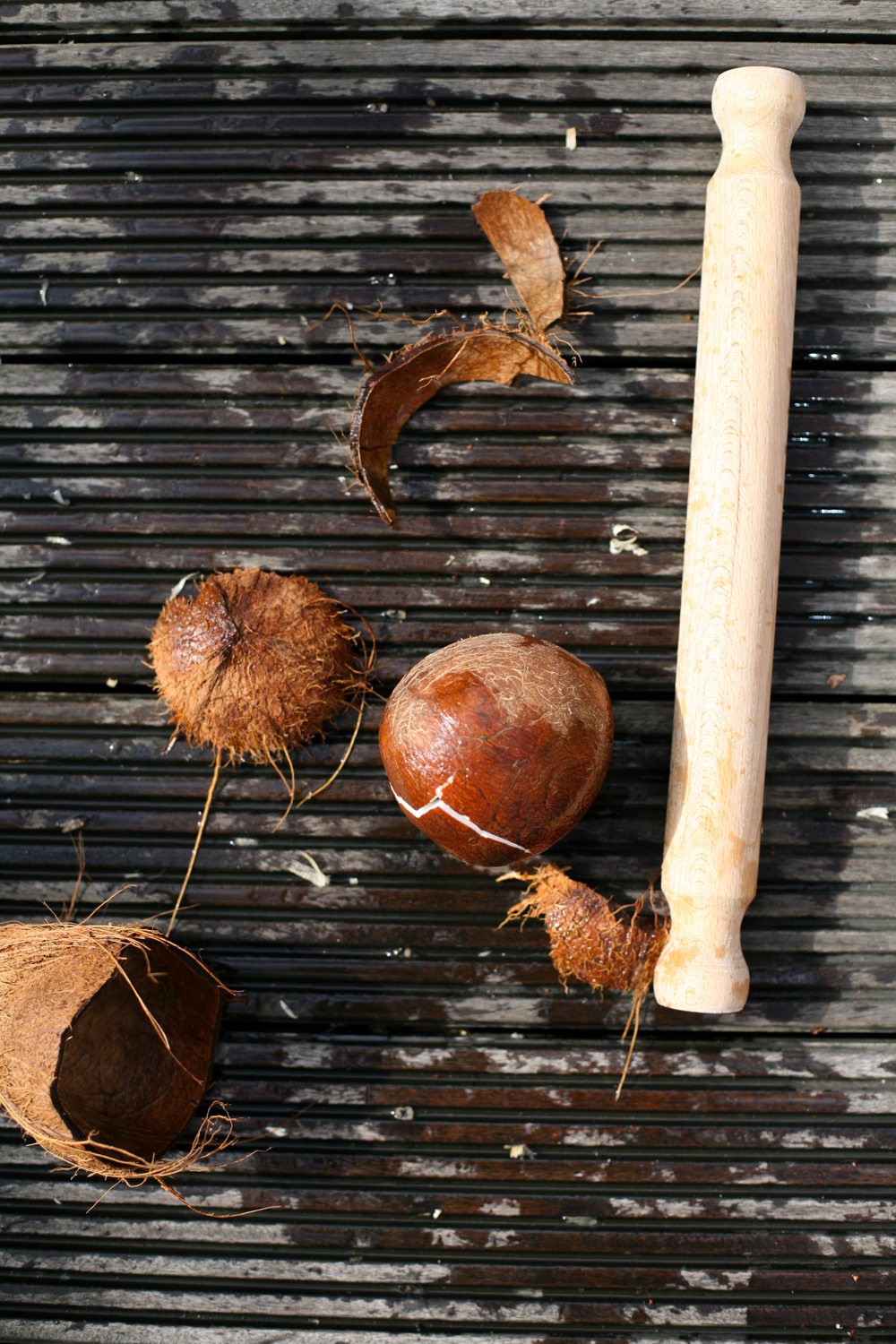
  1. Place the coconut in the freezer for 30-45 mins.
  2. Remove from the freezer and then use a rolling pin to bang down on the coconut whilst holding it in your other hand. The outer shell will break away.
  3. Easy hey!

IMG_1751

Drinking the coconut milk is a whole lot easier this way I find.

So on to the coconut chutney.

Once you have the naked coconut you then need to peel it – the outer skin comes away so easily. Then it is simply a matter of grating the coconut.

IMG_1759

Using a whole coconut does produce a lot of coconut chutney, but I find it lasts for up to a week in the fridge no problem. A dollop on the side of some spiced semolina – upma, from my previous post, works wonders or equally it would be great with any south Indian curry. In southern India they eat coconut chutney as part of breakfast, lunch or supper so if you take a similar attitude it will be used up pretty fast!

IMG_1768

Coconut Chutney

1 coconut

2 tbsp chana dal, roasted

2 fresh green chillies

*****

tempering

2 tbsp vegetable/coconut oil

1/2 tsp black mustard seeds

1/2 tsp cumin seeds

pinch of asafoetida/hing

2 dried red chillies

7 curry leaves

1 tsp salt

  1. Remove the shell from the coconut by placing it in a freezer for 30 minutes and then banging down on it carefully with a rolling pin.
  2. Remove the skin from the coconut using a potato peeler and then grate the coconut.
  3. In a frying pan dry roast the chana dal so they begin to bronze slightly. Let them cool and then use a spice grinder to grind them up.
  4. Place in a smaller blender along with the grated coconut and fresh green chillies. You will need to add a little water to loosen it up (the amount of water added depends on how thick you like your chutney! I tend to use 300ml). Blend to form a smooth paste. Add a little salt to taste.
  5. In a frying pan heat the oil and when it is hot add the mustard and cumin seeds, the dried chillies, curry leaves and hing. Move around the pan for 20 seconds before pouring over the coconut chutney.
  6. Stir into the chutney and serve.

IMG_1788


A tasty breakfast treat – spiced semolina (Upma)

IMG_1731

Semolina and I did not start out on a good footing.

For a few years when I was young I attended a convent – not as a nun, but as a pupil, and the nuns had a habit of being very strict. You had to eat every morsel on your plate and were not allowed to leave the table until your plate was clean.

IMG_1724

The food in the early 80’s was not something you would particularly blog about and the puddings that were dished up to us were well, how can I put this politely, not that appetising. The gruel that I particularly disliked was sloppy semolina with a dollop of sweet jam. I found it so hard to eat that on one occasion after the dining hall had emptied and I was sitting all alone and the minutes were ticking by I decided that when Sister was not looking I would deposit the contents of my bowl into my pocket. I did it like a stealth ninja and no one found out, other than my mother, who is such a sweetie she didn’t seem to make much of a fuss.

IMG_1714

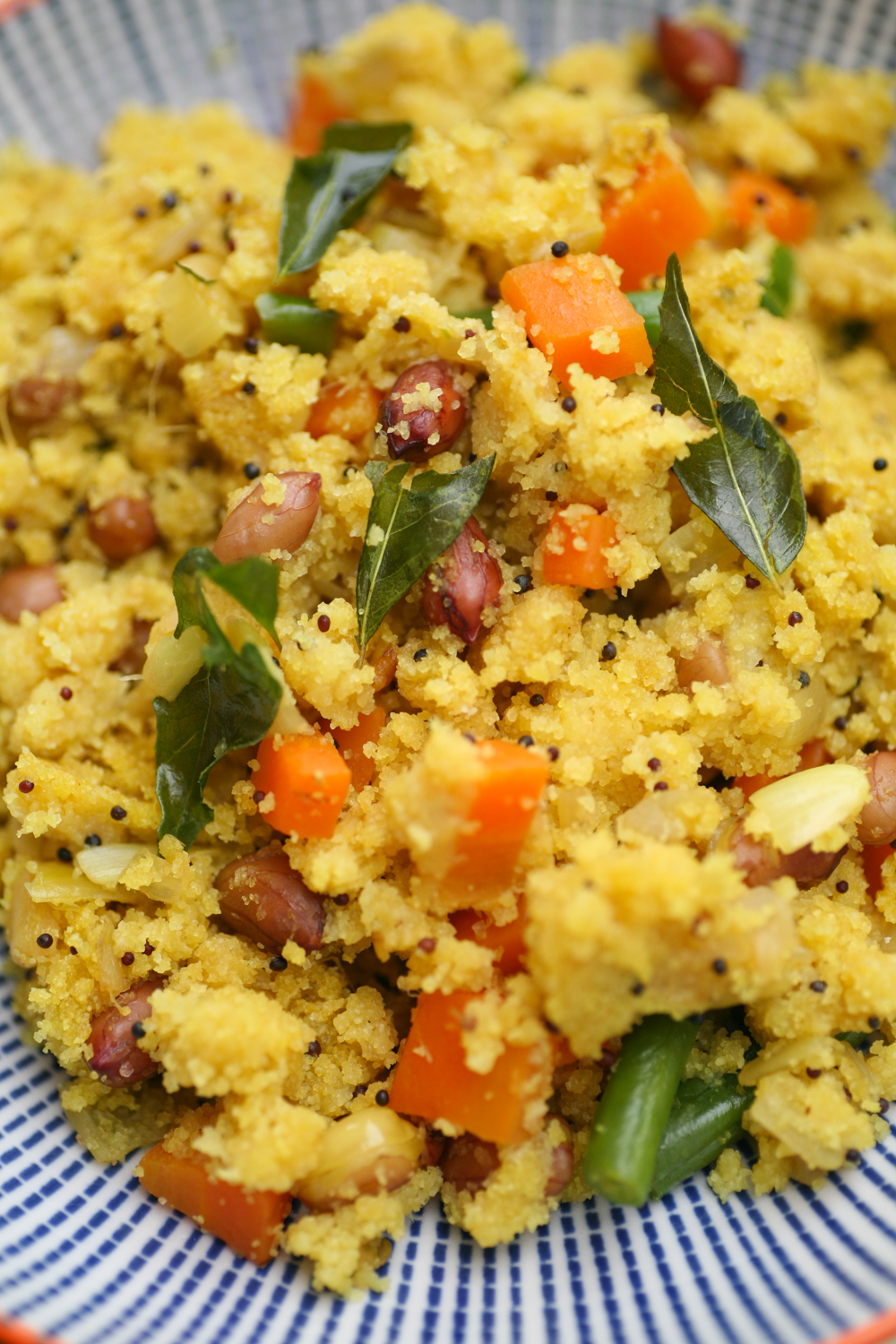
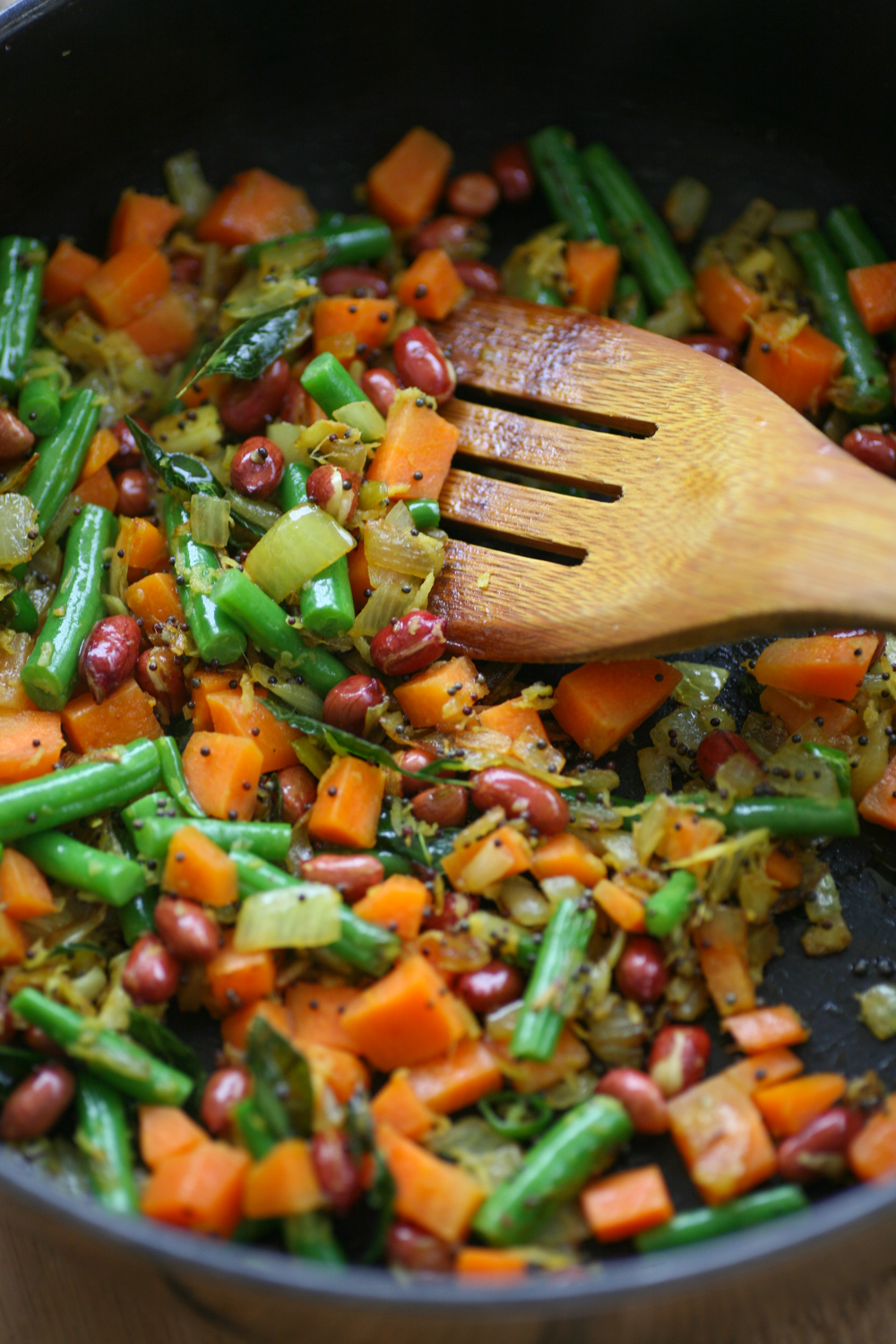
Fast forward 34 years and I now love semolina – but only if I eat it the savoury way. In India a hugely popular breakfast snack is spiced semolina known as ‘Upma’. It is so quick and easy to put together it takes minutes to create a really warming bowl of goodness. I eat it at any time of day in all honesty – breakfast, snack, lunch, supper – you name it, it is super versatile. You can also add whatever vegetables need to be used up in the fridge, so it’s a win win in my book.

IMG_1742

Spiced Savoury Semolina – Upma

Serves 2-3 (or for 4 if eating as a snack)

2 tbsp vegetable oil

1 tsp black mustard seeds

12 fresh curry leaves

1 fresh green chilli finely chopped

1 banana shallot or small onion, finely chopped

1 tsp salt

20g fresh ginger, finely grated

1/4 tsp turmeric powder

1 carrot, finely cubed

60g green beans chopped in half

40g red peanuts

150g course semolina (sooji)

275ml water

  1. Heat a pan with the oil and when it is hot add the mustard seeds, curry leaves and fresh chilli. The mustard seeds will begin to splutter after 20-30 seconds so then add the shallot/onion and salt and lower the heat. Allow the shallot to soften for around 5 minutes.
  2. Add the fresh ginger and turmeric and stir gently.
  3. Now add the carrot and beans or another vegetable that needs using up along with the red peanuts.  After 1 minute add the water and leave to simmer for up to 5 minutes or when the vegetables have softened.
  4. Add the semolina gradually and stir constantly so that it does not clump together too much. Once it has soaked up the water – you can add a little more water if needed at this stage – place a lid on the pan and switch off the heat so that it can steam for a few minutes before serving.

Toasted Cumin and Cinnamon Cauliflower

IMG_7116

I often think that cauliflower gets a little overlooked as a vegetable, unlike its more ‘superfood’ cousin, the broccoli. Boiling it can be bland, like most things, but roast it and add a little spice and textures then you have a truly delicious treat. I wrote a piece a few years ago on the merits of the humble cauliflower here so do check it out.

IMG_7114

This recipe is quick, extremely tasty (ok I know I am biased), full of goodness and great as a lunch to take to work in a tupperware or as an evening meal. It can be eaten hot or cold so is hugely versatile. A slight chill is now in the air in London, although I am still hopeful for an Indian summer, so the warming cumin and cinnamon gives the dish autumnal comforting notes. The sweetness come from the cinnamon and the saltiness from the feta so no extra salt is necessary.

Toasted Cumin and Cinnamon Cauliflower

serves 2 or 4 if serving with another dish 

1 cauliflower, chopped into florets and greenery removed

1 tsp cumin powder

1/2 tsp cinnamon

5 tbsp extra virgin olive oil

30g pine nuts, toasted

30g raisins or sultanas

1 small handful of fresh coriander

30g feta, crumbled

  1. Preheat the oven to 200 degrees (if using fan). In a large mixing bowl add the cauliflower florets and add the cumin and cinnamon powder along with the extra virgin olive oil. Mix gently with your hands so that the florets are evenly coated.
  2. Place on a baking tray in the oven for 20 minutes, so that the edges are nicely charred.
  3. Meanwhile heat a heavy frying pan and toast the pine nuts so that they begin to bronze. They bronze quickly so keep an eye on this. Add the raisins/sultanas to warm them and allow them to become soft. Place to one side in a bowl.
  4. Once the cauliflower is cooked add to a new mixing bowl and add the pine nuts, sultanas, coriander and crumbled feta. Toss gently and either plate up or leave to cool before adding to your lunch container.

I have also made this with prunes instead of raisins/sultanas, which works really well. Dates would also be another option.

IMG_1703


Foraging for Cockles on the Welsh Coast

IMG_6931

There is something very rewarding about foraging for your own food, it’s like a treasure hunt for grown ups. I am no expert forager mind you and I would draw the line at foraging for mushrooms. I did a post a few years ago on foraging for samphire which you can read here.

This past week, however, I have been in a corner of Wales that even the locals requested I keep secret for fear that their corner of paradise will be overwhelmed by zealous visitors. The beaches are HUGE – think California expansive – stretching over a couple of miles long. This gives the treasure seeker a wonderful opportunity to forage for tasty goodies.

IMG_6951

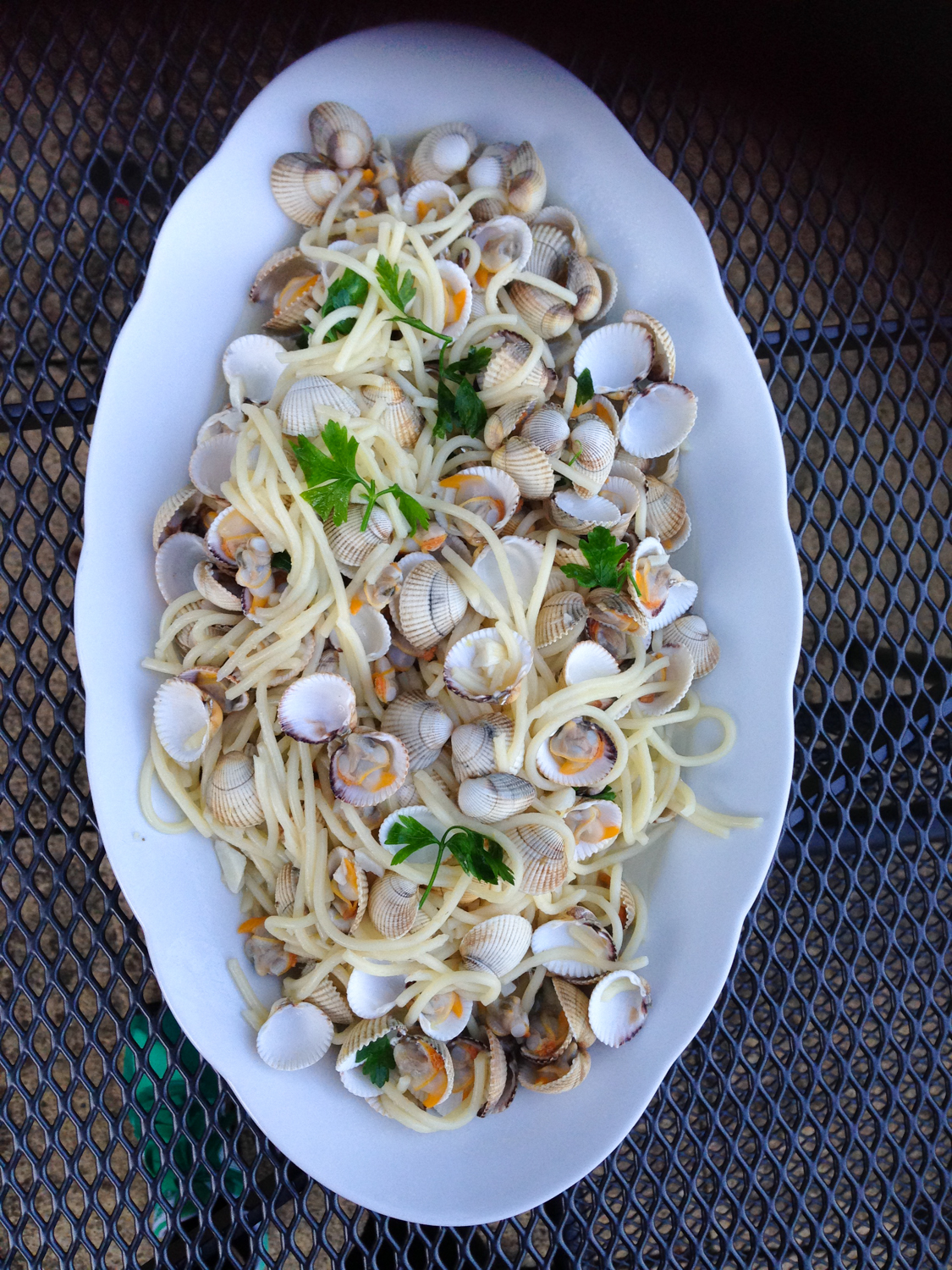
We opted for cockles this time, but when I return to Wales I will also try for razor clams as the locals say they are also great to search for when there is a spring tide. Cockles are basically like small clams and you may have had them in southern Spain where they are referred to as ‘coquinas’. They also sell them in seaside towns in Britain, cold in little pots without their shells. That never particularly appealed, but hot with loads of garlic, parsley, lemon juice and zest and spaghetti certainly does.

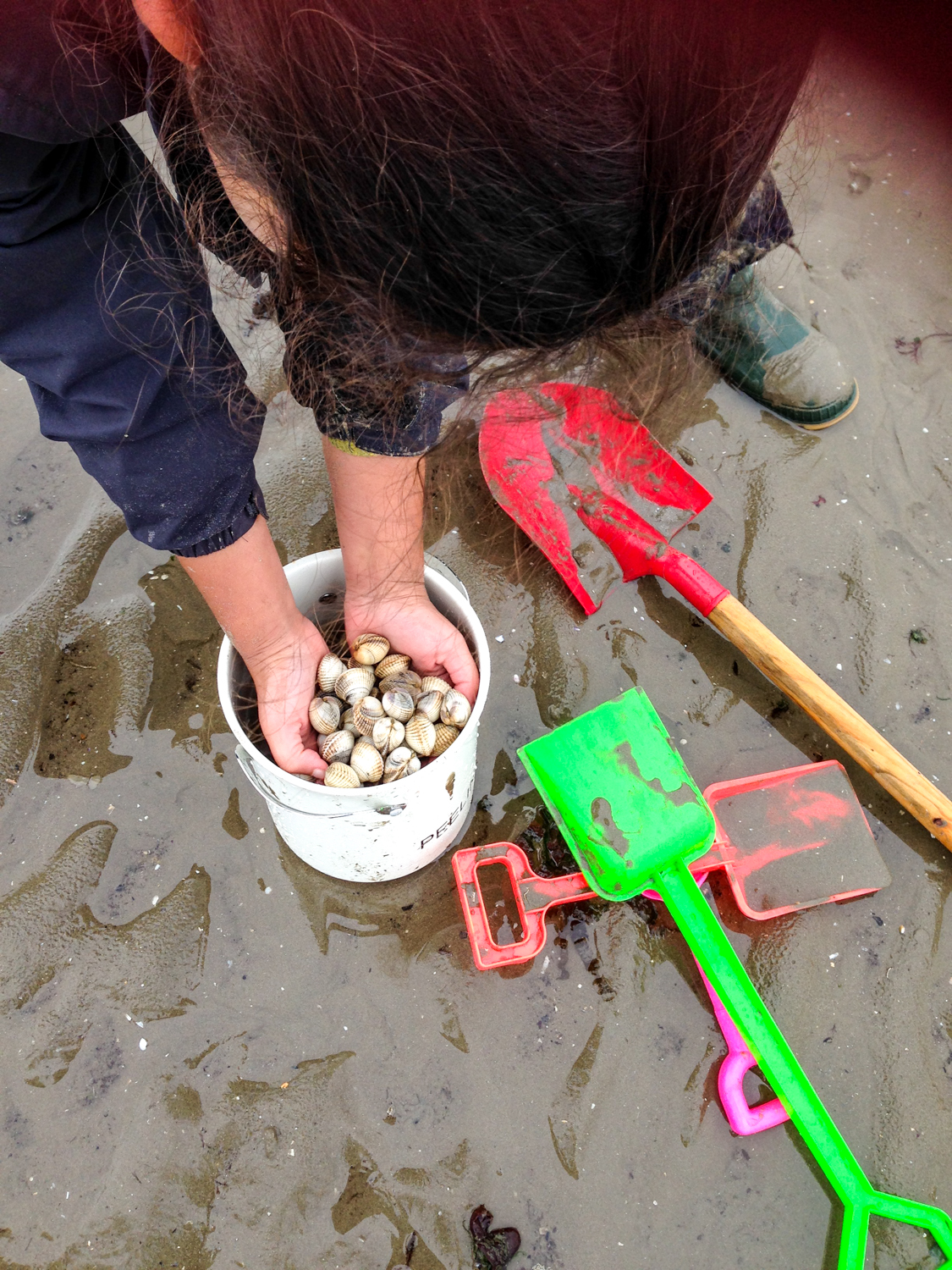
The day we foraged was a little drizzly (the rest of the week was completely sunny, unlike the rain clouds over London I hear). The tide was a long way out and we searched between the shoreline and the sea. We looked for clues – cockle shells laying scattered on the beach surface and then would dig a hole about 1-2 inches deep and then feel around with our hands. Once you have found a couple you can normally find a whole group of around 10 or so. My daughters and I (Mr B had decided to take himself off for a walk along the 2.5 mile beach instead) lucked out and found over 250 in under an hour and a half. Result.

IMG_6850

We placed them in a pot (bucket is ideal) which we had filled with sea water. Overjoyed with our foraging success we went back to the cottage cleaned the cockles and then covered with fresh water and some sea salt. We then let them rest for a minimum of 6 hours (to overnight) before draining them thoroughly. We discarded any that remained open or did not shut firmly when you gently knocked the shell on a surface. We found that there were only 10 or so that were a bit suspect, the remaining 250 were ready for our feast.

IMG_6917

This amount could easily feed 6 people. We definitely over foraged but seeing as we had cooked them we decided it would be a shame to waste any so ate the lot. Piggie I know! Both my daughters (6 and 9) adored them. I am a big believer that if you make a scene about shellfish or any particular kind of food in fact, then your children will too and not want to eat them. If you show them how delicious they are and get stuck in then invariably they will too and not want to be left out.

IMG_6924

We feasted royally and before you ask, we all felt on top form the next day. They are great fun to forage for so have a go when you are next on the British coast.

Cockles with Garlic, Lemon, Parsley and Spaghetti

Serves 4-6 easily

250 cockles (I did not weigh them but guess it is around 1-1.2kg)

4 tbsp salt

1 tbsp butter

2 tbsp extra virgin olive oil

6 garlic, finely chopped

1 lemon, juice and zest

160ml white wine

2 large handfuls of flat leaf parsley

400g spaghetti

black pepper

  1. Clean the cockles thoroughly then cover with cold water and add the salt to allow the sand and grit to be dispelled. Leave to one side for a minimum of 6 hours to overnight so that the cockles can filter out the sand.
  2. When ready to cook, drain then and run them under fresh water. Make sure they shut firmly and discard any that do not close.
  3. Place the spaghetti in a pan of boiling water and simmer for around 10 minutes, then leave in the boiling water until ready to add to the cockle pan (no9)
  4. Heat a large deep pan with the butter and olive oil and when it is hot add the garlic. Keep on a medium low heat.
  5. Once the garlic softens after a couple of minutes, add the lemon zest and stir.
  6. Turn the heat up high and add the cockles. Add the lemon juice, white white and then place the lid on the pan. Shake the pan gently from side to side.
  7. After a minute check to see if some of the shells are opening. Keep the pan moving with the lid on.
  8. After another minute the shells should be open.
  9. Add the spaghetti and the parsley and mix all the ingredients together for 30 seconds before plating up and adding a little black pepper.

Any shells that have not opened then discard – do not try to prize open.


Spiced Masala Paneer Skewers, Coriander/Mint Chutney and Bejewelled Couscous

IMG_1395

I was recently approached by the the UK’s number 1 tableware provider, Denby Pottery to come up with an exciting vegetarian BBQ recipe for their blog. They kindly provided me with some of their china from the  ‘Imperial Blue’ range, to present the food. I ended up creating spiced masala paneer skewers, coriander and mint chutney and bejewelled couscous. As well as cooking the paneer skewers on the BBQ they can equally be cooked on a griddle pan or under the grill so are super versatile.

Take a look at my recipe and post here and I would love it if you can share it through your social channels.

Hope you are all having a wonderful summer (winter if you are in the southern hemisphere).

IMG_1408


Vietnamese Summer Rolls – healthy and utterly delicious

IMG_1457

Vietnamese summer rolls, also known as Gỏi cuốn in Vietnam, are THE perfect lunch time meal, starter or snack when the sun is shining and you want something light, tasty and flavoursome. They are great fun to make and you can get creative on what to fill them with. The original Vietnamese ones often have pork loin and prawn wrapped inside them, however, I have always omitted the pork and simply added prawns, but its up to you. If you do include pork loin boil it in water for around 20 minutes and then thinly slice the pork loin when it has cooled.

IMG_1446

Fresh herbs are key and you ideally need: coriander, garden mint and Thai basil, although regular basil will suffice if you can’t lay your hands on the former. If you happen to live near or pass by an Asian grocers pick up some perilla/shiso leaves to add a more authentic flavour. A little lettuce – cos works well – is also good to include (I didn’t have any in my fridge so for the ones above I have not included this). Rice noodles, carrot and cucumber batons are also needed.

IMG_1448

IMG_1450

So to wrap you need to follow the photos above:

  1. Pour tap water into a tray and then dip the rice paper in it. Literally quickly submerge and take out straight away or else it will become too wet and sticky.
  2. Place a small amount of herbs, noodles, carrot and cucumber buttons and lettuce if using, at the central bottom of the circular rice paper.
  3. Roll it once and then bring in each side. Now place the prawns (if they are large slice them in two) and a couple of garlic chives/thin slices of  green spring onions with the ends poking out and roll again.
  4. Continue to roll tightly until the rice paper is firmly wrapped around the filling. Place to one side.

IMG_1477

I like to use my nuoc cham dipping sauce – recipe here. Equally they are also tasty if you dip them into a combined sauce of crunchy peanut butter with hoisin sauce.


Vietnamese Summer Rolls

makes around 16

A packet of Vietnamese rice paper – size 22cm

300g prawns (if you do not eat prawns you could add tofu)

packet of thin rice noodles

2 large carrots, sliced into thin batons

half a cucumber, slice into thin batons

cos lettuce

large handful of fresh coriander

large handful of fresh garden mint

large handful of thai basil (or regular basil if cannot find thai)

large handful of perilla/shiso leaves – optional

  1. Soak the rice noodles in a bowl of boiling water for around 7 minutes with a plate covering the bowl to keep in the heat. Check to taste they are cooked and then drain under cold water. Place to one side.
  2. Prepare all the ingredients and place them on a plate ready to use. If you are using giant chunky prawns it is best to slice them in two.
  3. Pour tap water into a tray and then dip the rice paper in it. Literally quickly submerge and take out straight away or else it will become too wet and sticky.
  4. Place a small amount of herbs, noodles, carrot and cucumber buttons and lettuce if using, at the central bottom of the circular rice paper.
  5. Roll it once and then bring in each side. Now place the prawns and a couple of garlic chives/thin slices of  green spring onions with the ends poking out and roll again.
  6. Continue to tightly roll until the rice paper is firmly wrapped around the filling. Place to once side and repeat.

They can be made ahead of time and then covered and placed in the fridge until ready to use. Bring out of the fridge 30 minutes before eating.

I often use my nuoc cham dipping sauce which you can see here. If you like this recipe you might also like some of my other Vietnamese ones such as:

Vietnamese pancakes – bahn xeo

Vietnamese chicken herb salad

Vietnamese fish with turmeric, ginger and dill

Vietnamese chicken rissoles with shallots, lemongrass and garlic

Vietnamese inspired salmon, cucumber, red onion and grapefruit salad

Bun cha

Vietnamese Pho Bo – Beef Noodle Soup

Vietnamese iced coffee


Cold Spiced Soba and Cucumber Noodles

IMG_1340

When it’s hot I like nothing more than a bowl of spiced cold noodles. If you have only ever eaten them hot before you are going to have to trust me when I say that cold noodles are seriously good. The whole meal takes 10 minutes max to prepare, which is even better when the sun is shining and you don’t really fancy spending too long over the stove.
IMG_1350

The crunch of the cucumber noodles and nuts (from the crunchy peanut butter) really compliment this dish. I decided to use dragons back chillies which you can purchase from World of Zing here. The chilli gave the dish a kick without being too overpowering. The spring onion and garlic also adds other wonderful flavours running through this dish. The star of the sauce in my mind is chinkiang vinegar, which is also known as Chinese black vinegar. I adore the stuff and if you love Chinese cooking it is an absolute must for your store cupboard. You can easily pick is up in any Asian food store.

IMG_1341

The sauce is salty, sour and sweet and mixed through the noodles it is absolutely heavenly. It’s a perfect meal to take to work as it is easily transportable and can be prepared the morning or night before and then stored in a fridge until lunch. Remember to take it out of the fridge around 30 minutes before eating so that it has reached room temperature.

IMG_1354Cold Spiced Soba and Cucumber Noodles 

Serves 2 or (1 if you are feeling a little piggy)

85g soba noodles

1/2 cucumber, noodles if you have this or thinly chopped into sticks if not

2 spring onions, sliced at an angle

1 dragons back chilli, halved or quartered

2 garlic cloves, finely chopped

1 tbsp chinkiang vinegar

1 tbsp light soy sauce

1 tbsp chilli oil

1 tsp sesame oil

1 tsp crunchy peanut butter

1 tsp caster sugar

1 tsp black sesame seeds

1 tsp salt – optional

1. Place the soba noodles in boiling water and boil for around 5 minutes or according to the packet. Drain and run under cold water so that the noodles are completely cold. Place to one side.

2. Mix the chinkiang vinegar, light soy sauce, chilli oil, sesame oil, chopped garlic*, sugar and crunchy peanut butter in a bowl and stir to form a dressing. Taste and add salt if required.

3. Prepare the cucumber noodles or chop the cucumber into thick sticks.

4. Heat a small pan and when it is hot add the dragons back chilli or other dried chilli so that it darkens slightly in colour. I keep all the seeds, but if you like it less hot you can reduce these. Then add 1/2 tsp of chilli oil and add the spring onions for a minute. Take off the heat.

5. In a mixing bowl add the cold soba noodles, the cucumber noodles, the dressing and the dried chilli and spring onions.  Gently fold in together and place in two bowls. Sprinkle some black sesame seeds on top.

* if you prefer to cook the garlic add it to the pan with the spring onions so that it softens slightly.

IMG_1355


Gnocchi with Butternut Squash, Garlic, Broad Beans and Crispy Sage and Kale

IMG_1319

The summer hols have started in my house. My daughters have weeks ahead to relax, explore, learn and grow. It’s a time to unwind and go at a more leisurely pace, no 6.30am wake up calls until September *does happy dance*. New additions to our family have arrived – two mini lop bunnies, so rabbit is firmly off the menu from henceforth.

IMG_1333

Picnics are wonderful but sometimes more of a proper meal at lunch time is required. This recipe is straightforward and although there are a couple of parts to bring together it really does not take long. I also love the bright summer colours of this meal, you can’t help but be happy when eating it. If you want to make it a morning activity though and involve your children/friends/partner then making your own gnocchi is really good fun. Here is my recipe.IMG_1335

I like to make kale crisps to add to this meal. Eleven minutes in a low oven and hey presto you have kale crisps. You can get creative as well and add cayenne pepper, soy, chaat masala, whatever takes your fancy. For this dish I have simply added a sprinkling of rock salt. By all means you can have the kale crisps in a bowl on the side, but I rather like the crisp aspect to the whole dish. It’s comfort food with a twist and they work well with the crispy sage. Broad beans are in season right now and I love to throw them in so many dishes. I prefer to shell them but I leave that to you to decide.
IMG_1324

Gnocchi with Butternut Squash, Garlic, Broad Beans and Crispy Sage and Kale

1/2 of a small butternut squash, skin removed and cubed to the size of the gnocchi

100g chopped kale

1 tbsp extra virgin olive oil

3 garlic cloves, roughly chopped

1 tbsp butter

40g shelled broad beans

350g potato gnocchi

salt and pepper to taste

handful of grated parmesan, optional

1. First cube the butternut squash into the size of the gnocchi. Boil in a pan of water along with the broad beans for around 10 minutes, or until soft but not mushy.  Rinse under cold water and leave to one side. If you need to shell the broad beans then do so at this stage.

2. Preheat an oven to 140 degrees fahrenheit. Meanwhile separate any stems from the kale and discard. Place the kale on a baking try and add the olive oil. Massage the oil into the kale and make sure that the kale is spread out evenly over the tray. Place in the oven for 11 minutes, by which time the kale will be crisp. If it is not then leave it for a minute or two longer. Keep a watchful eye over it as they can burn quickly. These kale crisps are a great snack but also rather lovely in this dish.

3. In a frying pan add the butter and when it is melted add the garlic. Move around the pan before adding the sage leaves. Allow them to cook on a low heat so that they begin to crisp.

4. Add the butternut squash and broad beans and coat them in the butter, garlic and sage.

5. Place the gnocchi in the pan and boil away for 1 minute or according to instructions. If you fancy making your own – here is my recipe.

6. Strain the gnocchi and add the pan with the other ingredients. Stir together for a minute, season to taste and plate immediately.

7. Sprinkle crispy kale over each serving with a scattering of parmesan as desired.