New York Wanderings and a Traditional Bengali Chicken Curry

IMG_1529

I’ve been doing a spot of travelling since my last blog post, hence the slight delay. Mr B and I celebrated our 10 year wedding anniversary with a long weekend in New York. It’s been a decade since I last visited so was really eager to catch up with friends and immerse myself in a city that has the most wonderful, infectious energy and of course, never sleeps.

IMG_1515

We parked ourselves in The Standard, East Village with it’s fabulous vistas spanning the whole of Manhattan with it’s floor to ceiling windows; I never tired of the view from our bedroom.

photo-15

The hotel totally lived up to our (high) expectations and the staff made a real effort to make our stay extra special. Would I return? Most definitely.

IMG_1497

Sunrise on our first morning from our room

We walked and walked and walked for hours on end, exploring the little streets in the Villages and Soho with it’s stunning wrought ironwork on the sides of the buildings.

photo-14

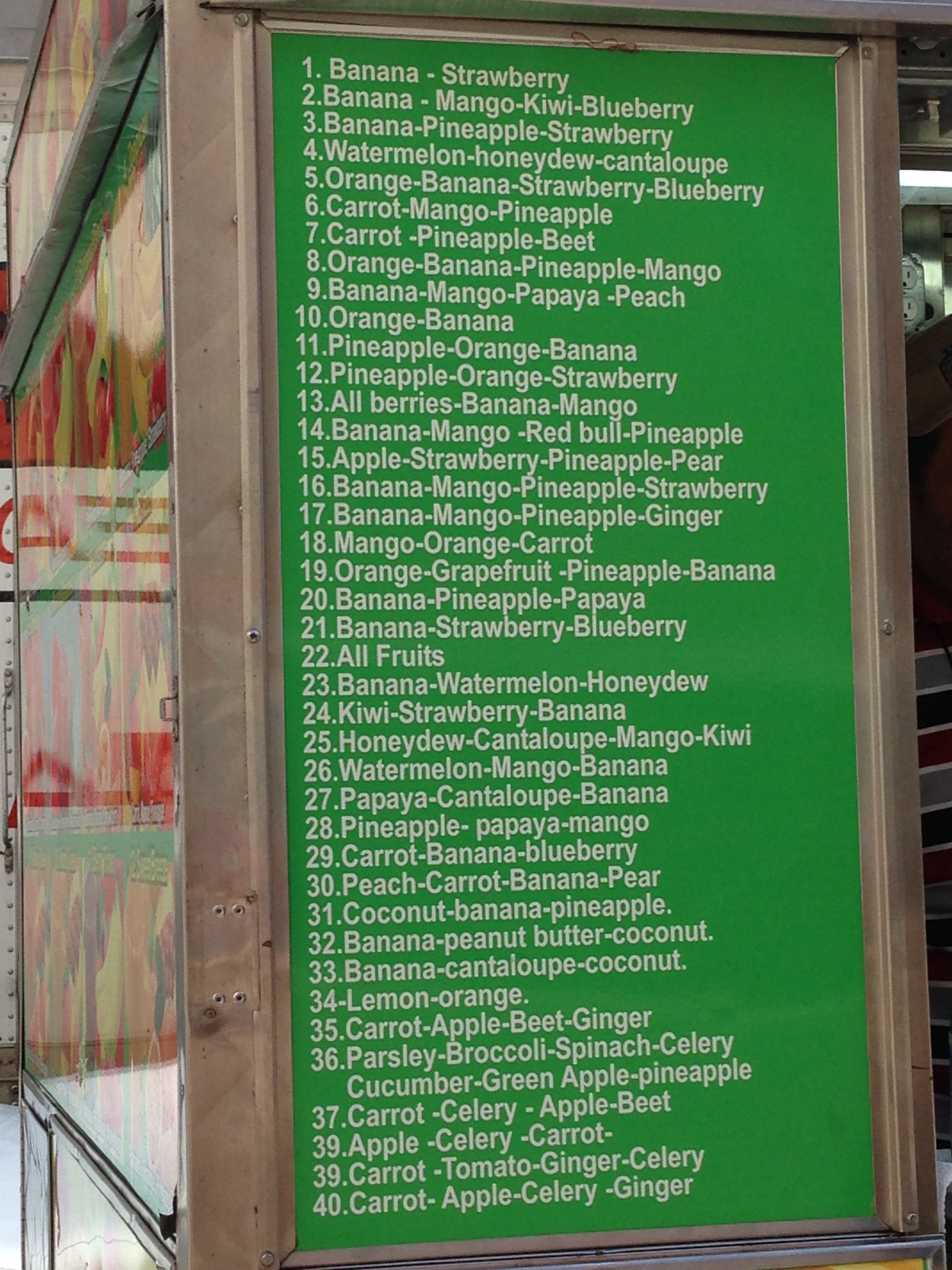
To give us bursts of energy we would refuel with fresh juices from the juice trailers parked in the streets. With around 80 different juice combinations to choose from it was hard to decide which one to pick. At around $4 a pop they are great value and ridiculously healthy – a win win.

photo-16

They cleanse the body and totally refresh the tired wanderer. Competitively priced and they would do so well here in London – a great business idea for a budding entrepreneur!!

IMG_1518

The stunning High Line with the old tracks visible

The High Line really impressed us – a great example of urban regeneration. It’s a stunning elevated greenway mile that used to be the New York central rail road spur, known as the West Side Line. It spans the meat packing district all the way up to Chelsea and is cleverly designed with shrubs, plants and trees interspersed with benches and seating areas around and on top of the old tracks. I particularly loved the raised seating, similar to an amphitheatre that looks over one of the roads with a huge glass window.

IMG_1537

Clever designs and architecture throughout the High Line

Instead of watching a movie you sit and watch the traffic buzz beneath you. Later in the day when I was passing underneath it in a taxi it almost looked like an advertising poster, and then I saw the people moving around. A clever effect and a fun way to be creative with the old rail road.

IMG_1535

Walkways along the High Line 

The peace and serenity that the High Line offers is a welcome respite from the manic life that goes on down below. If you are planning a trip my recommendation would be to go early as it definitely becomes crowded as the run rises higher in the sky.

IMG_1506

Me sitting on the attractive wooden seating on the High Line

Friends beckoned us over to Brooklyn, a place I definitely want to explore further on my next visit, to an area that is gentrifying and that has become rather hip – called Dumbo. Looking across at Manhattan from the Brooklyn side of New York, gave a new perspective to this sprawling city. The sun was shining and the crowds were out and if the ice cream queue at The Brooklyn Ice Cream Factory had anything to go by the area of Dumbo has become hugely popular.

IMG_1543

Looking back at Manhattan from Dumbo in Brooklyn

A couple other must-see destinations for foodies is the Italian food emporium of Eataly, which is just by the famous Flatiron building, which in itself is a piece of interesting architecture worth seeing.

IMG_1563

 The famous Flatiron building

It’s only a matter of time before we’ll see an Eataly in London, having already got branches outside the US in Dubai, Japan, Istanbul and Italy itself.  The shop is bursting at the seams with delicious Italian produce, and yet it has a calm serenity that makes wandering around it very pleasant indeed. There are bars and a couple of cafes (the one on the roof is perfect for sunny summer days and has a huge selection of beers) and it’s quite acceptable to browse around the store with a glass of wine in your hand. All very civilised if you ask me.

photo-17

The other food mecca worth seeking out is Chelsea Market, not far from the High Line, so perhaps the perfect pit stop after a High Line stroll. It’s a stunning food court with a great atmosphere and an incredible choice of eateries, bars and cafes.

photo-18

strolling through Chelsea Market – loving the exposed bricks

Aside from eating, walking and socialising we managed to squeeze in a little culture with a visit to the ‘The Frick Collection’ . Based in the Upper East Side it gave us a great excuse to explore the neighbourhood and central park. The collection itself is fascinating and housed in the mansion of the wealthy industrialist Henry Frick, one of America’s greatest art collectors who died in 1919. His house contains many masterpieces of paintings, sculptures and decorative art that the public are freely allowed to view and admire. He bequeathed the house and all it’s contents to the public upon his death. It’s a relatively small collection so won’t take too long to amble around so is easy to fit into a quick stop in New York. Go visit.

New York is jammed full of incredible restaurants. A list of some of those we visited is listed below:

The Dutch – happening bar with tasty American food and an exciting wine list. Based in Soho.

Lafayette – sister restaurant to The Dutch (we did not realise this at the time). Larger in size to The Dutch and a little more formal. More French style menu.

Atrium – This Dumbo restaurant is buzzy with a delicious brunch/lunch menu. Mr B found the pulled pork bun too small for his liking – I on the other hand found the size spot on. Interesting foliage structure upon the main wall.

Spice Market – based in the Meatpacking District across the road from Soho House. Old kid on the block but still going strong. Large restaurant so not intimate and filled with locals, but seriously tasty Asian food.

Noho Star – Neighbourhood cafe in East Village. Highly recommend the spicy Mexican Huevos Rancheros. Deeeelish.

Cafe Standard – Within the Standard Hotel East Village, this hip eatery is always buzzing and has a great menu with delicious juices.

*******************

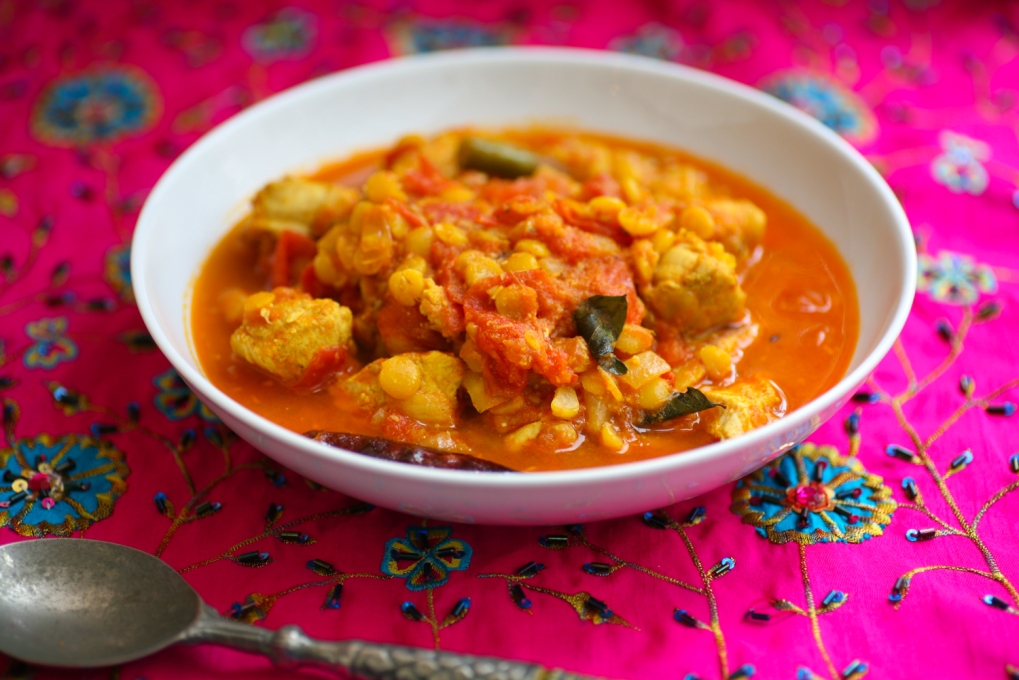
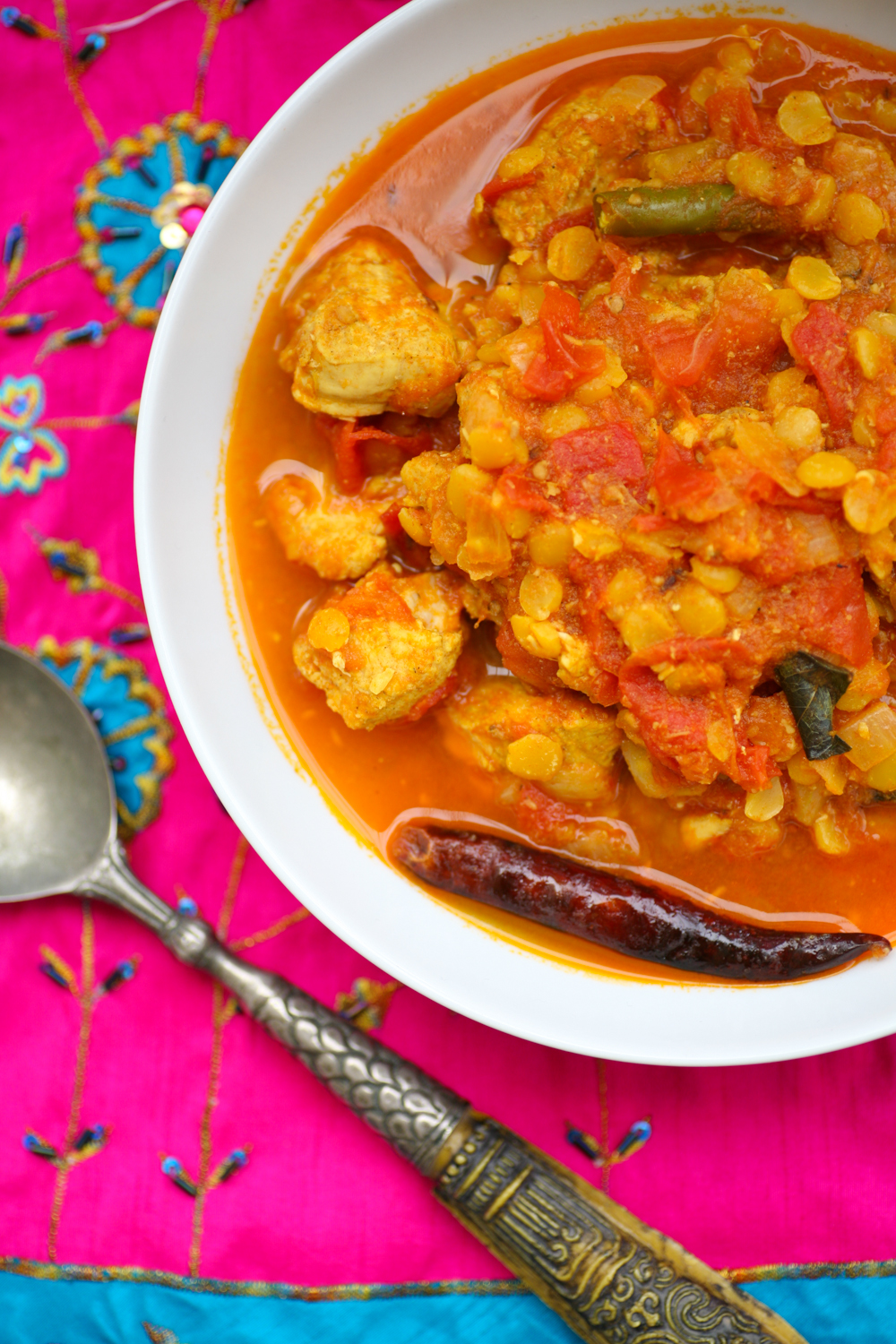
Back in London we craved spicy Indian food so rustled up one of our favourite chicken curries. We tend to cook it on the bone (seriously it tastes much better this way), but if the thought of cooking and eating off the bone doesn’t appeal simply cook the curry with breast and boneless chicken thighs instead.

Eating nourishing, homely food also really helps with jetlag ;0)

IMG_9187

Traditional Bengali Chicken Curry

Serves 4-6

3 tbsp vegetable oil

1 large onion, roughly chopped

1 chicken, cut into 10/12 pieces and skin removed

1 tsp turmeric powder

1 tsp cumin powder

1 tsp coriander powder

1 tsp Kashmiri chilli powder

4 cloves

5 cardamom pods, split open

1 pieces of cinnamon bark, split into three

2 tsp salt

8 garlic cloves, kept whole

2 tsp of fresh ginger paste

4 medium potatoes, chopped in two

2 or 3 large carrots, chopped into 1 inch pieces

1 tbsp natural yoghurt

2 tbsp of tinned chopped tomatoes

1. In a large deep pan heat up the oil. Place the onion in the oil and gently fry until the onion becomes translucent and soft. This should take around 5 minutes.

2. Add the chicken pieces to the pan and allow them to whiten completely. Turn them at intervals so that all sides of the chicken pieces are white. This will take around 10 minutes.

3. Once whitened add all the spices and salt followed by the potatoes, garlic cloves, carrots, tomatoes and yoghurt. Stir in well so that the chicken and vegetables are completely coated in the spices.

4. On a medium heat allow the curry to cook through, stirring at intervals. No extra water is needed as the chicken pieces release plenty of water during cooking.

5. After 40 minutes the curry should be completely cooked. Using a knife make sure the carrots and potatoes are soft. If they remain hard, stir into the sauce and cook for another 10 minutes.

Serve with rice or Indian bread. As it is on the bone it is easier to eat the traditional Indian way – with your right hand -but I’ll leave that for you to decide.


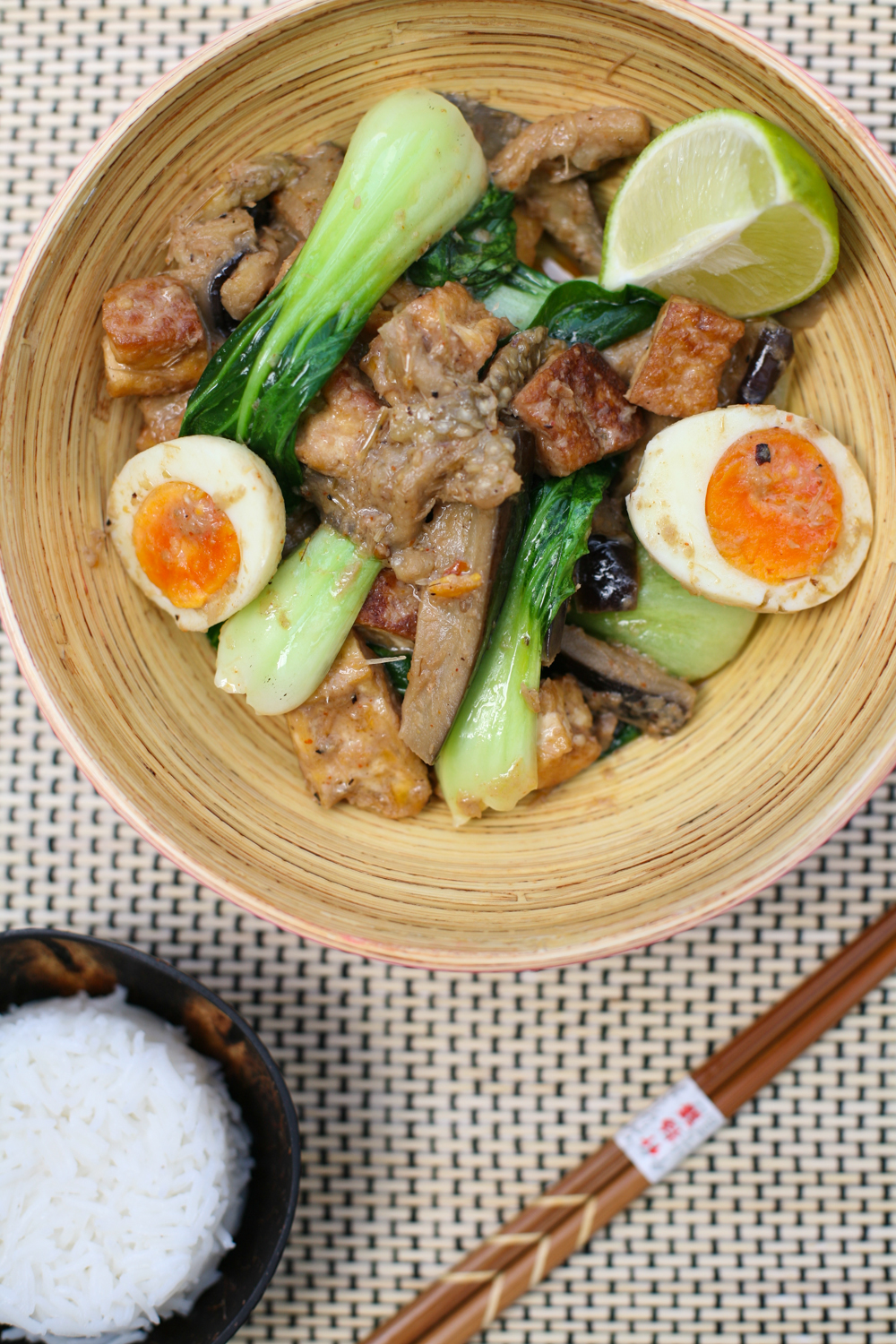
Red Thai Tofu, Aubergine and Egg Curry

IMG_9119

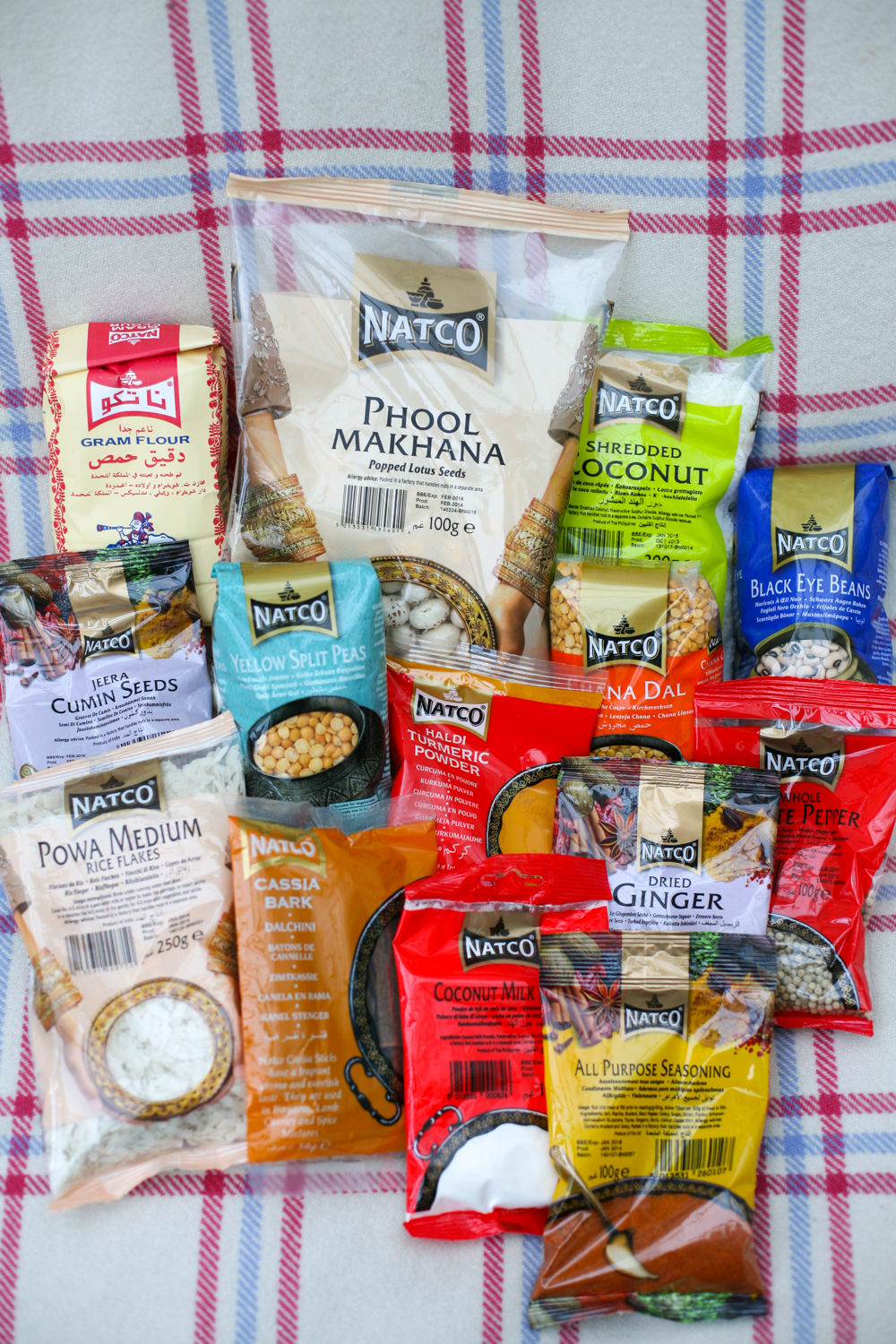
Over the past couple of weeks I’ve been cooking loads of Indian food – recipe testing mainly. I  had been sent a fabulous hamper from Natco foods as part of the Curry4Change competition that I’m taking part in –  details on this will follow in June as YOU too can get involved.

I am now craving food from a different region and a rather delicious vegetarian Thai dish caught my attention recently, cooked by John Torode as part of one of the invention tests in the 2014 Masterchef series. I find the series completely addictive and a pleasure to watch. The invention test in particular is always rather exciting as it really demonstrates how much flair and knowledge of cooking the contestant really has. Basically the contestants get two boxes to chose from, one savoury and the other sweet – no prizes for guessing which I would always choose! After electing a box they have to create a dish using some of the ingredients within the box as well as a few staple ingredients that they are all given. Before the contestants dive in John has a go at choosing one of the boxes (away from the contestants), typically he too always chooses the savoury box. This time he created a red Thai aubergine, tofu, egg curry, which I thought looked delicious, spicy and relatively light – a dish that was beckoning me to cook.

Here is my version of the dish inspired from the John Tororde’s creation. I have a feeling that John may have included red peppers in his paste but I opted to not put them in – I leave it to you to decide.

IMG_9135

Red Thai Tofu, Aubergine and Egg Curry

The proportions below will allow you to cook this dish a few times – freeze the paste left over.

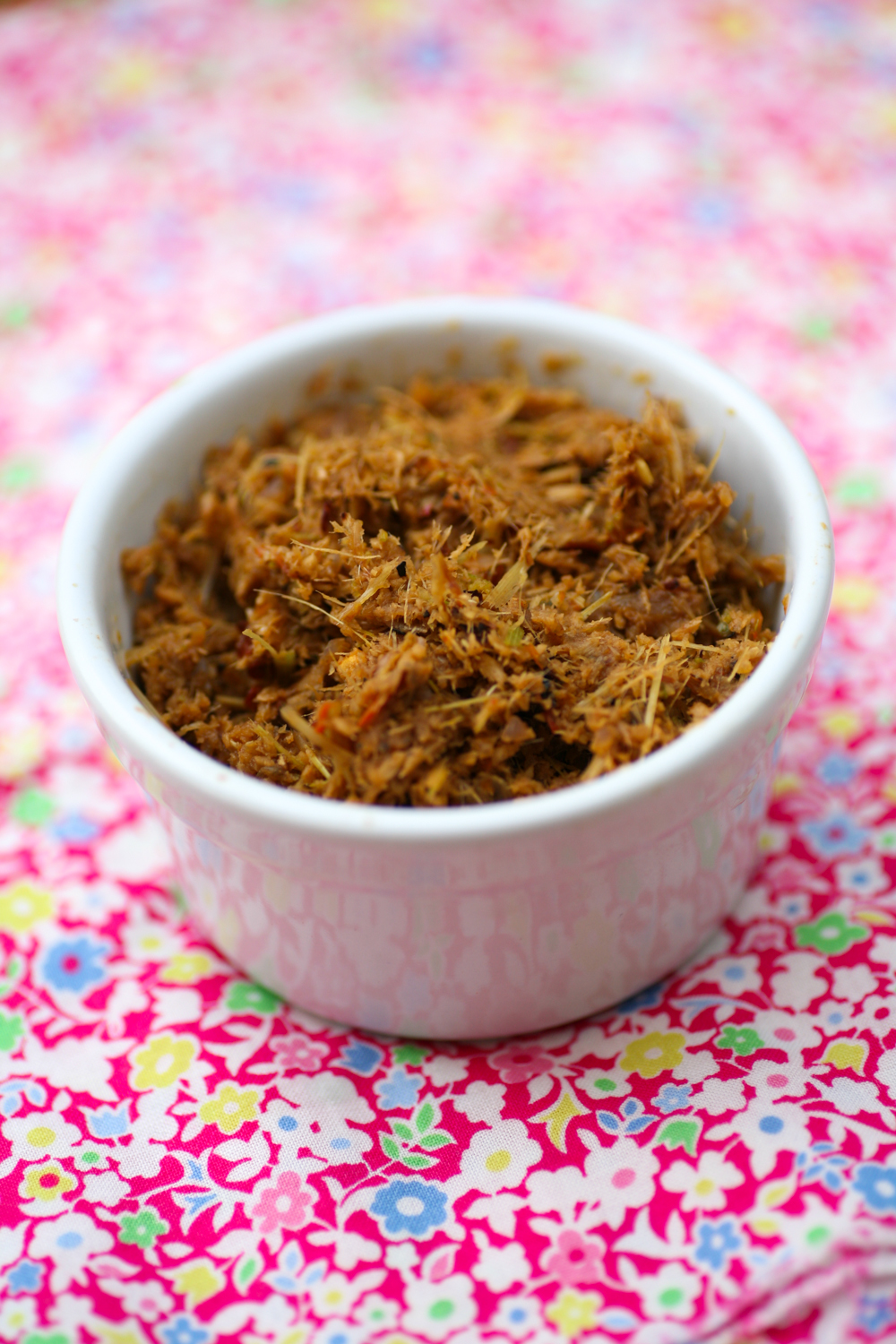
To make the paste

5cm fresh galangal

5cm fresh ginger

3 cloves of garlic

13 small shallots (half that if they are larger in size)

3 small piece kaffir lime peel

4 large dried red chilli, soak for 10 mins in warm water to soften

2 fresh small red chillies

2 lemongrass sticks

1 tsp shrimp paste

1. If you have a gas hob, simply place all the ingredients, aside for the shrimp paste, on a rack and place over the flame so that the ingredients char slightly. This will give the paste a lovely smokey flavour. I did exactly the same thing when I was in Vietnam and made Pho – see here.

2. If you do not have a gas hob, simply place them into a pan (do not add oil) and let them heat and char this way.

3. Once the ingredients have charred and cooled, place into a blender and add the shrimp paste. Blend until you can get it as smooth as you can.

IMG_9087

IMG_9100

***************

To make the curry itself

Serves 4

5 tbsp vegetable oil

800g firm tofu, cut into 3 cm cubes

4 tsp homemade curry paste

300g aubergine – if using baby aubergines cut into quarters, otherwise cut into 7x2cm matchsticks

400ml creamy coconut milk (1 tin)

4 eggs

1 tbsp caster sugar

1 tsp salt

3 pak choi

100ml water

1/2 lime, juice only

1. Firstly make sure the tofu is completely dry as it will then fry a lot better. I usually take the tofu out its packet a couple of hours before using and then place on kitchen roll so that it soaks up all the excess water.

2. Using a non-stick pan place a couple of tablespoons of vegetable oil into the pan and when it is hot carefully add the tofu cubes. Fry on a low heat so that the tofu bronzes delicately. This should not take much more than 10 minutes.

3. Meanwhile on a low heat, in a wok or karahi, add a couple more tablespoons of vegetable oil and add the thai paste. Stir around in the oil and add the aubergine and coat in the paste. You may find you need to add another tablespoon of oil at this stage as the aubergines do need quite a bit to cook.

4. As the aubergines begin to soften add the creamy coconut milk and the eggs in their shells. They will become hard boiled from cooking gently in the coconut milk.

5. Add the caste sugar and salt to taste.

6. Add the lime juice and then five minutes before serving add the pak choi and a little extra water. Remove the shells from the eggs and cut in half.

7. Serve in a bowl with a small bowl of rice on the side. John added roasted sesame seeds in his, which is a nice touch.

NB: My local Thai grocers said that they do not use fresh chillies in their red thai paste, but I decided to add a couple of help with the heat and colour.

IMG_9115


PS: I realise I’ve been cooking rather a lot of  dishes that include aubergine/eggplant lately. I do apologise if you can’t stand the vegetable. I don’t actively come up with recipes that include it but realise this is the third recipe that includes aubergines that I’ve cooked in the last month or so.  I promise there will be no aubergines for a while as you are probably being polite and are actually really sick of them ;o).


Fried Indian Spiced Aubergines

IMG_9073


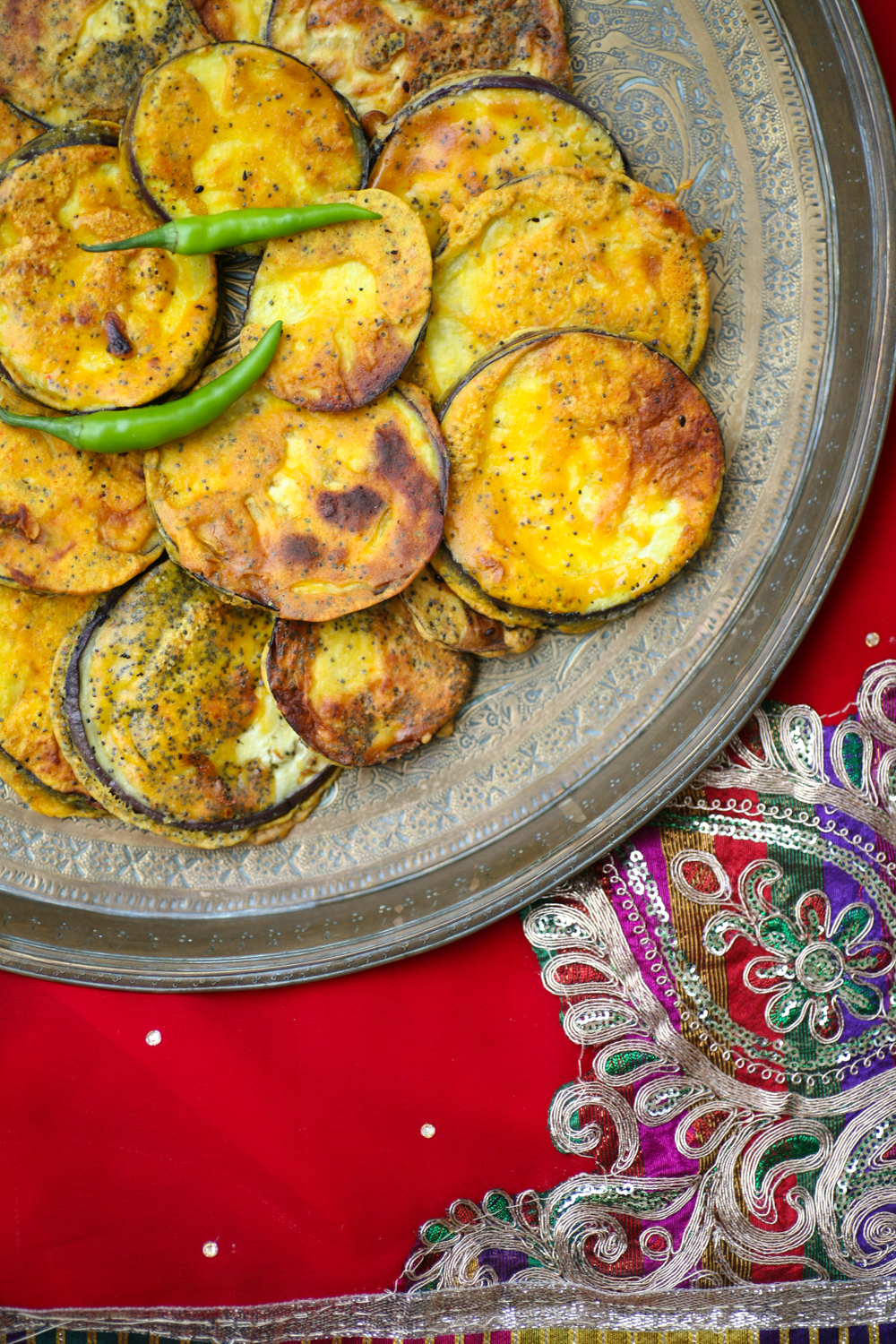
After the excessive eating around Easter time, which always happens when my family gets together for a few days, it was time to detox a little and by that I mean eat vegetable-only lunch and suppers. If you are a vegetarian, eating and cooking Indian food holds so many delicious possibilities, in fact it would be really easy to be a vegetarian in India as all the vegetable dishes taste so good and in many cases better than their meat and fish counterparts. Anyway after a few days of worthiness we did cook one dish, or perhaps I should call it a snack, that was perhaps a little less healthy – as they are fried – but are very addictive.


IMG_9061

They are incredibly moorish and the perfect accompaniment when eating rice/chapati and dal. The trick is to eat them within a couple of minutes of being cooked as they are not as tasty once they become cold. When eating Indian food with my family at home I tend to eat with my right hand – why? – well I find the food actually tastes better, although be careful not to over eat as it is easy to eat more this way ;o). Eating a thicker dal (not the overly soupy kind) and chapati with these fried spiced aubergines is one of lives pleasures. Have a go and you’ll know what I mean. They may not be pretty but they do taste rather good.

IMG_9070

To cook these little beauties follow these simple instructions:


Fried Indian Spiced Aubergines

4-6 people depending on the size of your aubergine

1 aubergine

100g chickpea/gram flour

100ml water

1/2 tsp chilli powder

1/2 tsp turmeric powder

1 tsp salt

2 tbsp poppy seeds/sesame seeds

2 tbsp vegetable oil


1. To make the batter mix the flour and water together. You want to get the right consistency – not too watery and not too thick so add a little more water/flour as you see fit.

2. Add the turmeric, chilli powder, poppy seeds/sesame seeds and salt and mix into the batter.

3. Slice the aubergine into thin circles – approximately 1cm in diameter. If they are too thick they will not cook through properly.

4. Place the aubergine slices into the batter, a few at a time.

5. Add the vegetable oil to the frying pan on a medium heat. When it is hot add a few of the aubergine slices. Fry on both sides for around 3 minutes per side.

6. Once bronzed place carefully on some kitchen roll and serve immediately with more salt as required.


Spiced Aubergine, Cavolo Nero and Mushroom Spring Rolls

IMG_8913

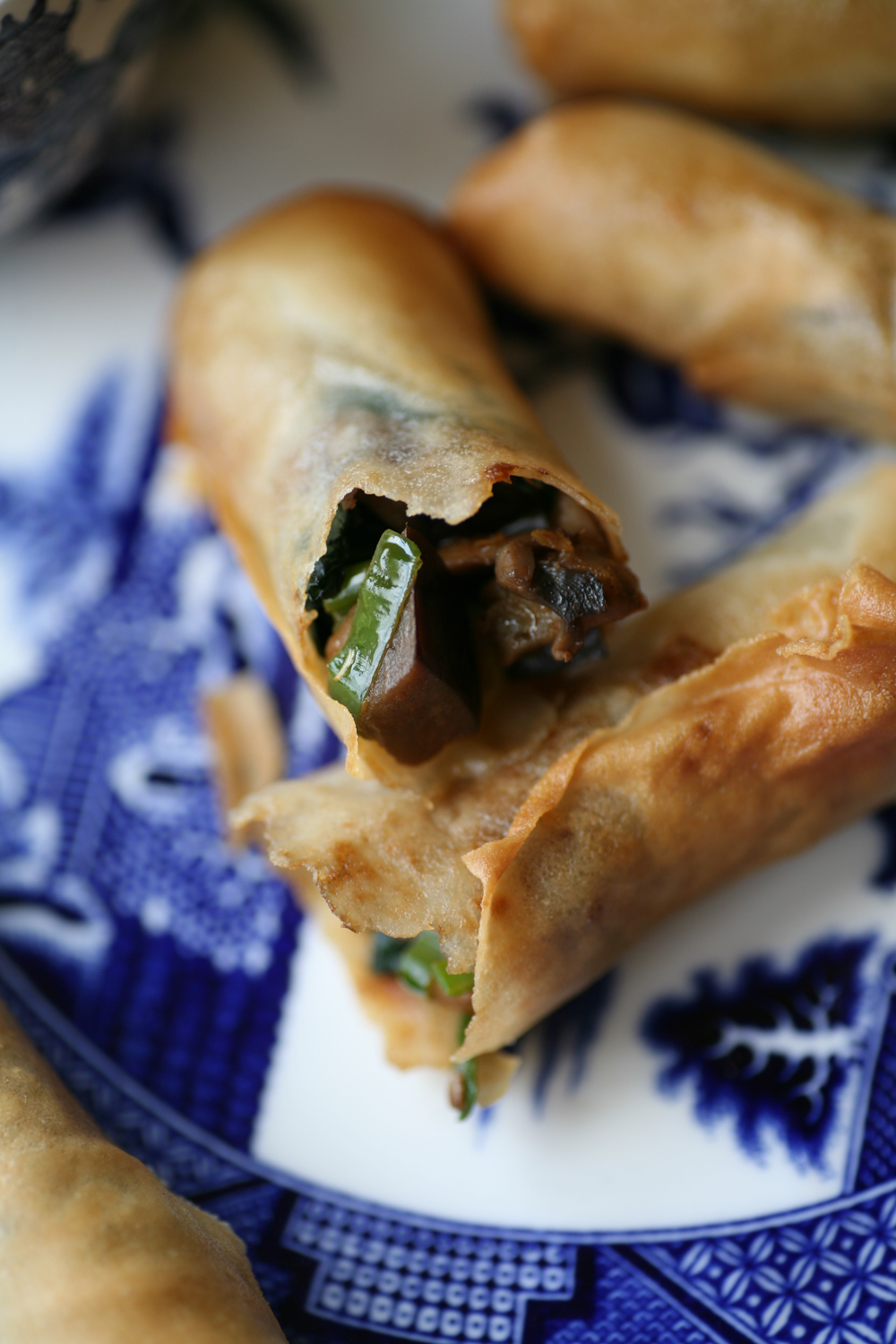
It’s the Easter holidays so my daughters have some wonderful leisured weeks ahead of them. They love to cook too so we decided to make these spiced aubergine, cavolo nero and mushroom spring rolls together. Rolling spring rolls is a great communal activity and actually rather calming and therapeutic. It is very satisfying to make a tightly rolled and neat spring roll – seriously you’ll know what I mean when you give this recipe a go.

IMG_8940

I hope that it gets a big thumbs up from all my vegetarian and vegan followers. The filling is deliciously tasty and even if you do like your meat I think you will be pleasantly surprised by how tasty these little spring rolls actually are.

IMG_8881

Once the filling has been prepared  and roasted the actually filling of the spring rolls is relatively quick. You can make them ahead of time and then leave them in the fridge until you are ready to fry them. Equally you could freeze them to use in the future – they are pretty versatile. IMG_8886

I adore cavolo nero and added to the aubergine, mushrooms and the spiced sauce, it makes for a very tasty filling.

IMG_8901

The trick to rolling spring rolls is to keep the rolls tight and well folded so that none of the filling escapes when frying. Don’t overfill or you may find the rolls cannot be rolled tight enough – I know it’s tempting but do restrain yourself ;o)

IMG_8912

Frying takes a couple of minutes and I tend to do a few at a time. Once they have bronzed, remove from the oil and place on some kitchen roll to cool and to soak up any excess fat. Diving in too quickly will burn your mouth, so let them rest for a short while before feasting. I like to dip them in tamarind chutney or some chilli sauce – the recipe for the former is noted below.

IMG_8925

Spiced Aubergine, Cavolo Nero and Mushroom Spring Rolls

Inspired by a similar recipe from Wild Garlic, Gooseberries and Me by Denis Cotter

Makes 22 rolls

1 aubergine (weighing 300g), diced

200g cavolo nero (black kale), chopped  and stalks removed

100g mushrooms, roughly chopped

1 tbsp olive oil

1 tsp tomato puree

2 tsp light soy sauce

1/2 tsp caster sugar

2 spring onions, thinly sliced

1/2 large red chilli, deseeded and finely sliced

1 tbsp coriander seeds

4 cloves

pinch of fresh nutmeg

22 spring roll pastry sheets

vegetable/sunflower oil for frying

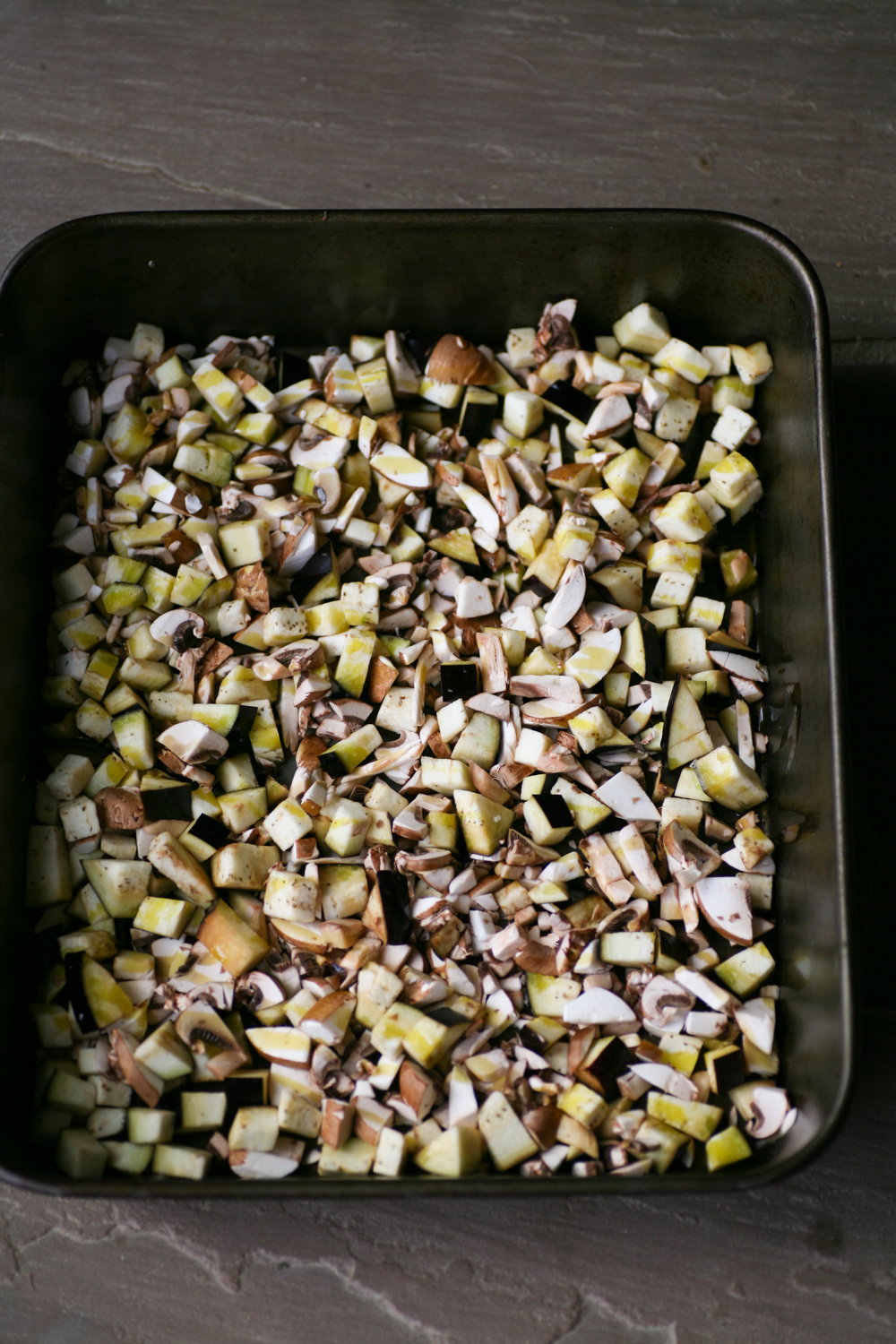
1. In a roasting tray layout the aubergine and mushrooms and scatter with a little olive oil. Roast in oven for 15 minutes, tossing at intervals so that all the ingredients cook and soften.

2. Whilst the aubergine and mushroom are roasting, heat a pan of boiling water and submerge the cavolo nero within it. Cook for 1 minute before straining under cold water and squeezing out the excess water from the cavolo nero. Place to one side on some kitchen paper to dry out thoroughly.

3. Mix the soy sauce, light soy sauce and caster sugar together and when the aubergine and mushrooms are sufficiently cooked transfer them to a bowl and mix in the sauce using a spoon.

4. Using a spice mix or pestle and mortar grind the coriander seeds and cloves together and add the nutmeg. Transfer these and the sliced spring onions and finely sliced red chilli also to the bowl along with the now dry cavolo nero.

5. Lay out a spring role pastry sheet and using your finger or a brush lightly wet the sides of the square. Add a tablespoonful of the aubergine, mushroom and cavolo nero mix towards the bottom of the sheet and then fold over tightly once and then fold in both ends   so that the roll is tightly packaged and then roll until the sheet has been used up. The water that you place on the end will sufficiently hold the spring roll together when cooking.

6. Once all the filling has been used up, heat a deep pan with sunflower/vegetable oil and when it is hot (drop a pinch of flour into it and if it fizzles it is ready) add a couple of the spring rolls at a time. They should take around 2 minutes each to cook. Once they have lightly bronzed place on a plate with kitchen roll to soak up any excess oil.

*************

Tamarind Chutney

Makes half a ramekin full

1 tsp roasted cumin seeds, ground

1 tbsp vegetable oil

2 tsp tamarind concentrate

500ml boiling water

45g palm sugar

1 tsp salt

1. In a pan dry roast the cumin seeds for 30 seconds so that the aromas are released. Place in a pestle and mortar or spice grinder and grind to a powder.

2. In a deep pan add the oil and when it is hot add the ground cumin and move around the pan.

3. Add the tamarind concentrate and boiling water and stir so that the concentrate is dissolved. Keep on a medium heat.

3. Add the palm sugar and salt and allow to dissolve into the liquid.

4. Simmer for 25 minutes by which time the liquid will have thickened, although it will still be relatively runny. As it cools it will begin to harden.

5. Store in the fridge in a sealed container for up to two weeks if not consuming immediately.


Mustard, Coconut and Colombo Spices Salmon Curry

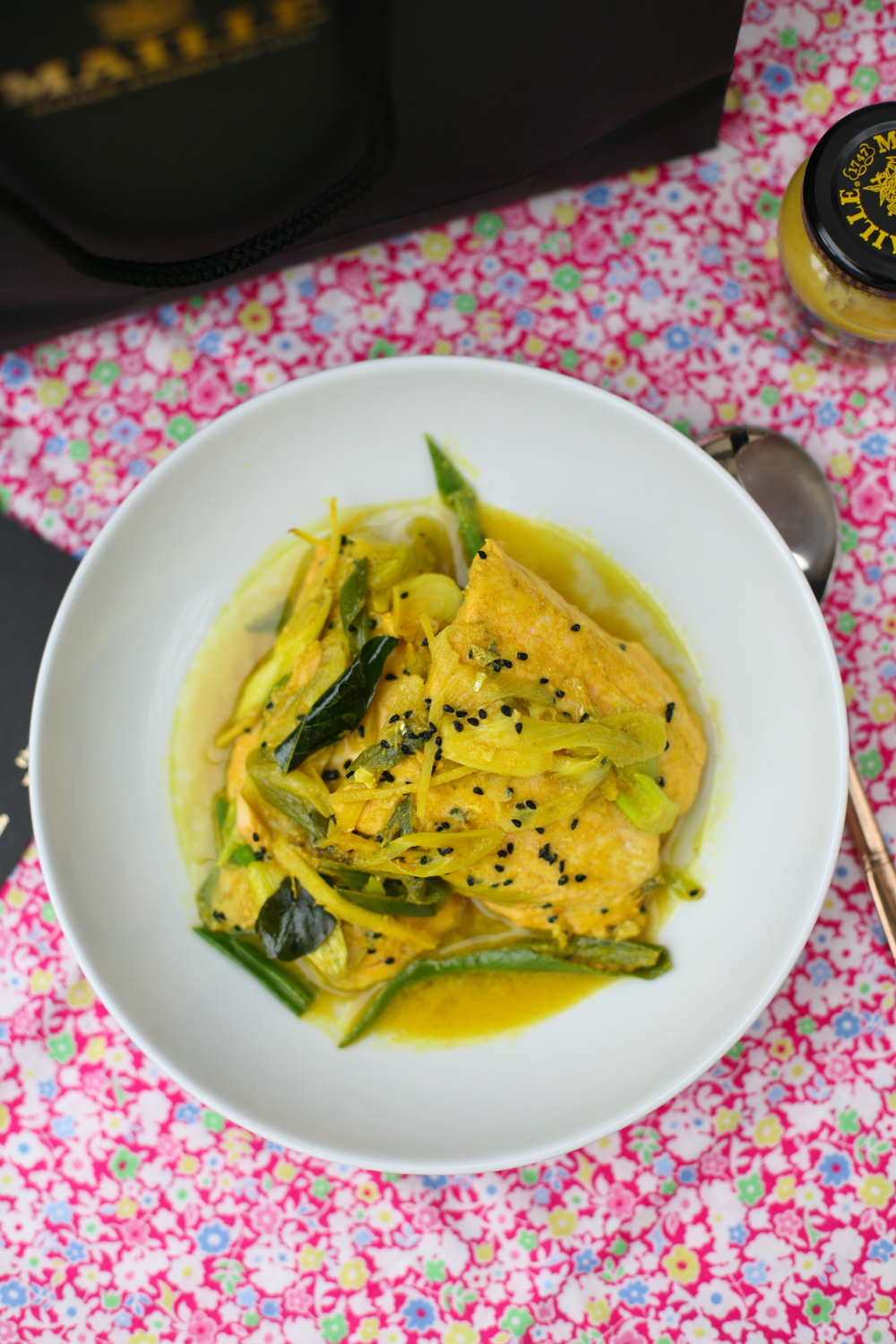
IMG_8841

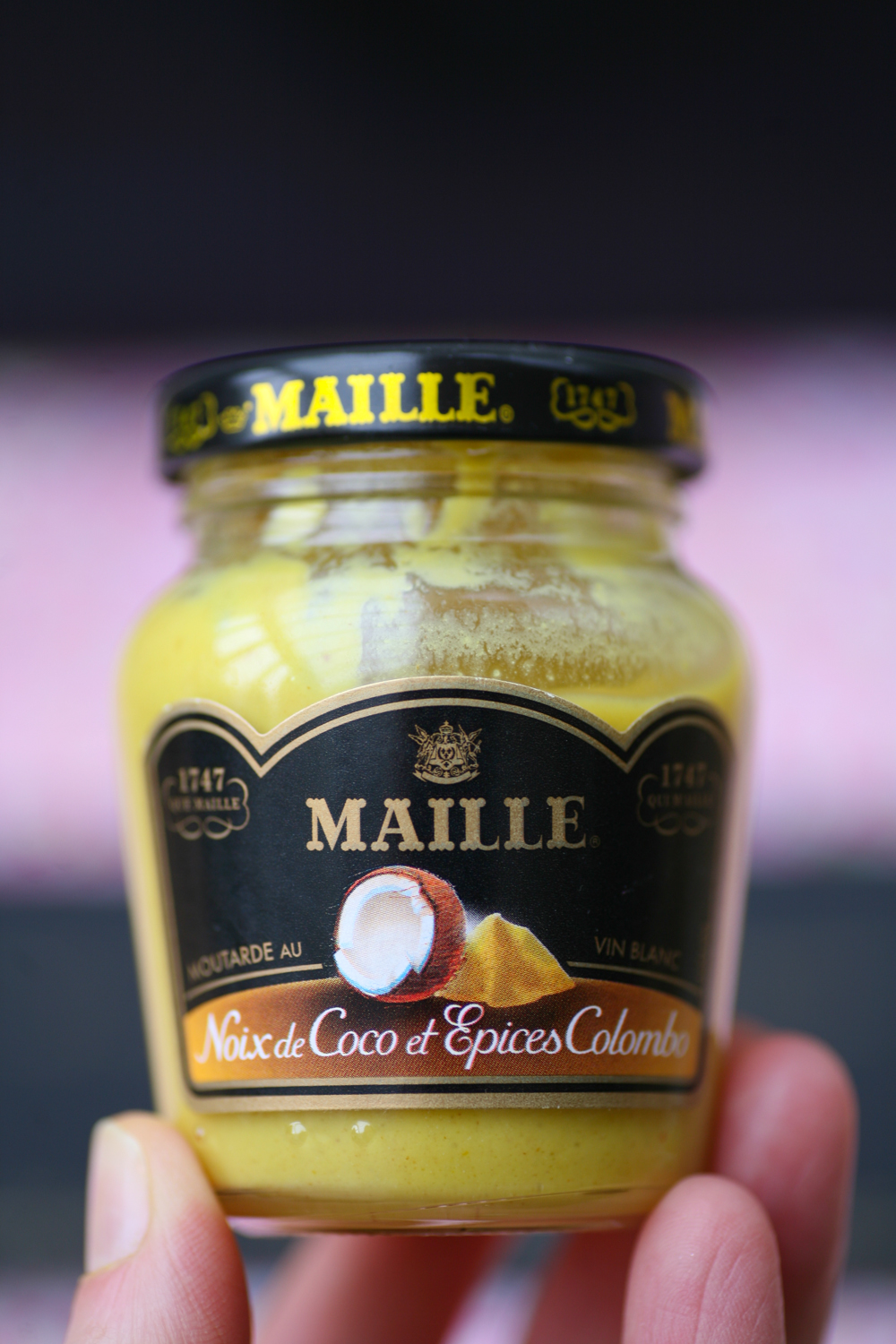
A couple of weeks ago I was approached on behalf of Maison Maille the purveyor of fine mustards, oils and vinegars, who have been in existence since 1747 and who have recently opened their first London store at 2 Piccadilly Arcadeto be part of the ‘Maille Culinary Challenge‘. It’s open for food blogger and food reviewers and as such I thought I would throw myself into the challenge and create a dish using one of their products in a recipe that I have devised especially for them and which I hope my readers will try and make.

IMG_8852

The recipes entered will be judged on four main criteria: creativity, originality, taste and visual appeal. I hope the curry I have created ticks all the boxes and in addition is easy for others to attempt to make at home. There is nothing more frustrating when you see a fabulous recipe but to create it involves so many steps and ingredients that it actually puts you off.  I want my recipes to be user friendly and to actually encourage people to cook and try new flavours and tastes. There is a whole flavour universe out there waiting to be sampled so be courageous and follow the simple steps below to try this recipe.

IMG_8863

Using mustards, in fish curries in particular, is very common in Bengal where my husband originates from and so I thought that would be a good starting point when coming up with a recipe. I was immediately attracted to the mustard that had coconut and Colombo spices as I thought that they would work really well in a curry. Unlike some coconut curries, which are very creamy, this curry is far more delicate and light and perfect for spring time. I was also conscious not to suppress the wonderful flavours of the mustard, so chose a range of ingredients that I believe complement the mustard perfectly. I hope you agree. Do leave a comment below and let me know what you think. Let’s see what the judges say. Fingers crossed!

IMG_8877

Mustard, Coconut and Colombo Spices Salmon Curry

Serves 4

3 tbsp vegetable oil

1 tsp nigella seeds

2 green chillies, halved lengthways

10 fresh curry leaves (or dried if you cannot find fresh)

15g of fresh ginger, cut into wafer thin batons

2 spring onions, sliced at an angle

1 tsp ground turmeric

600g salmon fillets (5 pieces)

200ml boiling water

2 tsp Maille Noix de Coco et Spices Colombo

1 tsp salt

1/2 tsp caster sugar

1. Gently heat a wide deep pan or karahi with 3 tbsp of vegetable oil. When it is hot add the nigella seeds and move them around the pan and then immediately add the fresh chilli, curry leaves and turmeric. Stir together and then add the ginger and spring onions. Toss in the pan for a minute.

2. Add the salmon fillets – skin side down – and leave them to gently bronze for a further minute. Do not keep touching them as you do not want them to break up.

3. Mix the Maille Noix de Coco et Spices Colombo with 200ml of boiling water and stir thoroughly. Add to the pan so that the salmon fillets are virtually covered.

4. Add the salt and caster sugar and stir gently into the sauce. Spoon some of the liquid onto the salmon and then place a lid on the pan and leave to simmer for 10 minutes. Continue to spoon the liquid onto the salmon fillets a couple of times during the ten minutes. (Depending on the thickness of your salmon the fillets should be cooked by ten minutes. If, when gently cutting into the fillet, it looks a little pink leave for a further couple more minutes with the lid on the pan).

Serve with basmati rice.

******************************

If you are not going to be in London town anytime soon you can order from Maille online HERE if you are based in the UK or France. A few products are on the US site which you can find HERE with more to be added next year.

Thank you to Maille for kindly providing me with the mustard for this post and also the ‘sweet apricot and curry mustard’, which I hope to use in a new recipe soon. 


Spiced Chickpea and Coriander Soup and Spinach Pakoras

IMG_8826

 I had some fresh spinach in the fridge what was beginning to turn so thought that making some spinach pakoras would be the perfect way to save them and accompany my homemade chickpea and coriander soup. I always have tinned chickpeas in my store cupboard as I find them so useful to throw into a number of dishes, be it a casserole, soup or salad. Similarly I had some fresh coriander that needed eating so decided to throw them into the soup as well to add a lovely balance.


IMG_8808

This whole meal takes a short time to prepare so is great to cook for a light lunch or a speedy supper when you have had a hard day at work. The soup does have a very satisfying kick, so if you prefer a less chilli buzz just reduce the amount of dried chillies you use. If you do use the same amount as me you’ll find that the yoghurt softens the chilli a little making the soup very satisfying and delicious.

IMG_8835


Pakoras – vegetables dipped in a spiced batter and then fried – are a hugely popular snack in the Indian sub-continent. Whilst perhaps not the most healthy out there they are extremely moorish and addictive.  In India you will find numerous street stalls selling them in little paper cones, similar to the one that I prepared for the photos above.  They are rather similar to my coriander fritters which I posted a couple of years ago on this blog – see here. Get creative and try making them with a mixture of vegetables. I’ll show you how to make different types in time. Watch this space.


Spinach Pakoras

Serves 4

75ml water

80g chickpea flour

1 pinch of baking powder

1 tsp turmeric

1/4 tsp Kashmiri chilli powder

1/2 tsp salt

160g fresh spinach, roughly chopped

vegetable oil for deep frying

1. To make the batter mix the water, chickpea flour, baking powder, turmeric, chilli powder and salt together in a bowl. If the batter is still a little too thick simply add an extra drop of water.

2. Add the fresh spinach leaves to the bowl of batter and mix in thoroughly.

3. In a deep pan or karahi heat some vegetable oil. When it is hot – you can test by placing a pinch of flour into the oil and if it fizzes then it is ready, add a tablespoonful of the spinach batter. Depending on the size of your pan you can do a number at a time. Leave the pakora to cook for a minute before turning over for a further minute. They should have gently bronzed by this time.

4. Place on a plate with kitchen paper to soak up any excess oil. Eat whilst still hot.

*******************

Spiced Chickpea and Coriander Soup

Serves 6

4 tsp coriander seeds

2 tsp cumin seeds

5 large dried red chilli

2 tbsp desiccated coconut

****

4 tbsp olive oil

650g fresh tomatoes, boiled to remove the skins

50g fresh coriander

2x400g tins of chickpeas, drained and pureed using a hand blender

1 tsp turmeric powder

900ml water

6 tbsp yoghurt

juice of 1 lemon

salt to taste

1. Place the cumin and coriander seeds and dried red chilli in a warmed up frying pan and move around the pan for a minute to realise the flavours. Place into a spice grinder along with the desiccated coconut and whizz to form a powder.

2.  Having removed the skins of the fresh tomatoes (I find boiling them for a couple of minutes allows the skins to be easily removed) place them in a blender along with the chickpeas and fresh coriander.

3. Heat the olive oil in a large deep pan and when it is hot add the spiced powder along with the turmeric powder and stir around for 30 seconds before add the pureed chickpeas/tomatoes and coriander.

4. After a minute add the water and stir together well. Simmer on a medium heat for 15 minutes and then add the yoghurt, lemon juice and salt to taste.

Serve with the spinach pakoras on the side for a tasty vegetarian meal. I often tend to make chapatis as well to dip into the soup.


Rajasthani Kick-Ass Lamb Curry – Laal Maas

IMG_8766

Sometimes a kick-ass curry is what one needs to enliven the senses and to feel blessed to be alive. It also does wonders if you are suffering from a cold or feeling a little run down. This curry, known as Laal Maas – which in Hindi translates as  ‘red meat’ – is a traditional Rajasthani dish that is loved, adored and eaten in every Rajasthani household. My version is not ‘blow your brains out’ chilli hot, although it does have more heat than the majority of my Indian curries on my blog.  I think if you generally like spice then this will appeal. If you are more of a korma person then I would give laal maas a wide berth.

IMG_8745

I cooked it earlier in the week when I had a bunch of friends over for supper and not one lamb morsel or spoonful of sauce was left. I served it with an ivy gourd/tindora/gentleman’s toes curry – see recipe here as I felt they would compliment and not overpower one another. I also made some pakora with some homemade coriander chutney and tamarind and date chutney – recipes for all of these I will post soon.

IMG_8728

Rajasthani cooking is traditionally a lot spicy than Bengali and this dish clearly demonstrates this. It is not a hot as you may think, largely owning to the Kashmiri chilli powder that is added which gives the curry a deep red colour but not so much heat that it is difficult to eat. The yoghurt also tones the down the heat making it enjoyably palatable. Not one of my guests requested milk to deaden the heat or were perspiring uncontrollably. So give it a go. I like to cook it earlier in the day and then gently reheat before serving. I find that leaving it to rest a while before reheating also calms the heat so don’t stress if you taste a spoonful when it is cooking in the first instance as it will calm down if it is left for a few hours.

***********

Laal Maas – Rajasthani Kick-Ass Lamb Curry

Serves 6

125ml vegetable oil

2 tsp cumin seeds

6 cloves

6 fresh red chillies, storks removed (you can also used dried – see footnote)

1/2 mace blade

6 green cardamom pods, opened

2 black cardamom pods

2 large red onions, thinly sliced

1 tbsp garlic paste

1 tbsp ginger paste

1.2kg lamb, diced

2 tsp Kashmiri chilli powder

1 tsp turmeric powder

2 tsp salt

250g plain yoghurt, whisked

coriander to serve – optional

1. Using a pestle and mortar (or a bowl and the end of a rolling pan if you do not have one), gently bash the green cardamom pods so that they open and some of the seeds come out. Place to one side. If you are making your own ginger and garlic paste I find gently grating them first is the best way to form a paste. Add a drop or two of water to make a more paste like consistency. For this recipe I used a jar of garlic paste and ginger paste for ease and speed.

2. In a large pan or casserole dish add the oil and when it is hot, but on a medium heat, add the cumin seeds and move them around the pan for 30 seconds to allow the flavours to open up.

3. Add the chilli, the green and black cardamom pods, mace blade and cloves and continue to move around the pan for a further minute.

4. Add the sliced onion and cook on a low heat for 6-8 minutes, by which time the onion will begin to brown in colour.

5. Add the garlic and ginger paste and stir in well with the other ingredients and leave to cook for a further 5 minutes.

6. Now add the diced lamb and completely coat in all the ingredients. Add the turmeric, Kashmiri chilli powder and salt and leave to cook gently so the lamb has browned – this will take up to 10 minutes.

7. Place the whisked yoghurt into the pan and fold into the lamb. Cook for a further 5 minutes, before reducing the heat and allowing the lamb to simmer in the sauce for 40 minutes. Continue to stir intermittently.

8. Ideally cook this curry at least a few hours before serving allowing the curry to rest. When you are ready to eat gently reheat and if you like scatter with coriander before serving.

Serve with Basmalti rice or Indian flat bread to mop.

The same curry can be made easily with either chicken or goat. 

You can also used dried Kashmiri chillies. Best to soak them in warm water for 10 minutes and then either keep them whole or blitz them to make a coarse paste. 

*********


Chicken, Ginger and Spring Onion Gyoza/Jiaozi/Pop Sticker

IMG_8706

Mention the worked ‘gyoza’ in my household and you will hear yelps of delight – and that’s not just from the children. These moreish savoury dumplings are incredibly addictive and are a great little starter or snack, although you can off course have them as a main meal along with some steamed greens with soy and garlic perhaps.

Japan and China both have their version of the dumpling, although these dumplings first originated from China and were then adopted by the Japanese. The Chinese dumplings are known as jiaozi if they are boiled or steamed and guo tie if they are fried, in Japan – gyoza and the US – pot sticker.

The Chinese variety have slightly thicker wrappers and have a far wider combination of fillings than their Japanese counterparts. They are often steamed, whereas the Japanese gyoza are fried for a few minutes and then steamed for a further few minutes. The fillings I typically use for the vegetarian are tofu and shiitake mushrooms, or the meat variety filled with pork, chicken or duck or the seafood version, which tends to be prawn. Whatever takes your fancy these little dainties will be forever cherished by those who sample them.

IMG_8670

Now the question is to lovingly prepare your own wrappers or to buy some from your local Asian grocers or online. Basically it will come down to time on your part. Making your own takes a little time, but its the perfect activity to do with a mate who comes over for coffee – just rope them in they’ll love the experience or even with the kids. Shop bought is pretty cheap, as you can see for the price sticker I left on above, and are likely to be more uniform in thickness, but I’ll leave it to you to decide which suits your lifestyle.

IMG_8662

For those who wish to make their own it is SO simple. Seriously you only need a couple of ingredients and then a bit of kneading.

IMG_8653

Homemade Gyoza Wrappers

Makes around 20

210g plain flour, seived

125ml warm water

 pinch of salt

1. Stir the salt into the warm water until it completely dissolves.

2. Place the sieved flour into a large bowl and add the warm water. Using a wooden spoon mix the flour and water together and then use your hands to create a ball.

3. Kneed the dough on a cold surface for around 10 minutes, when it will be soft and springy to touch. Sprinkle more flour onto the dough if it is getting too sticky.

4. Wrap in cling film and place in the fridge for 30 mins.

5. Take small balls of the dough – about the size of apricot – and flatten it with your hand. Gently roll the dough into a round shape, turning it after every roll. Using a round cookie cutter (or the bottom of a saucer) cut out a round circle and cover gently with flour and place in a pile.

6. Continue until the dough has been used up. You should make around 20 dough wrappers with the proportions above. Whilst you prepare the filling place a damp cloth over the wrappers so they do not dry out.

IMG_8655

So now you have the wrappers ready to go you need to prepare the filling. Whether you want to use chicken, pork mince, prawn, duck or shiitake mushrooms and tofu the rest of the ingredients remain the same.

IMG_8680

Whilst using Chinese cabbage is the most authentic, use whatever green cabbage you have in your fridge. Place two large leaves in a pan of boiling water for 1 minute and then drain and pat completely dry with kitchen paper. You then want to slice and cut them up as small as you can. You can blitz everything in a blender but I tend to often take the slightly slower version of cutting by hand. Today I used chicken and as I tend to find minced chicken hard to source so I bought boneless chicken thighs and cut up them up into small pieces. I also added spring onions, chopped garlic, finely grated ginger, soy sauce, sesame oil, salt and pepper and hey presto you have your filling. You can get creative and add any other ingredient you think might work – how about carrot, fresh chilli, five spice.

IMG_8687

Wrapping the dumplings is rather satisfying and you will begin to get into a rhyme with them. Don’t overfill the gyoza, instead putting a teaspoonful in the centre and then, using your finger tip, wet the low half rim of the circle. You then want to fold over the gyoza in half and then begin to pleat from left to right, making sure the filling is securely inside the parcel. It is definitely a case of the more you do the better you become. My 8 year old is a complete natural and can do multiple pleats across the top. You only pleat one side of the gyoza s0 do not turn over and attempt to do more on the other side.

IMG_8721

The above photo shows half of the gyoza pleated. I finished doing this row, but did not turn it over to attempt to do the other side. To pleat you simply use your thumb and forefinger to make small pleats going over the last. Make sure you press the top together so that it is firmly stuck together – you don’t want them opening up in the pan.

IMG_8693

So you can see some are neater than others above. They will still taste delicious even if you haven’t got the perfect symmetrical pleating!

IMG_8708

Dumpling Filling

to fill around 20 dumplings

2 large leaves from a green cabbage/Chinese leaf cabbage

2 garlic cloves, finely sliced

20g ginger, peeled and finely grated

3 spring onions, finely sliced into small pieces

1 tsp sesame oil

1 tsp soy sauce

1 tsp mirin rice wine

275g boneless chicken thighs/or chicken mince (or duck, pork mince, tofu and shiitake mushrooms)

100 ml water

************

Dumpling Dipping Sauce

3 tsp rice vinegar

6 tsp soy sauce

1 tsp chilli oil (optional)

1 tsp sesame seeds

**********

1. Finely chop all of the ingredients and then bind together using your hands.

2. Place a heaped teaspoon of the ingredients onto one of the wrappers in the centre.

3. Wet the rim of the lower half of the wrapper using your finger.

4. Fold the wrapper in two and then pleat from left to right across the top, making sure to firmly seal the top of the wrappers.

5. Bend the wrapper slightly so that it is in a crescent moon shape and so it can stand up unaided. Place to one side whilst you prepare the rest.

6. Using a large nonstick pan add a tablespoon of sesame oil and when hot add the dumplings so that they are standing up and not sticking to one another. Fry them for 3 minutes, by which time they will have bronzed underneath. If they have not bronzed sufficiently leave them to fry for a little longer.

7. Add 100ml of water to the pan and place a lid on the top. Leave to steam for a further 3-4 minutes so that the water has completely dissolved.

8. Mix the ingredients of the dipping sauce together and then place to one side in a little bowl.

9. Serve immediately with the dipping sauce.

IMG_8719


Boneless Southern Indian Chicken Curry

IMG_8635

I am guessing that most households will eat chicken at some point in an average week and whilst I do cook a number of chicken curries on the bone, it is always good to have some boneless chicken curries up your sleeve that you can whip together relatively quickly on a given evening. Cooking meat on the bone allows the meat to be more tender and succulent, but that said I know that having bones in a meal can really put some eaters off. So I hope this curry will be a happy compromise in that it is tasty, quick and bone free, therefore perhaps appealing to a wider audience.

IMG_8632

Whilst it does contain coconut milk the tomatoes balance out the sweetness to the extent the coconut doesn’t dominate this dish, instead giving it a subtle creaminess. I also find that adding just two chillies allows my eldest child, who is 8 yrs old, to really enjoy eating it as she does not find it too spicy. So if you find yourself wondering what to do with some chicken breasts in the fridge over the course of next week give this south Indian curry a go, you won’t be disappointed.

Boneless Southern Indian Chicken Curry

Serves 4

650g chicken breasts or thighs, cut into bite sized morsels

1 level tsp of turmeric powder

1/2 tsp of Kashmiri chilli powder

2 tbsp vegetable oil

1 tsp black mustard seeds

1 red onion, chopped

2 inches of ginger, peeled and finely grated

4 garlic cloves peeled and finely grated

************

curry paste

2 green chillies, chopped

1 red onion, chopped

3 garlic cloves, chopped

1 inch of ginger, peeled and chopped

1/2 tsp of black peppercorns

1/2 tsp ground cumin

1 tsp ground coriander

2 tbsp water

****************

5 tomatoes, peeled, skinned and chopped (put in boiling water for 3 mins then peel easily)

 2 limes, juice

250 ml coconut milk

salt to taste

fresh coriander leaves to serve

1. First marinate the chicken breasts at room temperature for up to an hour. Mix thoroughly with the turmeric and Kashmiri chilli powder and cover.

2. Prepare the chopping and grating of the onion, garlic and ginger for both the paste and the sauce and place to one side.

3. Place all the curry paste ingredients in a blender and blend into a smooth paste. Add a little more water if it needs help reaching a smooth quality. Place to one side.

3. Heat up a large pan with the oil and when it is hot add the mustard seeds. They will begin to pop within about 20 seconds  – move them around the pan to release the fragrance and then add the onion and stir into the oil and seeds. Cook the onions for 5 minutes, by which time they will begin to soften before adding the garlic and ginger. Cook for a further minute before adding the curry paste and stiring thoroughly. Let simmer away for a further couple of minutes.

4. Add the chicken and stir into the sauce so that it is coated and begins to cook. After 8-10 minutes the chicken should have turned white, with no pink bits remaining, and will begin to bronze in places.

5. Add the softened tomatoes (you can remove the pips but I tend to use it all up, bar the skin!), lime juice and coconut milk and simmer for a further 20 minutes to allow the flavours to work together and for the chicken to be thoroughly cooked through. Season to taste.

If the sauce needs to be juicier then simply add a little water. If it is too juice then cook with the lid off for a little longer.

Serve with fragrant rice or some Indian flat bread.

IMG_8629


Chickpea, Chorizo and Cod Stew with Fresh Parsley

IMG_8582

My household are on a bit of a cod roll this week. There’s rather a lot of it in the freezer so we decided to cook cod a different way for three nights running – a little bit of a challenge and to prove that you can cook with the same key ingredient in different ways and make it taste completely different. Yesterday it was a Kerala fish curry with my toor dal and tonight we are having my three C stew; the three C’s being chickpea, chorizo and cod. It’s so darn delicious you’ll have to have especially strong willpower to stop yourself picking up your plate and licking every last drop of sauce. I find serving it with fresh crusty bread normally works a treat where mopping is concerned.

IMG_8577

Like most of the recipes on my blog it is very straight forward and if you don’t eat meat you can simply leave out the chorizo as you will still get the wonderful smokiness from the sweet paprika. The basic sauce can be cooked in advance and then the cod added five minutes before you are ready to eat, so it’s also perfect if you are cooking for a crowd and want to just enjoy the moment instead of slaving over a stove when they arrive. I also find that it works well as a very comforting and satisfying mid week meal. In fact it’s perfect to eat at any time, although I would probably pass if it were served at breakfast.

IMG_8589

Like a good old Victoria sponge cake there are many versions of cooking this dish, but here is mine. Let me know what you think. Oh and for those wondering what I will do tomorrow night, well I’ll probably do a tom yam broth with cod instead of prawns or maybe my Cha Ca La Vong – recipe here we’ll see which way the wind will blow in the morning.

Have a good weekend folks.

Chickpea, Chorizo and Cod Stew

Serves 4

3 tbsp olive oil

1 large white onion, chopped

4 garlic cloves, sliced

150g spicy Spanish chorizo, sliced or cubed

1 tsp sweet paprika

1 tsp rock salt

1/2 a 400g tin of plum tomatoes

1 tsp of tomato puree

100ml red wine

300ml boiling water

2 tsp agave nectar (or caster sugar)

400g tin of chickpeas, drained (240g after drained)

500g cod, skinned and cut into 2cm cubes

handful of fresh flat leaf parsley, roughly chopped

optional: bread for mopping up the juices

1. In a large pan heat the olive oil on a medium heat and when hot add the onion and fry gently for 5 minutes before adding the garlic and cooking for another 3 minutes so that the onion is soft and beginning to bronze.

2. Add the chopped chorizo and continue to fry for a further 3 minutes. Add the sweet paprika, rock salt and stir into the ingredients, which will have taken on a deep red colour.

3. Add the plum tomatoes, which you then need to cut up, red wine, tomato puree, boiling water, chickpeas and agave nectar. Let the sauce gently bubble away for 20 minutes. If it becomes too dry add a little more boiling water. Taste and see if you like the balance of sweet and salty, adjust if necessary.

4. Five minutes before eating add the cod and cover with the sauce. Do not stir too much as you do not want the cod to flake. If you can place a lid on the pan as it will allow the fish to cook through nicely.

5. Serve into bowl/plates with a scattering of fresh parsley on top and fresh bread to mop up the sauce.