Vegetarian Ma Po Tofu


OLYMPUS DIGITAL CAMERA

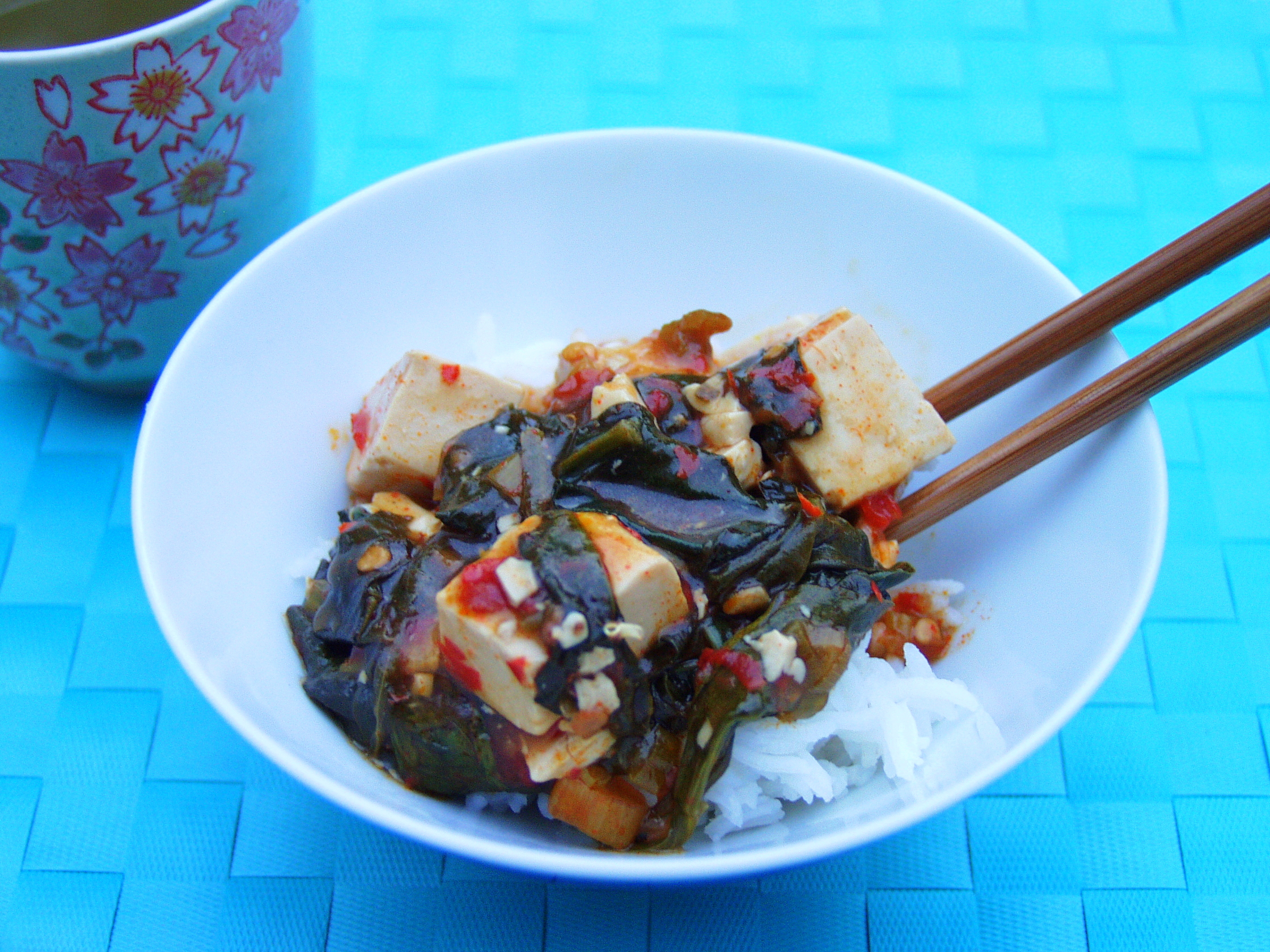
In my first months of blogging, way back in the middle of 2011, I posted one of my absolute favourite recipes, Ma Po Tofu, which is a Sichuan classic and is seriously addictive – if you like chilli that is. It is incredibly easy to cook and after a manic day it is the perfect pick-me-up-food that takes no time to prepare. Over the years however, I have found that I am increasingly making it without the pork mince element and keeping it to a more vegetarian dish by including simply tofu and fresh (or sometimes frozen) spinach.

Recently in Hong Kong I began to judge eating establishments on how well they could cook Ma Po Tofu and Dan Dan Noodles as I had a acquired a taste for both dishes.

OLYMPUS DIGITAL CAMERA

Tofu I know divides opinion, but I am definitely in the camp of someone who loves it. It wasn’t an immediate love affair, but one that has grown over time to the extent that I always have tofu in the house, ready and waiting for me to make a last minute Ma Po Tofu dish or my other favourite tofu dishes, roasted harlequin squash with tofu, kale and coriander in a miso curry paste, black pepper tofu and soba noodles with tofu, aubergine and mango. Seriously give them all a try – I don’t think you’ll be disappointed.

OLYMPUS DIGITAL CAMERA

Tofu, or bean curd as it is also known, is hugely nutritious, versatile and a great vehicle for flavour. It’s rich in protein and low in fat, especially saturated fat. Yes, eaten on its own it is rather plain, but the point of tofu is to incorporate it with other flavours which it will help to enhance and lift. There are a myriad of different types of tofu, but the one I tend to use the most is ‘firm, silken tofu’ . I am going to be cooking some more tofu dishes over the course of this year, hoping that I may convert a few followers to the joys of tofu eating.

So here is what you need for the vegetarian version of the dish.

OLYMPUS DIGITAL CAMERA

Vegetarian Ma Po Tofu

Serves 2/3

349g silken tofu (or a similar amount)

2 large handfuls of fresh spinach

1 tbsp vegetable oil

1 clove of garlic, finely chopped

2 spring onions, chopped

2 tbsp of chilli bean sauce (Lee Kum Kee’s I find works really well)

125ml of vegetable stock (fresh or a cube)

1 tsp shaoxing wine

1 tsp of soy sauce (light or dark)

2 tsp of sugar

1/4 tsp of sea salt

a good pinch of crushed Sichuan peppercorns

1/2 tsp of sesame oil

1. Cut the tofu into small (2cm) cubes and place to one side.

2. In a shallow pan heat the vegetable oil and then add the garlic and spring onions, stirring for around 30 seconds. Then add the chilli bean paste and mix into the garlic and spring onions.

3. After a minute add the vegetable stock, shaoxing wine, soy sauce, sugar and salt and bring to the boil.

4. Add the spinach to the pan and gently fold into the hot sauce.

5. Once the spinach has begun to wither add the tofu and carefully spoon the sauce over the tofu, making sure not to break up the cubes. Leave to gently simmer for a couple of minutes.

6. Serve into a large bowl and sprinkle the Sichuan peppercorns and sesame oil and gently mix together.

Serve alongside small bowls of rice and hot cups of piping Jasmine/Chinese tea.

Perfect for this cold snowy weather.


Macha Soul tea with Janice Leung and Satay Prawns with Garlic, Lemongrass and Spring Onions

OLYMPUS DIGITAL CAMERA
This blog post has been a long time coming and for that I apologise to you all. I initially wrote the post on the plane coming back from Hong Kong and was rather chuffed with myself as I had, for once, hours to compose and fine tune it.  I was really satisfied with the end result, but then tragedy stuck as I accidently deleted it upon my return owing to the fact that I wasn’t very familiar with my new computer. So this post is very much an abridged version of the original, which in hindsight was probably far too long and rambling anyway.

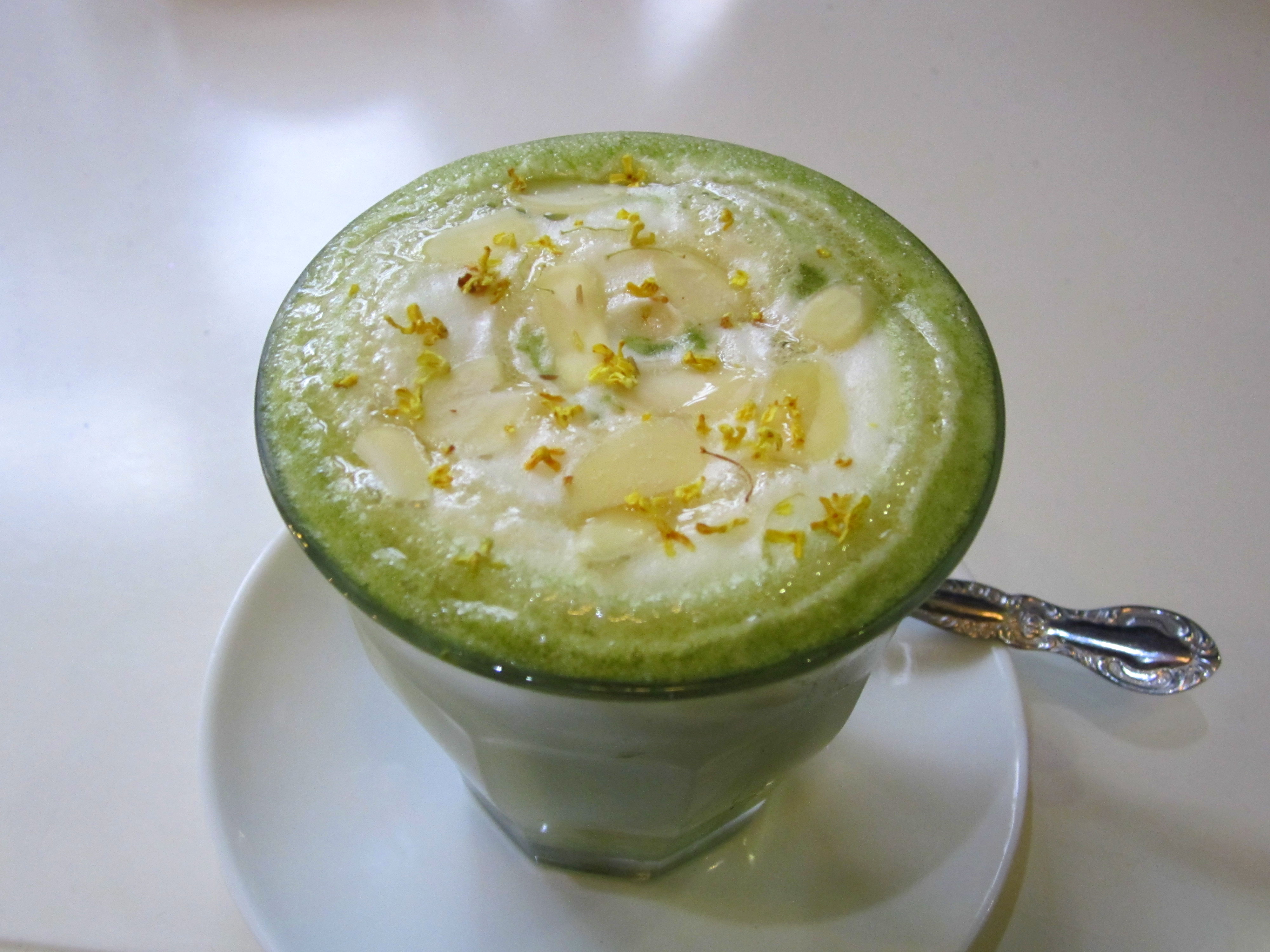
During my recent visit to Hong Kong I was fortunate enough to meet up with one of Hong Kong’s most dynamic food bloggers, Janice Leung, over a delicious cup of creamy ‘matcha soul’ tea, at a charming little tea house called Sinmei in Sheung Wan. Like many of Hong Kong’s gem eateries and cafes it was hidden on the 5th floor of a commercial building away from the hustle and bustle at street level. It was an oasis of calm and serenity with its mix of vintage Chinese and European furniture giving it a somewhat boho shabby chic vibe.

IMG_7166

Matcha soul tea at Sinmei
Prior to setting up her blog: e-ting food, Janice worked as Assistant Editor at Luxe City Guides, so knows her way around Hong Kong (and a number of other cities in fact) better than most. Most recently however Janice, along with her business partner Vincent Poon, have set up Island East Markets which is Hong Kong’s answer to an organic farmers market.
Janice’s motivation for setting up such an enterprise was down to the fact that she found it increasingly difficult to source good organic produce in Hong Kong; the nearest place for her was in Tao Po, over an hours journey from her house, or the  few stalls on Central Pier 7. Typically the fresh fruit and vegetables you see being sold in the various street markets in Hong Kong comes from mainland China where little or no knowledge is known about where or how it was grown and whether pesticides or fertilizers were used.
IMG_6960
A typical Hong Kong fresh vegetable stall
There was definitely a gap in the market to launch such an enterprise and having spent time traveling the globe as well as living and studying in Melbourne Australia, Janice had seen the positive effect that having a local farmers market had on the community and the farmers alike. She was keen to create an environment where people would want to spend time getting to know the vendors, trying the different foods on offer and a place that families could wile away a few pleasant hours on a Sunday.  As well as edibles and fresh produce, there is handcrafted goods made by local artisans, face painting for the kids and talented local bands. I also particularly like the idea that she has organised for local chefs to come and do food demonstrations using the local food on offer at the market to create delicious dishes that people can replicate at home.
There were a couple of key factors, however, that were paramount to the markets success; firstly she needed the support from the local organic farmers in Hong Kong – namely in the New Territories and secondly she needed a site. For the former she was directed to a body of around 70 farmers who were members of the Organic Farmers Association in Hong Kong, which is similar to the Soil Association in the UK. Using this list as a starting point she introduced the idea to the farmers who responded positively. The second factor could have proved tricky had the Real Estate company Swire Properties not offered them a site in Quarry Bay every Sunday. It was an incredible stroke of good luck that allowed the market to breath life. On Sunday’s the road is closed off to traffic and stalls are set up and a relaxed vibe is allowed to resonate.
So far the market has received a positive reception by vendors and customers alike and although it was closed over the Christmas period it opens up again from Sunday 27th January so if you are living or visiting Hong Kong in the future make sure you take some time out on a Sunday to visit Island East Markets on Tong Chong Street and see for yourself Hong Kong’s answer to an Organic Farmers Market, I know for sure that I will be paying it a visit upon my return in April, in fact I can’t wait!
——————————————————
OLYMPUS DIGITAL CAMERA
The recipe for you today was inspired by a visit to a restaurant called ‘The Chairman’ on Kau U Fong in Central. Similar to Janice’s way of thinking the restaurant is also pro ‘local’ and sourcing premium produce from the New Territories, as well as placing emphasis on home-made as opposed to ready-made. Additives and MSG have no place in their kitchen and whilst the menu may not have as widest selection of dishes compared to some restaurants, the dishes that are on offer hit the mark.
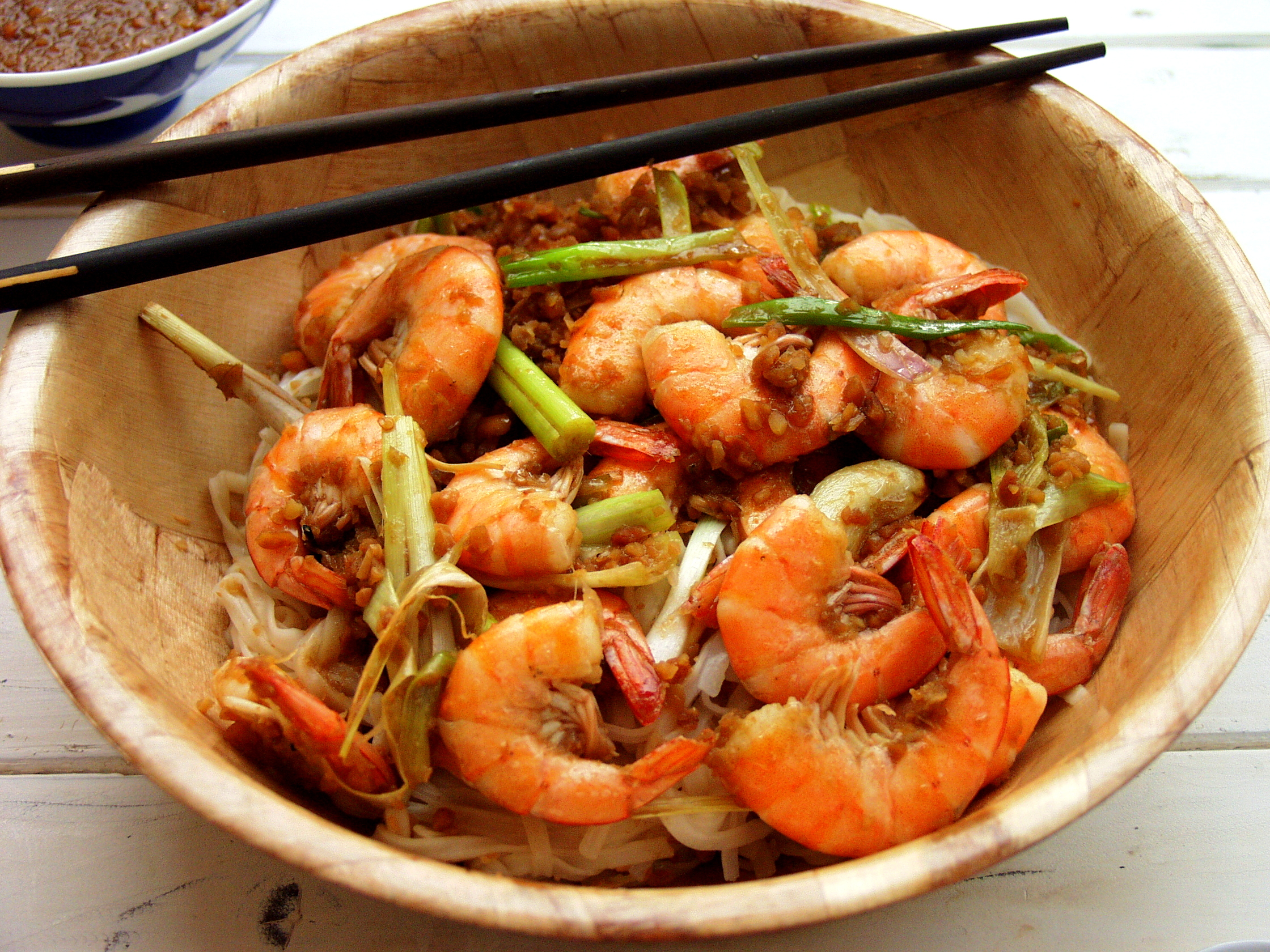
The dish below was inspired by one such dish that I sampled in the restaurant. I hope that I’ve done credit to the original.  After a few false starts on the home-made satay sauce, I think I have found one that hit’s the high note. I hope you ‘ll agree.
OLYMPUS DIGITAL CAMERA
Satay Prawns with Garlic, Lemongrass and Spring Onions with Rice Noodles
Inspired by a similar claypot dish at The Chairman Restaurant in Hong Kong
Serves 4-6 (depending if you are serving other dishes as well)
320g fresh King Prawns (heads removed, shell on or just tails on – up to you)
2 tbsp of ground nut oil
7 garlic cloves, peeled (I like my garlic)
3 spring onions, chopped into 2 inch pieces
2 lemongrass, chopped into 2 inch pieces and halved (white part only)
250g rice flat noodles
Peanut Satay
250g dry roasted peanuts, unsalted
1 tbsp Kecap Manis (sweet soy sauce)
1 and a half tbsp palm sugar (or regular if you don’t have this)
1 tbsp of tamarind concentrate (or pulp soaked in 25ml of warm water – you’ll need to squeeze it through a sieve if you do it this way)
pinch of salt
50 ml ground nut oil
200 ml water
for the spice paste you will need:
4 small dried red chillies, deseeded (or more if you want more of a kick)
3 shallots
2 lemongrass (remove the green part)
3 garlic cloves
1 inch fresh galangal (or ginger if you cannot source it)
1. First make the peanut satay sauce. Coarsely grind the peanuts in a blender or food processor (or pestle and mortar) and remove and place to one side.
2. Next place the spice paste ingredients in the food processor and whizz until they are form a smooth as possible paste.
3. If you are using tamarind pulp soak in warm water for 10 minutes and then press through a sieve.
4. Place the oil in a pan and add the spice paste ingredients and let simmer gently for a couple of minutes before adding the crushed peanuts and stirring together.
5. Add half the water, tamarind concentrate (or pulp), kecap manis, palm sugar, salt. Stir in throughly.
6. Place the remaining water, and add even more if necessary, and let similar for a few minutes. Taste test to see if the salt/sugar elements have the right balance. Let cool and place to one side.
————————————————
7. Heat a pan with groundnut oil and when the oil begins to bubble add the garlic and lemongrass and let it gently sizzle for a couple of minutes, stirring occasionally.
8. Add two tablespoons of homemade satay sauce to the pan and stir into the garlic and lemongrass.
9. Place the prawns into the pan and cover throughly with the peanut satay. Add another one or two tablespoons as required. After a couple of minutes add the spring onions and after a minute take off the heat.
10. In a separate saucepan boil the rice noodles for the time specified on the packet – will not be longer than 5 minutes. Drain the noodles and add a further tablespoon of satay sauce so that the noodles are also coated in the satay.
11. Transfer the noodles to a large main dish and place the prawns, garlic, lemongrass and spring onions on top and then let guests/family serve themselves.
Please note homemade satay sauce can be stored in the fridge for a couple of weeks and in the freezer thereafter.
OLYMPUS DIGITAL CAMERA


chilliandmint's avatarCHILLI & MINT

Christmas this year is going to be somewhat different from our usual traditional Christmases in England, to put it mildly. I have always spent Christmas with my parents, siblings, their partners and my husband and daughters, enjoying good food, mulled wine, long walks in the woods and on the Downs, games (we especially like this one) where we all pretend we’re not that competitive (but we secretly are!), carols and general merrymaking.

This year, however, my husband (Mr B) and our daughters are spending the whole Christmas vacation in the Far East – well, Hong Kong to be exact. Whilst I wasn’t exactly jumping for joy initially at the thought of being away from all the traditional festivities and family in England over that period, I am now thinking of it as an adventure that I will throw myself into and try and embrace.  It won’t be the…

View original post 1,159 more words


First impressions of Hong Kong and getting over jet lag

IMG_6478

There is always something rather thrilling about going on a trip or a journey, but when you’ve never visited the destination before there is an added level of excitement and anticipation. The smells, sights, sounds and general fever of the place seize you almost immediately as soon as you step foot on to Hong Kong soil. I always knew that the place would be frenetic with activity but seeing and experiencing it in the flesh is another thing. Hong Kong is buzzing and bustling with people. An initial impression is the sheer number of people who all live here side by side, or perhaps more aptly I should say – on top of, in huge towers reaching to the stars. Vertical living is very a la mode and living in dinky dwellings is standard practice.

IMG_6397

Whilst a lot is packed into Hong Kong there are also places to be found where there is an element of calm and serenity and to watch the world go by. One of the first places that I went to visit was the Man Mo temple, which is the oldest temple in Hong Kong, having being built in 1847. I thought it was necessary to experience the old if I was to truly understand and appreciate the new and besides I always enjoy visiting temples and churches when visiting a new country as I find it helps to better understand the underlying fabric of that country.

IMG_6399

The temple did not disappoint and as I strolled around it I particularly enjoyed the heady aromas from the incense coils that hung from the ceiling. From the outside the temple stands surrounded by tall tower blocks, which makes a slightly surreal sight.

IMG_6400

IMG_6395

Near to the temple I came across this wonderfully vibrant street art that really appealed to me; I think Banksy would definitely approve.

IMG_6427

Getting to know a city I like to amble around on foot as this not only helps me get my bearings but also see what the locals are up to. Street food sellers were out in abundance selling all manners of temptingly delicious snacks to feast upon.

IMG_6456

As our body clock is a little confused at the moment, we are eating at rather random times of the day, that said little Z and big A always seem to be hungry around tea time and therefore are ready for a little cake to give them some energy before more sight seeing then supper. We have come across a number of bakeries selling all manner of wonderful tasting cakes. Egg tarts are popular here as well as buns filled with red bean paste.

IMG_6454

We visited a fish market, but it is unlike the fish markets we have in the West as the fish here were not to eat. Oh no, if you want to find fish and meat to eat as well as vegetables and fruit you need to visit a ‘wet market’ which are scattered all over Hong Kong. I hope to take some photos of these over my stay so watch this space for more on this soon.

IMG_6421

Tropical fish for sale at the Fish Market in Mong Kok

Our first evening meal out in Hong Kong was dim sum at the very popular Din Tai Fung, which is in fact a Taiwanese import. It’s famous for it’s Xiao Long Bao, which are steamed pork dumplings filled with broth and dipped into vinegar and ginger – basically little mouthfuls of joy! I liked the way that they had instructions on how to ‘eat’ the little darlings. How very thoughtful!

IMG_6381

The winner on the dim sum stakes so far though comes from Hutong where we ate delicious tasting dumplings filled with pork and fennel – ones I wouldn’t mind attempting to make when back in London. Another favourite at Hutong was the Chicken Pot with Sichuan peppers, addictively delicious and not as ‘hot’ as you would think!

IMG_6491

As I mentioned we have all been experiencing a bit of jet lag so I decided to make a southing, homely broth for our first lunch on Hong Kong soil. After gathering a few ingredients I made the following dish, which seemed to hit the spot after a long journey. I kept ours vegetarian, but it would taste equally good with a bit of salmon or trout thrown in for a couple of minutes. Here is how to make it.

IMG_6378

Jet lag Noodle Broth

Serves 3 (and enough for seconds)

splash of olive oil

3 garlic cloves, sliced

1 inch of fresh ginger, peeled and thinly sliced

3 tbsp light soy sauce

1 heaped tsp of vegan Bouillon/vegetable stock

boiling water (to cover veg and noodles)

generous handful of Chinese broccoli (Gai Lan) or regular broccoli/spinach/pat choi

6 small tomatoes, halved

3 eggs, boiled, shell removed and halved

2 packs of udon noodles (or 3 if you are serving just adults)

1. Place the eggs into a pan with cold water and when the water has boiled cook the eggs for 4 minutes, less if you like it soft boiled.

2. Meanwhile place a little oil in a medium sized deep pan and when it is hot add the garlic and ginger and stir for a minute before adding the soy sauce.

3. Next add the boiling water so that it reaches a quarter of the way up the pan – you can add more a little later. Add the Bouillon or vegetable stock that you are using and stir well.

4. Add the Chinese broccoli and after 2 minutes add the udon noodles. You may wish to add a little more boiling water at this stage. Taste to see if it requires a little more soy sauce. Add the tomatoes no more than a minute before serving so that they still hold their shape. If you prefer softer vegetables then cook the Chinese broccoli for a little longer, but I find a couple of minutes is more than enough.

5. Serve with a slice or two of boiled egg.

Warming, delicious and ever so quick, before you collapse and have another little sleep.

Other ingredients that would be great to add: fresh chilli, spring onions, fresh salmon/trout, mushrooms.

IMG_6483


Curried Potatoes and an Award

There has been a whirlwind of activity in my household this week, getting ready for our departure to Hong Kong for the Christmas holidays. Big A and little Z breaking up from school and I have been doing last minute Christmas shopping – all done now, big sigh of relief – on top of that the ‘outlaws’ are spending this week with us, which means there is a lot of feasting and fragrant Indian cooking smells coming from the kitchen. A sprinkling of Christmas drinks with the traditional mulled wine (blog post for christmas 2013 I think) and carol concerts have added to the Christmas spirit and excitement.

Out of the blue this morning I received a ‘Blog of the Year Award’ from the lovely Charu who writes Soul of Spice, and whose blog I enjoy following immensely.

As part of the honour I must bestow the award on others that stand out for me. It’s a tough call as there are many strong contenders out there, but there are two obvious ones for me:

1) The Garum Factory. Written by husband and wife, Ken and Jody who are based on the east coast of the US.  Importantly the recipes are temptingly delicious and ones that I actually want to cook (mainly savouries, which suits my palette) The photographs always inspire me to try and improve mine ;o) and the narrative is always very amusing. I also mentioned The Garum Factory in a past post here

2) The other one I always enjoy reading and perusing over is The Hungry Australian written by Christina. She always seems to have a million things going on at once (running Eat Drink Blog conferences, the food blogger hop, writing articles for magazines, being a good mother, wife etc)  but is consistent at posting interesting blog posts with bright, impressive photos and interesting recipes, many with an Asian twist – which is  a winner in my book.

So I pass on the honour to both of you. Congratulations.

Blog of the Year Award 1 star thumbnail

The rules to accept this award:

1. Select the blog(s) you think deserve the ‘Blog of the Year 2012’ Award
2. Write a blog post and tell us about the blog(s) you have chosen – there’s no minimum or maximum number of blogs required – and ‘present’ them with their award.
3. Please include a link back to this page ‘Blog of the Year 2012’ Award – and include these ‘rules’ in your post (please don’t alter the rules or the badges!)
4. Let the blog(s) you have chosen know that you have given them this award and share the ‘rules’ with them
5. You can now also join our Facebook page – click the link here ‘Blog of the Year 2012’ Award and then you can share your blog with an even wider audience
6. As a winner of the award – please add a link back to the blog that presented you with the award – and then proudly display the award on your blog and sidebar … and start collecting stars…

6-stars-image

Yes – that’s right – there are stars to collect! Unlike other awards which you can only add to your blog once – this award is different! When you begin you will receive the ‘1 star’ award – and every time you are given the award by another blog – you can add another star! There are a total of 6 stars to collect. Which means that you can check out your favourite blogs – and even if they have already been given the award by someone else – you can still bestow it on them again and help them to reach the maximum 6 stars!

We all love potatoes right? So I thought that a new way to cook them might appeal to you all, hence the curried potatoes recipe below. I am sure I am not alone in saying that potatoes and rice are the two staples that you will always find in households, so if you want to cook an easy, cheap and quick supper making this dish, along side a dal for example, makes a really filling and tasty supper/lunch.

Curried Potatoes

Serves 4

2 tbsp mustard oil (or vegetable oil if you don’t have mustard oil)

500g small potatoes (I use Charlotte, but new would be good too)

1 tsp mustard seeds

1 onion, finely chopped

1 green chilli, chopped in half

4 inch piece cinnamon bark, broken into pieces

3 curry leaves

2 cloves

1 tsp turmeric

150 ml water

1 tbsp yoghurt

1/2 tsp sugar

1 tsp salt (to taste)

1. Boil the potatoes until they are softened – this will take around 10 minutes. Drain and place to one side.

2. In a pan gently heat up the mustard oil and when it is hot add the mustard seeds and stir for 10 seconds, then add the chilli, cloves, salt, sugar, cinnamon bark and curry leaves and stir once again.

3. Add the onion to the pan and stir into the spices. When they have softened and begin to bronze add the turmeric followed by the potatoes and stir in together so that they are properly coated in the spices.

4. Place the water and yoghurt in the pan and gently simmer  with the lid on until the water has almost completely been absorbed.

Serve immediately with some Indian bread, such as luchi or paratha. It would also go very well with a cinnamon and ginger dal


Rainbow Layer Cake

IMG_6263

I really hadn’t planned on making a blog post out of a rainbow layer cake, hence the rather limited, and not particularly styled photos, but the outcome was somewhat unexpected in that it looked and tasted rather good and definitely had the appropriate wow factor (from a child’s perspective!). I have never really been a big cake maker, or eater of cake for that matter, largely due to the fact that I don’t have a sweet tooth and by and large I tend to cook what I like eating – mainly savoury dishes that have herbs and spices in them of course!

However, when it comes to children’s celebrations a cake is very much required and so I tend to step up (well actually perhaps that is a little lie as I sometimes pass the buck to my mother, father, or cousin who are far better cake makers than me!) and usually opt for a Victoria sponge, chocolate or banana and walnut cake or maybe even some little cupcakes.

This time however, I thought I would give myself a bit of a challenge and try making a rainbow layer cake. Hey even if the cake were to taste bad, the looks alone would make up for it – well that’s kind of what I was thinking anyway.

Thankfully the cake ticked all the boxes and was surprisingly fun to make. It really felt like creating a cake from an artists colour palate.  I was also intrigued by the fact the recipe required soya milk. I don’t know why but I have never really had the need to drink soya milk, what with being a huge cows milk drinker (I need it when eating very spicy food). The taste of soya milk, however, completely surprised me as it was deliciously sweet and a genuinely lovely drink in its own right. I spotted soya milk with hazelnuts in the shops so will definitely be picking up a carton of that very soon.

So when you have a big celebration to prepare for try making this cake to wow the crowds, it won’t let you down.

IMG_6255

This cake had been slightly ‘child’ handled by the time this photo was taken, however, I assure you it looked a lot more pristine to begin with.

So here is what you need to do.

Rainbow Layer Cake

Adapted from Kitchen Tested

 (Melinda has some great step-by-step photos so check out her blog to get more of an idea)

325g plain flour

4 tsp baking powder

pinch of salt

225g margarine (I always use Stork for cake baking)

475g caster sugar

365 ml soya milk

5 egg whites

2 tsp vanilla extract

purple, blue, green, yellow, orange and red gel food colour (I use Dr Oetker’s food colours)

approx 550g  cream cheese style icing (if you are not making your own and want to save time Betty Crocker’s tastes good – 2 pots should be enough, but it depends on how much icing you like in and on your cake)

vegetable spray/oil

1. Preheat your oven(s) to 180 degrees. If you have just one you will need to cook the sponges in batches but this will not take long as they are quick to cook!

2. Line six 9 inch (round) baking tins with baking parchment. Spray or rub in a little oil into each tin so that the sponge will easily come away from the parchment after cooking.

3. Ideally mix the margarine and sugar together in an electric mixer if you have one, or by hand, to form a cream.

4. Gradually add the egg whites to the cream along with the vanilla extract.

5. In a separate bowl mix the sieved flour, baking powder and salt and then slowly add the flour mixture and the soya milk to the margarine cream, alternating as you do so. (eg: flour, milk, flour, milk etc). The mixture will seem fairly runny at this stage but do not worry as it will firm up nicely when cooking.

6. Pour the mixture equally into six individual bowls and then add one food colour per bowl. I tend to use the whole gel packet per bowl so as to get a bright, vivid colour. Mix in thoroughly and pour into the six baking tins.

7. Place in the oven for 15 minutes and then leave to cool on a wire rack before gently turning out and removing the baking parchment.

8. The purple sponge needs to be at the bottom. Gently smooth the cream cheese style icing on its surface before adding the blue sponge and repeat by adding the cream cheese style icing. Then add the green, yellow, orange and red, repeating the same process as you do so. It does not have to be particularly neat as you will be covering up with the outer rim icing! Once all the sponges are in place continue to evenly spread the icing over the sides of the sponges so that no sponge is showing. You could make this outer icing any colour you fancy, but I thought white worked well and showed off the rainbow effect within perfectly.

Sprinkle with edible glitter or hundreds and thousands and serve to your guests.


Dan Dan Noodles and an alternative Christmas

Christmas this year is going to be somewhat different from our usual traditional Christmases in England, to put it mildly. I have always spent Christmas with my parents, siblings, their partners and my husband and daughters, enjoying good food, mulled wine, long walks in the woods and on the Downs, games (we especially like this one) where we all pretend we’re not that competitive (but we secretly are!), carols and general merrymaking.

This year, however, my husband (Mr B) and our daughters are spending the whole Christmas vacation in the Far East – well, Hong Kong to be exact. Whilst I wasn’t exactly jumping for joy initially at the thought of being away from all the traditional festivities and family in England over that period, I am now thinking of it as an adventure that I will throw myself into and try and embrace.  It won’t be the same as being in England and we won’t try to make it so, instead we’ll have an alternative Christmas that will be exciting in its own right.  There are certain traditions that I will seek out, even over there (I love a good carol), but in many respects it might be refreshing to have a change as a once off.

As bizarre as it might seem, as I have travelled a lot in Asia in the past, I have never been to Hong Kong, so am looking forward to exploring the region and hopefully getting under the skin of what makes Hong Kong tick. I am looking forward to trying the food in particular and somehow I need to adopt a Chinese local to show me the ropes on some of their local specialities. The food markets are also going to be a highlight so if any of you lovely people out there have any recommendations re the above then let me know. On the food front I far prefer low key local as opposed to an ostentatious, flashy restaurant where people prefer to be seen rather than enjoying the food itself – you know what I mean and I am sure you are in agreement! I will blog from Asia so watch this space from mid December.

High up on my Christmas wish list (I hope my family is reading this…..maybe wishful thinking!) is Fuchsia Dunlop‘s book ‘Every Grain of Rice – Simple Chinese Home Cooking’ . For those who don’t know, Fuchsia is a cook and food writer specialising in Chinese cuisine having lived, studied and travelled extensively in China. Back in July (15.7.12 to be exact) there was an article in ‘The Observer’ newspaper with Fuchsia’s recipe for Dan Dan Noodles. I tore it out and promised myself to cook this dish over the coming months. Dan Dan noodles, or Dan Dan Mian, as it is also known, is a real classic Sichuan dish that traditionally is served on street stalls by vendors who carry a long bamboo pole (dan dan) over their shoulders balancing baskets either end full of the soupy noodle dish. There are a multitude of recipes for this dish on the web, but I thought that I would sample Fuchsia’s recipe to begin with.

I can honestly say that this dish is off the charts delicious. Initially when I saw the ingredients I did a double take as I didn’t have them all in my pantry. My local Asian grocers also didn’t have some of the ingredients, in particular: sweet bean/fermented sauce, Chinkiang vinegar and Tianjin preserved vegetables, but this only made me even more determined than ever to get the ingredients necessary to make an authentic Dan Dan noodle dish. My saving grace came from discovering Wai Yee Hong, the online Chinese supermarket, based in Bristol, England. They had everything I needed and delivered the ingredients in a very efficient speedy manner. So if you are at a loss, order on line and the ingredients will be sent to you in a couple of days. Simple and hassle free.

Fuchsia’s recipe serves 2, but I felt it was easier to write it out for 1 person and then you can just double up as necessary depending on how many guests you are serving. I found it easier to make up individual sauces in each bowl and then add the noodles and mince, as opposed to making one bowl and then serving into guests bowls. Basically this way allows for you to alter the sauce slightly depending on personal preference (ie: I omitted the chilli oil when serving my daughters). It’s far more straightforward that it sounds and really takes no time to prepare.

Dan Dan Noodles

Adapted from Fushia Dunlop’s book Every Grain of Rice, whose recipe was printed in ‘The Observer’ 15.07.12. Her original recipe can be found here

Serves 1

(double/ triple/quadruple up according to numbers that you are feeding)

1 tbs vegetable oil

75g pork mince

1 tsp Shaoxing wine

1 tsp sweet bean sauce

1 tsp light soy sauce

100g dried Chinese wheat flour noodles – I use these

For the sauce

1 tsp light soy sauce

2 tsp of chilli oil (I use one that has flakes and shrimp in it), to taste

3 large heaped tsp Tianjin preserved vegetables

1 tsp Chinkiang vinegar

2 spring onion, finely sliced at an angle

300ml noodle cooking water stock (200ml if you are serving in smaller bowls or if you prefer it less soupy)

1. Add the cooking oil to a pan and stir fry the pork mince until it browns in colour.

2. Add the Shaoxing wine and stir into the mince, followed by the sweet bean sauce and soy sauce. Cook together for a few more minutes pressing the mince to the side of the pan with the back of a spoon so that it begins to clump together slightly.

3. In a serving bowl add all the ingredients for the sauce EXCEPT the noodle cooking water stock. If you cooking for others you can alter the quantities of the chilli oil depending on their love of chilli. For my daughters I omit the chilli oil and include all the other ingredients.

4. In a pan boil the noodles for the time it states on the packet – around 4 minutes. Stir them with chop sticks so as to separate them and prevent them from sticking. Noodles are similar to pasta in that you know they are done when the white centre has disappeared.

5. Drain the noodles, making sure to keep the noodle water to one side as this will become your stock. Run the noodles under cold water and drain off completely.

6. Place 300ml of noodle cooking water (or 200ml if you are using smaller bowls) into the serving bowl with the sauce and stir in together. Add the noodles and the mince on top. Give a good stir so that the ingredients are combined well and serve immediately.

The sauce quantities are very much a case of personal taste so if you prefer to add more chilli oil, Tianjin preserved vegetables, spring onions etc then go ahead and experiment to see what you like best. I do NOT add any salt to this dish as I find the soy sauce more than makes up for salt, however, Fushia does add a  1/4 tsp in her recipe so taste and see if you think it needs to be added.

A few other books on my Christmas wish list include:

Jerusalem by Yotam Ottolenghi and Sami Tamimi

Spice Trip: The Simple Way to Make Food Exciting by Stevie Parle and Emma Grazette

Asian Tofu by Andrea Nguyen

Burma: River of Flavors by Naomi Duguid

Are there any others that you think should be on it? I’d love to know of any you would recommend. Don’t be shy and leave a comment below.


Pistachio and Cardamom Shortbread Biscuits

It’s always good to have a go-to biscuit that is straightforward and not too time consuming to make, but also has an added complexity in taste that makes it stand out from the crowd. This shortbread biscuit ticks all those boxes with flying colours. The flavours of cardamom and pistachio sing to me and the partnership is one to be jubilant about. I find it’s great to make a batch and freeze (before cooking) some of the dough, wrapped in cling film, that you are not needing, until you want to make another batch at a later date. At this stage simply remove from the freezer and let it defrost before making incisions into the dough to make your biscuits.

With the festive season almost upon us, I also find that they are a great offering to give to friends that you are visiting either wrapped in brown baking parchment, tied with some vintage twine or red ribbon, or placed in a sealed jar. Either way, the effort and initiative will definitely bring a smile upon the receiver.

Pistachio and Cardamom Shortbread Biscuits

sourced from Ottolenghi The Cookbook

Makes around 30

8 cardamom pods

200g unsalted butter

25g ground rice

240g plain flour

1/2 tsp of salt

35g icing sugar

60g shelled pistachio nuts

1 free-range egg, lightly beaten

2 tbsp vanilla sugar

1. Crush the cardamom pods, using a pestle and mortar and once the seeds have been released remove the skins and then crush the seeds into a fine powder. The smell is sensational.

2. Place the butter, ground rice, flour, salt , ground cardamom and icing sugar in an electric mixer and whisk until the ingredients have bound together to create a ball shape and immediately transfer the dough onto a cold surface sprinkled with a little flour. (see photo below)

3. Using your hands roll the dough into a log shape. If you want really large round biscuits then keep the the log short in length, however, if you would prefer small or medium sized biscuits then elongate the dough further. There is no hard and fast rule on how large the biscuits need to be. Wrap in cling film and place in the fridge for over an hour.

4. Meanwhile, place the pistachio nuts into the electric mixer and give them a quick wizz so that they are broken up slightly. If you do it for too long they will become too fine!

5. Place the crushed pistachio nuts on a flat surface and take the cling film off  the dough (and place the cling film to one side) and brush the log with the beaten egg. Now roll the dough over the top of the pistachio nuts; you may need to give a helping hand and place a few pistachio nuts into the side of the dough. Put the same cling film back on the dough log and place back into the fridge for a further 30 minutes.

6. Preheat the oven to 150 degrees. Remove the cling film and using a sharp knife cut the dough log into even slices and place them on a baking tray lined with baking parchment, placing them 2cm apart. Dust the biscuits with vanilla sugar and place in the oven for around 20 minutes so that they are golden, but not bronzed. Keep a close eye on them.

7. Remove from the oven and allow to cool completely as they will harden as they cool. If you pick them up before they are cool they may well crumble. Once they have cooled store in a sealed jar or container for up to a week.

Rolled out the dough log on a cold surface sprinkled with flour

Roll out the cold dough log over the pistachio nuts

Place the biscuits slightly further apart (2cm) than I have done above or they will begin to join together.

I was pretty lucky but it got close ;0)

Baked and ready to eat


Musakhan – Palestinian Roasted Chicken with Sumac

I wanted to introduce you to a wonderful bold spice that is probably unfamiliar to some of you.

Step forward, Sumac. 

This wonderfully flavoursome spice derives from the berry of a plant called ‘Rhus Coriaria’ that ranges from bright red to plum in colour and is grown wild throughout the Middle East and some parts of the Mediterranean. Whilst you can buy the berry whole, it is more often purchased dried coarsely or finely ground. The Romans used it as a souring agent as it has similarities to lemons in its tangy, tart taste.

Whilst ambling around the spice market in Turkey this summer, I purchased some to last me for quite some time.  However, like most things these days it is also available closer to home and can be purchased at most supermarkets or Middle Eastern food stores.

So as to appreciate fully the qualities of the spice I thought a straightforward version of the ubiquitous Palestinian dish,  Musakhan, would be a great place to start. The ingredients are simple and yet make a most appetising meal that can be enjoyed by all the family. It’s definitely a meal that you have to roll your sleeves up and get stuck in, so as to speak, and it requires you to eat it ideally with your fingers – far more satisfying. A number of the recipes for this dish talk about the  sumac chicken and onions (and sometimes also allspice and saffron!) on a flat bread that then gets toasted and scattered with toasted pine nuts, but I thought I would create the dish in a wrap form to make it easier to pick up and eat. I leave it to you to consume in either the flat or rolled form, both will be equally delicious I assure you.

Musakhan

Adapted from moodfoodblog.com

1 whole chicken

75g sumac

6 onions (mix of red and white ideally), thinly sliced

3 tbsp olive oil

juice of 1 lemon

100ml chicken stock

salt and pepper

10-12 Middle Eastern flat bread

1. Place the half the sumac, 1 tablespoon of olive oil, lemon juice, salt and pepper over the chicken and leave to marinade for a few hours or overnight

2. Preheat an oven to 180 degree and roast the chicken for 1 hour or until cooked

3. Meanwhile, place the rest of the olive oil in a pan and gently fry the onions along with the rest of the sumac until the onions are  soft

4. Add the chicken stock to the onions and stir in thoroughly for a couple of minutes

5. When the roast chicken is cooked leave to cool slightly and then shred the chicken, using a fork, from the carcass. There will be lots of juices from the chicken and sumac so place these into a dish with the shredded chicken.

If you want to keep the remains of the carcass you could make this chicken soup.

6. On the Middle Eastern flat breads place the shredded chicken, soft juicy onions and wrap tightly and place back into the oven for a couple of minutes to heat through. Then serve immediately with a quarter of lemon on the side.

As an alternative you could serve the shredded chicken hot and warm up the flat breads and let your guests serve themselves and create their own wraps, in the same way that you would make your own duck spring roll!

I served mine with a green salad which was full of olives, gherkins and tomatoes. A garlicky yoghurt or raita would also work exceptionally well.

Smother the uncooked chicken with the sumac, olive oil, lemon, pepper and salt and leave to marinade for a couple of hours or if you are really well planned, overnight! I love the bright redness of the spice.

Shred the roasted chicken and mix it with all the juices that have come from the roasting. The taste is divine.

Be careful not to overfill or you will find it hard to warp and then hold and eat.

The finished product. Roasted chicken with sumac, lemon and onion wrap. They are totally addictive and I assure you it is easy to polish off quite a few.


Baba Ganoush – it definitely has a ring to it!

I have to admit that it was initially the name of this wonderfully smokey aubergine (eggplant) dip/appetizer that caught my attention. I know you probably think I’m mad and just another one of those English eccentrics, but seriously saying ‘Baba Ganoush’ out loud has a wonderful ring to it – give it a try and you’ll see what I mean. You’ll want to keep saying it again and again, I promise you it’s rather addictive sounding. Coupled with the smokey undertones of this pureed roasted aubergine with tahini (sesame paste), lemon, garlic and olive oil and you have a perfect little dish. The name itself means ‘father pampered or spoiled’ in other words, it’s a dish that will please and delight and give great joy to those who feast upon it. It will bring smiles, rest assured!

It is common place in Lebanon, Israel, Turkey, all the Arab countries and North Africa, with each region taking their own spin on the  added extra ingredients. For example, in Palestine, yoghurt is often added to the mix, whilst in Lebanon pomegranate juice is sometimes added instead of the tahini and in Iran tomatoes, onion and turmeric is added. Some people like it to add cumin but I find that the perfect dish is one that is not too over complicated with different ingredients. The simplicity of it adds to it’s appeal.

We ate it on a number of occasions this summer in Turkey, cooked outside on an open fire. It tasted delicious and I made a note to myself there and then to share this recipe with you all. My recipe is very similar tasting to the one that I used to buy in those Middle Eastern supper markets around the Edgware Road in London. I acquired a taste for that style of Baba Ganoush, so when I started making my own homemade version the one I wanted to replicate was the one I used to eat in my youth – or perhaps I ought to say  early 20’s!

There is no hard and fast rule to making Baba Ganoush, so experiment and get creative and see which type really works for you. What I will say however, is that if you like it smokey – which is kind of the point of the dish – it is important to really burn the outside of the aubergine. Using tongs I roast them initially over a gas flame on my hob before putting them in the oven for 25 mins to soften them completely. If you don’t have a gas flame, placing them under a high grill so that the skins blacken and burn slightly, will have a similar smokey effect, but don’t forget to turn them regularly if you do this!

Baba Ganoush

Serves 4

3 large aubergine/eggplant

3 tbsp tahini (sesame paste)

juice of one and a half lemons

1 large tsp rock salt (or to taste)

3 garlic cloves, crushed

2 tbsp olive oil

1 pinch chilli powder

1 pinch sweet paprika

1 small handful of chopped flat leaf parsley

1. Preheat an oven to 180 degrees. Using tongs hold the aubergine over a gas flame so as to burn and blacken the skin. The more the skin burns the more smokey your Baba Ganoush will be. The skin should be sufficiently burned from between 6-10 minutes.

2. Place the aubergines on a baking tray and place in the oven for 25 minutes or until the aubergine is completely soft.

3. Leave to cool and then peal off the aubergine skin and discard the skin.

4. In a blender add the smoked aubergine flesh, tahini, lemon juice, chilli powder, salt and  half the olive oil and blend to a pulp. Taste and add more lemon juice/tahini/salt if required.

5. Place in a dish and add a pinch of sweet paprika, flat leaf parsley and the remaining olive oil and serve with toasted pitta bread, chapati or middle eastern bread.

It stores well in the fridge for a few days so great to cook in advance.

As you gently singe the skin of the aubergine the lovely smokey smells will come through.

After 25 minutes in the oven the aubergines will be very soft. Leave to cool before peeling off the skin, which should come away really easily. If they are at all hard in places, leave to cook for a further 5 minutes before checking again with a sharp knife. If the knife easily pierces the skin and goes through the aubergine then it is ready.

Into the blender goes the smoked and oven baked flesh of the aubergine, tahini, garlic, pinch of chilli powder, lemon juice, salt and olive oil.

I couldn’t resist a photo of my recent antique find – a c.1860 French steel and rosewood handle herb chopper, with the chopped flat leaf parsley ready to go on the top of the baba ganoush.