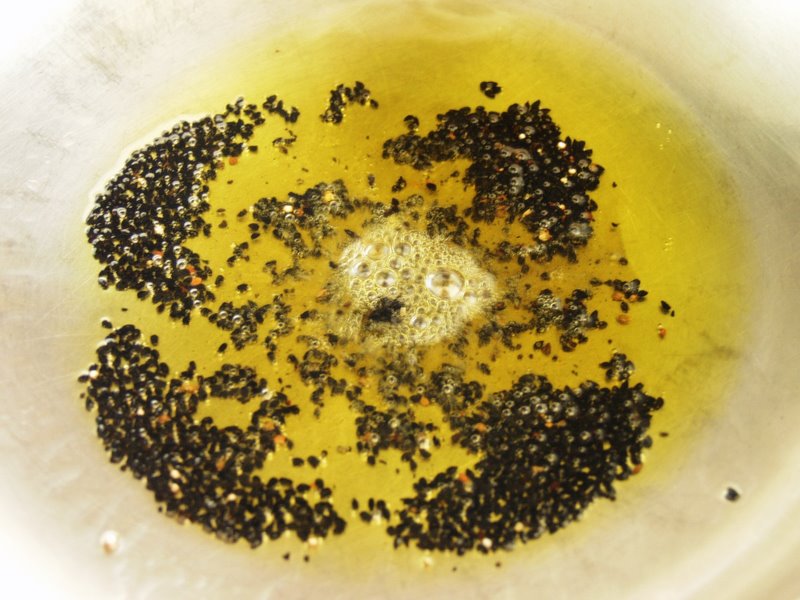
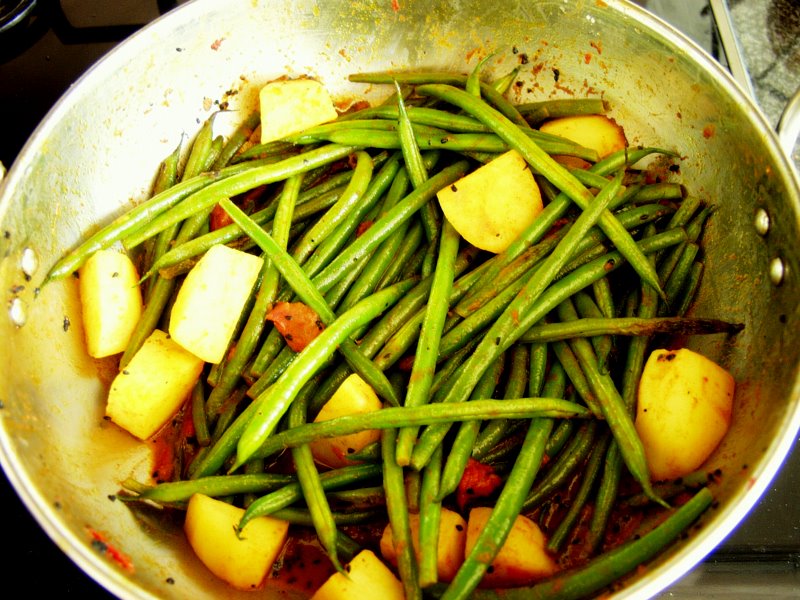
Roasted Cod with Fennel, Red Onion and Tomatoes in a Lemony Balsamic Jus

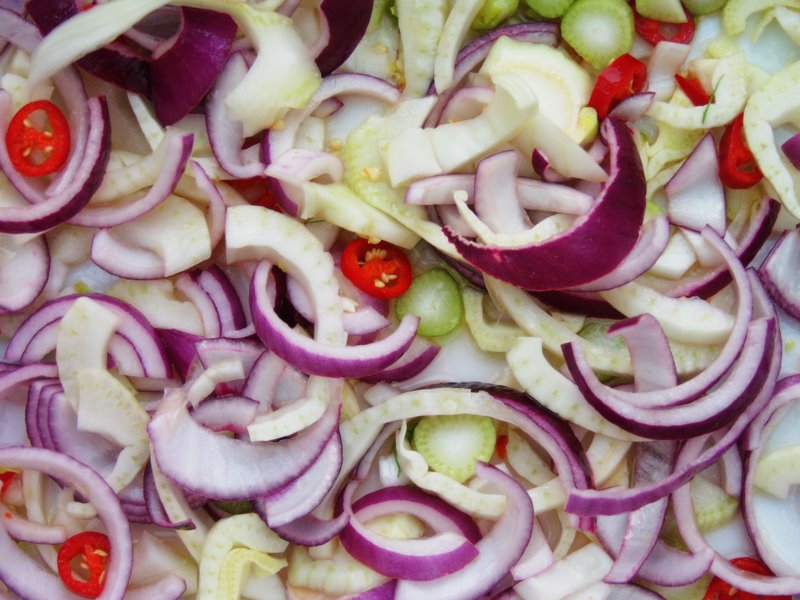
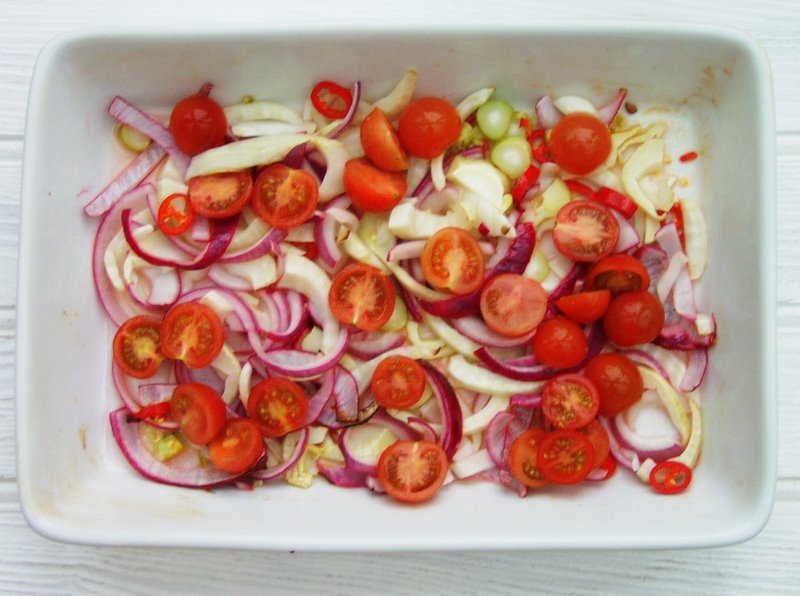
OK I admit it, I wasn’t telling the whole truth when I put together the grand title for this dish. It only takes a passing glance at the photo above for you to see that there is a sprinkling of fresh chilli in this dish. It’s totally NOT essential, so if your palate prefers the absence of chilli – or if you are feeding it to little ones, then please omit the chilli part as it still tastes really good.

We try and eat fish and seafood a couple of times a week, which reminds me, I must put up another of my squid recipes as squid gets a big thumbs up in our household. My six year old, known as big A in this blog (as she is my eldest daughter) has loved it for as long as I can remember; she is a joy to cook for as she eats and tries everything. She has her sights set on junior Masterchef, way to go girl.

This dish is perfect with white fish and cod works particularly well as it does not flake too readily during cooking. This dish is rustic and juicy and has the definite thumbs up from Mr B. There are a lot of flavours going on in the dish, from the sweetness of the balsamic vinegar, red onions and tomatoes to the subtle aniseed taste of the fennel and the wonderful kick from the chilli. I find they compliment each other so well, I hope you agree.

Roasted Cod with Fennel, Red Onion and Tomatoes in a Lemony Balsamic Jus

Adapted from a recipe by ‘Delicious Magazine’

Serves 2-4

600 g filleted cod

1 red onion, roughly chopped

1 fennel bulb, thinly sliced (set the fronds to one side)

juice of one lemon

2 tbsp olive oil

200g cherry tomatoes, halved

3 tbsp balsamic vinegar

1 large red chilli, sliced (not essential)

seasoning, as required


1. Prepare the fennel, red onion and chilli and place in an oven proof dish with 1 tbsp of olive oil and the juice from one lemon. Place in a preheated oven at 180 degrees if you are using a fan oven and 20 degrees more if you are not or gas mark 6, for 10 minutes

2. Add the tomatoes and roast for a further 5 minutes. Now place the cod fillets, balsamic vinegar and remaining olive oil on the vegetables and roast for 10-12 minutes. Do not overdo the cooking of the fish as it will begin to dry out. It needs less cooking time than you think!

3. Serve immediately with the fennel fronds scattered on top to garnish. I like to eat this with rice, although it would also work equally well with little cubed roast potatoes.


Baked Sweet Potato Paprika Chips with a Creme Fraiche, Chive and Lemon Dip

It’s been half term and after thinking that we had all managed to get through the winter months with no illnesses, Little Z and Big A both come down with a bug, which is then passed on to my fit and healthy mother. I’m just waiting to be knocked for six myself but am trying not to dwell on the possibility. So instead of being out and about  this week we have been hibernating inside and keeping cosy. With everyone on the mend and appetites returned I made a batch of these delicious morsels to cheer up my loved ones. They were gone in a blink of an eye, so I felt that I must share this simple recipe with you.

Baked sweet potatoes are a delicious addition to any dish, whether it be accompanying, fish, meat or other vegetables. They are also great as pre dinner nibbles if you have guests coming over or if you just simply fancy spoiling yourself or your family. With very little effort you can create these baked paprika chips with a creme fraiche dip and I assure you they are totally addictive.

I am a huge fan of  Santo Domingo Hot Spanish Smoked Paprika which you can buy here, as it has a real kick. As the girls adore them, I bake a batch without paprika or the less hot variety, so they can devour them as well. As an alternative way to serve them as nibbles, I make little paper cones and line each cone with baking parchment, so that the chips do not get stained with newspaper ink. The velvety creme fraiche is a great accompaniment and I like to add chives, as Big A is a big fan, a good splash of lemon juice and a sprinkling of rock salt. Simple and delicious.

Baked Paprika Chips 

Serves 4 -6

900g sweet potatoes, chopped into wedges

1 heaped tsp paprika

2 tbsp olive oil

1 tsp of rock salt

Creme Fraiche, Chive and Lemon Dip

200g creme fraiche,

1 tbsp of fresh chives, chopped finely

1/4 lemon, juice only

pinch of rock salt

1. Wash the sweet potatoes, but do not bother to peal them as the skins taste great when cooked. Chop them into chip/wedge size chunks and place in a large mixing bowl. Add the olive oil, rock salt and hot paprika and mix thoroughly with your hands so that all the pieces are completely covered.

2. In a preheated oven – 180 degree fan oven – place the sweet potatoes on baking/greaseproof paper on top of a baking tray and bake for 30-40 minutes or until they are soft.

3. When the sweet potatoes are baking prepare the dip by mixing all the ingredients together and taste and add more seasoning if necessary.

4. Serve immediately with the dip on the side.


Middle Eastern Okra and Tomato Stew, with a twist

I used to live close to the Edgware Road in London, which is the Middle Eastern part of town, well as Middle Eastern as it can be in London. It has a fairly chilled atmosphere with people spilling out of the cafes onto the pavements smoking their apple tobacco from their hookahs, when the weather permit and the sun shines.

There are two things however that I really miss most about the Edgware Road.

1) Mandalay Burmese restaurant, which as the name states is not Middle Eastern but a Burmese restaurant run by the affable and learned Burmese brothers Dwight and Gary. The restaurant serves good, honest, home cooked Burmese food (cooked by Dwight and Gary’s female relatives). It tastes divine and the whole experience is very memorable. They have a little library up at the front with a few Burmese books, which you can peruse at your leisure whilst waiting for your dining companion to arrive. Whilst it won’t win awards for decor, it wins hands down on charm and substance. You need to book as it is often packed to the rafters.

2) Green Valley Lebanese mini market, which Mr B and I always referred to as ‘Valley of the Kings’ for some reason. It has a wonderful deli selling a huge array of salads, hot bread, stews, cheeses and a butcher selling good quality halal meat, as well as cuts you may not see at your typical English butcher – sheeps’ tongues anyone? In addition, it also sells a vast array of fresh produce and the best baklava in town, which they put together on platters for you. Basically they stock every interesting food product imaginable and this place is like a tardis in the amount of food that it holds. We would make weekly weekend trips to stock up on goodies.

I was back there the other day buying some baklava (it’s worth the trip trust me), when I decided to buy a few little savoury edibles from the deli counter to munch in the car on the way home. Whilst making my selection my eyes rested for a while on the delicious looking okra and tomato stew. Whilst it isn’t so easy to transport and eat in the car, I decided to make some of my own when I got home and add my own little twist to the dish – butter beans. I do love my lentils and pulses and couldn’t resist adding them to the dish – for true purists amongst you simply skip the bit about adding butter beans.

The dish tastes great warm or at room temperature with Middle Eastern flat bread. It takes no time to make and am sure can convert even those who are a little reluctant about eating okra (or lady’s fingers as it is also known).

Middle Eastern Okra, Tomato and Butter Bean Stew

2 onions, chopped

3 garlic cloves,  roughly chopped

400 g of frozen okra (or fresh if you have it to hand)

1 tin of tomatoes, blended

splash of olive oil

1 tin of butter beans (they tend to be around 240g)

half a lemon, juice only

2 tsp of ground coriander

1 tbsp tomato puree

salt and pepper, to season

1. Add a splash of olive oil to a deep pan and when it is hot add the chopped onion and garlic and stir a little until they soften and becomes translucent. This should take around 6 minutes.

2. Whilst the onions and garlic are softening, blend a tin of tomatoes with a hand blender until smooth. Before adding the blended tomatoes, add the ground coriander and seasoning and stir into the onions and garlic.

3. Add the blended tomatoes to the pan along with the tomato puree and lemon juice. Stir thoroughly and let simmer for a few minutes.

4.  Add the butter beans and frozen okra and add a little boiling water so that the okra is fully submerged. Leave to gently simmer for 25 30 minutes, stiring gently, occasionally.

5. Taste and add more seasoning as required and serve with warm Middle Eastern flat bread. It could also be served with cous cous or steamed rice.


Red Camargue and Wild Rice Salad with Miso Dressing

I know it’s winter and there is snow on the ground but I’ve been trying out some new exciting salad recipes recently, ones which really make you sit up and take note of what you are eating and have the definite wow factor. I like to eat salad during my weekday lunches with a bowl of piping hot soup, even in winter. I make a decent amount so I can eat it over a few days.  Dressings are certainly important and give salads a certain edge. For your average green salad I always like to make my Asian vinaigrette, it’s fail proof and  can easily store in the fridge for a number of weeks.

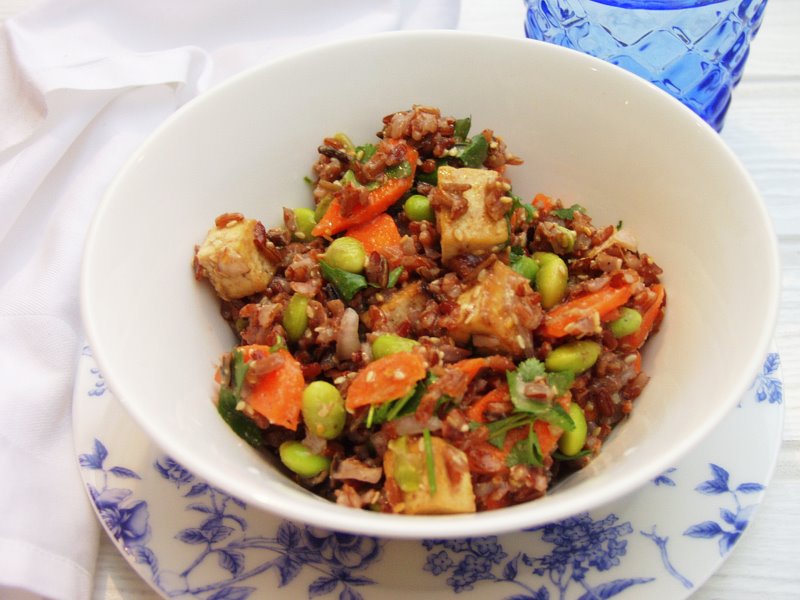
This red camargue and wild rice salad with a miso dressing is seriously divine and unlike any salad I have tried before, I really urge you to try it. I recently spotted it on fellow food blogger Sara Forte’s site sproutedkitchen.com. I have made a few changes, the most obvious one being that I used red camargue rice as well as wild rice so as to get that rich red colour. I’m rather partial to tofu these days, well ever since I discovered this recipe, which has become one of my favourites.

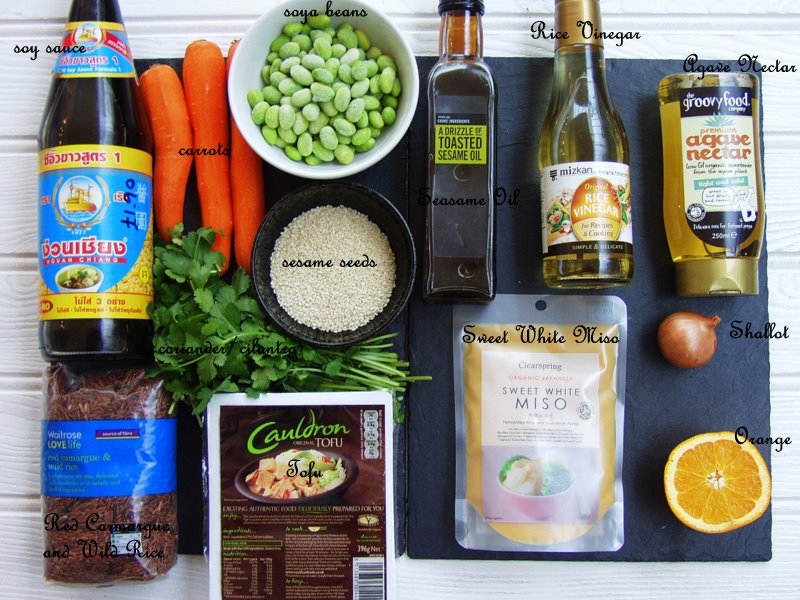
So this is what you need to make this winning salad recipe.


  Red Camargue and Wild Rice Salad with Miso Dressing

sourced from the talented Sara Forte from Sprouted Kitchen

150g rice (check packet to see cooking instructions)

400g block of firm tofu

2 tsp coconut or olive oil

2 tsp soy sauce

freshly ground pepper

2 carrots, thinly sliced

200g frozen edamame/soya beans

3 tbsp toasted sesame seeds

handful of chopped coriander/cilantro

and for the Miso Dressing you will need:

2 tbsp of white miso

2 tbsp agave nectar

1 tbsp sesame oil

2 1/2 tbsp rice vinegar

1 shallot, minced

juice of half an orange

1. Heat up a small frying pan and when it is hot add the sesame seeds and shake them in the pan for around 30 seconds. They burn really easily so as soon as they begin to turn a light brown take them off the heat and place to one side.

2. Rinse the rice and cook according to the instructions on the packet. If you are using red camargue or wild rice please note that cooking takes a lot longer than white rice. It will take up to 40 minutes before the water has been absorbed and the rice is ready.

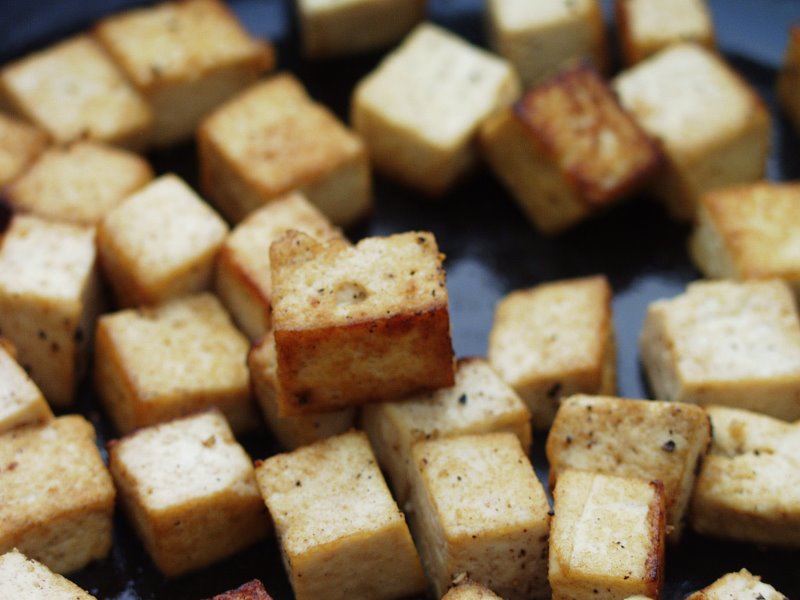
3. Drain the tofu, being careful not to break the block. Pat it dry with a kitchen towel and then cut into even bite sized cubes. In a cast iron pan, if you have one, or a normal frying pan if you don’t, gently heat up the coconut oil; I didn’t manage to find any so used olive oil. When the pan is sufficiently hot add the tofu and saute for around five minutes, being careful not to burn the tofu. Next add the soy sauce and a few grinds of black pepper and continue to saute for a few more minutes, turning the tofu so that it is evenly cooked on all sides. Once it is cooked turn off the heat and place to one side.

4. In a mixing bowl add all the miso dressing ingredients together.

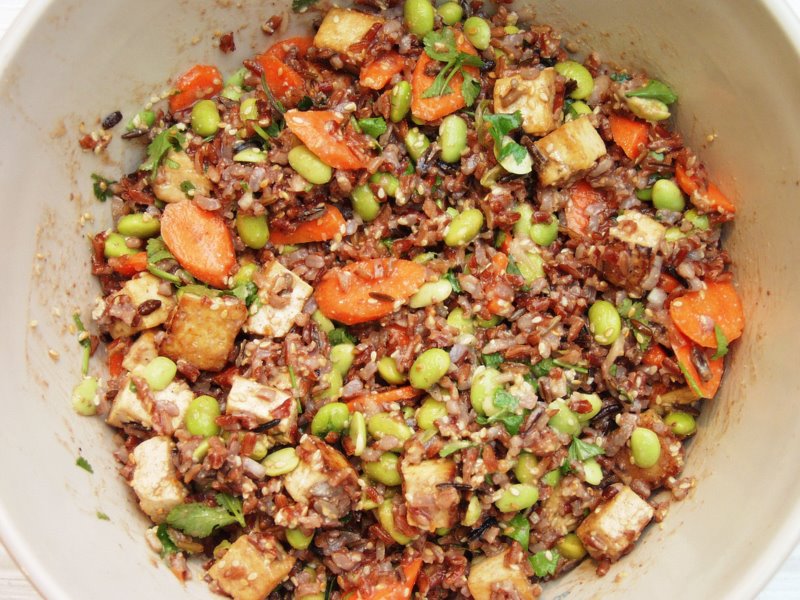
5. In a separate bowl combine the rice, tofu, sliced carrots and edamame.

6. Combine the salad with the dressing and add the toasted sesame seeds and coriander/cilantro. Serve at room temperature or chilled.


Beat this Borscht

I hadn’t planned on posting this Borscht recipe on my blog. I’ve cooked Borscht numerous times in the past and it’s always been…well…..fine…but never really much more than that. I then found a new recipe in my soup bible called ‘500 Soup Recipes’, ok my secret’s out, I AM A BIG SOUP FAN, but those who follow me I think you kind of already new that, right?

Anyway, this Borscht recipe is different from all the other Borscht recipes I’ve cooked in the past, namely that it is not smooth. Instead the beetroot are cut into thick strips, rather like chips in fact, along with the carrots and celery and because of this and the muslin bag full of herbs and spices, gives the soup an added dimension that really makes it a winner. I have followed the recipe loosely but the end result got the definite thumbs up from both myself and Mr B.

Beetroot is easy to find at this time of year and since I had just over half a dozen in my fridge that were beginning to look a little bit sorry for themselves, I decided to dedicate a recipe solely to them, well almost solely! The colour is a brilliant deep crimson and stains like crazy, so unless you like living on the edge, definitely don’t wear white when eating or cooking this dish.

As its January Mr B and I are on a bit of a health drive so we didn’t bother with the sour cream, with scattered dill or chives on top. It would have probably made a prettier photograph, but hey my waist line is thanking me for it.

Give it a try and please let me know how you get on, I’d love to hear what you think. Do you prefer it to the smooth variety that is more ubiquitous?

Borscht

Adapted from 500 Soup Recipes by Tim Smart and Bridget Jones

Serves 4-6

7 medium/small uncooked beetroot, peeled

2 carrots, peeled

2 celery sticks

2 tbsp butter

2 onions, sliced

2 garlic cloves, sliced

4 tomatoes, chopped

1 bay leaf

1 large handful of fresh parsley

2 cloves

4 whole peppercorns

2 pints of vegetable stock

75 ml cider vinegar, or to taste

sugar, to taste

salt and pepper, to taste

1 muslin

1. Peel the beetroot and carrots and cut into fairly thick strips. Also cut the celery into bit sized pieces. Heat the butter in a large pan and when it is melted add the sliced onion and stir on a low heat for 5 minutes.

2. Now add the beetroot, carrots and celery and cook for a further 5 minutes before adding the garlic and chopped tomatoes. Stir into the other vegetables and leave to simmer for a further 2 minutes.

3. Using a large piece of muslin, place the bay leaf, fresh parsley, cloves and peppercorns into the centre and tie the four corners together with a piece of string. Place the muslin  into the pan with the end of the four corners sticking out over the top of the pan slightly. Add the stock and make sure that all the vegetables and muslin pouch are submerged as much as possible. Bring to the boil and then simmer for 1 hour 15 minutes or until the vegetables are tender.

4. Discard the muslin pouch and add the cider vinegar. Pour in a little at a time and taste so that it creates the right balance of sweet and sour. Add a sprinkling of sugar if necessary. Season, stir and then ladle into bowls. Add a dollop of sour cream on top with either dill or chives.


Slow Cooked Lamb with Tomatoes, Dried Fruit and Spices

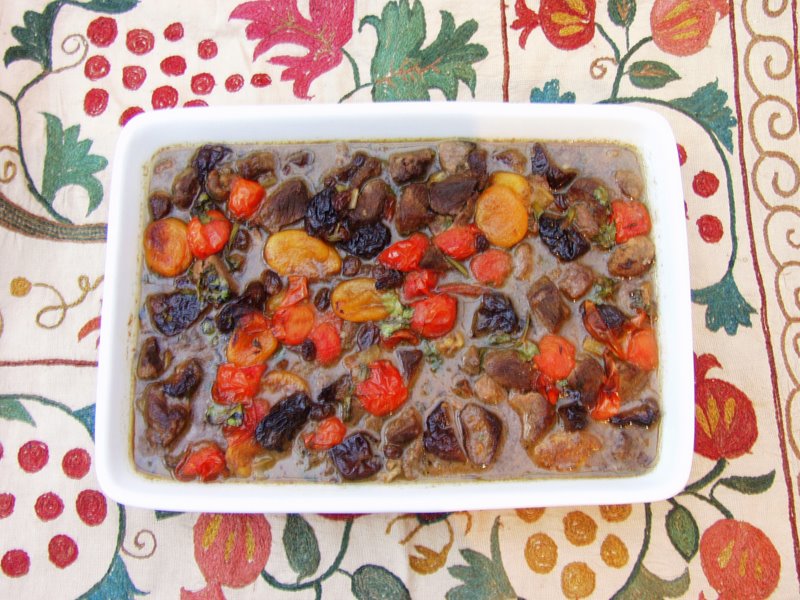
Winter time calls for hearty stews, casseroles and tagines to lift the spirits and bring joy, warmth and wonderful cooking smells into the home. You can cook them in advance and they are also perfect for leftovers the next day. Cooking with dried fruit divides opinion, but I for one am a huge fan and if someone really dislikes prunes, apricots or raisins I suppose they could easily pick them out so as to avoid eating them, but in many respects I feel they would kind of be missing the point. I think the fruit adds to the depth of flavour and gives it a touch of sweetness that makes this dish stand out from the crowd.

I don’t have a proper tagine dish so I cook mine initially in my Le creuset pot and then transfer it to two oven proof dishes. It works equally well with rice, which you can cook with a couple of cardamom pods, so as to make the dish more exotic, or couscous with a sprinkling of roasted almonds. I have added a chilli to the dish, naturally, but this is optional and tastes equally delicious without.

The amount I cooked was more than sufficient for a large group, so just divide by 2 for a family of 4/5.

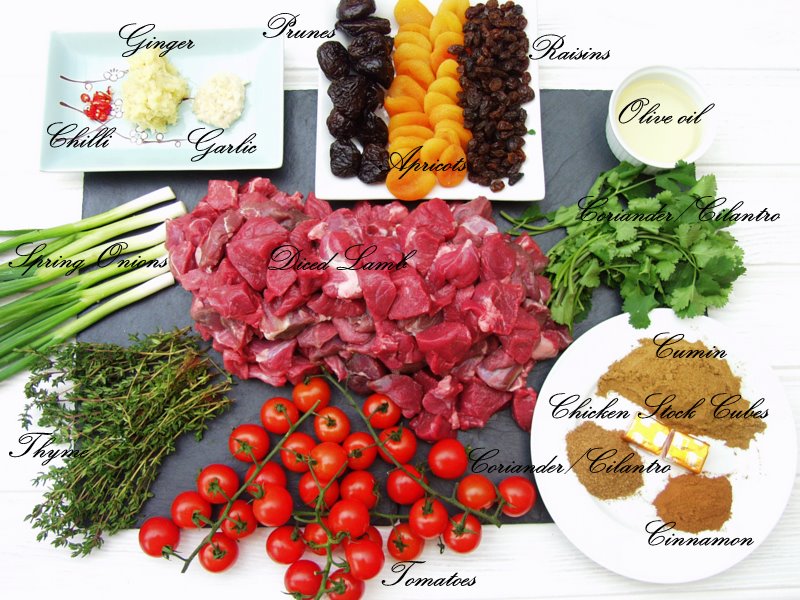
Slow Cooked Lamb with Tomatoes, Dried Fruit and Spices

Adapted from a similar recipe by Tana Ramsay’s Family Kitchen

Serves 6

3 tbsp olive oil

1.6kg lamb cut into bite sized portions

2 inch ginger, grated

4 garlic cloves, crushed

1 red chilli, chopped

6 spring onions

2 tsp ground coriander

2 tsp ground cinnamon

1 tbsp ground cumin

1.5 pints chicken stock

32 vine cherry tomatoes

handful of fresh thyme

15 dried apricots

10 pitted prunes, cut in half

50g/4oz raisins

handful of fresh coriander, chopped

rock salt, sprinkling

1) Preheat the oven to 160 degrees

2) Add  2 tbsp olive oil to a deep cooking pot and gently fry the ginger, garlic, chilli and spring onions for a couple of minutes.

3) Place the lamb into the pot and stir gently so that all the lamb begins to cook and change colour from a deep red to a lighter brown. This will take around 6 minutes. Once the lamb has changed colour add the rest of the spices and really stir into the lamb. Add the stock and then transfer into one or two oven proof dishes and place in the oven for 1 hour.

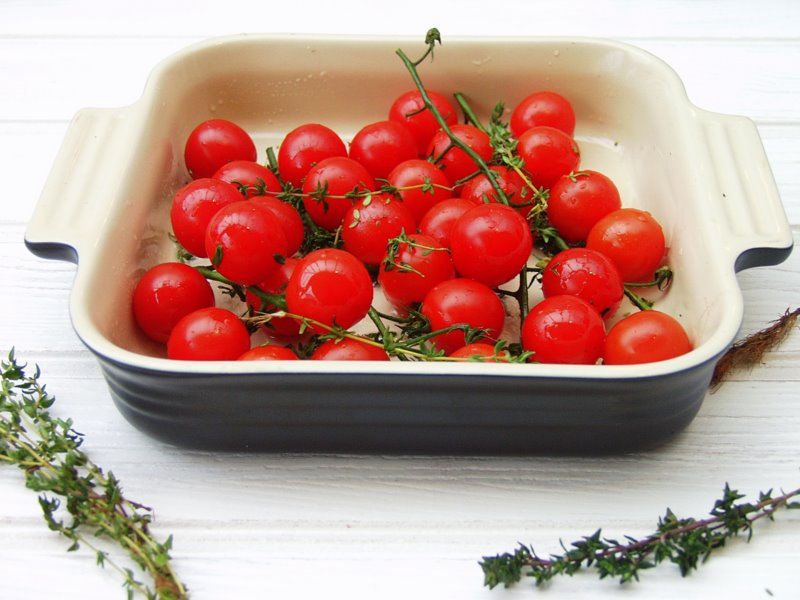
4) Whilst the lamb is cooking place the vine tomatoes in a separate oven proof dish with a few sprigs of thyme, a little olive oil and a sprinkling of rock salt. Place into the oven for 30 minutes so as to intensify the flavour.

5) When the oven roasted tomatoes have finished cooking add these, along with the dried fruits, a small handful of chopped coriander to the main dish and cook for a further 30 minutes. Serve immediately with a little extra fresh coriander sprinkled on top and either rice or couscous on the side.


Save the English cauliflower from extinction by EATING it!

It was during a recent family conversation about how cauliflower consumption is in decline, that gave me the idea for this blog. I wanted to do my bit, so as to speak, to give the cauliflower some much needed positive PR and encourage people actually to buy and eat the vegetable.  The sad truth is that if we don’t consume them we will slowly see them disappearing from our farmers’ markets, grocers, supermarkets (delete as required) and they will join the list of other extinct vegetables. A really interesting article was published a couple of  years ago in “The Daily Telegraph” with the heading ‘Cauliflower to make a comeback with environmentally friendly rebranding’ – it’s worth a read so just click here.

I think a lot of people are not too sure what to do with cauliflower, other than the obvious cauliflower cheese, which don’t get me wrong is tasty, especially when you add crispy bacon bits to the topping, but there are so many other delicious things to do with cauliflowers.

So I thought I would share two completely different recipes with you to inspire you to love and eat cauliflower. Broccoli and other so called ‘superfoods’ seem to have taken centre stage due to their health benefits, but the fact is that cauliflower is also very nutritious, perhaps not quite as much as broccoli, but close, and if the truth be told cauliflower has less calories than broccoli. You can check out the facts here if you don’t believe me!

First up…………………………drum roll please……………………. is………………………………………………..

Sweet Piccalilli, which is a gloriously tangy and vibrant looking relish which includes cauliflower as the main ingredient, along with green beens, courgette/marrow, pickled onions and spices. It’s also been referred to as ‘Indian Pickle’, indicating that it’s origin stems from the Indian subcontinent. I recently made a huge batch and then gave a number away as gifts at christmas time. A dollop of this relish is the perfect accompaniment to hams and cheeses, in fact you are guaranteed always to see it on the plate when ordering a traditional ploughman’s lunch at any good English Pub.

This recipe is sourced from my favourite preserves and pickling book called The Complete Book of Preserves and Pickles by Catherine Atkinson and Maggie Mayhew. I have remained pretty loyal to the original recipe other than the fact that I do add a little more flour as I like the piccalilli to be slightly thicker. It’s personal choice, so see how you get on and don’t be afraid to add a little more flour if need be. It is also really important to note that steps 1 and 2 you need to do 24 hours before the next steps can be completed.

Sweet Piccalilli

Makes circa 1.8kg/4lb, which was precisely 7 jars  and I bought them from here.

1 large cauliflower

450g pickling (pearl) onions

900g mixed vegetables (marrow/courgette, cucumber, French green beans)

225g salt

2.4 litres/4 pints cold water

200g granulated sugar

2 garlic cloves, peeled and crushed

2 tsp of mustard powder

1 tsp of ground ginger

1 litre/1 and three quarters distilled (white) vinegar

25g plain flour

1 tbsp turmeric

1. Clean and cut the cauliflower into small edible florets and cut off the ends of the French green beans and cut them into 2.5cm/1inch in length. The pickling onions I use are small, but if you have bought the slightly larger ones you will need to quarter them.

2. In a large bowl place the vegetables in layers and add a sprinkling of salt over each layer. Pour the water over all the vegetables and then cover with cling film and leave to soak for 24 hours.

24 hours later

3. Drain the soaked vegetables and discard the brine. You will need to rinse them well several times in cold water so as to get rid of the salt. You may find it easier to do this in batches.

4. In a large pan (preserving pan if you have one) add the sugar, garlic, mustard, ginger and 900ml/1 and a half pints of the vinegar. Gently heat the pan stirring occasionally until the sugar has dissolved.

5. Add the vegetables to the pan and bring to the boil and then reduce the heat and simmer for 10-15 minutes or until they are almost tender.

6. In a separate bowl stir the turmeric into the flour and then add to the remaining vinegar. Stir this mixture into the vegetables. Bring to the boil and stir and then turn down the heat so that it simmers for another 5-10 minutes allowing the piccalilli to become thick. If it is not the consistency you want, simply add a little more flour and it should thicken up.

7. Into warmed sterilized jars, add the sweet piccalilli and cover and seal. Store in a cool dark place for at least 2 weeks. Use within the year.

——————————————————————————————

The second recipe I wanted to share with you is Cauliflower Curry, which is really straight forward and speedy to make and perfect to eat either on its own or with a bowl of dal on the side; I also like to have mine with a little natural yoghurt. This recipe comes from my mother-in-law who stores all her recipes in her head and never seems to have precise measurements. It’s always a little bit of this and a little bit of that, and the result is always divine.  I think you will be pleasantly surprised at how tasty and simple this dish is to make.

Cauliflower Curry

Serves 2-4 accompanied with another dish such as dal or speedy salmon curry

1 large cauliflower

2 tbsp of mustard oil (or sunflower oil if you do not have mustard oil)

1 tsp  nigella seeds

1 tsp turmeric

1tsp ground coriander (cilantro)

1tsp ground cumin

1tsp garam masala

1 tsp salt

half tsp chilli powder

3 inch cinnamon bark, broken into smaller parts

splash or two of water

1 heaped tsp of ghee or butter, optional

1. Wash and cut the cauliflower into small florets. Do not discard the outer green bits as these too can be used in the curry.

2. In a pan warm up the oil on a low heat and when it’s hot add the nigella seeds. After 10 seconds add the cauliflower and stir into the seeds and the oil. Add the turmeric and then let the cauliflower gently cook away. You want to begin to see the cauliflower bronzing before adding any more of the ingredients, this will take between 5-10 minutes. Keep the oil on a low heat or you will find that the cauliflower will burn, which is not the effect that you want to achieve.

3. Add all the rest of the ingredients, aside from the ghee/butter and water. Stir them all together and then add a small amount of water to help soften the cauliflower and help it cook. Cook for further 10 minutes and then add the ghee/butter and stir into the cauliflower to give it a more buttery taste. This is not essential so try it both ways and see which you prefer.

4. Serve with natural yoghurt.

Do you have any any cauliflower recipes that you cook at home and would recommend? I’d love to hear them.
Indian Spiced Tea – the perfect hot drink for stormy weather

Indian Spiced Tea

Oh its been mighty stormy recently in the UK. The type of storm that wakes you up in the middle of the night and your mind begins to play tricks and convinces you that the house will take off torpedo style like Dorothy from the Wizard of Oz . Since I’m living in England and not Kansas or along a typical hurricane belt, I normally manage to get back to sleep in the knowledge that the wind will pass and we won’t be reliving the 1987 hurricane.

For the last few days however, the winds and rains have been battering our doors and keeping us cooped up inside. So when they gave us a little respite and a clear sky was visible we grabbed our wellies and headed out to face the cold wind on a country walk and to stretch our legs. We are spending a few days out of London so a walk in the fields with the pheasants and sheep was overdue.

After a bracing walk we returned to the warmth of the house and drank Indian spiced tea from elegant antique bone china cups, as you do.

In Kolkata, where Mr B is originally from, they often serve it in delicate little clay mugs, like this, at the side of the road from chai wallahs. They are often made from river clay that is then baked in an open fire. After use you literally discard your clay mug and it dissolves back into the earth. Environmentally friendly and far more hygienic than having a glass washed rapidly in unsanitised water at the edge of the road.

The drink is sweet, creamy and fragrant with ginger, cardamom, cloves and cinnamon all vying for attention. It’s the perfect drink to transport us to warmer climates and exotic locations. Try it and let me know. If you prefer a stronger tea then add one more tea bag and a little less milk and more water.


Please note that I have not added the water in this photo and you will need more milk than what is shown, the jug was too irresistible not to photograph.

Indian Spiced Tea

Serves 6

600ml full fat milk

600ml cold water

1 tbsp soft brown sugar

1 tsp ground cinnamon

1tsp ground ginger

1tsp ground cardamom (this works out to be approximately 5 cardamom pods)

1/2 (half) tsp ground cloves

3 tea bags (black tea such as PG)

6 cinnamon sticks, for serving

Please note that I have used ground spices, however, if you do not have these to hand or do not have a spice grinder you can use fresh ingredients and then simply strain the liquid after the tea has infused and before serving. 

1. In a saucepan add the water, all the spices (except the cinnamon sticks which are for serving) and the tea bags. Bring to the boil and then simmer for  5 minutes before adding the milk and sugar and then simmering for a further 10 minutes.

2. Let the spices and tea continue to infuse off the heat. You can leave them in the pan to cool. All this can be prepared in advance a few hours before drinking.

3. When ready to serve reheat the tea, removing the tea bags and simmering gently for 5 minutes. Serve immediately and place a cinnamon stick in each mug/glass. This is done more for effect than a major flavour enhancer so do not worry if you do not have any to hand.


New Beginnings and Small Things – Tana Ramsay’s Sausage Casserole with Savoy Cabbage and Butter Beans

There is something rather cathartic about the new year.  A whole new beginning, new goals, hopes, dreams and possibilities. It’s almost as if we can wipe the slate clean and start again. We always set out with good intentions, well I do anyway, but as the year flies by things don’t often turn out the way we hoped or planned. As Mr B and I sat in our yoga class at 10 am on new year’s day feeling very worthy, we pondered on this very question when our yoga teacher spoke about new goals and not being too overly ambitious. She explained that sometimes small changes to our lives can have larger lasting effects than we would think as they start a positive knock on effect. I think this was a good piece of advice as we will find more peace within ourselves in the long run if we set more achievable goals. So I for one am going to focus on the smaller things and then perhaps the bigger things will happen naturally.

I am excited about  the recipes I am going to share with you all over the course of  this year and how, I hope, my photography will improve as I get more practice and perhaps even upgrade the camera.

 A wonderful recipe to start this year’s blog posts is one I found years ago when I got hold of a copy of Tana Ramsay’s ‘Family Kitchen‘. I have always felt she has been in the shadow of her rather larger than life husband, but if the truth be told (sorry Gordon) I actually prefer her recipe books to his. Its good old family comfort food, which is a joy to cook and even better to eat. Her ‘Sausage Casserole with Savoy Cabbage and Butter Beans’ is tasty and the perfect meal to eat after a bracing new years winter walk. I have made a few changes from her recipe – I omitted leeks and added more fresh thyme for example, but on the whole I have tried to keep largely to her original. If you like this recipe a very similar one on my blog is Caldo Verde, so check that out as well if you fancy.

So here is what you need:

I like to add a spicy red chorizo, but with little Z and big A eating it as well I decided to cook with a more family friendly chorizo. Chunks of brown fresh bread are the perfect accompaniment to mop up the the bits in your bowl at the end.

Happy New Year to you all, hope 2012 brings health, happiness and joy to you and your families.

Sausage Casserole with Savoy Cabbage and Butter Beans

Serves 4-6

a good glug of olive oil

2 onions, finely chopped

1 garlic, chopped

500g/1lb sausages

55g/3oz pancetta, or bacon lardons

a handful of fresh thyme

55g/3oz chorizo sausage, cut into bite sized chunks

1 tin of butter beans, drained

1.5 litres/2.5 pints of vegetable stock

8 mushrooms, sliced

1 savoy cabbage, shredded and core removed

1. In a deep pan, I like to use my favourite Le Creuset cast iron casserole pot, heat up the oil and add the onions and garlic and fry for 3-4 minutes so that they soften. Add the sausage and do not add any further ingredients until they have begun to brown – this may take a further 5 minutes.

2. Add the pancetta and fresh thyme and leeks if you are going to include them as well. Stir well and then add the chorizo so that is begins to sweat and the casserole begins to take on a reddish hue.

3. Add the butter beans, mushrooms and stock and leave to simmer for around 15 minutes.

4. Add the shredded cabbage to the pot. It may look like a lot, but I promise you it will cook down, similar to spinach, when it has been cooking for while. Simmer on a low heat for at least 30 minutes.

Serve in bowls with chunks of bread.


No more cold cuts please – Turkey, Ham and Leek Pie

I hope you all had a wonderful Christmas with your family and loved ones and that it was not too stressful if you were the one in charge of feeding the masses. We always end up with loads of turkey and ham/gammon leftovers and whilst cold cuts are delicious for maybe one or two sittings, any more than that and one craves for variety. I felt a good old fashioned pie would be the perfect way to use up some of the leftovers and fill the bellies of my guests. It was polished off in one sitting so I guess you could say that it was hit.

Turkey, Ham and Leek Pie

serves 8

4 leeks, chopped

2 celery sticks, chopped

100g mushrooms, chopped

450g turkey, (or chicken) cut into small sized chunks

350g ham/gammon, cut into small sized chunks

1 heaped tbsp wholegrain mustard

1-1.5 litres of turkey stock (you could also use a tin of Campbell’s Cream of Chicken Soup or a combination of the two)

2 tsp of cornflour (if using stock add cornflour, you won’t need to if you add the chicken soup)

3tbsp cold water

pinch of salt

black pepper

400g of shortcrust pastry or ready made

1 egg, lightly beaten

1. Preheat the oven to 180 degrees fan.

2. Evenly chop the celery, leeks and mushrooms and place most of them on the bottom of the pie dish. (The dish I used was 35cm length by 24cm width). This will allow the vegetables to cook properly through when they are in the oven.

3. Cut the turkey and ham into small sized chunks and scatter over the vegetables along with the remainder of the vegetables that you put to one side. Add the wholegrain mustard and mix into the vegetables and meat.

4. If you have any turkey stock left over use that, otherwise, use chicken stock cubes, such as knorr or Campbell’s cream of chicken soup works really well. I also had some juices left from the ham so I managed to combine these into the stock as well giving it a really delicious taste. Add approximately 1.5 litres of stock to the pan and warm it through completely. Place 2 teaspoons of cornflour into a small bowl along with a couple of tablespoons of cold water. Stir until the cornflour is smooth and watery and add to the stock to thicken it.

5. Add the stock over the meat and vegetables and using your hands try and make sure all the pieces are covered to some degree in the stock. Add salt and pepper to season.

Easy Shortcrust Pastry

400g plain flour

200g butter, cubed

2-3 tbsp of cold water

6. To make your own pastry, simply place the plain flour into a large mixing bowl along with the cubed butter (room temperature is best). Using your finger tips gently mix the butter and flour together so that it begins to crumble. Using a knife stir in a little water into the dough so that it binds together. If you put in too much water just add a little extra flour. Once the dough has come together, form a ball and cover with clingfilm and place in the fridge for 15 minutes.

7. Roll the pastry out onto a cold floured surface. Once it is larger than your pie dish gently place it over the top of your filling making sure the extra pastry hangs over the sides. I find it is best to use the rolling pin to place it gently on top. Press down at the edges using your finger and thumb so that the pastry is completely secure. Using a knife cut the extra pastry that is hanging over the sides. You can then get creative on the top of your pie using the left over pastry.

8. To help give your pie the perfect brown glow, gently brush the top of the pie with your beaten egg.

9. Using a fork place a few fork marks over the top of your pastry so that it can let out the air within the body of the pie when cooking.

10. Place in the oven for 30-40 minutes, checking to see that it does not brown too much. Serve immediately with peas and new potatoes.