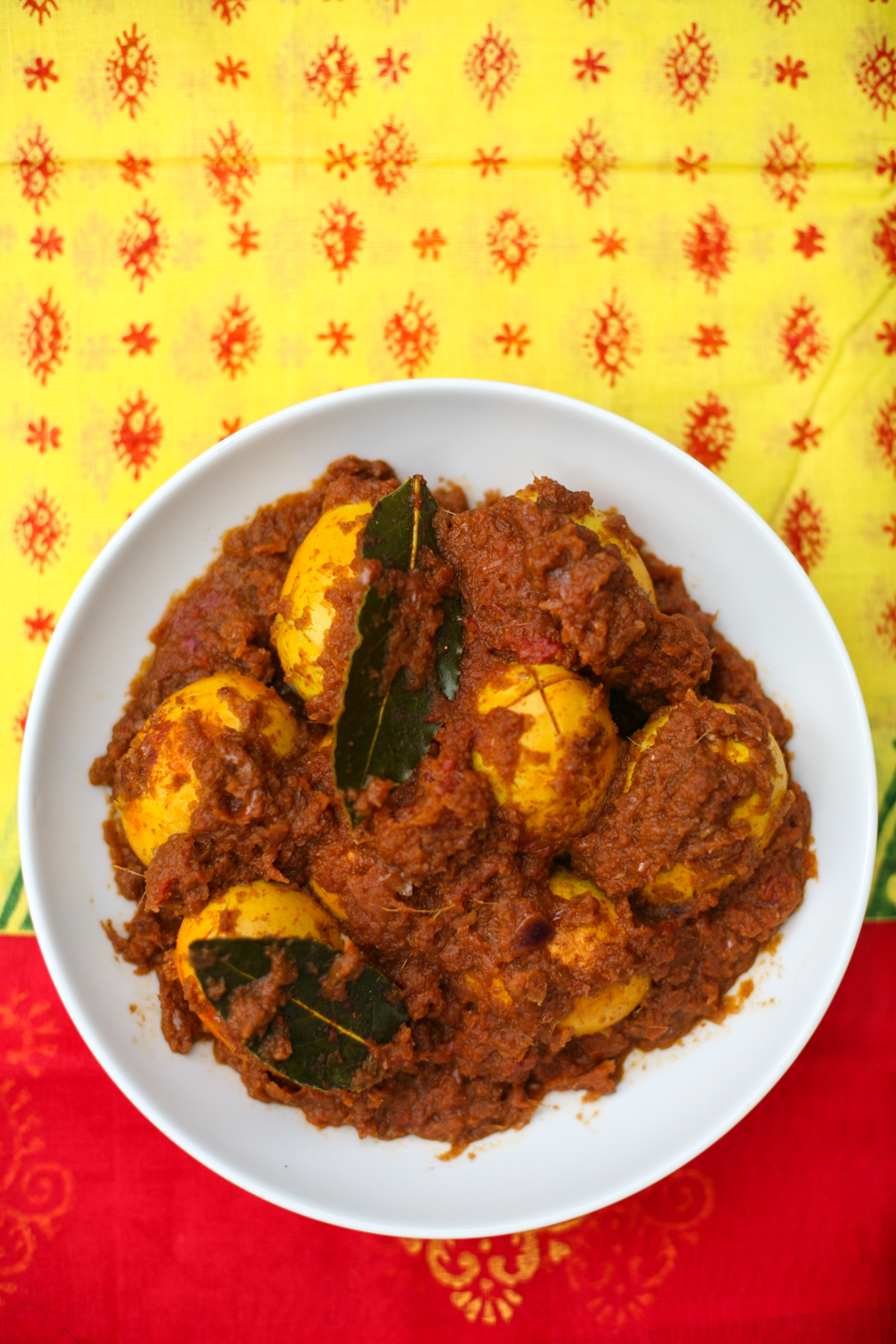
Bengali Egg Curry

IMG_7385

When I was staying in the heart of Kolkata, I was often woken from my deep slumber by the egg (dim) or milk (dudha) wallah shouting out in his crescendoing voice each morning. It was my regular wake up call to get out of bed and embrace the day ahead. There was something very charming about the wallah selling the fresh eggs and milk as he pushed his cart slowly down our road. Bengalis love eggs as much as I do. To this day, a picnic is not a proper picnic without a hard boiled egg. So when I was introduced to Bengali egg curry many moons ago, it was an immediate hit. Easy to execute, it makes for a most satisfying protein rich meal.

For the adventurous, this also serves as a wonderful late Sunday brunch with a kick.

IMG_7364

After boiling the eggs, remove the shell and place a cross with a sharp knife at the top of each egg and make a few other incisions on the skin and then cover them with turmeric and salt. Shake the bowl gently so that the eggs are properly covered in the turmeric.
IMG_7370

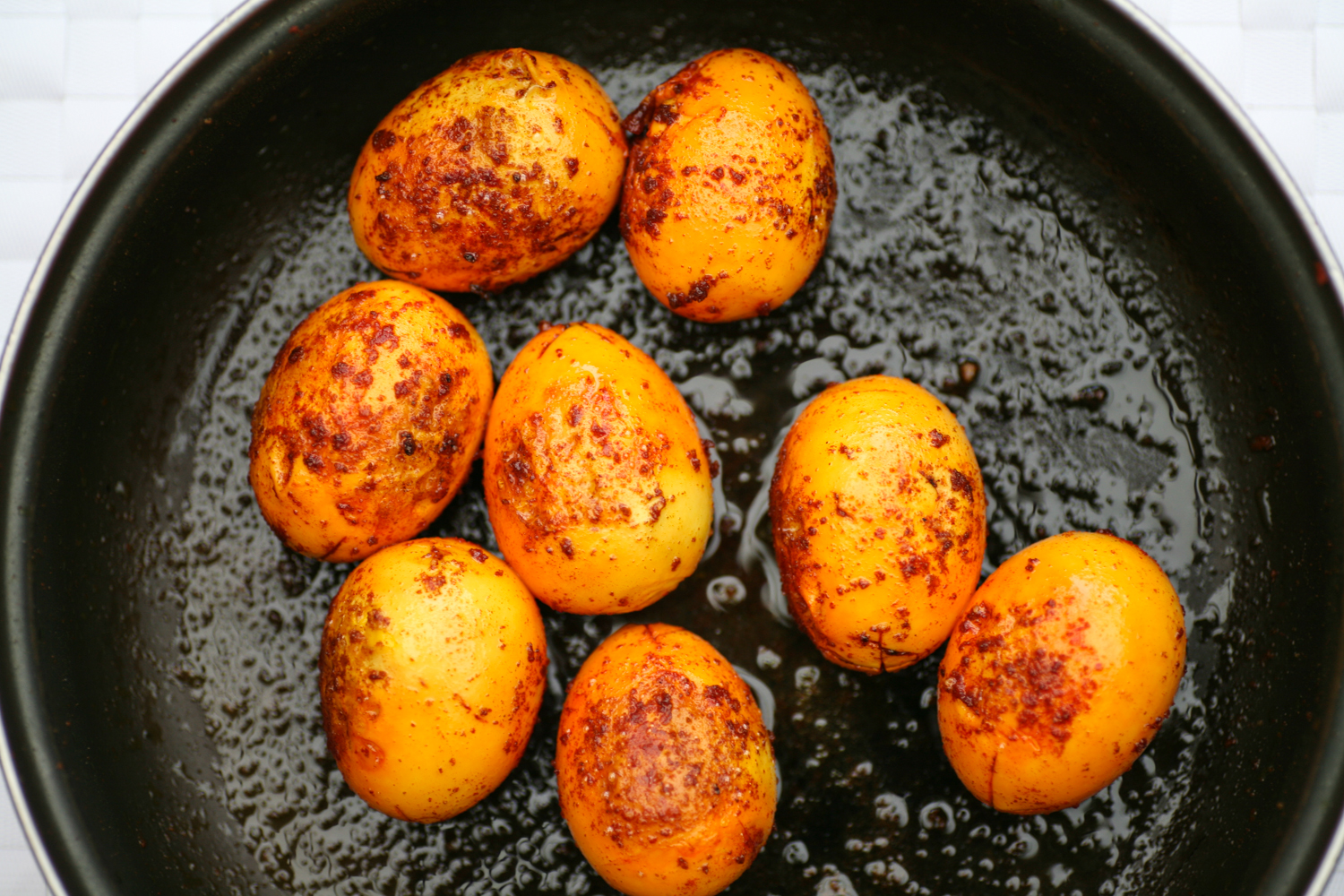
Fry the eggs in a pan so that the outer skins darken and harden. Then place to one side.

IMG_7427

Bengali Egg Curry

Serves 4

6 eggs, hard boiled

1 tsp turmeric

1 tsp salt

4 tbsp vegetable/mustard oil

2 onion, blended into a paste

4 garlic cloves, blended into a paste

2 inches of fresh ginger, blended into a paste

2 bay leaves

1 tsp cumin powder

2 tsp coriander powder

1/2 tsp sugar

1 tsp kashmiri red chilli powder

1 plum tomato from tin and a little juice (or 1 fresh tomato)

1 tsp garam masala

1.  Boil the eggs in water for 5 minutes and then strain under cold water and peel off the shells.

2. Place a small cross incision at the top of each egg as well as a few prick marks over their sides so that they do not explode during cooking. Place in a bowl and cover with turmeric and salt.

3. In a pan heat up some oil and when hot carefully lower the eggs into the pan and let them sizzle away for a few minutes so that the sides are bronzed and the skins harden. Remove from the pan and place to one side.

4. With an electric blender, blend the onion, garlic and ginger to form a paste. Add a little water so that the paste runs smooth. In the same pan that you cooked the eggs in, add a little more oil before adding the onion/garlic/ginger paste and simmer gently, moving the paste around in the pan with a spoon. When it dries up add a little boiling water and continue to heat through.

5. Add the chilli, coriander and cumin powder as well as the bay leaves and fold into the paste. Now add the chopped plum tomato and a little  tomato juice (about 2 tbsp) and leave to simmer.  Add a little more boiling water and let it simmer gently.

6. Return the eggs to the pan and fold into the paste along with the garam masala. Simmer for a few more minutes and add a little more salt if necessary.

Serve with some plain basmati rice or naan bread.

IMG_7395


Bengali Mustard Fish Curry

This post has been a loooooong time coming. Last week was totally full on with both my daughters now in school. There was a catch however, that being that Little Z was to be weaned on gradually with half days over the course of the week and a half, which mean’t that much of my existence was spent ferrying children in a car back and forth to school – six times per day for me to be precise, therefore allowing very little time to actually get on with anything productive.

At the weekend I threw myself into organsing an a friend’s baby shower so was baking and making in preparation for the event. The spread included: a Victoria sponge cake, flapjacks, egg mayo, smoked salmon with horseradish, cream cheese and cucumber finger sandwiches, rainbow coloured fruit sticks (got to keep it healthy!), a carrot cake and a few other sugary treats accompanied by big cups of tea and coffee, oh and not forgetting peach bellinis upon arrival.

IMG_7126

It’s now Tuesday and calm has reigned once more in my life as Little Z stays at school for her first full day. This now gives me the necessary breathing space to get this blog post out to you all.

•••••••••••••••

IMG_7166

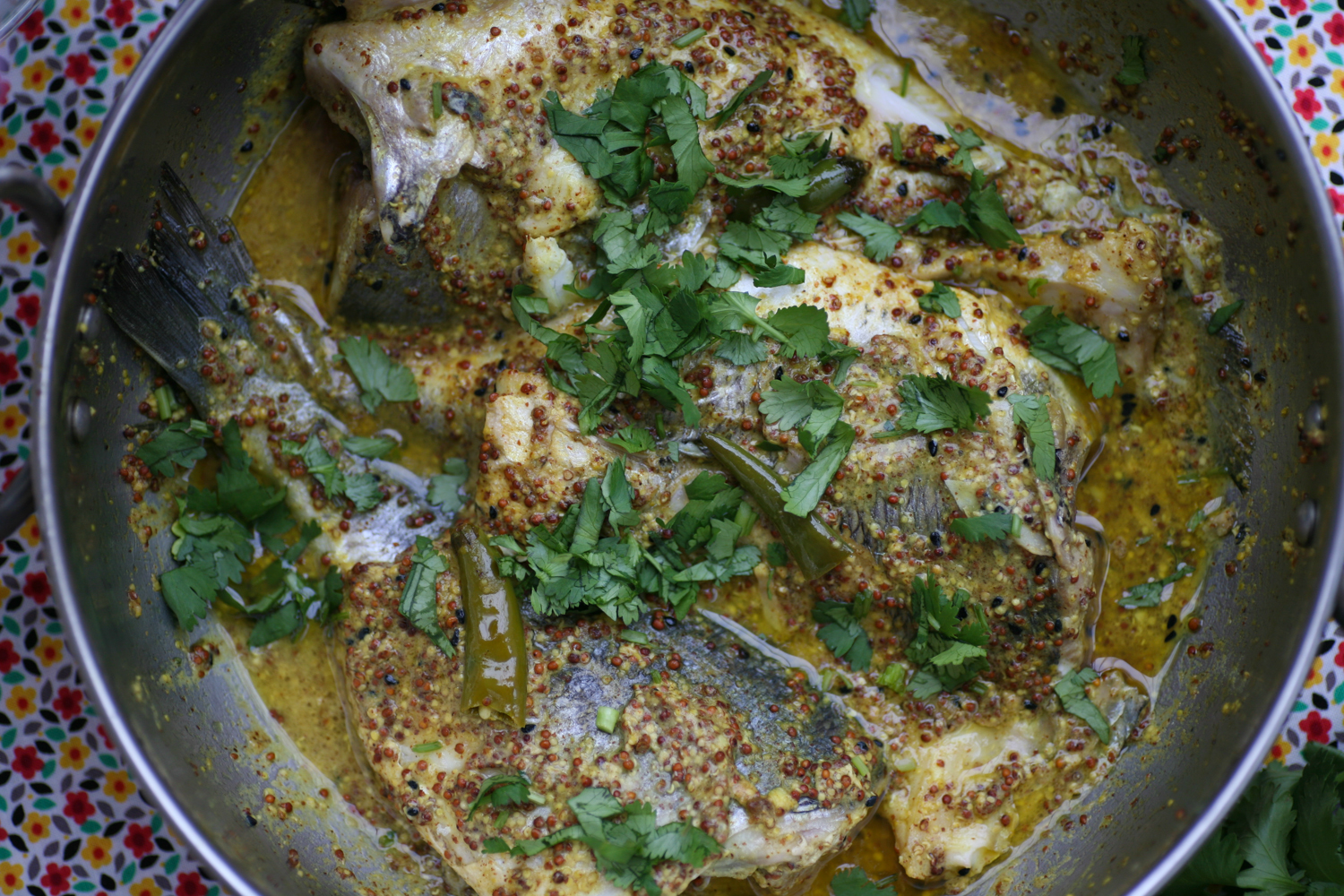
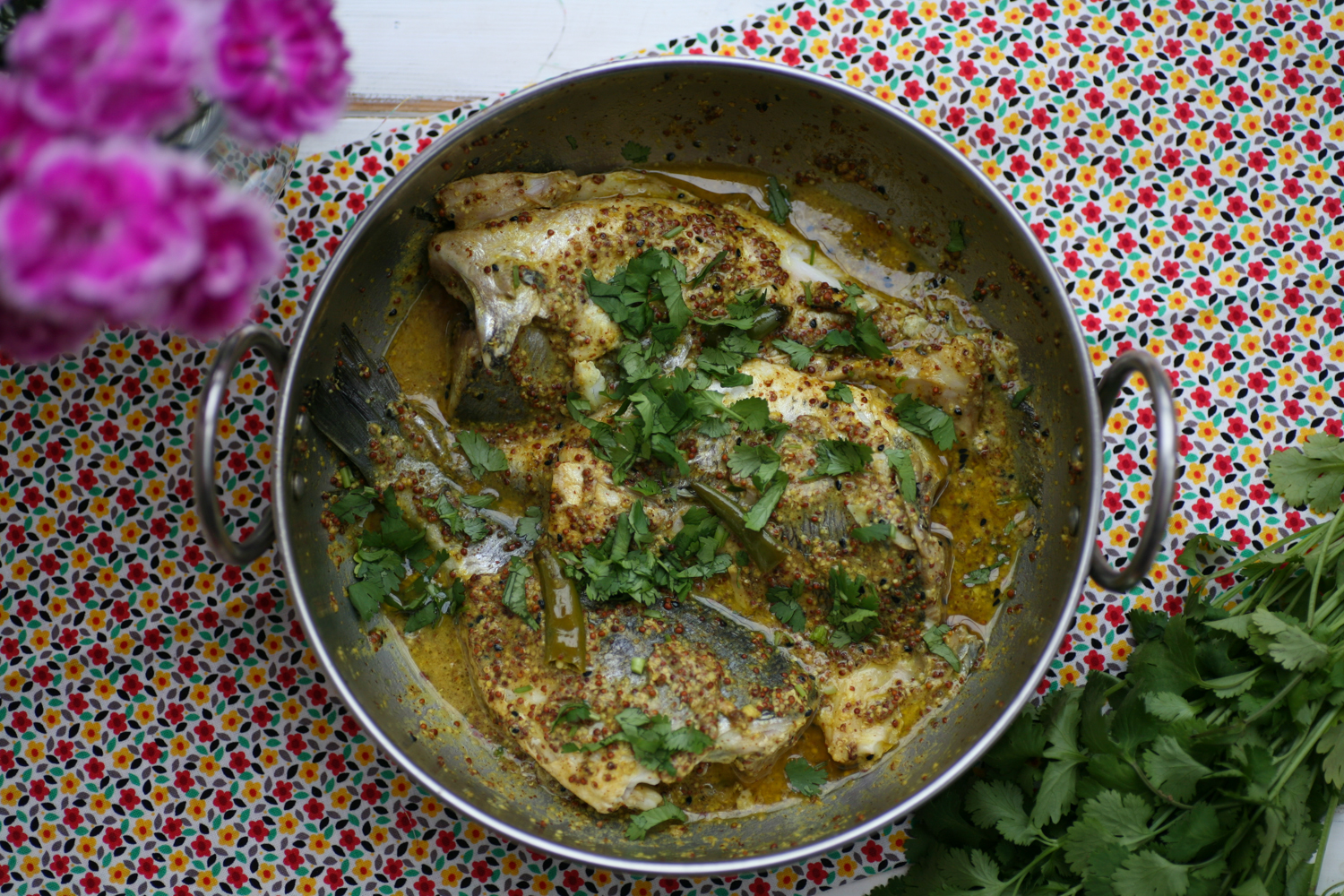
Mustard fish curry – Maach (fish) Jhol (gravy/curry), is probably THE most popular fish dish in Bengal. The Bengali diet includes a lot of fish and mustard oil/seeds/paste is as ubiquitous in Bengali cuisine as pepper is in the west. Traditionally the mustard paste for the curry is made by grinding brown mustard seeds on a ‘sheel nora’ or grinding stone that can be found in traditional Bengali kitchens. I learn’t this recipe however from my husband, Mr B, and my mother in-law who have converted to the quicker version of mixing some smooth Dijon mustard with some wholegrain mustard, which works superbly. Cheating? Well not really, just speeding up the process, which is always a bonus in our otherwise hectic lives.

This time I used sea bream, mainly because it is what I had in my freezer, but mackerel, tilapia, salmon or trout work equally well. Served with a bowl of rice it is perfect for a speedy week(end) night supper.

IMG_7226

Some recipes require that you rub turmeric and salt into the fish first and then deep frying them for a 2/3 minutes and then in a separate pan adding the mustard oil, nigella seeds and mustard paste followed by the fried fish. I have always tended to omit the first part, keeping the dish healthier, but by all means try both versions and see which you prefer. Similarly I often cook the dish with the fish whole, but head removed. However, you can also chop the fish into smaller pieces but do not fillet it as it will not work so well.

Bengali Mustard Fish Curry 

Serves 3 (if serving for 4 add one more fish and an extra chilli or two!)

3 sea bream/mackerel/tilapia/salmon/trout, head removed but kept whole

3 tbsp mustard oil

1 tsp nigella seeds

1/2 tsp chilli powder

1/2 tsp turmeric

3 green chillies, halved (more if you prefer it hot hot)

1 heaped tsp Dijon mustard

3 tbsp wholegrain mustard

pinch of salt

8 tbsp water

1. In a pan/wok/kadai heat up the mustard oil. When it is hot carefully add the nigella seeds, chilli powder and turmeric. Stir for a few seconds before adding both mustards. Stir well.

2. Add the chilli and then place in the fish using a spoon to cover the fish in the mustard juices. Add a pinch of salt and some water and place a lid on the pan so that the fish can steam. Keep the heat low so as not the burn the bottom of the pan. If it is drying out add a little more water or oil if need be. Spoon the juices over the fish from time to time.

3. The fish will be cooked within 10 minutes. Leave to rest. Scatter with chopped coriander before serving. To reheat, simply add a sprinkling of water and warm the pan.

Serve with rice.

IMG_7224


Rezala – Lamb Rib Chop Curry with Rose Water and Saffron

IMG_4595

Tomorrow I am heading off to Asia once again, returning to Hong Kong, but also managing to squeeze in a long overdue visit to Vietnam. I’m looking forward to visiting my favourite eating haunts that I discovered on my last visit to Hong Kong in December/January, as well as scoping out new restaurants that I never had time to visit. As for Vietnam, well I cannot wait to see what it has to offer on the food front. I am definitely going to be seeking out the ubiquitous Pho – the legendary Vietnamese soup and Banh Mi, which I fell in love with after eating my first here in London, it’s basically a Vietnamese version of a sandwich but is off-the-charts incredibly tasty. I am also looking forward to sampling a variety of Vietnamese spring rolls and hoping I can remember how to make them when I come back home so that I can share the recipes with you. Whilst I am not a coffee drinker I hear the coffee in Vietnam is out of this world and may even win over a non-coffee drinker….so let’s see.

In the meantime the dish I wanted to leave you with today, and one that I hope that you will try, is a Bengali dish known as ‘Rezala’, whose roots lie with the Muslim rulers of the Mogul era. It is both fragrant and sweet and yet there are some sharp notes from the lime that compliment the overall taste of the dish. Other flavours resonate from the dish as well including: cloves, cardamom, saffron, ginger, garlic, cumin and chilli powder. It is a dish that heightens the senses and beckons you to eat more….so you’ve been warned!

Rezala – Lamb Chop Curry with Rose Water and Saffron

Adapted from Mridula Baljekar’s recipe in ‘Curry Lovers Cookbook’

Serves 6-8 (or 4 with leftovers for another day!)

3 medium sized onions, chopped

splash of water

3 garlic cloves, crushed/chopped

3 tsp grated fresh ginger

6 cloves

18 peppercorns

8 green cardamom pods

4 small pieces of cinnamon bark

14 lamb rib chops

2 medium sized onions, very finely sliced

200ml natural plain yoghurt

75g butter

vegetable oil

1 tsp salt

1 tsp ground cumin

1 tsp chilli powder

1 tsp sugar

juice of half a lime

pinch of saffron – place into a small bowl with 1 tbsp of hot water for 10 minutes

1 tbsp rose water

rose petals

1. Place the three chopped onions into a blender with a splash of cold water and blend until you have a smooth puree.

2. Place the puree into a large bowl along with the grated ginger, garlic, cloves, cardamom pods, peppercorns and cinnamon bark and stir together before adding the lamb rib chops. Use your hands to  coat the lamb fully. Cover with cling film and place in the fridge for a few hours – or overnight if you can. Remember you need to bring the meat back up to room temperature before cooking it!

3. Heat some oil in a large pan and gently fry the remaining 2 onions, which need to be finely sliced. Gently fry until the onions have browned, which will take around 6 minutes. Remove the onion from the oil and place on some kitchen paper so as to soak up the oil.

4. Using the same pan, fry the marinated lamb chops for 5 minutes before reducing the heat and simmering on a low heat covered for another 5-7 minutes.

5. In a separate pan mix the butter and yoghurt together, stirring constantly for around 5 minutes before stirring into the lamb chops, along with the salt, cumin and chilli powder. Cover and gently cook for 50 minutes.

6. Finally add the sugar and stir into the curry before adding the lime juice, saffron and rose water. Mix well and simmer for a few minutes.

Serve with the fried onions and a scattering of rose petals. The sweet smells coming from this dish are sublime. Eaten with rice or naan, this dish is very memorable. I hope you agree.

IMG_4590


Bengali Prawn Curry

IMG_4683

This Bengali prawn curry is one that was passed on to me by my mother-in-law and is, without doubt, my favourite of all prawn curries. The sweet undertones from the desiccated coconut and prawns blends superbly with the black mustard seeds and chilli powder, giving it a gently kick. I love to cook it using the king of all prawns, but it tastes equally good if you cook it using the smaller varieties as well. I do prefer to keep the tails mind you, both for appearance and because it holds the prawns together well, so if you can find prawns with shells and tails on I would always opt for those as opposed to buying the ones that have already been shelled and deveined.

IMG_4611

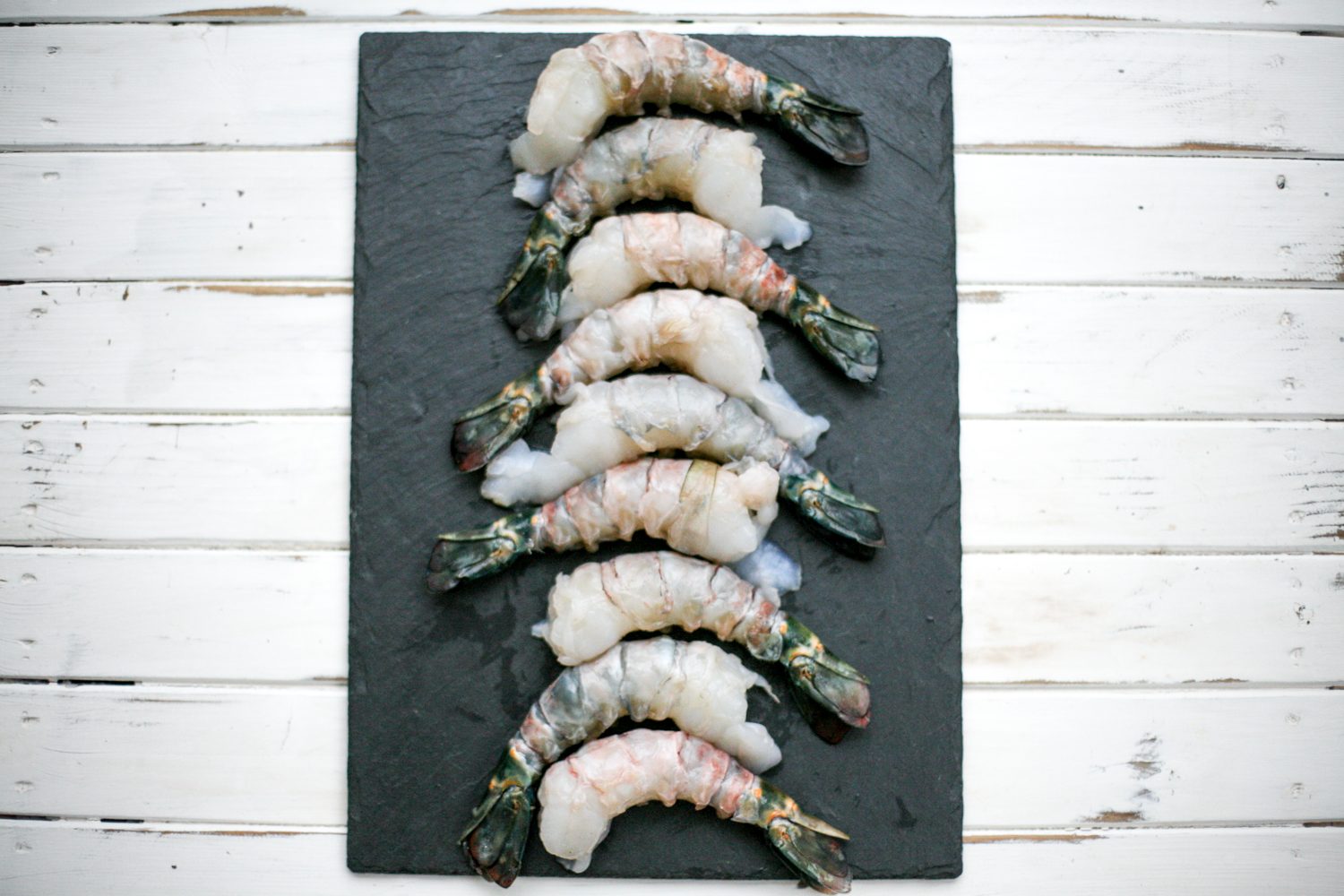
The prawns will be a greyish colour when you buy them. I bought frozen prawns and then let them defrost slowly over night in the fridge before peeling and deveining them in the morning. They remind me of the giant grilled prawns I would eat most evenings when I was staying on the shores of Lake Malawi for my honeymoon, many moons ago.

IMG_4620

Within seconds of being gently cooked the prawns will turn a fabulous pink and begin to curl into themselves. They only need a minute or so cooking on each side to seal them.

IMG_4629

The sealed prawns waiting to go into the curry sauce. The meatiness of them makes them a very satisfying and filling meal.

IMG_4641

Once the prawns have been added to the curry sauce let them simmer gently for a few minutes, making sure you coat the prawns sufficiently in the delicious sauce. Sprinkle ground garam masala over the prawns and give a little stir, before serving with basmati rice.

Bengali Prawn Curry

Serves 3-4

600g prawns, peeled, deveined but tails left on (I used 9 frozen super king prawns)

1 medium sized white onion, finely chopped

3 garlic cloves, finely chopped

1 inch piece of fresh ginger, skin removed and grated

vegetable oil

2/3 bay leaves

1 tsp black mustard seeds

25g (or 4/5 tbsp) desiccated coconut

1 tsp turmeric powder

1 tsp sugar

1 tsp chilli powder (less if you prefer it less hot)

1 tsp cumin powder

1 tsp coriander powder

1 tsp salt (you may wish to add one more – taste first)

2tbsp chopped tin tomatoes

200ml boiling water

1 tsp ground garam masala

1. Heat a couple of tablespoons of vegetable oil in a fairly deep frying pan or karahi. On a low heat add the prawns, in stages if your pan is on the small side, so as to seal them. They will curl up slightly and take on a vibrant pinkish hue. After a minute or so turn them over so that both sides are sealed. Then turn them on to their backs so as the top side is also cooked. Remove from the pan and place on a plate to one side, whilst you finish cooking the remaining prawns.

2. Add a little more vegetable oil if it is running dry and keeping the oil at a low heat add the black mustard seeds. They will burst open and sizzle so make sure the oil is not too hot as they will spit! Add the bay leaves and stir with the black mustard seeds.

3. Add the onion, garlic and ginger to the pan and cook gently for around 5/6 minutes until they begin to bronze in colour.

4. Add all the spices apart from the garam masala, as well as the salt and sugar.  Stir together and add the tinned chopped tomatoes.

5. Add 200ml of boiling water and add the desiccated coconut. Bring to the boil gently stirring and add the prawns. Gently cover the prawns in the sauce and simmer for a few minutes. Taste and add more salt if necessary.

6. Add the ground garam masala over the prawns, give a quick stir and serve immediately.

Serve with basmati rice.


Duck Vindaloo

IMG_4092

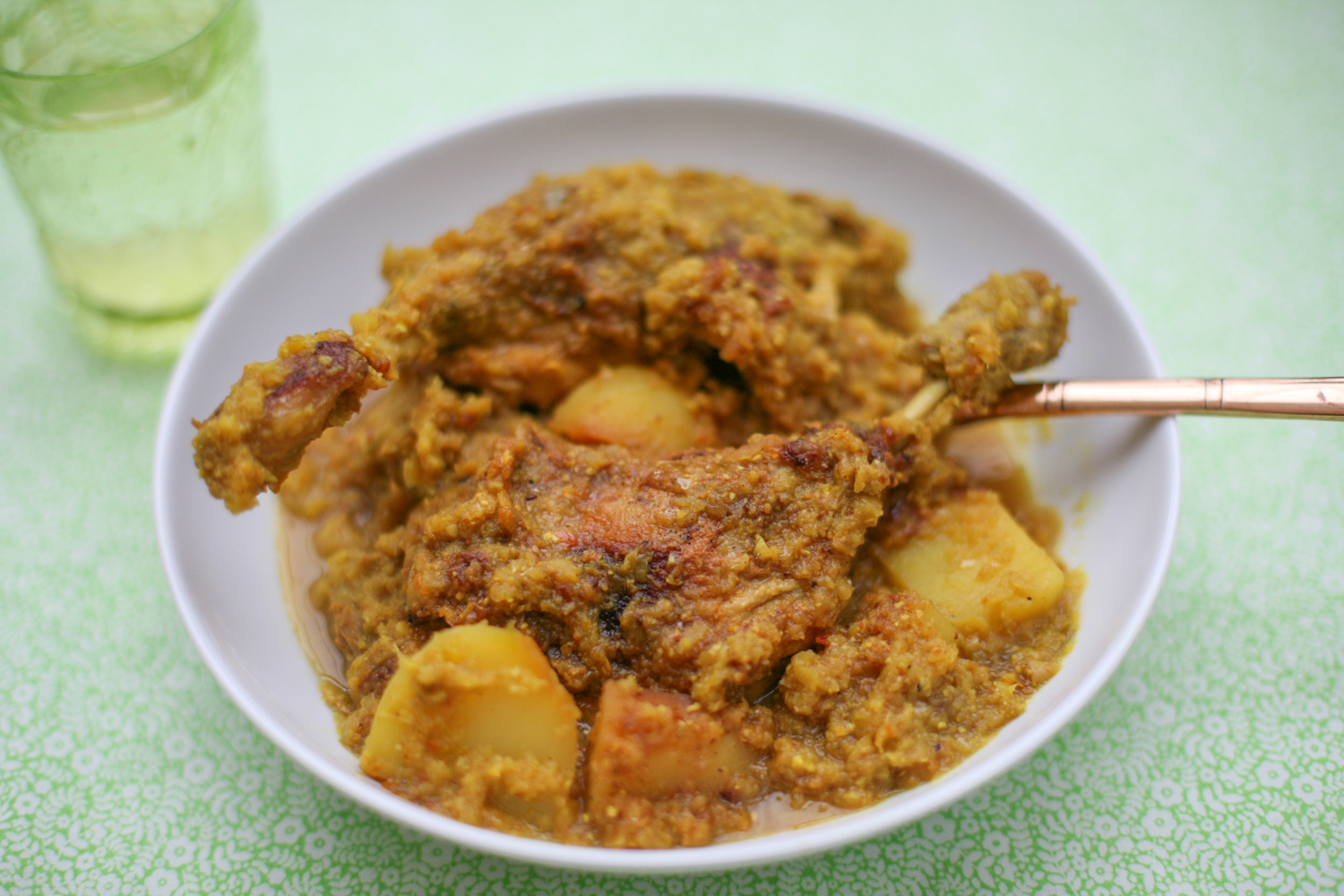
Sometimes I think it’s good to eat a meal that really makes you feel alive, something that has some real zing to it. I understand though that loving chilli and things hot and spicy really divides opinion and that it is definitely something that you build up a tolerance to over time, similar to swimming in cold water in fact. It’s good to have a gradual build up rather than jumping in at the deep end whether it be cold water or chilli. On this basis I have shown you how to cook a hot vindaloo as well as a more mild version, but one that still has a pleasant kick to it.

I rather like using duck for a change, but should you wish you could also easily cook this with chicken. Pork vindaloo is probably the most well known Goan version – which you can follow the recipe to HERE, however, duck adds an interesting and tasty alternative, which I urge you to try.

I suggest you probably try the more subtle version first and then gradually build up the chilli content should you require more of a kick. I would love to hear how you get on so do leave a message in the comments box below….go on, don’t be shy.

Duck Vindaloo

Serves 4 (or 2 if you are very hungry)

4 duck legs (or 1 duck jointed)

2 sticks of cinnamon

5 cloves

2 green cardamom pods, slightly split open

3 white onions

10 garlic cloves

2 inches of fresh ginger

5 dried red chilli (2 if you prefer it milder) I use the small Thai variety

5 small green chilli (2 if you prefer it milder) I use either serrano or finger chillies. Use Jalapeno if you prefer it less hot

1 tbsp cumin seeds

1 tsp turmeric

3 tbsp white wine vinegar

5 small/medium potatoes, peeled and quartered

1 tbsp sugar

1-2 tbsp butter/ghee

300ml water

1. Place the duck in a deep pan filled with cold water so that it covers the duck legs. Prick the duck a few times with a fork so that the spices can penetrate into the meat. Add the cinnamon stick, cardamom pods and cloves to the pan and bring to the boil and then simmer gently for 1 hour.

2. Using a blender, blend the onions, garlic, green chillies and fresh ginger. In a spice grinder grind the cumin seeds and dried chillies and then transfer them to the blender with the onions, garlic etc.

3. Add the turmeric, sugar and white wine vinegar and give it another final blast in the blender so that a smooth paste is formed.

4. Once the duck has been boiling for one hour, drain the water away and place to one side.

5. Heat a frying pan/karahi/wok and add the butter/ghee and when it has melted brown the duck legs on both sides and place to one side.

6. Using the same pan add the blended curry paste to the pan and gently fry until it becomes dry. You may need to stir it a few times to make sure that none of it burns on the bottom – cook on a relatively low heat!

7. Add the potatoes and duck to the paste along with the water and simmer gently until the water has disappeared and the potatoes have softened. You may need to add a little more water if the potatoes have not cooked through and the water has dried up.

8. Serve with rice or chapati along with a dal (see my recipe library for a list of my dals)


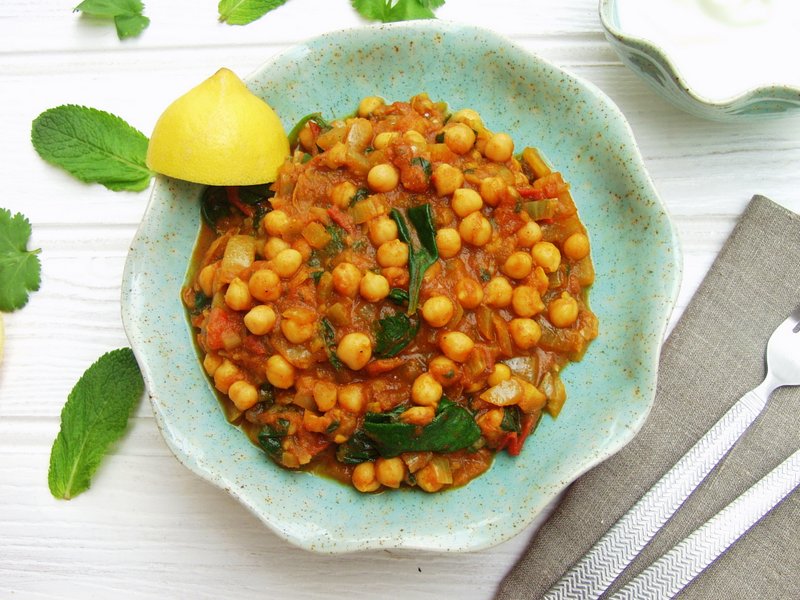
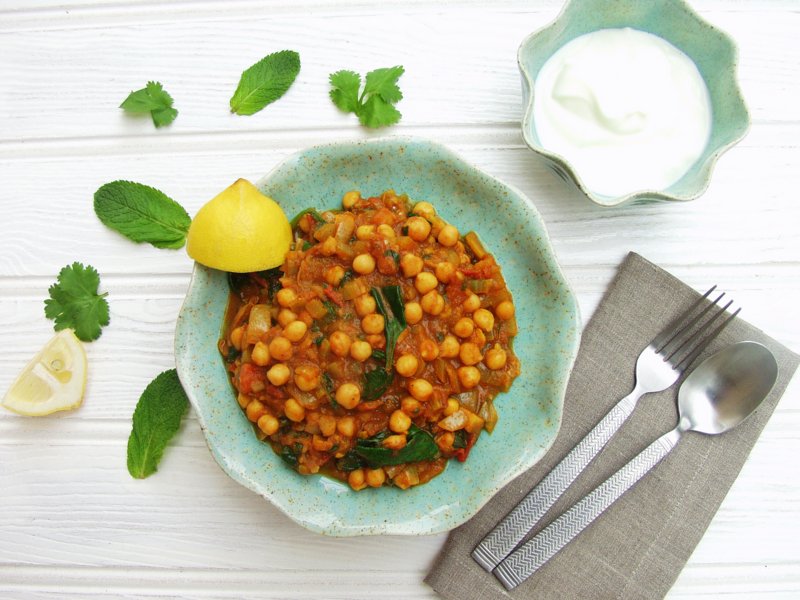
Chickpea Curry with Tomatoes, Spinach, Fresh Mint and Coriander

After a full on Monday there is nothing more exhausting than having to cook a long and complicated recipe for supper. So I always try to cook something healthy, tasty and speedy in equal measure. I have always loved the taste of chickpeas and find they compliment so many dishes, but for this dish they feature as the main ingredient. There are so many good chickpea curries I was in a quandary on which to show you first, but settled with this one as it can be prepared and cooked within 15 minutes. Seriously it is so fast you’ll impress even yourself. The fresh mint and coriander, whilst not usually paired together, compliment each other well in this dish as the mint gives a sweet undertone that balances really well with the bold coriander and all the other Indian spices.

I cook this curry using canned chickpeas (shock horror), which will save you having to soak them overnight and boil them for an hour or two. Whilst the curry is perfect to eat on it’s own, if you want to make more of a feast you could cook this delicious salmon curry, which also takes no time at all. I will be eating mine with some wholemeal pitta bread, a dollop of natural yoghurt and squeeze of lemon. Simple and yet satisfying, I hope you agree.

Chickpea Curry with Tomatoes, Spinach, Fresh Mint and Coriander

Serves 2 (as a main meal or up to 4 if having other dishes)

1 tin of drained chickpeas

2 tbsp ghee (or ground nut/mustard oil)

2 green chillies, chopped

1 onion, chopped

2 garlic cloves, chopped

1 tsp ground turmeric

1 tsp paprika

1 tsp garam masala

1 tsp ground cumin

1 tsp ground coriander

2 large tomatoes, chopped

1 handful chopped fresh mint

1 handful chopped fresh coriander

2 handfuls of fresh spinach

1 tsp salt

50ml boiled water

1. Heat the ghee/oil and when it is nicely hot add the chopped onion, garlic and chillies. After a few  minutes, when the onions are beginning to brown slightly, add the ground turmeric, ground cumin, ground coriander, paprika (I use this hot paprika one I mentioned in this blog post) and garam masala and stir into the onions, garlic and chillies. Leave to simmer gently for another minute.

2. Add the chopped tomatoes, mint and coriander and again stir into the other ingredients. The smells coming from your pan will be heavenly!

3. After draining the chickpeas add them to the curry and stir in thoroughly. As the curry will seem a little dry at this stage, add the boiled water and stir into the ingredients. Leave to simmer for a few minutes.

4. Add a couple of handfuls of fresh spinach and stir into the curry. Once it is wilted (this will only take a minute) leave the curry to simmer for a couple more minutes. If you think it is still a little dry just add a little more water. Add the salt and stir into the curry before letting it rest for a short while before eating. Equally you can cook it earlier in the day and simply reheat it when you are ready to eat in the evening, although you will have to add a little boiled water when you re-warm it.


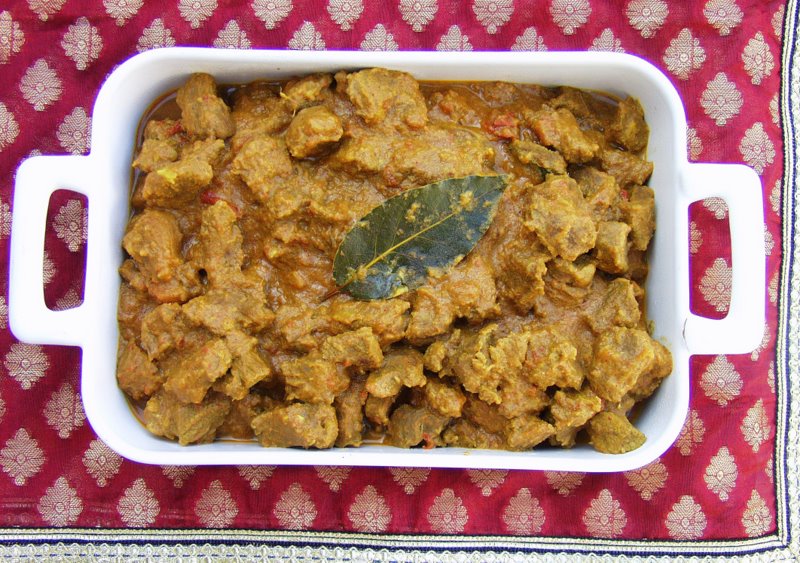
Goat Curry….I’m not kidding!

I have had a frozen goat, well part of one, sitting at the bottom of our freezer for quite some time, so I thought it was high time I dug it out. As my mother-in-law was returning from her two month vacation in Kolkata I thought goat curry might be the perfect dish to welcome her back to the UK. I adore goat, but I realise that perhaps it is not as easy to come by as lamb. If you live near a Middle Eastern or Asian butcher you will be able to purchase it without too much trouble. If however this is tricky for you, lamb works equally well for this curry.

As with all the Indian recipes, there is a certain amount of artistic license involved with creating them, so whilst I list a teaspoon of this and a teaspoon of that, if you put a little extra or less it will alter the dynamics slightly but still taste really good;  just remember it is not an exact science as baking is. Scales are not commonly used in Indian kitchens, instead the cook relies more on sight, smell and taste to get the right balance in a dish. After you have cooked the dish a number of times, you too will improvise more with the quantities, but until then it is best to follow my amounts listed below.

Goat Curry

Serves 4-6


1,600 kg goat, diced into mouth sized portions

1 yellow onion, grated

2 inch fresh ginger, grated

1 whole garlic, grated

2 tbsp malt vinegar

2 tsp turmeric

1 tsp chilli powder

1 tsp sugar

1 tsp salt

2 tsp cumin powder

2 tsp coriander powder

2 tbsp yoghurt

3 tbsp mustard oil

3 bay leaves

4 tbsp tinned tomatoes

2 tsp garam masala

1 tbsp ghee (optional)

1. Dice the goat (or lamb) into bite sized morsels and remove excess fat.

2. Grate the onion, ginger and garlic and add to the meat. Add the turmeric, chilli powder, sugar, salt, yoghurt, malt vinegar, coriander and cumin  powder. Some cooks like to add a little mustard oil at this stage, however, I felt that it was unnecessary.

3. Really mix the ingredients into the goat meat thoroughly and if you have time leave to marinate in the fridge between 4-6 hours.

4. Heat the oil in a pan and add the bay leaves a few seconds before adding the marinated goat meat. Let it simmer gently, stirring from time to time.

5. After about 10 minutes of cooking add the tinned tomatoes and continue to simmer. You will probably need to add a little water, so gradually put in a little at a time so that there is some sauce and is not too dry.

6. The curry should take just under 1 hour to cook. 10 minutes before you turn off the heat add the garam masala and stir in well to the curry.

7. To enhance the flavour further you can also add a little ghee, but this is not essential and if you are watching your waste line then you might want to ignore this ingredient.

Serve with rice, paratha, luchi, roti.

Please note: it is great to cook in advance and then reheat before serving hot. I find curries taste better if they have had time to rest for sometime before eating. If there is leftovers you can keep in the fridge and eat the next day.