Duck, Pomegranate, Coriander and Mint Salad with a Raspberry Vinegar Dressing

Long gone are the days when salads consisted of a few lettuce leaves, some tomatoes and grated carrots, a la 1970’s. Today there are so many inventive recipes that ordering, cooking and most importantly, eating, salads has been given a new kudos and a certain status that it is now totally acceptable to serve up a salad or two as the main dish when guests come over.

Personally I like them to be colourful and a little bit unexpected in as far as ingredients and taste go. Mixing and marrying ingredients that are salty and sweet and creating the right ying yang within the dish is so important. Over the last year I have cooked a few that stand out for me – check them out here – watermelonmangotofulentil. If you cook a couple when friends come over you’ll have a real feast and they can all be cooked in advance so that there is no stress when your guests arrive. People often like a choice so I normally prepare two or three. Leftovers the day after also work providing you keep them in the fridge.
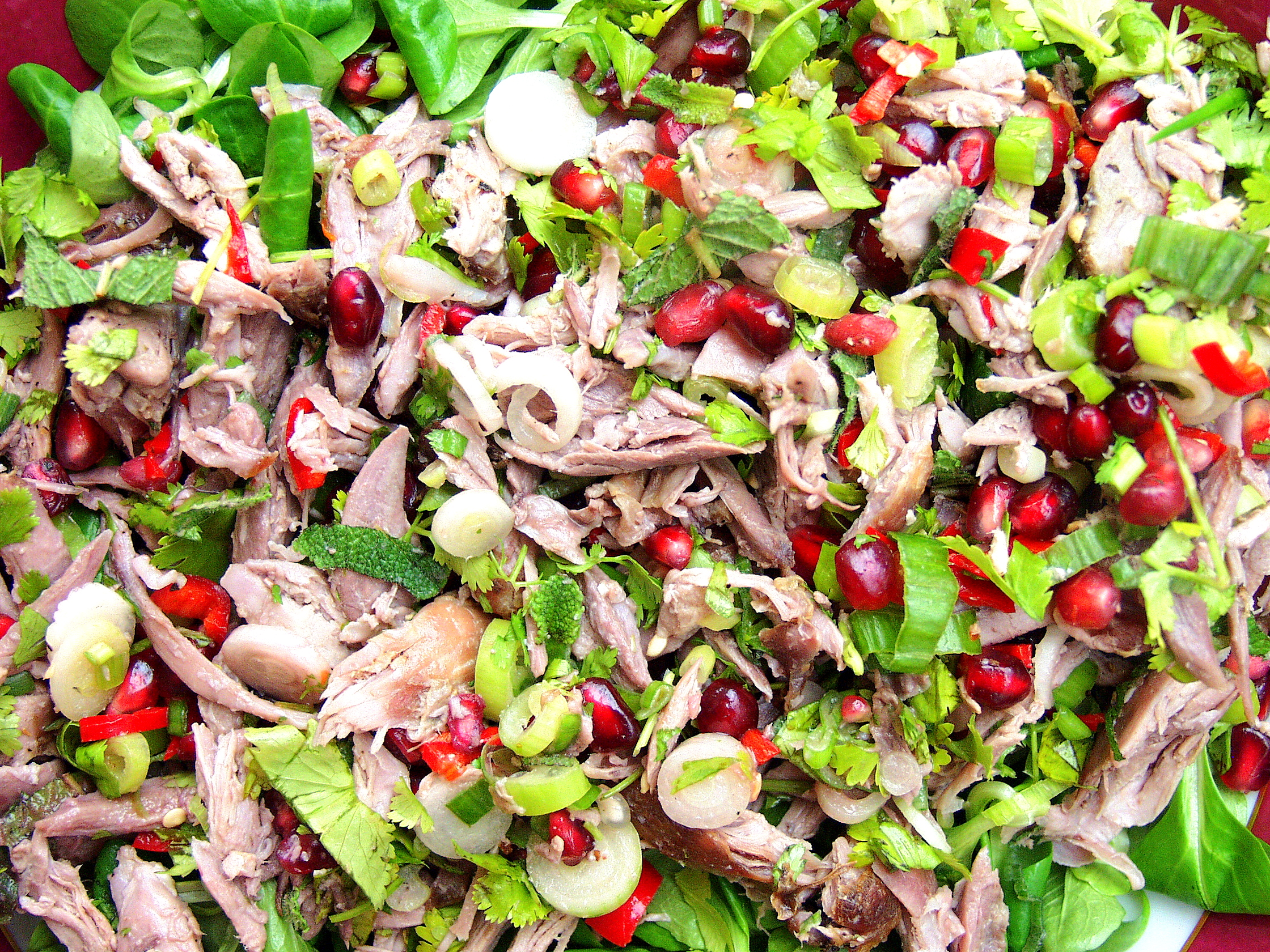
 I had a very similar duck salad to the one I have cooked here at a friend’s house a couple of years ago and was eager to share it with you. Other than the fact that the duck needs to cook slowly in an oven for an hour and half, the dish is very straightforward to make and will definitely get a positive response from those you serve it to. The raspberry vinegar you can buy at large supermarkets here in the UK and I am sure they have something similar overseas. The sweetness mixed with the duck and salad is really tasty. You do need to get hold of duck legs (ideally with the skin on) as opposed to breast, as the meat is far more succulent on the bone.

Which salads stand out for you? Post a comment to let me know and perhaps you’ll see your salad idea up here on my blog over the summer – with all credit to you.

Who said salads are boring?

Duck, Pomegranate, Coriander and Mint Salad with a Raspberry Vinegar Dressing

Serves 4

4 duck legs

110g pomegranate seeds

1 handful of fresh mint, chopped

1 generous handful of fresh coriander, chopped,

5 spring onions, finely chopped

1 red chilli, finely chopped

4 tsp of raspberry fruit vinegar

rock salt and ground black pepper

70g lambs lettuce

 1. Place the duck legs in a preheated oven at 150 degrees (if using a fan oven and 10 degrees more if not) for an hour and a half. Cooking the duck slowly at a low heat will allow the meat to become tender and the fat to reduce considerably.

2. I used the speedy option of pre-prepared pomegranate seeds but obviously if can get hold of fresh pomegranate I encourage you to use them. Tapping the fresh pomegranate gently on its side will allow the pips to dislodge from the pith allowing them to break free more easily. I used 110g but if you use a little more that is absolutely fine, it does not have to be exact with regards to the pomegranate seeds. Place them and the juice into a mixing bowl.

3. Finely chop the spring onions and add to the mixing bowl along with the fresh chopped coriander and mint.

4. Finely slice a red chilli and if you prefer it to have less of a kick remove the seeds. Add to the mixing bowl. If you are feeding this dish to young children then obviously just omit the chilli part.

5. When the duck legs are cooked it is important to let them cool completely before shredding them with a fork. I tend to remove most of the skin, but it is up to you.

6. Place the duck into the mixing bowl and add 4 tsp of raspberry fruit vinegar and mix in well to the ingredients. Add salt and pepper to taste.

7. Place the lambs lettuce on a serving dish and lay the the duck salad across the top and serve.


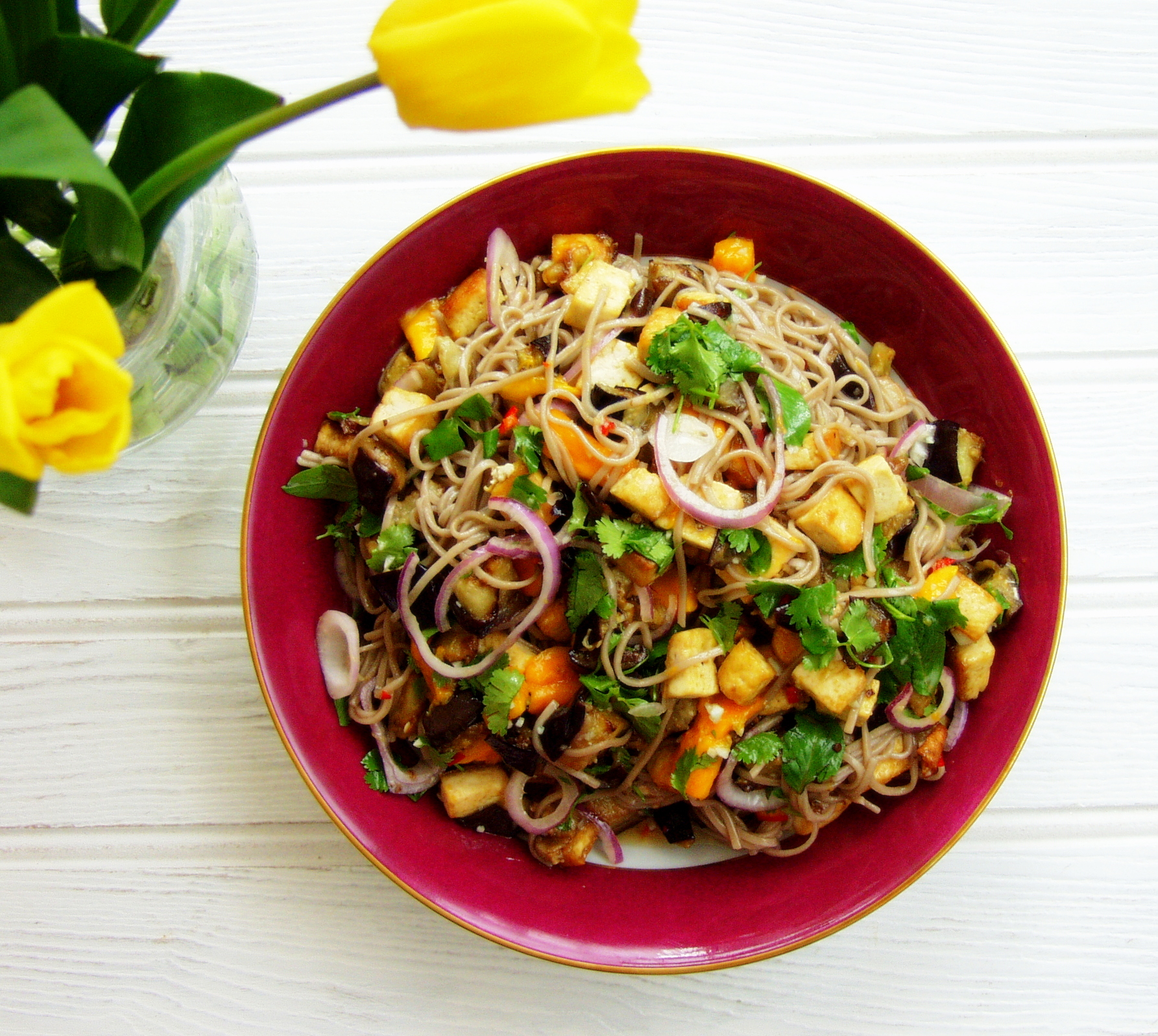
Soba Noodles with Tofu, Aubergine and Mango – it’s totally addictive BEWARE!

It’s always a joy cooking for a foodie friend who eats everything and shares a similar enthusiasm for exciting flavours, textures and foods. Said friend is off to pastures new in California so I wanted to prepare a simple and yet interesting lunch that he may not have tried before, but that he was hopefully going to remember fondly.

In the last couple of years my love for tofu has grown exponentially, on average I would say I eat it once a week as a main meal. One of my all time favourite recipes – Ma Po Tofu – I  sometimes cook without the pork mince and add loads of spinach to compliment the tofu instead. I would really recommend you give this dish a go if you haven’t already, it’s absolutely superb.

Another dish using tofu, which I discovered more recently, is the one that I want to share with you today. It’s a perfect spring/summer dish bursting with colour and if the truth be told, totally addictive. Between the two of us we almost saw off a portion which Yotam Ottolenghi says ‘serves 6’. I know, I know, it  makes us sound rather piggy. Look we were hungry and it is so delicious I bet you too would have seconds or maybe thirds ;o). I think that as a main dish it’s serving is better suited to 4 than 6, unless your guests have sparrow appetites that is!

 Don’t be shy, once you’ve cooked it do write a comment below to let me know how you got on and  that you too had seconds/thirds.

Soba Noodles with Tofu, Aubergine and Mango

Adapted  from Plenty by Yotam Ottolenghi

Serves 4-6

120 ml rice vinegar

40g caster sugar

1/2 tsp salt

2 garlic cloves, finely chopped

1/2 red chilli, finely chopped

1 tsp toasted sesame oil

1 lime, zest and juice

300ml sunflower oil

2 aubergines, cut into 1cm dice

396g firm tofu, cut into small cubes (a little more or less is fine so don’t worry about getting exact amount)

250g soba noodles

2 ripe mangoes, cut into strips or dice

small handful of Thai sweet basil, chopped

handful of fresh coriander, chopped

1 small red onion, finely sliced

1. To prepare the dressing warm the vinegar, sugar and salt in a pan for a minute so that the sugar dissolves. Remove from the heat and add the chilli, garlic and sesame oil and leave to cool. Once it is cool add the lime juice and zest.

2. In a frying pan heat up  half the sunflower oil and gently fry the aubergine in batches. To save time I cooked the aubergine in two frying pans cooking simultaneously. When they have bronzed place on kitchen paper to cool.

3. Using the remaining sunflower oil (if necessary – you may have enough left from cooking the aubergine!) gently heat up the tofu and cook until it has a crispy light brown appearance. This should take 6-8 minutes. Similar to the aubergine place on some kitchen paper to soak up some of the oil.

4. Heat a pan of boiling salted water and cook the soba noodles for around 5-8 minutes, stirring occasionally. Drain and rinse under cold water, shaking off as much excess water as possible. Place on a tea towel to dry.

5. In a mixing bowl toss the noodles with the dressing, mango, aubergine, herbs (save a few to scatter on top when serving),  red onion and tofu. Transfer to another serving plate/dish. You can eat immediately or set aside for a couple of hours.

The dressing resting whilst I prepare the rest of the ingredients (above)

The final result (below)

SaveSave


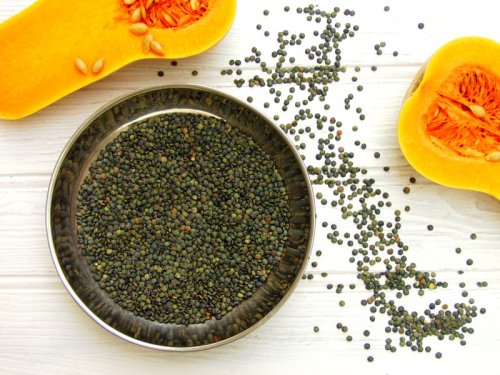
Garlic Roasted Butternut Squash, Lentil and Feta Salad

Butternut squash are one of those wonderful fresh ingredients that you can buy and store for a reasonable amount of time. I haven’t tested their longevity as such, but I know that they are fine for at least a month. (Any other educated guesses then let me know?)

If you can get past the fact that peeling them can be a bit labourous at times, you are treated to a sweet tasting, vibrant and versatile vegetable that generally passes muster with most people. It’s generally not one of those vegetables that people are known to turn their noses up at, unlike perhaps this, so it’s a great vegetable to feed the whole family. It’s bright, vivid colour is clealy a mood enhancer and with all this terrible weather we have been having lately, I welcolme it wholeheartedly into my cooking.  

I love all manner of lentils and pulses and cook with them most days in some capacity. This dish I cook in bulk and then eat over a few days. It stores well in the fridge, although I tend to keep the feta seperate until ready to serve, as I find it tends to crumble if I mix it in too early with the other ingredients. As with all my recipes if you are feeding it to your young children I omit the chilli.

The dish has some wonderful flavours going on, that combined together works really well. I sometimes add pomegranate seeds and had planned to put them in, but somehow managed to forget this time around. So if you fancy throwing in another bright colour to make the dish even more cheery and summery then add some pomegranate seeds.


 Garlic Roasted Butternut Squash, Lentil and Feta Salad

Serves 6

250g lentils

8 garlic cloves, chopped

1 butternut squash, peeled and cubed

3 tbsp olive oil

1 red chilli, finely chopped and deseeded

200g feta

1 small red onion, finely sliced

handful of fresh parsley

2 tbsp pomegranate seeds (optional)

2 tbsp red wine vinegar

2 tbsp sherry vinegar

1 tsp sugar

1. Preheat an oven to 180 degrees.

2. Peel a small/medium sized butternut squash and cut into bite sized cubes. Place on a baking/roasting tray along with the chopped garlic cloves. Using your hands cover the cubes and garlic with olive oil.

3. Place in the oven and leave to cook for 40 minutes.

4. Rinse the lentils in cold water to give them a good clean and then place them in a pan with cold water so that they are well covered and leave on a medium heat for 20-25 minutes (see packet for details). They should be nicely softened by this stage. Drain and leave to cool.

5. Finely slice a small red onion and red chilli (de-seeded if you prefer it less hot) and cut the feta cheese into small cubes.

6. In a small bowl mix the red wine vinegar, sherry vinegar and sugar and season to taste.

7. Gently mix all the ingredients, aside from the feta, together in a bowl first. Serve sprinked with feta cubes and a generous portion of chopped flat leaf parsley.

Serve at room temperature.

As the feta is so naturally salty you will probably find that you do not need to season with extra salt.


Middle Eastern Okra and Tomato Stew, with a twist

I used to live close to the Edgware Road in London, which is the Middle Eastern part of town, well as Middle Eastern as it can be in London. It has a fairly chilled atmosphere with people spilling out of the cafes onto the pavements smoking their apple tobacco from their hookahs, when the weather permit and the sun shines.

There are two things however that I really miss most about the Edgware Road.

1) Mandalay Burmese restaurant, which as the name states is not Middle Eastern but a Burmese restaurant run by the affable and learned Burmese brothers Dwight and Gary. The restaurant serves good, honest, home cooked Burmese food (cooked by Dwight and Gary’s female relatives). It tastes divine and the whole experience is very memorable. They have a little library up at the front with a few Burmese books, which you can peruse at your leisure whilst waiting for your dining companion to arrive. Whilst it won’t win awards for decor, it wins hands down on charm and substance. You need to book as it is often packed to the rafters.

2) Green Valley Lebanese mini market, which Mr B and I always referred to as ‘Valley of the Kings’ for some reason. It has a wonderful deli selling a huge array of salads, hot bread, stews, cheeses and a butcher selling good quality halal meat, as well as cuts you may not see at your typical English butcher – sheeps’ tongues anyone? In addition, it also sells a vast array of fresh produce and the best baklava in town, which they put together on platters for you. Basically they stock every interesting food product imaginable and this place is like a tardis in the amount of food that it holds. We would make weekly weekend trips to stock up on goodies.

I was back there the other day buying some baklava (it’s worth the trip trust me), when I decided to buy a few little savoury edibles from the deli counter to munch in the car on the way home. Whilst making my selection my eyes rested for a while on the delicious looking okra and tomato stew. Whilst it isn’t so easy to transport and eat in the car, I decided to make some of my own when I got home and add my own little twist to the dish – butter beans. I do love my lentils and pulses and couldn’t resist adding them to the dish – for true purists amongst you simply skip the bit about adding butter beans.

The dish tastes great warm or at room temperature with Middle Eastern flat bread. It takes no time to make and am sure can convert even those who are a little reluctant about eating okra (or lady’s fingers as it is also known).

Middle Eastern Okra, Tomato and Butter Bean Stew

2 onions, chopped

3 garlic cloves,  roughly chopped

400 g of frozen okra (or fresh if you have it to hand)

1 tin of tomatoes, blended

splash of olive oil

1 tin of butter beans (they tend to be around 240g)

half a lemon, juice only

2 tsp of ground coriander

1 tbsp tomato puree

salt and pepper, to season

1. Add a splash of olive oil to a deep pan and when it is hot add the chopped onion and garlic and stir a little until they soften and becomes translucent. This should take around 6 minutes.

2. Whilst the onions and garlic are softening, blend a tin of tomatoes with a hand blender until smooth. Before adding the blended tomatoes, add the ground coriander and seasoning and stir into the onions and garlic.

3. Add the blended tomatoes to the pan along with the tomato puree and lemon juice. Stir thoroughly and let simmer for a few minutes.

4.  Add the butter beans and frozen okra and add a little boiling water so that the okra is fully submerged. Leave to gently simmer for 25 30 minutes, stiring gently, occasionally.

5. Taste and add more seasoning as required and serve with warm Middle Eastern flat bread. It could also be served with cous cous or steamed rice.


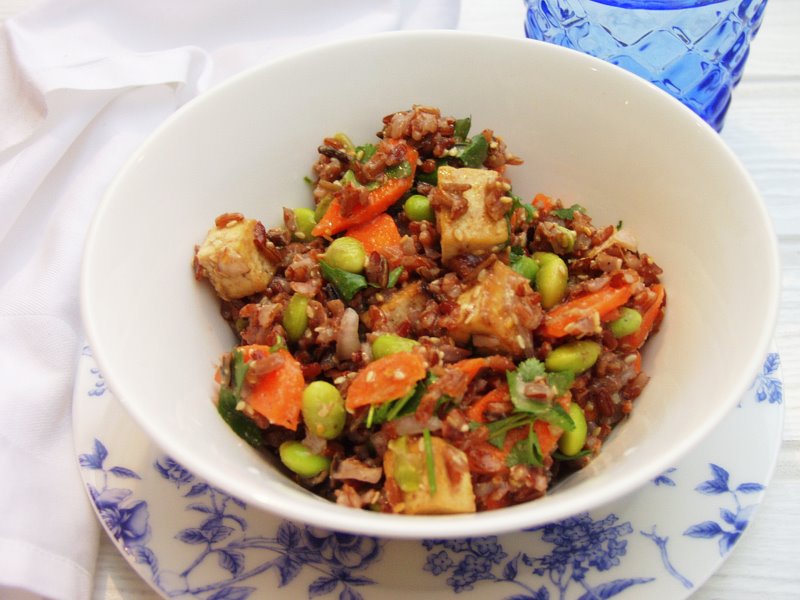
Red Camargue and Wild Rice Salad with Miso Dressing

I know it’s winter and there is snow on the ground but I’ve been trying out some new exciting salad recipes recently, ones which really make you sit up and take note of what you are eating and have the definite wow factor. I like to eat salad during my weekday lunches with a bowl of piping hot soup, even in winter. I make a decent amount so I can eat it over a few days.  Dressings are certainly important and give salads a certain edge. For your average green salad I always like to make my Asian vinaigrette, it’s fail proof and  can easily store in the fridge for a number of weeks.

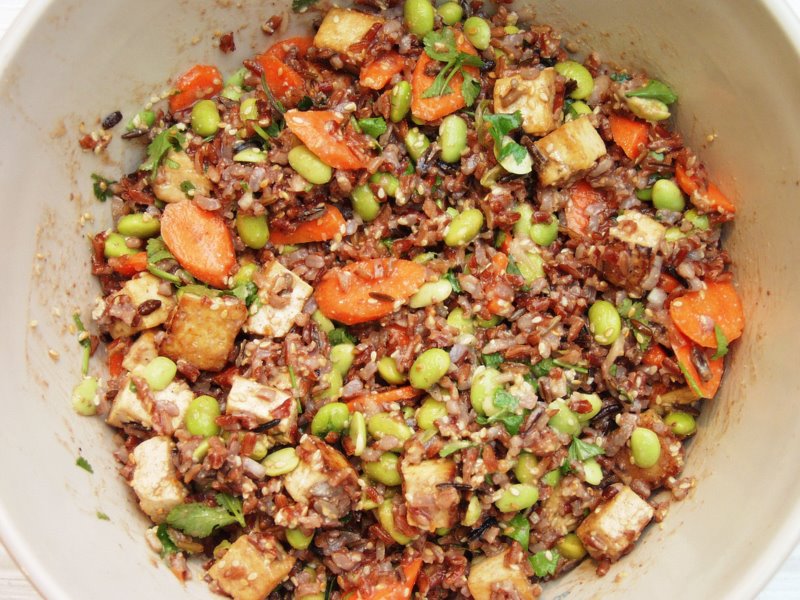
This red camargue and wild rice salad with a miso dressing is seriously divine and unlike any salad I have tried before, I really urge you to try it. I recently spotted it on fellow food blogger Sara Forte’s site sproutedkitchen.com. I have made a few changes, the most obvious one being that I used red camargue rice as well as wild rice so as to get that rich red colour. I’m rather partial to tofu these days, well ever since I discovered this recipe, which has become one of my favourites.

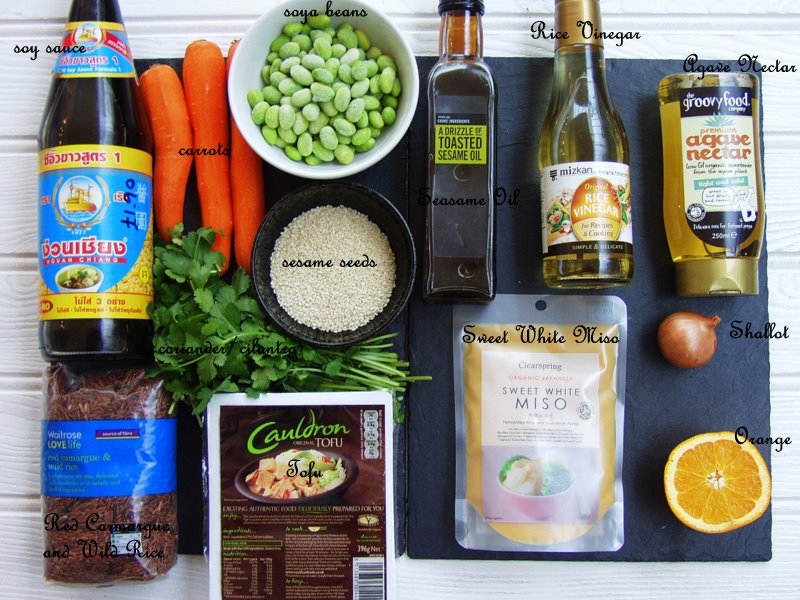
So this is what you need to make this winning salad recipe.


  Red Camargue and Wild Rice Salad with Miso Dressing

sourced from the talented Sara Forte from Sprouted Kitchen

150g rice (check packet to see cooking instructions)

400g block of firm tofu

2 tsp coconut or olive oil

2 tsp soy sauce

freshly ground pepper

2 carrots, thinly sliced

200g frozen edamame/soya beans

3 tbsp toasted sesame seeds

handful of chopped coriander/cilantro

and for the Miso Dressing you will need:

2 tbsp of white miso

2 tbsp agave nectar

1 tbsp sesame oil

2 1/2 tbsp rice vinegar

1 shallot, minced

juice of half an orange

1. Heat up a small frying pan and when it is hot add the sesame seeds and shake them in the pan for around 30 seconds. They burn really easily so as soon as they begin to turn a light brown take them off the heat and place to one side.

2. Rinse the rice and cook according to the instructions on the packet. If you are using red camargue or wild rice please note that cooking takes a lot longer than white rice. It will take up to 40 minutes before the water has been absorbed and the rice is ready.

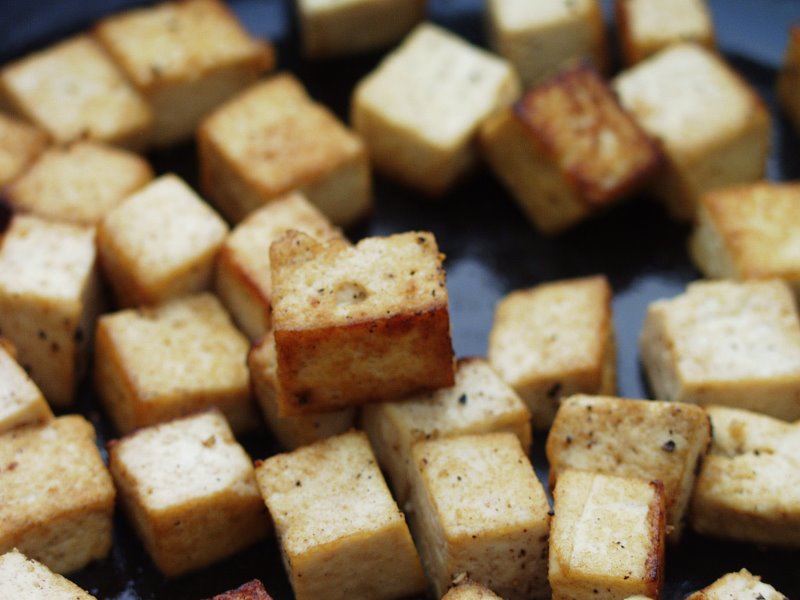
3. Drain the tofu, being careful not to break the block. Pat it dry with a kitchen towel and then cut into even bite sized cubes. In a cast iron pan, if you have one, or a normal frying pan if you don’t, gently heat up the coconut oil; I didn’t manage to find any so used olive oil. When the pan is sufficiently hot add the tofu and saute for around five minutes, being careful not to burn the tofu. Next add the soy sauce and a few grinds of black pepper and continue to saute for a few more minutes, turning the tofu so that it is evenly cooked on all sides. Once it is cooked turn off the heat and place to one side.

4. In a mixing bowl add all the miso dressing ingredients together.

5. In a separate bowl combine the rice, tofu, sliced carrots and edamame.

6. Combine the salad with the dressing and add the toasted sesame seeds and coriander/cilantro. Serve at room temperature or chilled.


Fishing for Inspiration

Billingsgate Fish Market

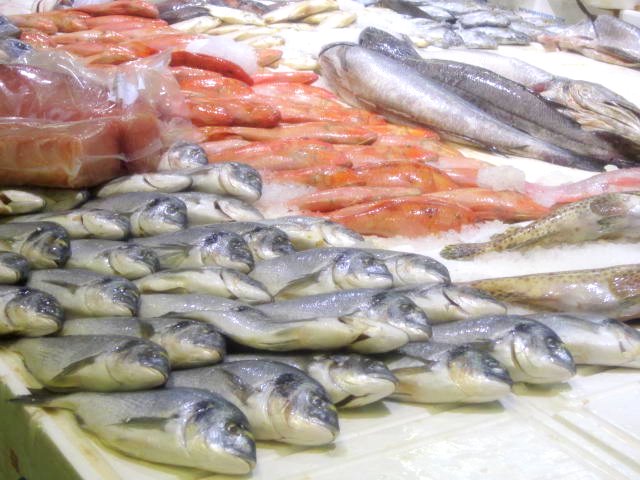
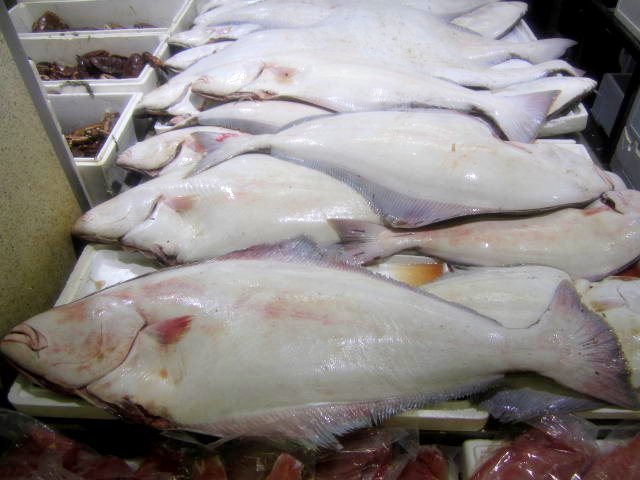
Mr B and I are buzzing. Yesterday we paid a visit to the oldest fish market in the UK, known as Billingsgate Fish Market. Its been operating for the past 800 years in Londinium and although the sites have changed over the centuries, the buzz and frenetic activity of buying and selling has no doubt remained the same.

Billingsgate Fish Market

Billingsgate Fish Market

As well as serving the fishmongers, caterers and restaurants around the country the general public are also welcome to come and buy an incredible variety of fish and shell fish at good honest prices – 50p an oyster anyone?

Its open from tuesday through to saturday from 5am until 8.30am – although the fish may have all been sold by 8am so its best to be there early. You’ll notice in the photo below the time was 8.20am on a Saturday and there were still some punters able to buy a good selection of fish. In the week though I hear the fish is all sold by 8am.

Billingsgate Fish Market

Situated just above the fish market is the Billingsgate Seafood Training School, which was set up 12 years ago as a charity to help educate the children from the local schools about fish and seafood and the benefits of eating it for a balanced diet. I should note that the market it right next door to Canary Wharf, which is one of the key financial districts in London. The local neighbourhoods however are much less affluent than this financial district, and it is these neighbourhoods that the training school was originally set up to benefit. In addition to introducing seafood to children, the school also offers a wide range of courses for adults who want to improve their fish skills. It was one of these courses that Mr B and I signed ourselves up for.

Billingsgate Seafood Training School

For six hours Mr B and I were treated to a range of informative demonstrations and tastings, followed by some hands on knife skills, where we got to gut squid, pocket plaice, fillet gilt-head bream and prepare gurnard. It was very satisfying to be able to actually fillet and gut your own fish. We learned so much that I only hope that we can retain it all and build upon it going forward. Like anything in life it requires practice, so Mr B and I are going to be eating even more fish going forward so that we can practice and finesse our new skills.

Here are a couple of new things we learned during the course:

1. You only need to cook squid for 30 seconds in a pan with a little hot oil. We had always cooked it for a few minutes, but it really is not necessary and tastes so much better if you fry it for a shorter amount of time. Equally you can braise it in an low oven for 1 hour 30 minutes – I have yet to ever try this. I’d love to hear from anyone who has a good braising recipe for squid!

2. Only fish that is going off smells fishy. Fish that is fresh has very little aroma, hence when we were in the market you could hardly smell fish.

3. When you buy squid in the supermarket it is often brilliant white in colour. This is because it has been submerged in water to give it more of a glow white look. Squid has more of a grey tinge when it is bought straight from the fisherman/market.

4. Fish requires no more than 10-12 minutes cooking time in a fan oven 200C, non-fan oven 210C  or gas mark 7.

5. When making fish stock do not cook the fishbones, head etc for more that 30 minutes as it may begin to taste bitter.

6. Avoid fish with cloudy and sunken eyes as it indicates they are losing condition. Buy fish that has bright eyes and a clear conea.

Billingsgate Fish Market

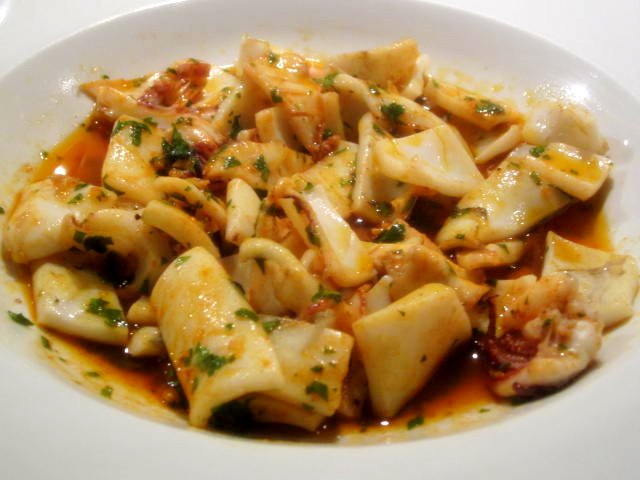
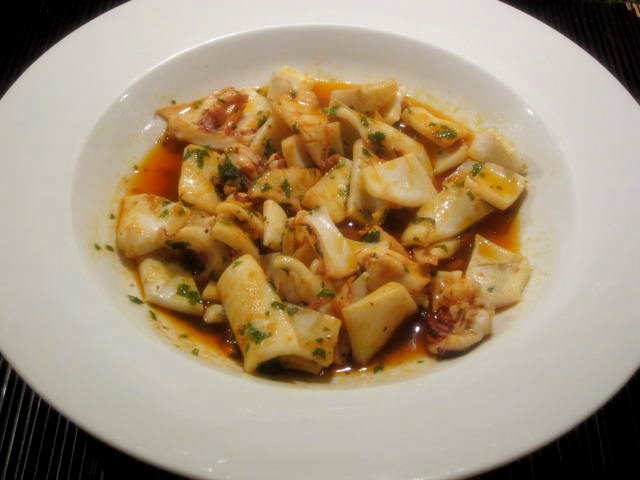
Each student was given a recipe booklet of the recipes we sampled during the course. We also all left with a huge bag of the fish that we had prepared during the course. So when Mr B and I arrived home we decided to prepare the marinated squid salad, which we had tried for breakfast in fact, earlier in the day. We were expecting a guest for dinner so thought that it would be a good starter to nibble on. I urge you to try this dish as it is absolutely divine and super easy to make.

Marinated Squid Salad

Marinated Squid Salad

Billingsgate Seafood Training School recipe

Serves 4

300g small squid (or cuttlefish or baby octopus)

7 tbsp olive oil

2 tbsp white wine vinegar

3 cloves of garlic, crushed

1 tsp of smoked paprika (non smoked is also fine)

salt and freshly ground pepper

handful of flat leaf parsley, finely chopped

1. Cut the squid into pieces, strips or rings or both, whatever takes your fancy.

2. Place 1 tbsp of olive oil in a frying pan and when the oil is hot (medium heat) add the squid and fry for about 30 seconds. Remove from the heat and transfer to a serving bowl.

3. Mix the remaining oil with the vinegar, garlic, smoked paprika, parsley, salt and pepper – stir the ingredients together thoroughly. Pour over the squid and mix together well. Leave to marinate for 20-30 minutes. Serve with fresh crusty bread and a green salad.

Marinated Squid Salad

So would we return for another course at Billingsgate? ABSOLUTELY. We can’t wait to return to do a full day course and learn more about preparing and cooking other fish and shell fish. Oh yes, I also now have the Billingsgate Market Cookbook on my christmas wish list!


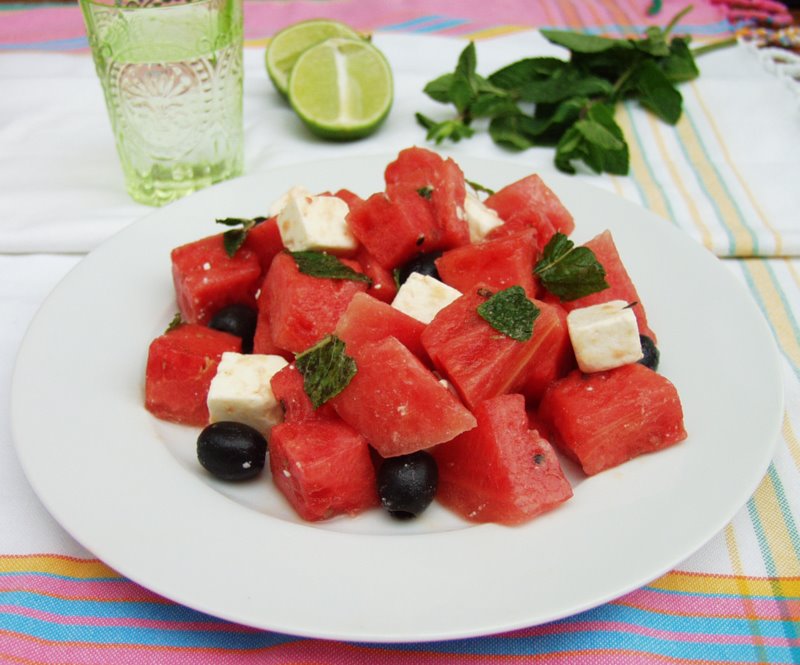
Watermelon, Feta, Black Olive, Mint and Lime Salad – a knockout combination

OK, I take it all back. The weather gods have clearly been reading my blog so much so they have decided to let it shine big time. Ever since I wrote my blog about ‘Raoul’s Eggs Rock‘ and that it is incessantly raining, the sun has come out to the extent that it’s been a scorcher ever since. A few days ago London was hotter than the Caribbean, which is wonderful really wonderful, aside from the fact that England is not really set up for extreme conditions – hot or cold. Its been so humid I keep having to go down to our cellar to get some cool air. Even the paddling pool water has heated up to bath water temperature. I don’t know about you but when it is really hot and humid I really like eating mountains of fresh fruit. A huge bowl of sweet melon, mango, strawberries, raspberries and fresh mint always goes down a treat.

This inspired me to share one of my absolute favourite salads with you. I have been cooking it for years and then discovered that the ubiquitous kitchen goddess – Nigella – has a similar recipe. It combines fresh, cleansing watermelon with the salty robust feta cheese. The flavours combined are perfectly balanced, although I know its hard to believe. Then with lime juice, black olives, fresh mint and a splash of olive oil you have a heavenly dish.

Its simple to create, truly delicious and very memorable. Perfect for a light lunch or for an evening dinner served alongside some grilled chicken. Give it a try and let me know what you think.

Watermelon, Feta, Black Olive, Mint and Lime Salad

Serves 4

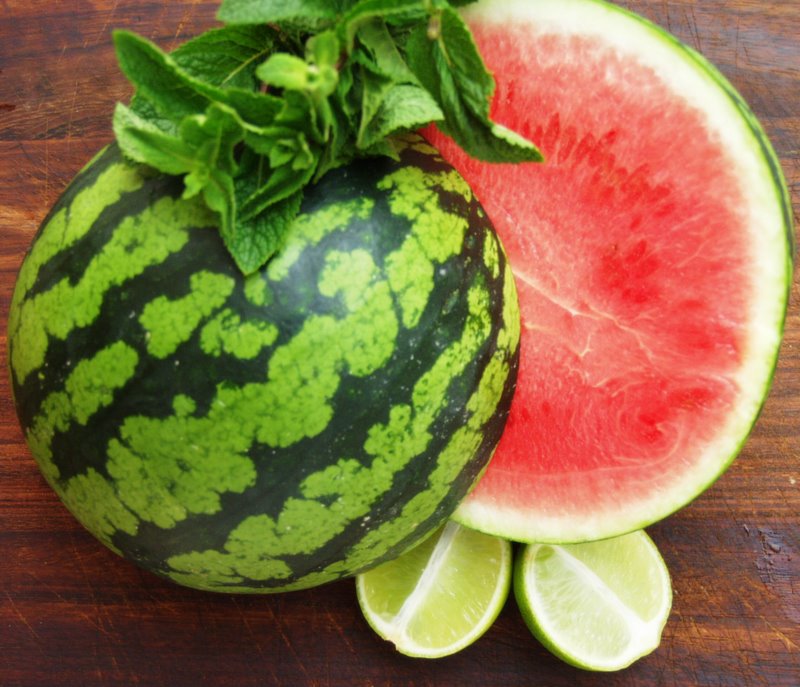
 1 mini watermelon (circa 2kg in weight), cubed

200g/8oz feta cheese, cubed

100/4oz black pitted olives

2 limes, squeezed

2 tbsp of olive oil

1 handful of fresh mint, torn into small pieces

1. Cut the watermelon into bite sized cubes and place in a bowl. Try not to handle it too much as it will begin to break and become more juice than melon.

2. Similarly cut the feta cheese into slightly smaller cubes than the watermelon. Place into the same bowl as the watermelon along with the black olives.

3. Squeeze the juice of two limes over the ingredients as well as 2 tbsp of olive oil. Using your hands mix into the ingredients gently.

4. Tear some fresh mint over the salad and serve.