Vietnamese Pho Bo – Beef Noodle Soup and finding the perfect cooking course in Hoi An

IMG_5336

Vietnamese cuisine is to put it simply, ‘heavenly’. After my first bite of a Banh Mi, from Banh Min 11, back in London, not that long ago, I knew that it was going to be a culinary love affair. Since arriving in the motherland it has not disappointed. Each meal we have eaten has been a multitude of delicate, fragrant flavours – spices that sing to you and dance on your tongue.
IMG_5119

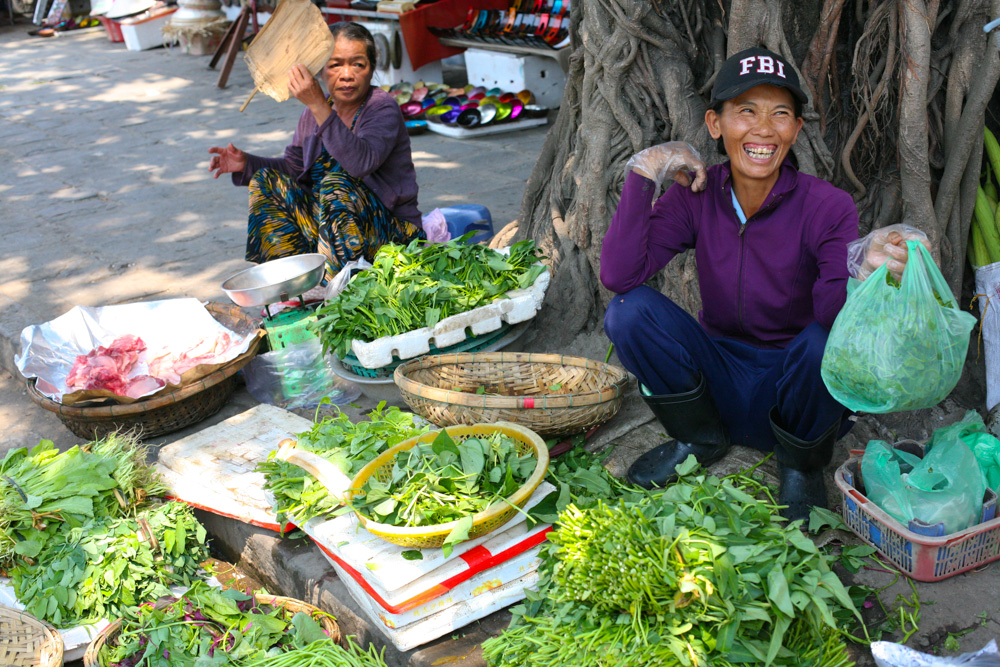
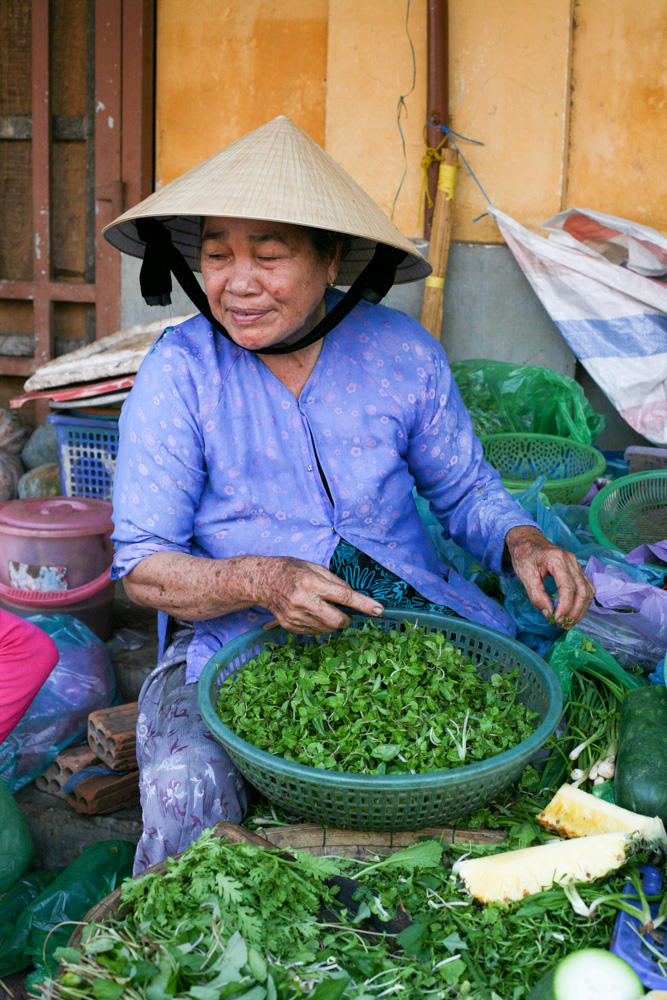
Herbs feature heavily in most dishes and add real fragrant lift. I was sufficiently enthused that I am going to attempt to grow some of them back in London – for example Vietnamese mint (which I should have no problems growing!), Vietnamese basil, saw tooth coriander, Vietnamese lemon balm, garlic chives. There is a great explanation of Vietnamese herbs here.
IMG_5076

I was keen to attend a cooking course in the UNESCO World Heritage Site of Hoi An and so set about researching a course that best suited my needs. I was given a few recommendations, however, I decided that a course run by the very affable Van, who runs ‘Green Bamboo Cooking School’ suited my needs perfectly.

IMG_5197

The course run by Van offered a detailed tour of the fresh food markets, where we picked up our ingredients; convivial fellow pupils; personal touches by Van who runs the course in her own home; unhurried tutoring over seven hours; a generous range of recipes manifesting itself in a memorable group lunch and a souvenir goodie bag to take home. Throw in door to door service as Van kindly ferried us to and from our hotels, and it is no surprise that Trip Advisor has over 210 positive comments for this class with no dissenters.
IMG_5126

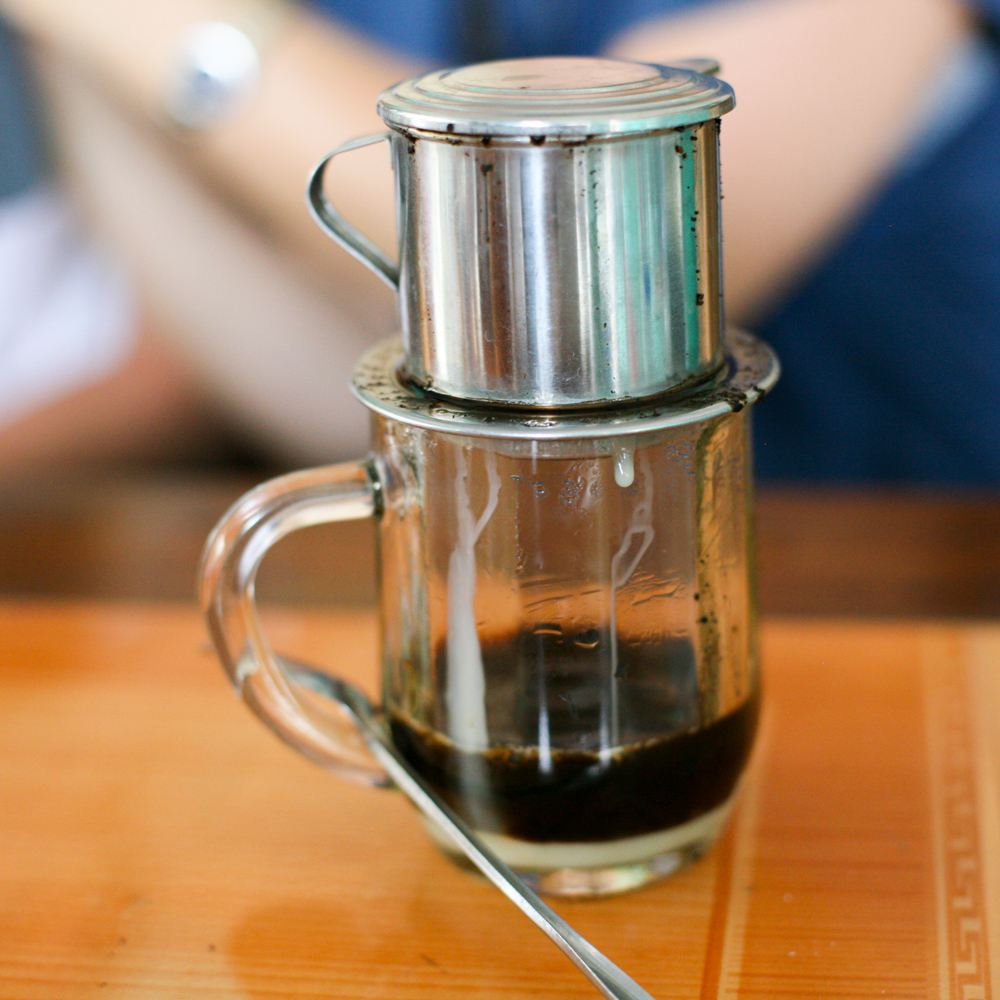
I am pleased to say that course surpassed even my high expectations. Van was charming, spoke excellent English and a was a natural teacher. She also converted me to Vietnamese coffee – the condensed milk being the key.

My fellow students were a really lovely bunch of enthusiastic foodies – three Australians, two Norwegians and two Swiss and all of us had huge grins on our faces all day, clearly revelling in the fact that we had chosen such a perfect course. Here are few photos of the day. Scroll down.

I elected to cook the unofficial national dish of Vietnam – pho bo, beef noodle soup (pronounced ‘fur’). You can find pho stalls on most streets in Vietnam, but to cook it well is the tricky part. I was keen to understand how to cook it from scratch and to make that perfect pho broth. First stop was the market to buy the beef, which was as fresh as it gets as the cow had been slaughtered that very morning. We bought the beef fillet and 1kg of beef bones. Normally Van would have bought the spine, but there had been a run on spine bones that morning from a hotel restaurant, which had bought the lot. So instead we had a range of other beef bones and some shin to add to the flavour.

IMG_5104

Back at Van’s house the first trick I learnt was to gently char the skin of some ginger, shallots and garlic over a flame as this would give the broth a deep smokey flavour.

IMG_5133

It takes no more than a couple of minutes on each side.

IMG_5145

I then removed most of the skin of the ginger, using that back of a teaspoon and also the skin from the shallots and garlic, which is very easy at this stage as they virtually pop out.

After properly cleaning the beef bones, place them in a large pan of boiling water so as to get rid of any scum from the bones before cooking. Submerge them in boiling water for under a minute and then place them into a second large saucepan, which has also has boiling water in it. Discard the water from the first saucepan. You then need to add the charred ginger, garlic and shallots

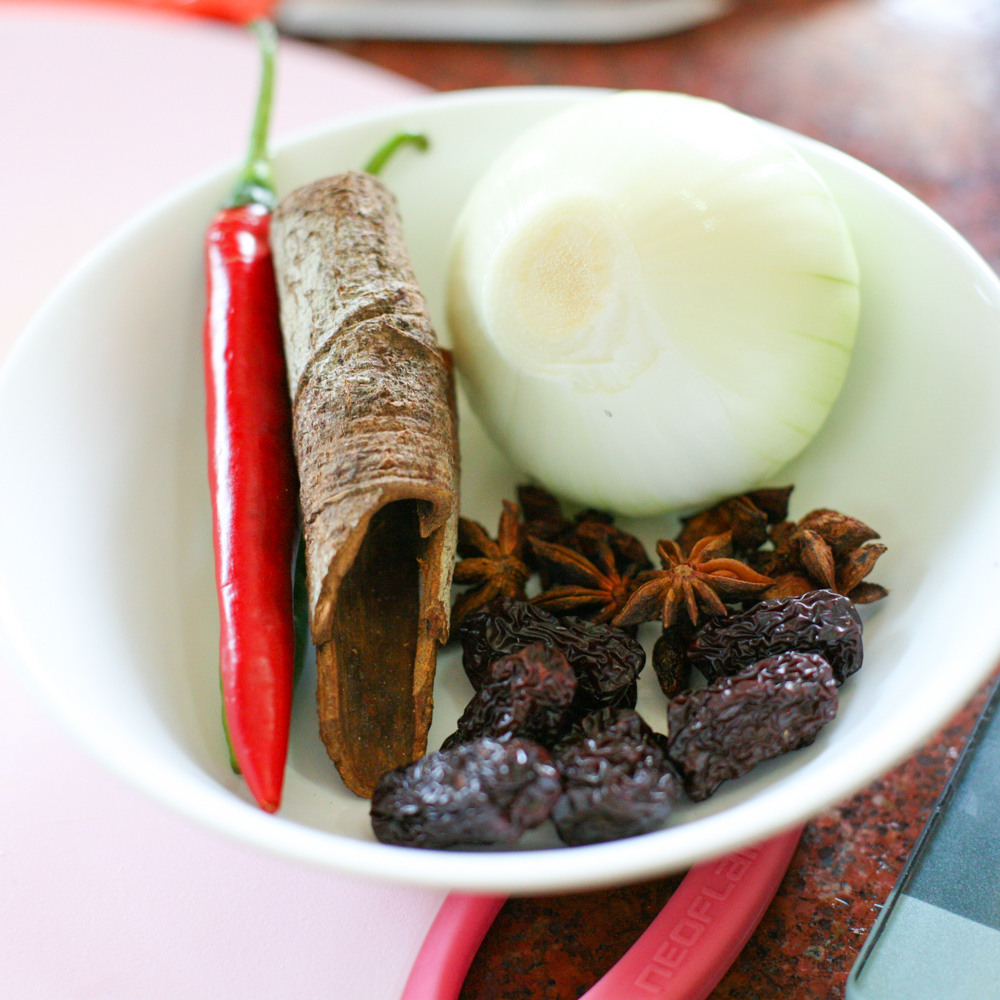
Continue to add the following ingredients to the pan: 2 chillies, stick of cinnamon, 1 large white onion, 5 star anise, 5 Chinese apples. I had not come across Chinese apples before, but they tasted delicious. As they may be difficult to source for some people, dates work equally well. Add some sugar and salt and if you fancy, some beef stock as well (I decided to omit the beef stock, to see how it would taste in its natural state).
IMG_5146

Place a lid on the top and leave to boil away gently for a further 2 to 3 hours. Add more seasoning to taste and beef stock if necessary.

IMG_5154

Meanwhile, very finely slice the beef fillet and leave in the fridge until ready to use.

IMG_5279

Before serving have individual bowls of bean sprouts and fresh pho noodles/rice noodles, (the noodles you have submerged into boiling water for 30 seconds and drained) at the ready. In a large ladle add a little of the raw beef and submerge it into the pho broth so that the broth fills the ladle. Using a fork or chop sticks, move the beef around in the boiling stock in your ladle for 30 seconds (that magic number) so that it cooks through and ladle it over one of the bowls of noodles that you have prepared.

Add a generous amount of fresh herbs, including Asian basil, coriander, spring onions along with a quarter of a lime and chilli sauce to taste. You can also have a small bowl of soy sauce on the side, should you wish to add a little, as well as some sliced green papaya and fresh sliced chilli.

IMG_5283

IMG_5284

I was delighted by the results and despite having eaten a ridiculous amount of the tastiest Vietnamese food, cooked by my fellow foodies, I managed to see off a bowl of my pho bo.

IMG_5289

Eight happy and well fed people were then deposited back to their hotels, along with a goodie bag provided by Van.

I hope that you too will try this tasty version of pho. Watch this space for more Vietnamese recipes over the coming months.

Pho Bo (Beef Noodle Soup)

Adapted from Van’s recipe, who runs Green Bamboo Cooking School

Serves at least 8

500g fresh pho noodles/rice noodles

300g beef fillet

1 kg beef bones – ideally spine bones or shin

5 litres boiling water

1 tbsp beef stock

******************

5 star anise

1 large stick of cinnamon

1 roasted fresh ginger

5 roasted shallots

1 large roasted bulb of garlic

5 dried Chinese apples/dates

1 whole white onion, peeled

2 red chillies, left whole or chopped in two

2 tsp salt and pepper

1 tbsp raw sugar

**********

50g fresh bean sprouts

50g fresh Asian basil

50g fresh coriander

50g spring onion, finely sliced

2 limes, cut into quarters

green papaya, finely sliced

chilli paste to taste

soy sauce, to taste (optional)

2 fresh chillies, sliced (optional)

1. Wash the beef bones under a tap and then place to one side. Meanwhile bring two large pans of water to the boil. In the first add the beef bones and submerge them for just under a minute and then transfer them to the second saucepan. Discard the water from the first saucepan.

2. Over a gas flame place the garlic, shallots and ginger on a metal grill directly above the flame, allowing them to char/roast. After a couple of minutes turn them over so that both sides are equally charred. Using the back of a teaspoon, peel off a little of the skin of the ginger.

3. Add them to the bones and boiling water, along with the onion, chillies, dried Chinese apples/dates, cinnamon stick and star anise. Add the salt, sugar, pepper and beef stock it you wish and place a lid on the pan and let  it boil gently for 2-3 hours.

4. Meanwhile, very finely slice the beef fillet and return it to the fridge.

5. Before serving, warm the noodles by placing them on a slotted spoon and submerging them in boling water for 30 seconds. Drain and place in individual bowls. Add the bean sprouts to each of the bowls.

6. In a large ladle add a little of the thinly sliced beef fillet and submerge into the pho broth so that the ladle is completely full and the beef is submerged. With a fork or chop sticks move the beef around in the ladle so that it ‘cooks’ through properly.  Pour over the noodles. Please note the pho broth needs to be boiling/bubbling away at this stage so that the beef fillet is cooked properly. 

7. Add the fresh herbs, lime, spring onions, green papaya and chilli paste/soy sauce/fresh chillies to taste.

8. Serve immediately and enjoy piping hot.


First impressions of Hong Kong and getting over jet lag

IMG_6478

There is always something rather thrilling about going on a trip or a journey, but when you’ve never visited the destination before there is an added level of excitement and anticipation. The smells, sights, sounds and general fever of the place seize you almost immediately as soon as you step foot on to Hong Kong soil. I always knew that the place would be frenetic with activity but seeing and experiencing it in the flesh is another thing. Hong Kong is buzzing and bustling with people. An initial impression is the sheer number of people who all live here side by side, or perhaps more aptly I should say – on top of, in huge towers reaching to the stars. Vertical living is very a la mode and living in dinky dwellings is standard practice.

IMG_6397

Whilst a lot is packed into Hong Kong there are also places to be found where there is an element of calm and serenity and to watch the world go by. One of the first places that I went to visit was the Man Mo temple, which is the oldest temple in Hong Kong, having being built in 1847. I thought it was necessary to experience the old if I was to truly understand and appreciate the new and besides I always enjoy visiting temples and churches when visiting a new country as I find it helps to better understand the underlying fabric of that country.

IMG_6399

The temple did not disappoint and as I strolled around it I particularly enjoyed the heady aromas from the incense coils that hung from the ceiling. From the outside the temple stands surrounded by tall tower blocks, which makes a slightly surreal sight.
IMG_6400

IMG_6395

Near to the temple I came across this wonderfully vibrant street art that really appealed to me; I think Banksy would definitely approve.

IMG_6427

Getting to know a city I like to amble around on foot as this not only helps me get my bearings but also see what the locals are up to. Street food sellers were out in abundance selling all manners of temptingly delicious snacks to feast upon.

IMG_6456

As our body clock is a little confused at the moment, we are eating at rather random times of the day, that said little Z and big A always seem to be hungry around tea time and therefore are ready for a little cake to give them some energy before more sight seeing then supper. We have come across a number of bakeries selling all manner of wonderful tasting cakes. Egg tarts are popular here as well as buns filled with red bean paste.

IMG_6454

We visited a fish market, but it is unlike the fish markets we have in the West as the fish here were not to eat. Oh no, if you want to find fish and meat to eat as well as vegetables and fruit you need to visit a ‘wet market’ which are scattered all over Hong Kong. I hope to take some photos of these over my stay so watch this space for more on this soon.

IMG_6421

Tropical fish for sale at the Fish Market in Mong Kok

Our first evening meal out in Hong Kong was dim sum at the very popular Din Tai Fung, which is in fact a Taiwanese import. It’s famous for it’s Xiao Long Bao, which are steamed pork dumplings filled with broth and dipped into vinegar and ginger – basically little mouthfuls of joy! I liked the way that they had instructions on how to ‘eat’ the little darlings. How very thoughtful!

IMG_6381

The winner on the dim sum stakes so far though comes from Hutong where we ate delicious tasting dumplings filled with pork and fennel – ones I wouldn’t mind attempting to make when back in London. Another favourite at Hutong was the Chicken Pot with Sichuan peppers, addictively delicious and not as ‘hot’ as you would think!

IMG_6491

As I mentioned we have all been experiencing a bit of jet lag so I decided to make a southing, homely broth for our first lunch on Hong Kong soil. After gathering a few ingredients I made the following dish, which seemed to hit the spot after a long journey. I kept ours vegetarian, but it would taste equally good with a bit of salmon or trout thrown in for a couple of minutes. Here is how to make it.

IMG_6378

Jet lag Noodle Broth

Serves 3 (and enough for seconds)

splash of olive oil

3 garlic cloves, sliced

1 inch of fresh ginger, peeled and thinly sliced

3 tbsp light soy sauce

1 heaped tsp of vegan Bouillon/vegetable stock

boiling water (to cover veg and noodles)

generous handful of Chinese broccoli (Gai Lan) or regular broccoli/spinach/pat choi

6 small tomatoes, halved

3 eggs, boiled, shell removed and halved

2 packs of udon noodles (or 3 if you are serving just adults)

1. Place the eggs into a pan with cold water and when the water has boiled cook the eggs for 4 minutes, less if you like it soft boiled.

2. Meanwhile place a little oil in a medium sized deep pan and when it is hot add the garlic and ginger and stir for a minute before adding the soy sauce.

3. Next add the boiling water so that it reaches a quarter of the way up the pan – you can add more a little later. Add the Bouillon or vegetable stock that you are using and stir well.

4. Add the Chinese broccoli and after 2 minutes add the udon noodles. You may wish to add a little more boiling water at this stage. Taste to see if it requires a little more soy sauce. Add the tomatoes no more than a minute before serving so that they still hold their shape. If you prefer softer vegetables then cook the Chinese broccoli for a little longer, but I find a couple of minutes is more than enough.

5. Serve with a slice or two of boiled egg.

Warming, delicious and ever so quick, before you collapse and have another little sleep.

Other ingredients that would be great to add: fresh chilli, spring onions, fresh salmon/trout, mushrooms.

IMG_6483


Rhubarb and Rosewater Tart and a visit to the Jurassic Coast

Fear not, my loyal subscribers, I have not abandoned you, although I realise it might have felt like that these past few weeks. Upon returning from my adventures in Turkey we headed off to the English south west coast, or to be precise, the Jurassic coast on the border of Dorset and East Devon. The old cottage, that we made our home for the week, was fairly remote and had no Wifi so there was no chance of blogging and also if the truth be told I was far too busy rock pooling, exploring coastal and in land walks, swimming – most refreshing although a little chilly upon entry but perfect after 15 seconds, playing board games and eating Devonshire cream teas.

We stumbled across characterful villages where time seems to have stood still and the same families have holidayed at the same place for generations. The weather can be a bit unpredictable but you can guarantee there is always adventures to be had. One such intimate village was called ‘Beer’ – we had to visit it out of curiosity. I liked the fact that the village still has an active fishing community and that you can actually buy fish direct from the fisherman.

Striped deck chairs are quintessentially English and I particularly loved this little advertising board – good honest advertising. Refreshing!

Boats waiting to be hired on the beach in Beer.

Cream teas and crab sandwiches in Beer  – things can’t get much better than this.

View from one of our many coastal walks


I gave swimming a pass on this day….

…………….but these guys just couldn’t resist a good storm

On our return journey we drove cross country in our bid to explore even more quaint, hidden away, little villages.  Not far from Milton Abbas – which is seriously worth a detour when you are next in Dorset – there is a charming little farm shop at Steeptonbill Farm, where we decided to stock up on supplies. We were greeted warmly by Tess who talked us through all the produce and meats. Seeing the sign in the right of the photo for ‘freshly pulled rhubarb’ gave me my idea for my next blog post.  I loved rhubarb crumble as a child but rarely eat rhubarb as an adult. It just so happens that I had stumbled across a recipe recently in House & Garden magazine for ‘Rhubarb and Rosewater tart’ and the combination intrigued me enough to try it out.

All the recipes on this blog, unless stated, are ones that I have cooked a number of times and work well. This recipe however was my first effort and I definitely think I could perfect the results further on my next try. The most important step with this recipe, which I found out a little too late, is to not overcook the rhubarb to begin with. The House & Gardens recipe states simmering the rhubarb in the dissolved sugar, water and rosewater for 8-12 minutes. I found that I cooked mine for less than 8 minutes and it was beginning to lose its shape. So my advice is to keep checking every 2 minutes when it is simmering; by 6 minutes it should almost be done.

You can see what I mean if you look at the bottom left hand side of the tart, which is more how I wanted the whole tart to look compared to the far right side which has rhubarb that has lost its shape.

What it lacked in presentation it certainly gained in taste. I hope you will think so too.

Don’t look too close at this photo, but you can see what I mean regarding the rhubarb loosing its shape on the middle to right of the tart.

You’ll find that you will end up with excess rhubarb and rosewater syrup so take a look at Heidi’s (from 101 Cookbooks) suggestions here on what to do with the leftover syrup.

Rhubarb and Rosewater Tart

Sourced from House & Garden July 2011 issue

Serves 6-8

150g caster sugar

250ml cold water

4 teaspoons rosewater (see another recipe on my blog using rosewater – here)

850g rhubarb, trimmed cut into 3cm pieces

250g ready-made puff pastry

handful of plain flour for rolling out the pastry

1 egg, whisked

300ml whipping cream

1. Wash, cut and trim the rhubarb into 3cm pieces.

2. Gently heat a deep pan with the cold water, sugar and rosewater so that the sugar completely dissolves; this will only take a couple of minutes.

3. Place the rhubarb into the dissolved sugar and water and simmer  for 6 minutes, remembering to cover the pan. You want to make sure the rhubarb is soft BUT  still holds its shape. If after 6 minutes the rhubarb is still firm, continue to heat for another couple of minutes until it has softened.

4. While the rhubarb is simmering, roll out the puff pastry so that it measures a rectangle of 35 x 25cm. Place onto a slightly larger piece of greaseproof paper.

5. Using a slotted spoon lift the rhubarb out of the syrup and place on a flat plate. With the remaining syrup continue to heat it on a high heat so that it is reduced, but that there  is at least 6 tablespoons of rhubarb rosewater syrup.

6. Preheat the oven to 180 degrees, if using a fan oven, 20 degrees hotter if not or mark 6.

7. Arrange the rhubarb on the puff pastry leaving a boarder of 2.5cm. I find it is easiest to make a slight mark with a knife all the way around so that it is fairly uniform.

8. Before placing in the oven brush with egg mixture around the boarder.

9. Bake in the oven for 15 minutes so that the pastry is puffed and golden. Leave to cool for five minutes.

10. When the tart is baking, pour the whipping cream into a large bowl and stir in 3 tablespoons of rhubarb rosewater syrup. Whisk until the cream thickens and peaks form.  Chill until ready to serve.

11. Brush the tart with the rhubarb rosewater syrup and serve hot along with the whipped cream.


Turkish Delights and Coban Salatasi

I have just returned from two glorious weeks spent exploring Turkey’s ancient Lycian Peninsula, which is in the south west of the country, by the warm azure waters of the Mediterranean.

The area is steeped in history with numerous ruins and tombs dating back over 2000 years. I couldn’t help thinking when I was exploring  and clambering all over these ruins (no health and saftey in Turkey!) that our Stonehenge is well, how can I put this delicately, a little underwhelming, if you compare it to all the ancient Lycian ruins. In the cooler months (April and October) guided walks are on offer through Lycia taking in the ruins of lost civilizations, the flora and fauna of the mountain passes and ambling through the charming Turkish villages, many of which seemed to have stood still in time. Perhaps not an adventure to take on with small children but definitely on my to do list for the future.

Ruins of Patara 

We did however, get the chance to soak up the ruins of: Letoon, which was the main religious centre of Lycia, Xanthos – the captial city of Lycia in the late Hellenistic and Roman times, Patara – an ancient city party submerged (ready to be truly discovered) under 12km of sand dunes, Tlos with its spectacular rock tombs carved out of the rock face and Kekova – the sunken city from 2000 years ago. At Kekova you are forbidden to swim and snorkel as the treasures from the old town are there for you to see clearly from a glass bottom boat or canoe. It was quite easy to see the  pots as we sailed gently passed.


Patara’s impressive amphitheatre

Tlos amphitheatre beneath the Taurus mountains

In a bid to absorb ourselves in authentic Turkey as opposed to full on ‘tourist Turkey’, we based ourselves slightly in land, firstly in the Kaya valley and the following week high up in the Taurus mountains. Both locations where a stones thrown from the glorious beaches but far enough away so that we were able to sample another calmer, slower side to Turkey.

Cooler breezes gave us welcome respite from the coast and we enjoyed seeing how the locals pass their days.

our neighbour with her goat

On a couple of days we managed to hire a boat for the day (complete with on-board cook – result!) so that we could see the coast line from the waters and swim in sheltered bays only reachable by boat.

Pretty harbour at Ucagiz

I was amused to see a local selling ice cream from his boat, similar to the one I had seen a few weeks previously on the south coast in England. Clearly all the rage around the world!!

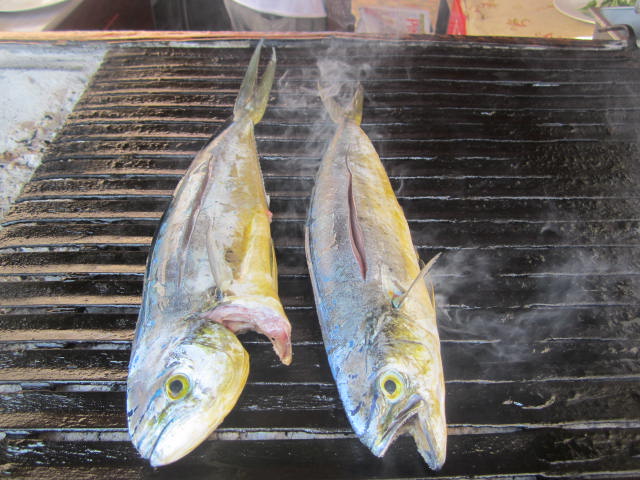
The absolute highlight of our time on the water was when Big A and Little Z both caught rather large fish at the same time. We were all so thrilled by this, even the Captain was impressed as I think he did not think they would catch anything using the hand held real as opposed to a rod. We took them to the local town where they gutted and grilled them for us so that we could have them for lunch. It was great for the girls to see the full cycle of catching a fish and then having it washed, cleaned and gutted before being grilled and then eaten, all within a couple of hours of being caught. Wonderfully fresh and we all agreed, very tasty. We weren’t too sure what the fish were exactly but they tasted delicious and the girls were delighted at being such able fisherwomen. Definitely a life long memory.

The morning’s catch!

When abroad I always enjoy discovering the different local foods and dishes on offer, as well as the spices and herbs that are commonplace.

At the spice market I bought: pink peppercorns, sumac, pul biber  (dried flaked pepper), dried mint tea, a marinade for fish

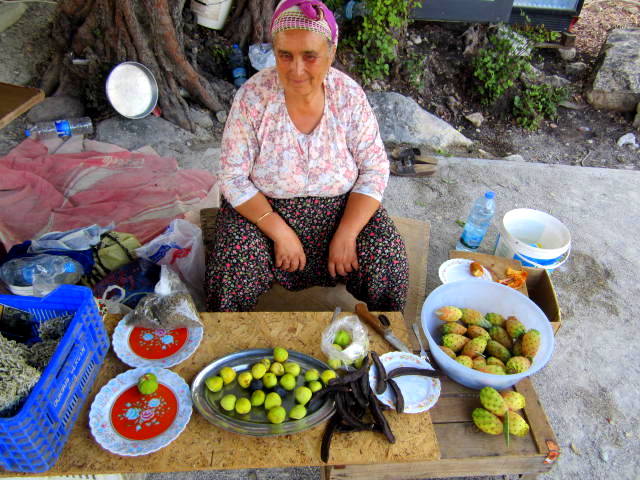
Turkey is bountiful with wonderful fruit trees bursting with offerings, some ready now – such as figs, grapes, peaches and cactus fruit (prickly pears) and others not quite ready for a month or two – namely pomegranate. I discovered the carob fruit that was completely new to me but I immediately took a liking to its sweet chewy undertones.

Carob fruit in centre of photo – they look like large vanilla pods.

I discovered that it has been cultivated for over 4000 years and that is also known as ‘St John’s bread’ or ‘locust bean’ as the pods were mistaking thought to be the ‘locusts’ eaten by John the Baptiste in the wilderness – although this was proved to be wrong as he ate migratory locusts. It has a honey taste to it and is in fact used as a substitute to sugar. I am certainly going to seek out the powder form and try baking with it this autumn – watch this space. Another interesting fact is that the beans are ground down to make a cocoa substitute, that although slightly different tasting, has a lot less calories and virtually fat free. It is also packed with vitamins (A, B, B2, B3, D). Check out this website which will tell you in more details about the carob fruit’s benefits. I also like John’s youtube summary of the fruit. I would love to grow a carob tree here in the UK, but I fear that our sporadic sun shine may not help it thrive like the ones in the Mediterranean and in California.

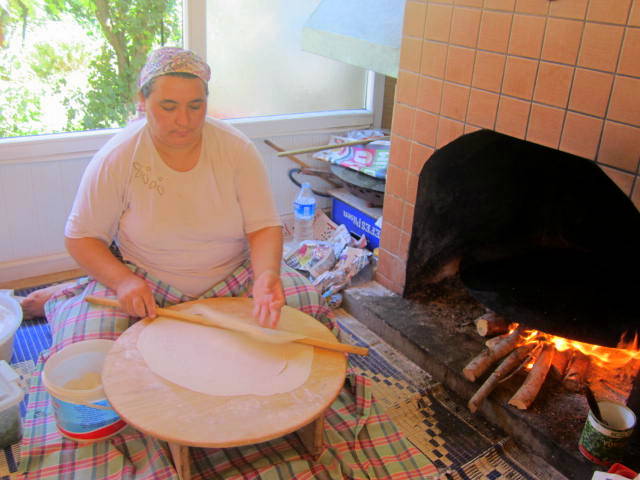
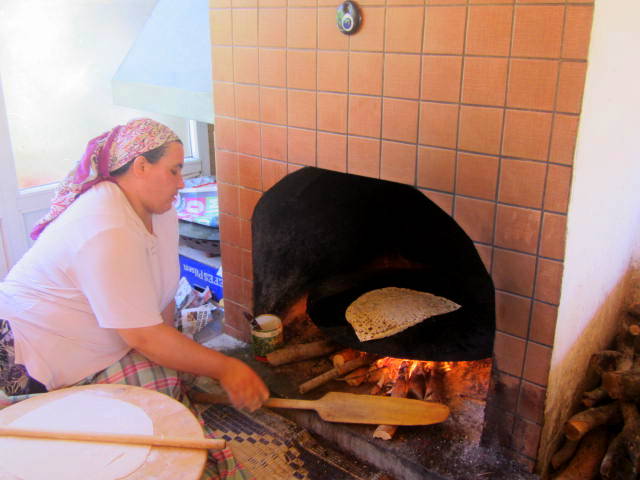
The girls discovered a new treat known as ‘gozleme’, which is basically Turkey’s answer to an Italian calzone. The dough is rolled out on a round surface and then half of it is stuffed with a contents of your choice – we liked spinach, feta and potatoes and then folded over to create a crescent. This is then put onto a hot circular surface that is heated underneath by an open fire. The whole process was mesmerizing to watch and the finished snack was polished off in no time at all.

Preparing our gozleme

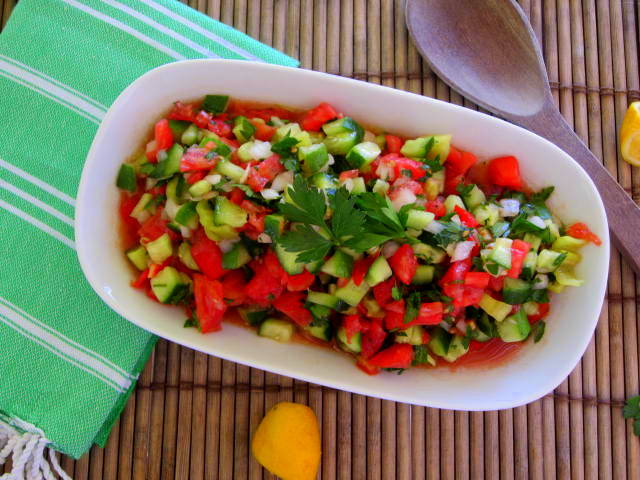
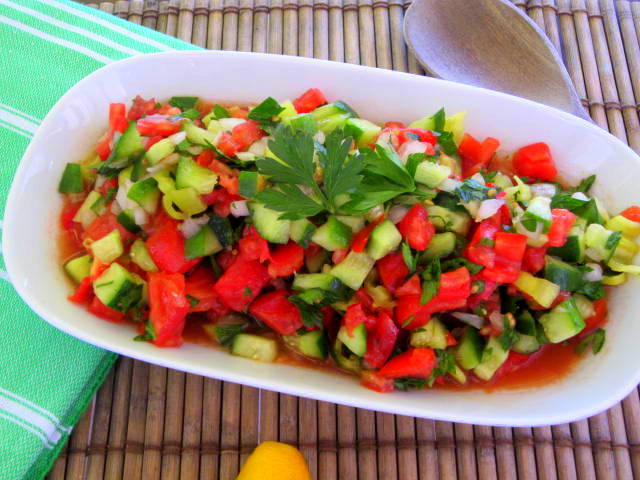
As the weather was ridiculously hot, salads became a staple at meal times. The most popular salad in Lycia seemed to be ‘Coban Salasti’ otherwise known as ‘Shepherd’s Salad’. It appeared on every menu and is ridiculously easy to make and perfect in hot weather. The trick is to cut the vegetables up  really small – far smaller than I would normally when making a salad.

Coban Salatasi – Shepherd’s Salad

Serves 4

2 large tomatoes (or 3 small), finely chopped

3 Turkish green peppers (the long thin ones), finely chopped

2 small cucumbers, finely chopped

1/2 (half) a white onion

1 large handful of fresh flat leaf parsley, chopped

2 tbsp olive oil

2 tbsp lemon juice

salt and pepper to taste

1. Finely chop all the ingredients into a large bowl and gently mix together.

2. Add the olive oil and lemon juice and season to taste and serve.

So what have you been up to this summer? Any food foraging or discoveries in foreign lands? Don’t be shy and leave a message below, I’d love to hear from you.


Stunning Bali – in every sense

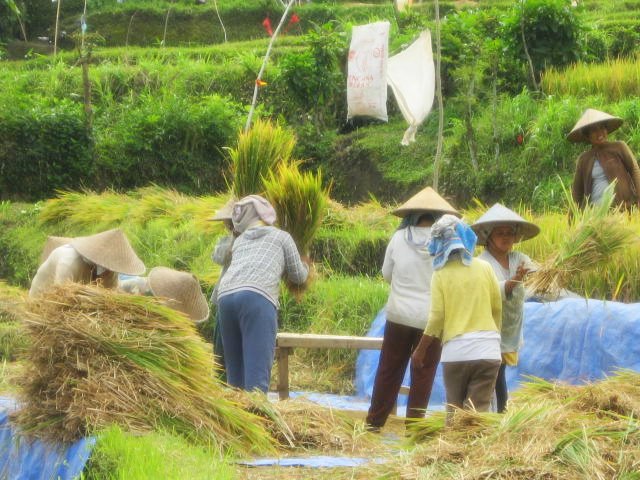
Bali Landscape

We returned very late last night from our galavanting in the tropics. Bali continues to be heavenly and a million miles away from the hustle and bustle of cosmopolitan London. Although we have only been away for just over two weeks it seriously feels that we have been away for a month or so. We have experienced so much and met some wonderful characters who added to the charm of the trip. The slower pace of life, the culture, landscape, food and general cheeriness of the Balinese people makes Bali a fantastic holiday destination if you are seeking some serious time out and a change of scenery. Our taste buds went into overdrive sampling local cuisine: from babi guling (suckling pig) to tongkol sambal matah (grilled tuna in shallot and lemongrass dressing) to burbur injin (Balinese black rice porridge with banana) – yes can you believe it I actually really liked a pudding. Watch this space and I will be sharing some of these recipes with you over the coming months. I may pass on the babi guling as that may be tricky for me to replicate quite so easily, but I will certainly be showing you a number of other dishes, as well as sambals and marinades.

I don’t know about you but when I’ve been eating the same type of food over a prolonged period (ok maybe two weeks isn’t prolonged, but you get my drift right?) no matter how tasty it is, I really yearn for different kinds of food. I recall holidaying in Italy a number of years ago and after two weeks of eating pasta – which was divine mind you – Mr B and I sneaked off to one of the Chinese restaurants in Florence to fill our bellies with some spicy food. We felt a little guilty but enjoyed our chilli kick. I am kind of getting that same feeling now that I have returned to England, so rather that rushing to replicate all those delicious dishes I experienced, I will put them up gradually.

As we are all suffering from jet lag I’ll put up a new recipe later this week. In the mean time I will leave you with a few photos taken in Bali.

Its good to back. Having hot humid weather is great, but I’m a sucker for the seasons and even though the rain has just kicked in, this temperature suits me.

IMG_1649

I particularly like this photo of the gecko as you can see the reflection of the beach and sea if you look closely at the centre of the photo.

IMG_1224

IMG_1560

IMG_1313

IMG_1248

IMG_1514

IMG_1656

Ever thought your shopping bags were heavy to carry? Well spare a thought for these ladies who swiftly walked by me with their heavy loads. Incredible.