Spiced Chickpea and Pineapple Salad


As we have been treated to some bright sunny days recently I thought that it would be super helpful to share some tasty and easy ‘salads’ over the coming weeks so that you can be ready for when the sun shines and you want to throw open the back door and eat ‘al fresco’. I like interesting combinations that work and I think this one will tick that box in spades.


Spiced Chickpea and Pineapple Salad

Serves 6 

2 tbsp vegetable oil

1 tsp black mustard seeds

1 tsp chilli flakes

2 stems of curry leaves, leaves removed and finely sliced

1 large whole pineapple, skin removed and cut into small bite sized cubes

2x400g tins/jars of chickpeas, strained

1/2 tsp salt (or to taste)

2 limes, zest and juice

2 tbsp freshly grated coconut

generous pinch of chaat masala

handful of fresh coriander to scatter on top


  1. Place the fresh coconut in the freezer for 30-60 minutes before using. Reason for this is that the outer shell comes away easier if it has been placed somewhere cold. To remove the outer shell use a rolling pin and bash the shell and it will crack allowing the outer shell to be removed. It will then be far easier to grate.
  2. Prepare the pineapple into bite sized cubes and place to one side.
  3. In a large wide pan heat the oil on a medium heat and then add the black mustard seeds. They will begin to fizzle almost immediately.
  4. Add the chilli flakes and the finely sliced curry leaves. They will begin to splutter so you may need to remove it from the heat for a second.
  5. Move around the pan and then add the pineapple, chickpeas and salt and cover in the mustard seeds, curry leaves and chilli flakes.
  6. Pour into a large serving platter and sprinkle with the grated coconut, lime zest and juice and chaat masala.
  7. Before serving scatter with some fresh coriander.


I accompanied it with my Bang Bang Chicken Salad which you can find here.


Lindisfarne and Pilgrims Coffee Cake


On our recent visit to Northumberland we visited the Holy Island of Lindisfarne. It is a tidal island that is accessed by a paved causeway, which is covered by the North Sea twice every 24 hours (so check tide times before you visit). It is one of the most important centres of early English Christianity when Irish monks settled there in AD635.

The Northumbrian King Oswald summoned an Irish monk named Aidan from Iona – the island monastery off the south west coast of now Scotland – to be bishop of his kingdom. He granted Aidan and his companions the island of Lindisfarne on which to found a monastery.

In the AD670’s a monk named Cuthbert joined the monastery at Lindisfarne and later became the greatest monk-bishop, and the most important saint in northern England in the Middle Ages.

Cuthbert also spent time on the even more remote island of Inner Farne just off the coast from Bamburgh. We visited the priory, which is now run by English National Heritage and definitely worth exploring, along with the fascinating exhibition which is included in the ticket. We combined our adventures on Lindisfarne with a stunning walk of the coast line of the whole island – around a 5 mile circular walk. We use Pathfinder walk books which I really recommend.

At the end of the walk, before we headed into the Priory, we chanced upon a rather inviting coffee house called ‘Pilgrims Coffee and Roastery’. I highly recommend you make a detour here to purchase a bag of their coffee beans (great gifts) as well as a cup of coffee and some excellent cakes and savoury eats. Their ‘Espresso Cake’ was so good that I thought I would share it with you here.

They have a cookbook, which you can buy with all their recipes in – you can purchase that here.


Pilgrim’s Coffee Cake

adapted from the Pilgrim’s Coffee and Roastery Cookbook

Serves 12

250ml espresso

250g salted butter

50g cocoa powder

400g caster sugar

150ml sour cream

2 eggs

1 tbsp vanilla extract

300g plain flour

200g chopped walnuts

2.5 tsp bicarbonate of soda

For the icing

60g unsalted butter

120g sifted icing sugar

2 tbsp espresso


  1. Preheat the oven to 180 degrees (they state 160 degrees if using fan, but I found it needed to be hotter for my fan oven)
  2. Line a 20cmx30cm tray with greaseproof paper
  3. In a large bowl whisk together the butter and sugar until light and fluffy
  4. Mix in the espresso, cocoa, sugar, sour cream, eggs, vanilla, flour, bicarbonate of soda and walnuts to a loose batter.
  5. Pour the cake mixture into the prepared tray.
  6. Bake for 30-40 minutes until risen and dark brown – I found I needed to do it for a little more than 40 minutes.
  7. Allow to cool on a baking tray and remove the greaseproof paper when cooled slightly.

Icing


8. In another bowl whip together the butter and icing until light and fluffy.

9. Fold in the espresso until smooth.

10. Spread over the cooled coffee cake. Decorate with a few extra walnuts.


Note: It’s probably me, but I found the icing did not work when I used the amounts in their recipe – 250g unsalted butter, 250g icing sugar and 120ml espresso so I redid the icing to the amounts above and it worked. I tend to prefer less than more when it comes to icing anyway as I don’t have a particularly sweet tooth. Let me know what works for you.


Wild Garlic Recipes Ideas

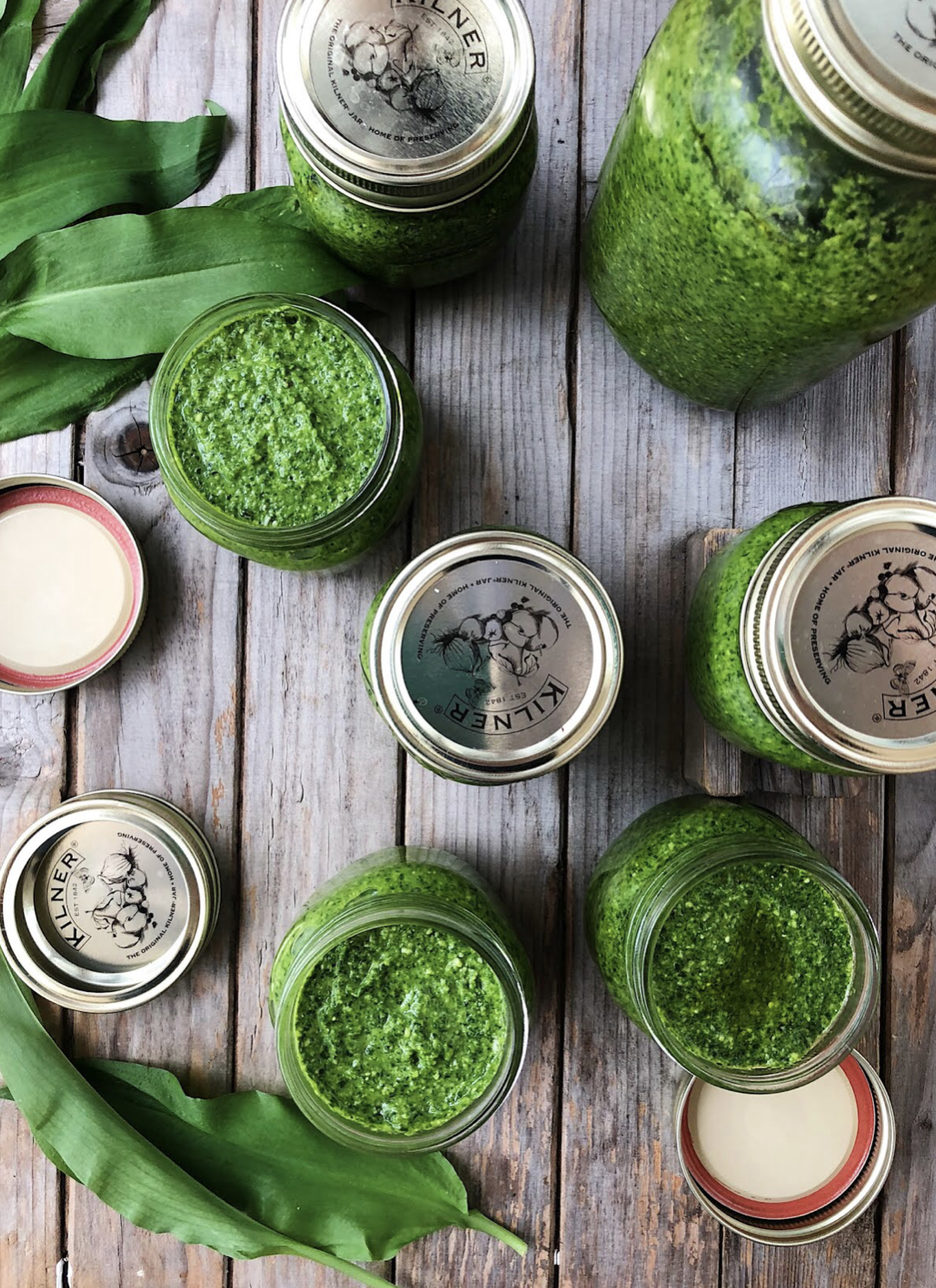
It’s that time of year again when a woodland walk will be interspersed by the smell of wild garlic on the wind. Follow the scent and you will find wild garlic growing – often near a stream – ready for picking. Over the years I have shown a number of wild garlic recipes on my blog so I thought it may be helpful to point them out.

If this is your first foray into foraging wild garlic may I suggest you start by making wild garlic pesto as it is very straight forward, tastes delicious and freezes really well (so much so I have enough to last me over the winter months and until the season starts again).

You can find the recipe here. When picking wild garlic simply break off the leaf, leaving the root and stem intact.

Wild garlic scones are great fun to make and a delicious treat after a spring walk – perfect for Easter gatherings.

You can find the recipe here.

Perhaps you are into soups – like me – then you might like making my wild garlic, courgette and lemon soup with a poached egg and panko breadcrumbs.

You can find the recipe here.

Or you can simply spread on hot butter toast, which is the favourite option of my eldest daughter and sister.

How do you like to eat wild garlic?  Have you ever eaten it? Any other new suggestions welcome in the comments section below. Happy Easter everyone.


Celebrating 100 Years of La Scolca Wine at Novikov Mayfair

Photo by Tibor Silva

It’s not every day that you get invited to help celebrate 100 years of La Scolca winery, hosted by the very charming and charismatic owner and CEO, Chiara Soldati, at the Italian restaurant of Novikov in Mayfair. The vineyard is located in the Piedmont region of Italy and was purchased between 1917-1919 by Chiara’s great-great grandfather who planted Cortese vines in an area traditionally used to cultivate only red grapes. Through the hard work, drive and tenacity of the Soldati family La Scolca winery has created an extraordinary set of wines that have brought attention to the “Gavi” region and to the Cortese grape.

Photo by Tibor Silva

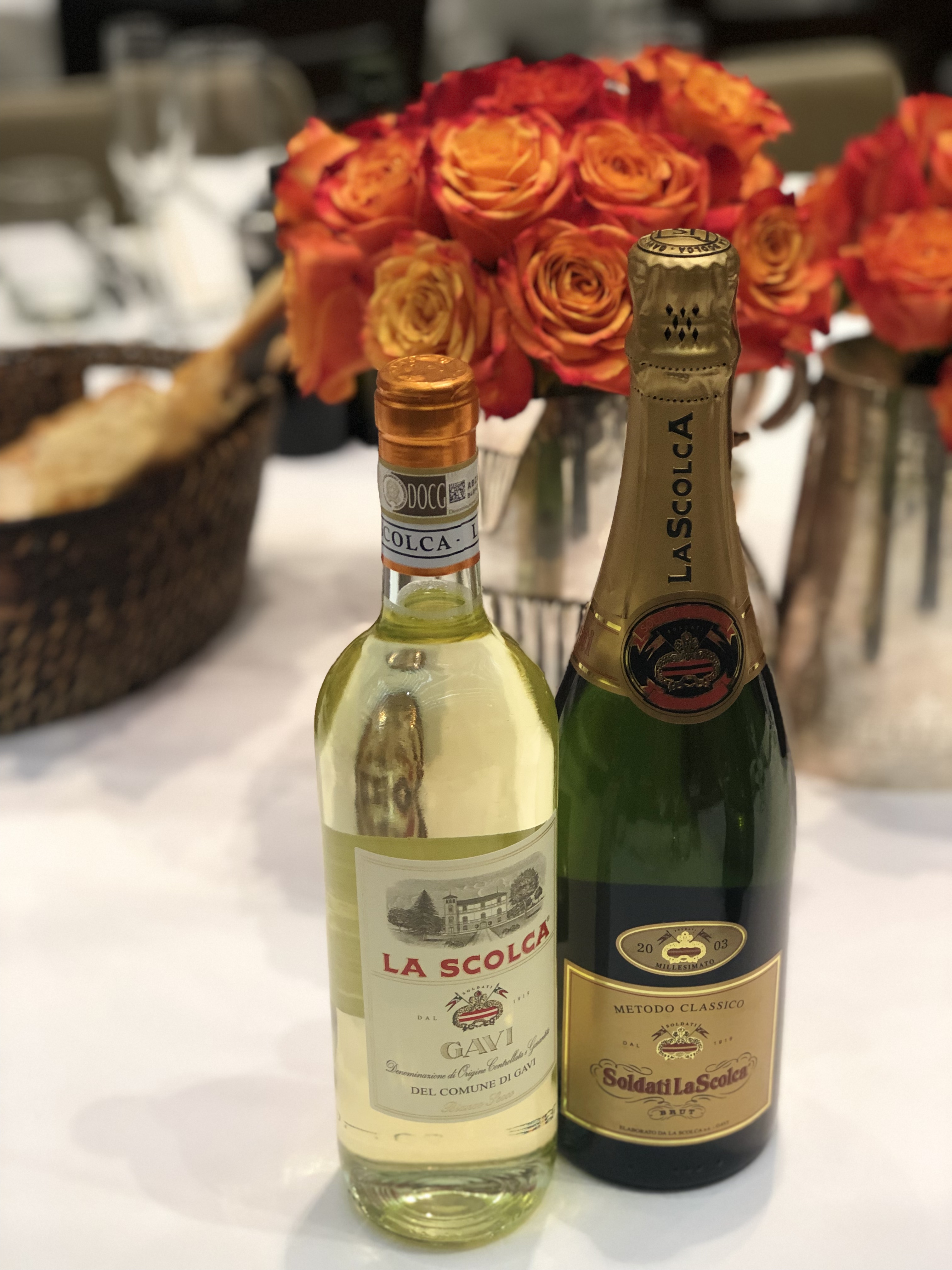
Attending the seven course lunch were a host of gourmet food and wine connoisseurs from industry, the press and bloggers, as well as some of the most respected general managers from well known Italian restaurants across London. The gathering was intimate and celebratory and we began the occasion with a glass of Soldati Brut Millesimato to mark the occasion. This sparkling wine is 100% Cortese, is fresh, full with a velvety embrace.

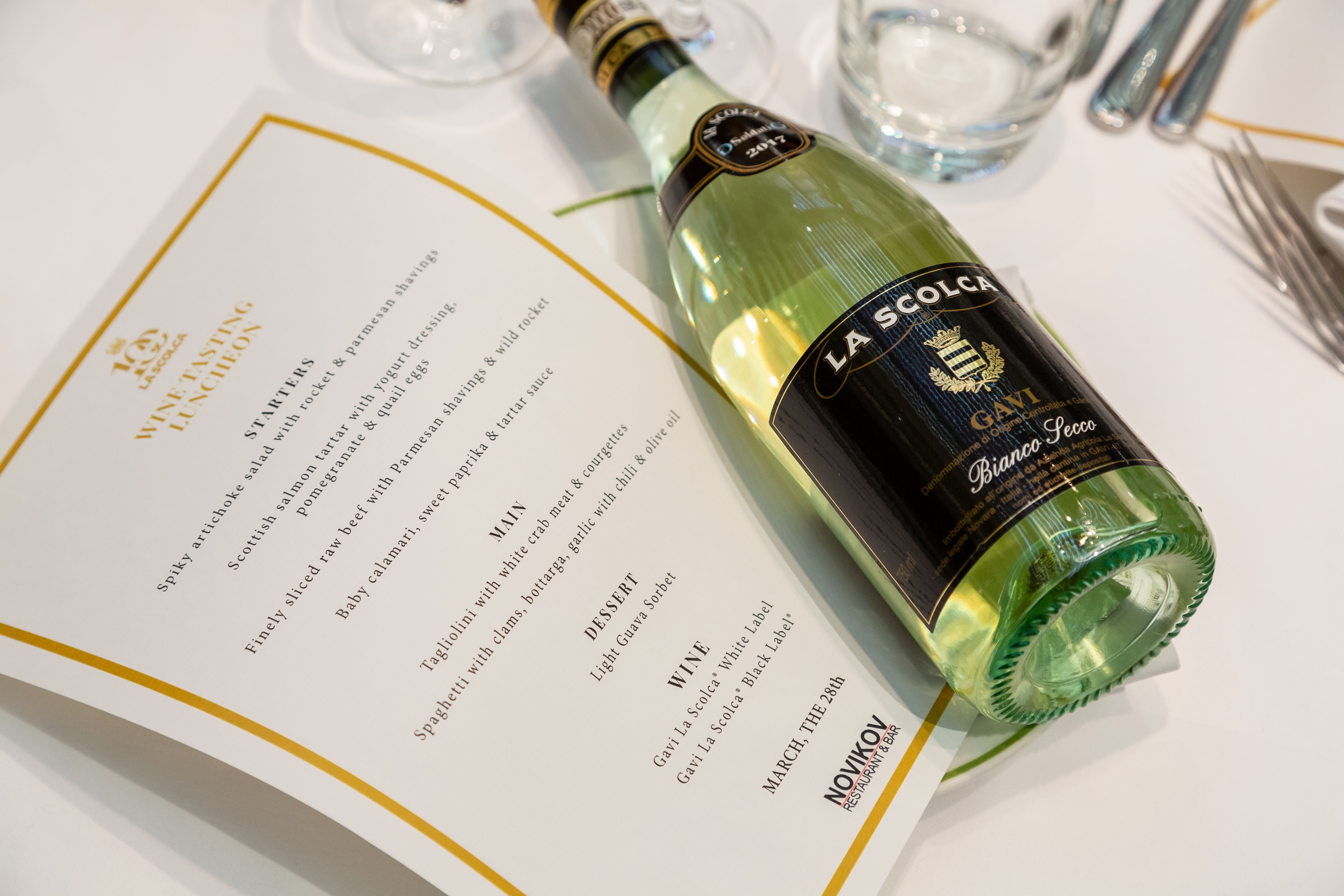
The menu as you can see below, was beautifully put together and each dish presented was a triumph. I particularly loved the crispy sweet paprika coating to the calamari – nice touch – and the spiky artichoke salad from the starters and both mains were exactly the type of dishes I would naturally choose from a menu – and I got to eat both. LUCKY.

Photo (above and below) by Tibor Silva

With our food we were treated to two different wines from the La Scolca winery – Gavi La Scolca (Gavi D.O.C.G. wine), which is a delicate, dry white that paired beautifully with the antipasti and seafood and fish dishes that we ate. Following this we had the Gavi dei Gavi Black label, which again is made with the Cortese grapes and was utterly delicious, and one that I will most definitely be seeking out again.

Drinking Chiara’s beautiful wines got me thinking. Both the white wines I had drunk would work rather well with some of the Indian recipes that I make. Something light, fresh and possibly citrusy would work well with these wines.

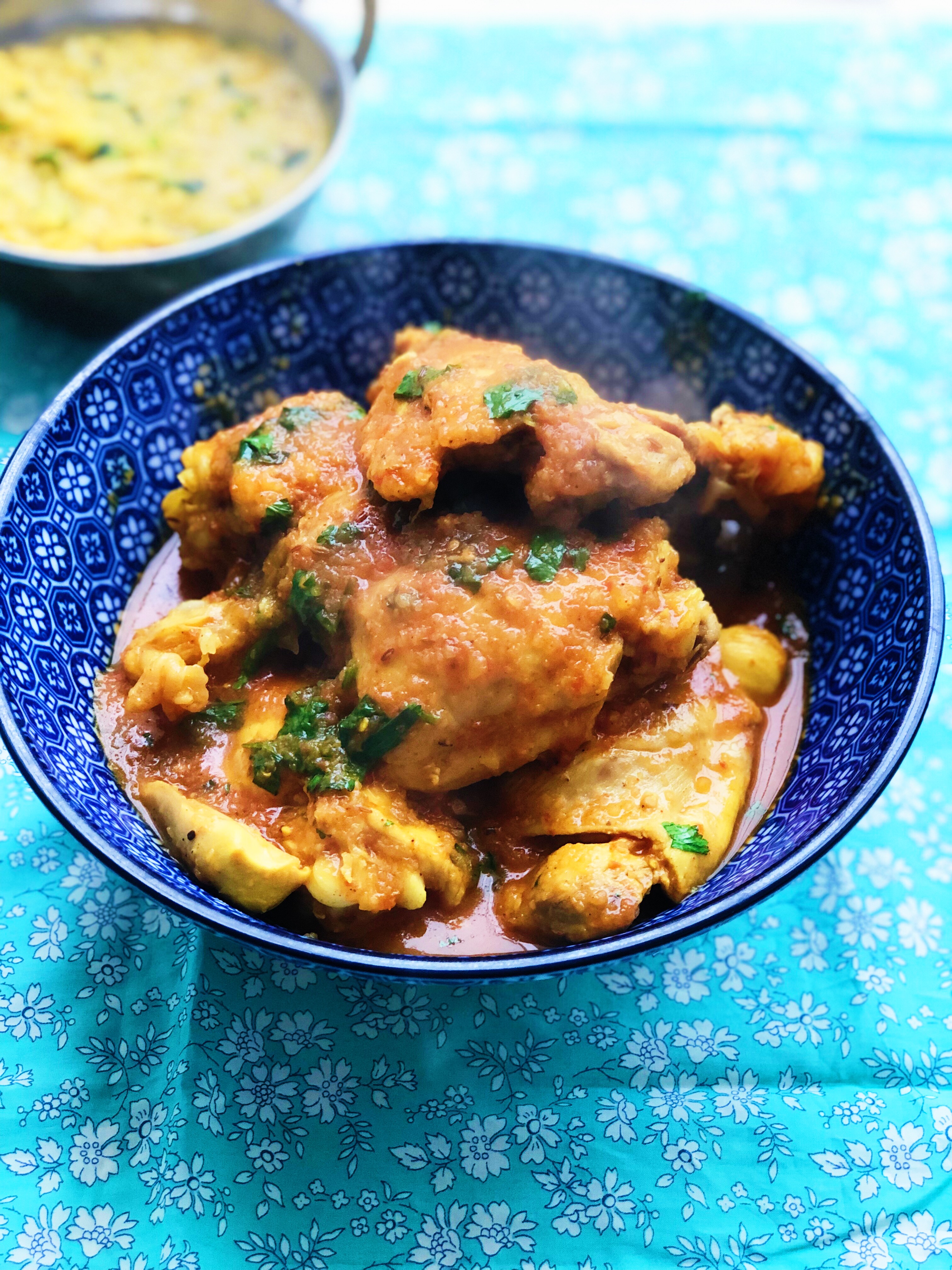
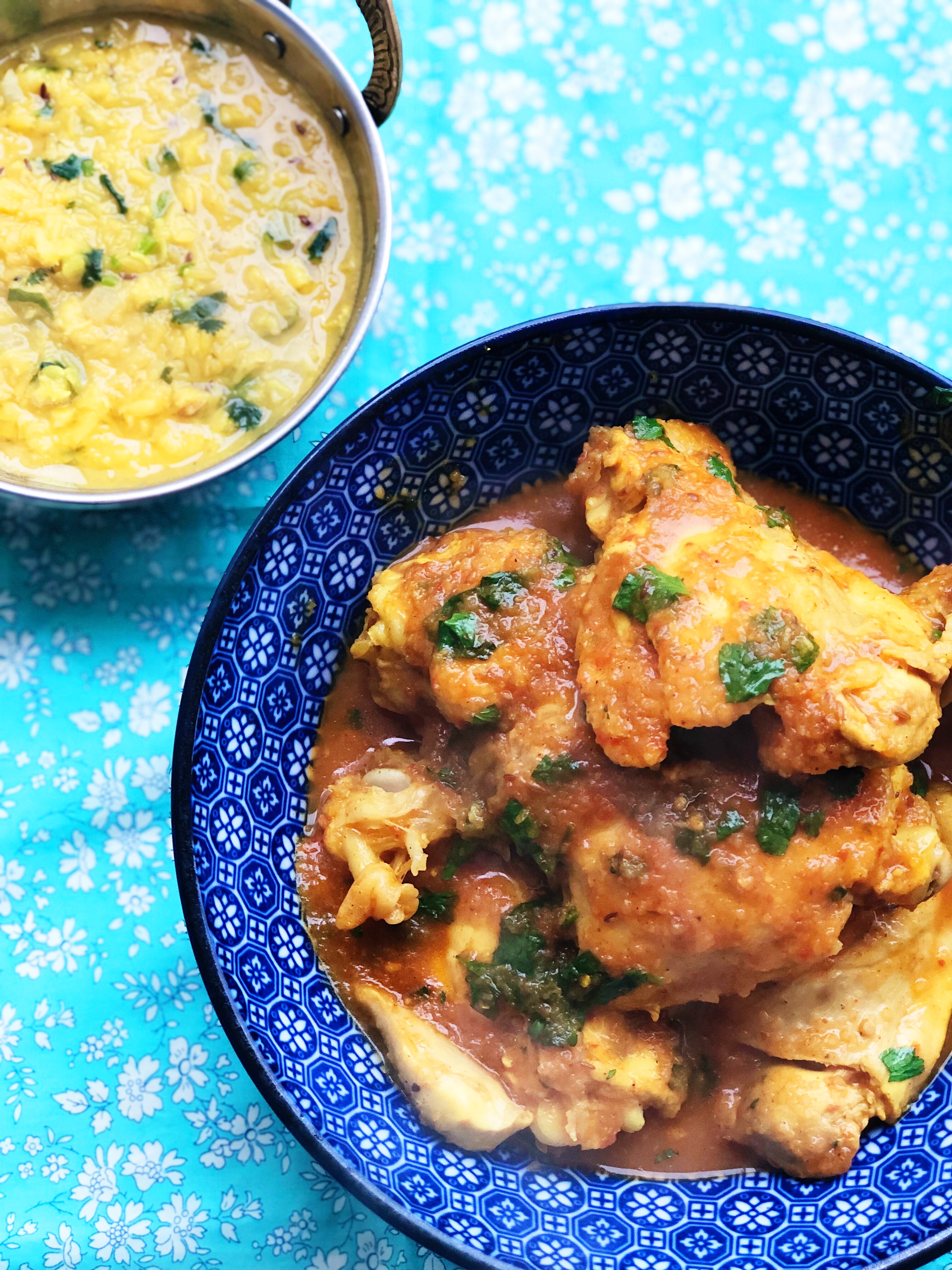
Back in my kitchen I came up with a lemony tomato chicken curry, that does not have much chilli heat but is delicately spiced. I think it would work brilliantly with Chiara’s wines or other Gavi whites.


Lemony Tomato Chicken Curry

serves 6-8

4 medium tomatoes, quartered

1 large potato, quartered

1 large white onion, quartered

3 green chillies, halved

2 tbsp oil

1 tsp cumin seeds

1 tbsp garlic paste

1 tsp ginger paste

4 lemons, juice only

1 tsp coriander powder

1 tsp Kashmiri chilli powder

1 tsp turmeric powder

1 tsp garam masala

1 tsp black pepper, freshly ground

1 tsp brown sugar/jaggery

1 tsp salt/to taste

2kg chicken on the bone (legs and thighs)

1 large handful of freshly chopped coriander


  1. Blend the tomatoes, potato, onion and green chillies in a blender until smooth.
  2. In a deep wide pan heat the oil and when it is hot add the cumin seeds so that the begin to sizzle – within 20 seconds – and then add the garlic and ginger paste. Move around the pan for a minute before adding the tomato and onion puree.
  3. Add the lemon juice and the remaining spices as well as the brown sugar/jaggery. Mix together.
  4. Add the chicken and coat in the masala mixture. Place a lid on the pan and keep on a medium heat for 30-40 minutes, stirring intermittently so that nothing burns on the bottom of the pan and the chicken cooks through evenly.
  5. You may find you need to add a little more water if the sauce is drying up.
  6. Taste test the salt level and check the chicken is cooked through – it sometimes takes a little longer on the bone.
  7. Before serving mix in the fresh coriander and serve with some simple plain rice and some dal (see my recipe library for a wide selection).


Me, Chiara and Susi – check out her blog www.foodwithsusi.com @food_with_susi
I was a guest of Chiara Soldati. Some of the photos above (mentioned) were taken by Tibor Silva