Mary’s Granola Bars

Mary McCartney has been gracing the pages recently of certain magazines here in the UK, namely The Saturday FT Magazine (April 21st 2012) and the June issue of ‘Red’ Magazine. Known for her talent behind the camera it was a revelation, albeit a positive one, that she has just produced a cook book called ‘Food‘ that she wrote and photographed. For those who are unaware, the McCartney clan are passionate vegetarians and Mary has clearly channelled her love of all things vegetarian into her own tome. Between the two magazines I now have just under 20 of her recipes, which should appeal to a wide audience in that they look straight forward to execute and appetising enough to warrant an attempt at making.

I thought that I would follow her take on the granola bar, which to all intense and purpose is a glorified healthy flapjack right? I am always thinking of little snacks to feed Big A and Little Z when I collect Big A from school, so thought Mary’s granola bar idea would be perfect to give them to fill the gap before supper.  I am also a huge fan of agave syrup, (which I also used in this recipe) which was right at the top of her ingredients list.

The recipe is so incredibly easy that it would be perfect for Big A (whose 6) to cook on her own, with a little overseeing from Mama of course! I followed the recipe religiously, but I think I will get creative next time and change some of the ingredients around. For example I think the bars would also be delicious with pecan nuts, hazelnuts, dates, dried cranberries, coconut. If you get carried away with some new ingredients that work do let me know and maybe next time I’ll follow your suggestion.

Granola Bars

Sourced from Mary McCartney’s recipes in The Saturday FT Magazine, April 21st 2012

Makes 12-14 slices

200ml agave syrup

50g butter

4 tbs vegetable oil

1/4 ground cinnamon

1 tbs vanilla extract

200g porridge oats

80g cornflakes

100g almonds, coarsely chopped

100g dried apricots, coarsely chopped

100g raisins or sultanas

2 tbs sunflower seeds

2 tbs pumpkin seeds

 1. Line a baking tray with baking parchment. I used a 25cm x 25cm tray. Preheat the oven to 180 degrees.

2. Heat the agave syrup in a pan for a few minutes and then add the  vegetable oil and butter. Take it off as the butter melts.

3. Add all the ingredients to the syrup mixture and gently fold in together so that all the ingredients are evenly covered in the syrup.

4. Transfer the contents of the pan to the baking tray and firmly press down evenly.

5. Bake in the oven for 15-20 minutes.

6. Take tray out of oven and leave to cool. When it is cool, cut the granola into square, rectangles – whatever shape takes your fancy! The baking parchment will come away easily once the granola has cooled.

7. Store in an air tight container.


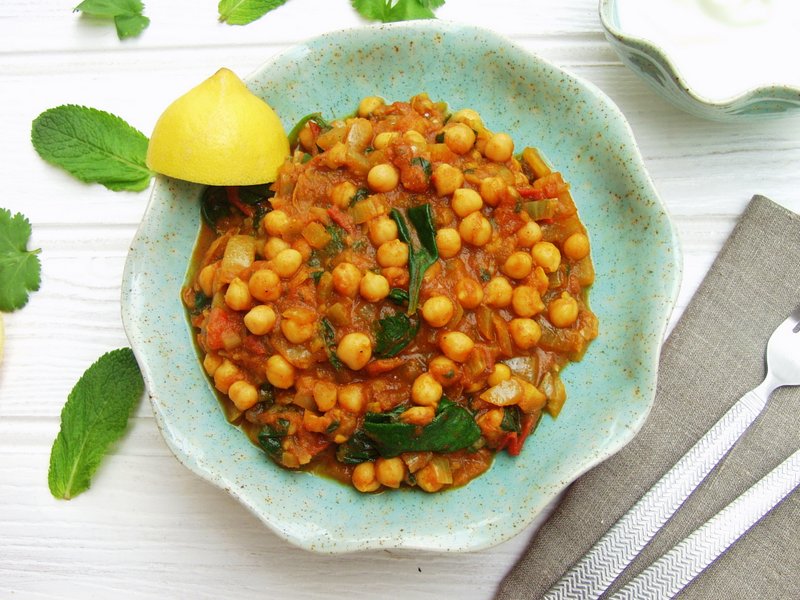
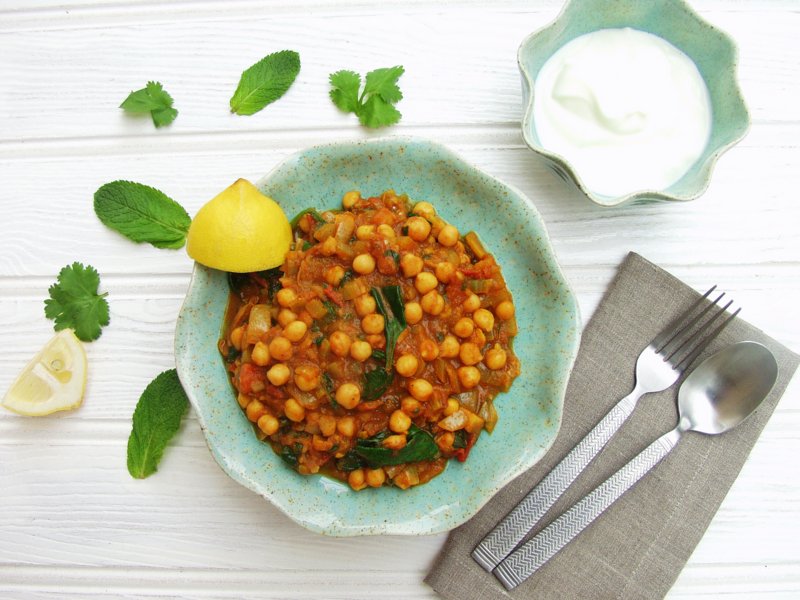
Chickpea Curry with Tomatoes, Spinach, Fresh Mint and Coriander

After a full on Monday there is nothing more exhausting than having to cook a long and complicated recipe for supper. So I always try to cook something healthy, tasty and speedy in equal measure. I have always loved the taste of chickpeas and find they compliment so many dishes, but for this dish they feature as the main ingredient. There are so many good chickpea curries I was in a quandary on which to show you first, but settled with this one as it can be prepared and cooked within 15 minutes. Seriously it is so fast you’ll impress even yourself. The fresh mint and coriander, whilst not usually paired together, compliment each other well in this dish as the mint gives a sweet undertone that balances really well with the bold coriander and all the other Indian spices.

I cook this curry using canned chickpeas (shock horror), which will save you having to soak them overnight and boil them for an hour or two. Whilst the curry is perfect to eat on it’s own, if you want to make more of a feast you could cook this delicious salmon curry, which also takes no time at all. I will be eating mine with some wholemeal pitta bread, a dollop of natural yoghurt and squeeze of lemon. Simple and yet satisfying, I hope you agree.

Chickpea Curry with Tomatoes, Spinach, Fresh Mint and Coriander

Serves 2 (as a main meal or up to 4 if having other dishes)

1 tin of drained chickpeas

2 tbsp ghee (or ground nut/mustard oil)

2 green chillies, chopped

1 onion, chopped

2 garlic cloves, chopped

1 tsp ground turmeric

1 tsp paprika

1 tsp garam masala

1 tsp ground cumin

1 tsp ground coriander

2 large tomatoes, chopped

1 handful chopped fresh mint

1 handful chopped fresh coriander

2 handfuls of fresh spinach

1 tsp salt

50ml boiled water

1. Heat the ghee/oil and when it is nicely hot add the chopped onion, garlic and chillies. After a few  minutes, when the onions are beginning to brown slightly, add the ground turmeric, ground cumin, ground coriander, paprika (I use this hot paprika one I mentioned in this blog post) and garam masala and stir into the onions, garlic and chillies. Leave to simmer gently for another minute.

2. Add the chopped tomatoes, mint and coriander and again stir into the other ingredients. The smells coming from your pan will be heavenly!

3. After draining the chickpeas add them to the curry and stir in thoroughly. As the curry will seem a little dry at this stage, add the boiled water and stir into the ingredients. Leave to simmer for a few minutes.

4. Add a couple of handfuls of fresh spinach and stir into the curry. Once it is wilted (this will only take a minute) leave the curry to simmer for a couple more minutes. If you think it is still a little dry just add a little more water. Add the salt and stir into the curry before letting it rest for a short while before eating. Equally you can cook it earlier in the day and simply reheat it when you are ready to eat in the evening, although you will have to add a little boiled water when you re-warm it.


Ottolenghi’s Roast Chicken with Saffron, Hazelnuts and Honey

Foodies in London will be very familiar with the names Yotam Ottolenghi and Sami Tamimi who first set up the successful deli/bakery/patisserie cum restaurant  called ‘Ottolenghi’ back in 2002 in Notting Hill.  Their passion and flair for cooking was evident from the start and their venture soon became a food lovers magnet, in particular I remember the mounds of mouth watering salads piled high on large dishes for you to help yourself to. We are not talking about a few lettuce leaves with tomatoes and cucumbers thrown in. Oooooooooh no, their salads were, and in fact still are, on a whole different playing field. They are the most imaginative and more-ish that you will come across, to the extent that it is actually hard to decide which to tuck into. Decisions, decisions!

In 2010 Yotam published a book dedicated to vegetarian food called ‘Plenty’ and a number of his salads were put into the book. It’s beautifully put together and I am convinced it would persuade even the most carnivorous amongst you to try some of the recipes. He has in many respects made vegetarian food, and indeed salads, look sexy.

Today they now have four delis as well as launching a very successful restaurant called, Nopi.  Basically they are on a roll and London cannot get enough of their talents. That is not to say that Yotam and Sami only cook vegetarian food, far from it. Their cooking is heavily influenced from their childhoods in Israel and their style of cooking definitely has a Mediterranean edge to it, with wonderful meat and fish dishes to whet the appetite.  They cook all the kind of dishes that I am attracted to – basically ones that are full of bold flavours, which they describe rather endearingly as the ‘noisy’ flavours: ‘lemon, pomegranate, garlic and chilli’. The other cookbook, which is a definite must for those who like their style of honest cooking, is ‘Ottolenghi, The Cookbook‘. They also have a new book,  ‘Jerusalem’, in the wings, launching later this year, which I am looking forward to buying.

It was from Ottolenghi, The Cookbook that I discovered ‘Roast chicken with saffron, hazelnuts and honey’. I was immediately attracted to the recipe as it had a wonderful range of interesting ingredients – in particular I like the fact that it had ginger, cinnamon, saffron, lemon, hazelnuts, honey and rosewater. I had never cooked with rosewater until I started cooking this recipe; I love the fragrance  and subtleness that it brings to the dish.  The  exotic smells coming from the oven takes me back to happy times exploring Morocco and the Atlas mountains.

 Roast Chicken with saffron, hazelnuts and honey

Sourced from Ottolenghi, The Cookbook

Serves 4

10 chicken thighs (or a combination of wing, leg and thighs)

2 onions, roughly chopped,

4 tbsp olive oil

1 tsp ground ginger

1 tsp ground cinnamon

1 large pinch of saffron strands

juice of 1 lemon

4 tbsp cold water

2 tsp coarse sea salt

1 tsp black pepper

100g unskinned hazelnuts

75g honey

2 tbsp rosewater

2 spring onions, roughly chopped

1. Trim the fat of the chicken thighs and then mix in a bowl with the chopped onions, olive oil, ginger, cinnamon, saffron, lemon juice, water, pepper and salt. Leave to marinate in the fridge for over an hour –  or overnight if you are really well organised. I wasn’t so left it in the fridge for a couple of hours!

2. In a preheated over – 180 degrees if using a fan oven (10 degree hotter if not), place the hazelnuts on a tray to roast for 10 minutes.

3. Roughly chop the roasted hazelnuts – I give them a quick wizz with my hand blender and set aside.

4. Place the chicken, skin side up, in an ovenproof dish/roasting tray in the oven with the onions and juice surrounding it and leave to cook for 35 minutes.

5. In a new bowl mix the honey, rosewater and nuts to create a rough paste. When the 35 minutes cooking time for the chicken is up, spread the paste over the chicken and place back in the oven for another 10 minutes, until the chicken is golden brown.

6. Whilst the chicken is cooking for the final 10 minutes, put on the rice/or prepare the cous cous.

7. Serve the chicken with either rice or cous cous and garnish with spring onions – I preferred to do this over the cous cous. There will be plenty of sauce full of deliciousness to serve over the chicken.


Indian Style Tomato Chutney

I adore condiments with my food no matter what the origin of the food. Chutneys, mustards, jellies, pickles, dressings – you name it, I love to have the option of having them on my plate supporting the meats and/or vegetables and giving the dish that extra added dimension. So you can just imagine how in heaven I was when Mr B’s grandmother, known as Dida, cooked this simple tomato chutney for us when we visited her in Kolkata a while ago. We were all given a little bowl of the chutney to eat alongside our dal and vegetable dishes and it tasted sublime. The combination of hot and spicy with sweet undertones  made the chutney completely addictive.

Tomatoes are to me what I imagine chocolate is to many people. I could give up eating chocolate tomorrow, but tomatoes……well that would be seriously hard. In fact for Easter my parents gave me a tomato plant instead of a chocolate egg, knowing that I would get more enjoyment out of that than a chocolate egg.  I eat tomatoes pretty much everyday and without doubt they are my absolute favourite fruit as they are just so versatile and can completely transform dishes. If you have any tomato recipes that you think I would like please send me an email to chilliandmint@gmail.com as I would love to try them.

With this recipe you can keep it simple and just use tomatoes, but I like to add a little dried fruit so as to blend the flavours. You can add a couple of dried prunes, dates, apricots or mango. Experiment and see which you like to compliment with the tomato.

Dida cooks her chutney without the tomato skins on, however, for speed and because I don’t mind them, I have left the tomato skins on. If you prefer a smoother texture then simply boil the tomatoes in a pan of boiling water for five minutes and then strain them and you will find the tomato skins easily come away from the body of the tomato.

Indian Style Tomato Chutney

Makes 1 bowl, 4-6 servings

300g tomatoes, chopped in half if using cherry and quartered if using larger size

1 inch of ginger, grated or chopped finely

2 dried red chillies

1 tsp black mustard seeds

1 tbsp olive/mustard/nut oil

1/4 (quarter) tsp salt

4 tsp sugar (to taste)

3 slices of Aam Shatwa (dried mango), or dried apricots, dried prunes, dried dates – optional

1. Warm the oil in a pan and when it is hot place the two dried red chillies into the oil. You want to fry them until they turn black, which will take a few minutes. For those of you who have seen or made my homemade mango chutney you will remember that frying the dried chillies will make you cough. My mother-in-law assures me that it helps those with nasal congestion, so if you have any issues in this area get involved at this part of the recipe as it is sure to help your ailment!

2. When the dried red chillies have blackened add the remaining ingredients and stir. The tomatoes will release juice as they warm in the pan. Squash the tomatoes with the back of a fork so that they become limp. Taste the chutney and add extra sugar if required.

3. Leave to simmer for 5 minutes, or until the tomatoes have completely softened and then transfer into a bowl to cool. Serve at room temperature.

SaveSave


Coriander Leaf Fritters – Dhone Pata Bora

I know that coriander leaves (cilantro for my lovely US/Canadian readers, dhone pata for my equally lovely Bengali readers) divides opinion, but I for one admire the herb for it’s wonderful, bold and punchy flavour. I find it really adds the perfect kick to a dish and brings it alive.

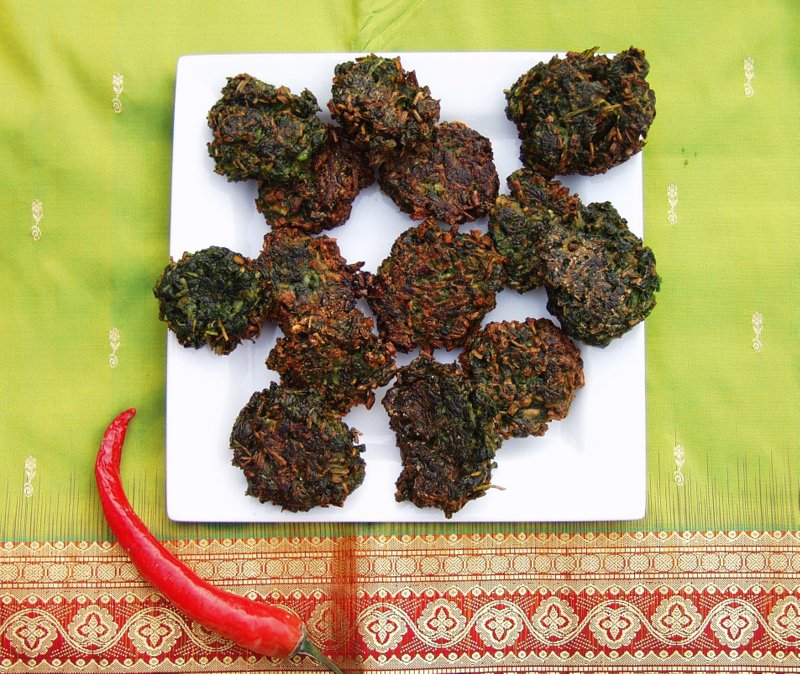
For this dish, or perhaps that’s a little bit grand to call it a dish as it ‘s more of a tasty snack, has coriander as the main ingredient. It takes centre stage and while they might not look that exciting, they taste really good and are prefect nibbles if you have friends popping over or if you are feeling the need for an original snack.

We’ve been having a roller coaster of weather conditions over here in the UK, with sun-rain-hail-thunder-lightening-rainbows all in one day, so outside play action for big A and little Z has been only temporary. Inside the house we get creative in all manner of ways, and cooking little delights is something we enjoy doing together. These bite sized fritters are easy to prepare and the girls love to help me put them together. We make an extra batch for them, without the chilli, but for a more mature, adult palate I add lots of chilli.

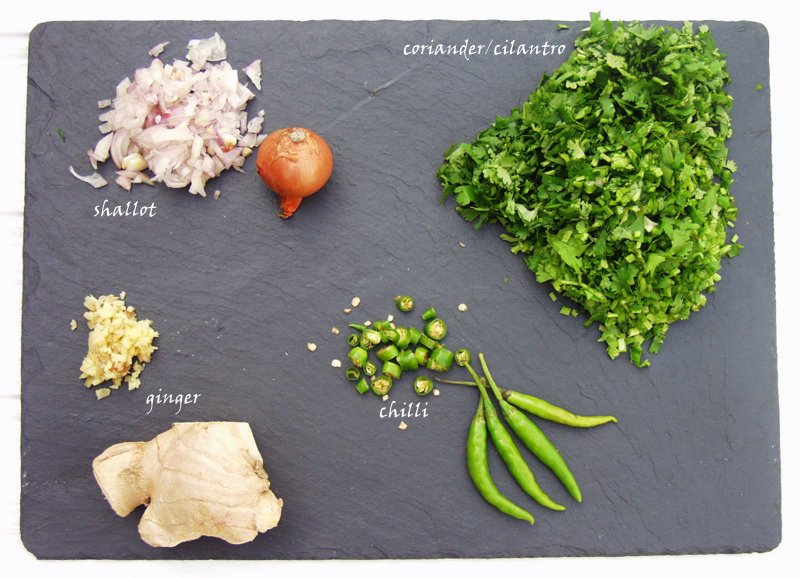
So here are the main fresh ingredients you need to make the fritters:

Coriander Leaf Fritters – Dhone Pata Bora

serves 2-3 (double/triple for larger quantity)

large handful of fresh coriander leaves/cilantro leaves/dhone pata, chopped

1 shallot, finely chopped

1 inch ginger, grated or finely chopped

2 small green chilli, finely chopped

half tsp of salt

3 tbsp plain or gram flour

3 tbsp water

splash of oil (I use mustard oil)

1. Finely chop all the fresh ingredients and place in a bowl along with the flour (I simply used plain instead of gram this time), salt and water. Add the water a little at a time so that the fritters are not too moist. If they do become too moist simply add a little more flour to bind them together.

2. Mix well and roll into small balls in your hand and then gently press down so as to flatten them, so that they look like this:

3. Heat the oil in a pan and when it is hot gently place the fritters into the oil and fry on a medium to low heat for a few minutes. When the undersides have darkened turn them over and let the fritters cook throughly on the uncooked side. The cooking time should not take much more than 5 minutes.

4. Serve and eat immediately. They also word well with dal and rice if you want to make more of a meal out of them.


Lazy Florida days and a healthy option omelette

We have now returned from 10 blissful days in the Florida Keys and Miami. Nine hours on a plane transported us to the depths of summer where the sun shone and a gently cool breeze drifted off the Atlantic Ocean and the Gulf of Mexico, giving us a little respite from its warm rays . I’d been to Key West once before but had flown directly onto the island so had not fully grasped how spectacular the drive from the Everglades to the southern tip of Florida – Key West – actually was. There are over 1700 islands in the coral archipelago that makes up the Florida Keys, but only 43 are inhabited connected by bridges, the most spectacular being the seven mile long bridge. We stayed on the beautiful Islamorada and whiled away the days swimming, snorkeling, sea kayaking, seeing dolphins and fishing from the jetty.

A coral reef stretches to almost as far as the eye can see and this coupled by bath warm still waters provided the perfect sea for the whole family to feel safe from deep swells.

We spent a leisurely day driving up to the tip – Key West – and back to Islamorada. Key West seemed to have expanded  somewhat since I was last there 18 years ago, as you would expect, but step off the touristy Duval Street on to the side streets and you will find the the beautiful weather boarded houses covered with bougainvillaea which have remained the same since the days of Ernest Hemingway. The pace of life is slow and it doesn’t take long to feel the stresses of everyday life lift off you when you spend time in the place.

Being only 90 miles from Cuba, therefore closer to Cuba than Miami, the island definitely has more of a Caribbean than American air to it. Many Cubans moved permanently to Key West from the 1860’s  following the ‘Ten Year War’ and with the Cubans came the arrival of the rooster (due to their love of cockfighting), to the extent that today virtually every street has a rooster wandering down it. Cockfighting was outlawed in 1970 but the roosters have remained free to wander at their will around the streets.

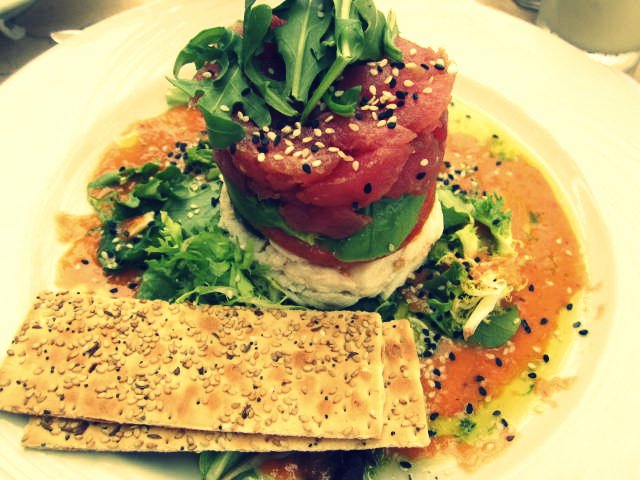
Mr B and I ate one of the most delicious lunches whilst in the US at a place called Mangoes, a ‘Tuna, Crab and Avocado Tower’. It was absolutely divine, seriously off the charts. It consisted of  tuna tartar, blue crab, layered avocado, plum tomato, cucumber, field greens and arugula (or rocket for us Brits!) and finished with a tomato vinaigrette and scallion infused oil.  I am going to have to replicate a similar dish and put it here on my blog in the future. Fresh, healthy and delicious what more could I ask for !

Half way through our holiday we said our goodbyes to the Keys and headed to Miami, a city that none of us had visited before. I had high hopes for the place and was looking forward to seeing its art deco district, sample fresh healthy food and soak up the atmosphere on South Beach. I can honestly say that Miami totally lived up to our high expectations. OK, it’s not going to compare to the likes of Rome or Florence for history and culture, but for flamboyance, flair and basically great fun, it definitely rocks.


The pulse of the place is electric and it’s definitely a place that promotes healthy living. South beach is stunning and stretches for miles and all day there are joggers, cyclists, skate boarders, roller bladders and walkers using the board walk that runs parallel to the beach. The beach is exceptionally wide owing to the fact that the part nearest the board walk has concrete underneath with sand on top, which gives it an easier surface to jog for those who want to run on the beach. It’s appearance however, completely blends in naturally with the rest of the beach. I was rather taken by the stunningly painted (mostly pastel shades) life guard huts that are scattered down the beach. There are 125 life guards covering 8 miles of beach and every couple of hundred meters sits another beautiful hut for them to survey the waters and swimmers within their view.

Up until the 1980’s Miami was a no-go zone for tourists, in fact it supposedly had the highest murder rate in the whole of the US. The hit TV series ‘Miami Vice’ played it’s own part at bringing around the change from least desirable city to visit to the happening, tourist magnet it is today. The series put Miami on the map and with the help of the real life cops it cleaned up it’s act. I can honestly say that I was surprised by how safe Miami – well South Beach – actually felt. There was a police presence, but not a threatening in your face kind of presence.

Food wise we ate some delicious meals but there are a few observations I thought it might be interesting to raise here.

1. Portions in the US are SOOOOO BIG. Way bigger than here in the UK. On average I would say they are twice the size. I have a good appetite but even I found the portions to be far too large to be considered healthy for a grown adult. I realise that ‘doggy bags’ are common place in the US, less so here in the UK, and that most people like to take home the food they cannot eat. Just an idea, but why don’t restaurants serve smaller portions, charge less, and then the diners can finish all their plate without having to take home a ‘doggy bag’. Does everyone really like leftover brunch? As far as I could see there must be so much wasted food in the US. Also as the population is growing in girth it might be advisable for restaurants all over the US to join together and serve smaller portions so that the next generation do not have to deal with such first world problems as obesity.

2. Oranges come from Florida right? They even have them on their number plates, so you would expect that a fresh orange juice in a restaurant/diner would be pretty cheap. Oh no think again. Fresh orange and apple juice were so much more expensive than all the fizzy sodas that it is no wonder that people chose the unhealthy option if they are strapped for cash. We went to a few diners and they always seemed to have free refill for coke, lemonade etc, but never the healthy options such as fresh orange or apple juice. I found it rather off putting seeing grown adults drinking pint sized glasses of coke with their breakfast.  Also ordering a fruit salad for breakfast was always so much more expensive than ordering the unhealthy options.

3. Seeing Cops eating in diners was new for us. In the UK you would never see this. It’s not that they don’t eat when on duty – I am sure they do – but you never see a bunch of them chilling out for an hour or so eating a large fry up. I’m not saying this is a good or bad thing, just an observation we made.

4. Average steak size in the UK is 12/14oz. In the US it’s 22 oz. This tells you something right?

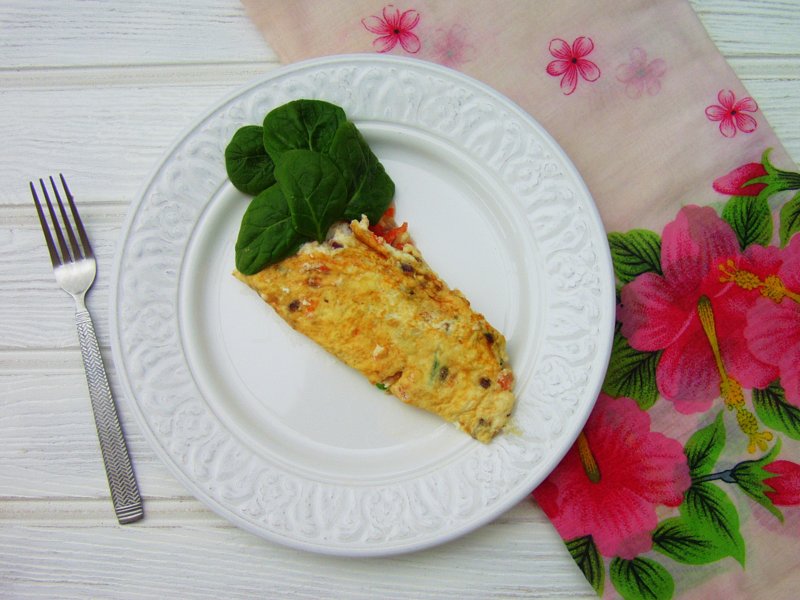
5. We had a fun brunch at ‘The Big Pink’ in South Beach, but a 5 egg omelette is just a little too much for one individual. A healthier option and one that was prepared for me when I was staying in Islamorada is the following and is without out doubt the tastiest and healthiest omelette ever. Seriously try it out and let me know what you think.

 Egg White Omelette with Fresh Spinach, Goats Cheese, Red Onion and Tomato

serves 1

3 egg whites, whisked

half a small red onion, chopped

half a medium sized tomato, chopped

small handful of fresh spinach

1 tbsp crumbled goats cheese/feta

olive oil

pinch of salt (optional)

1. Warm a pan/skillet and then add a little oil and the chopped red onion. Fry for 2-3 minutes before adding any other ingredients.

2. Add the tomatoes and spinach and after 10 seconds add the whisked egg whites, goat cheese and pinch of salt (optional).

3. Continue to whisk gently for up to a minute or just before the eggs set so as to make the omelette fluffy. Using a spatula press down lightly so as to bind the omelette together.

4. Gently fold over half the omelette using a spatula to create a half moon shape and again press down lightly for 20 seconds.

5. Tilt the pan/skillet and transfer omelette on to a plate.

6. Eat immediately, with a scattering of fresh spinach leaves on the side.


Homemade Mango Chutney

Warmer weather beckons (I hope!) at the end of the week when I’ll be in the sunny Florida Keys and art deco Miami. I was last in the Keys when I was 19 so it’s been some time since I visited its warm shores and admired its glorious sunsets. There is always so much to get ready before embarking on a long journey and since I pride myself on my packing it is left up to me to pack all the clothes. There is definitely an art to effective packing right! The truth of the matter is I hate packing, seriously it is so tedious and tricky to get the balance on what exactly to take. I am hoping that since it will be warmer then in London, I won’t have to take too many clothes and the ones I do will be light weight cotton. Well that’s the plan.

There is nothing that screams sunshine and warm weather more than mangoes. They are undoubtedly the queen of fruits and whilst the yellow ones are juicy and sweet, the unripe ones – they are the green ones by the way – are perfect for chutney making. The sourness combined with spice and salt is a perfect winning combination and cools down the body in hot temperatures. In India a few spoonfuls of the chutney either alongside or after some spicy dal or curry works a treat.

We have all sampled the mango chutney served in curry houses when we order poppadums,  however nothing prepares you for the true deliciousness of this knock out, authentic, fresh mango chutney. It tastes completely different and I love the sweet, sour, salty combination.

Mango Chutney

(or affectionately known as Aam-er Tok by Bengali speakers, which actually translates as sour mango)

Fills a small bowl/jam jar (can last in the fridge for up to a week)

2 small unripe green mangoes/1 large regular green mango, which you find in British supermarkets, skin removed and then sliced or diced

1 tsp mustard/groundnut/vegetable oil

 1 large dried red chilli, cut into two pieces (or 2-3 small dried red chilli)

1 tsp panch phoron 

1/4 tsp turmeric

1 tsp freshly grated ginger (optional)

2 tsp plain flour

three quarters of a tsp salt

110 ml cold water

2/3 tbsp sugar

1. Peel the mango skin and discard. Slice or dice the mango and keep the stone if you are using a larger mango as they are good to suck on post cooking! If you have really unripe green mangoes, which can be very sour, it is best to boil the sliced mangoes in a little water, with a pinch of salt, to remove part of the acidity for two minutes. Discard the water and put the mangoes to one side.

2. Place the oil in a pan and gently heat. When it is hot add the dried red chilli, including the seeds and fry the chilli gently until it darkens slightly in colour, which will take no more than a minute. Warning: you are likely to cough at this stage as the chilli darkens  so do not be alarmed!

3. Add the panch phoron, turmeric and ginger (if adding) to the hot oil as well as the soft mango, salt and 75 ml of water.

4. In a separate bowl add the flour and 35ml of cold water to create a white, smooth liquid. Immediately add this to the pan and stir it into the mangoes. At this stage also add the sugar.

5. Boil gently for 5-6 minutes. If you prefer to have a runnier chutney add a little more water, however, if you prefer a thicker consistency then you will need to boil it for longer.

6. Leave to cool and chill. Serve at either chilled or room temperature, but not hot.

It is wonderful to eat after a heavy curry as it helps to cleanse the palate and digest your food.

Note: In hot climates people tend to prefer the chutney with a stronger sour undertone and as such the amount of sugar they add is less. For those who prefer a sweeter taste then add the amount of sugar that I have specified above.


Goat Curry….I’m not kidding!

I have had a frozen goat, well part of one, sitting at the bottom of our freezer for quite some time, so I thought it was high time I dug it out. As my mother-in-law was returning from her two month vacation in Kolkata I thought goat curry might be the perfect dish to welcome her back to the UK. I adore goat, but I realise that perhaps it is not as easy to come by as lamb. If you live near a Middle Eastern or Asian butcher you will be able to purchase it without too much trouble. If however this is tricky for you, lamb works equally well for this curry.

As with all the Indian recipes, there is a certain amount of artistic license involved with creating them, so whilst I list a teaspoon of this and a teaspoon of that, if you put a little extra or less it will alter the dynamics slightly but still taste really good;  just remember it is not an exact science as baking is. Scales are not commonly used in Indian kitchens, instead the cook relies more on sight, smell and taste to get the right balance in a dish. After you have cooked the dish a number of times, you too will improvise more with the quantities, but until then it is best to follow my amounts listed below.

Goat Curry

Serves 4-6


1,600 kg goat, diced into mouth sized portions

1 yellow onion, grated

2 inch fresh ginger, grated

1 whole garlic, grated

2 tbsp malt vinegar

2 tsp turmeric

1 tsp chilli powder

1 tsp sugar

1 tsp salt

2 tsp cumin powder

2 tsp coriander powder

2 tbsp yoghurt

3 tbsp mustard oil

3 bay leaves

4 tbsp tinned tomatoes

2 tsp garam masala

1 tbsp ghee (optional)

1. Dice the goat (or lamb) into bite sized morsels and remove excess fat.

2. Grate the onion, ginger and garlic and add to the meat. Add the turmeric, chilli powder, sugar, salt, yoghurt, malt vinegar, coriander and cumin  powder. Some cooks like to add a little mustard oil at this stage, however, I felt that it was unnecessary.

3. Really mix the ingredients into the goat meat thoroughly and if you have time leave to marinate in the fridge between 4-6 hours.

4. Heat the oil in a pan and add the bay leaves a few seconds before adding the marinated goat meat. Let it simmer gently, stirring from time to time.

5. After about 10 minutes of cooking add the tinned tomatoes and continue to simmer. You will probably need to add a little water, so gradually put in a little at a time so that there is some sauce and is not too dry.

6. The curry should take just under 1 hour to cook. 10 minutes before you turn off the heat add the garam masala and stir in well to the curry.

7. To enhance the flavour further you can also add a little ghee, but this is not essential and if you are watching your waste line then you might want to ignore this ingredient.

Serve with rice, paratha, luchi, roti.

Please note: it is great to cook in advance and then reheat before serving hot. I find curries taste better if they have had time to rest for sometime before eating. If there is leftovers you can keep in the fridge and eat the next day. 


Extra Hot Smokey Chipotle Sauce Giveaway

I stumbled across the most delicious extra hot smokey chipotle sauce not so long ago, so much so that I studied the label on the jar in great detail so as to find out more about this beautifully balanced sauce. I was delighted to find out that it is made in Suffolk, England by ‘The Chilli Company’ – a chilli farm run by Denise and Adrian Nuttall since 2006. I proactively decided to get in touch with them, to offer my respect amongst other things to their great chipotle sauce. Generously they sweetly sent me a package with some of their products for me to enjoy. So I am going to look forward to trying their hot habanero chutney and their extra hot sweet chilli sauce.

I thought, however, it would be fun to give away a bottle of the smokey chipotle sauce so you too can discover the sensational, fiery taste for yourself. It’s the first time that I have organised a giveaway on my blog, so whilst it’s not a year’s supply of the chipotle sauce (maybe next time!), I hope a single bottle will attract your attention enough.

I will send it to one lucky winner – anywhere in the world (at my expense…even if you are on the other side of the world – that’s how much I rate this sauce).

With a chance of winning all you need to do is:

1) Leave a short comment below

2) Follow me on either twitter or my blog (or both of course ;o)

It’s that simple. A winner will then be chosen at random in one week’s time.

GIVEAWAY now closed. The lucky winner is:

Claire

Would love to try this:) I’ve never tried chipotle sauce.

CONGRATULATIONS


Fine Green Bean and Potato Curry

After every few days if I have not had Indian food (basically my chilli fix) of some capacity I start craving dal, vegetable curry or some succulent fish or meat curry. They are always fun to make and really do not take long to prepare once you know how and best of all they are always guaranteed to bring a smile to Mr B’s face after the stresses of commuting in London town. I am a total believer that the way to a man’s heart is through his stomach – although the same could be said for me come to think of it.

As delicious as steamed or boiled fine green beans are in their own right, this Bengali dish just takes them to a new level and gives them their own identity. It’s definitely one of those dishes that you can rustle up in a short space of time and enjoy with dal (or a meat/fish curry) and some Indian bread or rice, to create a really delicious, healthy (let’s just ignore the cooking oil this once!) and low cost meal.

The ingredient list is short and I always have them in my store cupboard. The only spice that maybe unknown to some of you is kalo jeera – which is also known more widely as nigella seeds. They are really easy to come by and are pretty mainstream even in the supermarkets. I have used mustard oil, but if you do not have this to hand a simple vegetable oil will be equally suitable.

 Fine Green Bean and Potato Curry

Serves 2-3 (accompanied by a dal)

350g fine green beans

1 large potato, peeled and cut into small cubes

2 tbsp mustard oil (or vegetable oil)

1 tsp nigella seeds

1 tsp turmeric

150ml boiling water

2 tbsp of chopped tinned tomatoes

1/2 tsp salt

1/4 chilli powder (optional)

1. Heat the mustard or vegetable oil in a pan and when it is piping hot add the nigella seeds. After 10 seconds add the potato and green beans and stir to coat the vegetables in the nigella seeds.

2. Add the turmeric, salt, chilli powder (optional) and chopped tomatoes and stir once again. After a few minutes add 50 ml of boiling water, stir and place a lid on the pan. Keep on a low heat and simmer gently.

3. Once the water has completely dried up add a further 50 ml of  boiling water, which will help soften the potato and green beans. You will probably need to add a further 50ml of boiling water during cooking as you want the beans and potato to be soft and not crunchy. The dish should be ready between 20-25 minutes. It can be stored easily in the fridge for a couple of days should you not finish it all in one sitting – although if you are like me, you will.

Happy eating.