Chinese Steamed Eggs – A tasty ‘mouthfeel’ dish

How are you all surviving with the deluge of rain that we are having in the UK? It’s relentless isn’t it. It’s no wonder that us Brits are renown for talking about the weather non-stop, as it is so pertinent to our very existence. At least I have opted for a relaxation/pastime that does not depend on the weather – swimming outside – rain or shine you are always going to get wet. Followed by a sauna, and you can guarantee that your day will always seem brighter.
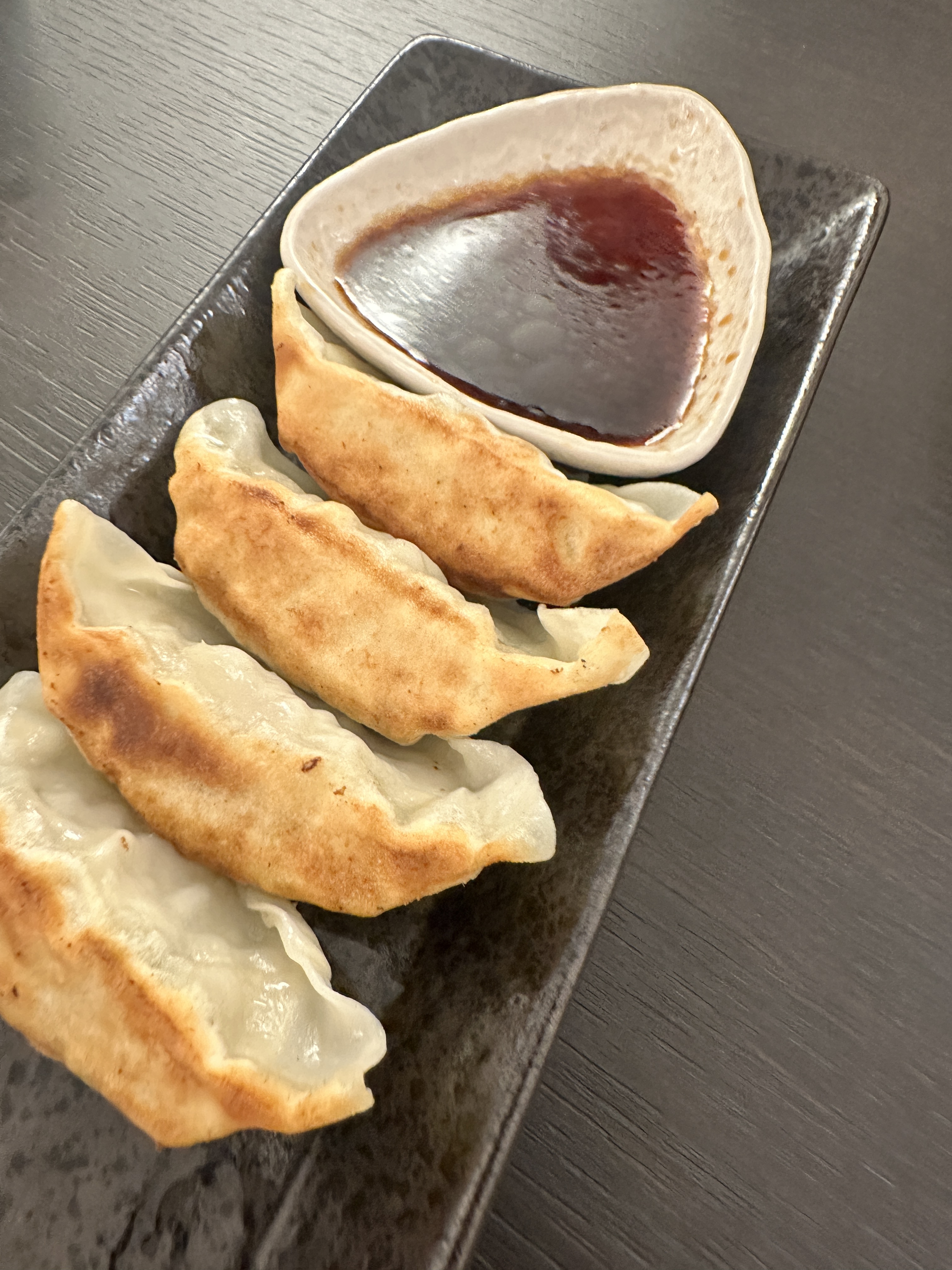
In a bid to be more consistent on here I wanted to kick off the weekend by sharing a super quick and tasty breakfast or lunch recipe for Chinese steamed eggs, which has a wonderful ‘mouthfeel’ to it. Fuchsia Dunlop talks about ‘mouthfeel’ in her excellent book ‘Shark’s Fin and Sichuan Pepper: A Sweet -Sour Memoir of Eating in China‘ – I highly recommend this book if you have not read it. In Chinese cuisine they have a specific word for mouthfeel – ‘kougan’ and this is often considered equal or as important to flavour. The mouthfeel for this dish comes in the form of a smooth and silky sensation – a term known as ‘hua’. The other sensations in the Chinese vocabulary are ‘cui’ – for anything that is crunchy or crispy, ‘Q’ for anything that is chewy, bouncy or rubbery in texture – noodles being a great example and ‘nuo’ for soft and gelatinous dishes – particularly braised dishes.

It takes around 15 minutes to make (including preparation) but there are a few important steps to remember.

1. After whisking the eggs it is important to strain them – this makes sure that the steamed eggs will be completely smooth.

2. The water that you add to the strain eggs need to be the same amount in weight to the eggs. It needs to be warm so I suggest half the amount is boiling water and the other half is cold. I like to add 1/4 cube of chicken or vegetable stock to the water. Give a good stir to allow the stock cube to dissolve, then strain into the whisked eggs.

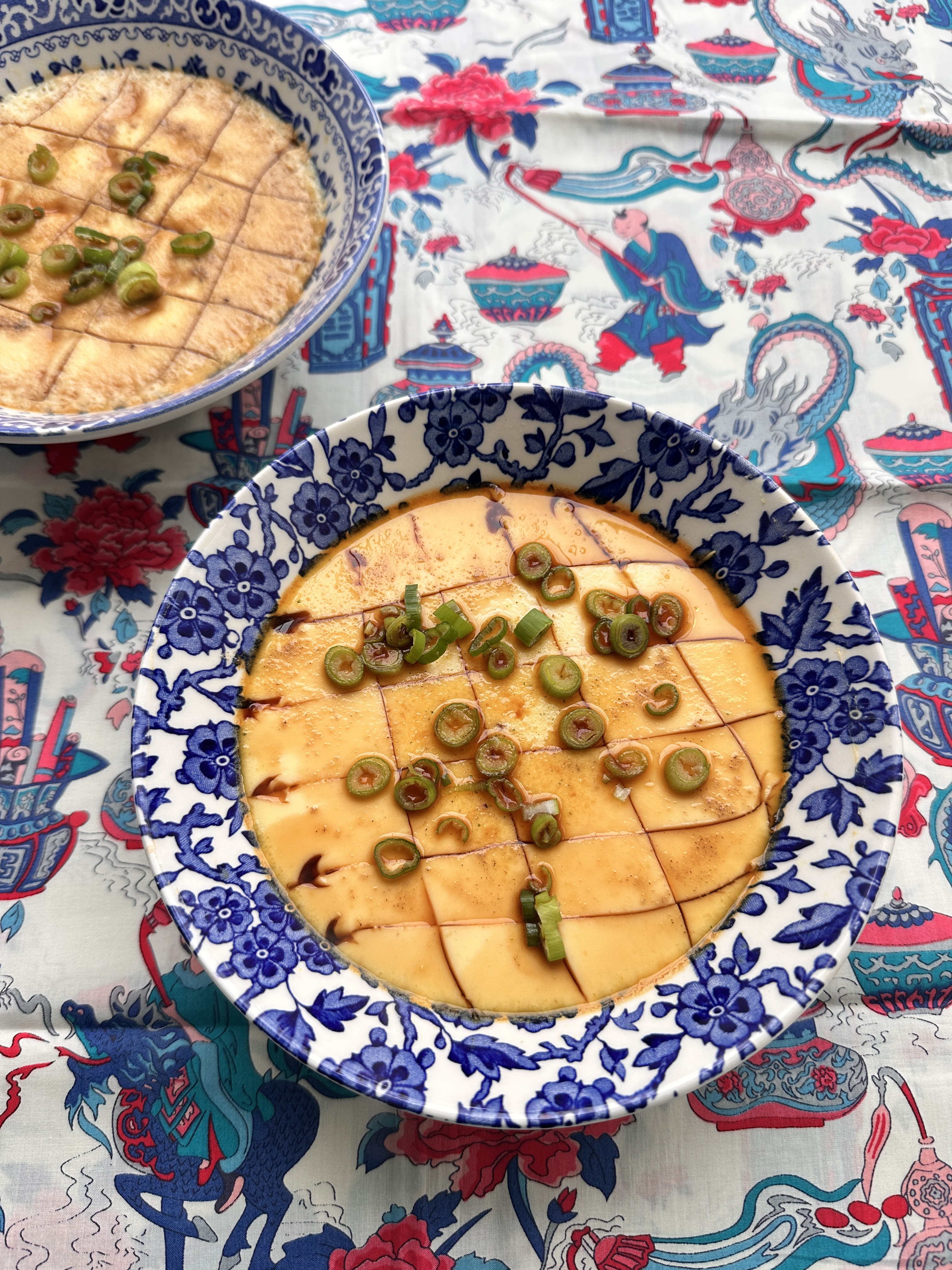
3. Cover the bowl with the egg mixture with some clingfilm with a few little holes in top – this is to prevent in water from the steam dripping into the bowl. (See the photo below which shows the bowl with steamed eggs that had clingfilm in the front of the photo and one without in the back. Without will make the eggs uneven on the surface.

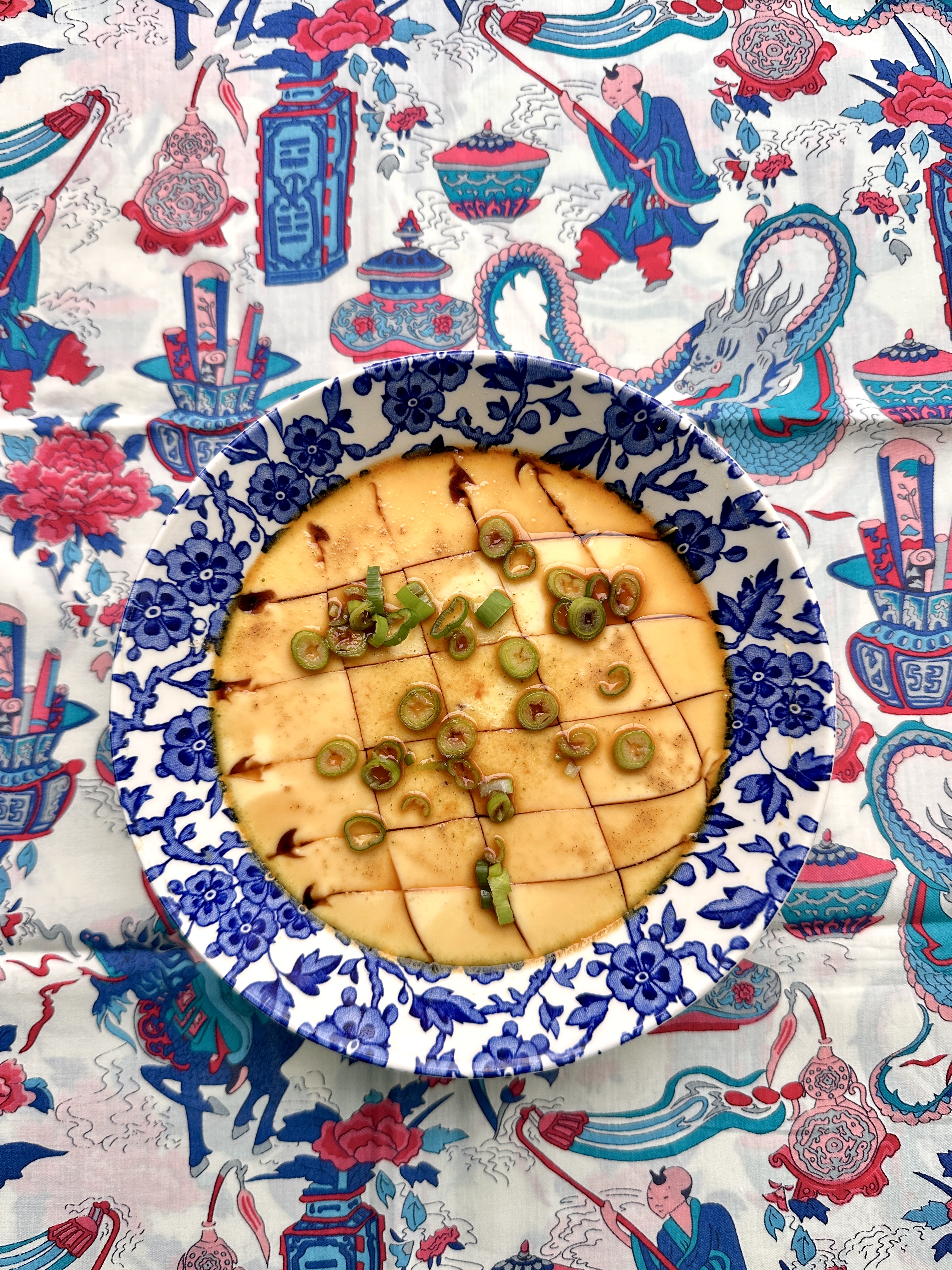
4. Use a sharp knife to make incisions evenly across the top of the steamed eggs, then turn the bowl and make more incisions so that you have a lattice effect.
So below is the recipe in detail.

Chinese Steamed Eggs

Serves 1

2 eggs, whisked

warm water (weight of the eggs + half again 1:1.5 ratio)to get the right temp water mix half boiled water/cold water

1/4 cube of chicken or vegetable stock

1 small spring onion, green part only, finely sliced OR 1-2 chives, finely sliced

1 tsp light or dark soy sauce

1/2 tsp sesame oil

small pinch of white pepper, optional

  1. Place a bowl on a weighing scales and weight the eggs. Make a note of the weight.
  2. Whisk the eggs in a bowl and leave to one side.
  3. Using a separate bowl or measuring jug add the half boiling/half cold so that it is warm and add 1/4 chicken/vegetable stock cube (you don’t want it to be too salty). You are looking for a ratio of 1.5x the weight of the eggs (example: 100ml eggs add 150ml of warm water). Stir well and then add to the bowl with the whisked eggs.
  4. Sieve the eggs and stock and place into your serving bowl. Remove any bubbles that have come to the surface.
  5. Add boiling water to the bottom of your steamer. If you don’t have one simply use a pan that is wider than your bowl. Place a cookie cutter or trivet on the bottom of the pan and cover with boiling water so that the water is up to the cutter/trivet. Bring to a rolling boil.
  6. Cover the serving bowl with cling film and prick it a couple of times with a sharp knife. Gently place in the pan and cover with a lid with a small hole in the top to allow the steam to escape.
  7. Turn the heat down to medium/low and allow to steam the eggs for 9 minutes. Turn off the heat and leave to sit for a further 3 minutes.
  8. You will be able to see that the eggs are nicely steamed and will jiggle a little if you give the pan a little tap. (see the jiggle below)
  9. Be careful removing from the steamer. Remove the clingfilm and then use a sharp knife to make a series of straight incisions along the top and then turn by 90 degrees and make more incisions so that you have a diamond lattice effect.
  10. Spoon the soy sauce and sesame oil on top, followed by a pinch of white pepper and spring onions or chives and dive in and enjoy the ‘kougan’ and comforting taste. I love it and hope you will too.

Please note:I don’t add any salt to the eggs to begin with as I find the chicken/veg stock and soy sauce adds enough salt to the dish.

Have a great weekend everyone. Wrap up warm and stay dry.

Torie


My Go-To Breakfast Choice…..at the moment

I definitely gravitate towards a savoury breakfast pre or post my cold water swim and sauna. As a side note, I am so pleased that the sauna revolution is growing from strength to strength the length and breadth of the UK. It is so good for you and with a cold water plunge or swim is a mood uplifter. Even in the dreary rainy days it is transformational. Trust me – give it go.

Anyway back to savoury breakfasts…..It was only during my first pregnancy that I gave pain au chocolate a look in and really craved them most days. Typically though give me masala dosa, dim appam/egg hopper with chutneys or perhaps idli and sambar, Vietnamese pho or eggs in any form with some miso sesame toast (yes that is a thing from the wonderful August Bakery) with marmite on the side.

At the moment, however I am gravitating towards an oat congee type affair. Congee, for the uninitiated, is a popular Asian rice porridge which is broken down to become a smooth-ish, thick-ish, comforting soup. Typically the rice is cooked slowly over an hour or two (1:8 or 1:10 rice/water ratio) when the grains break down and burst and the dish becomes creamy and soft. You can make it with white or brown rice, the latter naturally offering a fibre packed meal. It has all manner of toppings – sometimes chicken, pork or fish is added. In Japan it is known as ‘kayu’, in Korea as ‘jus’, in Myanmar ‘hsan pyoke’, in Indonesia ‘bubur’, Thailand ‘jok’ and in the Philippines it is known as ‘lugaw’.

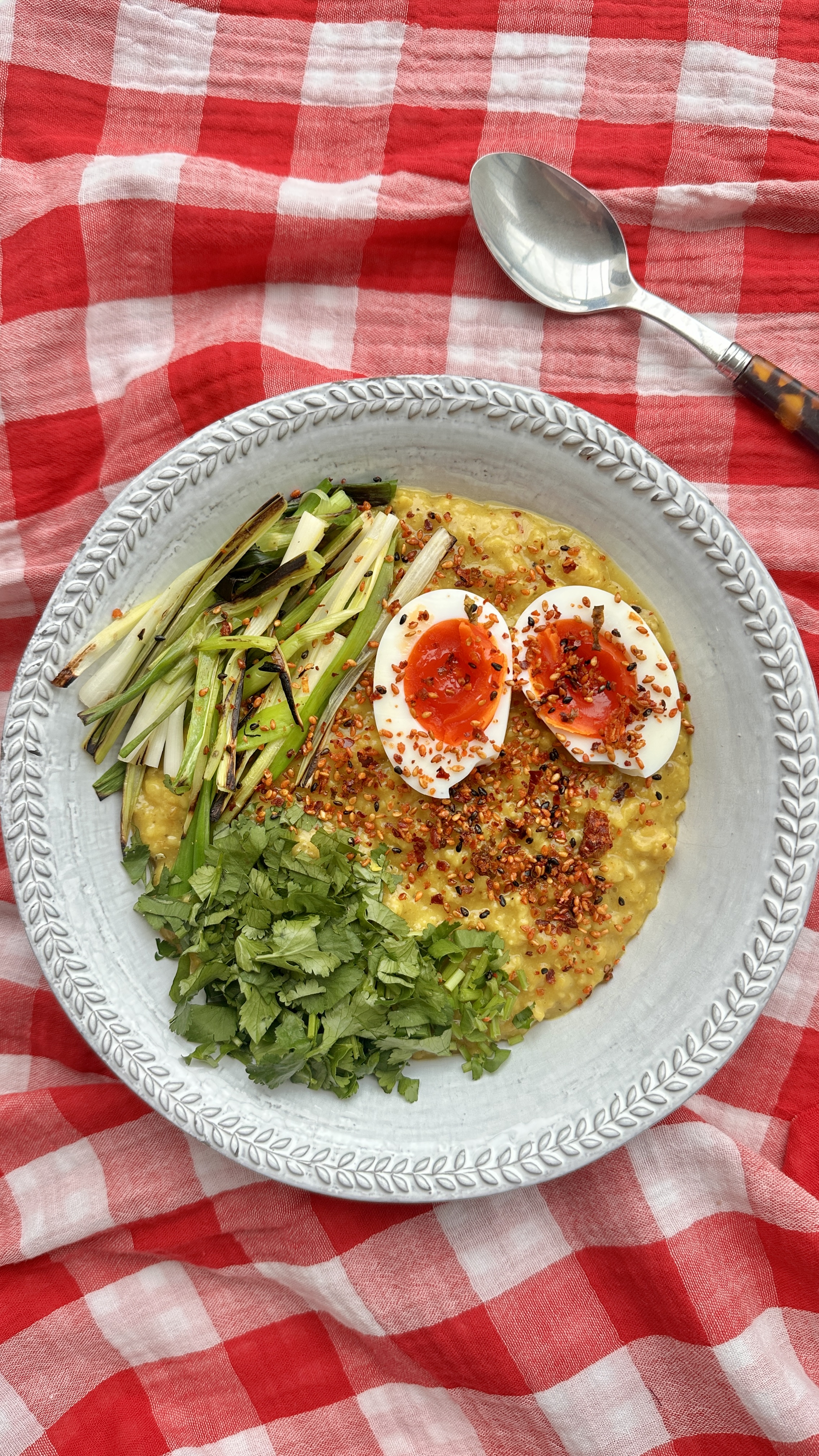
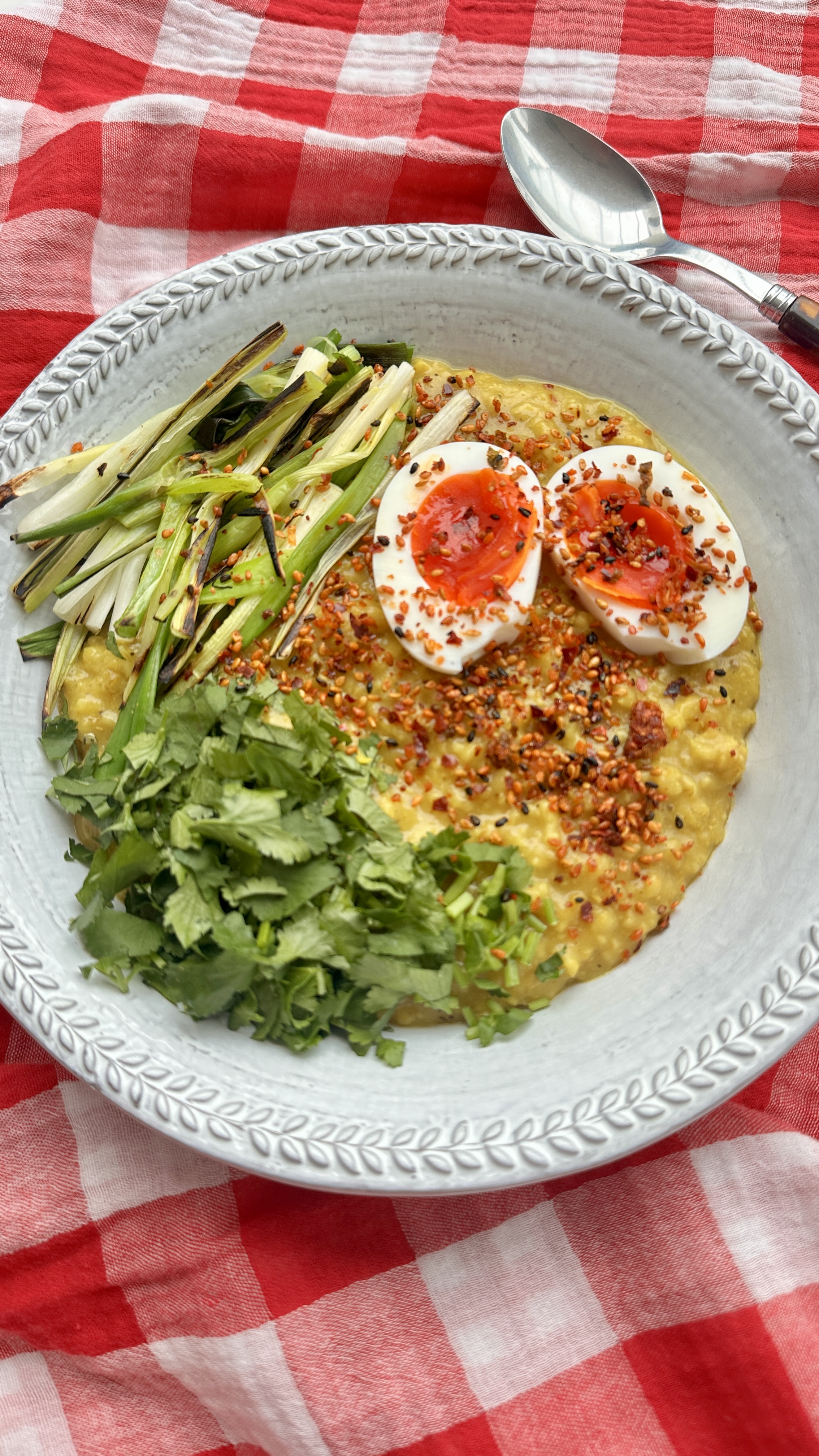
With the dark winter days, coupled with rains and general gloom we are having in the UK, my version of congee will definitely lift the spirits and put a spring in your step. It uses porridge oats instead of rice and uses no oil or butter and literally takes 7-8 minutes to make – the time it takes to boil an egg.

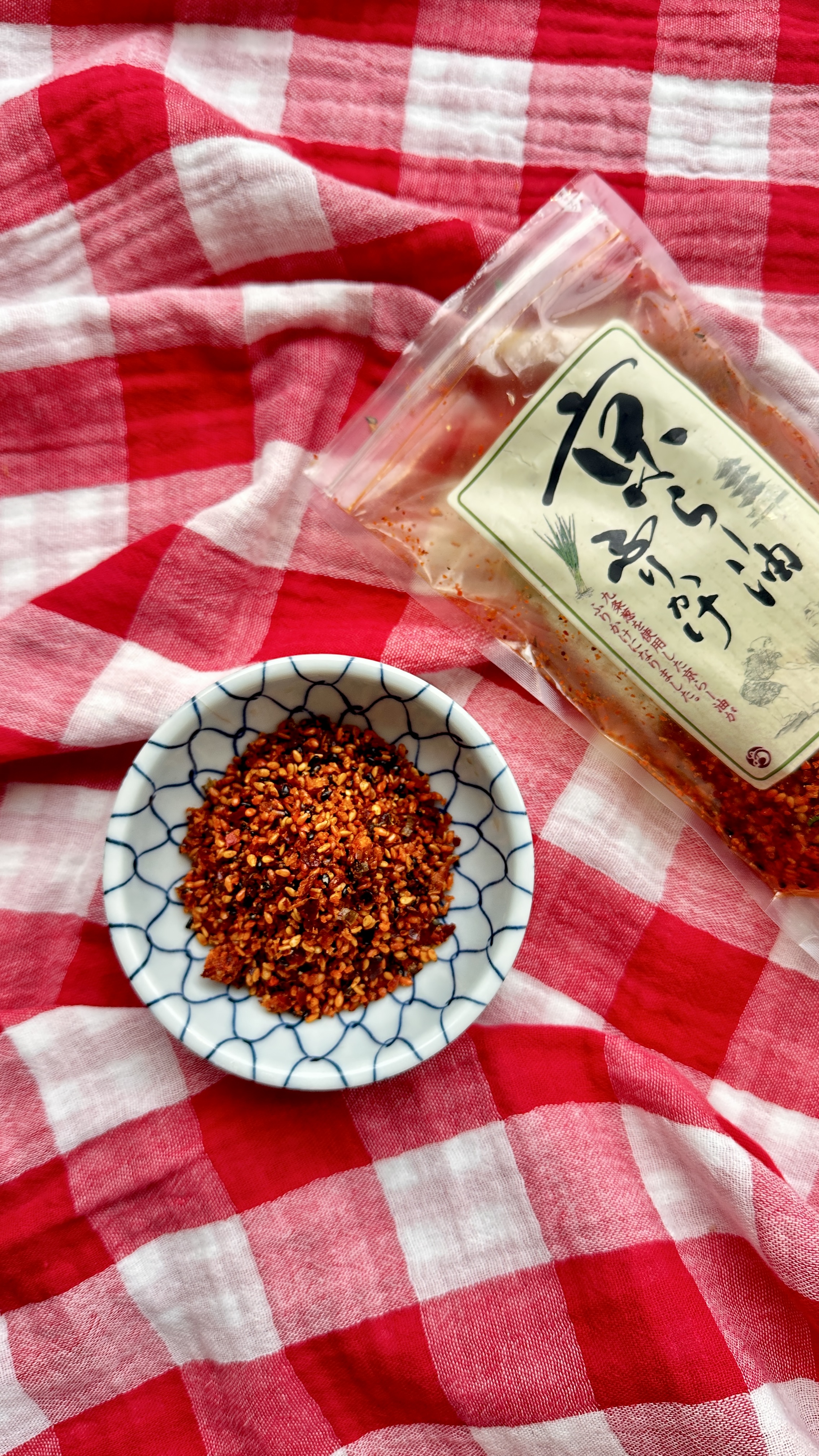
My favourite sprinkle condiment at the moment is known as ‘Kyoto Kyo-Ra-Yu Furikake’ and I love to sprinkle this over the finished dish. I first had it in Japan when I visited in 2023 and 2024 and I am completely hooked, regularly asking friends to bring it back with them when they visit Japan. I have found it online here in the UK – not cheap, but use it sparingly and you won’t be disappointed. It is crunchy with sesame seeds, chilli, garlic and fried Kujo leeks.

So to the recipe itself. I would love to hear what breakfasts/brunches are getting you through these winter months. Comment below and let me know.

Oat Congee with Fresh Turmeric, Black Pepper, Ginger and Garlic

a couple of handfuls of porridge oats (as much as you want to eat)

1/2 tsp fresh or ground turmeric, skin removed

1/2 tsp freshly ground black pepper

1 tsp heaped fresh ginger, finely grated

1 tsp garlic, finely grated

1/2 tsp salt, to taste

1 tbsp soy sauce, dark or light

water to cover

3 spring onions, cut in half and sliced lengthways

1 egg

1 tbsp fresh coriander, leaves and stalks, finely chopped

a sprinkling of Kyoto Kyo-Ra-Yu Furikake or chilli oil or seasoning of your choice


  1. Bring water to the boil in a small saucepan and then gently lower your egg into the water. If you want it soft boiled aim for 6-7 minutes.
  2. In a medium sized pan add the oats – I have purposely not given a precise amount – just use as much as you would use to make porridge. A couple of handfuls should be sufficient.
  3. Finely grate the fresh turmeric (ground turmeric is fine too), ginger and garlic and add these to the oats along with the freshly ground black pepper and salt.
  4. Cover with boiling water so that it is just above the oats and stir well. Add a little soy sauce to taste. Add a little more water to loosen as required. It should only take a few minutes. Turn off the heat when it has softened.
  5. Meanwhile heat a small frying pan and add the spring onions and allow to wilt and lightly char then remove from the heat and keep to one side.
  6. After 7 minutes drain the egg and rinse under cold water. Gently use a teaspoon to break the shell from the egg and remove.
  7. Now to plate up. In a bowl add the porridge/congee and then add the charred and wilted spring onions, freshly chopped coriander (leaves and stalks), gently cut the egg lengthways and lay on top of the porridge/congee. Add a splash more soy sauce if required. Finally sprinkle some Kyoto Kyo-Ra-Yu Furikake or your favourite condiment on top.
  8. Devour and enjoy.

Additions: Instead of spring onions you could add tender stem broccoli, sugar snaps, green beans, mange tout – simply add them in the boiling water with the egg for a minute then slice lengthways (for the tender stem). Sometimes I like to add wilted spinach which I place in a small pan with a splash (literally) of water to help wilt.

PS: It is important to add black pepper with the turmeric, as the piperine compound in the black pepper helps with the absorption of curcumin in the turmeric by 2000%, which boosts its anti-inflammatory effects.

Let me know how you get on. I hope you will love it as much as I do.

Best

Torie


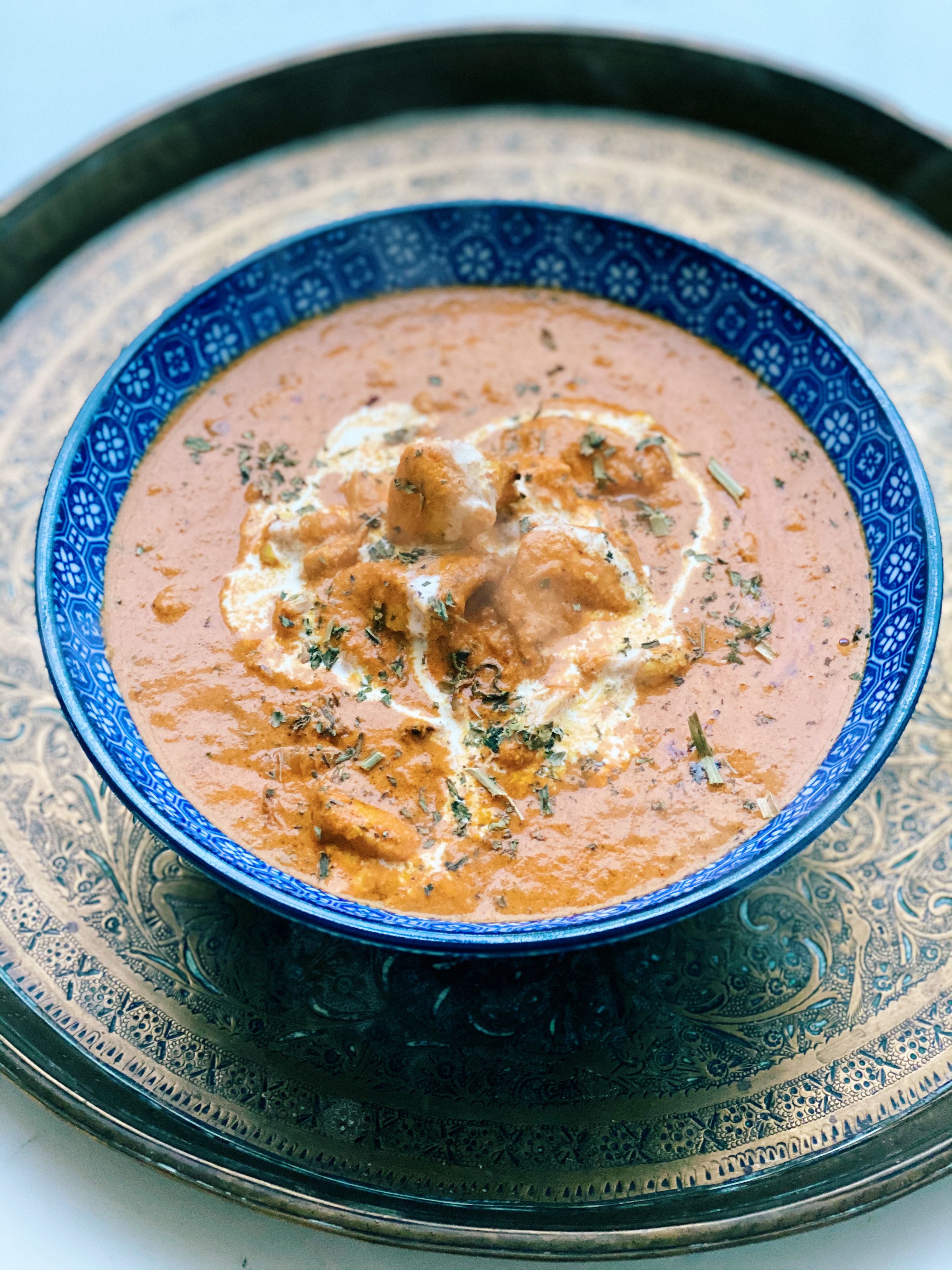
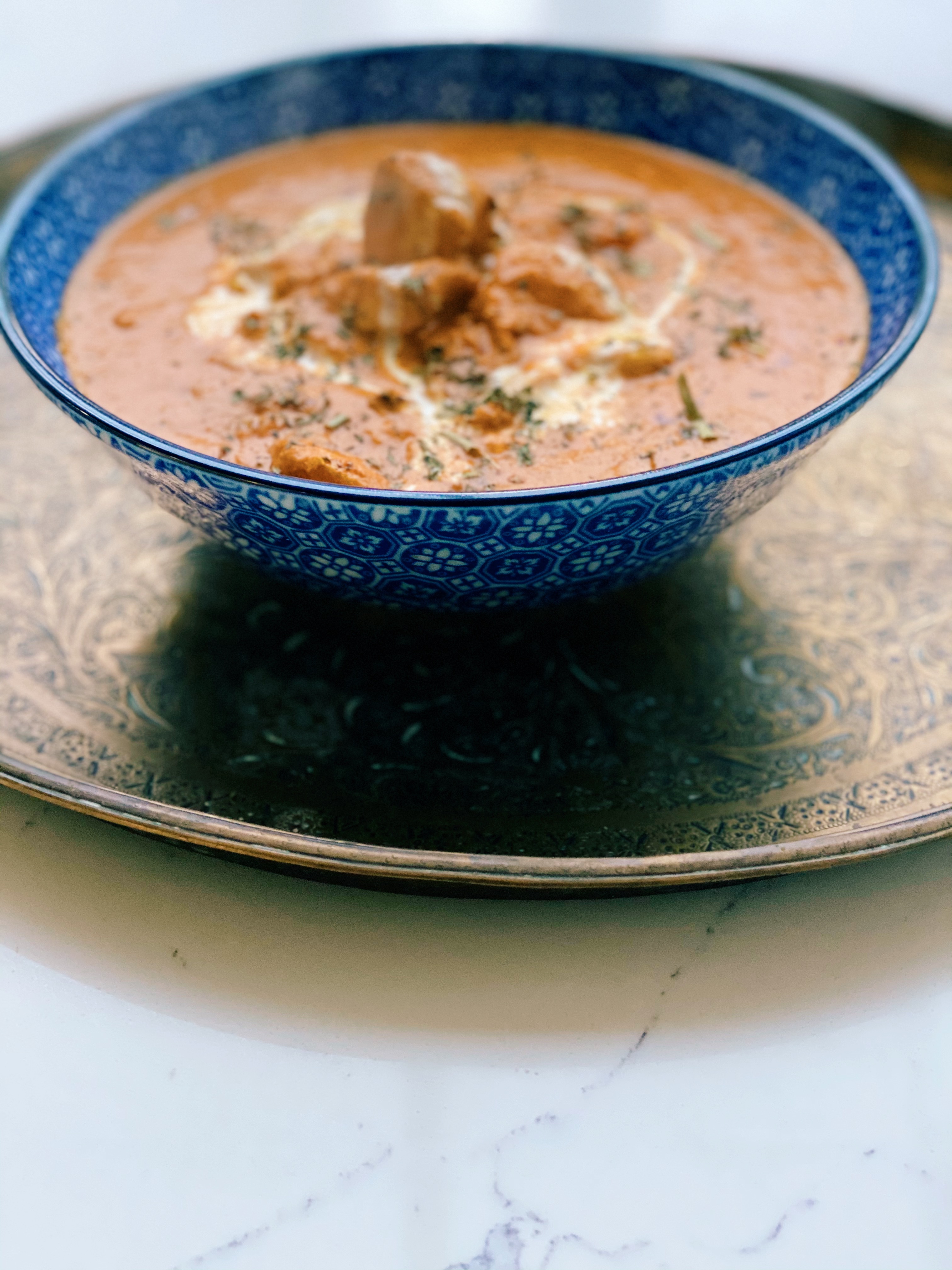
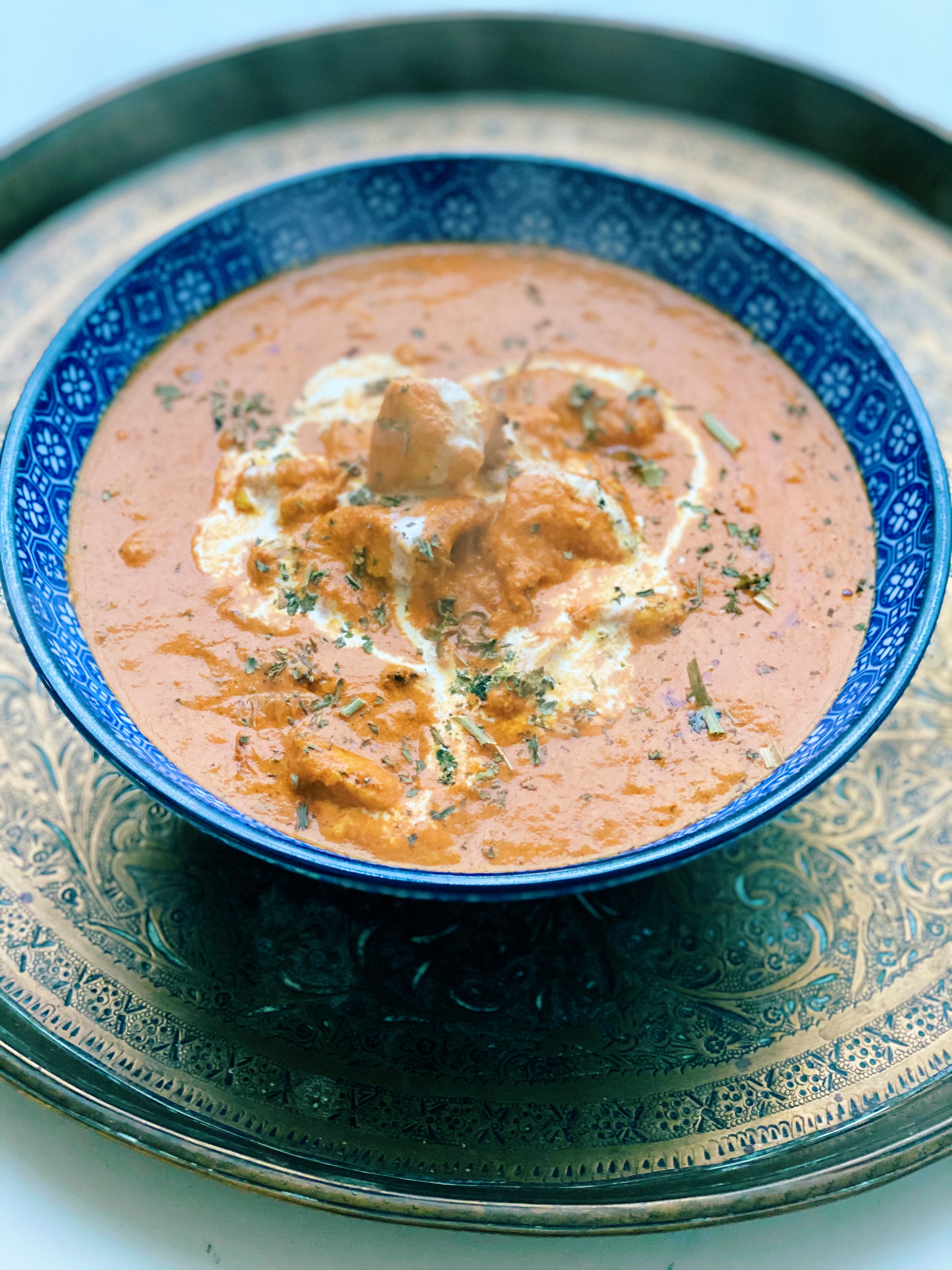
Chicken Tikka Masala – always a crowd pleaser

Chicken tikka masala and butter chicken are both firm curry house favourites here in the UK. They are very similar in that they both have a mild tomato sauce with Indian spices. The main difference is the amount of butter and cream. The butter chicken, as the name suggests has a lot more more butter and a less intense tomato sauce. It is also cooked in a pan where as the chicken tikka masala is charred and cooked in a tandoor or grill before it enters the sauce and pan.

To be honest, I rarely cook this type of curry and I have never seen any family members in India cook it either. Whilst cooking in the tandoor is very much Indian, the history of this curry is disputed with many saying that was ‘created’ for a Western palate by a British Pakistani chef in Scotland in the 1970’s whose customer requested a mild tomato sauce for their chicken tikka pieces. It was such a hit that it became a firm fixture on the menu with other curry houses following suit. I certainly remember it being a standard curry to order at university curry nights out.

Whether it is truly authentic or not it is much loved across the UK. It is creamy and more buttery than my usual curries, but eaten now and again is a complete joy.


Chicken Tikka Masala

Serves 4-6 (if serving with other dishes)

4 chicken breast, cut into bite sized pieces

marinade

3 tbsp full fat natural yoghurt

1 tsp ground turmeric

1 tsp Kashmiri chilli powder

1 tsp ground paprika

1 tsp ground garam masala

1 tsp ground coriander

1 tsp ground cumin

juice from half a lemon

1 tsp salt

1 heaped tsp garlic paste

1 heaped tsp ginger paste


Creamy tomato sauce

1 tbsp ghee (clarified butter) or regular butter

2 tbsp oil

2 white onions, finely chopped

1 heaped tsp ginger paste

1 heaped tsp garlic paste

1 tbsp tomato puree

1 tsp ground turmeric

1 tsp ground cumin

1 tsp ground coriander

1 tsp ground garam masala

1 tsp Kashmiri chilli powder

1 tsp ground paprika

1x tin tomatoes or 400g fresh tomatoes, blitzed

200ml water

1 tsp jaggery/brown sugar

1 tsp salt

pinch freshly ground black pepper

150ml double cream

1 tbsp butter

1 tbsp dried methi/fenugreek leaves OR coriander leaves

  1. First you need to marinate the chicken. Mix all the marinade together and then cover tightly with cling film/foil and place in the fridge for an hour – to overnight.
  2. Spread your marinated chicken out on a large baking tray and brush with a little oil. Place under a hot grill (240 degrees C) for 10-15 minutes so that it begins to char. Turn over halfway so that it chars on all sides. It does not need to be cooked all the way through at this stage as it will finish off cooking in the sauce. Do keep an eye on it though when it is under the grill as it can char very quickly and you don’t want it to be completely burned.
  3. In a deep wide pan (a wok would work well) heat the ghee/oil and gently fry the onion so that it begins to bronze – this will take around 6 minutes. Add the ginger and garlic paste.
  4. Add all the spices followed by the blitzed tomatoes, black pepper, salt and jaggery/sugar and water. Allow to simmer on a gentle heat for 7 minutes, by which time the sauce will have thickened sufficiently.
  5. Add the chicken to the pan and coat in the tomato sauce. Gently pour in the double cream and the final tablespoon of butter and simmer on a low heat for  15 minutes. Taste test to see if more salt is required.
  6. Finally add the dried fenugreek or fresh coriander. Drizzle a little more double cream before serving.


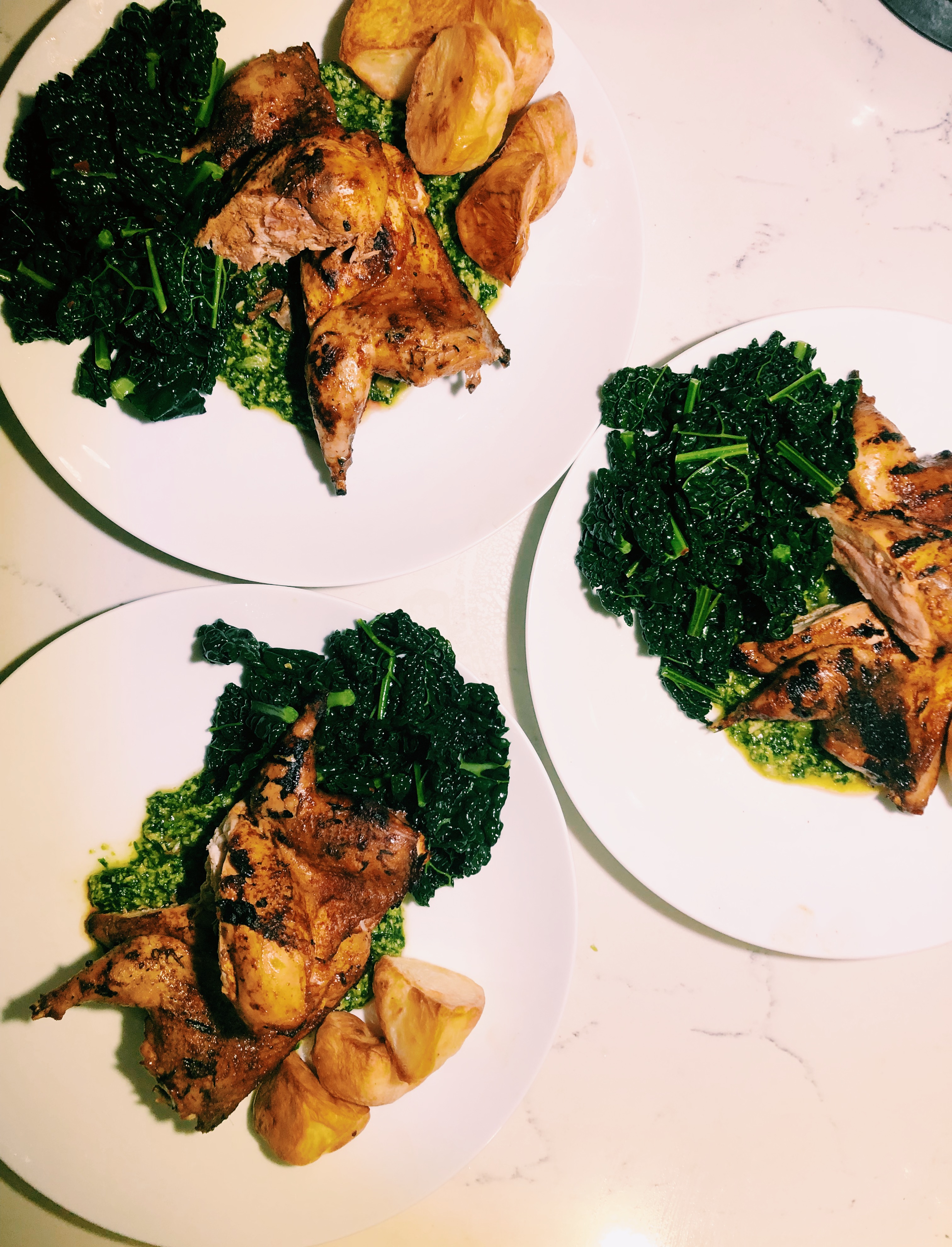
Honey and Smoked Paprika Spatchcock Partridges on a Rocket Pesto

Recently I was watching ‘Masterchef the Professionals’ and chef Monica Geletti set the challenge of spatchcocking a quail and making a rocket pesto (series 12, episode 4 if you want to take a look). She made it look ridiculously easy, but of course being under pressure of being on TV for the first time the chefs didn’t find it quite as easy as she made it look. It did however, give me the idea of replicating said dish at home as we had some partridges sitting in my freezer, and whilst a little bigger than quail, will require the same method of cooking albeit for a few minutes longer.

She set the challenge at 15 minutes to do the whole thing – prep and cook the quail and make the pesto. It took me a little longer, but not too much – largely owing to the fact I was cooking for three and not one. The result was absolutely delicious and I think spatchcocking game birds is definitely the way forward. Excuse the poor quality photos – I cooked it in the evening when it was dark outside, so taking photos in those conditions is never going to give you the perfect shot – but you get the idea.


Spatchcock Honey and Smoked Paprika Partridge with a Rocket Pesto

3 partridges/quail

2 tbsp runny honey

2 tsp smoked paprika powder

1 garlic cloves

70g pine nuts

110g fresh rocket

good glugs of extra virgin olive oil (around 150ml)

approx 50g parmesan cheese, freshly grated


  1. First prepare the game bird (quail, partridge etc) by cutting up the backbone and remove the innards from it.
  2. Turn it over and then press down hard so that it lays flat.
  3. Now you want to make a rub. You could mix honey with smoked paprika – which I did, or you could use sumac, garam masala, cumin, curry powder – lots of options.
  4. Once you have covered the bird with the rub, heat a griddle pan and when it is hot place the bird down firmly into the pan, breast side first – you want to sear the outside so that it creates the charred lines across it. This will take a few minutes.
  5. Then turn it over and after a further minute, remove the bird and place on a plate whilst you continue to sear the remaining birds. Once they have all been seared place back into the griddle pan or a roasting dish and cook in an oven preheated to 80 degrees fan – for 7-10 minutes (around 7-8 for a quail, and 10 for a partridge which is a little bigger). To check that they are cooked simply give then a gently prod with your finger. When they are done the flesh will feel firm.
  6. Whilst it is cooking, lightly toast off the pine nuts in a frying pan (do NOT add any oil) so that the oils are released naturally.
  7. Place the garlic into a pestle a mortar and pound it until smooth and then add the rocket, followed by the pine nuts. You can do all of this in a mini blender but I think it is nice to have a little bit of texture, hence preparing it in a pestle and mortar.
  8. Add a little of the oil and some parmesan. You need to taste and see if you need more of any of the ingredients as it is very much down to personal taste. Season as required.
  9. Once the partridge has cooked sufficiently, remove from the oven and cut in half lengthways.
  10. To plate up, place a bit of the rocket pesto in the centre of the plate and smear into a round circle, wider than the bird.
  11. Then place the halved bird on top of the pesto, leaning one half at angles onto the other.
  12. I also accompanied with a few roast potatoes and some kale, which I had lightly cooked in some oil and some chilli flakes.

To follow I skipped pudding and instead opted for a cheeseboard with some fresh fruit. All in all a deliciously decadent meal and yet very easy to prepare.


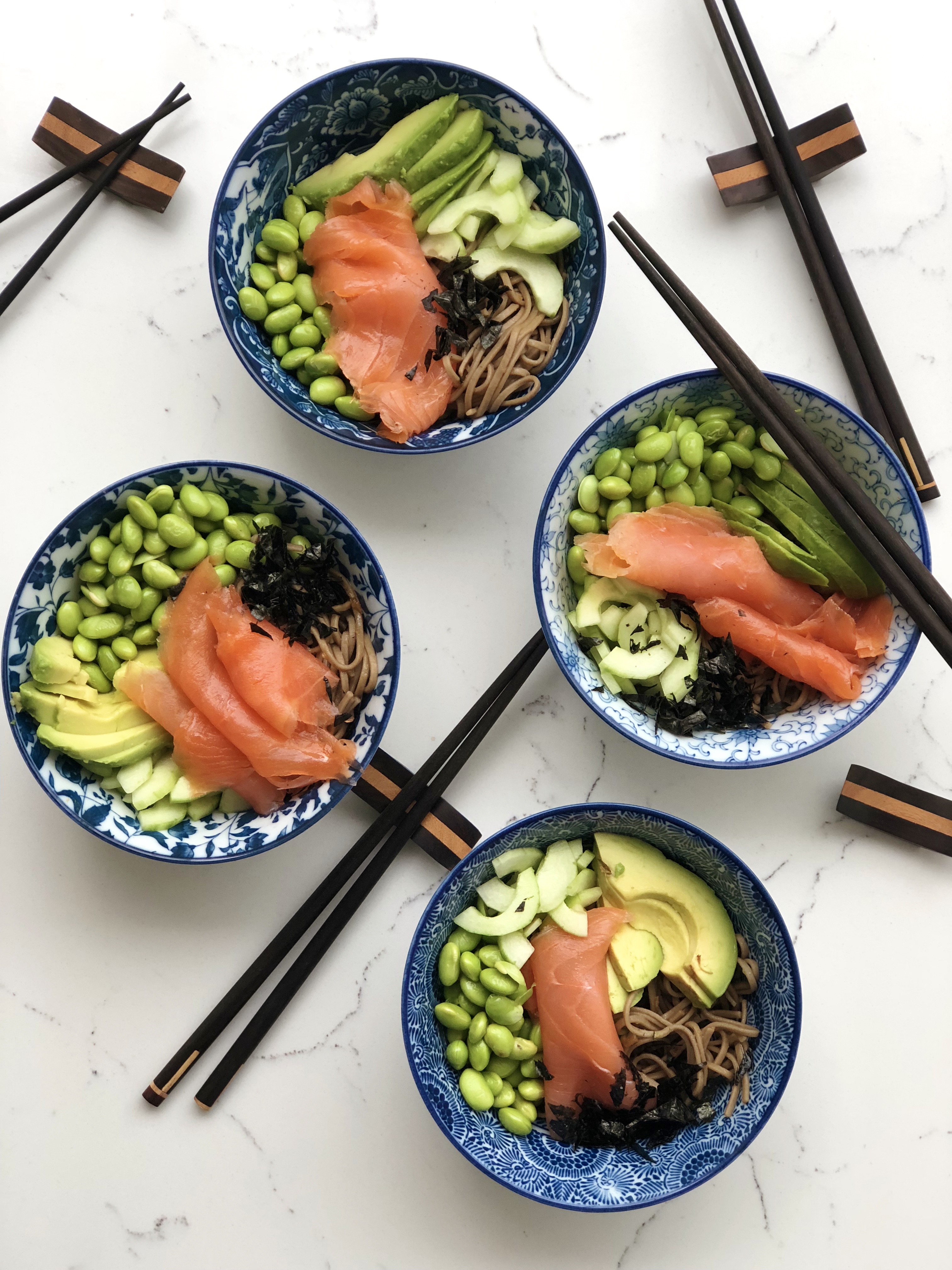
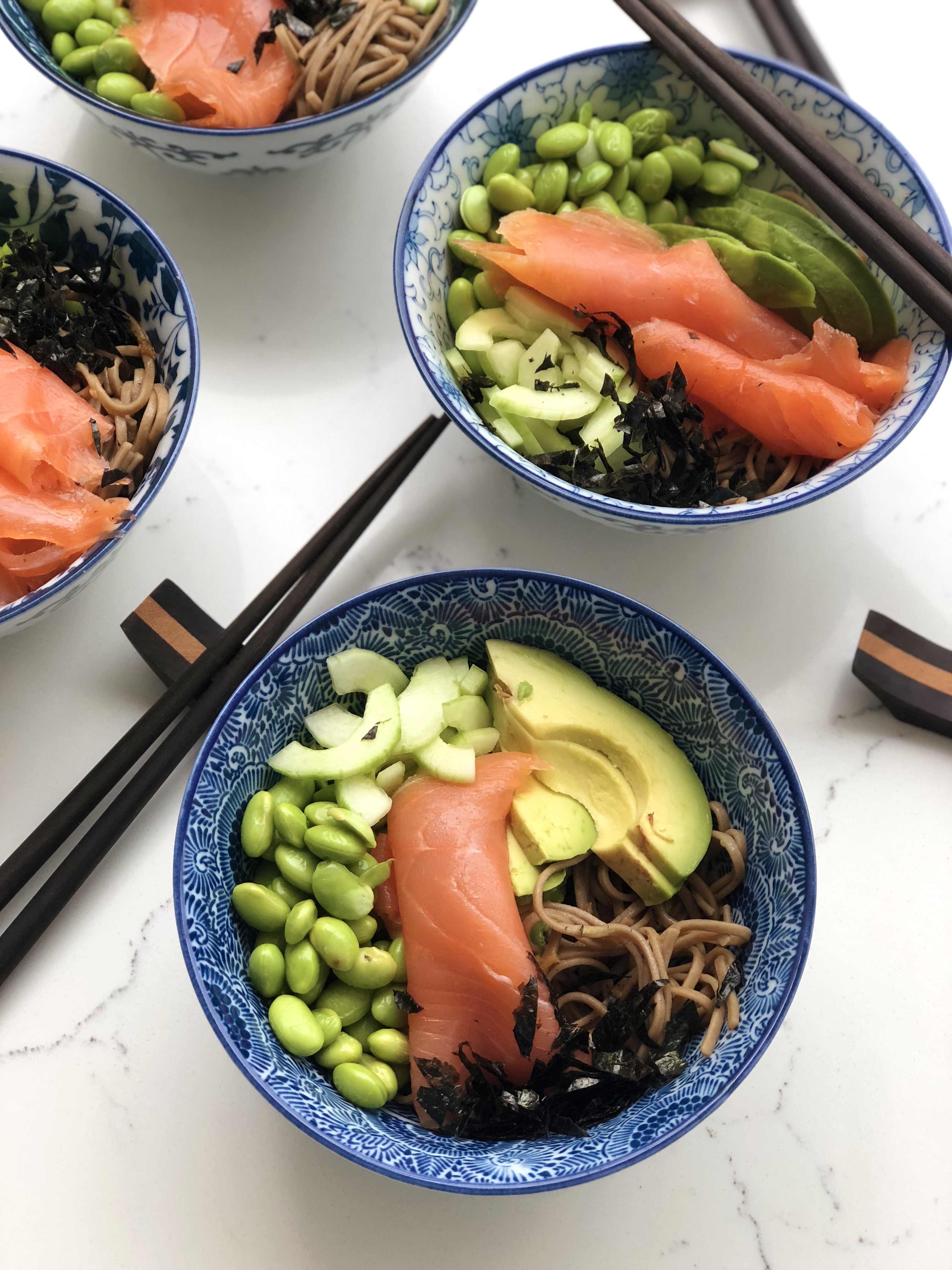
Smoked Salmon and Soba Noodle Bowl From Kelli Foster’s NEW book “Buddha Bowls”

I adore meals that can be eaten in a bowl, that are packed full of goodness and flavour. Going through my kitchen cupboards you will find all manner of bowls of different sizes and depths depending on what’s going in them. You can therefore imagine my delight when I came across Kelli Foster’s, new book “Buddha Bowls – 100 nourshing one-bowl meals”. Kelli is a food writer and editor for the daily food magazine on the web called ‘The Kitchn’ based in New York.  Buddha bowls are nothing new and the term has been banded around now for many years, along with “bliss bowls’, “nourish bowls” or “power bowls” but Kelli’s book is wonderfully original, with so many great sounding recipes that you actually want to cook. Turmeric-ginger cauliflower and lentil bowls, Moroccan-spiced chickpea bowl, chipotle sweet potato bowls, chicken kofta bowls, harissa chicken bowls, spinach and mushroom pesto breakfast bowl the list goes on. Making a decision on which to cook first is hard.

I opted to show you all the ‘smoked salmon and soba noodle bowls’ recipe as it is exactly the sort of thing that I make for myself and the family for lunch in the holidays or weekends. All the ingredients I already had in my pantry and fridge and it really is very straightforward to make. It’s super healthy and flavoursome so a win win.

At the beginning of the book Kelli has included a wide range of sauces to go with the various buddha bowls – for example chimichurri, creamy feta, essential pesto sauce with any herb of leafy greens, miso-ginger, tahini. The book is then split into chapters: breakfast bowls, fish and seafood bowls, chicken and turkey bowls, vegetable bowls, fruit bowls.

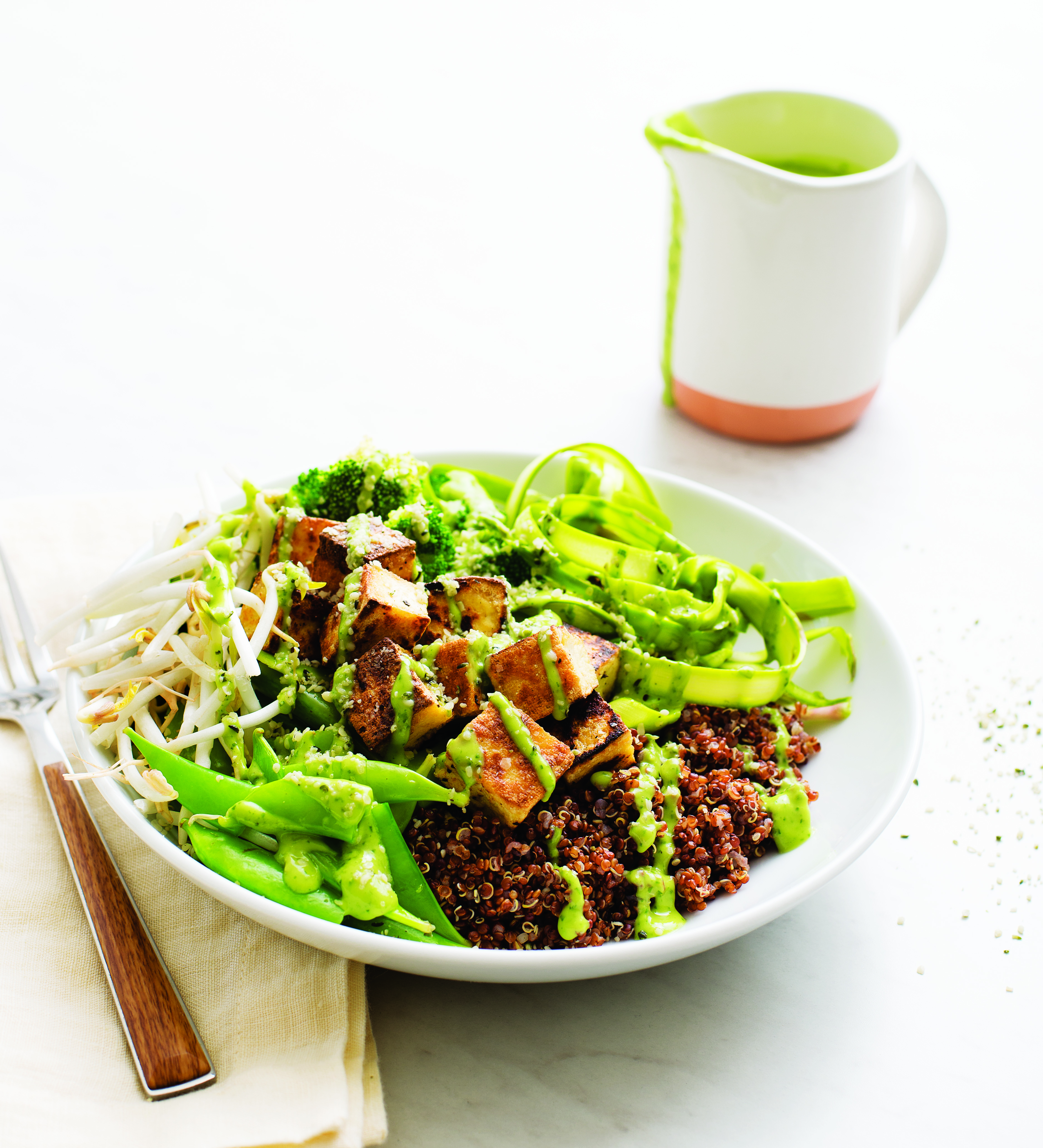
Photograph by Maria Siriano in the book Buddha Bowls by Kelli Foster published by The Harvard Common Press, an imprint of The Quarto Group

The recipes are all inventive, sound delicious and beautifully photographed. The ‘green goddess quinoa bowls with crispy tofu’ looked very appetising and will definitely be on the menu over the summer holidays for my family.

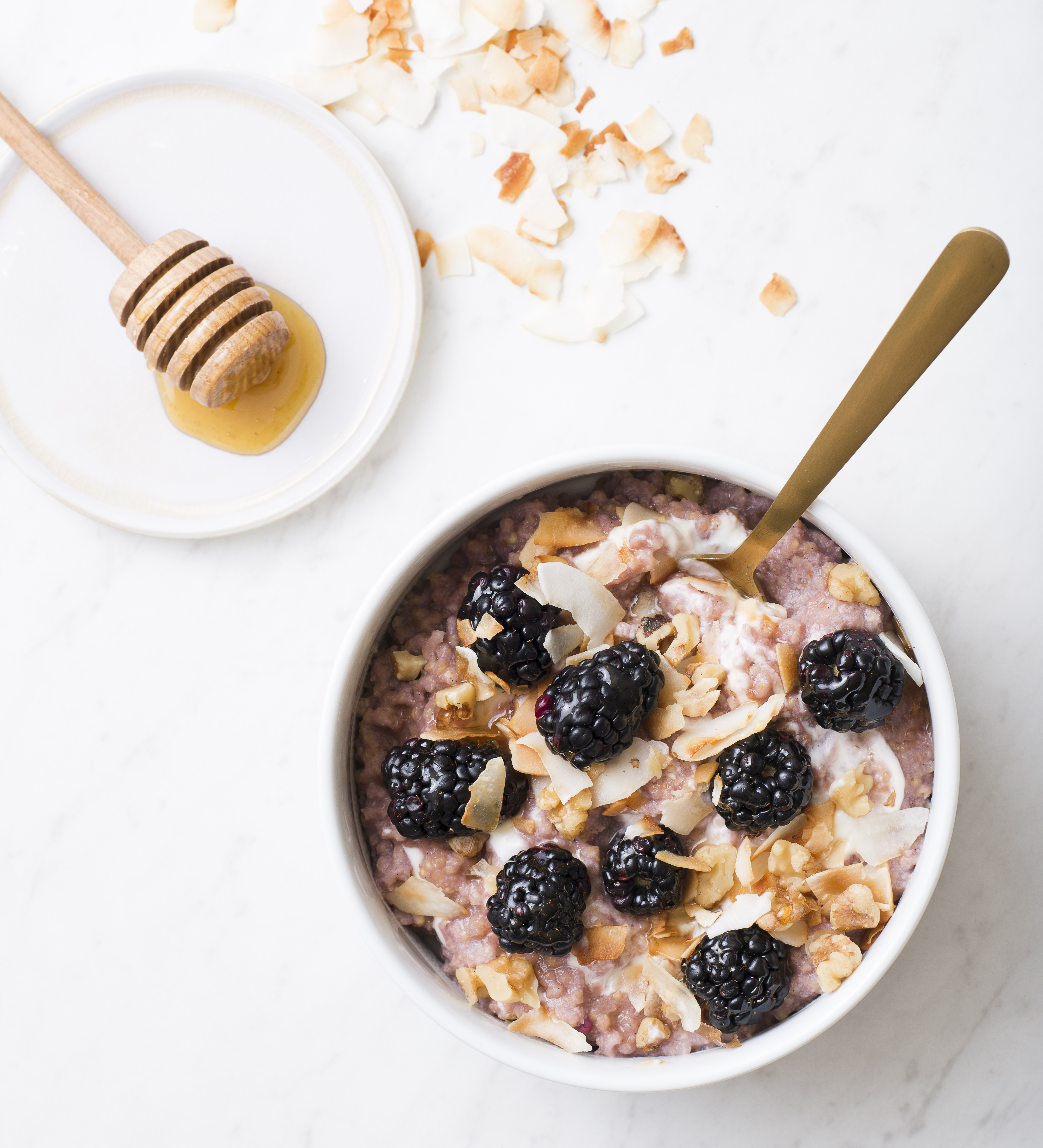
Photograph by Maria Siriano in the book Buddha Bowls by Kelli Foster published by The Harvard Common Press, an imprint of The Quarto Group

For those with a sweeter palate then the ‘blackberry millet breakfast bowls’ are perfect in the coming months when blackberry season is in full swing. I love overnight oats for breakfast so this will be a good one to try.

Photograph by Maria Siriano in the book Buddha Bowls by Kelli Foster published by The Harvard Common Press, an imprint of The Quarto Group

I also love the idea of the ‘quinoa and chicken taco bowls with cilantro (coriander to us Brits)- lime dressing. How divine sounding hey!

This book is bursting with ideas that the hardest thing you will find is actually deciding on which to opt for. It’s priced at £14.99 and $22.99 in the US and $29.99 in Canada but on one certain retailer you can pick up a copy for under £10 – click here.

I am running a competition until Sunday 5th August on my instagram where you can WIN a copy of the book by simply doing three simple things:

  1. follow me on instagram
  2. like my post with the salmon noodle bowl photo
  3. tag 2 friends who might be keen to win the book.

There will only be one winner and they need to be based in the UK. Good luck.

Smoked Salmon and Soba Noodle Bowls

serves 4 (gluten free)

4 tbsp (60ml) tamari (similar to soy sauce but contains little to no wheat)

1 tbsp (15ml) rice vinegar

1 tbsp (6g) freshly grated ginger

1 tsp (5mo) toasted sesame oil

1/2 (half) tsp honey

200g dry buckwheat soba noodles

1 cup (120g) shelled edamame

4 ounces (115g) thinly slices smoked salmon

1 medium seedless cucumber, peeled and julienned

1 avocado, peeled, pitted and thinly sliced

shredded nori (seaweed)

red pepper flakes

  1. First make the dressing by whisking the tamarind, rice vinegar, ginger, sesame oil and honey together in a small bowl; set aside.
  2. Bring a large pot of salted water to a boil. Cook the soba noodles according to the package instructions and then drain them and rinse thoroughly under cold water. Boil the edamame for 5-7 minutes until cooked, strain and rinse under cold water.
  3. Stir the sauce together once more and toss the noodles with 1 tablespoon (15mp) of sauce.
  4. To serve, divide the soba noodles among bowls. Top with edamame, smoked salmon, cucumber and avocado. Drizzle with the remaining sauce and sprinkle with nori and red pepper flakes. (I forgot the latter until after I had taken the photos!)

Absolutely delicious and super quick to rustle up. Enjoy.

NOTE: chilliandmint kindly received a copy of Buddha Bowls. All views and opinions are her own.

Cod, Potato and Spinach Curry


With the weather being pretty amazing here at the moment in the UK I like to cook quick speedy meals that are packed full of flavour and are not too laborious to make. I had a kilo of cod in my freezer, which I defrosted, so thought that a fish curry was called for, eaten in the garden. Bliss.

I love a good fish curry and have lots on my blog that I would recommend (not biased or anything!): Mild Indian cod currySri Lankan tuna curry, speedy salmon curry (excuse the dodgy photos on this one – it’s when I first started my blog), Bengali mustard fish curry.

The one I want to show you today takes 15 mins max – in fact most fish curries take no time at all. I used cod, but you could use any firm fish – pollock, salmon, trout, bhetki, tuna, monkfish. My cod was filleted and then I simply removed the skin and then cut it into slightly larger than bite size pieces. It will be in a red gravy and this is not because of tomatoes – there are none in it – instead from the paprika and Kashmiri chilli powder, the latter is not spicy hot, instead adds great colour to a dish. Do not be put off.


Cod, Potato and Spinach Curry

2 tbsp rapeseed oil

1 tbsp cumin seeds

1 red onion, finely chopped

1 tbsp coriander powder

1 tbsp garam masala powder

1 heaped tsp turmeric powder

5 garlic cloves, finely chopped

2 inches of ginger, skin removed and finely grated

4 fresh green chillies, sliced in half length ways (add less if you prefer less heat)

1 tbsp plain flour

1 tsp salt, to taste

1 heaped tsp paprika

1 tsp Kashmiri chilli powder

1 tsp mango/amchur powder

1 tsp sesame seeds

1 large potato, chopped into 1 inch cubes

250ml water

1 kg cod, filleted, skinned and cut into large bite size pieces

2 large handfuls of fresh spinach

1 tsp jaggery/brown sugar


  1. Use a large, wide, deep pan ideally. Heat the oil and when hot add the cumin seeds. They will sizzle almost immediately. After 10 seconds add the onion and move around the pan for a further couple of minutes before adding the coriander powder, turmeric and garam masala powder. Turn the heat down to prevent any of the spices burning. Move around the pan and then add the garlic and ginger.
  2. After about a minute or two add the flour, which will gently thicken the curry, and move around the pan. Add the paprika and Kashmiri chilli powder and then add the cubed potato.
  3. After a further minute add some water so that it covers the potato. Add the fish and coat in the masala. Add a little more water, to cover the fish and place a lid on the pan and cover for 5 minutes.
  4. Gently move the fish, without breaking it up, around the pan and add the mango powder, sugar and sesame seeds. Return the lid on the pan and simmer away for a further 3 minutes.
  5. Add the fresh spinach and continue to cook for a further 3 minutes or until the potato has softened. Add more water if you prefer a more saucy curry. Check on the taste and add more salt/sugar if necessary.
  6. Keep the lid on the pan to keep in the heat before serving. It works well with rice or Indian breads.


Rhubarb and Ginger Jam

Last year when I attended the Ballymaloe Food and Drink Literary Festival one of the first things I did upon arriving, was to take myself to their beautiful living room and order tea and scones – as you do!  Needless to say it set the tone for the whole weekend, but one very lasting memory was that they served their scones and clotted cream not with strawberry or raspberry jam, BUT with rhubarb and ginger jam. It tasted sublime and I made a mental note to try making some at some point back at home.

Now ok it’s taken me a year but I got there and it tastes great so was keen to share it with you. My mother celebrated her birthday the other day and invited some friends over for tea. My youngest daughter and I made cakes (an elderflower and lemon drizzle, in honour of the recent royal wedding and a carrot cake) and scones and some mushroom tartlets with sour cream and parsley. My eldest daughter baked her legendary chocolate cake and my father made a wonderful Victoria sponge and scones with raisins.

As a side note, scones you can make ahead as they are great to freeze – I made around a 100 for my brothers wedding tea – the recipe is here and it works really well. So whilst strawberry and raspberry jam were on offer for the traditionalists, my rhubarb and ginger jam tempted those who wished to try something new and exciting. Hope you like it too.

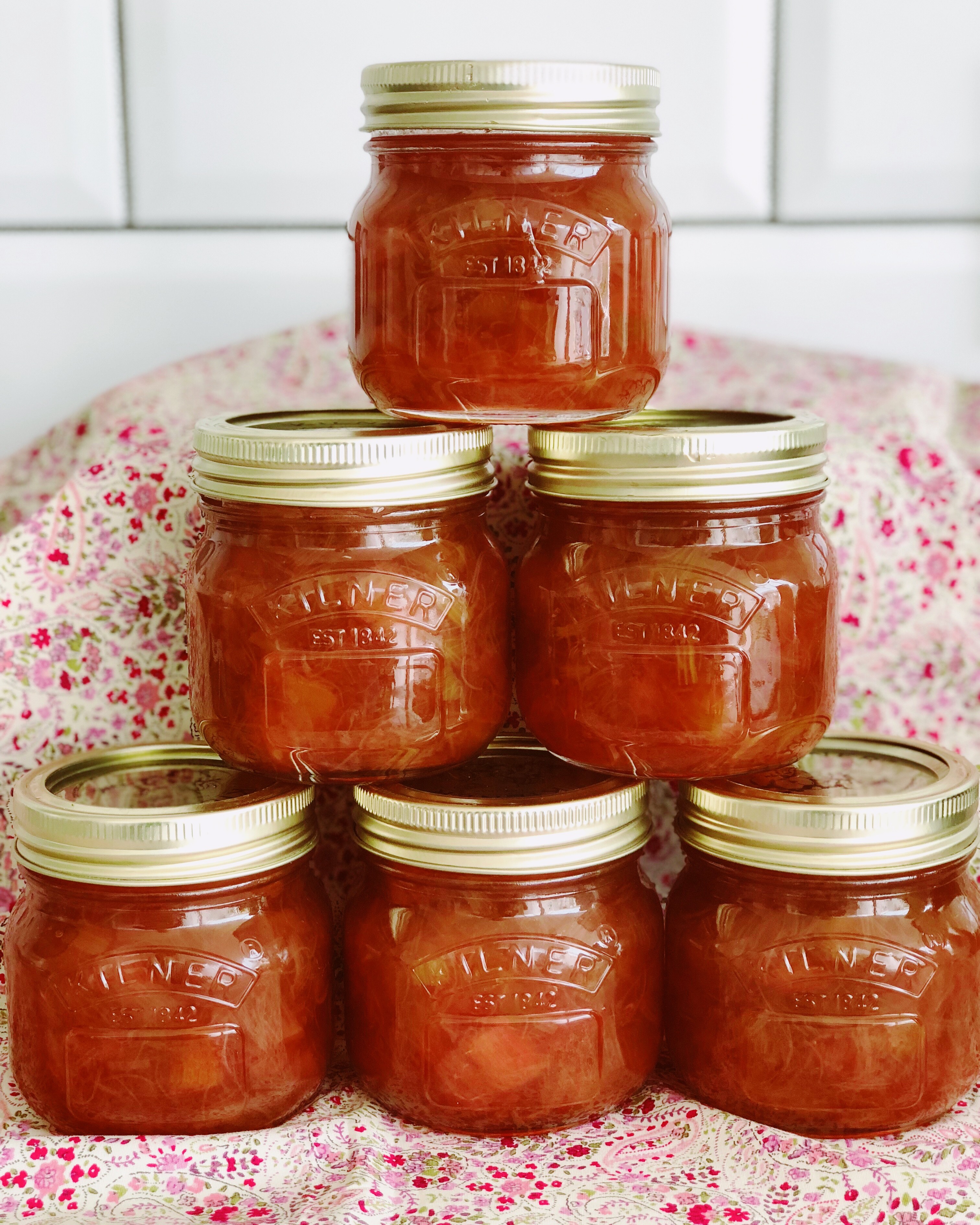
Strawberry jam (left) my Rhubarb and Ginger jam (right)         Mama


Rhubarb and Ginger Jam

1 kg of pink rhubarb, washed and cut into 2cm pieces

1kg of jam sugar

50g stem ginger

1 lemon, zest and juice

4cm fresh ginger, peeled and finely grated


Before you begin you will want to clean and sterilise the jars that you are planning on using.

  1. Place all the ingredients into a large plastic bowl, stir thoroughly and then cover and leave to one side for a couple of hours, stir a couple of times over this period,  so that the sugar dissolves and the flavours all harmonise together.
  2. Place a plate into the freezer.
  3. Use a large stainless steel pot – you do not need a preserving pan – and pour all the ingredients from the bowl into the pan. Place on a medium heat and stir so that the rhubarb tenderises and a setting point is reached. This will take no longer than 15 minutes.
  4. To test for setting point, simply remove the plate from the freezer and spoon a little jam onto the plate. Within a minute the jam will have little wrinkles if you move it with your finger. If it is still too runny, leave it to cook a little longer and try again.
  5. If setting point has been reached, remove from the heat and leave for a couple of minutes before pouring into the sterilised jars. Seal immediately and label. I find this easy fill funnel great for jam and chutney making.


SaveSave

SaveSave

SaveSave


Fish Medley Chowder

img_4105

Pick up a paper or food magazine and the big topic for January always tends to be how to detox and various diets to go on to help shift the excesses of the Christmas season. We all start with good intentions but as the weeks of January roll into February the new exercise class or diet doesn’t seem to hold the same appeal in quite the same way.

img_4104

I tend to follow the old adage ‘everything in moderation’ and in January and February I do try to eat less meat, eat a lot of vegetables – especially greens, have a few vegetarian days per week and eat lots of fish. Exercise is important all year around and whilst I have been a little slack on this of late, other than great long walks over the Christmas hols most days, I will gradually get into it again once my daughters go back to school.

As I am still without a fridge  – the process of replacing my old (10 month old) one with AEG is painful to say the least, I have had to be well organised when it comes to feeding the troops. Thankfully my freezer – which is separate to the fridge – is working well and has been keeping us going with frozen fish.

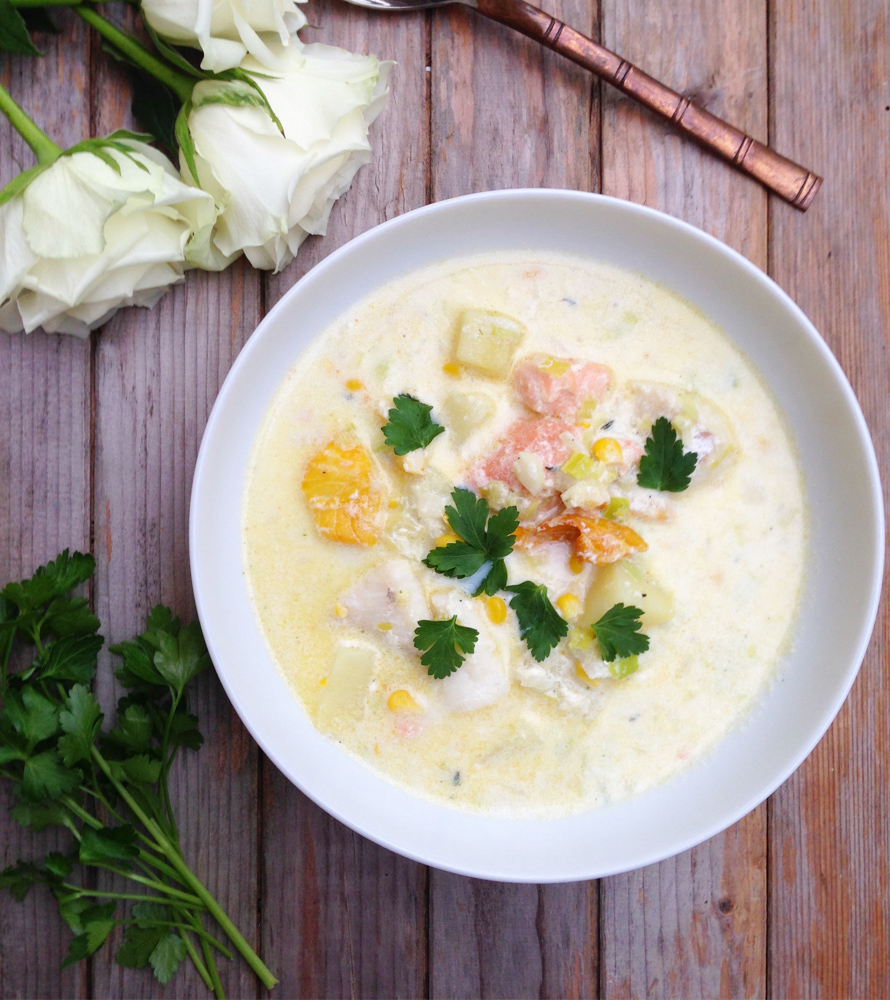
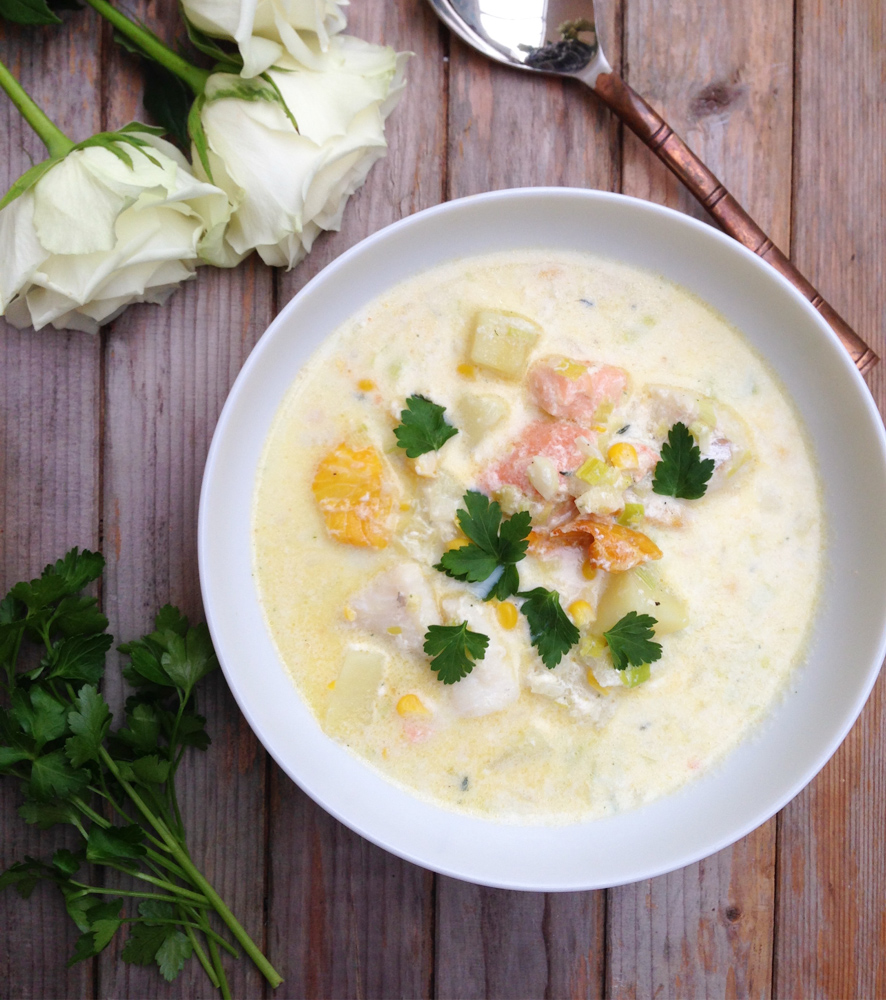
For todays blog post I am going to share my fish medley chowder which is healthy, filling and a one pot meal to feed the family. They all love it and give it a big thumbs up.  I picked up a fresh fish mix – which is perfect for fish pie – in waitrose, which included Atlantic cod, smoked haddock and Atlantic salmon. It’s been sitting in the freezer ready for when I need to thaw it and cook. The fish was already cut to size so there really was minimum effort on my part. Give it a whirl. It is hassle free and whilst it is effectively a soup is substantial enough to be a whole meal.

Happy New Year to you all. I hope to put up lots of inspiring recipes over the course of this year for you all. Here is to happy, healthy eating.

Fish Medley Chowder

1 good slice of butter

1 leek

1 onion

small bunch of fresh thyme kept whole

2 bay leaves

1 large potato/2 medium size, cut into bite sized cubes

salt and pepper to taste

800ml milk

1 vegetable/fish stock cube

100ml boiling water

sweetcorn from one corn on the cob (frozen sweetcorn is also fine)

500g cubed smoked haddock, salmon, cod

handful of fresh flat leaf parsley

  1. Place the butter in the pan – I find my Le Creuset casserole pan works well – and when it is melted add the leeks, onions, thyme and bay leaves.
  2. After 4 minutes or so the leeks and onions will have softened and become more transparent. Add the cubed potato and a little salt and pepper to the pan.
  3. After a further couple of minutes add 500ml of milk along with the vegetable/fish stock cube and the boiling water.
  4. Cut the sweetcorn off the cob and add to the pan – frozen is fine, in which case throw in a couple of handfuls.
  5. Allow to simmer gently on a low heat for 10 minutes or until the potato has softened. Add the extra milk gradually over this time.
  6. Add the fish cubes to the pan. Do not move around the pan too much as you do not want them to break. Simmer gently for 8-10 minutes by which time the fish will be nicely cooked. Taste and season further if necessary.
  7. Remove the bay leaves and fresh thyme bunch from the pan before serving.
  8. Serve in deep bowls with fresh parsley scattered on top.


Warming moong dal after a bracing New Year’s Day walk

img_4035

It’s new year’s day and after a wet and overcast walk through Richmond Park, along the Thames to Ham House followed by a mulled wine pit stop at the New Inn in Ham, we made it back to the car as day was turning to night, just in time before the gates to the park closed.

img_4037

Wet, windswept and with ruddy cheeks we made it home to hot piping bowls of dal that I had made in advance and then gently reheated. It is the queen of comfort food. Nourishing, warming, simple, restorative and importantly an utter joy to eat. It’s the type of food that gives you a great big hug and an inner body glow. There are so many varieties of dal, it can never get boring to eat or make. In India it is eaten every day in some form or rather. I’m a convert and I hope you will become one too once you give some of my dals a go. This one gives red onion centre stage (although I realise it does not show it in the photos I took, trust me they are in there!) and you can reduce the number of chillies depending on your preference. I find that by chopping them in two you can then make sure they do not go into the bowls of children or those who are less keen on eating a chilli. Either way give it a whirl to warm your soul after a windswept walk. Happy New Year to you all, may 2017 be a great one.

Moong Dal

Serves 4

230g yellow mung dal

1 tbsp oil/ghee

1 tsp black mustard seeds

1 tsp cumin seeds

1 red onion, thinly sliced

3 garlic cloves, crushed

2 green chillies, chopped in half

1 sprig of fresh curry leaves

1/2 tsp turmeric powder

salt to taste

serve

squeeze of lemon

  1. In a deep pan add the dal and then cover it with cold water. Using one of your hands rub the dal through your fingers and move it around your pan. Pour the water out of the pan and repeat the process a couple of times.
  2. Finally cover the dal once again with cold water so that it is about an inch above the dal. Place on a low heat and keep the lid off the pan. You will need to keep adding more water as the dal cooks as it will get soaked up. It is not an exact science so just put a little in at a time so that it does not become too watery.
  3. Remove the scum that will form at the top of the dal and discard.
  4. Gently cook the dal for around 45 minutes, by which time it will have nicely softened.
  5. After the dal has been cooking for about 30 minutes place some oil in a frying pan. Add the cumin and mustard seeds and allow them to begin to splutter before adding the fresh curry leaves and the red onion slices – I find slicing them with a mandolin works best.
  6. Move around the pan and allow the red onion to soften slightly before adding the garlic and chilli and cook for a further 5 minutes.
  7. Add the turmeric powder and then add a couple of spoonfuls of the dal to the pan. Move the dal around the frying pan before returning the contents of the frying pan into the pan with the dal.
  8. Give a good stir and add salt to taste. If you are going to eat the dal later in the day, gently reheat it and add a little more water to loosen it up.

Serve with a squeeze of lemon.

img_4036


Hearty Venison Casserole with Star Anise, Nutmeg and Pink Peppercorns

chilliandmint's avatarCHILLI & MINT

IMG_7260

Our desire for comfort food begins to kick in around Autumn. For me this is a time to start cooking stews and casseroles – meals that are warming after a long walk in the fresh air. The game season is upon us so it is easy to pick up grouse, partridge, pheasant, snipe, rabbit and also venison. Game is extremely lean and surprising good value, so there tends not to be a week that goes by when my family do not eat some form of game over the Autumn/Winter months.  I’ll be putting up some more game recipes with a spiced twist over the coming weeks to give you some ideas on how to cook it.

IMG_7258

Unlike other game, venison doesn’t actually taste particularly ‘gamey’ and approximates beef. It is however far leaner and has more protein than any other red meat and is packed full of vitamin B’s.  So…

View original post 463 more words