Bengali Vegetable Curry with Lentil Kisses

IMG_2531

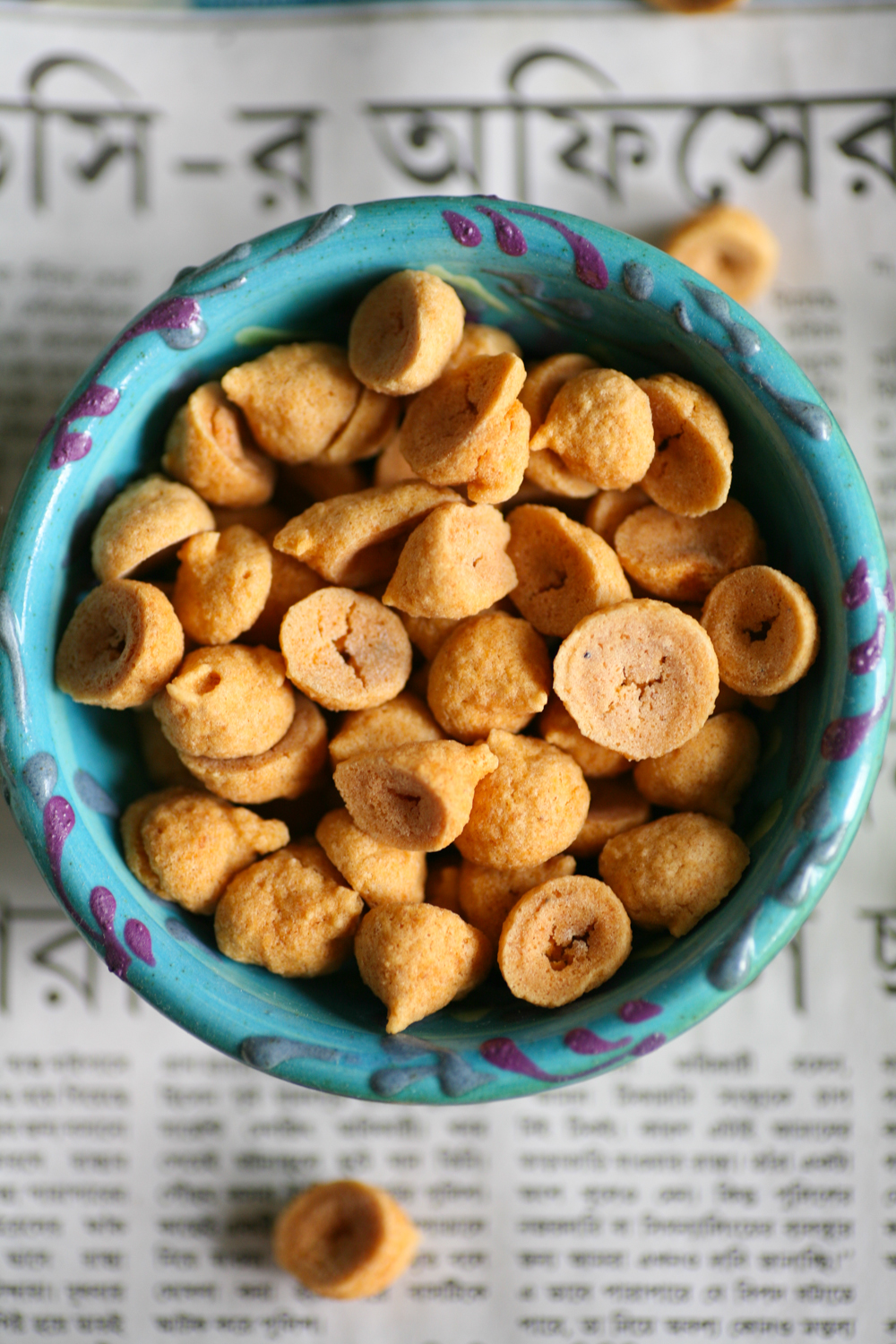
Lentil kisses, known as bori, are little sun dried lentil nuggets that have often been handmade and left to dry in the hot, warming Indian sun. My mother-in-law often brings me back a jar upon visiting her beloved  home city of Kolkata. They remind me of a lentil version of Hershey’s chocolate kisses – the type that visitors from the US often used to bring me and my siblings when we were young. Making bori yourself is not too tricky – there is a lovely recipe here if you are keen – if you live in a country where you can rely on warm, glowing hot sun, but as the weather in the UK is at best erratic when it comes to sunshine, it would probably be rather tricky.

IMG_2509


Whilst I realise not everyone has a Benglai mother-law-in who can magic up bori at a whim, you can get hold of bori in London at any good Asian grocers. In Kolkata, bori is also cooked with fish dishes or with greens, but today I wanted to show you a simple recipe that uses up vegetables that you are likely to have in your fridge. It makes for a very satisfying and enjoyable vegetable meal that is perfect eaten on it’s own or accompanied with some dal, rice or flat breads.
IMG_2512

Good luck in your quest for lentil kisses. They are seriously not that hard to seek out. Let me know how you get on.

IMG_2530

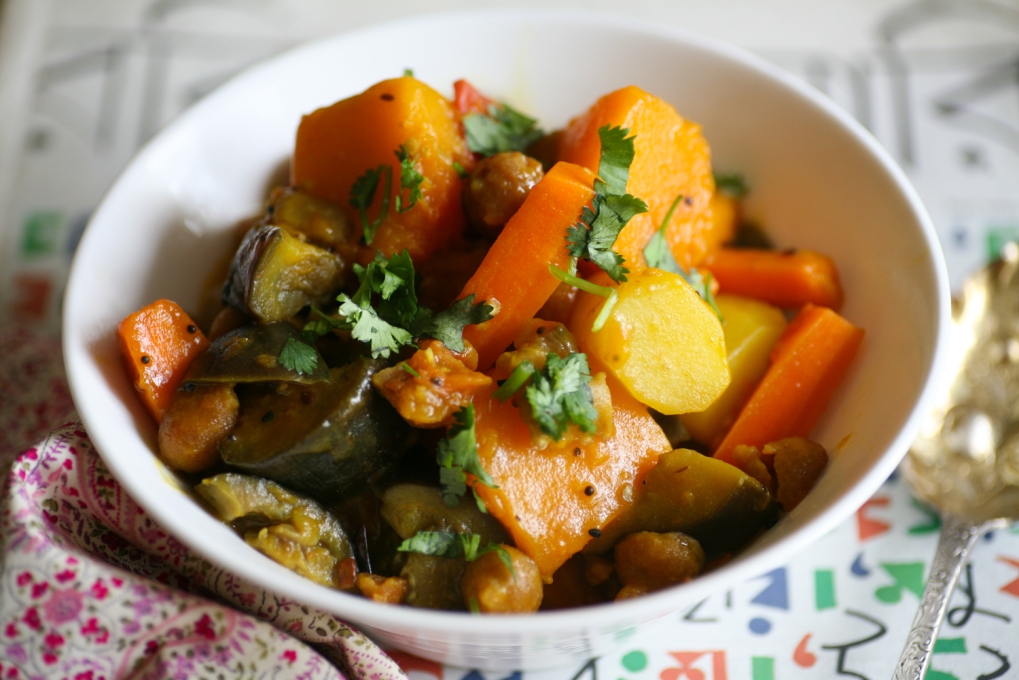
Vegetable Curry with Lentil Kisses

1 large handful of bori (lentil kisses)

2 tbsp groundnut oil

2 small dried red chillies

1 tsp panch phoron

1/2 tsp turmeric

1/2 tsp chilli powder, optional

2 carrots, cut into bite sized chunks

3 medium sized potatoes, quartered

1/4 of an aubergine, cut into bite sized chunks

2 tomatoes, finely diced

1 tsp salt

to serve

1 handful of fresh coriander

  1. Heat a tablespoon of oil (or thereabouts) in a pan and when it is hot add the dried chillies and allow them to blacken a little, this will take no longer than a minute, but may make you cough a little so beware!
  2. Add the panch phoron which will begin to fizzle almost instantly. Then add the turmeric and chilli powder (if using the latter) and add the chopped carrots and potatoes. Move around the pan, lower the heat add a couple of tablespoons of water and place a lid on the pan and leave for 15 minutes, stirring at intervals.
  3. Meanwhile in a separate pan add another tablespoon of oil and when it is hot add the bori/lentil kisses so that they bronze slightly in colour. This will only take a few minutes, if you keep moving them around the pan. Remove them from the pan with a slotted spoon and place on a plate with kitchen roll.
  4. In the main pan now add the aubergine, salt and fresh tomatoes and stir into the other ingredients. Add a little more water to help soften the ingredients, but not too much as you do not want the sauce to become too runny. Place a lid on the pan and leave for another 10 minutes.
  5. After 5 minutes check to see if the potatoes and carrots are softening. Add the bronzed bori and gently stir into the vegetables. Place the lid on the pan and leave for a further 5 minutes or until the potatoes and carrots have softened sufficiently.
  6. To serve add freshly chopped coriander.

It is wonderful to accompany with some dal and rice or Indian flat breads.
IMG_2517


Indian Inspired Cucumber, Apple and Red Onion Salad

IMG_0217

I’ve just returned from 10 glorious days in the Schwarzwald – or German Black Forest to you and me.

IMG_9957

Days were spent hiking through dense forests where gentle streams turned into ferocious waterfalls.

IMG_0097

 We climbed many a hill and marvelled at all the spruce and pine trees peppering the landscape. Dramatic scenery at every turn.

IMG_0022

Picnic lunch stops afforded us spectacular vistas, stretching for miles and the best thing was that we were completely alone – over the time we were there we passed only a couple of other walkers, one of which was a nun from the local nunnery. We live in such a frenetic, fast paced world that taking time out and spending time with nature away from the crowds is wonderfully cleansing for the mind and soul.

IMG_9971

Upon returning to our gasthof we would often treat ourselves to the local speciality…….Black Forest Gateaux,  because when in Rome…..

IMG_0113

After resting our weary limbs we prepared for serious dining in the evening. The food was exquisite, refined and yet hearty – the lemongrass creme brule and the wild garlic soup being highlights.

IMG_9946

Upon returning back in the UK however, I was ready to have a vegetarian spell. I began to crave green vegetables (I eat a lot of spinach) and fruit with a spice injection and simple Asian food. In fact the first thing I cooked for myself when we returned to Blighty was this.

With the bambinos having just returned to school and the sun giving us a lovely, welcome dose of vitamin c – check out the blossom and blue skies

IMG_0208

I wanted to eat a lovely salad that I was given recently when I was in Kerala. It’s lovely on it’s own or eaten to accompany all manner of Indian, meat, fish or veg curries – see my recipe library. The crunch from all the different textures and the flavours sing sweet notes as you dive into this salad. Give it a whirl and let me know if you agree.

IMG_0218

Indian Inspired Cucumber, Apple and Red Onion Salad

Serves 4 with another dish or 2 on it’s own

2 crunchy green apples, cored, skin removed, quartered and chopped into 3

1 cucumber, skin removed, halved and chopped into half moons

1 red onion, finely sliced

1 handful of fresh coriander, roughly chopped

1/2 tsp salt

1 tbsp agave nectar/honey

  1. Skin, slice and cut the ingredients as specified above and mix altogether along with the honey and salt. Simple and utterly delicious.

This salad would also be perfect with meat, fish or vegetables off the BBQ.

IMG_0219


Keralan Prawn and Kudampuli Curry – Chemmeen Olarthiathu

IMG_2240

Hidden away in the calm and tranquil backwaters of Kerala you will find a homestay called ‘Philipkutty’s Farm’ that sits on 35 acres of a small island, which totals 750 acres. The island was reclaimed from the backwaters of Lake Vembanad in the 1950’s by the present inhabitant’s late husband’s grandfather.

IMG_8660

Today the farm is run by Anu (pictured above) and her mother-in-law, known as Aniamma, but it was Anu who warmly greeted us as we made our way from the opposite shore in a wooden canoe known locally as a ‘vallam’ (country boat), powered by a local using a wooden punt. After sipping on homemade cool ginger lemonade we were shown our cottage where we would be spending the next couple of nights.

IMG_8659

To say that it was charming was a massive understatement. I read in the visitors book that one lady had stayed for 5 weeks and had returned numerous times. I could see the attraction. It was without doubt the perfect place to unwind, write a book perhaps or simply just relax.

IMG_8638

Without modern day distractions such as television (there was only wifi in the main house) you felt positively cut off from the outside world. Bliss. It enabled you to sit and admire the views and watch the passing traffic, aka houseboats, drift by. My daughter’s fished with Anu’s daughter and managed to collect a number of fish, before always returning them to the waters. Mr B bravely swam in the backwaters themselves, much to all our amusement.

IMG_8639

The highlight of staying at Philipkutty’s Farm, however, is the food. Aniamma, Anu and their team of helpers prepare breakfast, lunch and dinner for guests, which all congregate in a thatched pavilion close to the main house. As there are only a handful of cottages there tend to be no more than 12 or so guests. We all sat on one large table, swapped storied and filled our bellies with dish after memorable dish of food.  The cuisine was predominately Syrian Christian with a strong backwater influence. The vegetables and spices were grown on the farm and these were accompanied by a wide range of fish and meats. I was in heaven.

IMG_8634

I have a feeling that if I stayed for 5 weeks, like one guest, there would be a high chance that I would return home a little more ‘wholesome’ than when I arrived!

IMG_2912Each evening Anu and Aniamma would do a cookery demonstration of a couple of the dishes we were to eat that evening. So it was during these informal demonstrations that I learned a host of new recipes.

This prawn and kudampuli curry – known as chemmeen (prawn) olarthiathu, was interesting as it included an ingredient I had not come across before. It is a staple of Keralan cuisine and adds a unique sourness to seafood curries, fish stews and biryanis. It is also know by the rather exotic name of  ‘Malabar Tamarind’. It is in the same family as Kokum, but is more sour.  The outer skin of the fruit is halved and dried, which in turn curls and becomes a dark purple black colour – apparently the darker the colour the better the kudampuli. d
IMG_2217

Whilst they undoubtedly add a sweet and sour element to a dish they also add a smokiness that is unlike anything that I have tried before. They never drown out the main taste of a dish, instead complementing it with their gentle souring notes.

IMG_2221

I used prawns with tails on but you can use whatever prawns you wish.

IMG_8722

You’ll need red onion, shallots, ginger, garlic and fresh curry leaves. You can pick up fresh curry leaves from most Asian grocers. I tend to freeze mine and then dig them out of the freezer as and when I need to use them, which is most days.
IMG_8725

Above shows Aniamma adding the cherished kudampuli to her curry.

IMG_2251

I served mine with my Indian toor dal, which you can find here and some basmati rice.

IMG_2246

Kerala Prawn and Kudampuli Curry (Chemmeen Olarthiathu)

Serves 4-6

1-2 tbsp coconut oil

1 large or two small red onions, finely chopped

3 garlic cloves, roughly chopped

2 inch fresh ginger, roughly chopped

3 shallots, finely chopped

10 curry leaves

1/2 tsp salt

1/2 tsp turmeric

1 tsp chilli powder

2 medium sized tomatoes, roughly chopped

500g prawns

4 pieces of kudampuli, pre soaked in 150ml boiling water for 20 minutes*  or 35g soaked tamarind (see below)

1 tsp freshly ground black pepper

  1. Heat the coconut oil and then add the garlic, shallots, ginger and curry leaves.
  2. After a minute add the red onion, salt and chilli powder (if using).
  3. On a medium to low heat, add the turmeric and allow the ingredients to soften, which will take around 5-7 minutes.
  4. Add the fresh tomatoes and stir into the other ingredients and allow to soften.
  5. Add the prawns and move around the pan so that they are coated in all the ingredients.
  6. After 3 minutes add the kudampuli and gently cook for a further 5 minutes.
  7. Add the fresh black pepper powder just before serving.

*Kudampuli is similar, but not the same, as Kokum. Both have a tart/sour flavour but kudampuli is sourer in flavour. They are from the same family but the kudampuli has more groves in its skin and is commonly used in south Indian cuisine whilst kokum is used slightly further north in Goan cuisine. Both can be found easily online. Equally you can replace with 35g of tamarind, soaked and then added to the recipe after being strained.

IMG_2253

Each morning at Philipkutty’s Farm the urns would have different arrangements of fresh flowers floating in them. So pretty and symmetrical.

IMG_8641


Keralan Chicken Stew

IMG_2208

Recently my family and I spent the day with a local Keralan family in Cochin: Lt. Col. Mathens, Moly and Philip. The intention was to spend the day with them cooking and eating so you can imagine how excited I was about this. After a good hours drive from our hotel we arrived at their house, still in Cochin but away from the old centre.

Before the cooking began we were given a guided tour of their garden, which grew all manner of spices, vegetables and fruit. They had planted this magnificent oasis themselves when they had bought the property some years before. It had been shrub land, but with such fertile soil, sunny weather and good rains in the monsoon, the vegetable garden had thrived beyond belief. There was no reason to go to the market to buy fresh produce as they had such a bounty waiting for them in the garden.

How many of the above can you recognise? Let me know in the comments box below.

We were showed at least thirty different vegetables, fruit and spices and to see them growing in their natural habitat was hugely memorable – although looking back through my photographs I cannot be certain about a couple of the plants. A return trip is necessary perhaps to further my education? Any excuse really!

After our garden tour we made our way to the kitchen where Moly explained the different dishes we would be cooking and the others she had prepared earlier that would accompany our feast.

IMG_2193

One of the dishes she showed us was her Keralan chicken stew. A couple of things that stood out with the way that she actually prepared the stew.

Firstly it was cooked on the bone, like all authentic curries should. Secondly she add the coconut milk in two stages. To begin with she added the thin coconut milk and at the very end she added the thicker, creamer coconut. The third point was that she added the thin coconut milk when some of the chicken was still pink. She did not measure anything as such, so I frantically took notes as to the approximate amount she was adding into her stew.

It does have a chilli kick to it with pepper, cardamom and clove notes resonating through the dish. By all means reduce the amount of chillies to suit your palate. I added a teaspoon of Kashmiri chilli powder, but this is not necessary and looking back in my notes I don’t believe Moly added it so for the recipe below I have omitted it although when I was testing the recipe I did add it, hence the photos have a red/orange hue to the dish. Yours will not have this in quite the same way if you follow the recipe below.

She did not measure out the coconut milk, but as it generously covered the chicken I think she must have used the equivalent of two tins of coconut milk or thereabouts. I find some brands of coconut milk have a thick creamy coconut milk at the top and a more water milk at the bottom. If you can try and get hold of these types of coconut milk.

Keralan Chicken Stew

serves 6

2 tbsp coconut oil

1 tsp mustard seeds

2 red onions , finely diced

3 garlic cloves, finely diced

7 Kashmiri chillies

2 potatoes cubed

1 whole chicken (approx 1.2kg) skinned and chopped into 10-12 pieces

1tsp cardamom seeds

4 little pieces of cinnamon bark

1 1/2tsp fresh ground black pepper

10 cloves

2 tsp salt

1 tsp ginger powder

400ml tin of coconut milk

160ml tin of coconut cream

  1. In a deep pan – I find my Le creuset casserole works well – add the coconut oil. When it is hot add the mustard seeds and move around the pan for 10 seconds before adding the onion, garlic and dried chillies. Leave to cook in the pan for 3 minutes. Keep on a medium low heat.
  2. Now add the cubed potatoes and stir into the other ingredients and allow to cook away for a further 3 minutes.
  3. Add the chicken and stir before placing the lid on the pan for 5 minutes. Some of the chicken will have whitened but do not be alarmed if some of the chicken is still a little pink at this stage.
  4. Add the cardamom, cloves, cinnamon bark, ginger powder and black pepper.
  5. Add the coconut milk and the salt. Put the lid back on the pan and allow to simmer for 30 minutes, stirring at intervals.
  6. Test to see that the potato is soft and the chicken is cooked. Add more salt if necessary.
  7. At the very end turn the heat down very low and add the coconut cream and stir into the stew. It is important that you do not let it boil as the coconut cream will split.

Serve with rice, luchi, chapati or the traditional Keralan appam.

IMG_2190


Dreaming of Kerala – Squid Coconut Fry

IMG_2170

Kerala, often called ‘God’s own country’, is the perfect destination for the avid traveller who seeks adventure, beauty and tasty food. It encompasses so many different experiences and terrain in this sunshine state that no day is ever quite the same. Over the course of the last few weeks my family and I (and not other animals) spent time in Cochin, exploring their diverse places of worship as well admiring their famous Chinese fishing nets.

IMG_8310

The Western ghats, which provide the state, and much of the wider world, with tea, cardamom and coffee.

IMG_8541

The calming, slower pace of life in the emerald backwaters,

IMG_8731

and of course the palm fringed beaches of the coast and the gloriously warm Arabian sea.

IMG_8898

Along the way I met some wonderful people, both locals and fellow travellers, who all made our experience of Kerala very memorable. It was tough to say goodbye to the warm rays and friendly smiles and head back to a much colder London, which is now firming in the throes of winter.

During our travels I learned to cook a wealth of Keralan recipes from chefs and home cooks who welcomed us into their homes and kitchens. Meet some of them below. From left ‘Mummy’ from Philip Kutty’s Farm,  Sreeja  from Marari Beach Hotel and Moly from Cochin, who allowed me to shadow her for the day.

Prior to visiting the state I had a preconceived notion that a lot of the cuisine would be vegetarian, however this is not the case. In Kerala, Muslims, Hindus, Christians and Jews (there are only 6 now left in Cochin) live harmoniously and respectfully amongst one another. As such we feasted on chicken, lamb, pork and beef as well as delicious fresh and seawater fish, shellfish and a host of vegetarian dishes. Coconut oil and coconut in many forms, is the heart of many Keralan dishes along with the irresistibly sour tamarind and kokum, the latter being new to me. “Kera” in Malayalam (the language of Kerala) means coconut. As Kerala is abundant with coconut plants, it naturally got the name Kerala. Yes, many of the dishes in Kerala have heat, but with the cooling qualities of  coconut, many had their chilli bite tempered.

Over the coming months I will intersperse my blog posts with temptingly delicious Keralan dishes that will hopefully encourage you to try cooking them at home.

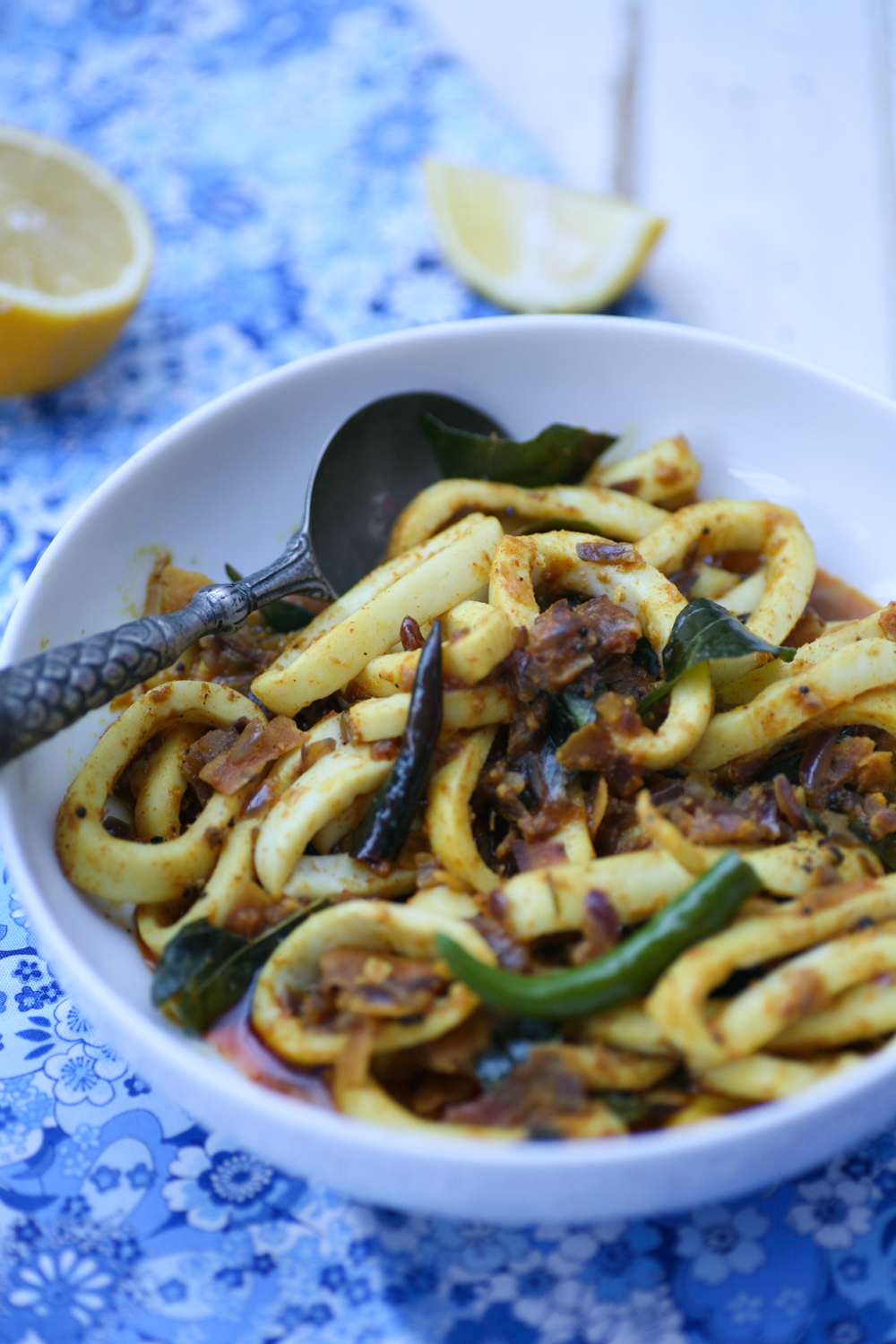
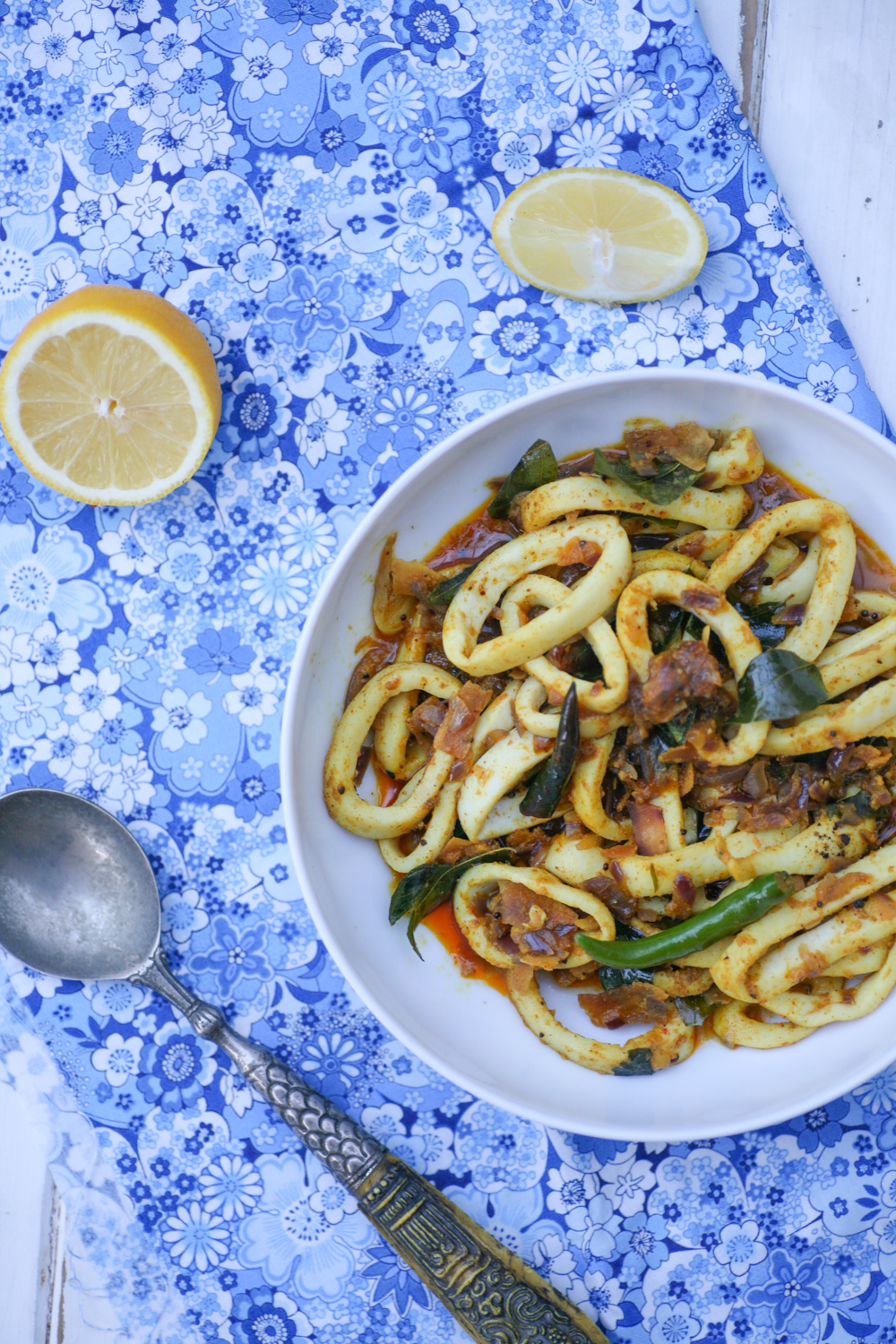
First up is ‘Squid Coconut Fry’, which in all honesty takes 10 minutes and that includes the prepping and cooking. So look no excuses not to give this a whirl. It is so good you’ll be cooking it time and time again. IMG_2160

 Squid Coconut Fry

Serves 2 (or 4 if serving with other dishes)

2 tbsp coconut oil

1/2 tsp mustard seeds

2 dried red Kashmiri chillies, halved and seeds removed if you like it less hot

10 pieces of thinly sliced fresh coconut or dried coconut slices

3 garlic cloves, thinly sliced

1 tsp ginger paste

1 fresh green chilli (2 if you like it hot)

10 curry leaves

1 small red onion, finely chopped

1/2 tsp salt

1/2 tsp chilli powder

1/2 tsp coriander powder

1/2 tsp turmeric powder

300g squid tubes, chopped into thin rings

1/4 juice of a lemon

1/4 tsp ground black pepper

1/4 garam masala

  1. First get all the ingredients ready as the dish takes no time to cook and you will want to eat it immediately. This dish is not good to be reheated.
  2. Heat the coconut oil in a pan. When it is hot add the mustard seeds and red chillies followed by the thin coconut slices. Keep the heat on a medium to low heat.
  3. After 20 seconds add the garlic, ginger, fresh green chilli and curry leaves.
  4. Move around the pan for a minute before adding the red onion and salt.
  5. Now add the chilli powder, coriander powder, turmeric powder and allow the flavours to come together in the pan. Allow the onion to soften for 3-5 minutes
  6. Add the squid and move around the pan. Cook for a further 3 minutes.
  7. Add the lemon, pepper and garam masala. Move the ingredients around the pan.

Serve immediately. All the wonderful flavours will have wrapped themselves around the squid culminating in the most appetising of dishes.

Quick and easy. I would serve with rice, a vegetable curry and a dal (see my recipe library).


Fiery Chettinad Chicken

IMG_0969

Chettinad is a region in the southern eastern state of Tamil Nadu in India. The cuisine is commonly regarded as one of the most fiery and aromatic.

IMG_0932

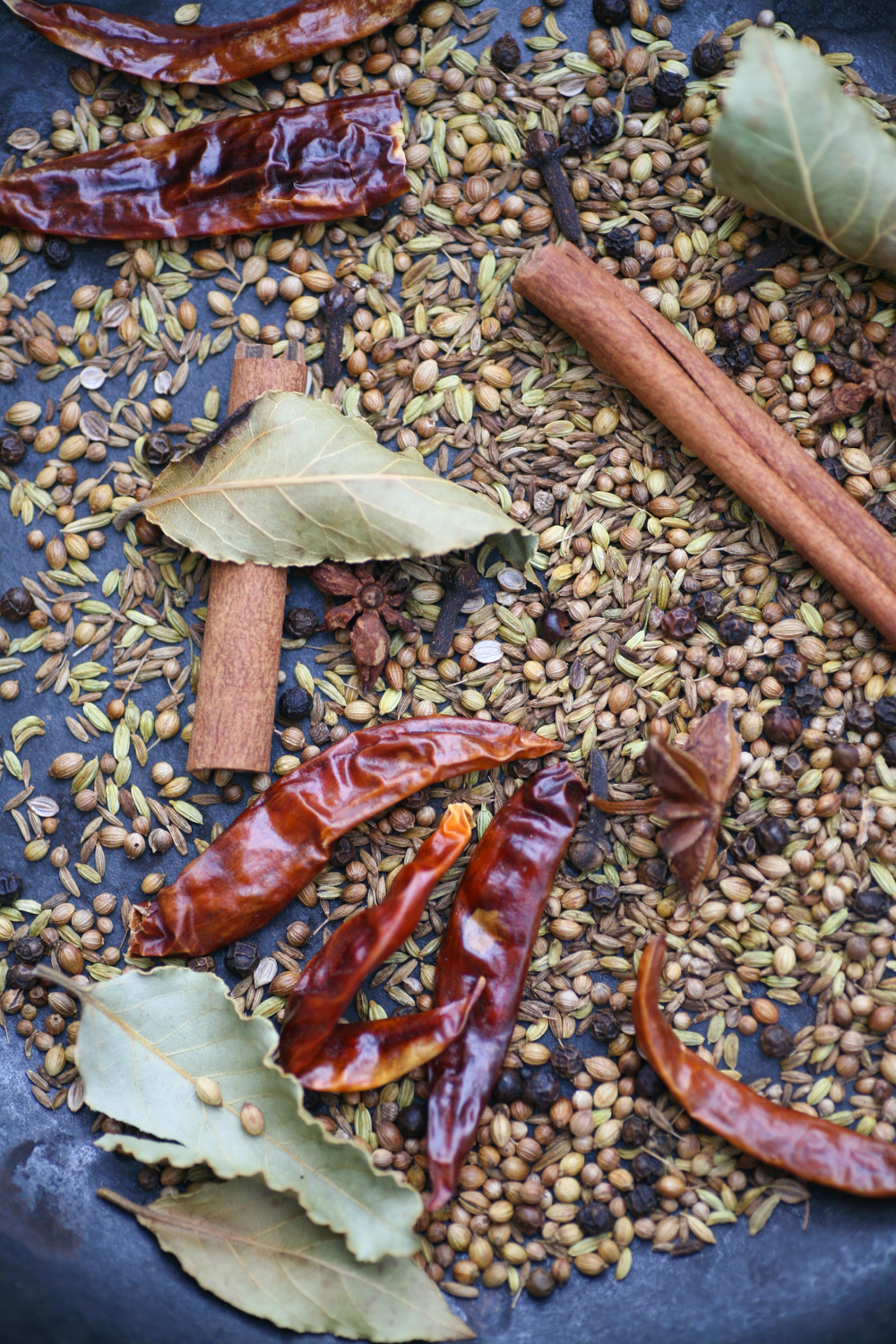
It is famous for its dry masalas that use a wide array of spices including, rather surprisingly, star anise, as well as more commonly used Indian spices such as cumin, cloves, black peppercorns, cinnamon, cardamom, coriander seeds, fennel seeds and whole red chillies. Similarly to the rest of southern India, coconut and tamarind are also often used in cooking.

IMG_0946

The Chettinad people have always been successful traders, travelling far afield throughout Asia. This can be seen in their cuisine as they use a wide range of spices and techniques, clearly influenced by their travelling merchant ancestors.

IMG_0971

My recipe is perfect if you crave some spice. For those at the korma end of the spectrum probably ought to give this a wide birth, but for those who like a flavoursome kick THIS is the curry for YOU. My kids definitely would not eat it, but Mr B and I are big fans and I hope that some of you out there will be also. If you prepare it in the morning ready to eat in the evening it works a treat. You could also cook it a day in advance if you are feeling super organised.

If any of you cook this please let me know what you think. It really isn’t that hot if you are used to eating spice, so be brave and give it a go. It would be great on a hot summer’s eve with a cold beer – check out my brother’s beer here or a chilled lassi such as this one.

Chettinad Chicken

Serves 4-6

800g chicken thighs, cut into bite sized pieces

1 tsp turmeric powder

1/2 lemon, juice only

****

Masala

2 tbsp coriander seeds

1 tbsp cumin seeds

1 tbsp black peppercorns

2 tsp fennel seeds

1 cinnamon stick

3 cardamom pods, seeds only

6 dried red chilli

6 cloves

4 fresh or dried bay leaves

2 star anise

60g desiccated coconut

100ml cold water

****

3 tbsp ground nut oil

14 fresh curry leaves

2 red onions, finely sliced

2 tsp salt

2 tsp garlic paste (or fresh garlic made into a paste)

2 tsp ginger paste (as above)

3 fresh tomatoes, chopped

75-100ml cold water

****

fresh ginger batons to serve

****

1. First cut the chicken thighs into bite sized pieces and cover with the turmeric and lemon juice. Mix in thoroughly and then place to one side whilst you make the masala.

2. Heat up a non stick pan and when it is hot add all the spices (but not the desiccated coconut) and move them around the pan for just over a minute so as to lightly toast them and release the flavours.

3. Place them in a spice grinder. I have this one which is excellent and Debenhams is selling it at the moment for £18. Best investment ever. (I am not on commission to say that!)

4. Whizz them around the spice grinder and then take out half the powder and then add the desiccated coconut or as much of it as you can. Whizz again and remove some more powder and put the remaining coconut in the spice grinder. Transfer to a bowl and add 100ml of cold water to create a thick paste.

5. In the same non stick pan add the ground nut oil and when it is hot add the fresh curry leaves, red onions and salt and gently fry for 8-10 minutes. Add the garlic and ginger paste and move around the pan so that it does not spit.

6. Add the tomatoes and continue to cook for a couple more minutes before adding the masala paste.

7. Add the turmeric lemon chicken and cover fully with the masala paste. Add the remaining water and leave to simmer for 45 minutes, or until the liquid has become virtually dry. Stir at intervals.

To serve place a few fresh ginger batons on top of the curry. It goes really well with rice or Indian breads. It is always good to have a bowl of fresh yoghurt on the side as this dish is renowned for being fiery.


Chingri Maach – Bengali Prawn Curry for Delicious Magazine (April)

Apr 15_Tastes like home


Happy Easter Bank holiday everyone. I’m really excited to share with you the news that my ‘Chingri Maach – aka Bengali Prawn Curry’ is featured in the April edition of Delicious Magazine. So please go out and get your own copy so that sales for April sky rocket and Delicious Magazine want to feature me again ;o). It just so happens that the front of the magazine this month has my favourite cakes of all time – Portuguese custard tarts. They look so temptingly delicious that I will be trying to make them myself shortly.

So what are you waiting for….go grab yourself a copy and do try my prawn curry. The background to the curry is explained in the article. If you are in the US/Canada/India/Australia/NZ etc…then perhaps you could leave me a comment below telling me which are your favourite Food/Lifestyle Magazines in your country so that I can get in contact with them for future features.


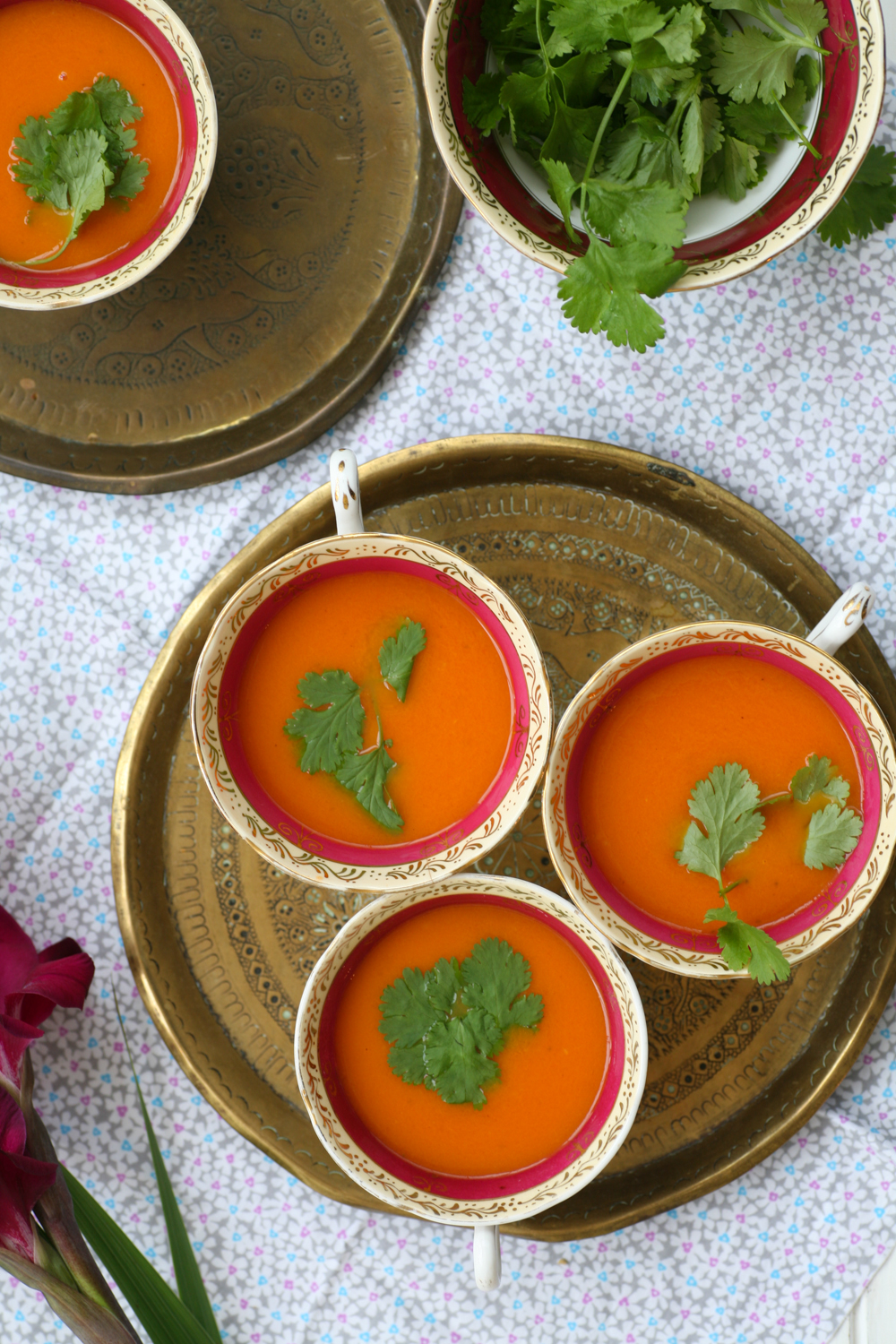
Indian Rasam – Spiced Tomato Soup

IMG_0021

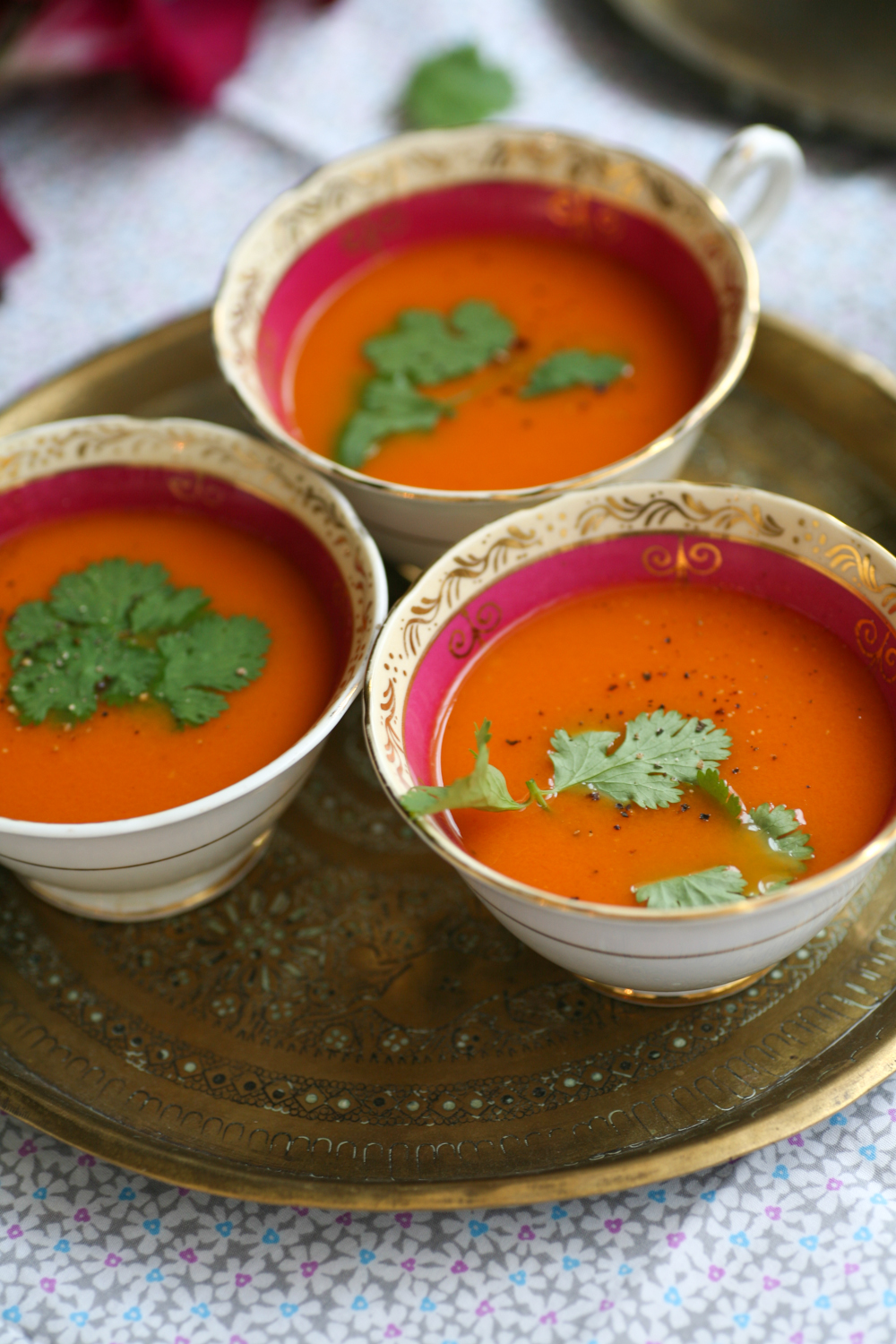
There is nothing more sublime than a spicy hot tomato soup to warm you up and give you that inner glow. If you are feeling under the weather with a cold or fever, which invariably many of us do at this time of year, this is a great way to blast your system with goodness and help pull you through. Rasam, as it is known in South India, translates to ‘juice’ or in Sanskrit rasa means ‘taste’. I think ‘tasty juice’ is the perfect way to describe this warming, fragrant and flavoursome soup. Traditionally it is made with tomatoes or tamarind with a host of spices and fresh curry leaves giving it a comforting aroma and taste.  Being totally addicted to tomatoes I tend to make my rasam with tomatoes as the base note.

IMG_0010

Traditionally it is eaten in India at the end of a meal, but I tend to serve it the opposite way round and kick a meal off with a warming cup of this thin spiced tomato soup to whet the taste buds. It is often served in a mug or cup or can be poured over a bowl of hot steaming basmati rice. It’s also the perfect drink after a long, cold and invariably wet winter walk. With a roaring fire going and a cup of rasam you will feel a state of happiness surround you. Seriously try it and you’ll know what I mean.

IMG_0033

The only tricky (ish) ingredient to source is fresh curry leaves. If you go to your local Asian grocer they are likely to have some, or at least will be able to point you in the right direction. So what are you waiting for – give it a go and leave and comment below to let me know how you get on.

**********

Indian Rasam – Spiced Tomato Soup

Serves 4

2 tbsp sunflower oil

1 heaped tsp of garlic paste/fresh garlic grated

1 heaped tsp of ginger paste/fresh ginger grated

2 large dried red chillies (1 if you prefer it with less of a kick)

12 fresh curry leaves

1/2 tsp of crushed black pepper

1 tsp salt

1 tsp sugar

700g fresh tomatoes, roughly chopped

350ml water

a couple of sprigs of fresh coriander to garnish

black pepper to garnish

1. Warm the oil in a deep non-stick pan and when it is hot add the garlic, ginger, dried red chillies, fresh curry leaves and crushed black pepper and gently move around the pan so that the chillies darken and the ginger and garlic begin to bronze. Keep on a medium heat for a few minutes before adding the tomatoes, salt and sugar.

2. Move around the pan so that the tomatoes begin to soften and are completely covered in all of the ingredients. Then add the water and let it boil for a couple of minutes before lowering the heat and cover for 30 mins.

3. Using a hand blender blend the soup so that it is smooth and then pass through a sieve so that there are no pips or tomato skin and what remains is brilliant red, smooth thin rasam. Heat up the smooth rasam gently in the pan before serving.

4. Pour into cups and garnish with some fresh coriander and black pepper.


IMG_0027


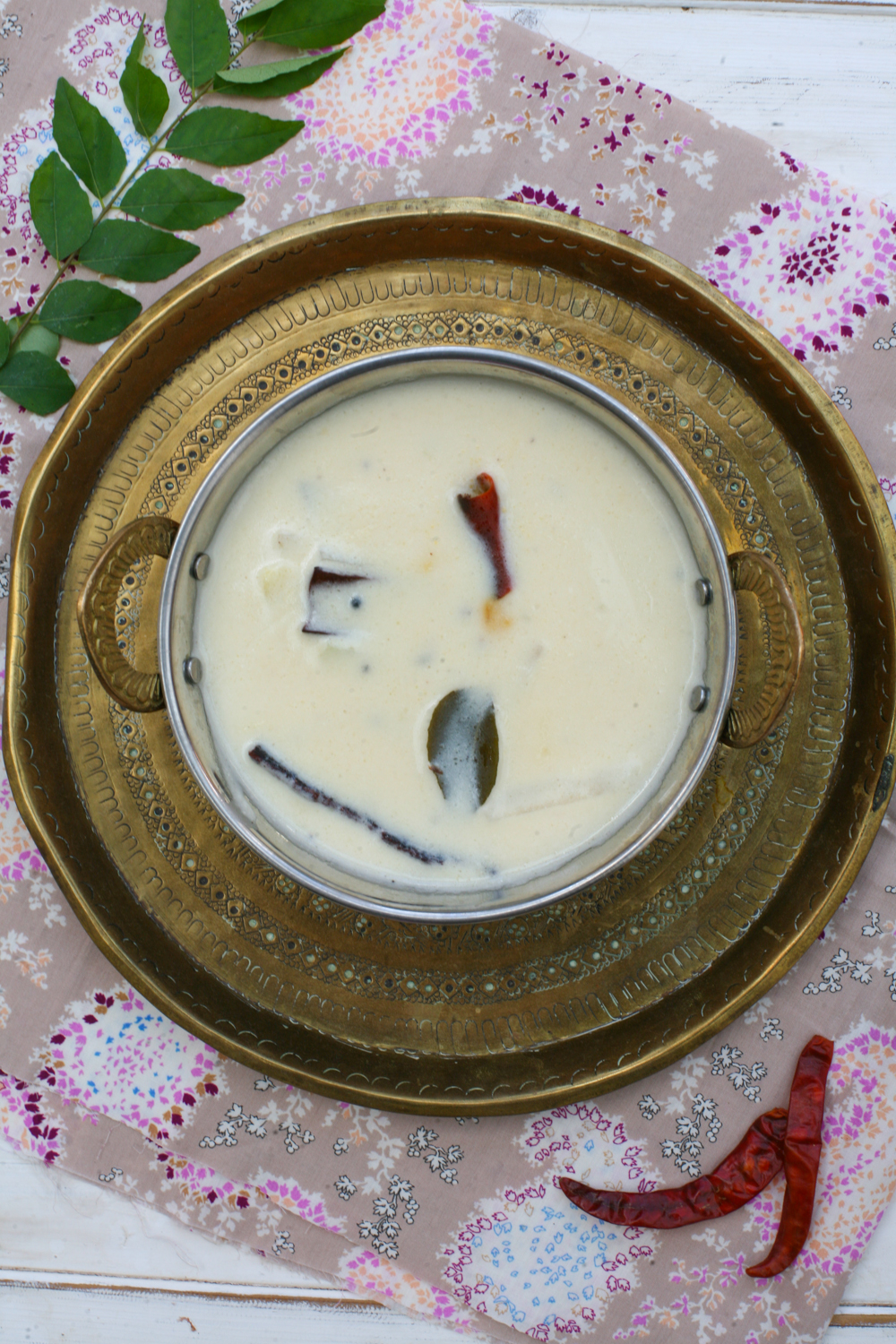
Gujarati Kadhi – a delicately spiced yogurt soup

IMG_9991

It is bucketing down outside this afternoon and I am feeling rather cosy inside out of the rain. After taking the photos for this blog post I had a bowl full of this hot, delicately spiced warming soup. Seriously delicious and quite filling, owing to the yogurt, potatoes and mooli.  Now that Autumn is well and truly here this soup comes into its own and I urge you to try making yourself some.

IMG_0006

It was Durga Puja last weekend – you can read up what goes on exactly at this Indian celebration in my posts from last year and the year before  see here and here. During the festivities at the Hindu temple prasad is often taken. Prasad is literally a religious offering or gift that comes in the form of a meal. Always vegetarian and gently spiced it allows families and friends to come together to share a meal that is blessed during this auspicious occasion. One of the curries we were served was this Gujarati Kadhi. I adored the delicately spiced yogurt soup so much so I was allowed to venture into the kitchens to see how it was being prepared. Huge caldrons of the soup were being constantly stirred over hot stoves before being taken out to hungry worshippers.

IMG_9990

I’ve made my own additions and twists but the taste is pretty similar to the one that I had last weekend. It is so different from any soup or dal I have tried before that it immediately appealed. All the ingredients are pretty easy to pick up at your local supermarket. I have seen gram flour in the big supermarkets here in the UK and I noticed that Waitrose was even selling fresh curry leaves the other day. Times are changing!  Mooli is harder to track down if you don’t live near an Asian grocers so just omit that part if you can’t find it. As with most of my recipes it is quick and easy so if you are feeling adventurous then give this fabulous dish a try.


Gujarati Kadhi

Serves 4-6

500g natural yogurt

2 tbsp gram flour (chickpea flour)

1/2 tsp green chilli paste

1/2 tsp ginger paste

700ml water

1 tsp salt

•••••••••••

1 tbsp ghee/butter

1/2 tsp black mustard seeds

1/2 tsp cumin seeds

3 cloves

2 small cinnamon sticks

2 dried red chillies, broken into pieces

10 fresh curry leaves

pinch of asafoetida

75g mooli (also known as daikon or white radish)/, cut into thin matchsticks

1 small potato, cut into thin matchsticks

1 tsp jaggery/sugar

1. In a large bowl mix the yogurt, gram flour, green chilli and ginger paste, salt and water using a hand whisk.

2. In a deep saucepan add the ghee and when it is melted add the mustard and cumin seeds and after 30 seconds add the cloves, cinnamon sticks, dried red chillies, fresh curry leaves and asafoetida. This is known as tempering.

3. Add the mooli and potato matchsticks and stir into the spices for one minute.

4. Gently pour in the yogurt/gram flour mixture over the potato, mooli and tempering spices and stir continuously to prevent the yogurt from separating.

5. If you find the mixture too thick simply add a little more water.

6. Add the jaggery or sugar if you don’t have any jaggery to hand. Stir into the soup. Simmer for  around 15 minutes or until the potato and mooli matchsticks are softened.

Serve with basmati rice or simply on its own in a bowl.


IMG_0002


Chana Masala at L’atelier des Chefs by St Paul’s Cathedral

IMG_8345

A stone’s throw away from the iconic St Paul’s Cathedral in the heart of the city of London you will find Foster Lane and nestled down it at number 10, the cookery school and cook shop, ‘L’atelier des Chefs‘. This is one of two – the other is in Wigmore Street – soon to be three locations of the cooking school, with a further 17 across the water in France.

IMG_8368

Originally set up by two French brothers, Nicolas and Francois Bergerault who wanted to bridge the gap between chefs and the day to day cook. The ethos of the company was to bring people back in the kitchen, around the table and share the love of cooking. The brothers have hired passionate and skilled chefs to teach cooking classes to budding food enthusiasts. Classes range from half an hour, whereby you cook one dish over a lunch time or after work, to a four hour ‘chefs masterclass’, therefore appealing to those of all standards and budget. Class sizes also range from small intimate groups to larger corporate events/team bonding; there is even a class for kids so everyone is included and encouraged.

IMG_8367

I headed down there earlier this week with my mother in tow. I enlisted the pair of us on the Indian cooking session. Whilst I am very comfortable around the spice rack and cooking Indian food, my mother, who is a fabulous cook, is slightly less comfortable cooking a curry. I was keen to see if the session would appeal to both of us.

IMG_8310

We were greeted by friendly staff who offered us teas and coffees before class began. There were seven of us in our class and we were introduced to chef Daniel Stevens who has just returned from an extended visit to Kochi in Kerala, India, where he has been working closely with Lily Vanilli and Atul Kochhar in their new joint venture, Bloomsburys Cafe, which focuses on celebrating Kerala flavour in Western style patisserie.

IMG_8290

Introductions over we rolled up our sleeves, washed our hands and began slicing, dicing and chopping away. Over the course of the morning we all helped to prepare a lamb rogan josh (lamb curry), chana masala (chickpea curry), vegetable pakoras (similar to an onion bhaji) with a tamarind chutney and saag aloo (potato and spinach curry). We all took turns with stirring and adding ingredients and all tasted for spiciness and saltiness along the way. I liked how Daniel allowed the class to decide if more salt, spice, sourness or sweetness was required in a particular dish. After all Indian cooking is not an exact science like baking where exact measurements are integral to the success of the cake or bread. Indian cooking allows you to be a little flexible with measurements and a more ‘go with the flow approach’ to creating a dish – something that definitely appeals to my style of cooking.

Time raced by and after two hours we had prepared all the dishes. We all sat down on a long table, admired the curries we had created and dived in before anything got cold. We all agreed that the morning had been a real success. We had all picked up new tricks and skills and unanimously agreed that we would all be able to replicate the same dishes again in the comforts of our own home kitchens. Would we return? Most definitely. In fact a couple of my class mates were already on their third return visit and if that isn’t the seal of approval on a fun and informative cooking school, I don’t know what is.

After squeezing in second helpings we were given goodie bags to take home some more. We said our goodbyes and headed out into the rain with a glow in our bellies and a spring in our step.

Chana Masala

Adapted from the L’atelier des Chefs recipe.

Serves 4-6

250g tinned chickpeas

2 tbsp vegetable oil

3 whole cloves

1 whole cinnamon stick

3 green cardamom pods, split open

2 medium sized white onion, finely sliced

1 tsp turmeric

1 tsp red chilli powder

2 tsp ground coriander

2 inch fresh ginger, peeled and finely grated

2 whole garlic, finely grated

4 tomatoes, chopped into small bits

150ml vegetable stock

1 handful of fresh coriander

2 tsp rock salt

1 lemon, juice

1. Heat a saucepan and add the vegetable oil. When it is hot add the cloves, cardamom pods and cinnamon stick and allow the aromas to be released. After a minute add the onion to the pan and cook on a medium heat for around five minutes until it begins to soften and brown.

2. Now add the turmeric, chilli powder and ground coriander and give a good stir. Add the garlic and ginger and stir to make sure they do not burn at the bottom of the pan. Adding a very little water helps to prevent burning!

3. Add the tomatoes and allow them to soften for a few minutes before adding the vegetable stock and chickpeas and allowing the curry to simmer and soften gently. Allow the juice to soak up and if it becomes too dry then just add a little more water.

4. After ten minutes add some salt to taste and then turn off the heat and scatter the fresh coriander on top. Before serving add some lemon juice

Chilli and Mint was a guest of L’atelier des Chefs. You can find more details about the course and other courses on offer here.