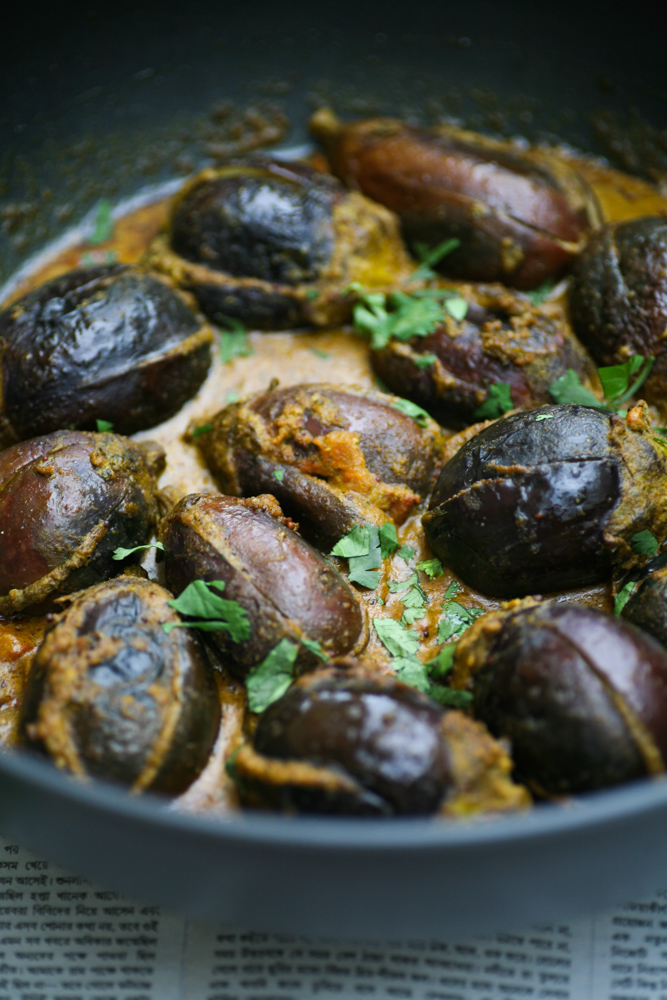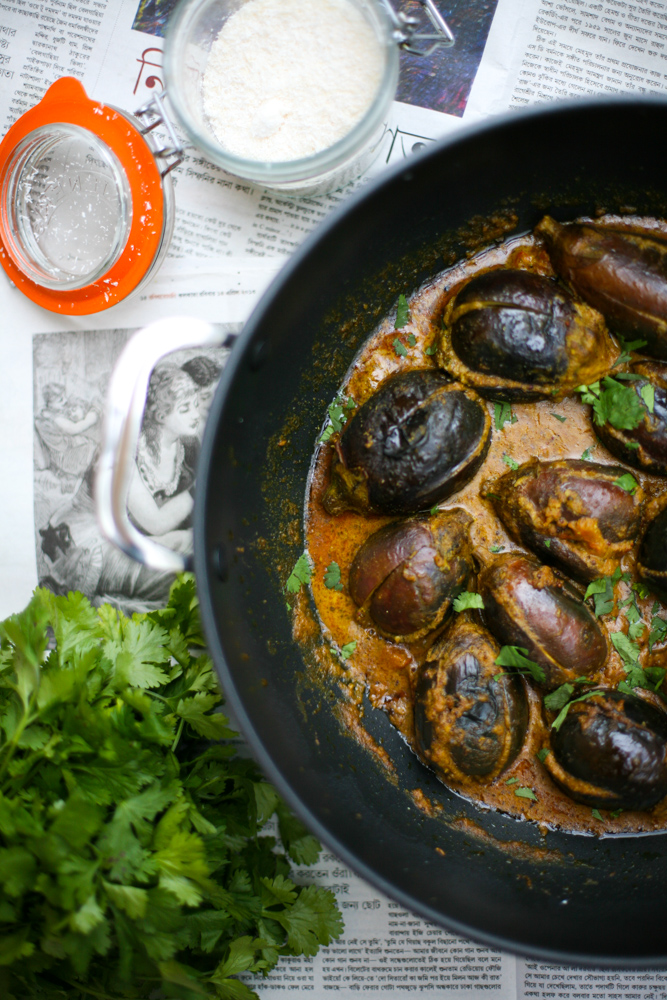
Maharashtrian Stuffed Aubergines with Cashew, Coconut and Tamarind

img_2735

I’ve been having quite a number of requests recently for aubergine recipes. At my local Indian grocers they have the full range from the small round ones, which I used for this recipe, to the small finger looking ones, to the more regular sized ones that you find in your general supermarket.

As far as recipes go I have quite a few already on the blog so do check them out:

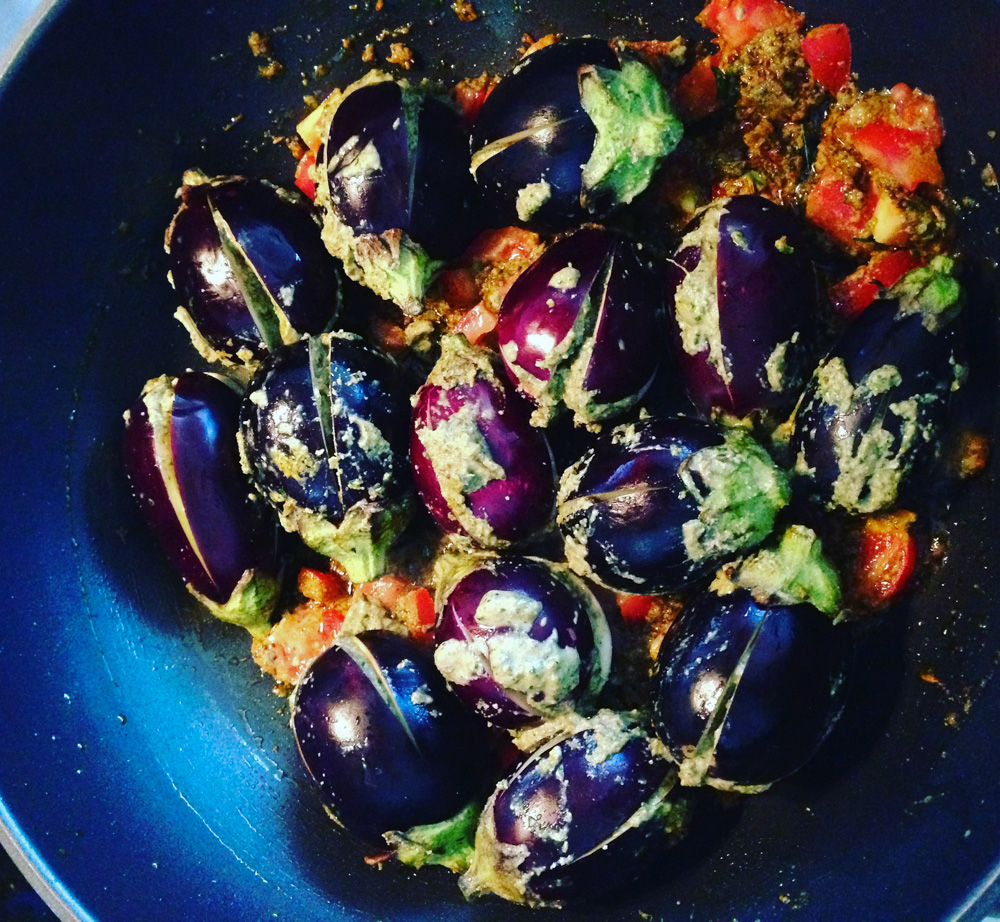
miso aubergines

fried indian aubergines

aubergine, pork and rice noodle salad

moussaka

red Thai tofu, aubergine and egg curry

Indian aubergine peanut and tomato curry

baba ganoush (one of my favourites)

soba noodles with tofu, aubergine and mango

img_2724

img_3222


The one that I wanted to show you today is very similar to the Indian aubergine, peanut and tomato curry, however it uses small oval shaped aubergines that are easy to find at Indian grocers. It also uses cashew nuts, desiccated coconut and tamarind and does not include onion. This recipe is a traditional Maharashtrian dish often prepared over religious festivals. As diwali – the hindu festival of light – is fast approaching this coming Sunday 30th October I thought it was apt to show you how to make it.

img_3219

Do not be put off by the length of ingredients as it really is pretty easy to make.

Maharashtrian Stuffed Aubergines with Cashew, Coconut and Tamarind

serves 6-8 if serving with a couple of other dishes (reduce the amount of aubergines if serving a smaller number)

12-14 small oval aubergines – slit (but not all the way through) crossways

2 tbsp vegetable oil

1 tsp black mustard seeds

1 tsp cumin seeds

1/2 tsp turmeric

1/2 Kashmiri chilli powder

10 fresh curry leaves

pinch of asafoetida

2 medium tomatoes, diced

1 tsp salt

150ml water

Paste

70g cashew nuts

2 tbsp white sesame seeds

3 tbsp desiccated coconut

2 tbsp coriander seeds

30g fresh coriander – leaves and stalks

1 tsp salt

1 tsp tamarind paste

1 tbsp jaggery/brown sugar


  1. First make cross incisions in all of the aubergines being careful not to cut all the way through. Place in a bowl of cold water with pinch of salt added.
  2. Next make the paste. First dry roast the cashew nuts and when they begin to brown very slightly add the sesame seeds and keep them moving around the pan for about 20 seconds before adding the coconut and stirring for a further 20 seconds. Remove from the heat and allow to cool before adding to your spice grinder along with the coriander seeds.
  3. As my spice grinder cannot take liquid I then move to my mini blender where I then add the fresh coriander, salt, tamarind paste, jaggery and a splash of water to loosen it slightly – although it is important it remains a paste as opposed to a runny liquid.
  4. You then want to stuff each of the aubergines with the paste and place to one side. If you have any paste left over this will go into the pan so also leave to one side
  5. Heat a deep pan and add the vegetable oil. When it is hot add the mustard and cumin seeds, followed by the asafoetida, curry leaves, Kashmiri chilli powder and turmeric powder. Move around the pan for 15 seconds before adding any leftover paste and the diced tomatoes. Keep on a gently heat for a couple of minutes before adding the aubergines.
  6. Add around 150ml of water – you can add more later if it becomes too thick and keep on a gentle simmer for 25 minutes with the lid on. Turn the aubergines over at intervals.
  7. Taste the sauce and add more water if too thick. Add more salt or jaggery if need be.
  8. Serve with a scattering of freshly cut coriander.

SaveSave


In Search of the Perfect Taco – California – part 1

img_2857fish taco from Mercado &Taqueria De Amigos, Pascadero

On a recent road trip to California a really old article from The New York Times, caught my attention. In short, the author, Cindy Price, went on a taco trawl from San Francisco to Los Angeles sampling the tacos on offer. This appealed to me on many levels. Whilst the article was old, I absorbed the information and decided that if we happened to be near any of the places she recommended we’d check them out – if they were still in business that is.

The first place we just ‘happened’ to be driving past was a stones throw from the legendary Highway 1. We’d spent the morning exploring the beaches of Bean Hollow State Park and Pebble Beach, admiring the wild surf and trying in vain to spot a whale along the shoreline. There was a chill in the air and we were eager for some Mexican food to warm us up. California really does have many micro-climates and you only need to go a little inland and the chill from the coast dissipates.  Pescadero is a charming town so small that if you blink you’ll have passed it. There is a county store, a tea shop, a church, a bar and a couple of furniture shops and not much else. On the corner of the ‘main’ street is a garage with a small stores attached called Mercado & Taqueria De Amigos and it was here where we were assured we would find some good, honest Mexican food, and in particular tacos.

img_2858

img_2859Seeing local Mexican workers having their lunch at the tiny booths was a good sign. If it’s good enough for them then I knew I was onto a good thing. The setup was small, but the choices on offer definitely made my stomach begin to rumble.

img_2863

I first opted for the fish tacos, which had been recommended to me, my girls had chicken quesadillas (there were another couple of option boards not in photo above) and Mr B chose a burrito, as he likes something ‘more substantial’ and refried beans. As we made our way to our booth we passed the self service nacho bar accompanied by four red and green zingy and spicy salsas to choose from.

img_2860

We loaded up with our choices in little paper pots and after a short wait the food arrived.  The fish tacos were hot, freshly cooked and fragrant. I added a splash of salsa and dived in.

img_2861

There is no way to eat these in an elegant manner. You need to pick them up and disregard the looks of your dining companions as the juices dribble down your chin. Loose yourself in the moment people, seriously this is what eating is all about. If I hadn’t been so restrained I could have eaten them again and again and again, but ceviche tostadas were calling.

img_2862

The tostadas was crisp and held the ceviche in place until it reached my mouth. The zing from the lime, the creaminess of the avocado, the heat from the chilli and freshness from the fish, made this dish memorable. In fact even writing about it now is making me so hungry. Needless to say we totally loved this taqueria. It’s the type of place that you would typically drive by and never consider as a food destination, had you not been given the wink. It’s between San Francisco and Santa Cruz and is definitely worth stopping at. The portions are big and the food reasonable priced – even with our present exchange rate. Order a little and see how you get on. You can easily order more if you can squeeze in another taco or three.

img_2866

Combine it with a stop off at Harley Goat Farm, which is a few minutes drive away. Here you will be able to see a herd of about 200 goats and pick up some of their award winning goats cheese. I love the presentation of the cheeses above with their edible flowers and dried fruit. They also have a great selection of bath and body products made locally with their fresh goats milk. They also host lunches and dinners which you can attend, so check out their website for dates as these do get booked up.

img_2865

After you’ve tasted some cheese and patted some goats head back on Highway 1 and go south to Davenport where, just before entering the town, you will find Swanton Berry Farm. Here you can either go strawberry picking, jam tasting, relax over some tea and cake in their tea shop or simply pick up a jar of their delightful jams. You’ll even be able to pick up a jar of the olallieberrie jam, which I’d not come across before. Apparently olallieberries are a cross between the youngberry and the loganberry.

Before heading back to Portola Valley we couldn’t resist visiting the tasting room of Bonnie Doon, five minutes down the road in Davenport. We’d had their wines back in England and had enjoyed them immensely. The first thing you notice about them is their artistic labels which are painted by a wide range of artists.  Am sure many of my readers may recognise the labels? The friendly staff will guide you through a tasting of some of the wines, giving you an in depth overview of the wines themselves as well as the history and background of the vineyard.

Bean Hollow State Park and Pebble Beach – Highway 1 near to Pascadero (take a jumper even in August)

Mercado & Taqueria De Amigos – Pascadero

Harley Goat Farm – Pascadero

Swanton Berry Farm – just before Davenport

Bonnie Doon Tasting Room  – Davenport (please note this is the tasting room only, not the vineyard itself)


Som Saa – restaurant review

img_2947

I am not going to beat around the bush. If you love spice and heat – and let me just stress the latter, HEAT – then stop what you are doing right now, make an excuse that you have to leave whatever you are doing and get yourself down to Spitalfields  – 43A Commercial Road to be precise. At this address you will find a little white sign with black writing on it with the words Som Saa. Go in and if you find yourself there at lunch time, you might just be lucky enough not to have a wait before being shown to your table.

img_2946

This Thai restaurant, opened earlier this year by ex Masterchef 2009 finalist Andy Oliver, Mark Dobbie, chef from now closed Michelin starred Nahm restaurant in Knightsbridge and Pok Pok in New York and front of house, Tom George, will more than knock your socks off. I had gone with really high expectations after hearing all the hype and had half expected them to be crushed after my visit. It’s normally the case when a play/book/film/restaurant get’s over hyped you feel a real crushing blow that it really wasn’t that good, but with Som Saa it is a whole different story.

img_2944

The seed for Som Saa was planted a couple of years back when they ran a pop-up (of the same name) at Climpson’s Arch in London Fields. This ran for a year and began to get so much of a cult following that leveraging into a permeant bricks and mortar site was an obvious transition. They had had the chance to try out a range of dishes on punters and had leaned valuable lessons on what worked and what needed to be fine tuned. They raised their capital through crowdfunding raising a staggering £700k in 4 days.

img_2954

They wanted their new residence to have the same feeling and vibe of the old Climpson’s Arch and although I did not get to experience it, looking at the architecture it has the exposed brick arches, rustic, tables chairs and flooring that I can only imagine is not too far removed from their pop-up days. There is a small window looking onto the kitchen itself, with incredible smells wafting it’s way around the restaurant.

img_2950

Similar to another recent great find – Gunpowder – Som Saa’s lunchtime menu is short but perfectly formed. I much prefer short menus as the offering is always far superior and the food far fresher. My companion and I opted for the following:

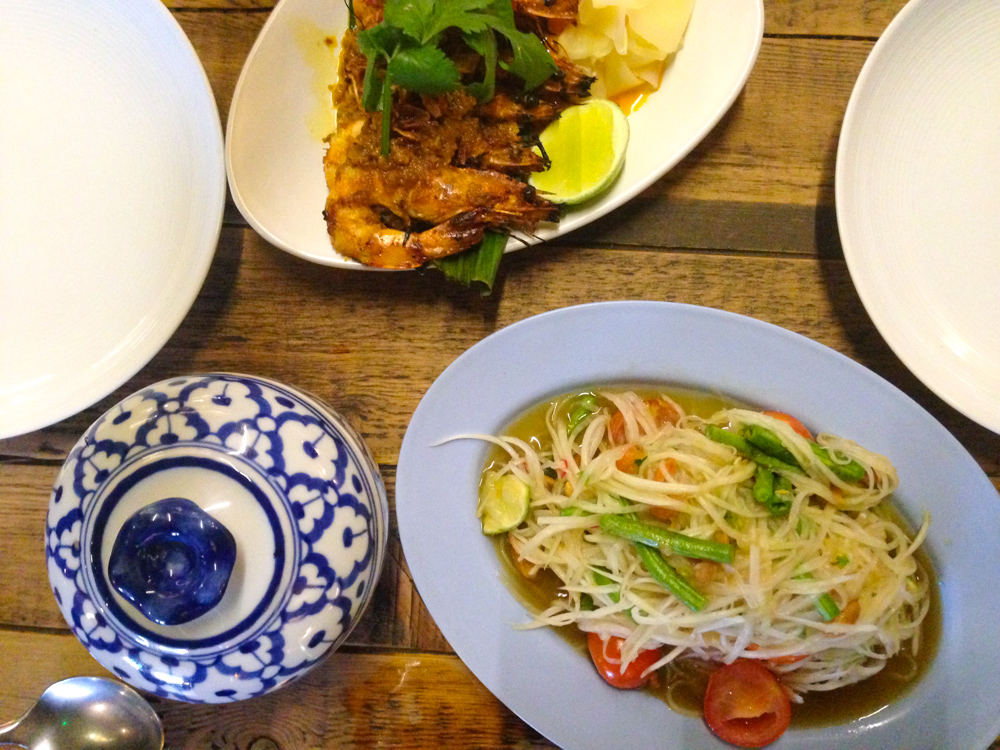
gung golae – grilled prawns in a southern style coconut marinade

som tam thai – Bangkok style green papaya salad with snake beans, dried shrimp, peanuts and cherry tomatoes (they can make this vegetarian if you wish)

gaeng hung lay – Burmese style curry of pork belly and shoulder with pickled garlic and fresh ginger

gaeng baa pla – jungle curry with family fish, thai aubergines, holy basil and wild ginger

khao hom mali – jasmine rice

It’s no exaggeration that every dish was punch-the-air fabulous. Seriously they did not even slip up on one dish. Papaya salad is always a good indicator of whether the restaurant will be any good and even that was delicately balanced with the necessary zing and heat.

I loved the look of all the menu, but felt that this was more than enough for a midweek lunch. Apparently the evening offering offers a few extra dishes, but I would go back in a heart beat and eat the same again and perhaps alternate with a new dish on every visit. I skipped dessert, as I invariably do, but I have been reprimanded by one of my instagram followers who insist I am missing out and that I must ‘give them a try’. I also didn’t take advantage of the interesting cocktails – ‘day by the pool (yes please ;o) – prosecco, jasmine tea, gin, creme de violate, lemongrass cordial, but with school runs to rush too I really couldn’t.

Som Saa is a rare Thai citrus fruit that has, apparently, an incredible flavour and can be found in old Thai recipes. Thompson describes it as a “metaphor for the restaurant” in that he wants to “introduce diners to new tastes”. It is time to move on from the dumb down version of Thai food that we have all grown up with and to experience a more authentic Thai experience.

Som Saa

43A Commercial Street

Spitalfields

London

E1 6BD

lunch: tue-fri: 12-2.30pm

dinner: mon-sun: 5-late (last orders 10.30pm and 10pm on Sunday)


Methi (Fenugreek) Paratha for Durga Puja

img_3013

This coming weekend is the beginning of the Bengali Hindu festival of Durga Puja, which lasts for five days. I have written a few posts on the celebration here and here over the last couple of years. In short, the weekend is spent visiting temples in all corners of London, catching up with family and friends and eating vegetarian feasts at the temples. I am not Hindu but I enjoy being part of the occasion, which is always very lively and colourful, and of course the food is always so good.

img_3005

I was pottering around in my local Asian supermarkets this morning when I came across some methi – fresh fenugreek. Fenugreek is jam packed with health benefits. We all need it in our diet – either the seeds or fresh leaves or both. It lowers blood cholesterol, reduces the risk of heart disease, controls blood sugar levels – therefore diabetics are advised to eat it daily. It aids digestion, weight loss, prevents colon cancer – the list goes on. Seriously if you have not had it before please try it and then try and incorporate it into your diet. One way you can do this is by making fenugreek/methi paratha. The hard part will be locating the fresh methi.

img_3006

If you live in London then you will have no problem as you will find it at any Indian/Asian supermarket. Apparently it is really easy to grow so maybe it is something to look into growing if you are living outside a major city. I would love to hear how you get on if you go down this path.

img_3007

Anyway back to the making of the paratha. It is important to carefully take the leaves of the fenugreek plant away from the stem, as the stem is very bitter and you don’t want to be eating that. I leave the leaves to soak in a bowl for 15 minutes so that the grit and dirt sinks to the bottom. Then you can easily remove the leaves and place them in a new dry bowl along with the spices and flour.

img_3008

If you don’t have a tawa then simply use a frying pan. Once the leaves have soaked and you have made the dough it takes very little time to make the paratha.

img_3009

They are great eaten with dal such as this one or this one or simply with chutney and perhaps a little yoghurt and lemon. In India they are sometimes eaten at breakfast, but I tend to eat them for lunch or dinner.

img_3010

img_3011

Methi Paratha

Makes round 5

150g wholemeal chapati flour/atta 

50g gram/chickpea flour

50g fresh methi/fenugreek (leaves only), washed and finely chopped

1 small fresh green chilli, finely chopped (optional)

1/4 tsp Kashmiri chilli powder

1/4 tsp turmeric powder

1/2 tsp salt, optional

2 tbsp melted ghee/butter/oil

  1. First remove the methi leaves and discard the rest of the methi stem. Place in a bowl of fresh cold water and leave to soak for 15 minutes.
  2. Gently remove the methi leaves so that the grit and dirt is at the bottom of the water bowl. Discard this water. Place in a clean dry bowl.
  3. Measure out the flours, chilli powder, turmeric powder, salt and fresh chilli (if using).
  4. Use your hand to begin to bind the ingredients together. Gradually add a little warm water so that a dough forms.  Be careful not to make it too wet.
  5. Place a drop of oil in the bottom of the bowl and cover the dough, which you have now made into a ball shape. Cover the bowl and leave for 10 minutes.
  6. Knead the dough for a minute further and then break off a small part – about the size of a lime.
  7. Place the dough in some fresh flour and then roll it out on a dry, clean surface. If you want to make triangular paratha roll the dough into a circle and then fold it in half and then half again. I kept mine round today.
  8. Heat a tawa/frying pan and place a drop of ghee onto the pan. Then place the paratha on the pan and leave for a couple of minutes.
  9. Whilst it is cooking begin making your next paratha.
  10. Before turning over the paratha on the pan, brush a little ghee on the top and then turn over. You want the paratha to begin to have little bubbles that begin to bronze. Leave to cook on this side for a further couple of minutes. If need be turn over again and then place to one side.
  11. Repeat until all the dough has been used up.

Eat warm with dal, chutney or yogurt with a splash of fresh lemon.

Notes: You can also add finely chopped onion, 1 tsp garlic paste and/or ginger paste, 1 tsp cumin seeds, 1 tsp ajwain/carom seeds, 1/2 tsp coriander powder. There are so many options so try a variation and see what works for you.img_3015


Gunpowder – a new exciting Indian restaurant worth seeking out

img_2882

I rarely eat out at Indian restaurants these days – other than my old favs down in Tooting. My other half is Indian, so as you can imagine by default I cook and eat a fair amount of Indian food. When my mother-in-law comes to visit or we go and stay with her, she spoils us with her traditional Bengali fare, so in many respects I’m pretty spoilt when it comes to tasty, home cooked Indian food.

My other half had recently eaten at this new Indian restaurant, close to Spitalfields market and the Bangladeshi enclave of Brick Lane, named ‘Gunpowder’ and had waxed lyrical about how much I would love it.

img_2883

I did not need to be asked twice. It was relatively easy to find – literally 5 minutes walk from Liverpool Street station. The exterior, although small and low key, appealed; the font and paint work had been chosen with care. As there is a no reservations policy I arrived just past noon to find only one other table already seated. It was not long however, before the place filled up with hungry diners. Whilst I waited for my fellow guests the waiting staff were attentive and friendly, guiding me around the menu and the days special – partridge cooked in Indian spices, if I recall.

img_2874

Much like the restaurant itself, the menu was small and yet perfectly formed – it seats only 28. Although Gunpowder – named after a spice mix and a nod to the old artillery ground nearby – is on the premises of an old curry house, it is far removed from your typical cuzza. The restaurant is the brainchild of Kolkatan Harneet Baweja and his wife, who brought on board Mumbai-born head chef Nirmal Save, ex Tamarind and Zaika.

The menu choice is refreshingly original with dishes such as: chettinad pulled duck served with homemade oothappam, sigree grilled mustard broccoli, karwari soft shell crab and wild rabbit pulao, to tempt diners. The cuisine is not specific to an area, instead encapsulating elements across many regions.

img_2875

We started with ‘rasam ke bomb’ – which were the perfect spice explosions to kick off the proceedings. The ‘rasam’ – a spiced Indian thin soup, was presented in shot glasses. On top sat round crispy shelled pani puri. Within these little beauties was a lighted spiced potato mash. We were encouraged to bite, sip and bite again until we had finished both the ‘bomb’ and the shot. It was the most magnificent way to start the proceedings adding a theatrical allure to the whole occasion.

Whilst we waited for our other dishes to arrive we munched on tasty porzhi okra fries. Even if you’ve been put off okra in the past seriously try these, you will not be disappointed. Following the fries we feasted on spicy venison and vermicelli doughnuts, which looked similar to scotch eggs but instead had soft spiced venison incased within a crispy shell. The hot dipping sauce to accompany the doughnut added further zing and spiciness to the dish. We followed these with maa’s Kashmiri lamb chops, saag with tandoori paneer and a rather delicious spiced kale with a yogurt dressing. I loved the attention to detail and the genuine passion that had gone into making each dish.

The restaurant is onto a winning formula in that the menu is original and yet follows through spectacularly with flavour and heat. Those who love their spices will feel right at home at Gunpowder. This is not the place to come if you are looking for your chicken korma and other typical curry house dishes. I am already looking forward to my next visit.

Opening hours

Monday to Saturday

Lunch 12 noon – 3pm

Dinner 5.30pm – 10.30pm

Sunday closed


Address

11 White’s Row

Spitalfields

London, E1 7NF


Vietnamese Tofu Banh Mi Sandwich

img_2823

I have a love affair going on when it comes to the ubiquitous Vietnamese sandwich known as banh mi. If the truth be told I love them in every form: pork, chicken, fish, beef, tofu – you name it and I pretty much love all the varieties that you can have. I love the cruchiness and sweet and sour piquant from the pickle, combined with the freshness of the coriander, the spices from the marinaded tofu/meat/fish, the chilli and the freshness from the baguette. Every bite has so much action going on for the palate – sweet, sour, umami chilli notes.

img_2848

They are not as much of a chore as you’d expect if you make them at home. I tend to buy the baguette, but if you have time on your hands, then I can totally recommend The Banh Mi Handbook by Andrea Nguyen to show you how to make the traditional baguette as well. Father Christmas kindly popped it in my stocking a few years back – such a thoughtful fella!

img_2853

I’ll talk your through it step by step, but once you’ve made the pickle – this takes no time at all – you’re pretty much all set. The pickle also lasts up to a month in the fridge so there is no need to use it all in a couple of days.  I am going to show you how to do the tofu version, but if you prefer to make it with chicken or pork then the same marinade can apply.

img_2852

I used the silken firm tofu, which you need to handle with care. Some brands are firmer than others, but ultimately if it falls apart a little it doesn’t really matter once it is in the baguette.

There are a few ingredients that you really need to get hold of before making a banh mi:

  • daikon (also known as mooli or white radish) – it looks similar to horseradish but has a lot milder flavour. I pick mine up from my local Indian grocer.
  • carrots
  • rice wine vinegar
  • a crunchy baguette
  • maggi seasoning sauce – according to Andrea Nguyen for a ‘first class banh mi, drizzle on some maggi sauce; it will boost each bite with an umami hit’ – she goes on to explain that ‘it is practically synonymous with banh mi’. I picked mine up from my local Asian supermarket but you can also order it from Ocado here
  • chillies to give the heat injection
  • fresh coriander
  • cucumber to add texture and crunch
  • mayonnaise (vegan if you want to keep the whole meal vegan)
  • sriracha sauce
  • 1 litre jar for the pickle


So to begin with you need to prepare the pickle. Trust me it is quick and easy to make.


Carrot and Daikon Pickle

500g daikon, peeled and cut into matchsticks *

2 large carrots, peeled and cut into matchsticks (as above)

1 tsp salt

2 tsp caster sugar

100g caster sugar

300ml rice wine vinegar

250ml warm water

1 litre storage jar (can be slightly bigger but no smaller)

  1. After peeling, cut the carrot and daikon up into equal size matches and place them in a bowl.
  2. Sprinkle the salt and the teaspoons of sugar over the carrots and daikon and gently massage them gently for a few minutes using your hands. This will make them become softer and more bendy.
  3. Wash and drain them thoroughly under some cold water before placing them into your jar.
  4. In a separate jug mix the rice wine vinegar, caster sugar and warm water so that the sugar dissolves and then pour into the jar with the carrots and daikon. Discard any left over brine. If you need a little extra brine to cover the carrots and daikon simply add a little more warm water.
  5. Refrigerate for up to a month.

*the exact size of the matchsticks is irrelevant, obviously not too big, but do make sure that the carrot and daikon matchsticks are of similar size if possible.  I have seen them super skinny and slightly wider like mine below. Both ways taste delicious. 

img_2855


Matchstick daikon and carrots above and with salt and sugar ready to be massaged below.

img_2854

Once your carrot and daikon pickle is resting it’s now time to make the marinade for your tofu. I slice my block of tofu gently into about about 9slices. You don’t want to cut them too thin or they will easily break.

Place them gently in a bowl and add the marinade, which consists of: tamari (or soy sauce), 1/2 lime and zest, 1 tsp of minced garlic, 1 tsp minced ginger and cracked pepper. Coat evenly and then leave to marinade for around 20 minutes. Heat some groundnut (or sunflower) oil in a pan and then let the tofu  cook gently on each side for around 3-5 minutes before turning over. It wants to be nicely bronzed.

Tofu Marinade

349g firm tofu (or similar size pack), sliced

2 tbsp tamari (or soy sauce)

1/2 lime, juice and zest

1 tsp minced garlic

1 tsp minced ginger

liberal amount of cracked pepper

1 tsp groundnut/sunflower oil

  1. Slice the tofu gently into approximately 9 pieces and then place in a bowl and cover with the marinade ingredients.
  2. Leave to marinade for 20 minutes.
  3. Heat  the pan with oil and gently space out the marinated sliced tofu. On a medium low heat, leave the tofu for around 3 minutes to see if it is nicely bronzing. If it is then carefully turn it over for a further 3 minutes. Leave a little longer if it requires more time to bronze.
  4. Remove from pan and leave to cool whilst you prepare the rest of the sandwich.

If you are using pork or chicken make sure to slice the the meat thinly and leave to cook for longer on both sides. 

img_2851

The next part is easy. You simply mix a couple of tablespoons of mayonnaise (homemade, vegan or shop bought) and add sriracha to taste. I usually find that around 1/2 tbsp works really well.


Sriracha Mayo

2 tbsp mayonnaise (homemade, vegan or regular shop bought)

1/2 tbsp sriracha, or to taste

  1. Mix the two ingredients together to form a salmon pink sauce. Taste and add more sriracha if necessary.

The next part is the assembling. First you need to slice the baguette, but not all the way through.  Take out some of the white bread part within – this allows more space for the fillings. Now follow the instructions below.

Assembling the Bahn Mi

few drops of maggi seasoning sauce

1/4 cucumber, thinly sliced

handful of fresh coriander

2 red chillies, chopped – optional

  1. Spread out the sriracha mayo evenly along the baguette followed by a few drops of maggi seasoning sauce.
  2. Next add the cucumber, tofu followed by some of the pickled carrot and daikon. You can also add some thinly spiced fresh red chillies for extra heat if necessary or omit this part and just add the fresh coriander.

It sounds terribly long winded but I assure you that it really doesn’t take that long at all. The pickle will last for ages and is pretty quick to make in the first place. The marinading is straightforward and the sriracha mayo takes seconds. So give it a whirl. Trust me you’ll become as addicted as me about banh mi.


Ferment Pickle Dry – Cookbook Review and Preserved Lemons

img_2755

Over the last few years I have seen a revival of ancient cooking techniques, such as pickling, fermenting and drying, and along with this new found enthusiasm has sprung some exciting and informative books to help teach and guide us on our new culinary journey. I was recently sent a copy of a beautiful new cookbook that has recently been published.fermented-apples-p-98

Photo credit: Kim Lightbody

Aptly named ‘Ancient methods, modern meals: Ferment, Pickle, Dry’ by Simon Poffley and Gaba Smolinska-Poffley, published by Frances Lincoln, it’s beautiful matt photographs, by Kim Lightbody (see above and below re photo credit) really draw the reader in to showcase the limitless range of possibilities that are on offer within the book.

The book acts as a gentle guide through the different processes, providing both simple, and some adventurous, preserving recipes to try at home. In addition it also shows you how to transform your newly preserved ingredients into fabulous dishes – for example alone side ‘pickled French beans’ is the recipe for ‘pickled bean falafel’.

At the start of the book it gives an overview of what you actually need to get going, sterilising tips, as well as key ingredients that you need. The book is then naturally split into three under the techniques outlined on the front cover.kimchi-images

 Photo credit: Kim Lightbody

Photographs accompany some, but not all the recipes, as is pretty standard in cookbooks and both sweet and savoury options are given in each chapter.

napa-kimchi-solyanka

 Photo credit: Kim Lightbody

In the ‘Ferment’ section standout sounding recipes for me were:

-labneh (a thick Middle Eastern yoghurt)  and whey

-pumpkin kimchi – because you can never have enough pumpkin recipes

-nukadoko with udon noodles – my daughters are obsessed with udon noodles so any new flavour to accompany them works for me. Nukadoko I learn is a Japanese rice-bran fermenting bed and is one of the more labour-intense procedures

-Kombucha – the fermenting drink made from tea and is hugely popular in Japan.

In the ‘Pickle’ section the following sounded appealing:

-Green chilli and red onion pickle

-spicy pineapple and mango pickle

-pickled oranges

-pickled watermelon rind and easy pickled nuts

kimchi-biscuits-credit-kim-lightbody

 Photo credit: Kim Lightbody

In all honest ‘drying’ as a technique probably appeals to me less than pickling and fermenting. That said  I regularly make crispy kale crisps and dry roasted pumpkin seeds, but other than that I don’t massively dry foods.  As such I should probably give it more of a go. I love the sound of ‘kimchi or sauerkraut crackers’ and the ‘mango and chilli leather’ or ‘spiced apple and banana leather’, so you never know I may be persuaded to be more exploratory on the drying front.

img_2831

My sense is this cook book will appeal to those who get excited to learn new culinary techniques and who are already fairly comfortable in the kitchen. It will also probably appeal to those who like, or who are interested in, foraging. As the authors so aptly put it ‘preserving is more than just a solution to seasonal surplus going to waste. It actually positively transforms fruit and vegetables, bringing out new flavours and textures’.

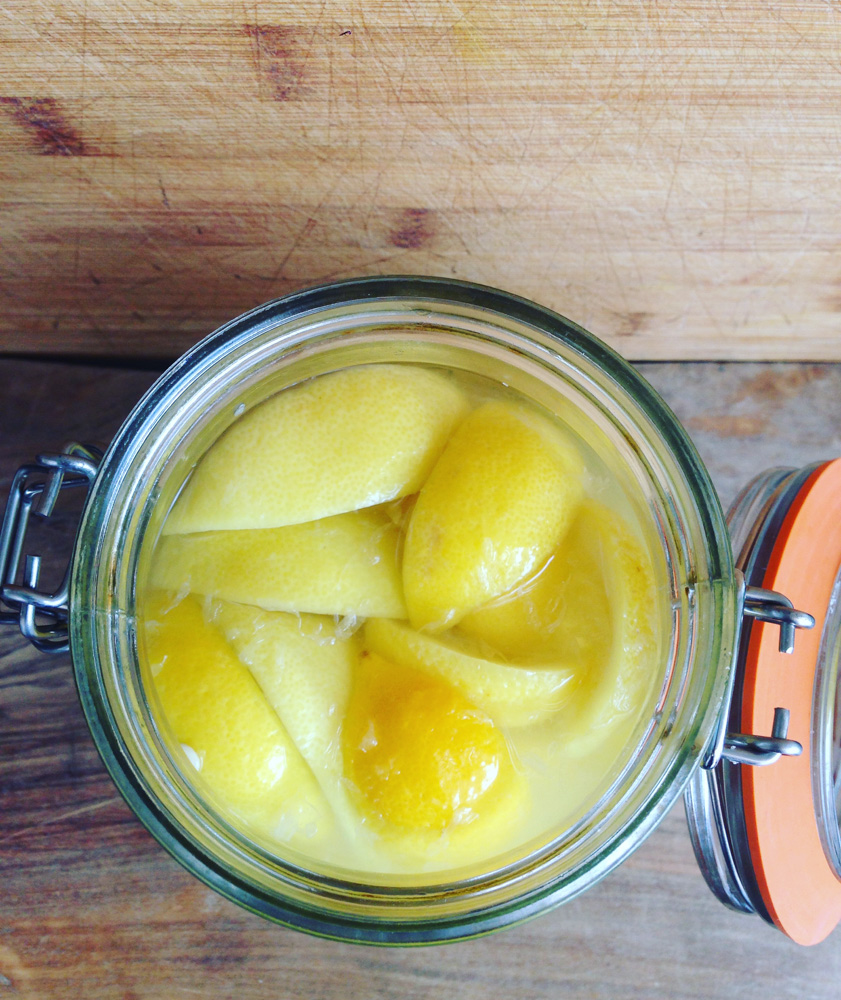
The preserved lemons recipe caught my eye. I often use them in my cooking  – check out one of my favourite recipes that includes them, so it made sense for me to make a batch.

img_2829

It was very straightforward and took minutes to prepare, after I had properly sterilised my jar – 30 mins in an 120 degrees oven (rubber seal removed and boiled in water). Here is what you need to do.

Preserved Lemons

taken from ‘Ferment, Pickle, Dry’ by Simon Poffley and Gaba Smolinska-Poffley

600g (approx 5 lemons) unwaxed lemons

40g sea or rock salt (pure, without iodine or anti-caking agent)

approx 1 litre/34fl oz jar

  1. Simply wash and cut all the lemons into at least 6 slices lengthways.
  2. Place into the sterilised jar (see note above on how to sterilise) along with a layer of salt before adding the next layer of lemons. Use the end of a rolling pin to gently mash each layer to release the juices. As the juice is released it forms the ‘brine’ in which the lemons are preserved.
  3. Once all the lemons slices are packed in they should sit just below the surface of the brine. If there is not enough brine mix a little boiling water with a pinch of salt, let it cool then add to the lemons.
  4. Leave to ferment in a warm place for at least 3-4 weeks.

Once fermented, keep in the fridge for up to 3 months.

In a month’s time I hope to have delicious tasting preserved lemons.


Toasted Cauliflower with Freshly Ground Cumin, Lemony Tomato and Fresh Coriander

img_2785

Cauliflower has gained a bit of a renaissance in the last few years. Personally I love it and feel that it is a hugely versatile, tasty and nutritious vegetable to include in your diet. A few years ago I posted recipes for sweet piccalilli and cauliflower curry which are both delicious and straightforward to prepare.

Recently when I was in LA I was admiring a ‘salad’ and got chatting to the chef on how he prepared it. I noted it down in my head and have since prepared back to the UK.  It’s a hit folks, seriously it tastes SO good and takes no time to whip together.

img_2780

It is perfect eaten on it’s own or with another salad or perhaps with lamb, chicken or even fish. It’s a great little recipe to have in your arsenal. Give it a go and let me know what you think. I think you’ll find it will be a keeper.

img_2781

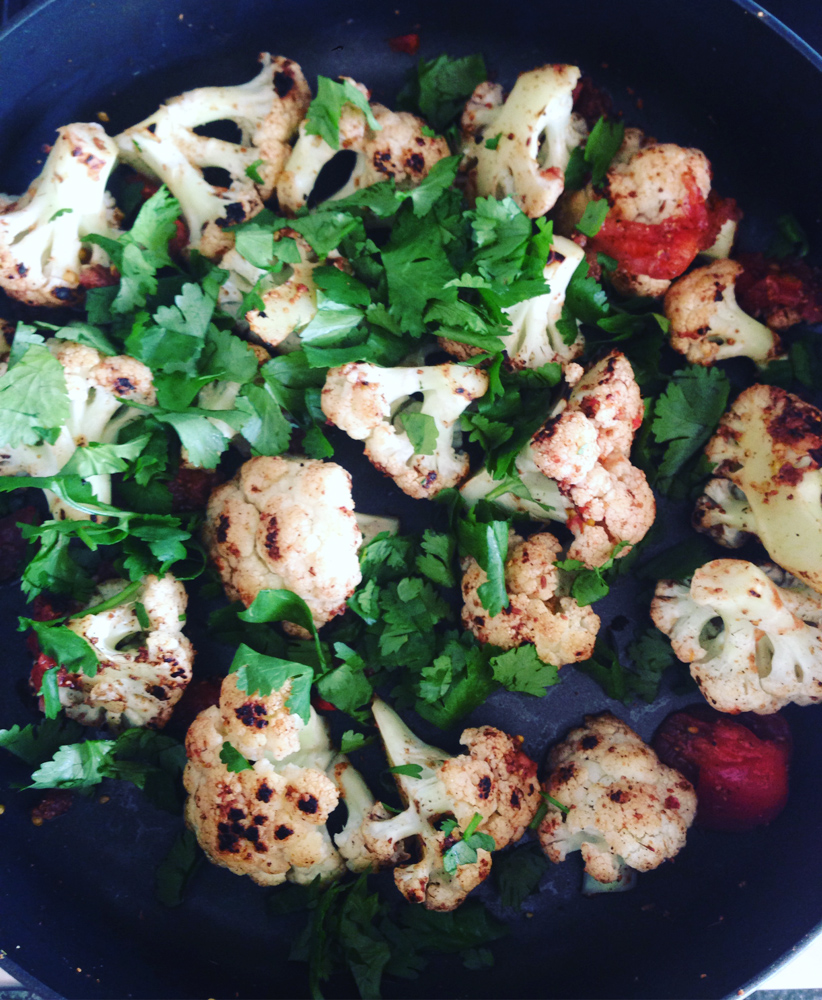
 Toasted Cauliflower with Freshly Ground Cumin, Lemony Tomato and Fresh Coriander

Serve 2-4 (depending on the size of your cauliflower)

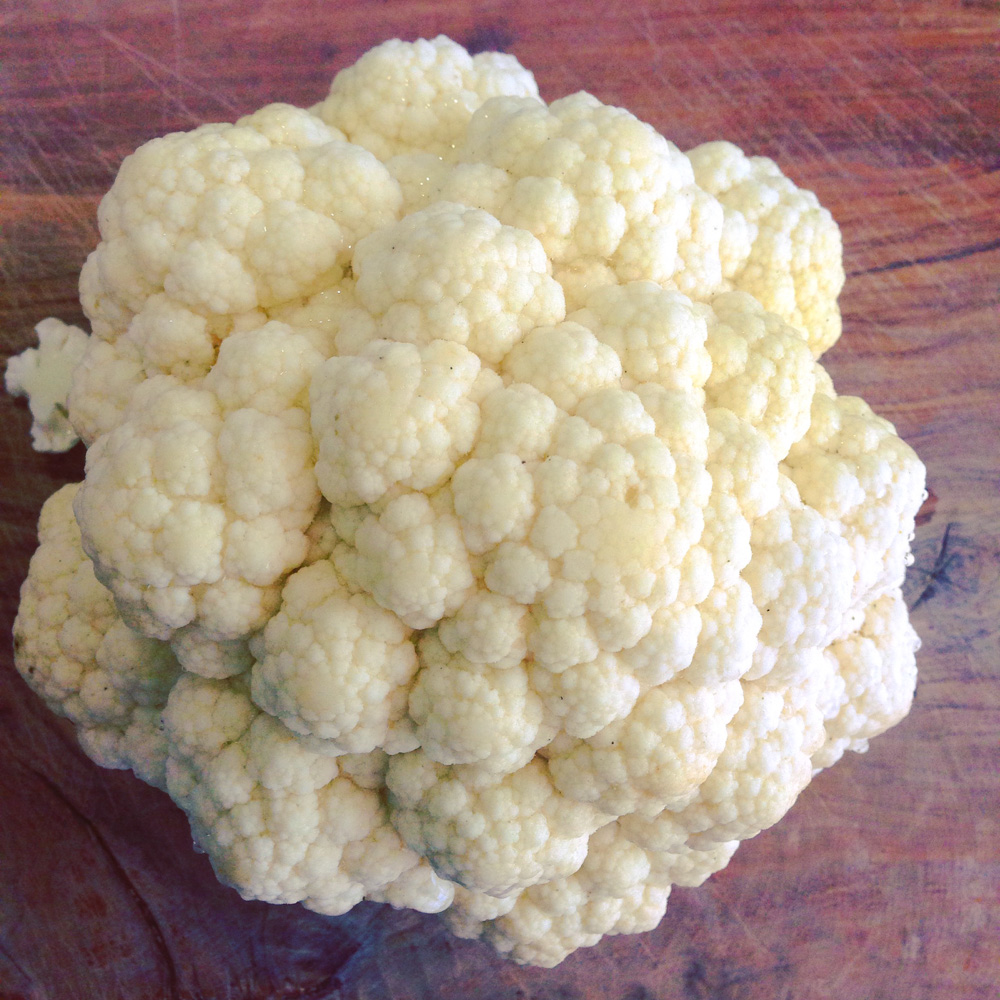
1 cauliflower, greens removed and cut into florets

1 tsp of cumin seeds, toasted and then ground

10 baby plum tomatoes

1/4 lemon, juice only

1/2 tsp salt

handful of roughly chopped fresh coriander

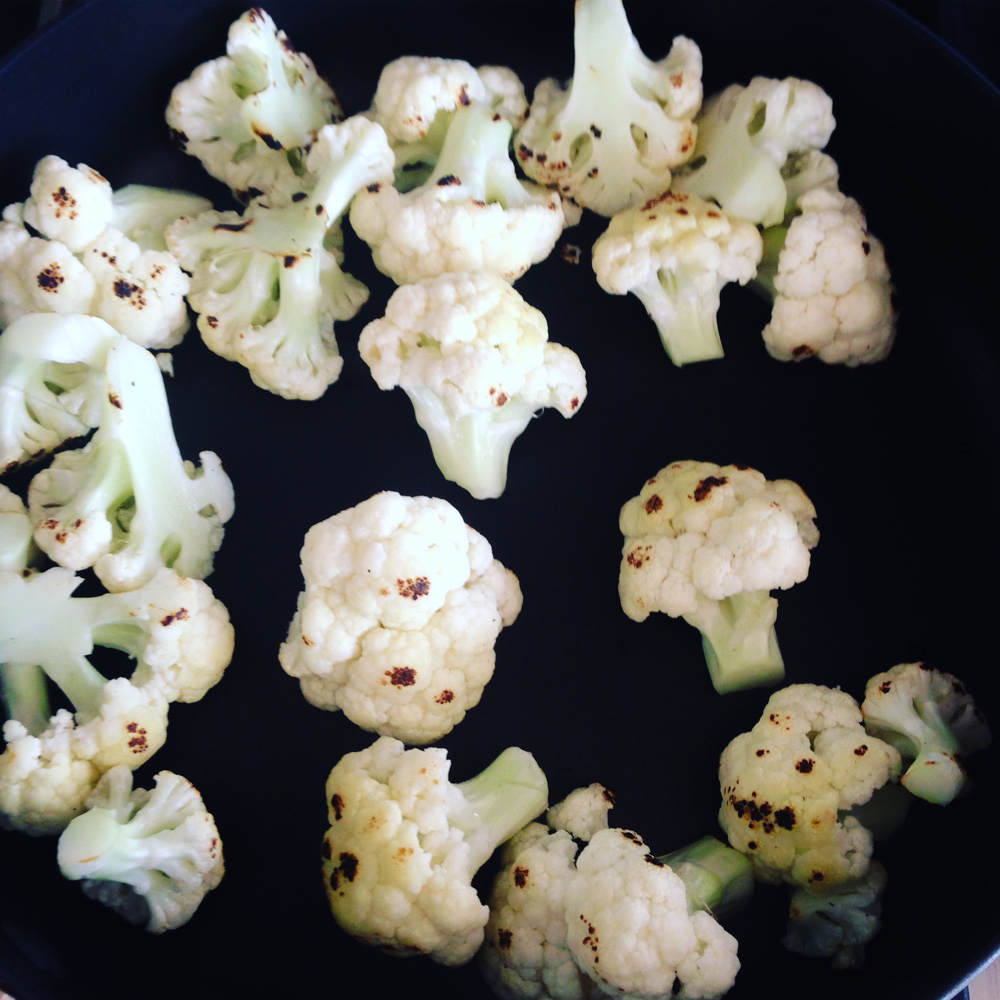
  1. Heat a pan and when it is hot add the cauliflower florets and move them around the pan at intervals  for five minutes so that the cauliflower begins to char. Turn off the heat but leave in the pan.
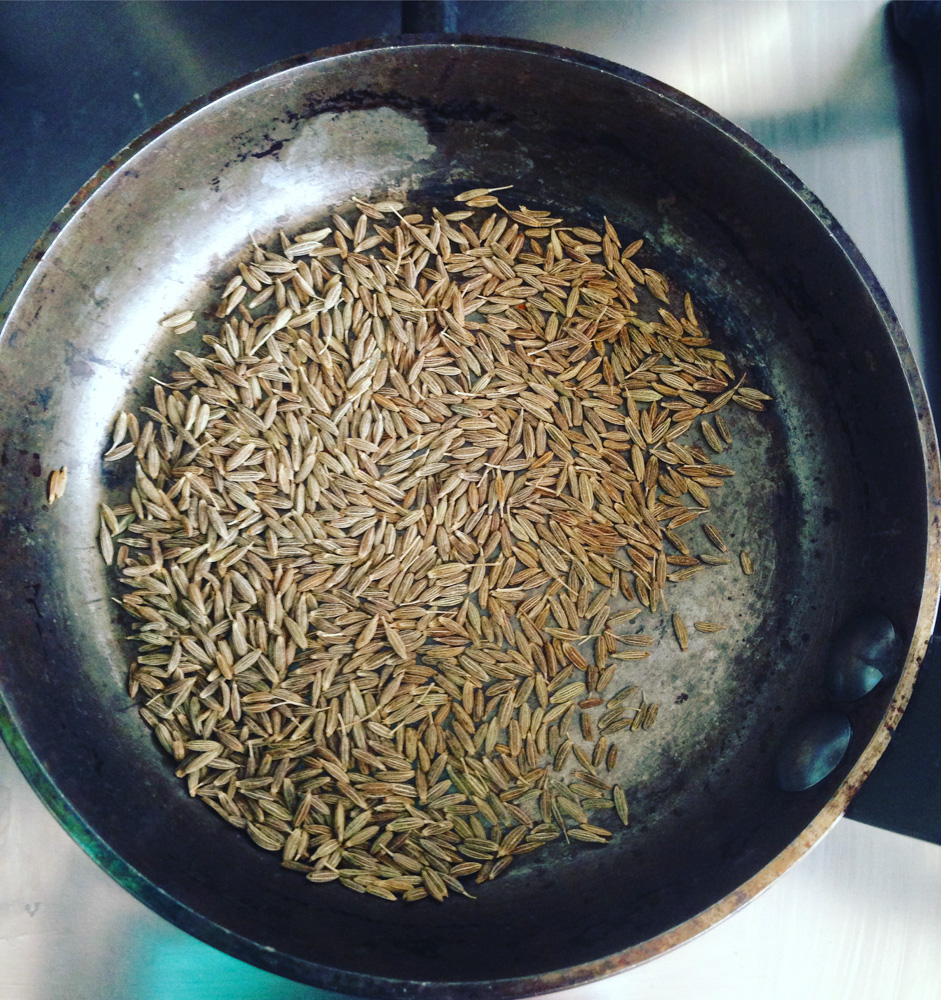
  2. In a separate pan dry roast the cumin seeds for around 30 seconds so that the aroma of the cumin is released.
  3. Place them into a spice grinder to create cumin powder. Pour the cumin powder over the cauliflower and move around the pan so that the powder coats the cauliflower.
  4. In the pan you used to dry roast the cumin seeds, add the tomatoes and keep on a medium heat so that the tomatoes heat up and begin to char. Then remove from the heat and allow to cool enough so that you can hold them and peel off the skin. Place them in a bowl with the lemon juice and crush them slightly.
  5. Add the lemony tomatoes to the cauliflower and move gently move around the pan so that they are evenly distributed.
  6. Add the salt and the fresh coriander and serve either immediately or at room temperature, both work equally well.

img_2783


Chermoula – North African Marinade

IMG_1855

Stuck for marinade or rub ideas? Or perhaps you simply want a tasty relish to go with some grilled or BBQ meat or fish. Chermoula is the answer, seriously it is sooooooo good you are going to be doing a happy dance once you’ve prepared and tasted it. Trust me.

IMG_1854

This tasty Moroccan herb spiced marinade can be prepared within minutes and adds so much flavour and exotic notes to a dish that I can guarantee you’ll be wanting to prepare it time and time again.

IMG_1856

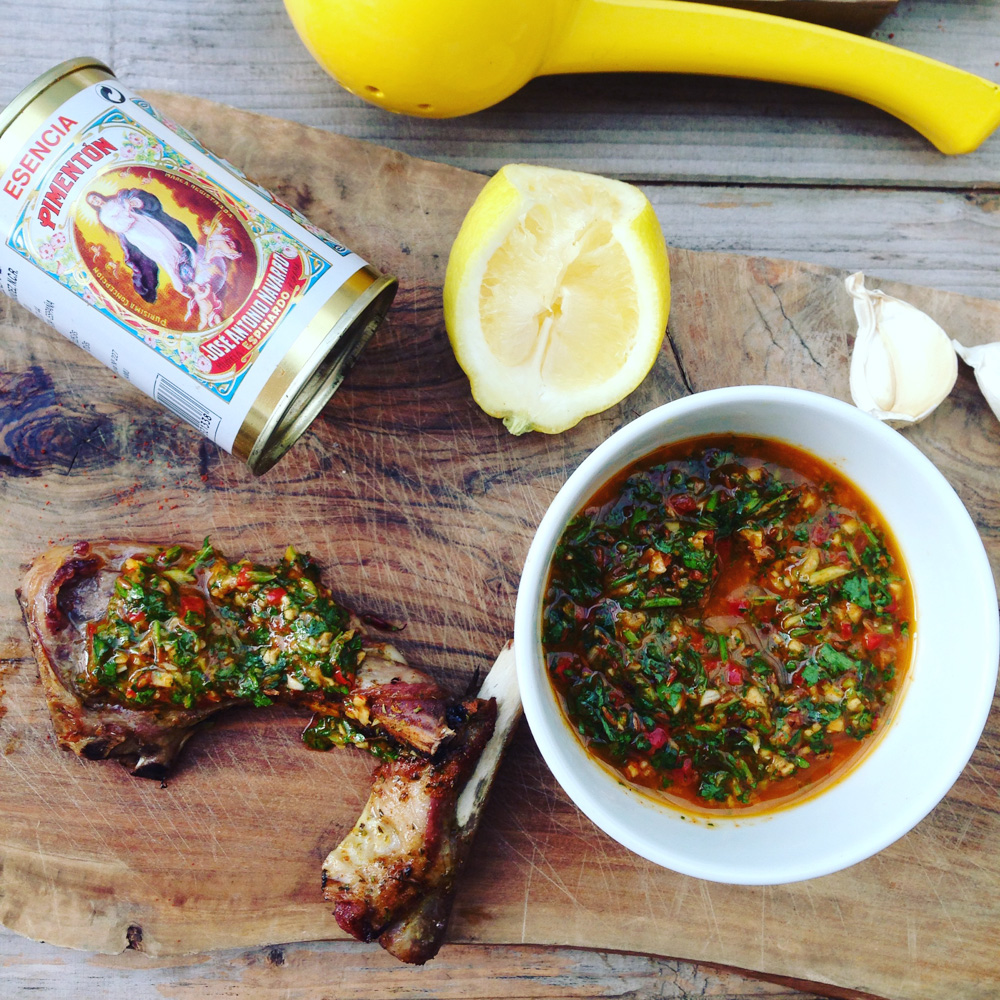
Chermoula is used in cooking throughout North Africa, particularly in Morocco, Tunisia, Libya and Algeria. It includes fresh parsley and coriander alongside spices such as cumin seeds, sweet paprika, cayenne pepper, black pepper, salt, saffron. These are then mixed with garlic, lemon juice, fresh red chilli and extra virgin olive oil. It really is that simple. It’s also one of those marinades that you can marinade meat or fish an hour before you cook, or serve it in a bowl for people to serve themselves. Versatile and flexible, what’s not to love?

IMG_1857

You can make it super smooth, but personally I like to have it so that you can still see bits of garlic, parsley, coriander and chilli.

IMG_1858

North African Chermoula

Serves 4-6 (double up if you are catering for larger numbers)

1 tsp cumin seeds

3 garlic gloves, roughly chopped

1 tsp sweet paprika

1/4 tsp cayenne pepper

pinch of saffron (optional)

12g fresh coriander, finely chopped

12g fresh flat leaf parsley, finely chopped

1 red chilli, seeds removed and finely chopped

1/2 tsp freshly ground black pepper

salt to taste

juice from 1/2  lemon

5 tbsp extra virgin olive oil

  1. Dry roast the cumin seeds for around 20-30 seconds to release their smell and then place them in a hand blender *.
  2. To the same hand blender add the rest of the ingredients and 2 tbsp of extra virgin olive oil. Blitz briefly with the hand blender then add the rest of the olive oil. Blitz again briefly, unless you want it super smooth.
  3. Check the balance of salt and sour and add more salt or lemon if needed.
  4. Either place in a serving bowl, cover and leave in the fridge until ready to eat or add to your meat or fish for up to an hour before cooking.

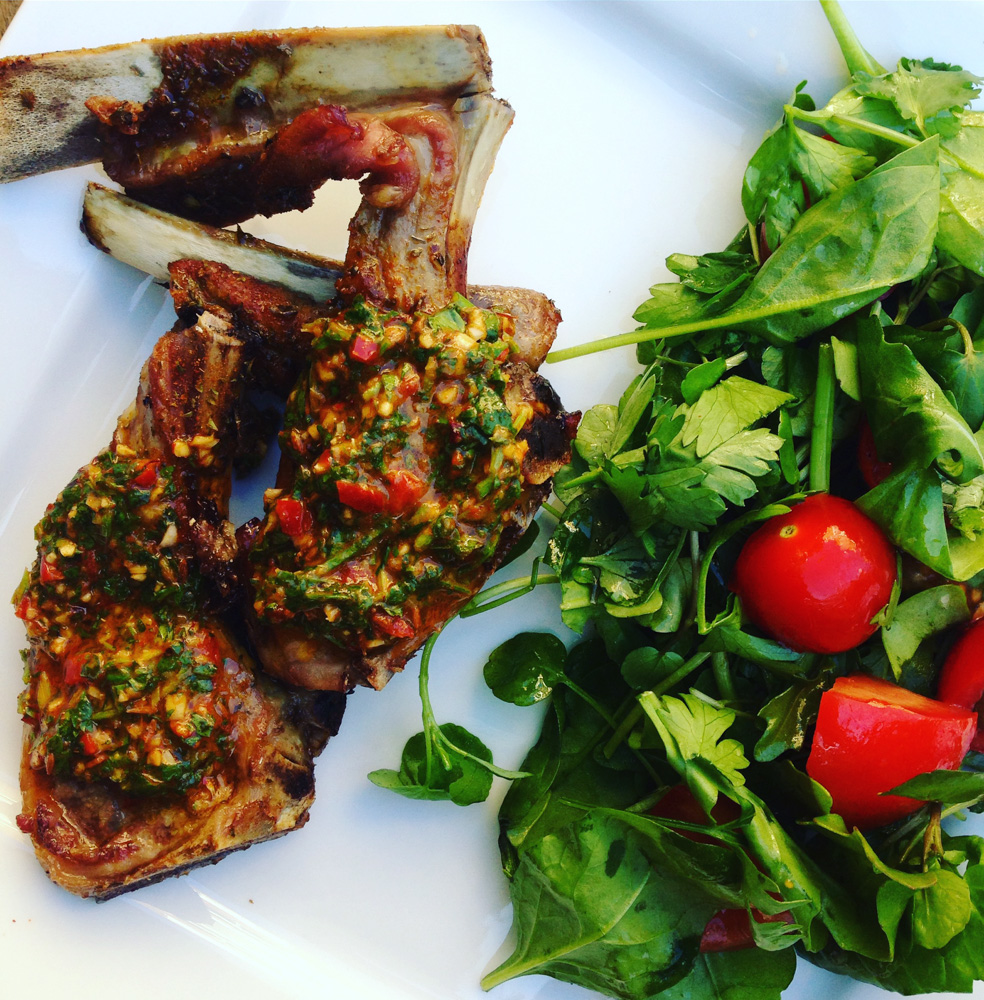
I ate my chermoula with lamb chops and a salad on the side. Perfect summer out door dining.

*or mortar and pestle

IMG_1859


Broccoli, Mushroom and Sesame Salad from Korean Food Made Simple by Judy Joo

IMG_1799

Korean food has come a long way – from a mainstream perspective –  in the UK over the last couple of years. I wrote an article for Country & Town House Magazine about it being the ‘next big thing’ a couple of years ago – you can read the article here. Whilst a number of exciting Korean restaurants have sprung up in the centre of London giving us the chance to sample a wide range of mouth watering dishes, I sense we are still a little reluctant to cook it in the home. This reluctance mainly comes from not being familiar with the ingredients and knowing what to cook exactly. Recently however there have been a couple of Korean recipe books published that will no doubt give many the confidence to give Korean cooking a try in the home.

Korean Food Made Simple

Korean Food Made Simple by Judy Joo, photography by Jean Cazals. Published by Jacqui Small (£22). More information on the book can be found here.

Judy Joo’s ‘Korean Food Made Simple’ is what we’ve all being waiting for. In many respects we want our hands held whilst we get familiar with Korean cooking and once we build in confidence we want to attempt dishes that challenge our new skills. Joo’s book gives a wonderful taster of Korean food and guides us on what we need to buy before we embark on this new culinary venture. Her store cupboard chapter is very useful as she spells out all the ingredients that are used in the recipes within the book. If I had to narrow ingredients down for first time Korean cooking I would suggest you buy: Doenjang (Korean soya bean paste), Gochujang (Korean chilli paste) and Gochugaru (Korean chilli flakes). With these few ingredients you can begin to make some of the dishes.

Late Night Naughty Noodles

Korean Food Made Simple by Judy Joo, photography by Jean Cazals. Published by Jacqui Small (£22). More information on the book can be found here.

Joo’s chapters go through the usual chicken, beef & lamb, seafood etc but also have a section on salads and veggies, pancakes, dumplings and other small bites, kimchi and pickles, sauces and breads. There is a lot to read and digest and the beautiful photographs both of the recipes and of Joo and Korea itself really engage the reader and encourage you to try making some of the recipes.

Joo’s rise in the culinary world has been impressive. After a successful stint on Wall Street in New York as a fixed income derivatives sales, Joo felt something was missing in her life. Whilst she liked her job she knew that she had to go down a different path to feel completely fulfilled. Hence she quit and enrolled in cooking school at the French Culinary Institute in New York, which gave her a culinary foundation that she could then build upon. Fast forward to today and she hosts her own cooking show – Korean Food Made Simple – and is regularly on TV. In addition she has opened her own restaurant in London and Hong Kong – Jinjuu –  where she is Chef Patron.

KMFS Ultimate KFC p167

Korean Food Made Simple by Judy Joo, photography by Jean Cazals. Published by Jacqui Small (£22). More information on the book can be found here.

‘Korean Food Made Simple’ is Joo’s first cookbook. The book itself is immediately striking because of it’s lustrous copper, yellow and lilac cover and the glossy photographs within, by Jean Cazals, capture the essence of Korea and Joo’s recipes exceedingly well. It’s the type of book that you want take time to pour over, with stunning photographs of Korean street life and food, architecture and it’s people. The narrative  also sets the scene and gives the reader the encouragement to start cooking Korean food themselves. I think Joo has managed to balance many easy and delicious Korean recipes to prepare at home along with more ‘cheffy’ recipes for those who want their skills to be pushed. The recipes themselves range between classics, classics with a twist and fusion largely owing to Joo’s Korean upbringing in America. She describes herself as a ‘French-trained Korean American Londoner; and the different influences in my life show up in my cooking’.

Many of her recipes appeal – mixed rice bowl with beef, known as bibimbap, is a great one to start with if you want to dive straight into a Korean main course, making your own kimchi is a must – it really is not as hard as you think. Once you have mastered that you can then make all many of delicious treats – kimchi fried rice or pork belly and kimchi stir-fry with tofu as examples.  I adore seabass and Joo has an enticing ‘steamed ginger sea bass’ that I will be trying in the months ahead. On the fusion front I particularly love the sound of the pork tacos and krazy Korean burgers (shown below).

KMFS-Krazy-Korean-Burgers-p185

Korean Food Made Simple by Judy Joo, photography by Jean Cazals. Published by Jacqui Small (£22). More information on the book can be found here.

I made her ‘Broccoli, Mushroom and Sesame Salad’ (see the 1st photo on this blog post), which is light, fresh and super quick to rustle up. The Korean ingredients transform the broccoli and mushrooms giving the dish a real Korean taste. Broccoli is so good for you – check out this interesting article on its health benefits. I did not have Korean apple vinegar, but instead opted for the rice vinegar, which Joo says is a good alternative. Korean ingredients are beginning to be sold more mainstream, although I tend to make the trip to Korean Foods in New Malden. For those living out of London you can easily purchase the Korean staples from a number of online supermarkets who’ll send them to you – Oriental Mart – for example. I would love to hear how you get on with some of her recipes so leave a comment in the comments section of this blog post.

Broccoli, Mushroom and Sesame Salad

Serves 4

2 tbsp roasted sesame seeds

1 tbsp toasted sesame oil

1 tbsp light soy sauce

1 tbsp Korean apple vinegar (sagwa-shikcho) or rice vinegar

1/4 tsp of Korean chilli flakes (gochugaru)

2 cloves garlic, finely grated

175g broccoli florets

115g button mushrooms, stems tried and thinly sliced

2 spring onion, thinly sliced on an angle

  1. Slice, grate and prepare the garlic, spring onions, mushrooms and broccoli.
  2. Bring a large pot of salted water to the boil.
  3. In a separate bowl add ice (or very cold water). Place to one side.
  4. In a frying pan toast the sesame seeds for a couple of minutes so that they bronze slightly in colour and let off a nutty smell. Place them in a large bowl along with the sesame oil, soy sauce, vinegar, chilli flakes, garlic and salt to taste.
  5. Place the broccoli florets to boiling water for no longer than 2 minutes. Strain and immediately plunge the florets into the ice bowl so as to stop the cooking process.
  6. Add the blanched broccoli, mushrooms and spring onions to the bowl with the dressing to coat thoroughly.
  7. Transfer to a serving bowl and sprinkle with more chilli flakes and serve.